


The Heart of the Pie
This pie is a hug from the autumn garden. It tastes like cozy afternoons. The butternut squash is sweet and gentle. The sage and brown butter make it feel special.
I learned this from my friend Margie. She brought it to a harvest potluck. Everyone asked for the recipe. I still smile thinking about that day. It matters because food shared is joy multiplied.
A Little Kitchen Magic
Let’s talk about browning the butter. You melt it with fresh sage. Watch it carefully. It will foam and turn a lovely gold. Doesn’t that smell amazing?
That nutty smell is the magic starting. Fun fact: this is called “beurre noisette” or hazelnut butter in French. It adds a deep, toasty flavor. This step matters. It turns simple butter into something wonderful.
Your Helping Hands
The dough has a funny trick. You grate some butter onto a cold plate. Then you pop it in the freezer. It feels like making butter snow!
Those little frozen shreds make the crust so flaky. They melt in the oven and create tiny pockets. Have you ever tried grating butter for a recipe? What did you make? Tell me about it.
Putting It All Together
Please, use a warm pie crust. It’s a small secret. You pour the filling into the warm, just-baked shell. This helps the bottom get perfectly crisp.
Then you need patience. Let the pie cool for a full four hours. I know, it’s hard to wait! But it needs time to set. Do you find it hard to wait for desserts to cool? I always do.
A Slice of Comfort
This pie is not too sweet. It is smooth and spiced just right. The ginger and nutmeg whisper, not shout. It feels nourishing.
To me, it tastes like the turning of the leaves. It is a celebration of the harvest. Which autumn vegetable is your favorite to cook with? Is it squash, pumpkin, or something else? I love hearing your stories.
Ingredients:
| Ingredient | Amount | Notes |
|---|---|---|
| Unsalted butter, chilled | 10 tablespoons (divided) | For the dough |
| All-purpose flour | 1 ¼ cups (6¼ ounces/177 grams) | For the dough |
| Sugar | 1 tablespoon | For the dough |
| Fresh sage or thyme, minced | 1 ½ tablespoons | For the dough |
| Table salt | ½ teaspoon | For the dough |
| Ice water | ¼ cup (divided) | For the dough |
| Unsalted butter | 8 tablespoons | For the filling |
| Fresh sage, minced | 1 teaspoon | For the filling |
| Butternut squash, peeled, seeded, and cut into 1-inch pieces | 30 ounces (850 grams / 5 cups) | For the filling |
| Table salt | 1 teaspoon | For the filling |
| Fresh ginger, grated | 1 teaspoon | For the filling |
| Ground nutmeg | ¼ teaspoon | For the filling |
| Brown sugar, packed | ¾ cup (5¼ ounces/149 grams) | For the filling |
| Heavy cream | ¾ cup | For the filling |
| Whole milk | ⅔ cup | For the filling |
| Large eggs plus large yolks | 2 eggs + 2 yolks | For the filling |
| Vanilla extract | 1 teaspoon | For the filling |
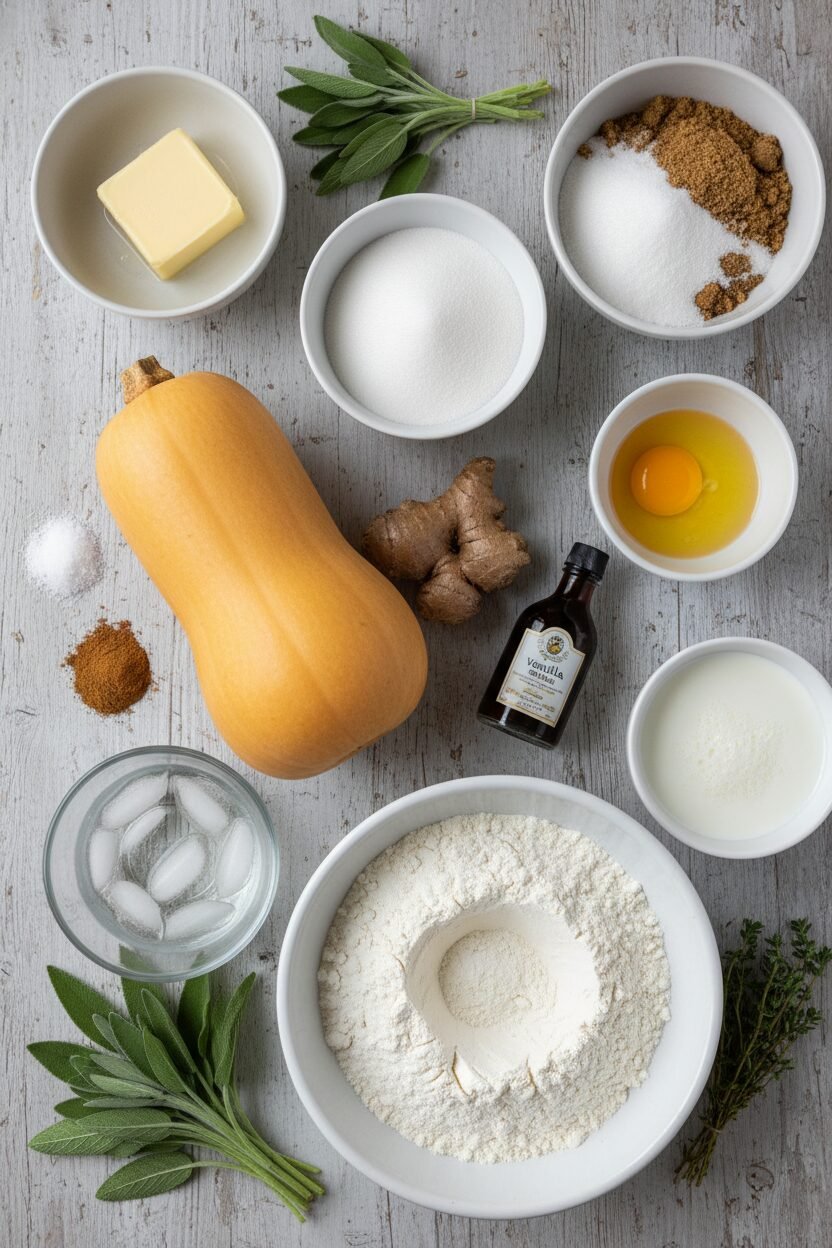
Sage Brown Butter Butternut Pie
Hello, dear. Come sit a while. Let’s make a pie that tastes like a cozy autumn hug. It’s my Sage Brown Butter Butternut Pie. The secret is browning the butter with sage. Doesn’t that smell amazing? It gets all nutty and warm. I first made this for a harvest supper years ago. I still laugh at that. I was so worried it wouldn’t set! But it turned out perfectly smooth and sweet. Let’s make a memory together.
Instructions
Step 1: First, let’s make our dough. Grate two tablespoons of your cold butter. Pop it in the freezer. Cube the rest. Mix your flour, sage, sugar, and salt in the processor. Add the cubed butter and pulse. It will become a paste. (A hard-learned tip: really chill your grated butter. It makes the crust flaky.)
Step 2: Now, break that paste into chunks. Add the rest of the flour and pulse. Toss in the grated butter. Sprinkle ice water over everything. Toss it until it’s moist. Press it into a ball with your spatula. Wrap it in plastic. Form it into a disk. Refrigerate it for two hours. This patience is important.
Step 3: Time to roll. Let your dough soften for ten minutes. Roll it into a big circle on a floured counter. Gently lay it in your pie plate. Trim and tuck the edges. Crimp them with your fingers. I like a simple fork-press pattern. Refrigerate the crust again to keep it firm.
Step 4: Now for the magic filling. Melt butter with sage in a skillet. Cook until it’s golden brown. It will smell like toasted nuts. Microwave your squash pieces until very soft. Be careful of the steam! Blend the squash with the brown butter and spices. What spice gives this pie its classic warm flavor? Share below!
Step 5: Bake your empty pie crust with weights. This is called blind baking. It stops a soggy bottom. Once it’s golden, pour in your warm filling. Bake it low and slow until just set. The center should have a little jiggle. Let it cool completely. This is the hardest part, waiting! But it’s worth it.
Creative Twists
Swap the sage for fresh rosemary. It gives a lovely piney fragrance.
Use sweet potato instead of butternut squash. The color is gorgeous.
Add a crunchy pecan streusel topping. Sprinkle it on before the final bake.
Which one would you try first? Comment below!
Serving & Pairing Ideas
This pie is wonderful just slightly warm. A dollop of whipped cream is perfect. For a fancy touch, add a few crispy sage leaves on top. It’s lovely after a simple soup supper. For a drink, a glass of chilled apple cider is my favorite. For the grown-ups, a sip of bourbon or whiskey pairs nicely. The caramel notes match the brown butter. Which would you choose tonight?

Keeping Your Pie Cozy and Ready
This pie keeps beautifully. Let it cool completely first. Then, cover it gently with plastic wrap. It will be happy in your fridge for up to four days. The flavors even get friendlier overnight.
You can freeze the whole pie, too. Wrap it tightly in two layers of plastic. Then, a layer of foil keeps it safe. Thaw it in the fridge before serving. I once sent a frozen pie to my grandson at college. He said it tasted like a hug from home.
To reheat, a warm oven is best. A microwave can make the crust soggy. A low oven for 15 minutes brings back the magic. Batch cooking matters because good food is a gift. It is a gift to your future, busier self. Have you ever tried storing it this way? Share below!
Simple Fixes for Pie-Perfect Results
Sometimes, our cooking needs a little help. Here are three common fixes. First, a soggy bottom crust. Always bake your crust first with weights. This creates a strong, crispy shield.
Second, the filling might crack. Do not over-bake it. The center should still have a tiny jiggle. It sets as it cools for hours. I remember when I baked my first pumpkin pie. I thought it was too wobbly, so I baked it longer. It cracked like a dry riverbed!
Third, your browned butter might burn. Swirl the pan and watch it closely. It goes from golden to black quickly. Nailing these steps builds your kitchen confidence. It also makes the flavors deep and just right. Which of these problems have you run into before?
Your Quick Questions, Answered
Q: Can I make this gluten-free?
A: Yes! Use your favorite gluten-free flour blend. A nutty almond flour crust would be lovely, too.
Q: Can I make parts ahead?
A: Absolutely. The dough can rest in the fridge for two days. You can also cook the squash a day early.
Q: What if I don’t have fresh sage?
A: Dried sage works. Use half the amount. The flavor will be a bit quieter, but still good.
Q: Can I make smaller pies?
A: You can make little tartlets. Just reduce the baking time. Watch them carefully in the oven.
Q: Any optional tips?
A: A tiny sprinkle of flaky salt on top before serving is wonderful. *Fun fact: Browning butter is called “beurre noisette.” It means “hazelnut butter” in French!* Which tip will you try first?
From My Kitchen to Yours
I hope this recipe finds its way to your table. I love thinking of families sharing a slice. The smell of sage and squash is pure autumn comfort.
Please tell me all about your baking adventure. Did your kitchen smell amazing? Did you change anything? I read every note you leave. Have you tried this recipe? Let me know in the comments below.
Happy cooking!
—Elowen Thorn.


Sage Brown Butter Butternut Pie
Description
Butternut Squash Pie with Browned Butter and Sage
Ingredients
10 tablespoons unsalted butter, chilled, divided
8 tablespoons unsalted butter, cut into 8 pieces
Instructions
- Grate 2 tablespoons butter on large holes of box grater and place in freezer. Cut remaining 8 tablespoons butter into ½-inch cubes.
- Pulse ¾ cup flour, 1½ tablespoon minced fresh sage or thyme, sugar, and salt in food processor until combine, 2 pulses. Add cubed butter and process until homogeneous paste forms, about 30 seconds. Using your hands, carefully break paste into 2-inch chunks and redistribute evenly around processor blade. Add remaining ½ cup flour and pulse until mixture is broken into pieces no larger than 1 inch (most pieces will be much smaller), 4 to 5 pulses. Transfer mixture to bowl. Add grated butter and toss until butter pieces are separated and coated with flour.
- Sprinkle 2 tablespoons ice water over mixture. Toss with rubber spatula until mixture is evenly moistened. Sprinkle remaining 2 tablespoons ice water over mixture and toss to combine. Press dough with spatula until dough sticks together. Transfer dough to sheet of plastic wrap. Draw edges of plastic over dough and press firmly on sides and top to form compact, fissure-free mass. Wrap in plastic and form into 5-inch disk. Refrigerate dough for at least 2 hours or up to 2 days. Let chilled dough sit on counter to soften slightly, about 10 minutes, before rolling. (Wrapped dough can be frozen for up to 1 month. If frozen, let dough thaw completely on counter before rolling.)
- Roll dough into 12-inch circle on floured counter. Loosely roll dough around rolling pin and gently unroll it onto 9-inch pie plate, letting excess dough hang over edge. Ease dough into plate by gently lifting edge of dough with your hand while pressing into plate bottom with your other hand.
- Trim overhang to ½ inch beyond lip of plate. Tuck overhang under itself; folded edge should be flush with edge of plate. Crimp dough evenly around edge of plate. Wrap dough-lined plate loosely in plastic wrap and refrigerate until firm, about 30 minutes. Adjust oven rack to middle position and heat oven to 350 degrees.
- Melt butter and sage into 8-inch skillet over medium-high heat. Continue to cook, swirling skillet occasionally, until butter is dark golden brown and has nutty aroma, about 2 minutes; set aside. Microwave squash in covered bowl until very soft and easily pierced with fork, 15 to 18 minutes, stirring halfway through microwaving. Carefully uncover, allowing steam to escape away from you, then drain squash; transfer to food processor. Add browned butter, salt, ginger, and nutmeg and process until smooth, about 1 minute, scraping down sides of bowl as needed. Transfer to large saucepan and set aside.
- Line chilled pie shell with double layer of aluminum foil, covering edges to prevent burning, and fill with pie weights. Bake on foil-lined rimmed baking sheet until edges are set and just beginning to turn golden, 25 to 30 minutes, rotating sheet halfway through baking. Remove foil and weights, rotate sheet, and continue to bake crust until golden brown and crisp, 10 to 15 minutes longer. Transfer to wire rack. (Crust must still be warm when filling is added.)
- Meanwhile, cook squash mixture and sugar in saucepan over medium heat until thick, shiny, and reduced to 2½ cups, 10 to 15 minutes, stirring constantly. Return squash mixture to now-empty processor bowl, add cream, milk, eggs and yolks, and vanilla, and process until well combined and smooth, about 15 seconds. Transfer filling to warm crust. Reduce oven temperature to 300 degrees and bake until edges of pie are set but center jiggles slightly and registers 160 degrees, 25 to 35 minutes. Let pie cool completely on wire rack, about 4 hours. Serve.
Notes
- Nutritional information is referenced in the text with “View Nutritional Information” but the specific nutrition details are not provided in the extracted content.