


My Favorite Seder Plate Friend
Let’s talk about the Passover seder plate. Each item has a special meaning. The charoset sits right there with them. It looks like a sweet, chunky paste. It reminds us of the mortar the Israelites used in Egypt. But it tastes so much better!
This Traditional Apple-Walnut Charoset is my go-to. It is a classic Ashkenazi charoset recipe. The apples and walnuts make a perfect team. I love the crunch and the sweet spice. It is my favorite matzo topping by far. What is your favorite item on the seder plate to eat?
A Bowl Full of Stories
Every family has their own version. This one is my family’s classic charoset. My grandmother taught me to chop everything by hand. She said the uneven pieces held more love. I still laugh at that.
I use a sweet red wine, kosher for Passover. The smell of apples, wine, and cinnamon fills my kitchen. Doesn’t that smell amazing? This Jewish Passover recipe connects me to so many past seders. *Fun fact: Sephardic charoset often uses dates and different spices!* It shows how families adapt.
Why The Little Things Matter
You might wonder why we toast the walnuts. It is a small step. But it makes a big difference. Toasting brings out their warm, nutty flavor. It makes the whole bowl taste deeper.
Hand-chopping matters too. A food processor is faster. But it can make mush. We want texture. We want to see the pieces of apple and walnut. This texture is part of the story. It reminds us that building something takes care.
Making Your Own Memories
This recipe is very forgiving. You can adjust the cinnamon or sugar to your taste. Some like it sweeter, some like more wine. Make it yours! Do you prefer your charoset more sweet or more spicy?
And don’t let any go to waste. I have great leftover charoset ideas. Stir it into morning oatmeal. Or spread it on toast after Passover. It is delicious any time.
Your Turn in the Kitchen
This apple and walnut charoset is so simple to make. It comes together in about 15 minutes. The hardest part is waiting for the seder to start! The flavors get even better as they sit.
I hope you try this recipe. It is more than a dish. It is a taste of history and family. Will you be making charoset this year? I would love to hear about your traditions.
Ingredients:
| Ingredient | Amount | Notes |
|---|---|---|
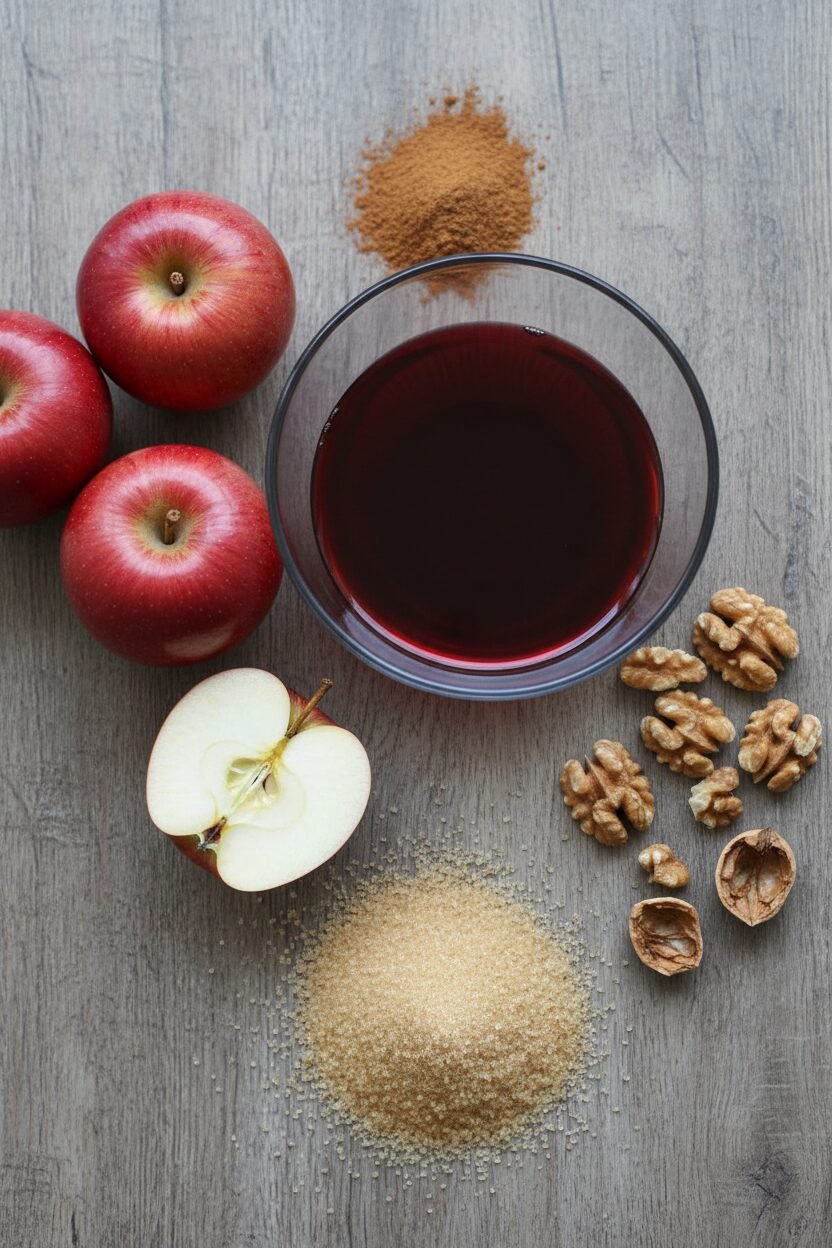
| Apples (such as Gala, Fuji, or Honeycrisp) | 3 medium | Peeled, cored, and cut into ¼-inch pieces |
| Walnuts | 1 cup | Toasted, cooled, and coarsely chopped |
| Sweet red wine (such as Malaga or Manischewitz) | ⅓ cup | |
| Light brown sugar | 1 tablespoon (packed) | |
| Ground cinnamon | ¾ teaspoon |
Instructions
Step 1: First, toast your walnuts. Spread them on a baking sheet. Toast until they smell wonderful. Let them cool completely. (Cool walnuts chop better and stay crunchy!)
Step 2: Now, peel and core your apples. Dice them into little pieces. I like a chunky texture for this classic charoset. It reminds me of my own grandma’s table.
Step 3: Chop the cooled walnuts. Don’t make them too fine. Add them to the bowl of apples. Doesn’t that look pretty already?
Step 4: Sprinkle in the cinnamon and brown sugar. Pour the sweet red wine over everything. Stir it all together with a big spoon. What does this mixture symbolize on the Passover seder plate? Share below!
Step 5: Let your Traditional Apple-Walnut Charoset sit for an hour. This Jewish Passover recipe gets better as it rests. The flavors become friends. Then it’s ready for your matzo topping.
Creative Twists
Add a chopped pear for extra sweetness.
Try a splash of orange juice instead of all wine.
Mix in a handful of raisins for a chewy surprise.
Which one would you try first? Comment below!
Serving & Pairing Ideas
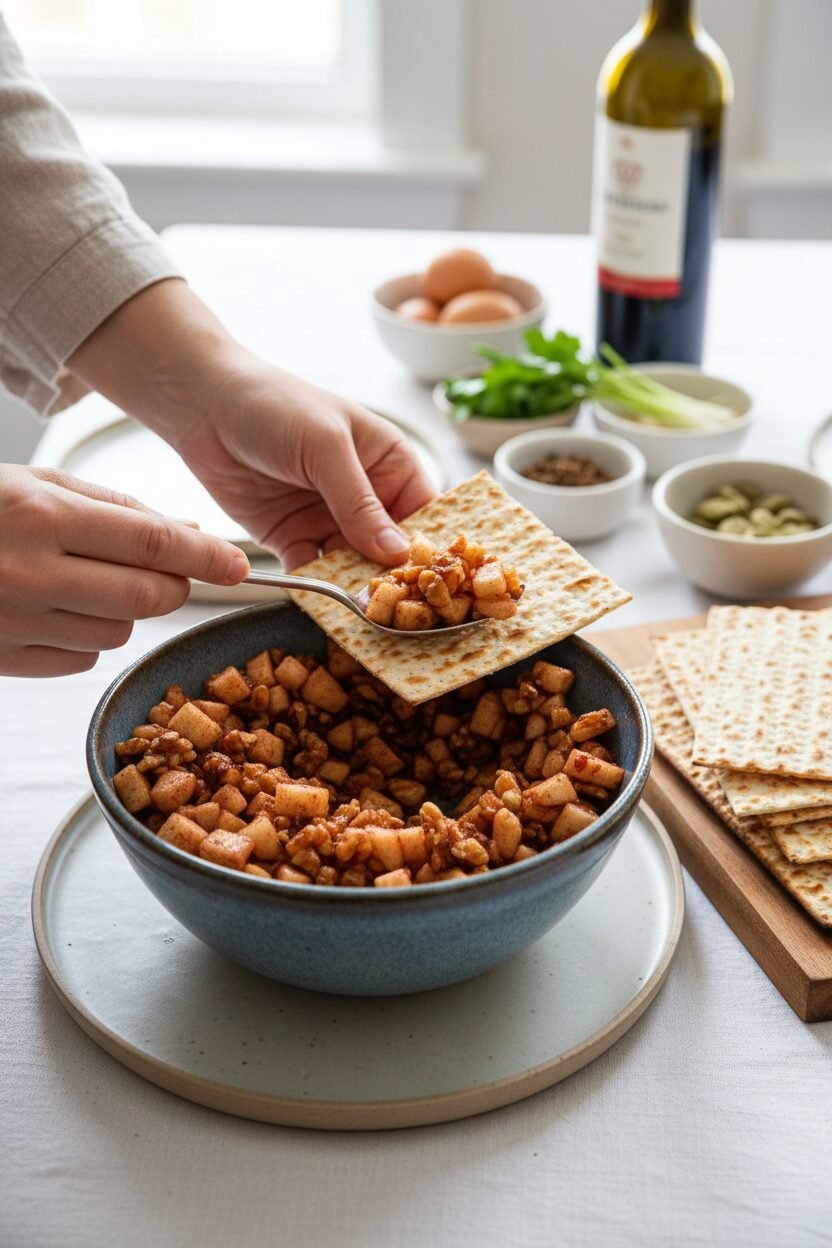
This Ashkenazi charoset recipe is perfect on matzo. I also love it with a bit of yogurt for breakfast. Use leftover charoset ideas like a sweet sandwich spread. Which would you choose tonight?
Keeping Your Charoset Fresh and Tasty
Let’s talk about storing this sweet treat. Your charoset loves a cozy spot in the fridge. Just pop it in a sealed container. It will stay good for about four days. The flavors even get better as they sit together.
You can freeze it, too. I use a small freezer jar. Thaw it overnight in the fridge when you need it. I remember my first big batch. I was so proud, I made enough for a week!
Batch cooking like this matters. It saves you time on busy days. You can focus on family, not fussing in the kitchen. Have you ever tried storing it this way? Share below!
Simple Fixes for Common Charoset Hiccups
Sometimes our cooking needs a little help. First, your charoset might look too dry. Just add a splash more kosher for Passover wine or grape juice. It will loosen right up.
Second, the apples might turn brown. A squeeze of lemon juice keeps them pretty. I once forgot the lemon. My apples looked tired, but they still tasted great!
Third, the walnuts could taste bland. Always toast them first. It makes their flavor deep and nutty. Fixing small issues builds your cooking confidence. It also makes the final flavor so much better. Which of these problems have you run into before?
Your Quick Questions, Answered
What is the difference between Ashkenazi and Sephardic charoset?
Our Traditional Apple-Walnut Charoset is a classic Ashkenazi charoset recipe. It comes from Jewish communities in Eastern Europe. Sephardic charoset comes from Jewish communities in Spain and the Mediterranean. It often uses dates and other dried fruits. Both are important parts of the Passover seder plate.
What’s a good appetizer for Passover?
Matzo ball soup is always a winner. You can also serve gefilte fish. A simple plate of chopped liver on matzo works well. This Jewish Passover recipe for charoset can also be a sweet starter. Just serve it with matzo crackers.
What is a Moroccan charoset for Passover?
Moroccan charoset is a type of Sephardic charoset. It is often a paste made from dates, nuts, and spices. Sometimes it includes bananas or other fruits. It is very sweet and spreadable. It makes a wonderful matzo topping.
What to use instead of wine in charoset?
Use grape juice to keep it kosher for Passover. You can also use a little apple juice. Some people like a bit of honey thinned with water. This swap works in any apple and walnut charoset. The goal is that sweet, fruity flavor.
What was the main difference between Sephardim and Ashkenazi Jews?
The main difference is their historical homelands. Ashkenazi Jews lived in Central and Eastern Europe. Sephardic Jews lived in Spain and the Mediterranean. After leaving Spain, they settled in North Africa and the Middle East. This led to different customs, languages, and foods, like their unique charoset recipes.
What fruit is in some Sephardic charoset?
Dates are the most common fruit in Sephardic charoset. You also find figs, raisins, and apricots. Some recipes include fresh fruits like pomegranates or oranges. *Fun fact: Some Sephardic charoset includes bananas!* This creates a deliciously different paste from our classic charoset.
Which tip will you try first?
From My Kitchen to Yours
I hope you love making this traditional dish. It holds so many sweet memories for me. Food connects us to our past and to each other. I would love to hear about your seder.
Have you tried this recipe? Did your family enjoy it? Tell me all about it in the comments below. Sharing stories is the best part.
Happy cooking!
—Marina Caldwell.

Apple Walnut Wine Charoset for Passover
Description
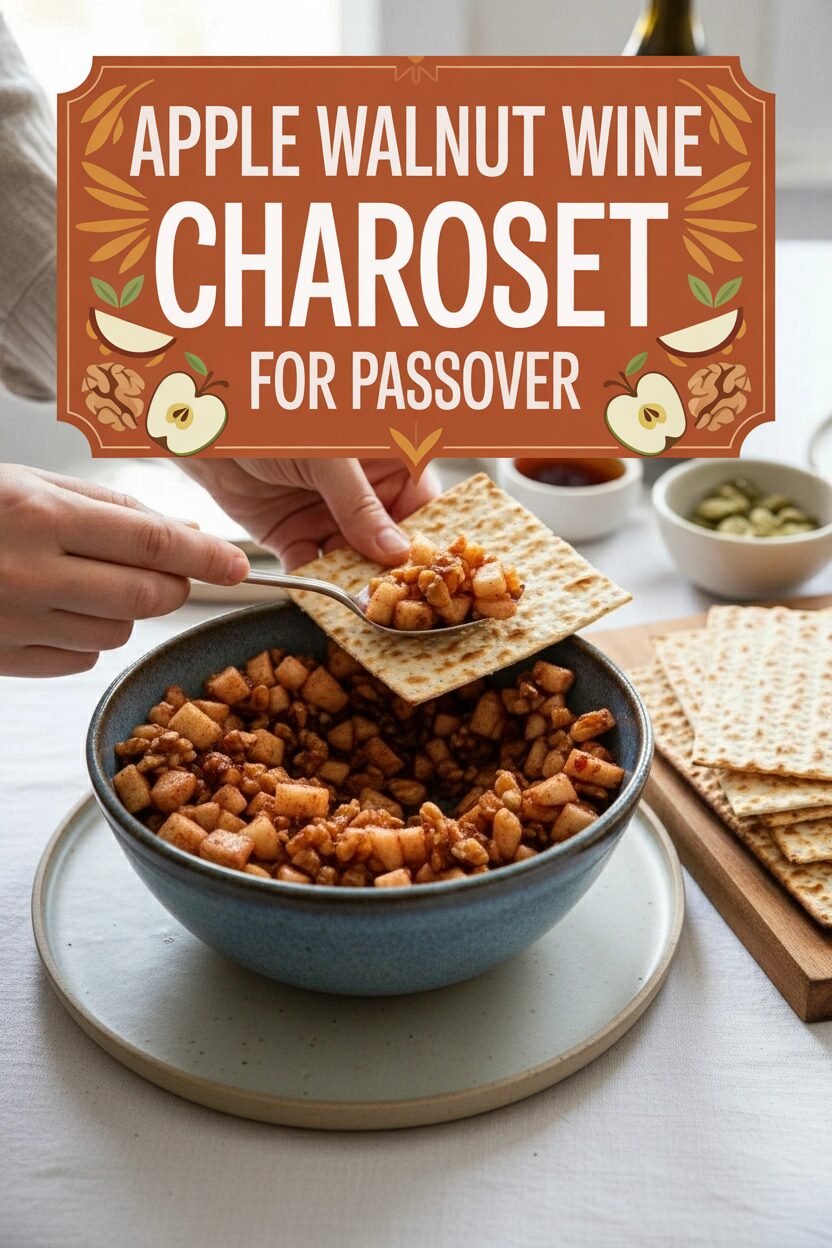
Traditional Apple-Walnut Charoset. This classic Ashkenazi charoset recipe is “just like Bubbe used to make,” with chunky chopped apples and walnuts, drenched in sweet Malaga wine and warmed up with a touch of cinnamon.
Ingredients
Instructions
- Prepare the apples by peeling, coring, and dicing them into ¼-inch pieces. For the best texture, do this by hand. Alternatively, you can pulse them in a food processor, being very careful not to over-process into a mush.
- Toast the walnuts in a dry skillet over medium heat until fragrant, about 5 minutes. Let them cool completely, then coarsely chop them.
- In a medium mixing bowl, combine the diced apples and chopped walnuts. Add the sweet red wine, packed brown sugar, and ground cinnamon.
- Stir everything together until well combined and the apples are evenly coated in the wine and spices. Taste and adjust sweetness with a bit more sugar if desired.
- Let the charoset sit for at least 15-20 minutes before serving to allow the flavors to meld. Serve as part of your Passover Seder plate or as a side dish.
Notes
- For the most even texture, we recommend dicing the apples by hand. However, to save time, they can be chopped in the food processor—just be careful not to overprocess.