


My Spring Garden in a Pot
This spring vegetable risotto is like a sunny day in a bowl. It has all the fresh tastes of the garden. I love making it when the asparagus is young and tender. Doesn’t that smell amazing?
This creamy risotto feels fancy. But it is just simple, good food. It is a wonderful vegetarian risotto for any night. I think food should make you feel happy and cared for. That is why this matters to me.
The Secret is in the Stirring
People often ask me how to make risotto. They think it is hard. The secret is just a little patience and a wooden spoon. You add warm broth slowly and stir. It is a gentle rhythm.
This easy risotto recipe is perfect for learning. My grandson calls it “stirring soup.” He helps me, and we talk. *Fun fact: The stirring helps the Arborio rice release its starch. That is what makes it so creamy without any cream!*
A Story About Asparagus
This asparagus risotto reminds me of my own grandma. She had a big patch of asparagus by her fence. Every spring, we would go cut the spears together. I still laugh at that.
She taught me to snap off the tough ends. They break at just the right spot. I do the same for this recipe. Using what the season gives you is a special joy. What is your favorite spring vegetable to cook with?
Why This Rice is Special
For a perfect homemade risotto, you need Arborio rice. It is a short, fat grain. It soaks up all that lovely broth and flavor. This Arborio rice recipe is a great place to start.
You toast the rice in the pot first. It gives it a warm, nutty taste. Then you add a splash of wine. It makes the whole kitchen smell wonderful. Have you ever cooked with Arborio rice before?
Bringing It All Together
The best part of this spring risotto is the finish. You turn off the heat. Then you stir in cold butter and fresh parmesan. It becomes so rich and silky.
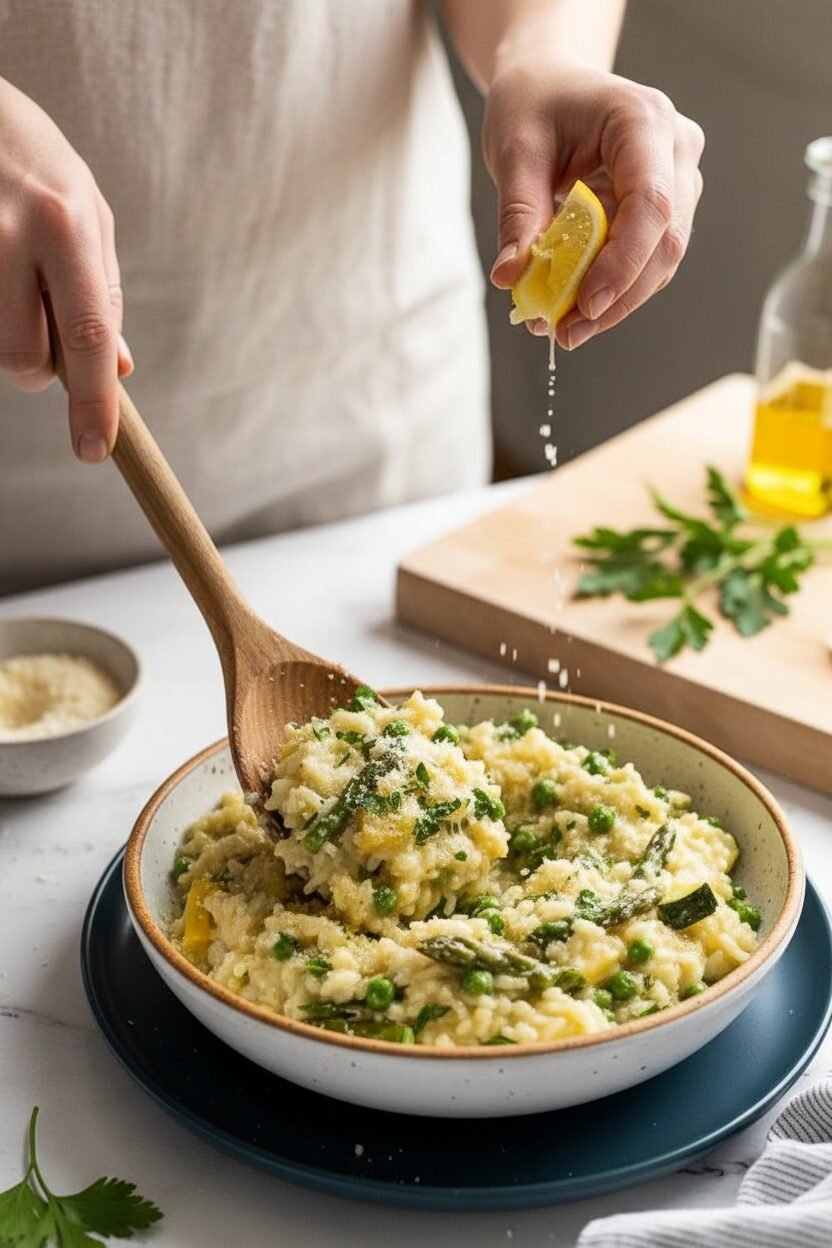
A little lemon juice on top is magic. It makes all the flavors sing. This vegetable risotto recipe is a celebration of simple things. Taking time to cook for someone is a act of love. That is why this matters. Will you try adding the lemon at the end?
Ingredients:
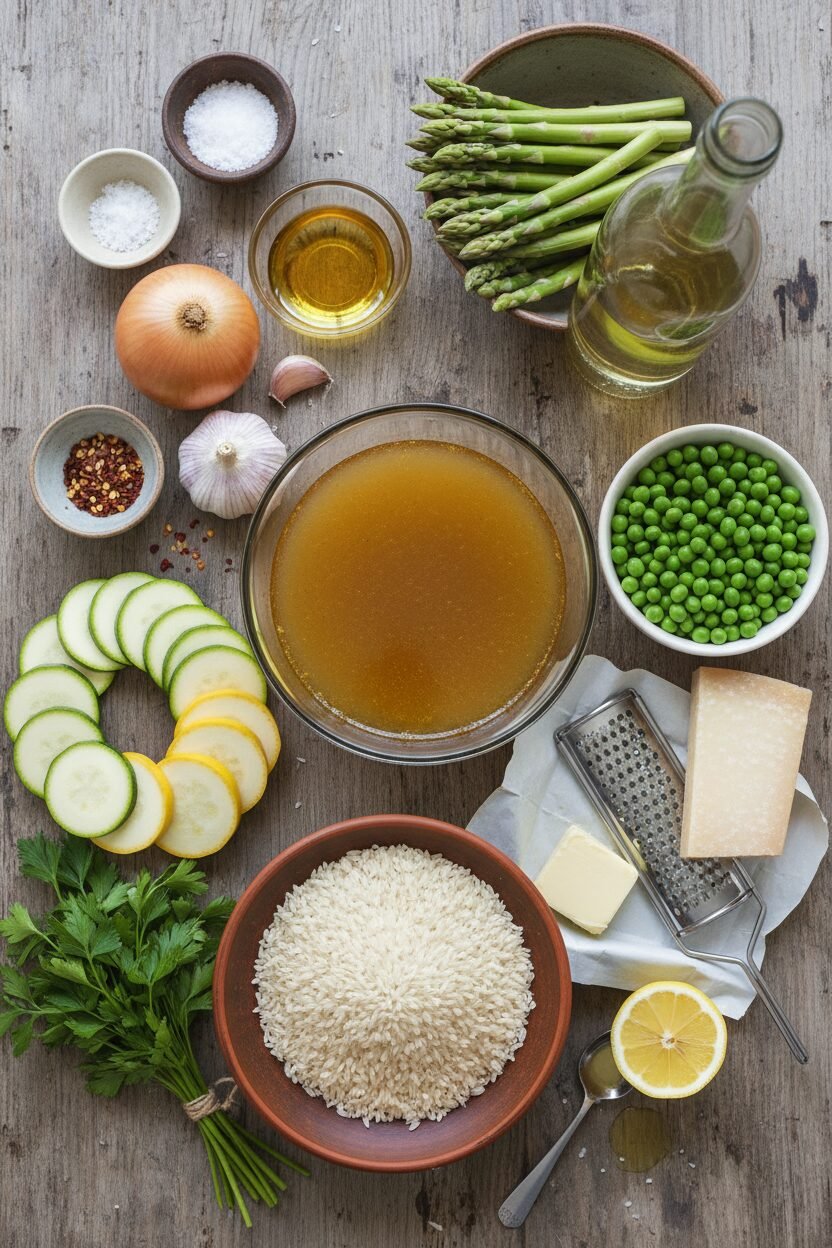
| Ingredient | Amount | Notes |
|---|---|---|
| Vegetable stock | 6 cups | Keep warm in a saucepan |
| Olive oil | 1/4 cup | |
| Yellow onion, diced | 1 cup | |
| Salt | to taste | |
| Red pepper flakes | Dash | Optional |
| Garlic, minced | 2 cloves | |
| Arborio rice | 2 cups | |
| Dry white wine | 1/2 cup | For deglazing |
| Asparagus spears | 1/2 pound | Cut into 1-inch pieces |
| Zucchini, diced | 1 cup | About 1 small zucchini |
| Yellow squash, diced | 1 cup | About 1 small squash |
| Peas | 1 cup | Frozen or fresh |
| Unsalted butter | 4 Tablespoons | |
| Parmesan cheese, shredded/grated | 1 cup | Freshly shredded or grated, plus more for garnish |
| Fresh parsley, chopped | for garnish | Optional |
| Fresh lemon juice | to finish | Optional |
Instructions
Step 1: Warm your stock in a small pot. Keep it simmering low. This is the secret to a creamy risotto. Cold stock stops the cooking. I always do this first. Doesn’t that smell amazing already?
Step 2: Cook onion and garlic in oil until soft. Add a pinch of salt. This starts our spring vegetable risotto right. I love the sizzle. (Always warm your oil first for the best flavor.)
Step 3: Stir in the Arborio rice. Toast it for one minute. It will look shiny. This step is key for homemade risotto. Why toast the rice? Share below! It builds a nutty taste.
Step 4: Pour in the wine. Stir until the rice drinks it all up. This is how to make risotto. It adds a lovely brightness. My kitchen smells like a fancy restaurant now.
Step 5: Add warm stock, just half a cup at a time. Stir until it’s gone. Repeat. This patience makes a perfect vegetarian risotto. I stir and think of my garden. You’ll see it turn creamy.
Step 6: After about 4 cups of stock, add all the fresh veggies. In goes the asparagus risotto star! Also add zucchini and peas. They will cook right in the broth. This easy risotto recipe celebrates spring.
Step 7: Keep adding stock and stirring. Taste a grain of rice. Is it firm but not crunchy? Good! Turn off the heat. Stir in butter and parmesan. Your spring risotto is now dreamy.
Creative Twists
Lemon Zest Sunshine: Stir in lemon zest with the cheese. It makes the spring vegetable risotto pop! Herb Garden Swirl: Mix in fresh basil or mint at the end. So green and pretty. Pea & Mint Magic: Use extra peas and fresh mint. A classic, happy pair. Which one would you try first? Comment below!Serving & Pairing Ideas
Serve this creamy risotto right away. It waits for no one! Top with extra parmesan and parsley. A simple green salad on the side is perfect. For a heartier meal, add a crispy breadstick. This vegetable risotto recipe is a full spring feast. Which would you choose tonight?
Keeping Your Spring Risotto Fresh
Let’s talk about saving your lovely spring vegetable risotto. First, cool it quickly. Spread it on a baking sheet for thirty minutes. Then, pack it into airtight containers. It will keep in the fridge for three days.
You can freeze it for one month. Use a freezer-safe bag. Press out all the air first. Thaw it overnight in your fridge before reheating.
Reheating is simple. Add a splash of stock or water to a pot. Warm the risotto over medium-low heat. Stir it gently until it’s hot and creamy again. I once reheated it without extra liquid. It was a bit dry, so I learned my lesson!
Batch cooking this easy risotto recipe is a lifesaver. It means a homemade meal is always minutes away. That matters on busy nights. Have you ever tried storing it this way? Share below!
Simple Fixes for Common Risotto Hiccups
Even grandmas have cooking troubles sometimes. Here are three common issues with fixes. First, crunchy rice. This means you need more warm liquid. Just keep adding broth and stirring patiently.
Second, mushy vegetables. I remember when my asparagus turned to mush. Add your veggies later in the process. For this spring risotto, add them with the last few cups of broth.
Third, risotto that’s too thick. Stir in a little extra warm stock at the end. This restores the perfect creamy texture. Fixing these problems builds your cooking confidence. It also makes sure every bite of your vegetarian risotto is delicious. Which of these problems have you run into before?
Your Quick Questions, Answered
What is a substitute for Parmesan cheese in risotto?
You can use other hard, salty cheeses. Pecorino Romano is a great choice. It gives a similar salty, tangy flavor. Mature cheddar or aged gouda also work well. Grate them finely so they melt smoothly into your creamy risotto. This is a handy tip for any vegetable risotto recipe.
How to make risotto without Parmesan?
You can make a lovely spring vegetable risotto without any cheese. Finish it with a big spoonful of butter for richness. A squeeze of fresh lemon juice at the end adds a bright flavor. This keeps your homemade risotto creamy and delicious. It’s a perfect dairy-free option for your asparagus risotto.
What cheeses go well in risotto?
Many cheeses melt beautifully into risotto. Try Pecorino Romano, Asiago, or Grana Padano. For a stronger taste, a little blue cheese is nice. Softer cheeses like goat cheese make it extra creamy. *Fun fact: The starch from the Arborio rice recipe is what creates the creamy base for the cheese to melt into.*
Is Parmesan necessary for risotto?
No, Parmesan is not necessary. Traditional recipes often use it. But your easy risotto recipe will still be wonderful without it. The key is creating a creamy texture with the rice starch. Flavor can come from good stock, vegetables, and butter. Learning how to make risotto your way is the real goal.
What to replace Parmesan with in risotto?
Replace it with nutritional yeast for a cheesy, nutty flavor. A tablespoon of white miso paste adds deep savory notes. For a simple swap, just use more butter and a pinch of salt. Your spring risotto will still feel complete and satisfying with these changes.
Can I make risotto without Parmesan cheese?
Absolutely, you can! A vegetarian risotto shines with its spring vegetables. The peas, asparagus, and squash bring their own sweetness. The butter and slow stirring create the creamy risotto texture we love. The cheese is a finishing touch, not the main star. Which tip will you try first?
A Final Word from My Kitchen
I hope you love this taste of spring. Cooking should be joyful, not stressful. This easy one-pot meal is meant to be shared. I’d love to hear about your cooking adventures in the comments.
Tell me about the vegetables you used. Did your family enjoy it? Your stories make my day. Have you tried this recipe? Thank you for cooking with me today.
Happy cooking!
—Marina Caldwell

Spring Vegetable Parmesan Risotto
Description
A creamy and comforting risotto packed with spring vegetables like asparagus, zucchini, yellow squash, and peas, finished with Parmesan cheese.
Ingredients
Instructions
- In a medium saucepan, add the vegetable stock and bring to a simmer. Then, reduce heat and keep warm over low heat for the duration of the cooking process. You can’t add cold liquid to make risotto.
- Heat a large stock pan or Dutch oven over medium to medium-high heat. Add the olive oil, then, once it’s warm add the onions with a generous pinch of salt and red pepper flakes, if using. Saute for a minute, then add the garlic, cooking for an additional 2 minutes.
- Add the Arborio rice to the onion mixture, stirring to coat the rice completely. Cook it for approximately 1 minute until toasted and any additional oil is mostly absorbed.
- Deglaze the pan with the white wine, slowly pouring it in and stirring at the same time. Continue gently stirring and allow for the rice to absorb the wine.
- Once the wine is absorbed, add about 1/2 cup of the warm broth (I use a measuring cup and simply dip it in, then pour it into the risotto pan). Stir the risotto consistently, until the broth is absorbed.
- Continue the process of adding 1/2 cup broth, then stirring until it’s completely absorbed until you’ve added approximately 4 cups of the broth (just do your best to keep track). At this point, add the vegetables to the broth to begin cooking.
- Continue adding broth to the risotto in the same way (1/2 cup, stir until absorbed, etc.), but this time transfer a whole lot of the veggies over with you in the process. The vegetables will cook both in the broth and as the risotto finishes.
- Begin testing the rice for doneness. If it is still crunchy, you will need more time. Continue adding broth 1/2 cup at a time, and stirring until it is all absorbed. I recommend taste testing after each addition at this point to really get a feel for where the rice is at. Once the risotto is creamy, the bite is firm but not crunchy (think al dente pasta), and the last addition of broth is absorbed, turn off the heat.
- Add the butter and parmesan cheese, stirring to combine and allowing both to melt. Serve the risotto immediately with chopped parsley as desired and additional parmesan cheese. Enjoy!
Notes
- For a finishing touch, a squeeze of fresh lemon juice can brighten the flavors. Use the best quality Parmesan you can find for the best flavor.