


The Humble Egg’s Best Dress
Some people think fancy food is complicated. I think it is simple food, done just right. This omelet is a perfect example. It is just eggs and herbs. But the care you give it makes it special.
My granddaughter calls it “the yellow pillow.” I still laugh at that. It truly is soft and fluffy. The secret is in the swirl. You don’t stir. You gently swirl the pan. This makes lovely, soft curds. Doesn’t that sound like a fun little dance?
A Pinch of Green Magic
Those herbs are not just for color. They are called *fines herbes*. That is French for “fine herbs.” They are always used fresh. Dried just won’t do here. Each one brings its own little song.
Chives are like a mild onion whisper. Tarragon is sweet and a little spicy. Parsley is fresh and clean. Dill is like a gentle breeze. Together, they make the eggs sing. *Fun fact: This classic herb mix was a favorite of French King Louis XIV!* He knew good taste.
Butter, Heat, and Courage
Now, the cooking part seems fast. It is. Your pan must be hot. The butter should foam and sizzle. This matters because a hot pan sets the eggs quickly. It keeps them tender. If the pan is too cool, the eggs get tough.
I remember my first try. I was so nervous. I jerked the pan to fold it, just like the recipe says. The omelet flew right out! It landed on the counter, not the plate. We ate it anyway. It still tasted wonderful. So don’t be afraid. What was your first cooking adventure that went a little wild?
Why This Simple Meal Matters
This recipe teaches you to pay attention. You watch the butter. You listen to the sizzle. You feel the weight of the eggs in the pan. This is how you learn to cook with your senses, not just a timer.
It also shows that you deserve a nice meal, even alone. One perfect omelet, just for you. That is a quiet act of kindness. Do you have a favorite “just for me” meal?
Your Turn at the Stove
The final flip onto the plate feels like a magic trick. It might not be perfect the first time. That is okay. The tenth one will be beautiful. Each try makes you better.
This matters because cooking is a journey, not a test. Every egg is a new chance. So tell me, which of the four herbs are you most excited to try? Or do you have another soft herb you love? I’d love to hear your plans.
Ingredients:
| Ingredient | Amount | Notes |
|---|---|---|
| Eggs | 2 | extra-large, at room temperature |
| Sea Salt | ¼ teaspoon | |
| Black Pepper | ¼ teaspoon | freshly cracked |
| Dill | ¾ teaspoon | finely minced |
| Tarragon | ¾ teaspoon | finely minced |
| Chives | ¾ teaspoon | finely minced |
| Parsley | ¾ teaspoon | finely minced, Italian flat leaf variety |
| Butter | 1 tablespoon | unsalted |
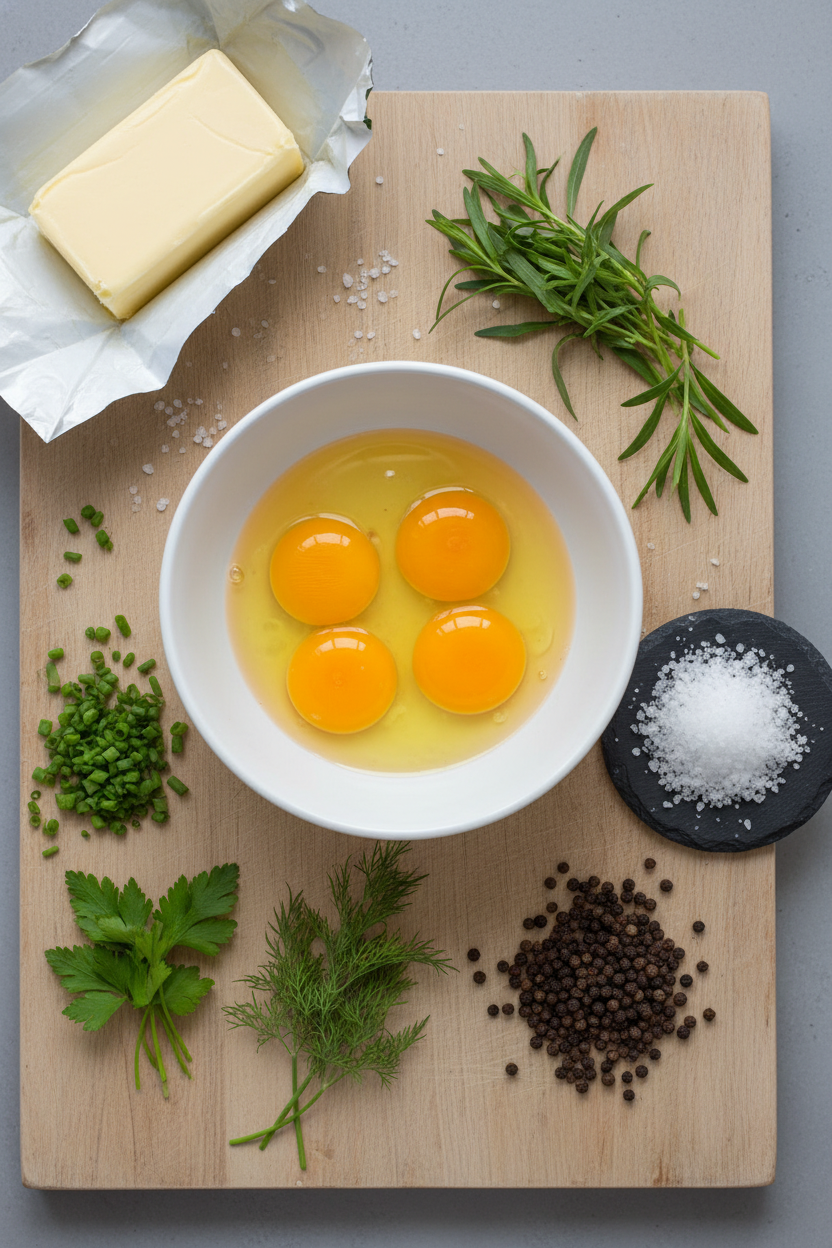
Instructions
Step 1: Crack your eggs into a small bowl. Add the salt, pepper, and all those lovely green herbs. Whisk them together until they’re one happy, yellow family. I love the sound of the fork against the bowl. It reminds me of my own grandma’s kitchen. (Use room-temperature eggs. They cook more evenly and gently.)
Step 2: Get your pan nice and hot over high heat. Drop in the butter. Swirl it until the whole pan shines. Listen for that soft sizzle. Doesn’t that smell amazing? You want it melted and foamy, but not brown. That’s your signal.
Step 3: Pour your egg mixture right into the center. Let it sit for just a few seconds. Then, start swirling the pan. Watch the edges begin to cook. The center will look soft and bubbly. This is the magic part! Swirling or stirring—which technique makes a fluffier omelet? Share below!
Step 4: When it’s mostly set but still a bit wet, jerk the pan toward you. Do it a few times. This folds the omelet neatly onto itself. It will slide to the far edge. Don’t worry if it’s not perfect. My first one looked like a little yellow cloud!
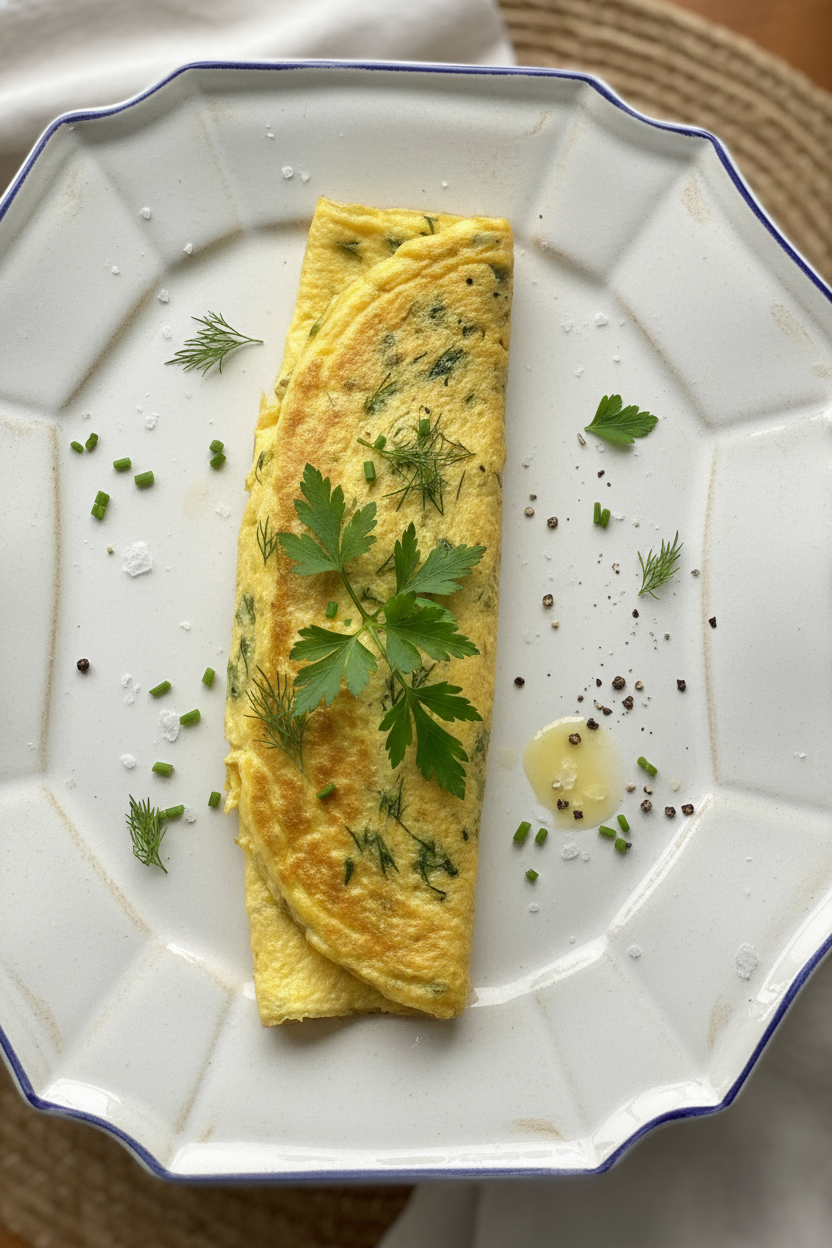
Step 5: Tilt the pan over your plate. Let the omelet roll out gently. It should land folded and beautiful. Sprinkle a pinch more herbs on top. There you go, a little French secret, right in your kitchen. I still laugh at how fancy something so simple can be.
Creative Twists
Cheesy Dream: Add a sprinkle of Gruyère cheese right before you fold it. Spring Garden: Mix in a spoonful of soft cream cheese with the herbs. Sunshine Inside: Place a few slices of ripe tomato in the center as you fold. Which one would you try first? Comment below!
Serving & Pairing Ideas
Serve your omelet with buttery, toasted bread for dipping. A simple green salad with a lemon dressing is lovely on the side. For a heartier meal, add a few crispy roasted potatoes. I always think a good breakfast deserves good company. Which would you choose tonight?
Keeping Your Omelette Perfect for Later
Let’s talk about storing your lovely omelette. You should eat it fresh. But life happens. To store, let it cool completely first. Wrap it tightly in plastic wrap. Then place it in the fridge. It will be good for one day.
I don’t recommend freezing it. The eggs get a rubbery texture. It loses that lovely creaminess. I learned this the hard way. I once froze a beautiful herb omelette for my grandson. He said it tasted like a kitchen sponge! We had a good laugh.
To reheat, be gentle. Use a skillet over low heat. Add a tiny bit of butter. Warm it slowly for a minute or two. This keeps it tender. Batch cooking is about giving yourself a gift. It means a good meal is ready on a busy day. Have you ever tried storing it this way? Share below!
Fixing Common Omelette Troubles
Omelettes can be tricky. First, a rubbery omelette means too much heat. Your pan was too hot. Cook over medium heat instead. This gives the eggs time to stay soft.
Second, eggs sticking to the pan? Your pan might not be non-stick. Or you did not use enough butter. I remember my first omelette stuck fast. I had to scrape it out with a spoon! Always use a good non-stick pan and that full tablespoon of butter.
Third, a broken or messy fold. Do not overfill it. A French omelette has herbs inside, not lots of cheese. Practice the jerking motion. It gets easier. Fixing these issues builds your confidence. You learn to control the heat and the pan. This matters because confidence makes every meal taste better. Which of these problems have you run into before?
Your Quick Questions, Answered
What is the secret to a perfect French omelette?
The secret is gentle heat and constant motion. Do not let the butter brown. Swirl the pan as soon as you add the eggs. This creates small, soft curds. Fold it while the center is still a bit wet. The residual heat finishes the cooking. This gives you a tender, creamy roll. It should look pale yellow, not brown.
How do fresh herbs elevate a simple omelette?
Fresh herbs add a garden’s brightness to every bite. They are the main flavor, not just a garnish. Dried herbs can taste dusty. Fresh ones taste alive. They make a simple egg feel special and fancy. *Fun fact: The classic “fines herbes” mix always uses soft, fresh herbs, never woody ones like rosemary.*
What are the best herbs to use in a French omelette?
The best herbs are the classic “fines herbes.” Use chives, tarragon, parsley, and chervil. If you cannot find chervil, use dill. They should be fresh and finely minced. This mix is delicate and fragrant. It perfectly complements the eggs without overpowering them. Avoid strong herbs like oregano or rosemary here.
What is the difference between a French and an American omelette?
A French omelette is smooth, pale, and rolled. It is creamy inside. An American omelette is cooked faster over higher heat. It is often golden brown and folded in half. American versions have more fillings like cheese, ham, and peppers. The French style highlights the egg and delicate herbs. Both are delicious, just different.
How do you achieve a creamy, not browned, omelette texture?
Keep your heat at medium. Use enough butter to coat the pan. Swirl the eggs constantly after pouring them in. This makes tiny, soft curds. Remove the pan from the heat just before the eggs look fully set. The inside will finish cooking from the pan’s leftover heat. This prevents browning and keeps it creamy.
Can you make a French omelette without a special pan?
Yes, you can. The key is a good quality non-stick skillet. An 8 or 10-inch size is best. Make sure it is in good condition with no scratches. The slippery surface lets you swirl and fold easily. You do not need a fancy French “omelette pan.” My favorite pan is just a simple non-stick one from the market. Which tip will you try first?
From My Kitchen to Yours
I hope you feel ready to make this classic dish. It is a simple joy. Cooking is about sharing and trying new things. Do not worry if your first try is not perfect. Mine certainly was not!
I would love to hear about your cooking adventure. Tell me how it went in your kitchen. Your stories make my day. Have you tried this recipe? Let me know in the comments below.
Happy cooking!
—Grace Hollander.

Herbed French Omelette Elegance
Description
Experience the delicate and elegant texture of a classic French omelette, infused with the fresh, aromatic blend of fines herbes.
Ingredients
Instructions
- In a small bowl, beat the eggs, salt, pepper and fresh herbs until the yolks and whites are fully incorporated.
- Place a 10-inch non-stick frying pan over high heat. Allow the pan to get very hot, but not smoking.
- Add the butter and swirl it around to evenly coat the bottom and sides of the pan. Once the butter is completely melted and the foam has started to subside, pour the eggs into the center of the butter (be careful to not let the butter turn brown).
- Allow the eggs to sit for just a 5 – 10 seconds before you begin swirling the pan over the heat, until the edges just start to cook and the center of the eggs begin to bubble.
- Continue the swirling motion for another 5 – 10 seconds. Once the eggs begin to set and there is just a little bit of wetness in the center, jerk the pan several times back and forth in order to fold the eggs onto itself. The finished omelette will end up in the far lip of the pan.
- Grasp the handle of the pan from underneath and rest the far lip of the pan (where the omelette has formed) slightly off-center onto the bottom of a dinner plate.
- Gently turn the pan upside down over the plate. The omelette will then drop into position.
- Garnish with more salt, pepper and fresh herbs and serve.
Notes
- For best results, ensure all ingredients are at room temperature. The pan must be very hot before adding the butter to prevent sticking and to achieve the right texture. Multiply the recipe as needed for more servings.