


The Heart of the Holiday Table
This bread is more than food. It is a hug from my Nonna. She made it every Easter morning. The whole house smelled like sweet lemon and butter. I still smile thinking about it.
We would gather around the table. The braided wreaths held colorful eggs right in the dough. It felt like a celebration before we even took a bite. That feeling is why I still make it. Food can hold our happiest memories.
A Dough With Character
Now, this dough is a bit sticky. Do not worry. That is how it should be. Just trust the recipe. Knead it for the full ten minutes.
It will become smooth and soft. The lemon zest is my favorite part. Doesn’t that smell amazing? It makes the whole bread taste bright and sunny. *Fun fact: The lemon zest adds flavor without any juice, which could change the dough.*
The Story of the Eggs
Let me tell you about the eggs. One year, my little cousin used too much blue dye. His hands were blue for two days! We still laugh at that.
You use raw eggs right in the bread. The oven bakes them perfectly as the bread cooks. It is a symbol of new life. That is why this matters. It connects us to spring and fresh starts. Do you have a favorite color to dye eggs?
Braiding With Love
Shaping the wreaths is simple fun. Roll two pieces into long ropes. Pinch them together at the top. Then just twist them over each other.
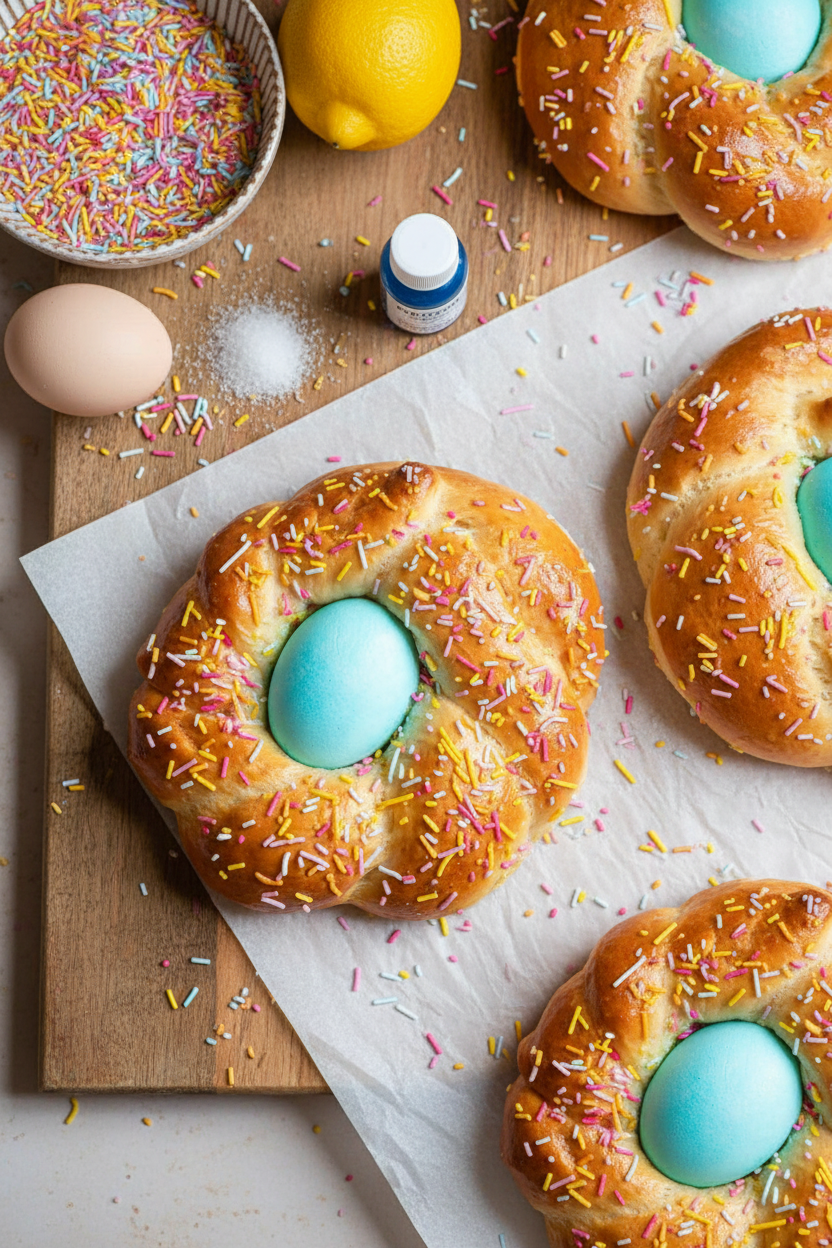
Join the ends to make a circle. Place your colored egg in the center. The braid is like arms hugging the egg. This step is why the bread looks so special. It shows you took the time. What kitchen task do you find the most fun?
Share the Warmth
When it comes out of the oven, it is glorious. Golden brown and shiny. Let it cool just a little. Then tear off a warm piece.
The bread is best shared the same day. Give a loaf to a neighbor. Take one to your family dinner. Sharing food spreads joy. That is the second reason this matters. It turns a recipe into a gift. Will you be sharing your Easter bread with anyone this year?
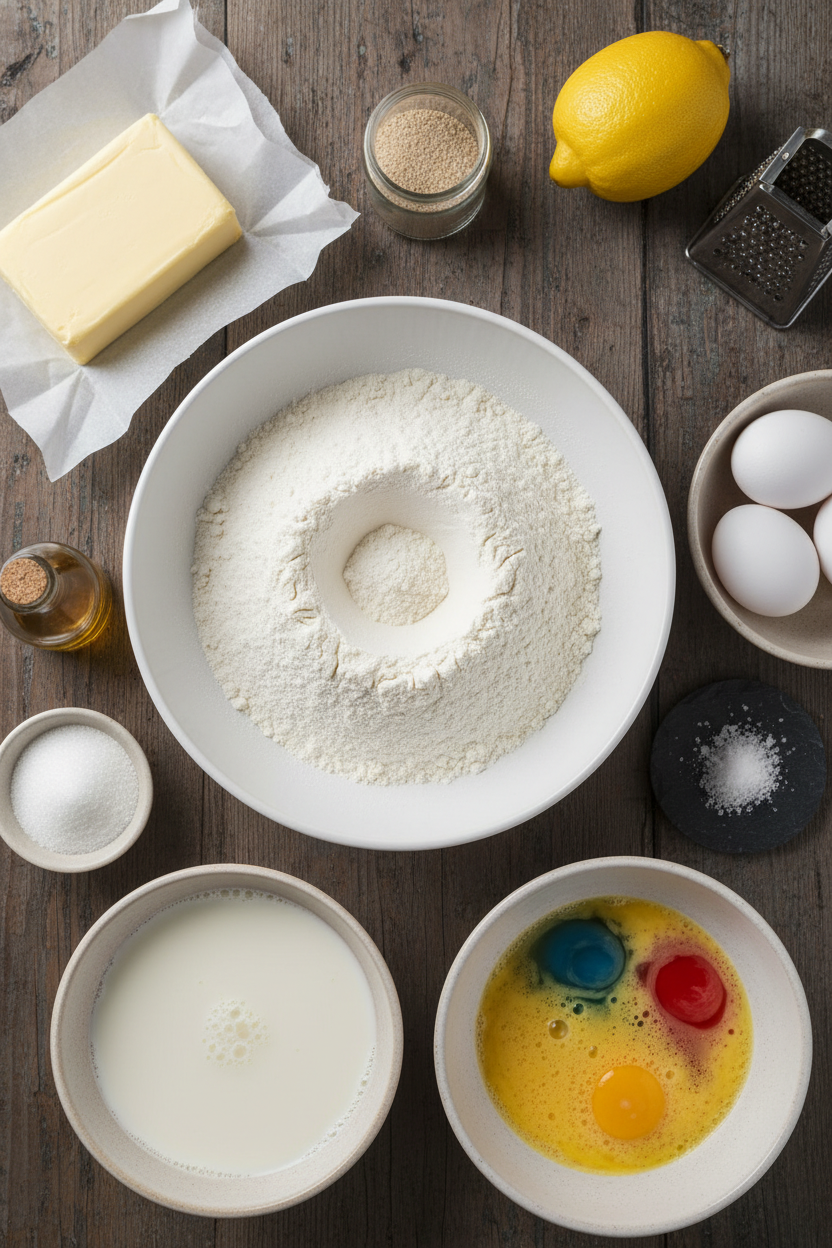
Ingredients:
| Ingredient | Amount | Notes |
|---|---|---|
| Bread flour | 3.5 cups (470g) | spooned and leveled |
| Unsalted butter | 6 tbsp (85g) | melted |
| Whole milk | 1 cup (240ml) | warmed |
| Large eggs | 3 | for the dough |
| Granulated sugar | ⅓ cup (70g) | |
| Salt | ½ tsp | |
| Instant yeast | 2 tsp | fast action yeast |
| Vanilla extract | 1 tsp | |
| Lemon zest | from 1 lemon | |
| Raw eggs in shell | 8 | for decorating |
| Food coloring | optional, for painting eggs |
Instructions
Step 1: Warm your milk gently. Melt the butter. It should feel cozy, not hot. Mix the flour, sugar, salt, and lemon zest in your big bowl. That lemon smell is springtime, isn’t it? Add the yeast and make a little well in the middle. Pour in the eggs, milk, butter, and vanilla.
Step 2: Now, let’s knead the dough for ten whole minutes. It will be sticky at first. Don’t worry, that’s perfect. (A sticky dough makes a soft, fluffy bread). Let it rise in a warm spot for two hours. It will get so big and puffy! What do you think it looks like as it grows?
Step 3: Time to paint our eggs! Use gel food coloring on raw, white eggs. Let them dry completely. This part is so fun and messy. I still laugh at the rainbow fingers. Gently rinse and pat them dry. Now, punch down that fluffy dough. Can you guess why we do that? Share below!
Step 4: Divide the dough into 16 pieces. Roll two pieces into long ropes. Pinch the tops together and braid them. Form the braid into a wreath on your baking sheet. Tuck a colored egg right in the center. Cover and let them rise again for one hour.
Step 5: Preheat your oven. Gently brush each wreath with a beaten egg. Add colorful sprinkles for joy. Bake for 20-25 minutes until golden. Doesn’t that smell amazing? Let them cool. This bread is best shared the very same day.
Creative Twists
Orange zest instead of lemon for a sweeter, sunshiny flavor. Chocolate chip dough for a sweet surprise in every bite. Rainbow sprinkles mixed right into the dough before braiding. Which one would you try first? Comment below!Serving & Pairing Ideas
Serve a warm slice with soft butter and a drizzle of honey. It’s perfect with a glass of cold milk. For a special breakfast, add a bowl of fresh berries on the side. The colors will make your table so happy. Which would you choose tonight?
Keeping Your Easter Bread Fresh
This bread is best the day you bake it. Its soft texture is perfect then. But I know you might have leftovers. Let’s talk about storing them.
Wrap any leftover bread tightly in plastic wrap. Keep it at room temperature for one more day. For longer storage, the freezer is your friend. Slice it first, then wrap slices well. They will keep for a month.
To reheat, just warm a slice in the toaster. I remember my first loaf got a bit hard. My grandson taught me the toaster trick. It brought back that soft, just-baked feel.
Batch cooking the dough is a great idea. Make the dough and form the wreaths. Then freeze them before the second rise. Thaw in the fridge overnight, then let them rise and bake. This matters because fresh bread makes any morning special.
Have you ever tried storing it this way? Share below!
Simple Fixes for Common Bread Troubles
Sometimes baking doesn’t go as planned. That’s okay. Here are three common issues and easy fixes.
First, dough not rising? Your milk or butter may have been too hot. It should feel just warm to your wrist. I once used steaming milk and waited hours. The yeast was asleep! This matters because happy yeast makes light, fluffy bread.
Second, dough too sticky? Resist adding lots of extra flour. Knead it in the mixer the full time. It will become smooth and pull away from the bowl. This builds good gluten for a perfect chew.
Third, bread browning too fast? Loosely tent it with foil. This lets it bake inside without burning outside. This matters for confidence. Knowing these fixes makes you a fearless baker.
Which of these problems have you run into before?
Your Quick Questions, Answered
How to make sweet Easter bread?
Start with a rich, sweet dough. Use ingredients like milk, butter, eggs, and sugar. Flavor it with lemon zest or vanilla. The dough is braided and shaped into a wreath. Colored eggs are nestled in before baking. The key is letting the dough rise fully twice. This creates a soft, tender, and celebratory bread perfect for spring.
Traditional Easter bread recipe?
A traditional recipe, like this Pane di Pasqua, is a sweet, enriched bread. It uses yeast, milk, butter, and eggs. The dough is often flavored with citrus. It is braided and formed into a circle or wreath. Whole, raw eggs in their shells are pressed into the dough. The eggs bake right inside the loaf, making a beautiful centerpiece.
What is the difference between challah and Easter bread?
Both are beautiful braided breads. Challah is a Jewish Sabbath bread. It is typically not as sweet and uses oil. Easter bread, like Pane di Pasqua, is sweeter. It uses butter and milk for richness. Easter bread often includes citrus flavor and has eggs baked into it. Challah is usually brushed with an egg wash for a shiny crust.
Sweet bread with colored eggs recipe?
Use the recipe above. The special step is coloring raw eggs first. Use white-shelled eggs and food coloring. Paint them and let them dry completely. Gently rinse and pat them dry. This stops dye from running on the dough. Then nestle the colored eggs into your braided wreaths before the final rise and bake. It’s a fun, colorful tradition.
Greek Tsoureki recipe?
Tsoureki is Greece’s sweet Easter bread. It is similar but uses different flavors. The dough includes milk, butter, eggs, and sugar. The special flavor comes from mahlepi and mastic spices. These give it a unique, fragrant taste. It is often braided into a loaf with three strands. Sometimes a red-dyed egg is placed in the center. It is brushed with egg wash for shine.
Italian Easter bread with anise?
Some Italian families add anise seed for flavor. To make it, follow the main recipe. Add one to two teaspoons of anise seeds to the dry ingredients. You can also use a bit of anise extract. This gives the bread a gentle, licorice-like flavor. It’s a lovely variation. The braiding and egg tradition remain the same. *Fun fact: anise seeds are said to aid digestion.
Which tip will you try first?
From My Kitchen to Yours
I hope you feel ready to bake this beautiful bread. It is more than food. It is a tradition full of love.
Sharing it with family is the best part. The colorful eggs always make everyone smile. I love seeing your creations too.
Please tell me all about your baking adventure. I read every comment with my morning tea.
Have you tried this recipe? Let me know how it went in the comments below.
Happy cooking!
—Marina Caldwell

Sweet Braided Easter Bread
Description
A beautiful and traditional Italian Easter Bread (Pane di Pasqua), featuring a sweet, lemony braided dough and colorful eggs baked right in.
Ingredients
Instructions
- Gently warm the milk (it shouldn’t be hot) and melt butter separately.
- Add the flour, sugar, salt and lemon zest to a bowl of a stand mixer and mix to combine.
- Add the yeast, mix to combine then make a well in the center of the bowl. Add the whisked eggs (2 large), warm milk, melted butter and 1 tsp of vanilla.
- Using a paddle attachment mix everything for a few seconds then swap to a dough hook attachment and knead the dough for 10 minutes on a medium/low speed. The dough will be very sticky but shouldn’t stick to your hands when touched.
- Transfer the dough to a clean, lightly oiled bowl, cover with plastic wrap and let is rise for 2 hours or until doubled in size.
- Colouring the eggs: Paint raw, uncooked eggs with any food coloring of your choice. I find that gel food coloring works best. Let them dry completely then give them a gentle rinse under cold water to stop the colour running onto the dough. Pat them dry with kitchen paper. Note: It’s best to use white shelled eggs rather than brown.
- Assembling the Easter bread: Once risen, knock the air out of the dough and place it on a clean work surface very lightly dusted with flour (don’t add too much or it’ll be too difficult to roll).
- Cut the dough into 8 then cut each piece in half so you have 16 pieces. Roll two pieces of dough to roughly 10 inch long strands. Pinch the strands together at the top and weave them together to create a braid. Join the top and bottom ends together to create a wreath then place on a baking tray lined with baking parchment and place a colored egg in the middle of the wreath. Repeat with the remaining pieces.
- Cover the baking tray with plastic wrap and leave to rise again for 1 hour.
- Once risen, pre-heat the oven to 350F/180C.
- Gently brush the Easter bread with a beaten egg and top with sprinkles. Bake in the oven for 20-25 minutes until golden brown on top.
- Remove from the oven, let cool and serve. Best eaten the same day.
Notes
- Nutrition information is per serving (one bread wreath) and is an estimate. The raw eggs baked inside are a traditional decoration; they are not intended to be fully cooked for consumption.