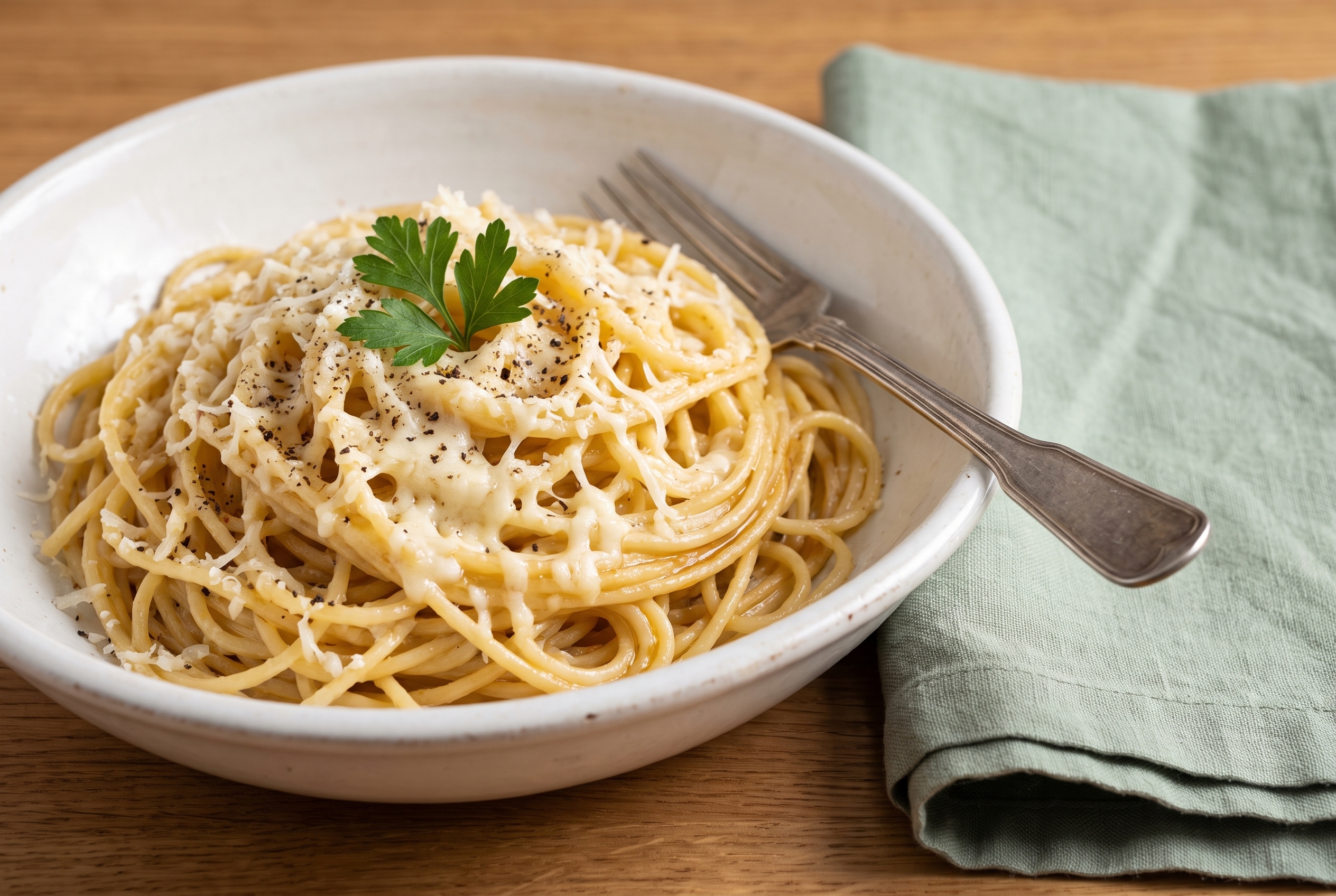
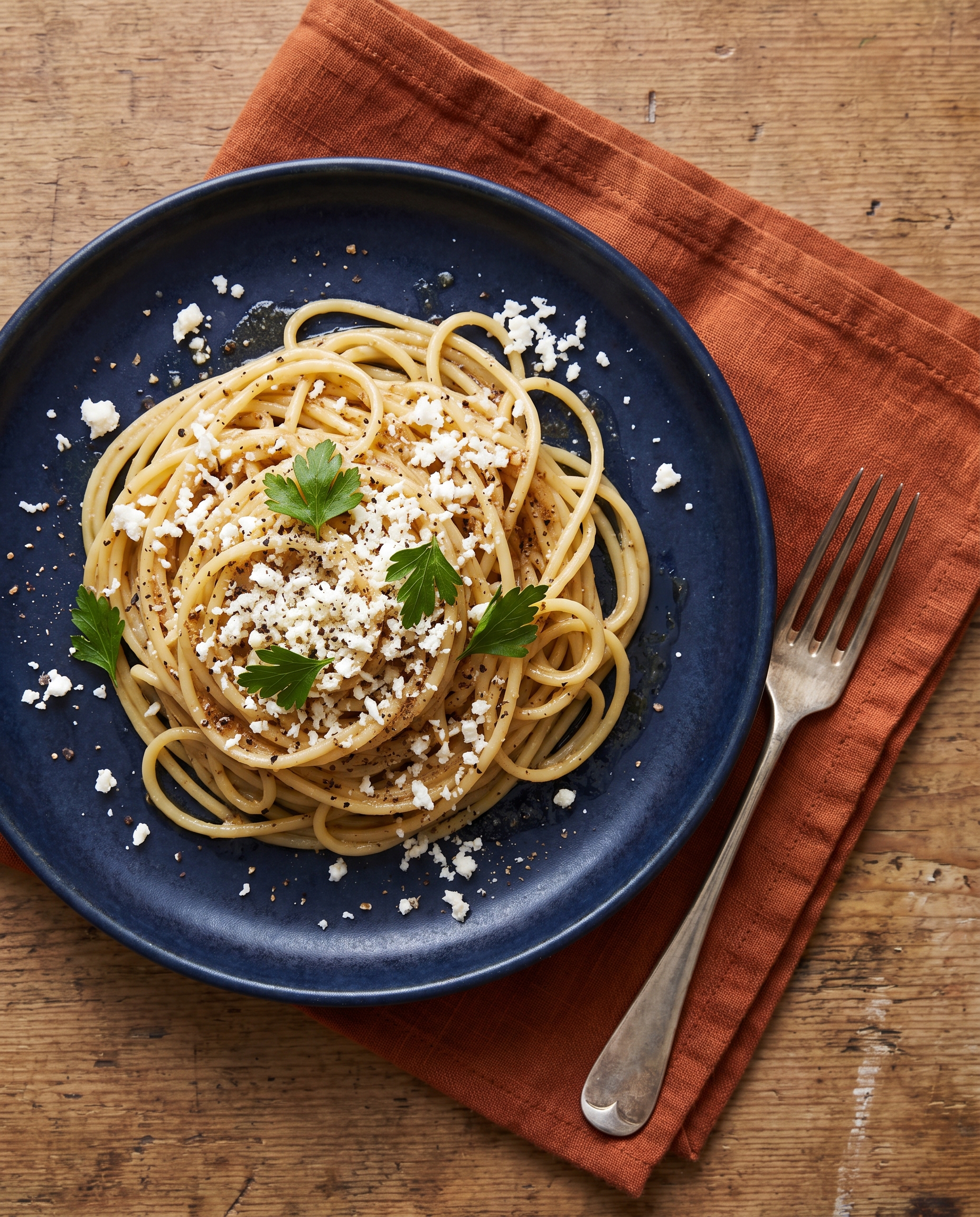
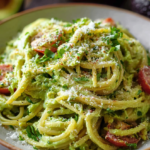
Have you ever tasted something so simple it stopped you mid-bite? That’s what happened to me the first time I tried brown butter and mizithra on pasta. I was maybe nine, sitting at a small table in a restaurant with a red-and-white checkered tablecloth, and my grandmother leaned over and said, “Just wait, kiddo — this one only has three ingredients, but it’s going to haunt you.” She was right. The smell of butter turning nutty, the salty crumble of mizithra on warm noodles — it has lived in my kitchen ever since.
Most weeks I want a big pot of something bubbling for hours. But there are nights when I want dinner to be quiet — just the pasta water bubbling, the soft hiss of butter in a skillet, and nothing else. This pasta with brown butter and mizithra is exactly that. Five real ingredients, twenty minutes, and the kind of flavor that makes you forget you didn’t turn on the oven.
Why Brown Butter Changes Everything
The trick — and yes, it really is a trick, not a complicated technique — is the butter. When you heat butter gently, the milk solids sink to the bottom of the pan and slowly toast. They turn golden, then amber, then deep honey-brown, and the kitchen fills with this warm, almost-caramel, almost-nutty smell. Same science as making toffee, in about seven minutes flat.
Mizithra is the second half. It’s a Greek cheese made from sheep’s milk, sold as a hard grating cheese — similar to dry parmesan but saltier and a little tangier. Tossed with hot pasta and brown butter, the mizithra softens just enough to cling to every strand without melting into a puddle. Combined with the butter’s nuttiness, it tastes like it took all afternoon but took less time than finding your keys.
This dish asks almost nothing of you. Just keep an eye on the butter — that’s the only place it can go wrong. Everything else is boiling water, a quick toss, and dinner. Mizithra is the star, so don’t swap it for something too mild. A dry aged pecorino will get you close, but mizithra’s tang is what really makes it sing.
Ingredients
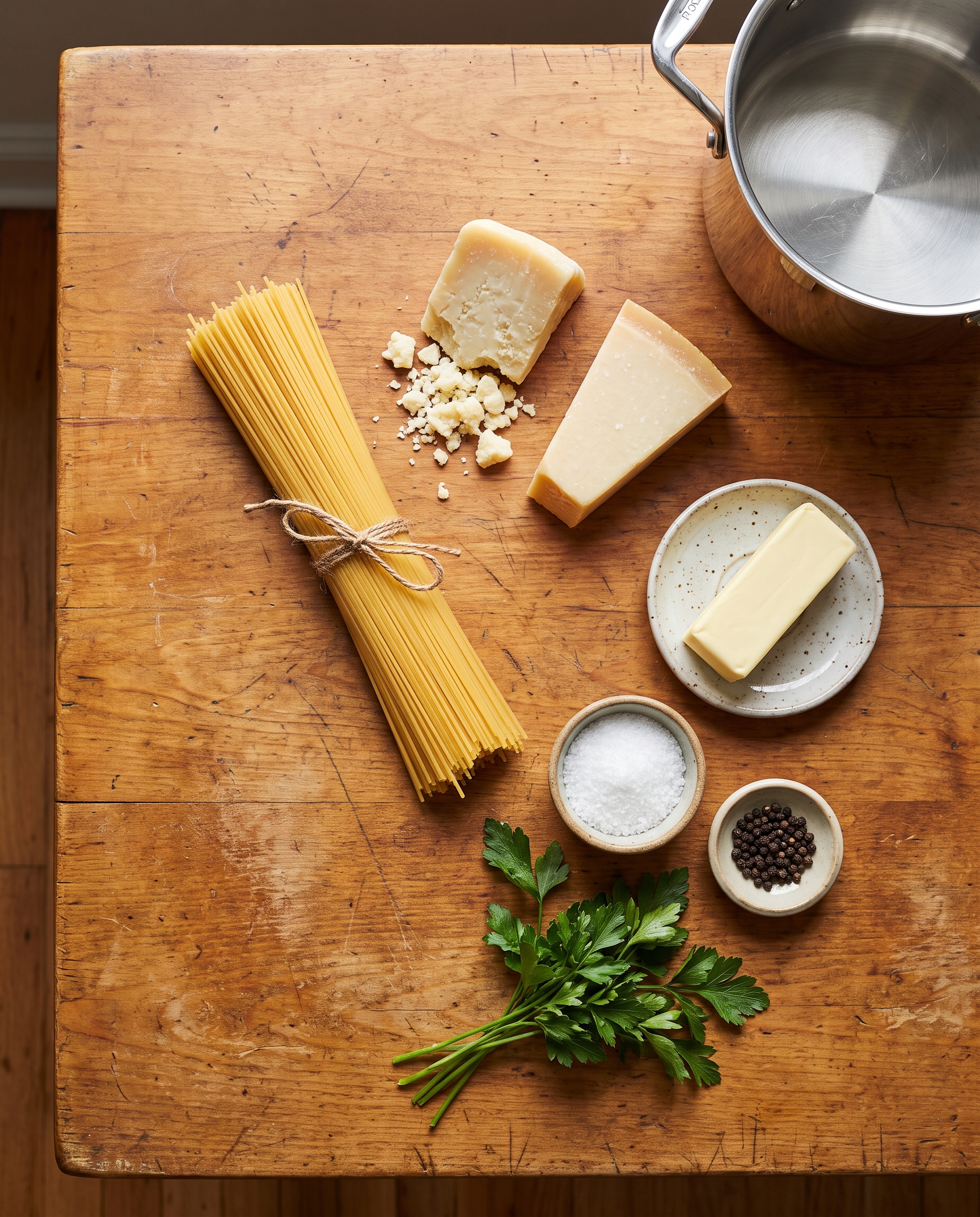
1 pound dried spaghetti
9 tablespoons unsalted butter
1 cup grated mizithra cheese
1/2 cup grated romano cheese
Fresh cracked black pepper, to taste
Kosher salt, for the pasta water and to season
Chopped fresh parsley, for garnish
From Pot to Plate: My Step-by-Step Method
Step 1: Get the pasta water going. Salt a large pot of water generously (it should taste like the sea) and bring it to a rolling boil. Cook the spaghetti to just shy of al dente — about one minute less than the package says. Reserve a cup of starchy pasta water before draining; it’s liquid gold for loosening the sauce later.
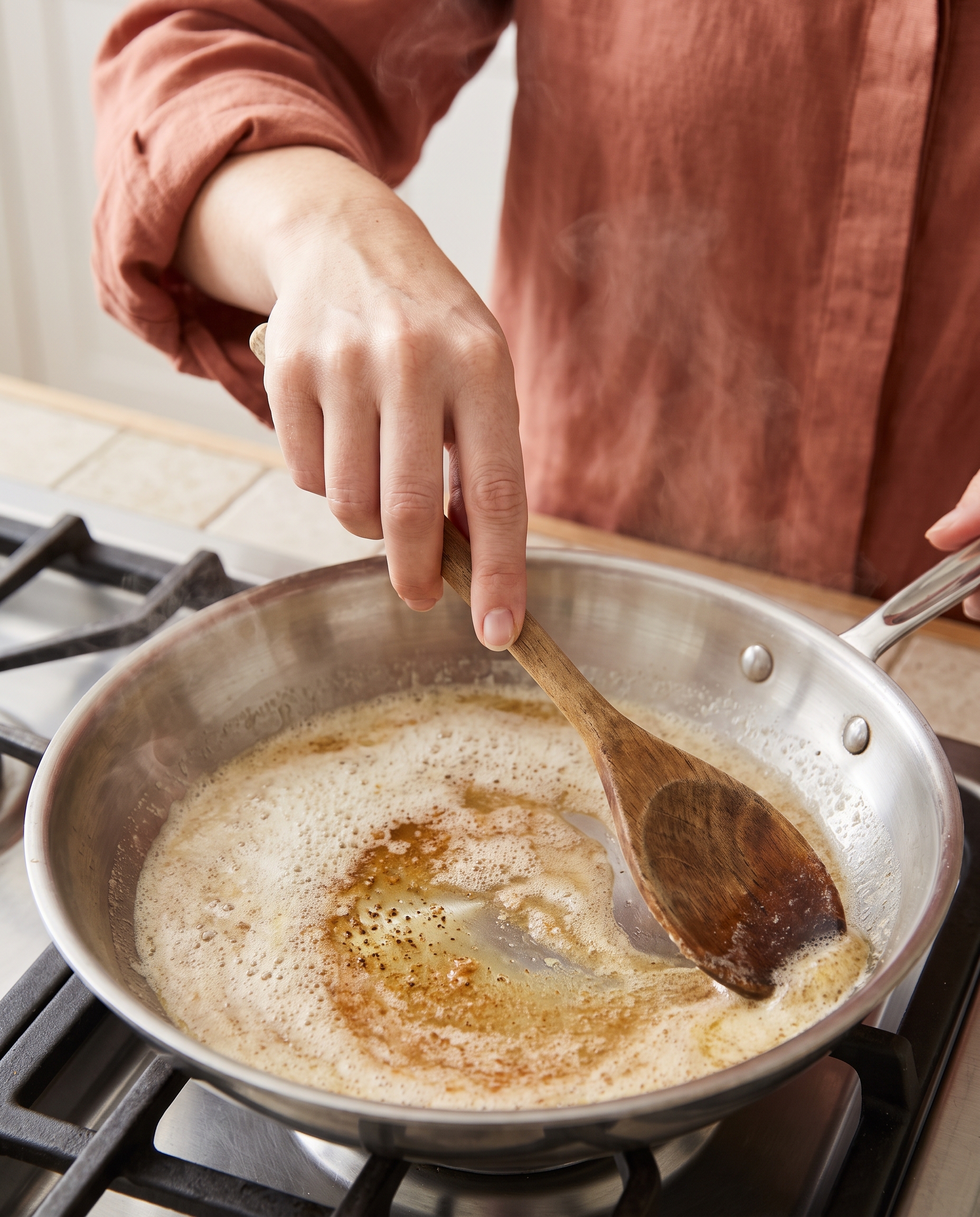
Step 2: Brown the butter while the pasta cooks. In a stainless steel skillet (not nonstick — you want to see the color), melt the butter over medium heat. It will foam, then settle. Keep swirling; after six to eight minutes, the milk solids turn warm tan and the butter smells toasted and nutty, almost like hazelnuts. Pull it off the heat the moment it smells ready — it goes from perfect to burnt in thirty seconds.
Step 3: Combine and toss. Drain the pasta and return it to the pot (or drop it straight into the brown butter skillet). Pour the brown butter over the top, add the mizithra and romano, and toss vigorously with tongs until glossy. If it looks dry, splash in a few tablespoons of the reserved pasta water. The cheese should soften into creamy little pockets, not melt into a sauce.
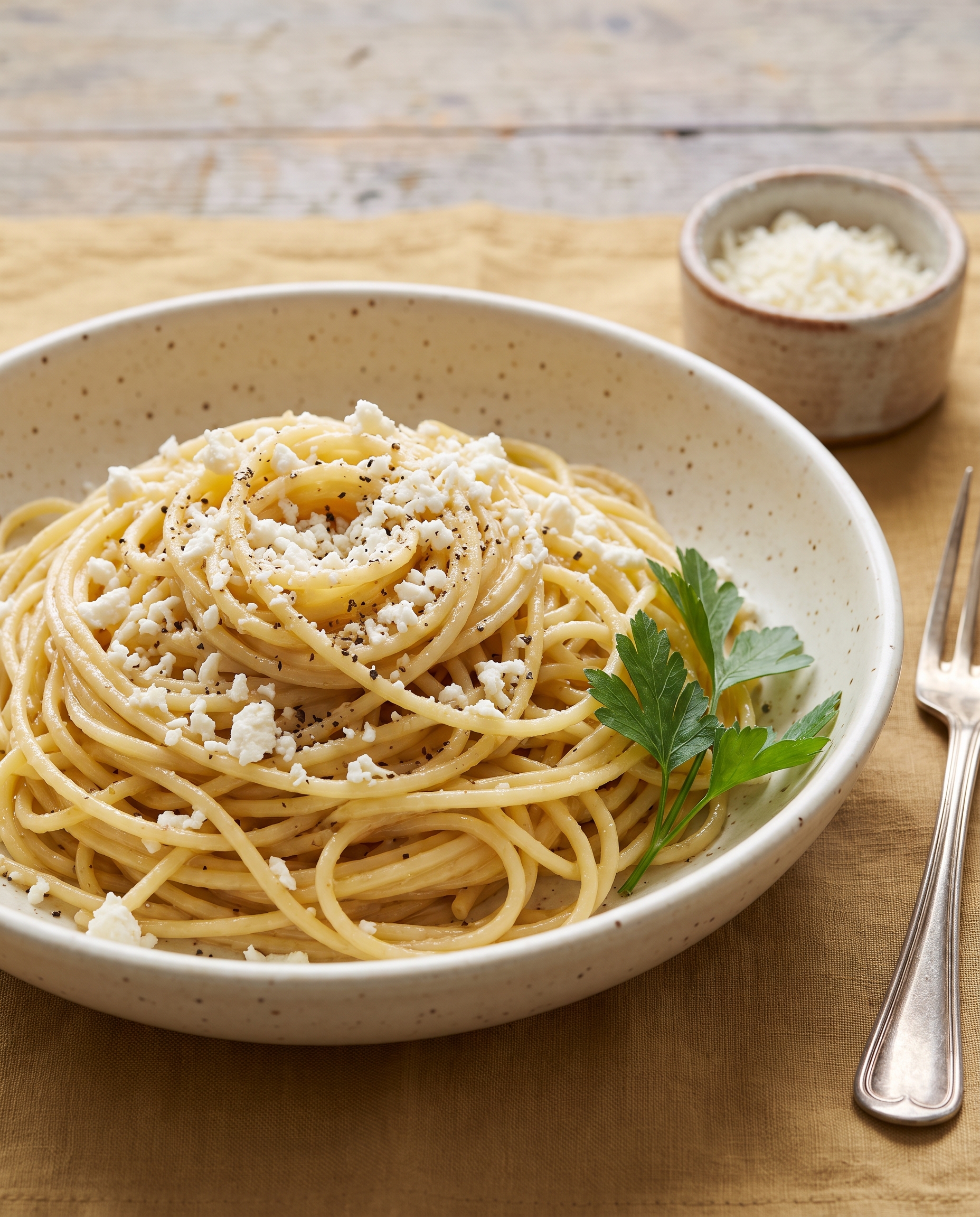
Step 4: Season and serve. Crack fresh black pepper over the top, taste for salt (the cheeses are salty, so you might not need any), and adjust. Pile the pasta into shallow bowls, shower with more mizithra, and scatter fresh parsley across. Bring the bowls to the table right away — this dish does not wait politely.
Creative Twists
Add a squeeze of lemon at the end. Lemon zest and a small squeeze of juice brightens the whole dish and plays beautifully with the cheese.
Toasted breadcrumbs on top. Toast panko in olive oil with a pinch of salt until deeply golden and sprinkle it over. A little crunch that mimics a Roman cacio e pepe texture.
Brown sage leaves in the butter. Once the butter is nutty, drop in five or six fresh sage leaves and let them crisp. The butter picks up an herbal note that’s hard to beat.
Try a different pasta shape. This sauce clings to bucatini beautifully, and tagliatelle catches every drop. Even rigatoni works — the butter pools inside the tubes.
Serving & Pairing Ideas
What should I serve with this pasta? Almost nothing — the pasta is the show. A simple arugula salad with lemon, blistered cherry tomatoes, and warm crusty bread for sweeping up the buttery pool. For protein, a soft-poached egg on top is dreamy. A crisp white wine — Pinot Grigio or Vermentino — is the right dinner party call.
Why I Love This Recipe
I love this recipe because it taught me that simplicity is a skill. For years I thought good cooking meant more ingredients, more steps, more time. Brown butter and mizithra pasta gently proved me wrong. It’s the dish I make when I’m tired and want to feel like I cooked something real. It’s also the dish I make for friends who “don’t like pasta” — every single one of them has changed their mind over a bowl of this.
Storage and Batch Cooking
Honestly? This pasta is best the moment it hits the bowl. Brown butter pasta doesn’t reheat gracefully — the butter firms up and the noodles get sticky. For leftovers, keep the butter and cheese separate. Cook the pasta, shock it in cold water, toss with a bit of olive oil, and store in the fridge. Reheat the butter with a splash of pasta water and re-toss when ready to eat.
Troubleshooting Your Pasta
My butter burned — can I save it? Unfortunately, no. Burnt butter is bitter all the way through. Pour it out, wipe the pan, start over, and watch it more carefully the second time.
My pasta looks dry and the cheese is clumping. Splash in some starchy pasta water, a tablespoon at a time, and toss vigorously. The starch is what emulsifies the butter and cheese into a glossy coating.
The dish tastes flat. Almost always, it needs more salt or acid. Taste the noodles first. If they taste nutty and cheesy, add a few cracks of black pepper. If they taste heavy, a tiny squeeze of lemon will lift them. If they taste like nothing, you need salt.
Your Quick Questions, Answered
What exactly is mizithra cheese? A traditional Greek cheese made from sheep’s milk, most often sold in the US as a hard, dry grating cheese. Saltier than parmesan with a slightly tangy, almost lemony note. Best substitutes: aged pecorino romano (closest) or dry aged manchego. Avoid anything soft — the dish relies on the cheese holding its shape.
Do I have to use spaghetti? Use whatever long pasta you love. Bucatini, linguine, and tagliatelle are all beautiful. Even rigatoni works — the butter pools inside the tubes and the cheese gets trapped in every bite.
How do I know when the butter is properly browned? Three signs: color (yellow to golden to warm amber), smell (from “butter” to “toasted nuts, almost toffee”), and sound (the bubbling slows and gets quieter). The moment the milk solids turn deep honey, pull it off the heat — it keeps cooking from residual heat.
Can I make this ahead for a dinner party? Prep the components ahead — brown the butter (reheat gently before serving), grate the cheeses, chop the parsley — but toss and serve right before guests arrive. Assembly takes about three minutes once everything is ready.
A Few Last Thoughts
Some nights, dinner is supposed to be a production. This isn’t that night. Brown butter pasta is a small, perfect, deeply good thing — and I think you’ll find yourself coming back to it the way I do. There’s something almost meditative about standing at the stove, watching butter slowly turn gold, knowing dinner will be ready in twenty minutes and taste far more impressive than the effort you put in.
If you make this, I’d love to hear how it went. Did you stick with the classic or try one of the twists? Tell me in the comments — I read every one. And if you’re new here, welcome to Savory Discovery. Pull up a chair.
A simple three-ingredient pasta featuring nutty brown butter, salty mizithra cheese, and spaghetti — a Greek-inspired weeknight classic ready in under 25 minutes.
Ingredients
Instructions
Bring a large pot of generously salted water to a rolling boil. Cook the spaghetti to just shy of al dente, about 1 minute less than package directions. Reserve 1 cup of pasta water before draining.
While the pasta cooks, melt the butter in a stainless steel skillet over medium heat. It will foam, then settle. Continue cooking, swirling occasionally, until the milk solids turn golden brown and the butter smells nutty, 6 to 8 minutes. Remove from heat immediately.
Drain the pasta and return it to the pot (or add directly to the brown butter skillet). Pour the brown butter over the noodles, add the mizithra and romano, and toss vigorously with tongs. Add reserved pasta water a tablespoon at a time if the pasta looks dry.
Season generously with fresh cracked black pepper and additional salt if needed. Divide among warm bowls, top with extra mizithra and fresh parsley, and serve immediately.
Notes
Watch the butter carefully during the last minute of browning — it can go from perfect to burnt in 30 seconds. Mizithra can be substituted with aged pecorino romano if needed.
Keywords:brown butter pasta, mizithra, spaghetti, easy pasta recipe, weeknight dinner