


My Family’s Favorite Holiday Brisket
This is my go-to Jewish brisket recipe. I make it for Passover, Rosh Hashanah, and Hanukkah. The house smells like love and spices for hours. Everyone asks for seconds.
I learned it from my Aunt Sarah. She always said the secret was patience. You cannot rush a good brisket. I still laugh at that. She was right.
Why We Cook It Slow
This holiday brisket cooks low and slow. That long bake makes the meat so tender. It just falls apart with your fork. Doesn’t that sound perfect?
Why does this matter? Slow cooking lets all the flavors get to know each other. The meat, the fruit, the spices become one happy family. It’s a lesson in good things taking time.
The Sweet and Spicy Magic
This is a beef brisket with dried fruit. We use apricots and prunes. They get so soft and sweet in the sauce. It balances the warm spices so nicely.
The spices make it a North African spiced brisket. We use cumin, coriander, and a little cinnamon. *Fun fact:* These spices traveled along ancient trade routes. They found a happy home in this pot.
A Little Kitchen Story
My grandson once called it “meat jam.” He meant the spiced fruit puree we rub on the brisket. I thought that was the best name. Now we always call it that.
Do you have a funny family name for a favorite food? I would love to hear it. Sharing those little stories keeps our traditions alive.
Making It Your Own
This is a wonderful Passover brisket made in the oven. But you can adapt it! You can make a slow cooker brisket or an Instant Pot brisket. Just adjust the time.
Why does this matter? A recipe is just a friendly guide. Your kitchen, your rules. The goal is a meal that brings people together. What is your favorite holiday dish to share?
Let’s Talk About Leftovers
The recipe says to chill it overnight. This is the real secret! It makes the flavors even richer. Slicing it cold is also much easier.
Then you warm it all up the next day. The wait is worth it. I think the leftovers are even better. Do you agree that some foods taste better the next day?
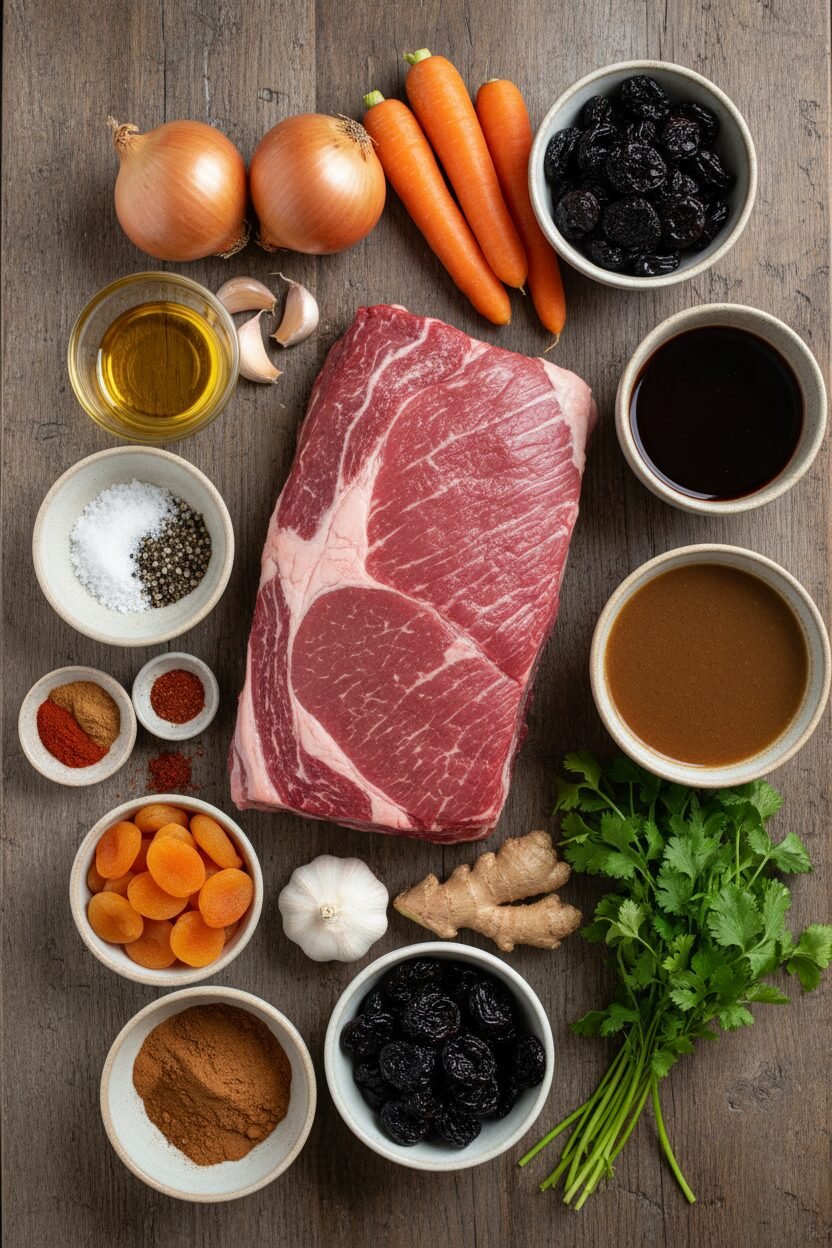
Ingredients:
| Ingredient | Amount | Notes |
|---|---|---|
| Flat-cut beef brisket | 1 (3- to 4-pound) | |
| Olive oil | 3 tablespoons | |
| Kosher salt | 1 teaspoon, plus additional | For seasoning the meat |
| Freshly ground black pepper | 1/4 teaspoon, plus additional | For seasoning the meat |
| Onions | 2 | Diced |
| Medium carrots | 2 | Peeled and diced |
| Garlic cloves | 6 | |
| Dried apricots | 4 ounces (about 2/3 cup), divided | |
| Pitted prunes | 4 ounces (about 2/3 cup), divided | |
| Ground cumin | 3 1/2 teaspoons | |
| Fresh ginger | 1 tablespoon | Minced |
| Ground coriander | 1 teaspoon | |
| Ground cinnamon | 1/4 teaspoon | |
| Cayenne pepper | 1/8 teaspoon | |
| Dry red wine | 1 cup | |
| Beef broth | 3 cups | |
| Fresh cilantro or parsley | Chopped, for garnish |
Instructions
Step 1: First, get your oven warm at 300°F. Pat your beef brisket dry with a paper towel. Sprinkle it all over with salt and pepper. I love the smell of a holiday brisket ready to cook. Doesn’t that smell amazing?
Step 2: Brown the meat in a hot pot for about 8 minutes. This makes the flavor so rich. Then, cook your onions and carrots until they are soft. This is the start of a great Jewish brisket recipe. What’s your favorite vegetable to smell cooking? Share below!
Step 3: Now, make the magic paste. Blend some apricots, prunes, garlic, and spices. This North African spiced brisket paste is so fragrant. Spread it all over your browned beef brisket with dried fruit. (A hard-learned tip: Use a spoon to spread it, your fingers get too messy!)
Step 4: Pour wine and broth into the pot with the veggies. Add the rest of the fruit. Place your coated meat right in there. The liquid should come partway up the sides. This brisket with apricots and prunes will become so tender.
Step 5: Cover the pot and bake for about 2 1/2 hours. Baste it every so often. Then, you must let it cool and sleep in the fridge overnight. This makes slicing your Passover brisket easy. I still laugh at how hard it is to wait!
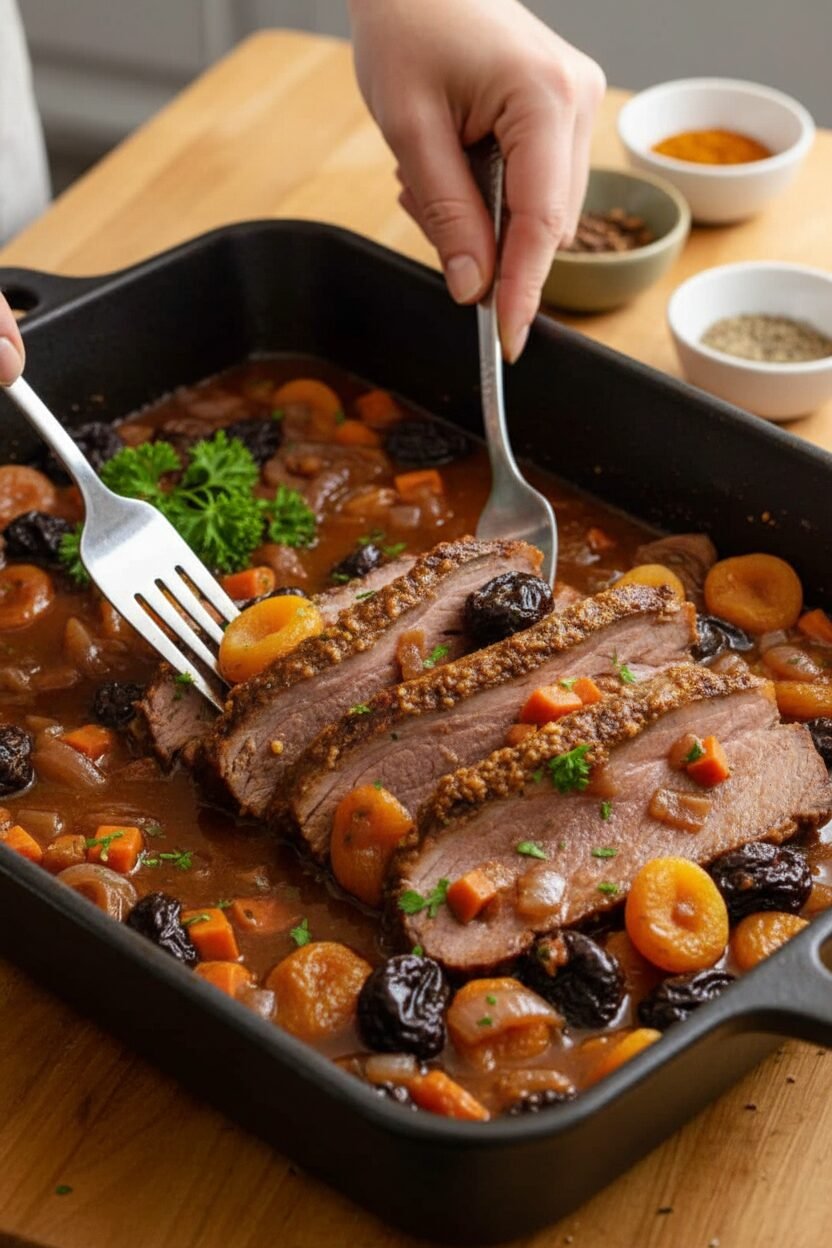
Step 6: The next day, slice the meat thinly. Put all the slices back into the sauce. Reheat it in the oven until it’s bubbling hot. Your Rosh Hashanah brisket or Hanukkah brisket is finally ready. Your whole house will smell like love.
Creative Twists
Use your slow cooker. After browning, let it cook all day low and slow. Try it in an Instant Pot. A modern Instant Pot brisket is much faster for a busy weeknight. Swap the dried fruit. Use figs or cherries instead for a new taste. Which one would you try first? Comment below!Serving & Pairing Ideas
This holiday brisket is wonderful over creamy mashed potatoes. The sauce is so good soaked up. For Passover, serve it with roasted carrots and crispy potatoes. A simple green salad on the side is always nice. Garnish with fresh parsley for a pop of color. Which would you choose tonight?
Making Your Brisket Last
This holiday brisket makes wonderful leftovers. Let it cool completely first. Then store slices in the sauce. Use a tight container in the fridge for up to four days. You can also freeze it for two months. Thaw it in the fridge overnight before reheating.
I remember my first big brisket. I was so proud! But I put the whole hot pot in the fridge. My grandma gently scolded me. She said it could spoil other food. Now I always let it cool on the counter. Batch cooking this dish saves holiday stress. You do the work ahead of time. Then you enjoy your family on the day.
Have you ever tried storing it this way? Share below!
Three Little Brisket Fixes
Is your meat tough? It likely needs more time. Low and slow cooking makes it tender. Just pop it back in the oven. Is your sauce too thin? Let it simmer on the stove without a lid. The extra liquid will cook off and thicken it nicely.
I once forgot to skim the fat after chilling. The sauce was very greasy. Chilling the whole pot overnight fixes this. The fat rises and hardens on top. You can just lift it off. This matters for flavor. A skimmed sauce tastes cleaner and richer. Fixing small issues builds your cooking confidence. You learn that most mistakes have easy solutions.
Which of these problems have you run into before?
Your Quick Questions, Answered
What is the best cut of beef for braising besides brisket?
Chuck roast is a great choice. It has good fat and connective tissue. This breaks down during long, slow cooking. The result is very tender meat. It works perfectly in any Jewish brisket recipe. Just cook it low and slow like you would a brisket.
Can I use a slow cooker for braised brisket with red wine?
Yes, a slow cooker brisket is very easy. Brown your meat in a pan first. This adds great flavor. Then put everything into your slow cooker. Cook on low for eight to ten hours. The meat will become wonderfully tender. It is a great hands-off method.
What can I substitute for plums in a braised brisket recipe?
Dried apricots or figs work well. They provide a similar sweet taste. This beef brisket with dried fruit needs that touch of sweetness. It balances the spices and wine. You could even use a mix. The recipe will still taste delicious and festive.
How do you thicken the sauce for braised brisket?
Let the sauce simmer on the stove. Do this without a lid on the pot. The steam will escape. The liquid will reduce and get thicker. You can also mix a little cornstarch with water. Stir this into the simmering sauce for a quicker thicken.
What side dishes go well with red wine braised brisket?
Mashed potatoes are a classic choice. They soak up the delicious sauce. Roasted carrots or green beans are also nice. For a Passover brisket, serve with potato kugel or matzo balls. The sides should be simple. Let the flavorful holiday brisket be the star.
Can I make braised brisket with red wine ahead of time?
Absolutely! Making it ahead is actually best. Cook it fully and let it cool. Then refrigerate it overnight. This makes the meat more tender. It also lets you easily remove the fat. Gently reheat it the next day. This makes any Hanukkah brisket or Rosh Hashanah brisket dinner much easier.
*Fun fact: The spices in this dish, like cumin and coriander, make it a North African spiced brisket.*
Which tip will you try first?
From My Kitchen to Yours
I hope you love this brisket with apricots and prunes. It holds so many memories for my family. The smell fills the house with love. It tells everyone a special meal is coming. Whether for Passover or a cozy Sunday, it brings people together.
Have you tried this recipe? I would love to hear your story. Tell me about your holiday table in the comments below. Sharing recipes is how we keep traditions alive and warm.
Happy cooking!
—Elena Rutherford
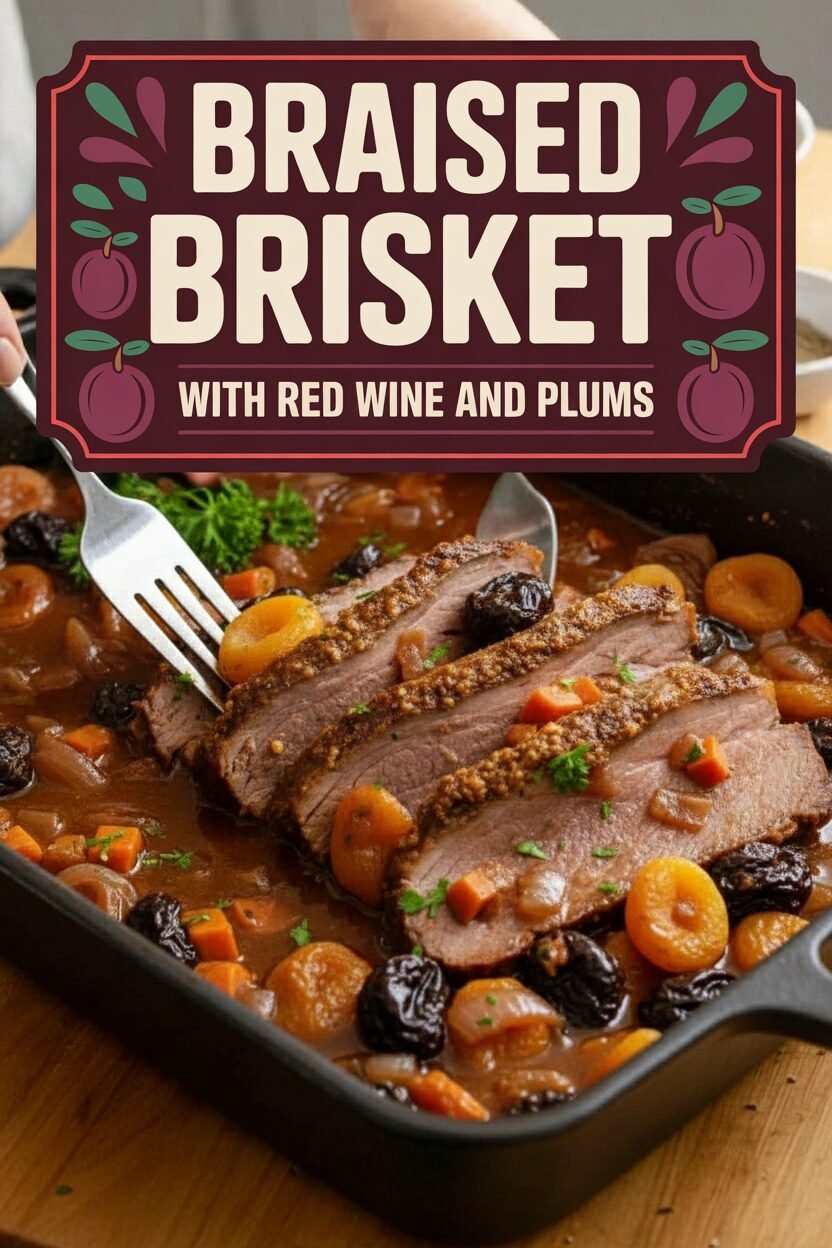

Braised Brisket with Red Wine and Plums
Description
A rich and tender beef brisket braised with aromatic spices, red wine, and sweet dried fruits like apricots and prunes.
Ingredients
Instructions
- Preheat the oven to 300°F.
- Season the meat all over with salt and pepper.
- Heat a large, oven-safe Dutch oven or cast-iron skillet over medium-high heat. Add the brisket and cook until browned on both sides, about 8 minutes total. Transfer to a plate.
- Add the olive oil to the pan and heat over medium-high heat. Add the onions and carrots and cook, stirring frequently, until softened, about 8 minutes.
- Meanwhile, combine 1/2 cup of the dried apricots, 1/2 cup of the prunes, garlic, ginger, cumin, coriander, cinnamon, cayenne, and the remaining salt and pepper in a food processor and process to a chunky puree.
- Spread the puree on the meat, covering it as much as possible.
- When the onions and carrots are softened, add the wine to the pot and cook, scraping up any browned bits, for about 3 minutes. Stir in the beef broth.
- Quarter the remaining dried apricots and prunes and add them to the pot.
- Add the meat to the pot, cover, and bake in the oven, basting every 30 to 60 minutes, for about 2 1/2 hours.
- Remove from the oven and let cool to room temperature. Refrigerate overnight.
- The next day, remove the meat from the sauce and slice it thinly. Return the slices to the sauce.
- Reheat the meat in the sauce in a 350°F oven for 30 to 45 minutes.
- Serve hot.
Notes
- For best results, do not skip the overnight chilling step as it allows the flavors to develop and makes the brisket easier to slice.