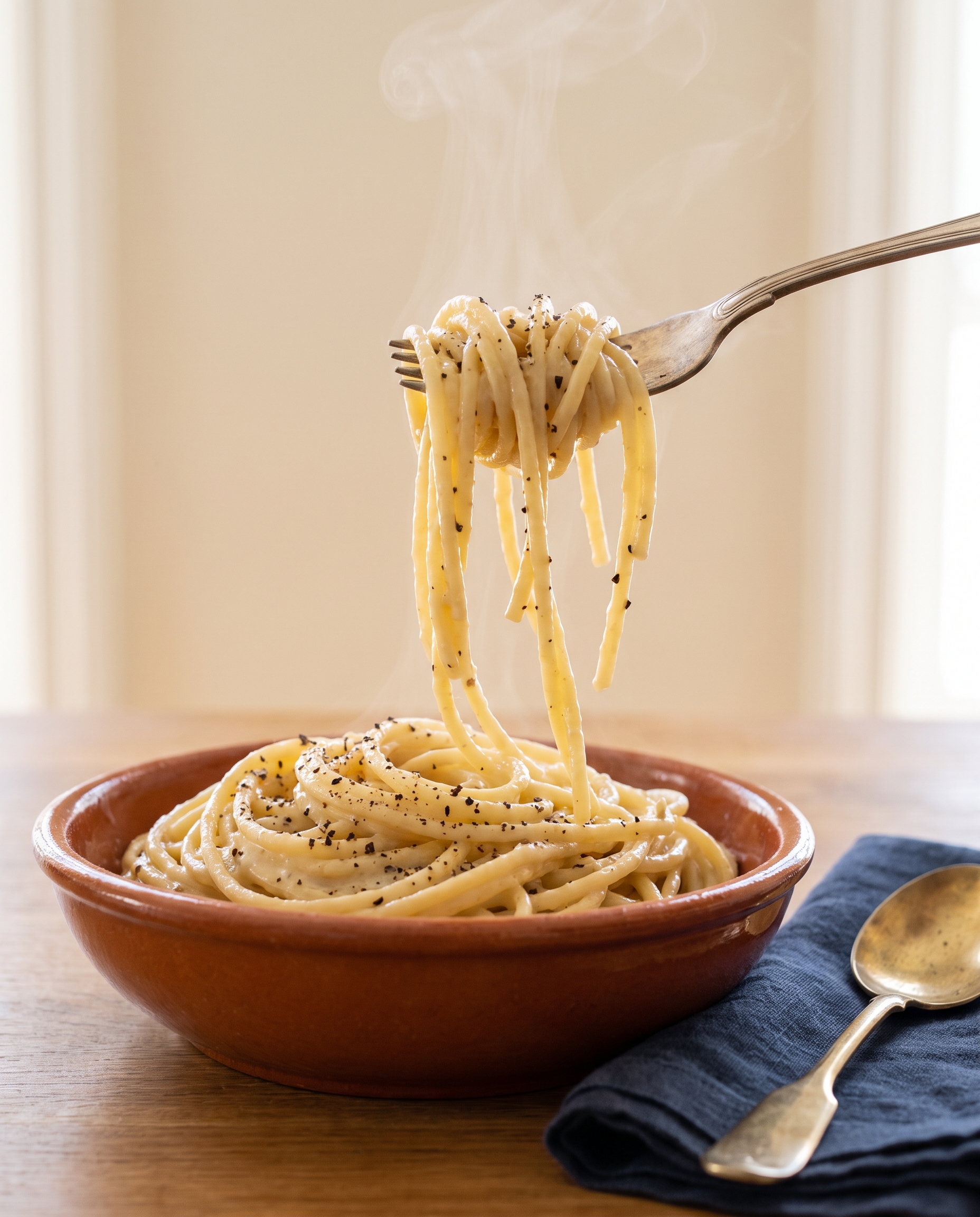
Best-Ever Cacio e Pepe: The Roman Bowl My Grandma Would’ve Approved Of
Have you ever watched a Roman nonna toss cacio e pepe in seconds and wondered what sorcery she’s performing? Three ingredients, a dish that has foxed home cooks for centuries. Spoiler: it’s not sorcery, it’s misunderstood. Once you taste the real thing, made at home, you’ll understand why Romans are quietly smug.
My grandma learned this dish by feel. My friend learned it from a Roman trattia. Somewhere between those two teachers is where I landed. Have you tried cacio e pepe at a restaurant and watched the magic from across the table? Yeah, me too. Let’s make it happen at home.
Why the Three-Ingredient Rule Actually Matters
The genius of cacio e pepe is the genius of any three-ingredient dish — nowhere to hide. Old pecorino, dusty pre-ground pepper, weak pasta water: you’ll taste every flaw. The discipline is in sourcing, not technique.
Real pecorino romano DOP is the only way. Sharp, salty, tangy, melts into velvety cream with warm pasta water. Parmesan gives a different dish — nuttier, milder, missing the sheep’s-milk bite. Pepper? Toast it fresh. Whole peppercorns crushed just before the pan make a night-and-day difference.
The pasta matters. Spaghetti is classic; tonnarelli gives a thicker chew. Skip fresh — too soft, too watery. Bronze-die dried pasta holds the sauce better, period.
Cacio e Pepe
This is the Roman classic in its purest form. Don’t be intimidated by the off-heat rule — that’s the difference between silky sauce and scrambled eggs. Read the steps once. Cacio e pepe waits for no one.
Ingredients
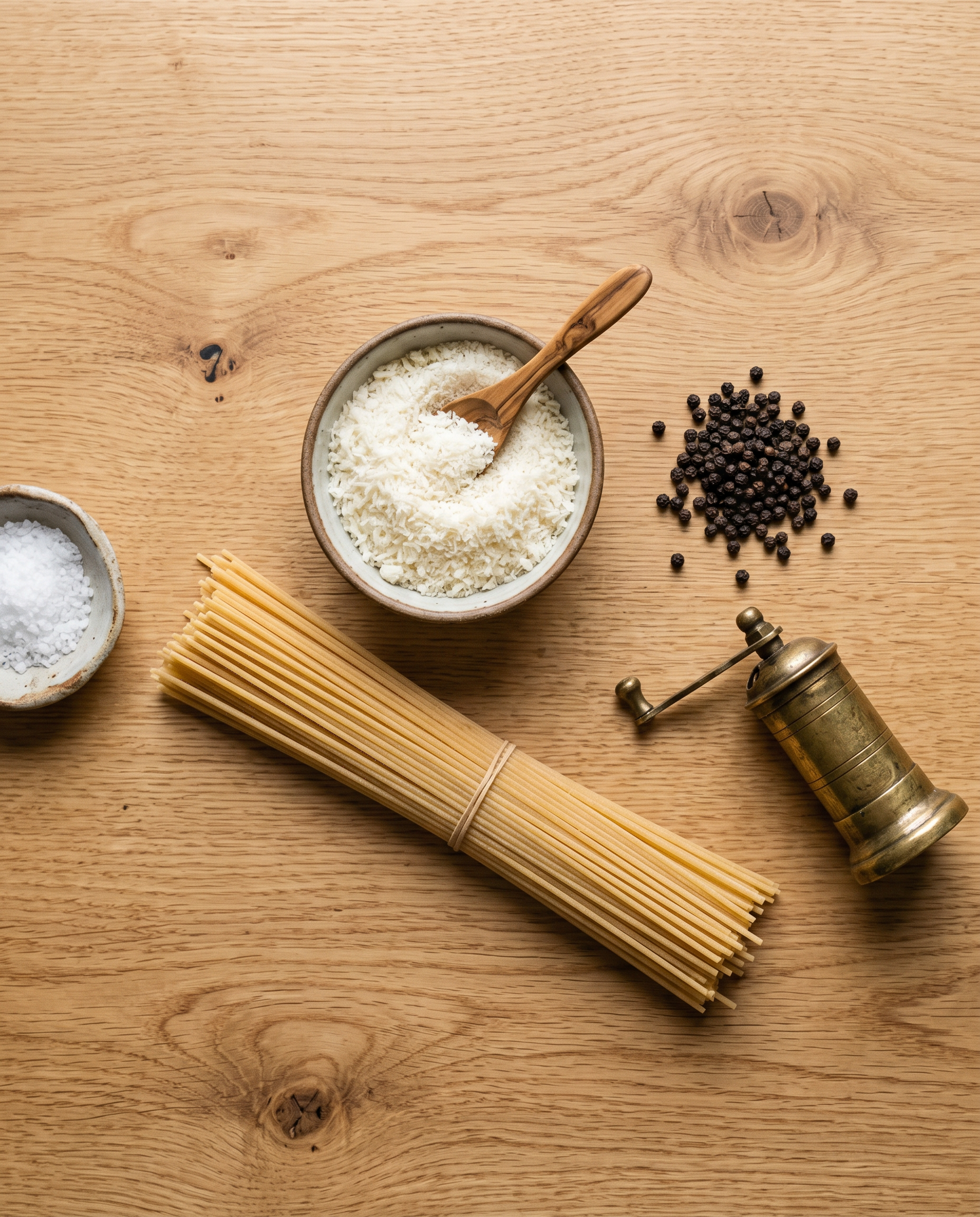
1/2 tablespoon whole black peppercorns
2 1/2 cups (100g) pecorino romano, finely grated (use the small holes of a box grater or a microplane)
250 g dried spaghetti or tonnarelli
Coarse sea salt, for the pasta water
From Pot to Plate: My Method for Silky Sauce
Step 1: Bring shallow, well-salted water to a boil. Fill a wide pot with just enough water to submerge the pasta — far less than usual. We want the water extra starchy. Salt it like the sea.
Step 2: Grate the pecorino while the water heats. Skip pre-grated cheese — it’s coated in anti-caking agents that prevent smooth melting. You want fluffy ribbons of real pecorino.
Step 3: Crush the peppercorns. With a mortar and pestle, crush to a coarse grind. Set aside 1.5 teaspoons for the sauce; the rest is for toasting.
Step 4: Toast the pepper. Heat a wide stainless steel pan over medium heat. Add the larger portion of crushed pepper and toast for 60 seconds, just until fragrant. Don’t walk away — pepper burns fast.
Step 5: Cook the pasta to half-time. Drop the pasta in the boiling water and cook for HALF the box time. It finishes in the pan. Reserve 1.5 cups of pasta water before draining.
Step 6: Risottare the pasta. Transfer pasta to the pan with the toasted pepper. Add a ladle of pasta water. Cook over medium heat, tossing, until al dente and the liquid has reduced to a starchy glaze. Add more pasta water as needed.
Step 7: Make the pecorino paste. In a small bowl, mix a few tablespoons of warm pasta water into the grated pecorino to form a thick paste — like wet sand just before clumping.
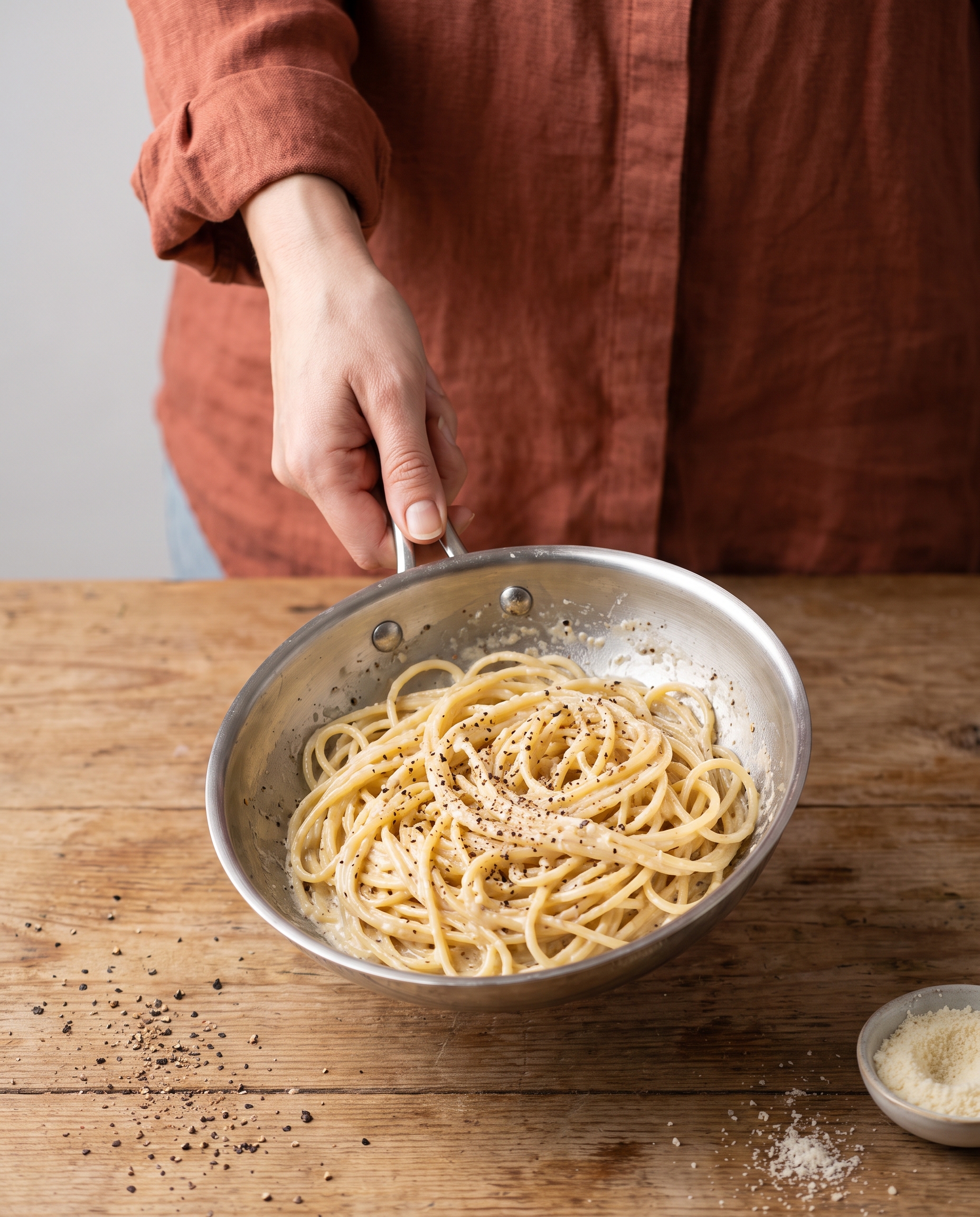
Step 8: Off the heat, add the cheese. Remove the pan from the heat, wait 30 seconds, then add the pecorino paste. Toss vigorously with tongs. The residual heat and starchy water melt the cheese into a creamy sauce. Tight? Add another splash of pasta water.
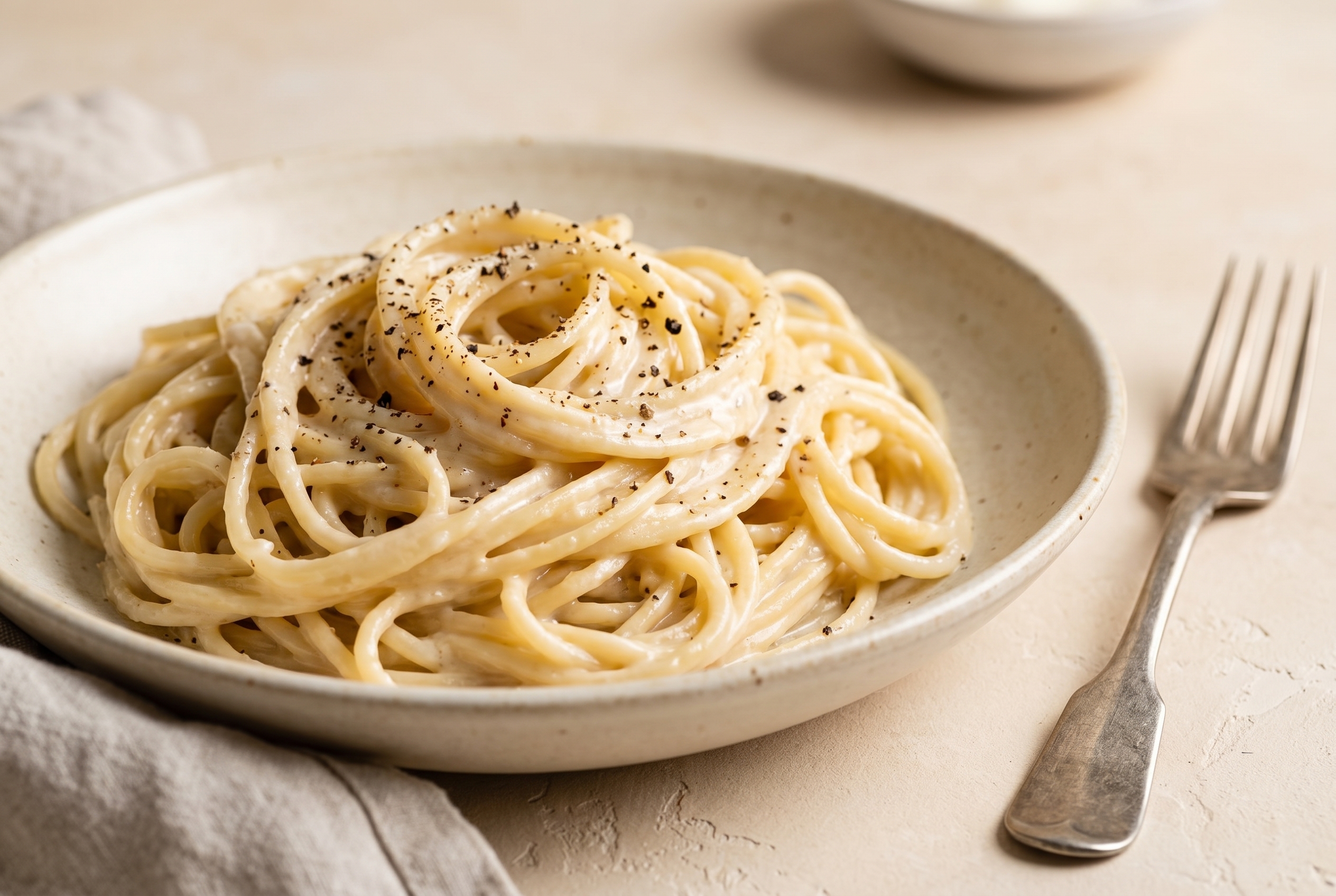
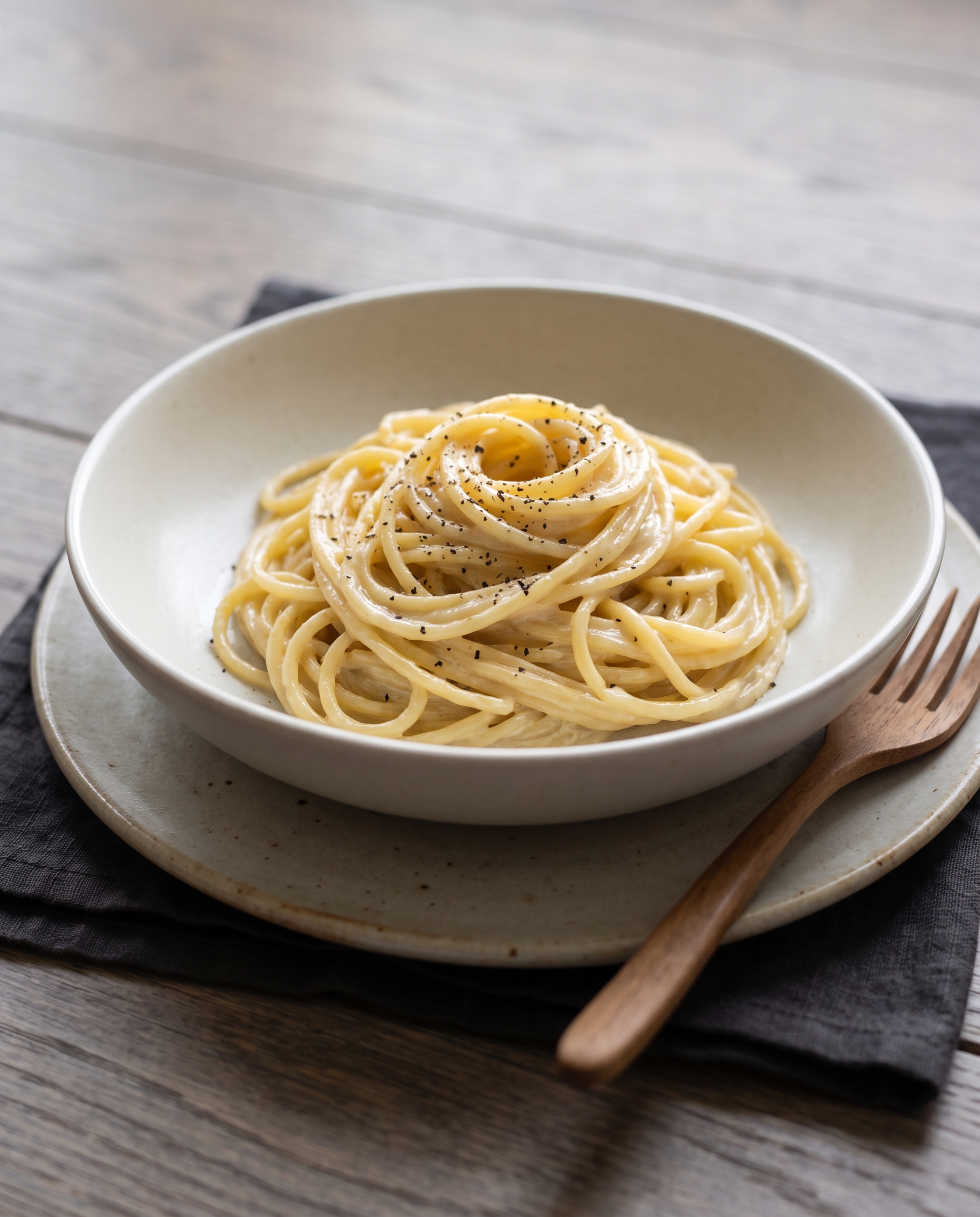
Step 9: Plate and finish. Twirl into warm bowls, top with fresh cracked pepper and a small shower of pecorino, and serve immediately. Best in the first five minutes.
Creative Twists Worth Trying
Once you’ve nailed the classic, here are fun ways to riff — none betray the spirit, each adds a wink.
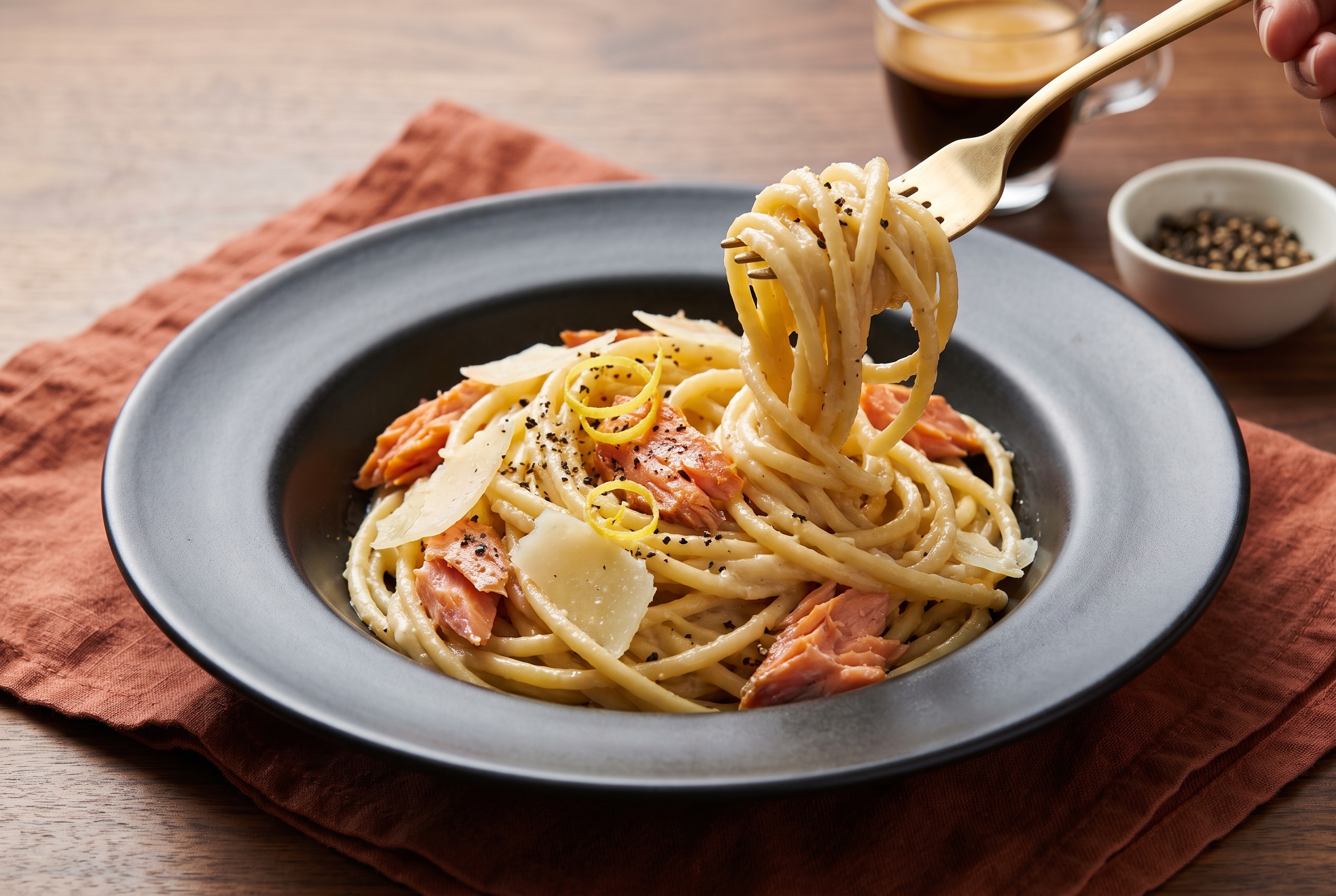
Brown butter: Melt 2 tbsp unsalted butter until golden before toasting the pepper. Untraditional, gorgeous.
Soft egg yolk: Off the heat, stir a room-temp yolk into the pecorino paste. Richness, but keep pasta cool enough to avoid scrambling.
Lemon zest: Stir in zest of half a lemon at the end. Acid cuts through the cheese beautifully.
Tonnarelli: Traditional Roman choice. Square-cut, egg-enriched, clings to sauce better.
Toasted breadcrumbs: Panko in olive oil with salt, sprinkled on top. Crunchy, un-Roman, tasty.
Serving & Pairing Ideas
What should I serve with cacio e pepe? A simple green salad with sharp lemon vinaigrette, a glass of cold Frascati or Verdicchio, and maybe a small plate of marinated olives. That’s it. This dish doesn’t need sides — it needs company.
For a fuller meal, start with a Roman antipasto (prosciutto, pecorino, marinated artichokes) and follow with grilled fish or roasted chicken. The pasta is rich and cheesy — pair it with light, acidic, fresh sides.
Wine-wise, a dry Italian white is the classic move: Frascati, Verdicchio, Soave, or a zippy Pinot Grigio. For red, go light and high-acid — young Chianti or Barbera d’Alba. Heavy or tannic wines fight the dish.
Why I Love This Recipe
Because it’s a love letter to restraint. In a world where every recipe wants a pinch of this, a dash of that, cacio e pepe says no — three ingredients, executed well, is the whole story. The best cacio e pepe is a dare: can you let the ingredients speak?
It’s also the recipe that taught me to trust my instincts. You can’t time it, you can’t measure it — you watch the sauce, feel the pasta, know when the texture is right. Once you’ve made this a few times, you’ll reach for it on a Tuesday night, not because it’s fancy, but because it’s the most honest bowl of pasta you’ll ever eat.
Storage and Batch Cooking
Honest truth: cacio e pepe doesn’t reheat well. The sauce breaks, the pasta absorbs all the moisture, and you end up with a gummy clump. Make it fresh, every time.
You can prep components ahead. Grate pecorino and store airtight in the fridge 3-4 days. Pre-toast and crush the pepper, store at room temperature. Dinnertime: boil water, cook pasta, toss — about 12 minutes total.
Leftovers? Reheat in a wide pan with a splash of hot water. Better than the microwave.
Troubleshooting Your Cacio e Pepe
Sauce is clumpy or stringy. Pan too hot, or pasta water not starchy enough. Take the pan off the heat for 30 seconds before adding cheese, and use less water when boiling.
Sauce too thin. Too much pasta water, or pasta not al dente. Let it cook down — sauce should coat thickly, not pool.
Cheese seized like glue. Pan too hot. Cheese protein tightens at high heat. Off heat, add a splash of cooler pasta water and keep tossing. Sometimes rescuable, sometimes not.
Tastes bland. Under-salted water, or pecorino past its prime. Taste the water — it should taste like the sea.
Pasta is gummy. Not enough water, or not enough tossing. Keep the boil rolling.
Your Quick Questions, Answered
Can I use parmesan instead of pecorino romano? You can, but the dish will taste different — milder, nuttier, less sharp. Stick with pecorino for authenticity; a 50/50 blend works in a pinch.
Why does my sauce break every time? Pan was too hot, or pasta water wasn’t starchy enough. Take the pan off the heat, wait 30 seconds, add cheese gradually. Use less water when boiling pasta to keep the starch high.
Can I make this gluten-free? Yes — use a good gluten-free dried pasta (rice-corn blend, or chickpea for extra protein). The sauce is naturally gluten-free; the technique stays the same.
Can I make this ahead for a dinner party? Not really — it’s a “cook and serve immediately” dish. If hosting, set up a pasta station and finish tableside. Five minutes from raw pasta to plated bowl, and the drama is half the fun.
What’s the difference between tonnarelli and spaghetti? Tonnarelli is square-cut, egg-enriched, and traditional to Rome. Spaghetti is round, flour-and-water, and more familiar. Both work; tonnarelli clings to the sauce better.
A Few Last Thoughts
Here’s what I want you to take away: cacio e pepe is not a recipe, it’s a relationship. The first time, the sauce might break and you’ll wonder what all the fuss is about. The third time, something clicks — you feel the cheese melt, see the sauce go glossy. By the fifth or sixth, you won’t even measure. You’ll just know.
Once you understand what three good ingredients can do when you respect them, you’ll start looking at every recipe differently. What’s the minimum I really need? What’s the one technique that makes it work?
Make this. Once, twice, until it’s a Tuesday night tradition. When a friend says “I could never make that,” hand them a fork and let the pasta do the talking.
A classic Roman pasta with just three ingredients: pecorino romano, black pepper, and spaghetti. Silky, sharp, peppery — and far easier than its reputation suggests.
Ingredients
Instructions
Fill a wide pot with just enough water to submerge the pasta. Salt it generously. Bring to a boil.
Finely grate the pecorino romano using the small holes of a box grater or a microplane.
Crush the peppercorns with a mortar and pestle. Set aside 1.5 teaspoons for the sauce.
In a wide pan over medium heat, toast the remaining crushed pepper for 60 seconds until fragrant.
Add the pasta to the boiling water and cook for half the time indicated on the package. Reserve 1.5 cups of pasta water.
Transfer the pasta to the pan with the toasted pepper. Add a ladle of pasta water and cook over medium heat, tossing, until al dente.
In a small bowl, mix a few tablespoons of warm pasta water into the grated pecorino to form a thick paste.
Remove the pan from the heat. After 30 seconds, add the pecorino paste and toss vigorously until creamy. Add more pasta water if needed.
Twirl into warm bowls. Top with fresh cracked pepper and a little extra pecorino. Serve immediately.
Notes
For best results, use real pecorino romano DOP and freshly cracked pepper. Pre-grated cheese will not melt smoothly. The sauce is best eaten within 5 minutes of tossing.
Keywords:cacio e pepe, roman pasta, pecorino, three ingredient pasta
Elowen Thorn I cook, photograph and re-test every recipe in an ordinary home kitchen before it goes up, so what you make matches what you see. Savory Discovery is where simple weeknight cooking, seasonal ideas and the odd bit of kitchen craft sit side by side — written plainly, and worth cooking twice.