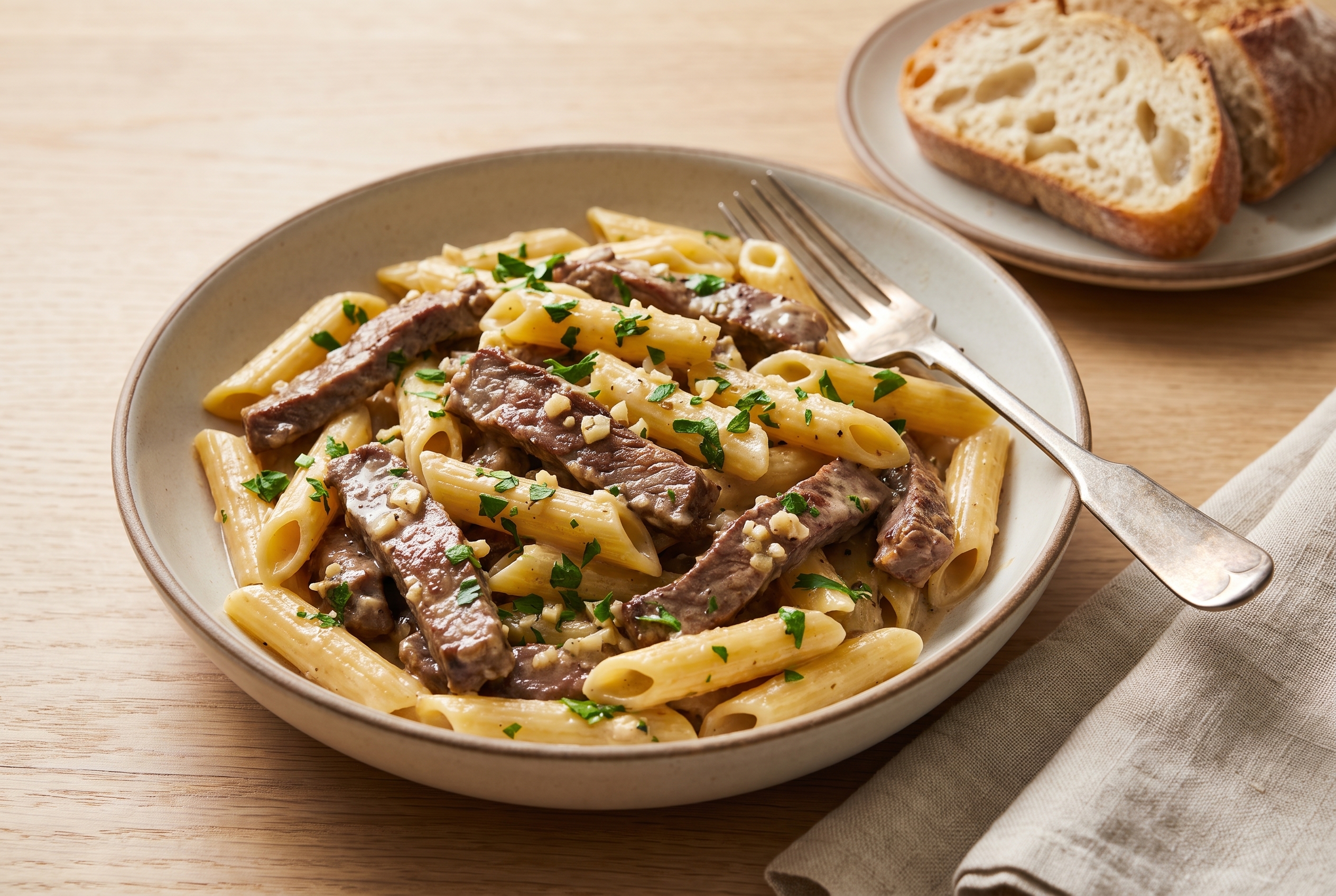
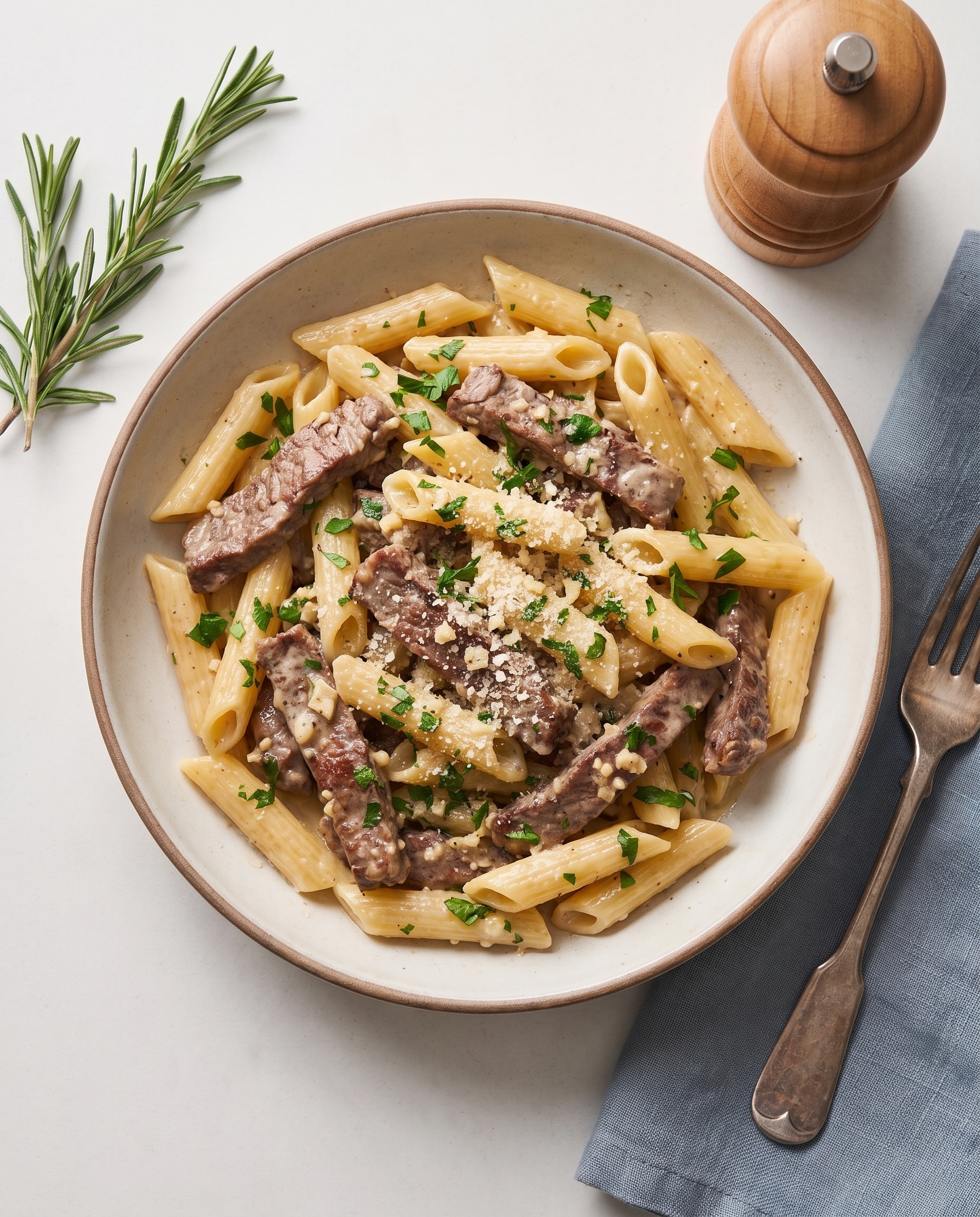
Have you ever opened the fridge at 6 p.m. and thought, “I have ground beef, half a carton of cream, and some sad-looking parsley. That’s a meal”? That’s exactly how this creamy garlic beef pasta came to be the first time, and now it’s the meal I crave on a Tuesday more than almost anything else on this site.
My grandmother had a way of turning a few humble ingredients into something that tasted like a Sunday. She’d brown the beef until the edges got a little crisp, push it to the side, and let minced garlic melt into butter and cream until the whole kitchen smelled like a hug. This is my best attempt at that bowl. It’s a 30-minute dinner, and the kind that makes the whole table go quiet.
I’m walking you through every step, the small choices that make a big difference, and a few of my favorite twists. If you’ve loved a bowl of garlic butter steak pasta or my creamy garlic mushroom pasta, this one is right in your lane.
Why This Creamy Garlic Beef Pasta Works
The trick isn’t a secret ingredient. It’s patience with three small moves: a real sear on the beef, blooming the garlic in fat for a full minute so it goes sweet and mellow, and finishing the sauce with grated parmesan stirred off the heat. Do those three things and the sauce gets silky without a slurry or a roux.
Another reason this works: the sauce clings. Penne is my go-to here because the ridges catch the cream and the tubes hold the little beef strips, but a long noodle like fettuccine or a short one like shells will both work. If you want to go even heartier, try the rigatoni from my slow cooker beef stroganoff recipe — same cozy vibe, totally different week.
Creamy Garlic Beef Pasta
This is the kind of one-pan pasta that makes you feel like a much better cook than you are. Brown the beef, soften the garlic, pour in the cream and broth, simmer, melt in the parmesan, toss with the pasta, and dinner is on the table. The sauce comes together in the same pan you brown the beef in, so even cleanup is a non-event.
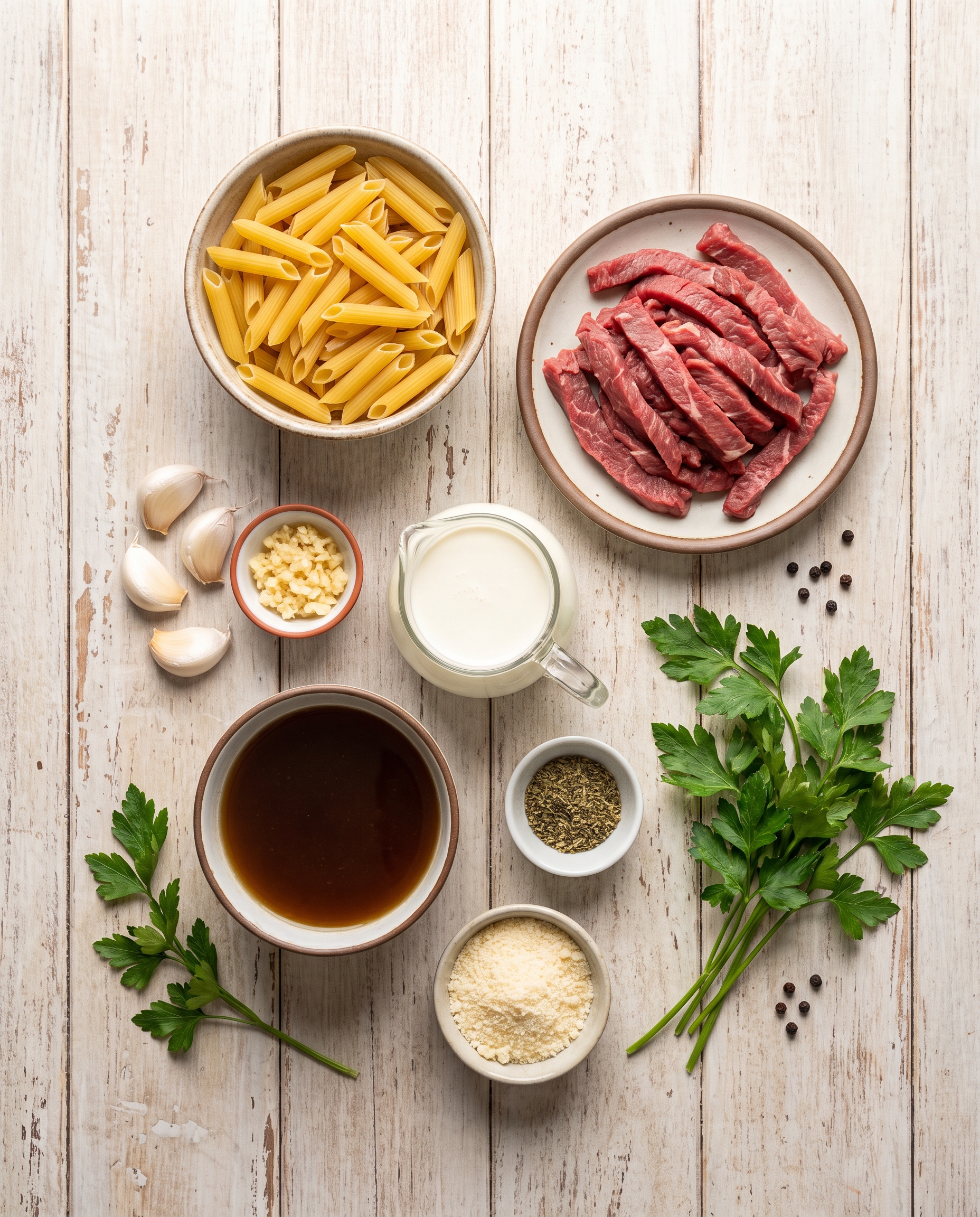
Ingredients
8 oz dried penne pasta (or fettuccine, shells, or rigatoni)
1 lb beef sirloin or flank steak, thinly sliced against the grain
2 tbsp olive oil, divided
4 cloves garlic, minced
1 cup heavy cream
1/2 cup beef broth (low sodium)
1 tsp dried Italian seasoning
1 tbsp Worcestershire sauce (optional but lovely)
1 tsp kosher salt, plus more for the pasta water
1/2 tsp freshly ground black pepper
1/4 cup finely grated Parmesan cheese
2 tbsp fresh parsley, chopped, for serving
From Pot to Plate: My Step-by-Step Method
Step 1: Boil the pasta. Bring a large pot of well-salted water to a rolling boil and cook the pasta one minute shy of al dente according to the package directions. Reserve about 1/2 cup of pasta water before draining. The pasta will finish cooking in the sauce, and that starchy water is the secret to a glossy, clingy finish.
Step 2: Sear the beef hard. While the pasta cooks, pat the sliced beef very dry with paper towels. Heat 1 tablespoon of olive oil in a large skillet over medium-high heat until it shimmers. Lay the beef in a single layer, season with half the salt and pepper, and sear for about 2 minutes per side, only flipping once. You want a deep brown crust, not a gray, steamed look. Transfer the beef to a plate and set aside.
Step 3: Bloom the garlic. Lower the heat to medium, add the remaining tablespoon of olive oil to the same pan, and stir in the minced garlic. Cook, stirring constantly, for about 60 seconds — long enough to smell sweet, short enough that it doesn’t brown. If the pan looks dry, add a small splash of the beef broth to keep the garlic loose.
Step 4: Build the cream sauce. Pour in the beef broth and the Worcestershire sauce and scrape the bottom of the pan with a wooden spoon to lift all the brown bits — that’s the flavor. Add the heavy cream, Italian seasoning, the rest of the salt, and the pepper. Bring to a gentle simmer and let it bubble softly for 3 to 4 minutes, until the sauce lightly coats the back of a spoon.
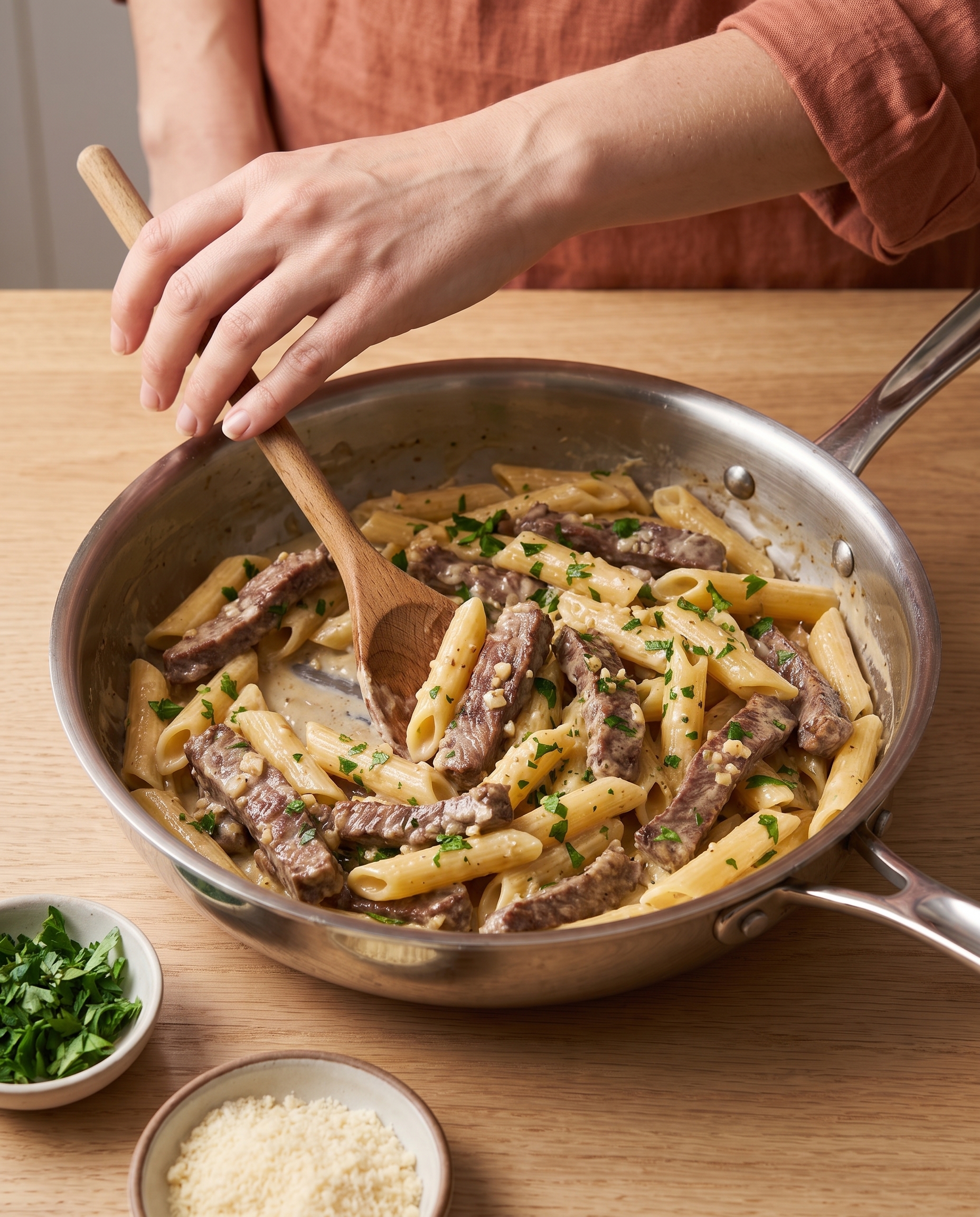
Step 5: Finish the pasta and beef. Add the drained pasta and the seared beef (with any juices from the plate) to the skillet. Toss gently for about a minute so the pasta drinks up the sauce. If it looks tight, add a splash of the reserved pasta water. Kill the heat, scatter the Parmesan over the top, and toss once more so the cheese melts into a glossy coat.
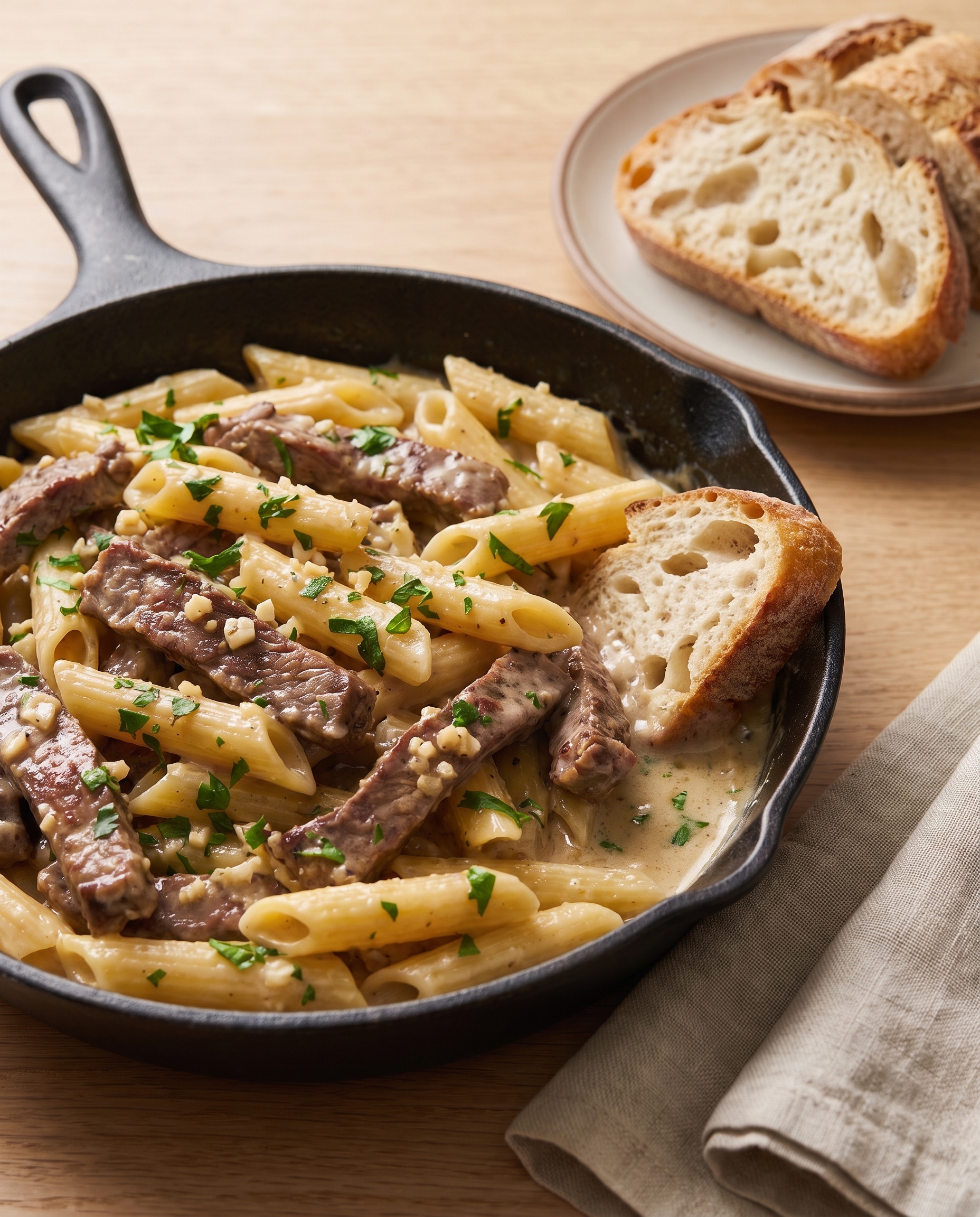
Step 6: Rest, then serve. Let the pasta sit in the pan for 2 minutes off the heat so the sauce tightens around the noodles. Spoon into warm bowls, finish with the chopped parsley, and bring the whole skillet to the table if you’re feeling generous.
Creative Twists
This recipe is a wonderful blank canvas. Here are the variations I make most often:
Mushroom lover’s version. Add 8 oz of sliced cremini mushrooms to the pan right after searing the beef. Let them get golden before blooming the garlic. Earthy, rich, and almost stroganoff-like.
Spicy garlic beef pasta. Stir in 1/2 tsp of red pepper flakes with the Italian seasoning, and finish with a drizzle of chili oil. Leftover harissa paste also works beautifully here.
Cheesy bake. Transfer the finished pasta to a small baking dish, top with a mix of mozzarella and parmesan, and broil for 3 to 4 minutes until bubbly. Same cozy bowl, crispy lid.
Sun-dried tomato version. Stir in 1/3 cup of chopped oil-packed sun-dried tomatoes with the cream. The tang cuts through the richness and turns the whole dish a little Tuscan.
Ground beef weeknight. Swap the sirloin for 1 lb of ground beef. Brown it with a little extra seasoning, drain the fat, and follow the rest of the recipe. Faster, more budget-friendly, and the kids go wild for it.
Serving & Pairing Ideas
What should I serve with creamy garlic beef pasta? A piece of warm, crusty bread is non-negotiable in my house — the sauce is too good to leave in the bowl. A simple arugula salad with lemon, olive oil, and shaved parmesan balances the richness. For something green, try blistered broccolini or roasted asparagus with a little lemon zest. If you’re pouring a glass, a medium-bodied red like Chianti or a soft Merlot plays really well with the cream and beef.
Why I Love This Recipe
I love it because it doesn’t ask much. It’s weeknight-easy, special-occasion-good, and it freezes like a dream. My partner has requested it for every birthday in the last three years, and I’ve made it for friends who said they didn’t even like cream sauces. That’s the garlic working its quiet magic.
Storage and Batch Cooking
How do you store creamy garlic beef pasta? In a sealed container in the fridge for up to 4 days. Reheat gently in a skillet over low heat with a splash of cream, milk, or beef broth to loosen the sauce — the microwave can make cream sauces tighten up. For freezing, freeze the sauce separately from the pasta for up to 2 months. Thaw both overnight, warm the sauce, and toss with freshly reheated pasta and a little pasta water.
For batch cooking, double everything and freeze the sauce in single-serve portions. A 30-minute dinner on a Wednesday is a small miracle, and a freezer stash is the closest I get to one.
Troubleshooting Your Creamy Garlic Beef Pasta
The sauce is too thin. Let it simmer another 2 to 3 minutes before adding the pasta. Cream reduces faster than you think, and a low, gentle bubble is what you want — not a hard boil.
The sauce is too thick. Splash in a little of the reserved pasta water, a tablespoon at a time, until it loosens to a glossy, just-coats-the-noodle consistency. The starch in that water is your friend.
The beef turned gray and steamed. The pan wasn’t hot enough, or the beef was crowded in. Next time, dry the slices really well, crank the heat, and sear in two batches if you need to. Crowding is the enemy of browning.
The garlic tastes bitter or sharp. It likely got a little too dark. Pull it earlier next time — you want pale gold, not brown. If a single clove of garlic burns, it’s better to start over than to chase the bitterness through the whole sauce.
The sauce broke or looks greasy. Take the pan off the heat, let it cool for a minute, and whisk in a tablespoon of cold cream. Adding the cheese off the heat also helps prevent this in the first place.
Your Quick Questions, Answered
Can I use ground beef instead of sliced sirloin? Absolutely. Brown 1 lb of ground beef, drain off the excess fat, then continue with the recipe. It will taste slightly different — more like a classic beef-and-cream pasta — but it’s just as good, and a real budget win.
What pasta shape works best? Penne, rigatoni, and shells are my top three because they hold the sauce in their ridges and tubes. Long noodles like fettuccine or linguine also work beautifully. Avoid very small shapes like orzo or ditalini — they overcook fast in the cream.
Is there a substitute for heavy cream? Half-and-half will give you a lighter sauce that’s still lovely. For a dairy-free version, full-fat coconut milk works, but it will bring a subtle coconut note. I’d skip milk entirely — it’s too thin to cling.
Can I make this ahead for guests? Yes. Sear the beef and build the sauce earlier in the day, store them separately, and toss with freshly cooked pasta right before serving. It comes back together in about 5 minutes.
A Few Last Thoughts
Some recipes earn a permanent place in the rotation, and this creamy garlic beef pasta is one of mine. I hope it lands in yours, too. If you make it, I’d love to hear what you twirled into yours — mushrooms, chili flakes, a different cheese. That’s the best part of cooking at home.
For more cozy pasta nights, take a peek at the rest of the pasta recipes on the site. And if you want a little more about me and how this whole kitchen thing started, I’m over on the about page. Thanks for being here.
A 30-minute one-pan pasta with seared beef in a silky parmesan cream sauce loaded with garlic.
Notes
For best flavor, slice the beef very thinly against the grain and pat it dry before searing. Crowd the pan in two batches if needed — crowding steams the meat instead of browning it. Reheat leftovers with a splash of cream or broth to bring the sauce back to life.
Elowen Thorn I cook, photograph and re-test every recipe in an ordinary home kitchen before it goes up, so what you make matches what you see. Savory Discovery is where simple weeknight cooking, seasonal ideas and the odd bit of kitchen craft sit side by side — written plainly, and worth cooking twice.