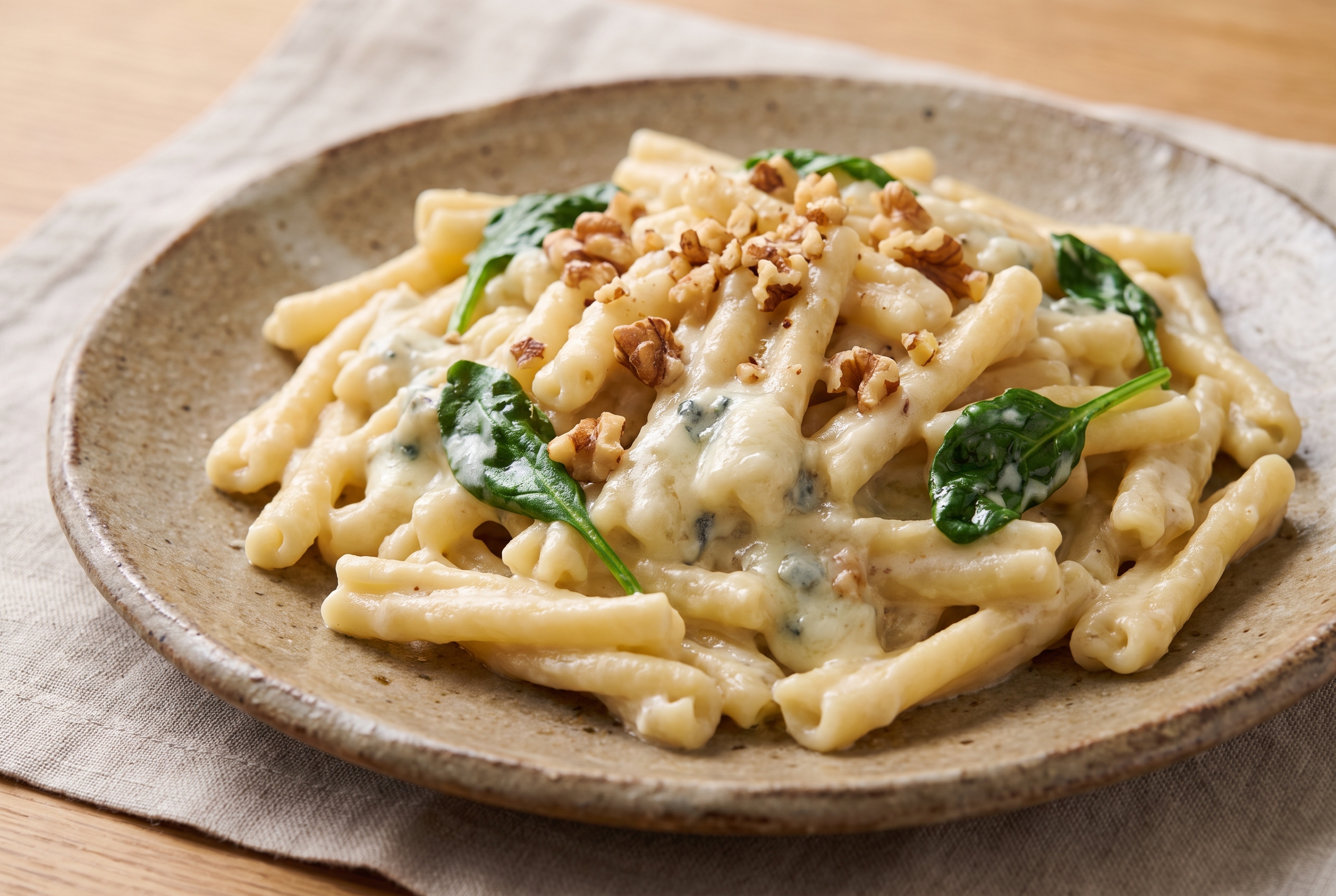
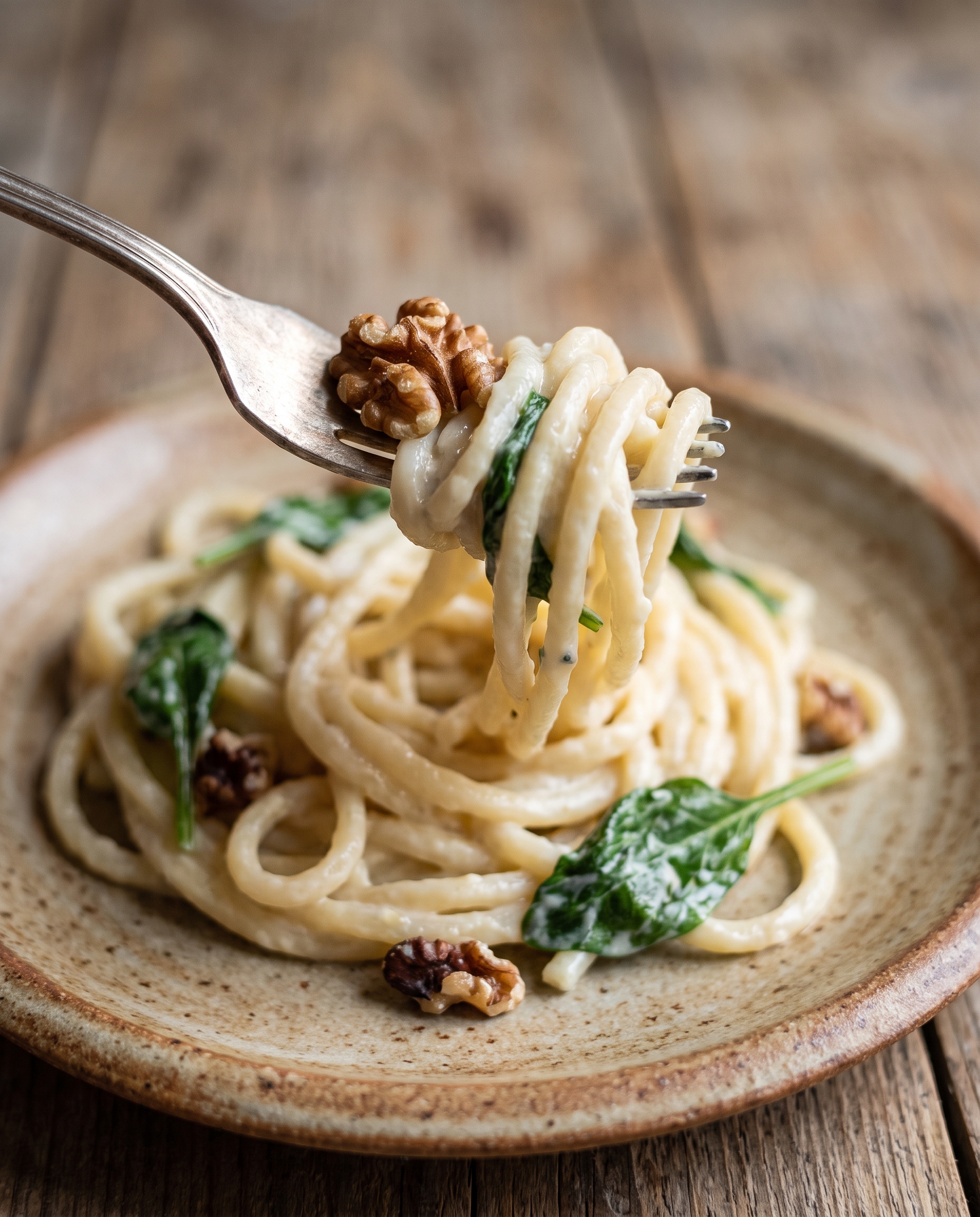
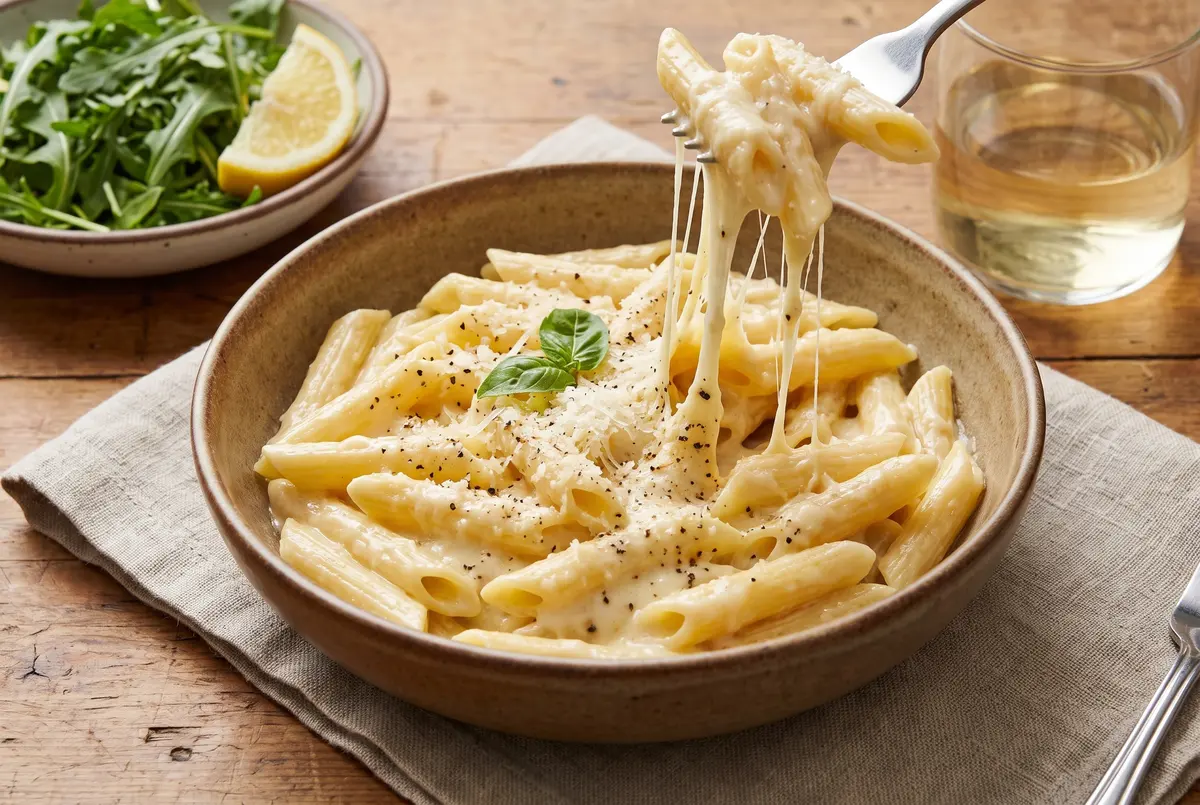
Have you ever tasted a pasta so quietly luxurious that you forgot to put your fork down? That is exactly what happened the first time I made this creamy Gorgonzola walnut pasta on a rainy Tuesday afternoon, with the radio on low and a bag of walnuts I’d been meaning to crack open for a week. My grandma would have called it pasta coi noci, and she would have wagged her finger at me for using a skillet instead of a deep pot, but she would have approved of the result. There is something deeply comforting about a sauce that leans on just a handful of good ingredients and lets each one speak.
Walnuts and Gorgonzola have a long love affair, and once you taste them together, you start spotting the pairing everywhere — folded into ravioli, crumbled over roasted pears, tucked into focaccia. But tossed with a short, sturdy pasta that catches all that creamy, earthy sauce? That’s the move. If you’ve ever been scared of blue cheese (and believe me, I used to be one of you), let this be your gateway. The cream tames the boldness, the walnuts bring the warmth, and the pasta ties it all into a single, satisfying bite. Which one of you is already peeling the wrapper off a wedge of Gorgonzola as you read this?
Why Gorgonzola and Walnuts Belong Together
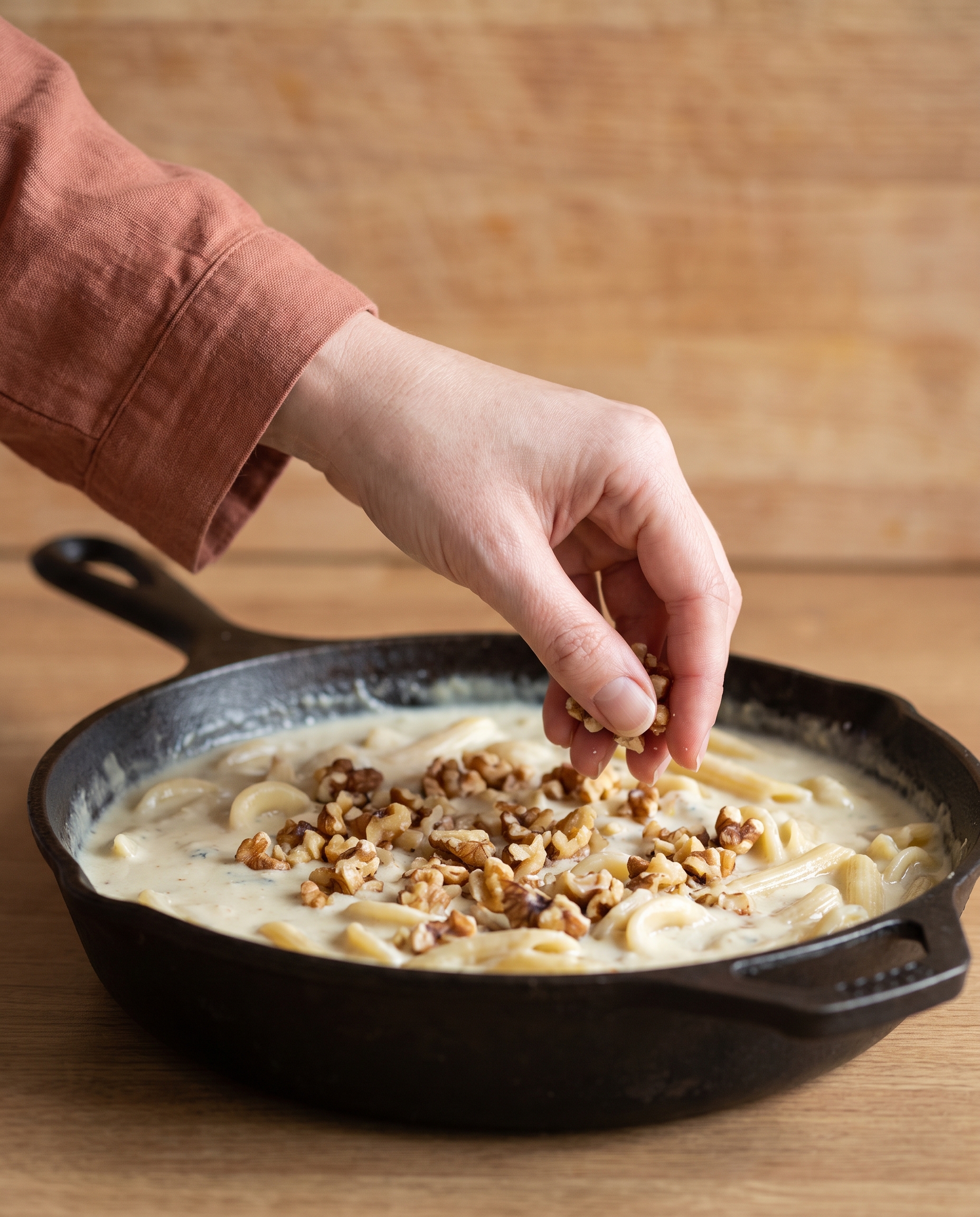
The first trick is choosing the right Gorgonzola. Dolce (the mild, creamy one) melts into the sauce like a dream and stays gentle. Piccante is sharper and more crumbly, and it will give you a punchier, more adult dish. Either works here — pick based on your mood. The second trick is the walnuts. Toast them. Always. A dry pan over medium heat for 4 to 5 minutes is all it takes, and the difference between toasted and raw walnuts is the difference between a whisper and a song.
The third trick, and the one I learned the hard way, is not to over-reduce the cream. You want the sauce to coat the pasta, not to become cement. A splash of hot pasta water at the end is your insurance policy. I keep a measuring cup right next to the colander so I never forget. And finally, the pasta shape matters more than people think. A short, ridged, or curled shape — casarecce, penne, fusilli, orecchiette — will grab more sauce than a long strand. Trust me on this.
Creamy Gorgonzola Walnut Pasta
This is the kind of dish I make when I want dinner to feel like a small celebration without a lot of fuss. Twenty-five minutes, one pot (mostly), and a glass of wine for the cook. Below is the full method — but first, let’s get the ingredients lined up.
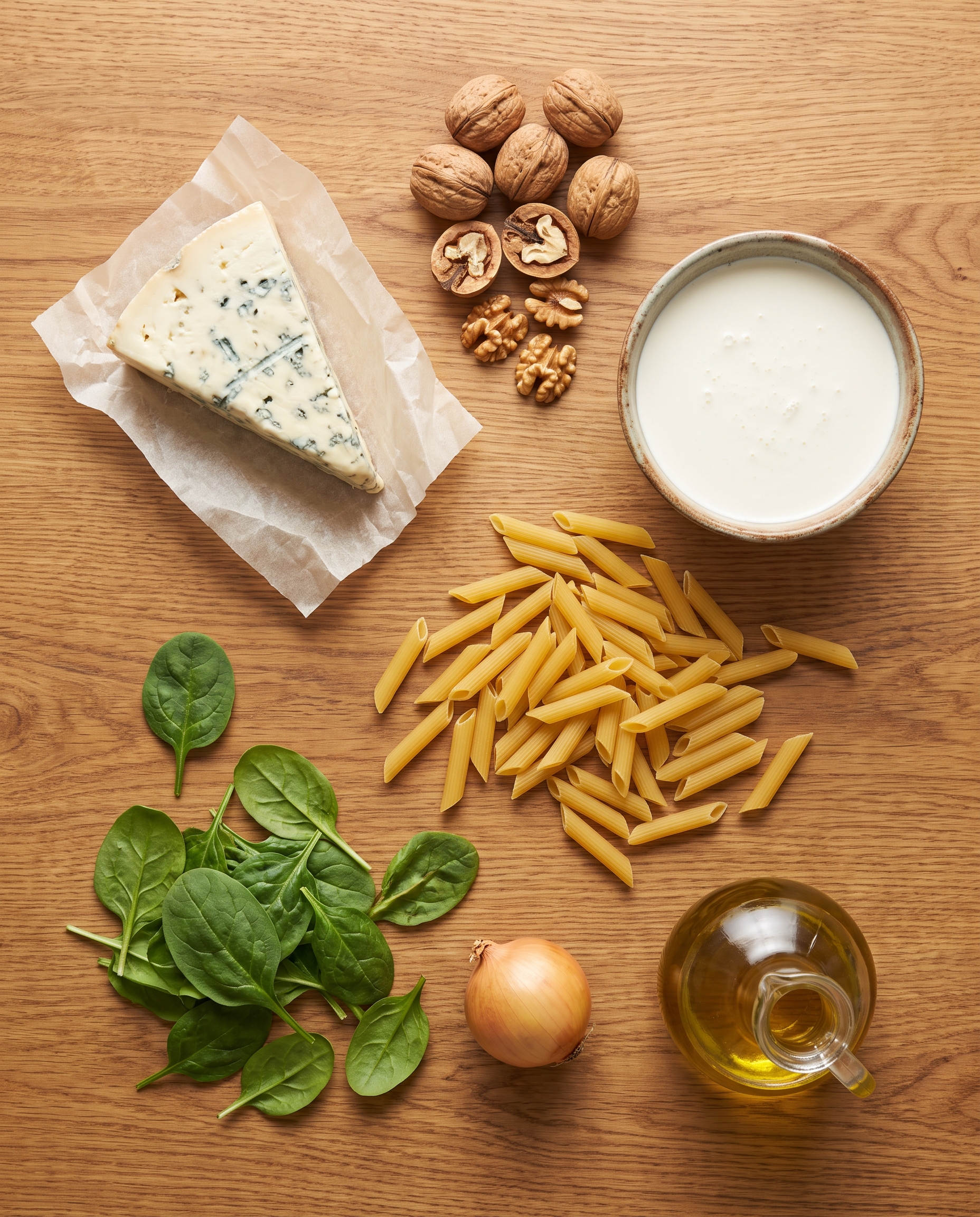
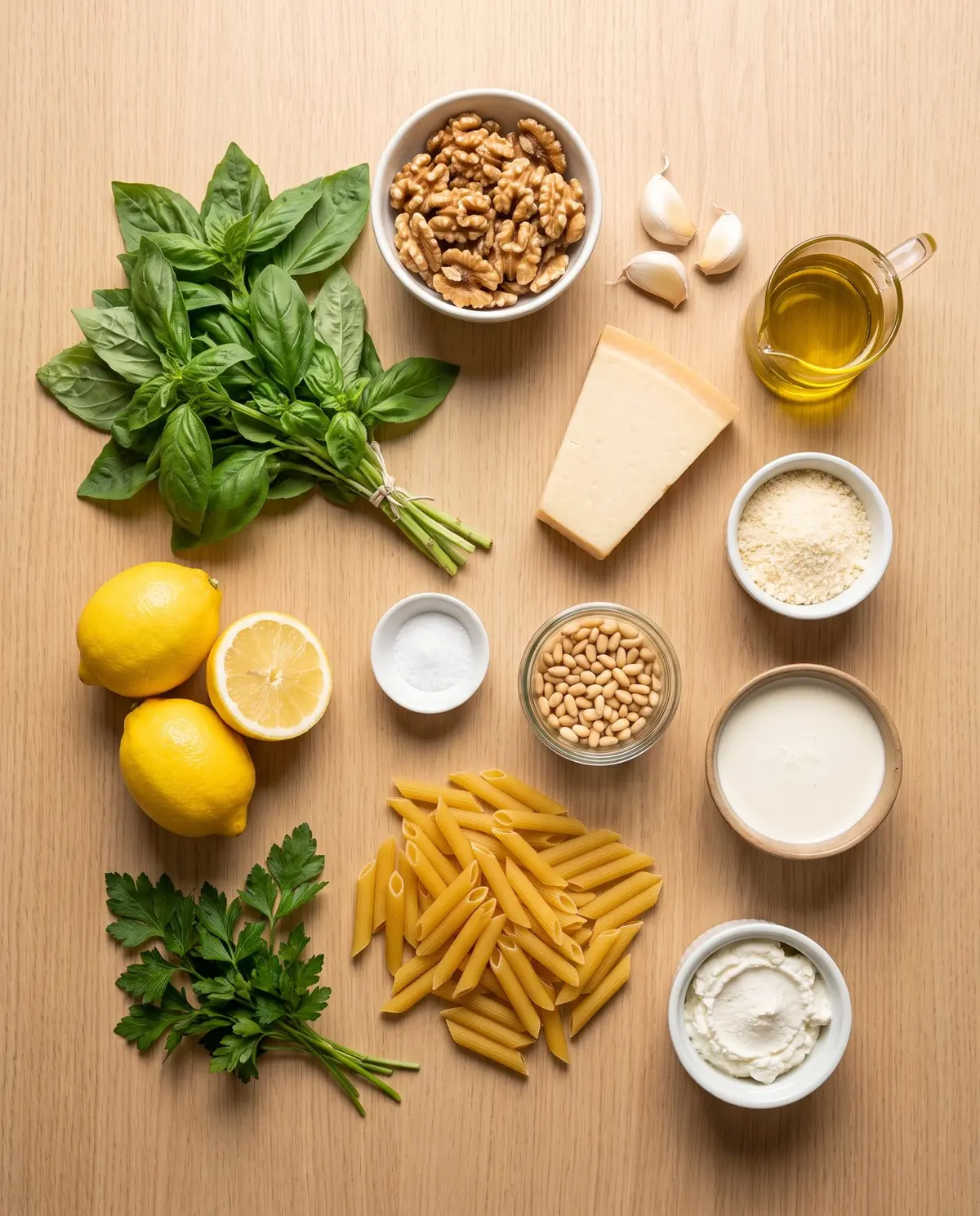
Ingredients
2 tablespoons olive oil
1 small onion, finely diced
300 g (10.5 oz) short dried pasta (casarecce, penne, or fusilli)
150 g (5 oz) Gorgonzola cheese, crumbled (dolce for mild, piccante for bold)
50 g (½ cup) walnuts, roughly chopped, plus extra for serving
900 ml (4 cups) hot vegetable or chicken stock
100 g (3 oz) baby spinach leaves
Freshly cracked black pepper, to taste
Salt, for the pasta water
From Pot to Plate: My Step-by-Step Method
Step 1: Set a deep, wide skillet or sauté pan over medium heat and add the olive oil. Once it shimmers, add the diced onion and a small pinch of salt. Cook gently for 4 to 5 minutes, stirring often, until the onion is soft, translucent, and just turning golden at the edges. You want it sweet, not browned — patience pays off here.
Step 2: While the onion cooks, bring a separate pot of well-salted water to a boil for the pasta — or skip that entirely and follow the one-pot method below. Pour the hot stock into the skillet with the onions and bring it to a gentle simmer. Add the pasta, give it a stir, then crumble in the Gorgonzola. Stir until the cheese is mostly melted and the liquid looks creamy and unified.
Step 3: Add the chopped walnuts to the pan. Cook uncovered over medium heat for 12 to 15 minutes, stirring every couple of minutes, until the pasta is al dente and the sauce has thickened enough to coat the back of a spoon. If the sauce tightens up before the pasta is done, splash in a little extra hot stock or pasta water — never let it go dry.
Step 4: Stir in the baby spinach and cook for another 2 to 3 minutes, just until the leaves wilt into the sauce. Taste and season with black pepper and a small pinch of salt if needed (Gorgonzola is already salty, so go easy). If you’d like a looser sauce, another tablespoon or two of hot pasta water will loosen it beautifully.
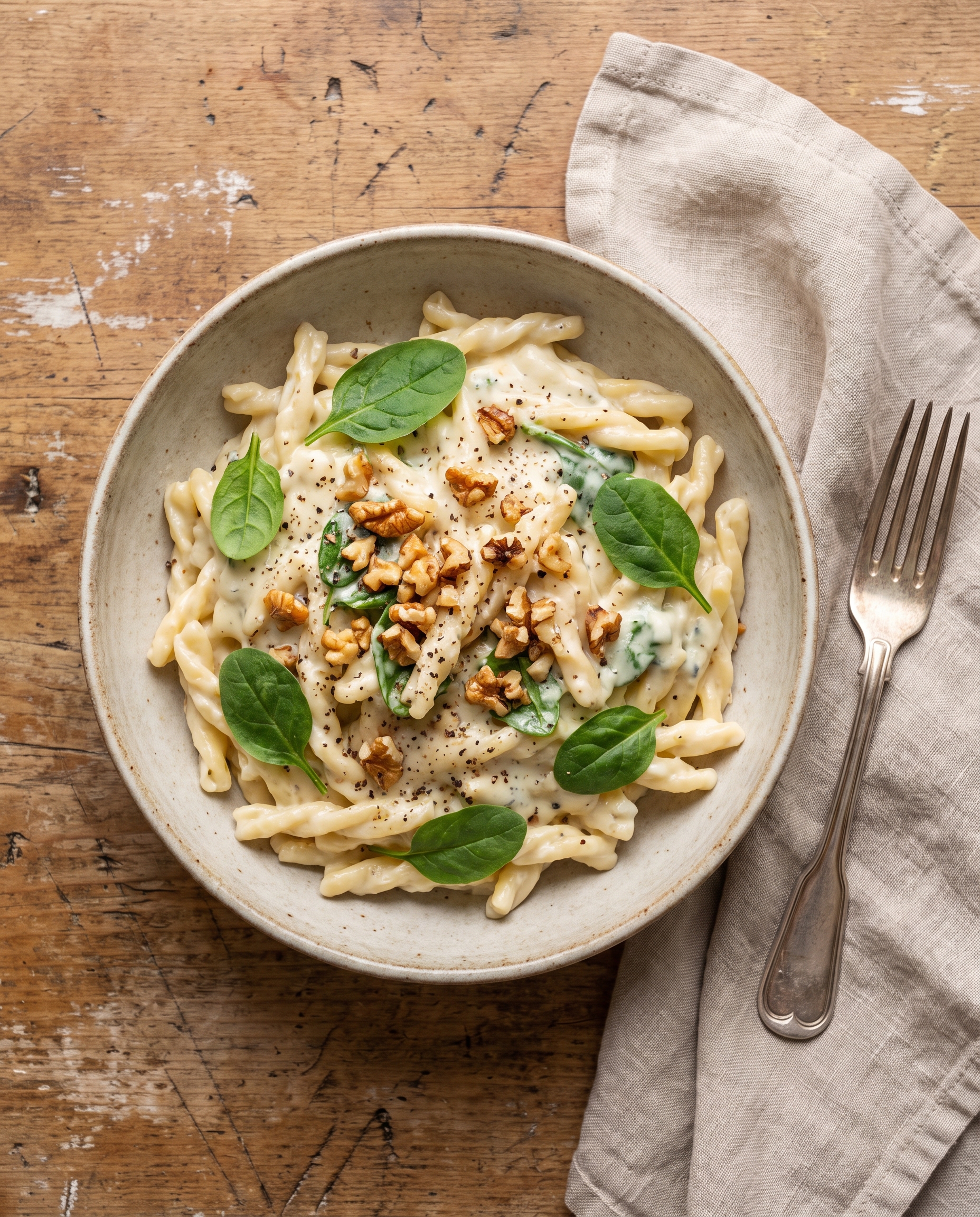
Step 5: Plate the pasta in shallow bowls, top with a generous scatter of extra toasted walnuts and another few cracks of black pepper. Serve immediately, while the sauce is at its silkiest. A small grating of Parmesan is optional — the Gorgonzola is doing the heavy lifting.
Creative Twists to Try Next Time
Once you have the basic method down, the recipe is a wonderful canvas for small changes. Here are the variations my family has come to love:
Gorgonzola, Walnut, and Pear: Add a peeled, finely diced ripe pear to the onions in Step 1. The sweetness plays beautifully against the salty cheese.
Add Pancetta or Bacon: Render 100 g of diced pancetta in the olive oil first, then use the fat to cook the onions. Skip the extra oil. Smoky, rich, and very Italian.
Spinach Swap: Swap baby spinach for kale (stems removed, leaves torn) or even arugula stirred in at the very end for a peppery finish.
Brown-Butter Finish: Right before plating, swirl a tablespoon of brown butter over the finished pasta. The nutty aroma doubles down on the walnuts.
Honey Drizzle: For a sweet-salty moment, finish each bowl with a thin drizzle of honey and a crack of black pepper. Trust me.
Serving & Pairing Ideas
What should I serve with this pasta? A crisp, peppery rocket salad dressed with lemon juice and shaved Parmesan is the classic partner — the bitter greens reset the palate between creamy bites. For wine, reach for a dry Italian white like a Gavi, a Soave, or a lightly oaked Chardonnay. If you prefer red, a light Barbera d’Asti works surprisingly well. And bread — always bread. A simple slice of focaccia or a warm ciabatta for dragging through the sauce is non-negotiable in my house.
Why I Love This Creamy Gorgonzola Walnut Pasta
There is a particular kind of joy in making a meal from just a handful of ingredients, where every single one earns its place. The Gorgonzola brings the soul. The walnuts bring the warmth. The cream brings the silk. The pasta brings it all home. I love that this dish can be weeknight-simple but dinner-party-worthy — and that the leftovers, reheated gently with a splash of milk or stock, taste even better the next day. If you’re new to blue cheese, this is the recipe that will change your mind. If you’re already a fan, this is the one that will make you feel understood.
Storage and Batch Cooking
Store any leftovers in an airtight container in the fridge for up to 3 days. The sauce will thicken as it cools — that’s normal. When reheating, add the pasta to a skillet over low heat with a generous splash of milk, cream, or stock, and stir gently until the sauce loosens and the pasta is hot. Avoid the microwave if you can; it tends to make the cheese sauce grainy.
For batch cooking, I’d actually recommend cooking the sauce and the pasta separately and storing them in separate containers. The pasta will keep absorbing liquid as it sits, so keeping them apart means you can reheat a single portion without it turning into a porridge. Cooked sauce keeps in the fridge for 4 days and freezes well for up to 2 months — thaw overnight in the fridge and reheat gently with a splash of stock.
Troubleshooting Your Pasta
My sauce split or looks grainy. The Gorgonzola got too hot too fast. Take the pan off the heat, add a tablespoon of cold cream, and whisk gently. It usually comes back together. Next time, crumble the cheese in off the heat and let the residual warmth melt it.
My pasta is overcooked and the sauce is too thick. Splash in more hot stock or pasta water, a tablespoon at a time, and stir. The pasta will not un-cook, but the dish will be rescued from dry to silky.
The blue cheese flavor is too strong. You probably used piccante. Next time, start with dolce, or do a 50/50 blend of dolce and piccante. A small splash of cream at the end will also soften the bite.
My walnuts taste bitter. They may have been over-toasted. Walnuts go from golden to burnt in about 30 seconds, so once you smell them, pull them off the heat and tip them out of the pan onto a plate to stop the cooking.
Your Quick Questions, Answered
Can I make this pasta without the walnuts? You can, but you’ll lose the warm, earthy counterpoint to the cheese. Pecans are the closest substitute, and toasted hazelnuts also work beautifully. If you have a nut allergy, try toasted pumpkin seeds or sunflower seeds for a similar crunch.
What pasta shape works best? Short, ridged, or curled shapes — casarecce, penne, fusilli, orecchiette. These grab more sauce than spaghetti or linguine. If you only have long strands, still make the recipe; just toss the pasta with the sauce in a large bowl so every strand gets coated.
Can I make it ahead for a dinner party? Yes, with one trick: cook the pasta 2 minutes shy of al dente and stop the cooking process with a quick rinse under cold water. Store the sauce and the pasta separately. To serve, warm the sauce, drop the pasta in, and finish cooking for 2 to 3 minutes with a splash of stock.
Is Gorgonzola the same as blue cheese? It’s a type of blue cheese, but Italian and traditionally made with cow’s milk. Other blue cheeses (Roquefort, Stilton, Danish Blue) will all work here, but they each bring a different intensity and salt level — taste as you go.
A Few Last Thoughts
Some recipes teach you a technique. Some recipes give you a new weeknight staple. This creamy Gorgonzola walnut pasta, I hope, does both. It taught me that blue cheese isn’t something to be afraid of — it’s something to be invited in for dinner. And it taught me that walnuts, given a few minutes in a hot pan, can carry an entire dish on their toasted, buttery shoulders. The next time you find yourself with a wedge of Gorgonzola and a bag of walnuts in the kitchen, you know what to do. Pour yourself a glass of something crisp, put on some music, and let the smell of toasted walnuts fill the room. Let me know how yours turn out — and which twist you tried.
A weeknight-luxurious short pasta coated in a creamy Gorgonzola sauce with toasted walnuts and wilted baby spinach — ready in 25 minutes from one pot.
Ingredients
Notes
If the sauce is too thick before the pasta is al dente, add a splash of hot stock or pasta water. Gorgonzola is salty, so taste before adding more salt.
Keywords:gorgonzola pasta, walnut pasta, creamy pasta, italian weeknight
Elowen Thorn I cook, photograph and re-test every recipe in an ordinary home kitchen before it goes up, so what you make matches what you see. Savory Discovery is where simple weeknight cooking, seasonal ideas and the odd bit of kitchen craft sit side by side — written plainly, and worth cooking twice.