


The Story in the Pot
My grandson calls this my “storybook stew.” I think he’s right. Every time I make it, I remember my own Gran. She taught me this recipe on a cold, snowy day. The smell filled her whole kitchen. It felt like a hug from the inside.
She said good food tells a tale. The long, slow cooking is the plot. The tender beef is the happy ending. This matters because cooking is more than following steps. It’s about the memories you make while you wait. What’s a meal that tells a story in your family?
Why We Cook It Slow
This roast needs patience. We cook it low and slow for hours. Why? A tough piece of beef becomes incredibly tender this way. The heat and the liquid gently soften the meat fibers. It’s like a long, warm bath for the roast.
Rushing it with high heat would make it tough. This slow method matters. It teaches us that some of the best things can’t be hurried. Good food, and good times, often need a little waiting. I still laugh at how I used to peek in the oven every ten minutes!
The Magic of the Sauce
Let’s talk about that rich, red sauce. It starts with wine and broth. Then we add the browned bits from the pot. Those little brown bits are flavor gold! *Fun fact: chefs call those bits “fond.” It’s just a fancy word for tasty stuck-on stuff.*
We scrape it all up. It makes the sauce deep and wonderful. Doesn’t that smell amazing when it all comes together? The sauce soaks into the meat. It makes every bite sing. Do you prefer your sauce poured all over, or just on the side?
Little Pearls and Mushrooms
The vegetables are not just an afterthought. We cook the pearl onions and mushrooms separately. We give them a sweet, buttery glaze in a skillet. This keeps them firm and pretty.
They get a lovely shine and their own special taste. Then we nestle them around the sliced beef. It makes the whole platter look like a feast. It’s a small step that makes a big difference. Which vegetable here is your favorite – the carrots, onions, or mushrooms?
Your Turn at the Table
When the roast is done, let it rest. This is very important. The juices settle back into the meat. If you cut it right away, all the good juice runs out onto the board. We wait 30 minutes. It’s hard, but worth it.
Then slice it against the grain. See the lines in the meat? Cut across them. This makes each piece melt in your mouth. Gather everyone. Share the food and the stories that come with it. That’s the real recipe.
Ingredients:
| Ingredient | Amount | Notes |
|---|---|---|
| Boneless beef chuck-eye roast | 1 (5- to 6-pound) | Pulled apart at seam into 2 roasts, fat trimmed, and tied individually |
| Salt and pepper | To taste | For seasoning the roast |
| Bacon | 4 slices, halved | |
| Carrots, peeled and chopped | 4 | |
| Onion, chopped | 1 | |
| All-purpose flour | ¼ cup | |
| Garlic cloves, minced | 3 | |
| Red wine | 1 (750-ml) bottle | |
| Beef broth | 2 cups | For the pot roast |
| Fresh thyme, minced | 2 teaspoons | |
| Bay leaves | 2 | |
| Frozen pearl onions | 2 cups | For the vegetables |
| Beef broth | ½ cup | For the vegetables |
| Unsalted butter | 3 tablespoons | |
| Sugar | 2 teaspoons | |
| White mushrooms, trimmed and quartered | 1 pound | |
| Fresh parsley, minced | 2 tablespoons | For garnish |

Instructions
Step 1: Heat your oven to 300 degrees. Dry your beef with a paper towel. Season it well with salt and pepper. Cook the bacon in a big pot until it’s crisp. Set the bacon aside on a towel. Pour out most of the fat, leaving just a little. Brown the beef in that fat. Get it nice and dark on all sides. Then move the beef to a plate. (Always pat meat dry first. It helps it get a beautiful brown crust.)
Step 2: Put the chopped carrots and onion in the same pot. Cook them until they get some color. Stir in the flour and garlic. It will smell so good! Whisk in the whole bottle of wine. Let it bubble and cook down for a bit. This makes the flavor deep and rich. Stir in the broth, bacon, thyme, and bay leaves. Put the beef back in the pot. Cover it tightly with foil and the lid. Bake it for about 2 ½ hours. The meat should be very tender. What vegetable helps make the sauce thick? Share below!
Step 3: When the beef is nearly done, cook the vegetables. In a skillet, combine the little onions, broth, butter, and sugar. Boil it, then cover and cook until soft. Uncover and cook until the liquid is gone. Add the mushrooms and salt. Cook until everything is golden and glazed. Set this aside until the beef is ready. I love how shiny and sweet the onions get.
Step 4: Take the pot from the oven. Be careful, it’s hot! Move the beef to a cutting board. Cover it loosely with foil. Let it rest. This keeps it juicy. Skim the fat off the top of the cooking liquid in the pot. Then boil that liquid until it reduces. You want about 3 cups of lovely, thick sauce.
Step 5: Strain your sauce into a measuring cup. Toss the cooked veggies from the pot. Reheat your glazed mushroom mix. Stir in the fresh parsley. Now, slice the beef against the grain. (Slicing against the grain makes every bite tender.) Arrange it on a platter. Spoon the glazed vegetables all around. Pour some sauce over the top. Serve the extra sauce at the table. Doesn’t that look like a hug on a plate?
Creative Twists
This recipe is wonderful as-is. But sometimes, it’s fun to play. Try a little twist to make it your own. I still laugh at the time I used orange juice instead of wine. It was different, but good! Here are three simple ideas for you.
Use a dark beer or stout instead of red wine for a deeper, cozy flavor.
Add a tablespoon of tomato paste with the carrots for a touch of sweetness.
Swap the mushrooms for parsnips or turnips with the pearl onions.
Which one would you try first? Comment below!
Serving & Pairing Ideas
This roast makes its own rich sauce. It just needs a simple friend on the side. I always think of my grandson when I make this. He loves to mash the potatoes. A big bowl of creamy mashed potatoes is perfect. So is a crusty loaf of bread for dipping. A simple green salad cuts through the richness nicely. Doesn’t that smell amazing?
For a drink, a glass of the same red wine you cooked with is lovely. For a cozy, non-alcoholic sip, try sparkling apple cider. It feels festive. Which would you choose tonight?

Keeping Your Cozy Roast Cozy
Let’s talk about keeping your beautiful roast for later. It stores wonderfully. Let the roast and sauce cool completely first. Then store them together in a sealed container. It will keep in the fridge for about four days.
You can also freeze it for up to three months. I freeze the meat and sauce in one container. I keep the glazed vegetables separate in another. This keeps their texture just right. Thaw everything overnight in the fridge before reheating.
To reheat, be gentle. Warm it in a covered pot over low heat. Add a splash of broth if it looks dry. I once reheated it too fast on the stove. The meat got a little tough. Low and slow is the secret.
This matters because good food deserves a second act. A batch-cooked roast means a fantastic meal is always ready. It is a gift to your future, busy self. Have you ever tried storing it this way? Share below!
Simple Fixes for Common Hiccups
Even grandmas face little kitchen troubles. Here are three common ones and their easy fixes. First, your sauce might be too thin. Just simmer it a bit longer without a lid. The extra liquid will cook off and thicken it up.
Second, the meat could be tough. This means it needs more time in the oven. Pop it back in for another 20 minutes. Check it with a fork. I remember when I pulled my first roast out too early. We had to wait, but it was worth it.
Third, your vegetables might not get that nice glaze. Make sure all the broth evaporates before you add the mushrooms. Let them sit in the hot pan to brown. This creates delicious flavor. Which of these problems have you run into before?
Fixing small issues builds your cooking confidence. It also makes the final dish taste so much better. That is a win for everyone at the table.
Your Quick Questions, Answered
Q: Can I make this gluten-free?
A: Yes! Just swap the all-purpose flour for a gluten-free blend. It will work the same way.
Q: Can I make it ahead?
A: Absolutely. In fact, it tastes even better the next day. Just follow the storage tips above.
Q: I don’t have fresh thyme or parsley.
A: Dried herbs are fine. Use one-third the amount. So, about ¾ teaspoon of dried thyme.
Q: Can I make a smaller roast?
A: You can. Just use a smaller pot. Keep all the other steps and times the same.
Q: Any optional tips?
A: A fun fact: adding the whole bottle of wine is traditional. It gives the dish its name and rich color. You can use a less expensive Burgundy or Pinot Noir. Which tip will you try first?
From My Kitchen to Yours
I hope you love making this special roast. It fills the house with the best smell. It brings everyone to the table with happy smiles. That is my favorite part of cooking.
I would love to hear about your cooking adventure. Tell me how it went for you. Have you tried this recipe? Share your story in the comments below. Let’s chat about food and family.
Happy cooking!
—Elowen Thorn.
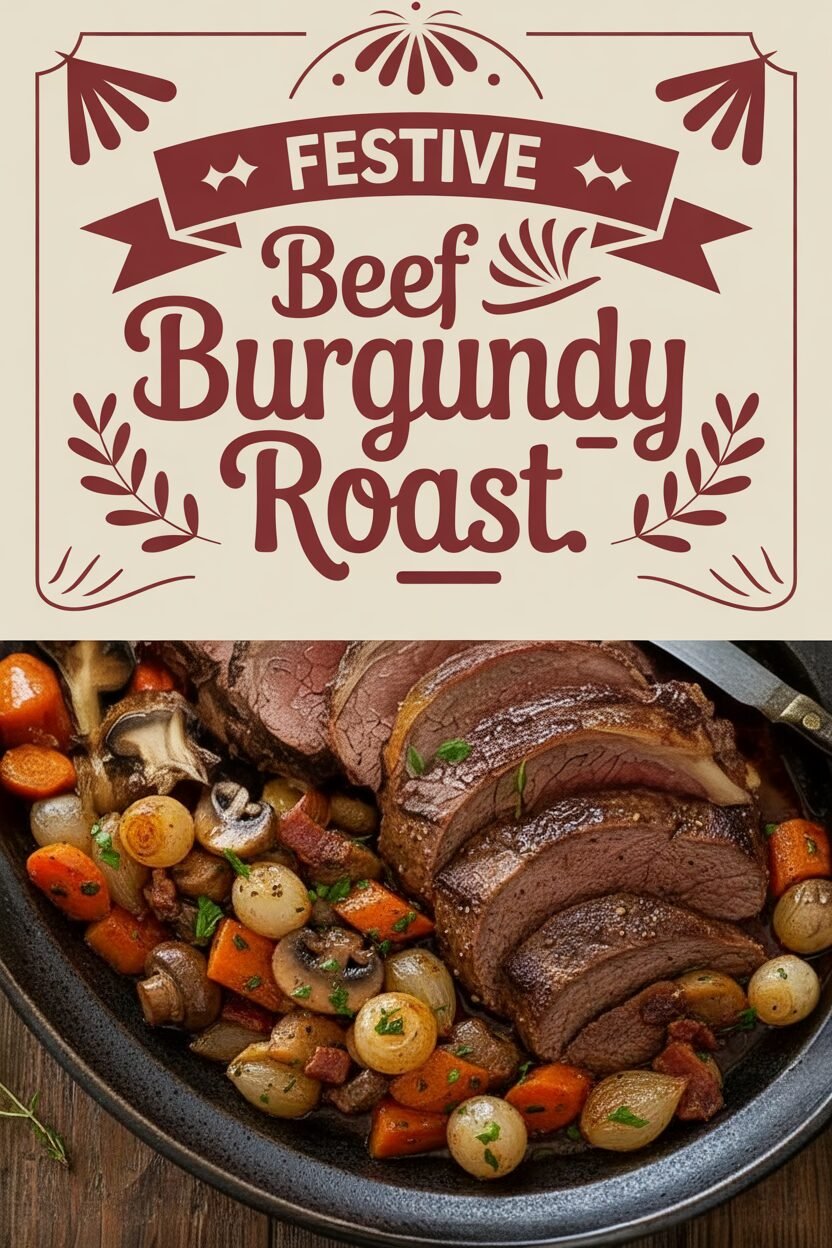

Festive Burgundy Beef Roast
Description
A rich and hearty Burgundy Pot Roast, slow-braised in red wine with aromatic vegetables for a perfect festive meal.
Ingredients
POT ROAST:
VEGETABLES:
Instructions
- Adjust oven rack to lower-middle position and heat oven to 300 degrees. Pat beef dry with paper towels and season with salt and pepper. Cook bacon in Dutch oven over medium heat until crisp, 6 to 8 minutes. Transfer to paper towel–lined plate. Pour off all but 2 tablespoons fat from pot and heat over medium-high heat until just smoking. Add beef and brown on all sides, 8 to 10 minutes. Transfer to plate.
- Add carrots and onion to now-empty pot and cook over medium heat until browned, about 5 minutes. Stir in flour and garlic and cook until fragrant, about 1 minute. Whisk in wine and bring to simmer, scraping up any browned bits. Reduce heat to medium-low and cook until reduced by half and slightly thickened, 8 to 10 minutes. Stir in broth, bacon, thyme, and bay leaves. Return beef and any accumulated juice to pot and bring to simmer. Place large sheet of aluminum foil over pot and cover tightly with lid. Bake until fork slips easily in and out of beef, 2½ to 3 hours.
- When beef is nearly done, bring onions, broth, butter, and sugar to boil in 12-inch skillet over medium-high heat. Cover, reduce heat to low, and cook until onions are tender, 5 to 8 minutes. Uncover, increase heat to medium-high, and cook until all liquid evaporates, 3 to 5 minutes. Add mushrooms and ¼ teaspoon salt and cook until vegetables are browned and glazed, 8 to 12 minutes. Season with salt and pepper to taste. Cover and set aside until beef is done.
- Transfer beef to carving board, tent with foil, and let rest for 30 minutes. Let braising liquid settle, then skim any fat from surface with large kitchen spoon. Bring liquid to boil over medium-high heat and cook until reduced to 3 cups and slightly thickened, 15 to 20 minutes.
- Strain sauce through fine-mesh strainer into 4-cup liquid measuring cup; discard solids. Season with salt and pepper to taste. Reheat vegetables over medium heat, about 3 minutes. Stir parsley into vegetables. Discard twine, slice beef against grain into ½-inch-thick slices, and transfer to platter. Spoon vegetables around beef. Pour 1½ cups sauce over beef. Serve, passing remaining sauce separately.
Notes
- For best results, use a good-quality, drinkable red wine like Pinot Noir or Burgundy. The roast can be made a day ahead; gently reheat in the sauce before serving.