


The Scent of Summer
Let me tell you about pesto. It smells like summer in a bowl. You crush those bright green basil leaves. Then you add garlic and nuts. Doesn’t that smell amazing? It wakes up your whole kitchen.
I grow basil in pots by my back door. One year, my cat thought it was her salad bar. She nibbled a whole plant! I still laugh at that. Now my pots sit up high. What’s your favorite summer smell? Tell me if it’s basil, roses, or cut grass.
Why We Toast the Nuts
You can use pine nuts right from the bag. But toasting them is a small magic trick. Warm them in a pan for a few minutes. Watch them carefully. They turn a light gold color.
This little step matters. It wakes up the oil inside the nuts. Your pesto gets a deeper, warmer flavor. It tastes more like a hug. *Fun fact: Pine nuts come from pine cones!* They are a lot of work to collect. That’s why they can be pricey.
The Heart of the Matter
Good pesto is about balance. You have the sharp bite of garlic. Then the gentle cheese. The rich oil brings it all together. The salt makes every flavor sing. Taste as you go. Your tongue knows best.
This matters because cooking is about trust. Trust your senses. Does it smell right? Does it taste good to you? That is the real recipe. Do you like your pesto more garlicky, or more cheesy? I’m always curious about other people’s tastes.
A Spoonful of History
This sauce is very old. It started in Italy long ago. Families made it in stone bowls called mortars. They used a wooden pestle to crush everything. That’s where the name “pesto” comes from. It means “to crush.”
Making it by hand was a slow labor of love. Today we use a food processor. It’s faster, but the love is the same. You are making something real. This connects us to all those grandmothers long ago. They knew simple food made with care is best.
Your Pesto Adventure
Your pesto is ready now. But what will you do with it? Toss it with hot pasta. Spread it on bread. Stir a spoonful into soup. It makes simple things special. I love it on scrambled eggs.
Store it in a little jar. Pour a tiny bit of oil on top. This keeps it green. It matters to make food that brings joy later. Opening that jar next week will make you smile. What will you try your pesto on first? Share your best idea with me.
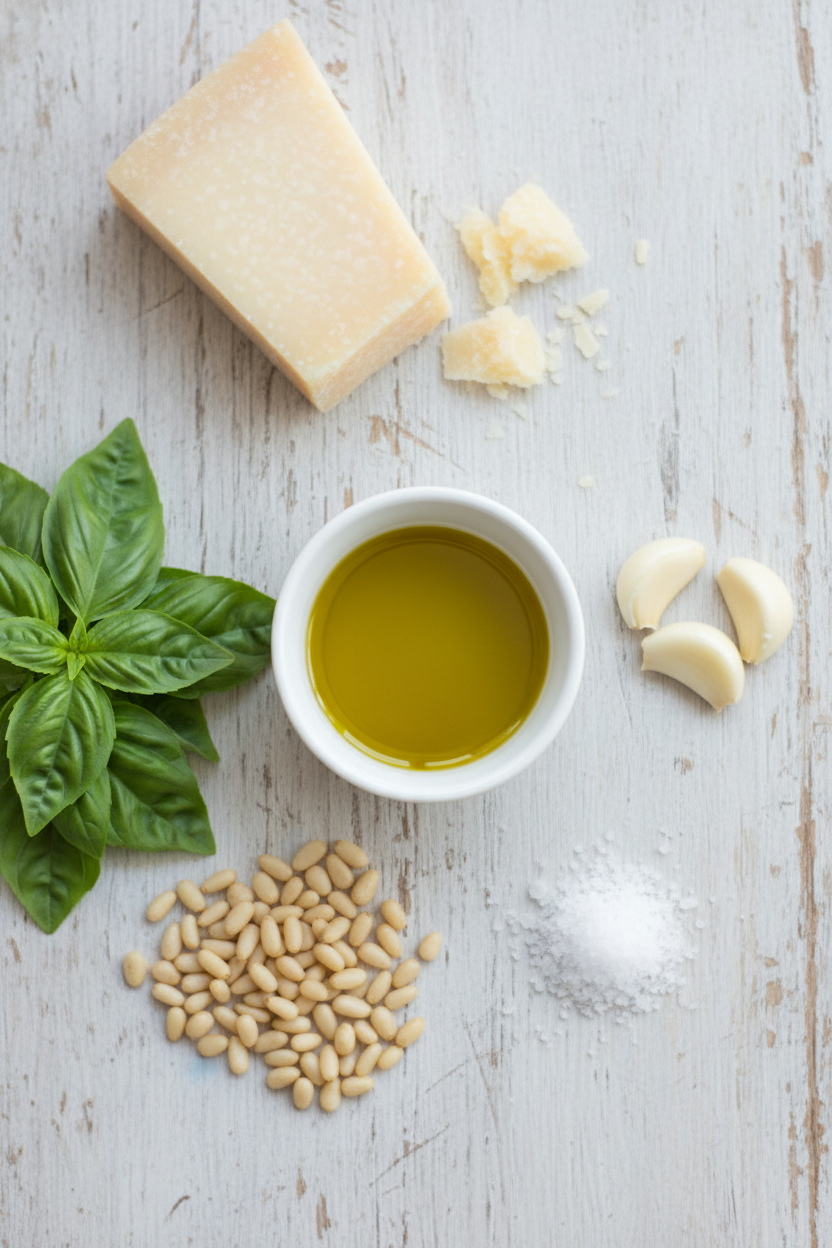
Ingredients:
| Ingredient | Amount | Notes |
|---|---|---|
| Fresh basil leaves | 2 cups | tightly packed |
| Pine nuts | 1/4 cup | optional: toasted |
| Garlic cloves | 3 | |
| Fine sea salt | 1/2 teaspoon | or to taste |
| Parmesan cheese | 1/2 cup | freshly shredded |
| Extra virgin olive oil | 1/2 cup |
Instructions
Step 1: Let’s toast those pine nuts first. Just warm them in a dry pan. Shake it gently until they smell wonderful. It makes the pesto taste cozy and deep. (Keep a close eye, they burn fast!) Doesn’t that smell amazing?
Step 2: Now, pile everything but the oil into the processor. Basil, nuts, garlic, cheese, and salt go in. Give it a few good pulses. I still laugh at the loud whirring sound. It all gets chopped up nice and fine.
Step 3: Here’s the magic part. Keep the machine running. Slowly pour in the golden olive oil. Watch it turn into a beautiful, green sauce. What’s your favorite pasta shape for pesto? Share below! Scrape the sides once to mix it all.
Step 4: Give it a tiny taste. Need more salt? Add a pinch. Your pesto is ready to use now. To store it, press plastic wrap right on top. This keeps it bright green for days.
Creative Twists
Swap pine nuts for walnuts. They give a lovely, earthy flavor. Try half basil, half baby spinach. It’s a great way to use greens. Add a squeeze of lemon juice. It makes the flavors pop so nicely. Which one would you try first? Comment below!Serving & Pairing Ideas
Toss it with hot pasta and a splash of the pasta water. It makes the sauce so silky. Or spread it on a crusty piece of warm bread. You could also stir a spoonful into a bowl of tomato soup. It adds a fresh, herby surprise. Which would you choose tonight?
Making Your Pesto Last
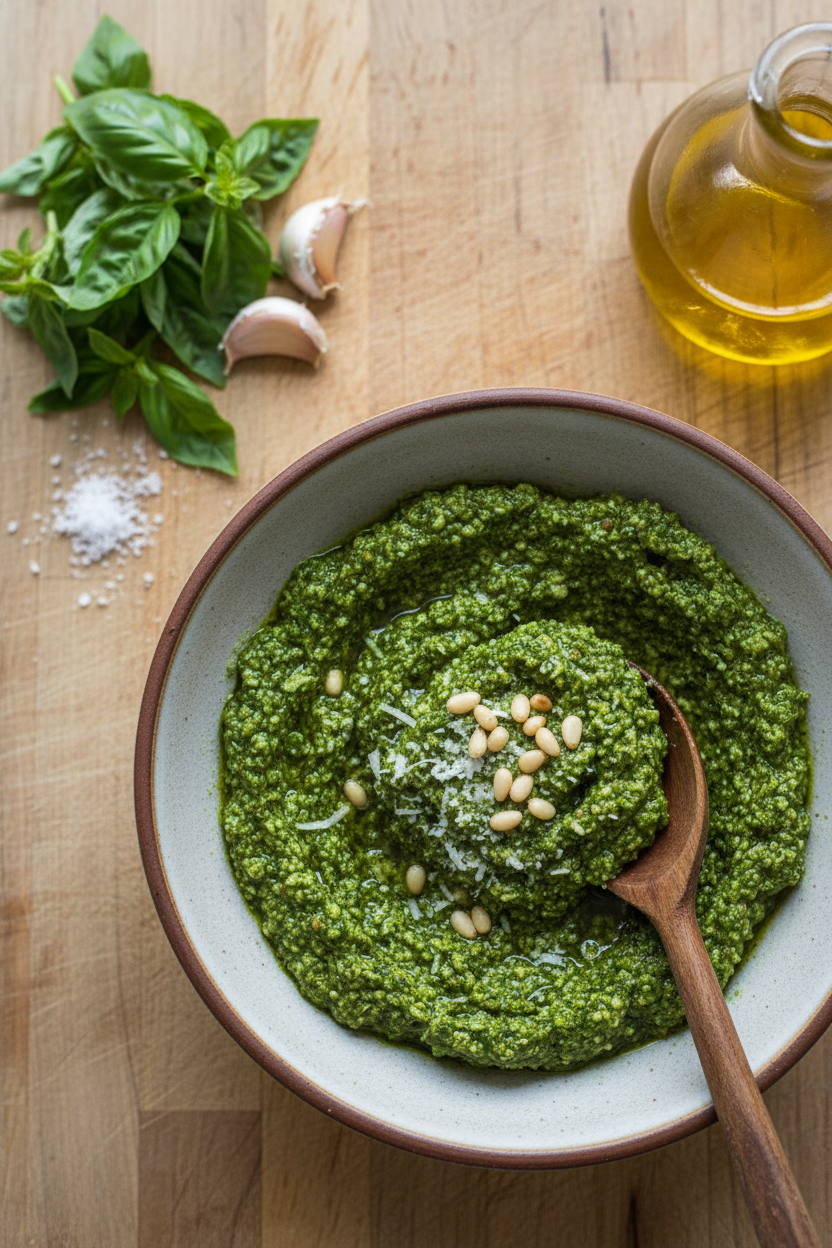
Let’s talk about keeping your pesto happy. Fresh pesto loves a cozy jar in the fridge. Pour a little olive oil on top before you close it. This keeps the bright green color safe. You can also freeze pesto for months. I use an ice cube tray for perfect little portions.
I remember my first big pesto batch. I was so proud! But I didn’t cover it with oil. The next day, it had turned a sad, dark color. I learned my lesson that day. Batch cooking saves your future self so much time. It means a quick, delicious meal is always ready for you.
Have you ever tried storing it this way? Share below!
Simple Fixes for Common Pesto Problems
Sometimes pesto can be tricky. First, it might turn brown. A thin layer of oil on top stops air from touching it. Second, it can taste bitter. Your garlic might be too strong. Try using just one clove at first. Third, it might be too thick. Simply stir in a spoonful of pasta water to loosen it up.
I once made pesto that was much too garlicky. We could taste it for hours! Fixing small problems builds your cooking confidence. You learn how each ingredient works. Getting the flavor right means your whole family will love it. Which of these problems have you run into before?
Your Quick Questions, Answered
What is the best substitute for pine nuts in pesto?
Walnuts are my favorite swap. They have a rich flavor that works perfectly. Raw almonds or cashews are great choices too. Even sunflower seeds make a fine, nut-free pesto. Just use the same amount your recipe calls for. The taste will be slightly different but still wonderful.
How do you keep basil pesto from turning brown?
Air is the enemy of green pesto. Always press plastic wrap right onto its surface. Then pour a thin layer of olive oil over the top before sealing the jar. This creates a protective barrier. *Fun fact: This same trick works for guacamole!* Storing it in a small, full jar also helps.
Can you make pesto without cheese?
Yes, you absolutely can. Just leave the Parmesan cheese out. The pesto will taste brighter and more herbal. You might want to add a tiny bit more salt. A spoonful of nutritional yeast can add a cheesy flavor if you like. It becomes a lovely, dairy-free sauce for everyone to enjoy.
What is the traditional ratio for pesto Genovese?
Traditional pesto uses a mortar and pestle. The rough ratio is two parts basil to one part cheese. Then use one part nuts to one part oil. Garlic is added to taste. This method slowly coaxes out the best flavors. A food processor is faster and still makes delicious pesto.
How long does homemade pesto last in the refrigerator?
Properly stored pesto lasts about five days. Keep it in a sealed container. Remember the plastic wrap and oil layer trick. Always use a clean spoon to take some out. If it smells sour or looks off, it is best to toss it. For longer storage, the freezer is your friend.
What dishes can you use basil pesto in besides pasta?
Oh, pesto is so versatile! Swirl it into soups or spread it on sandwiches. Mix it with mayo for a tasty dip. Toss it with roasted vegetables or new potatoes. Use it as a marinade for chicken or fish. Or simply spread it on good, crusty bread. Which tip will you try first?
From My Kitchen to Yours
I hope you feel ready to make your own pesto. It is one of life’s simple, green joys. Cooking should be fun, not stressful. My door is always open for more kitchen chats. Tell me about your cooking adventures in the comments below. Have you tried this recipe? I would love to hear all about it.
Happy cooking!
—Elena Rutherford

Fresh Basil Pine Nut Pesto Perfection
Description
Fresh Basil Pesto with Pine Nuts
Ingredients
Instructions
- Optional: If you want to use toasted pine nuts, place them in a small skillet over low-medium heat for 3-4 minutes until warm, fragrant and toasted.
- In the bowl of a food processor with a chopping blade (or blender), add the basil leaves, pine nuts, garlic cloves, salt, and parmesan cheese. Pulse until finely chopped together.
- While the food processor is running, slowly drizzle in the olive oil, scraping the sides of the bowl as needed. Taste test for salt levels and adjust as desired.
- Pesto is ready to use immediately, otherwise store it in an airtight container in the fridge for up to 5 days. You may want to cover with a thin layer of olive oil or plastic wrap to prevent oxidation.
Notes
- Nutrition per 2TBSP: Calories: 175kcal, Carbohydrates: 1g, Protein: 3g, Fat: 18g, Saturated Fat: 3g, Polyunsaturated Fat: 3g, Monounsaturated Fat: 11g, Cholesterol: 4mg, Sodium: 246mg, Potassium: 53mg, Fiber: 1g, Sugar: 1g, Vitamin A: 367IU, Vitamin C: 1mg, Calcium: 88mg, Iron: 1mg