


The Secret in the Salt Water
Let me tell you a little secret. It starts with a bucket of salty water. Soaking the turkey this way makes the meat so juicy. It is like a long, relaxing bath for the bird. I still laugh at that thought.
This matters because no one likes dry turkey. The salt water helps keep all the good juices inside. It is a simple trick that makes a big difference. Do you have a family trick for keeping meat moist? I would love to hear it.
A Cozy, Slow Start
We start the oven very low. Just 250 degrees. This gentle heat cooks the turkey through without rushing. It is like warming up by a fireplace, slowly and evenly. Doesn’t that sound nice?
We put some vegetables inside the turkey too. They steam from the inside, adding lovely flavor. Fun fact: starting the turkey breast-side down lets the back fat baste the breast as it cooks. It is a clever bit of kitchen magic.
The Story of the Giblets
Now, about those giblets in the bag. Do not throw them away! My grandson used to call them “the mystery bits.” We simmer them with vegetables to make a broth. This makes the best gravy you have ever tasted.
This matters because good gravy ties the whole meal together. It is made from the turkey’s own flavors. That broth is liquid gold. What is your favorite part of the Thanksgiving plate? Is it the gravy, the stuffing, or something else?
The Big Turn and The Final Crisp
After hours of slow roasting, we turn the turkey over. Be careful, it is hot! I use big wads of paper towels. Turning it lets the breast get beautiful and golden. The skin will get so crisp.
Then we turn the heat up to 400 degrees. This is the final touch. It browns the skin perfectly. The smell in your kitchen will be amazing. It tells everyone the feast is almost ready.
Making the Golden Gravy
While the turkey rests, we make the gravy. We use that special broth and the drippings from the pan. All those little brown bits in the pan are full of flavor. We stir them all into the gravy.
A little cornstarch mixed with water helps it thicken. You stir and watch it turn silky. This gravy is the heart of the meal. It is worth every minute. Do you like your gravy smooth, or with little bits of giblet in it?
Gathering at the Table
Let the turkey rest before you carve it. This lets the juices settle back into the meat. It is hard to wait, I know. But it makes every slice tender.
Then, bring your beautiful bird to the table. This is more than just food. It is about the work, the care, and the love you put into it. That is what makes a meal truly special. Sharing it with people you love is the best part.
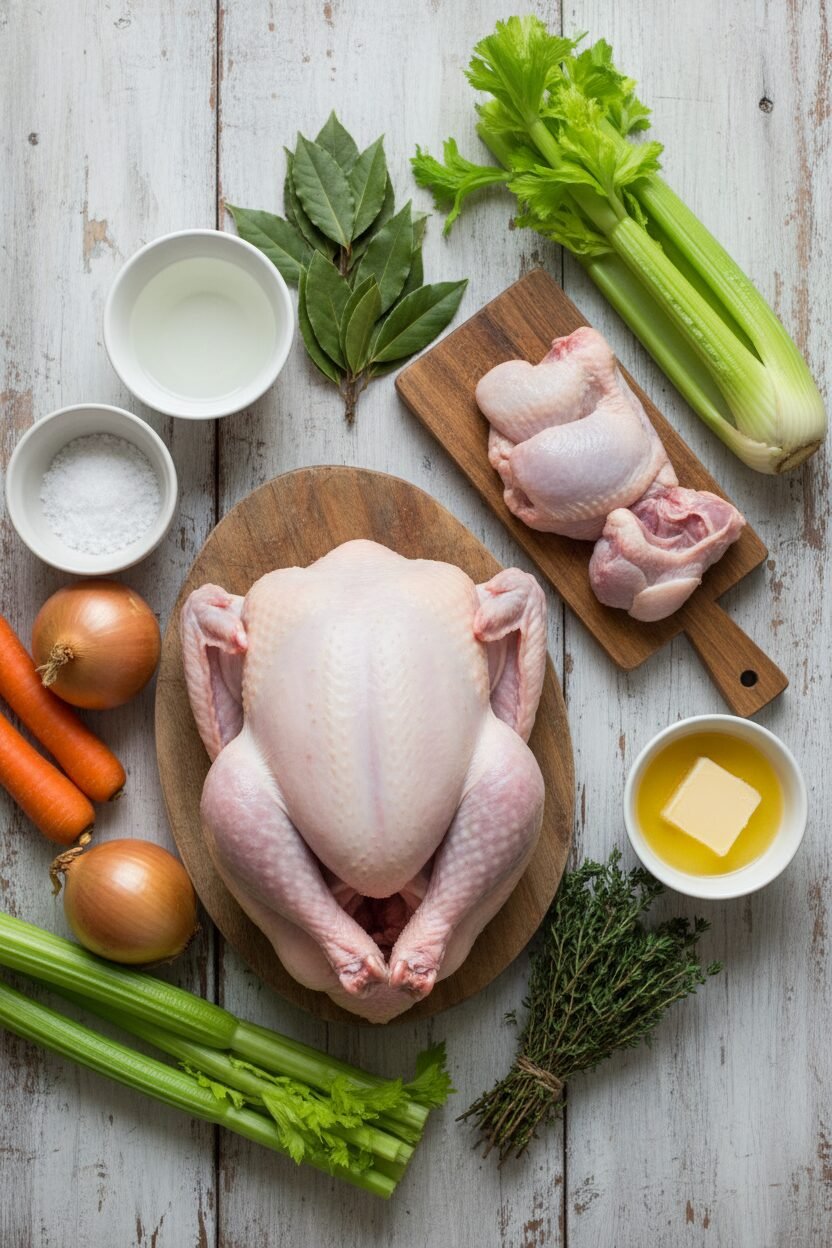
Ingredients:
| Ingredient | Amount | Notes |
|---|---|---|
| Turkey | 1 large (18-20 lbs gross weight) | Rinsed thoroughly, giblets, neck and tail piece removed and reserved |
| Table Salt (or Kosher Salt) | 1 cup (or 2 cups kosher) | For brining |
| Bay Leaf | 1 | |
| Onions | 3 medium | Chopped coarse |
| Carrots | 1 ½ medium | Chopped coarse |
| Celery Ribs | 1 ½ medium | Chopped coarse |
| Fresh Thyme | 6 sprigs | |
| Unsalted Butter | 1 tablespoon, melted, plus extra | For brushing and basting turkey |
| Cornstarch | 3 tablespoons | For gravy |
Instructions
Step 1: First, give your turkey a good bath. Put it in a big pot with salty water. Let it sit in a cold spot for 8 hours. This makes the meat so juicy later. I still laugh at that time I used a clean bucket. (A hard-learned tip: make sure it’s very cold, or use the fridge!)
Step 2: Take the turkey out and rinse it well. Use cool water from the tap. Rinse inside and out for a few minutes. You want to wash all that salt away. Doesn’t that feel like a fresh start?
Step 3: Now, let’s make a special broth. Put the giblets and neck in a pot with some veggies and water. Let it simmer for about an hour. The smell fills the whole house. Save the liver to add at the very end. What’s your favorite kitchen smell? Share below!
Step 4: Heat your oven to 250 degrees. Tuck some chopped onions and herbs inside the turkey. Then, tie its legs together with string. This helps it cook evenly. My hands always remember how my grandma showed me. (Tying it snug is the secret!)
Step 5: Scatter the rest of the veggies in your roasting pan. Add a cup of water. Place the turkey breast-side down on the rack. Now, give it a nice butter brush all over. This makes the skin golden and delicious.
Step 6: Roast for 3 hours, basting it now and then. Then, carefully turn it breast-side up. This part is a two-person job. Roast it some more, then turn the heat up to 400 degrees. Let it get beautifully brown. Finally, let it rest. The waiting is the hardest part!
Step 7: Time for the gravy! Use that lovely broth you made. Skim the fat from the pan drippings. Stir in the broth to get all the tasty bits. Thicken it with a little cornstarch mixed with water. Stir in the chopped giblets. Now, isn’t that a rich, wonderful sauce?
Creative Twists
Sometimes, I like to play with the flavors. It keeps things fun in the kitchen. Here are three simple ideas for your next turkey. They add a little surprise to every bite. My family loves when I try something new.
Add orange slices and a cinnamon stick to the cavity. It makes the kitchen smell like the holidays.
Brush the turkey with maple syrup instead of butter. It gives the skin a sweet, glossy finish.
Mix a tablespoon of apple cider into the gravy. It adds a nice little tang.
Which one would you try first? Comment below!
Serving & Pairing Ideas
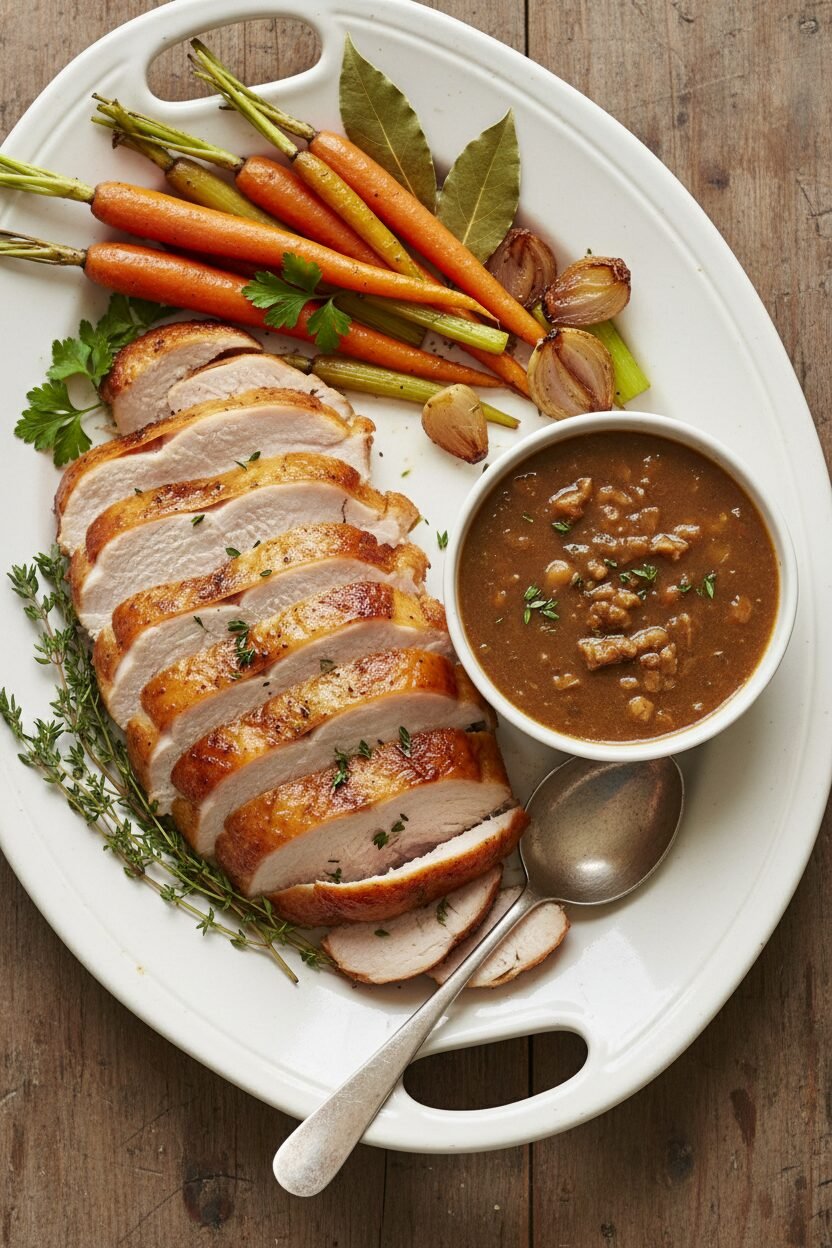
This golden turkey deserves a beautiful table. I always make creamy mashed potatoes. They are perfect for that rich gravy. A bright cranberry sauce adds a pop of color and taste. Don’t forget simple green beans on the side.
For drinks, a crisp apple cider is lovely. It’s sweet and fizzy for everyone. For the grown-ups, a glass of Pinot Noir wine pairs nicely. It sips smooth with the savory turkey. Which would you choose tonight?
Storing Your Golden Turkey & Gravy
Let’s talk about leftovers. They are a happy treasure. First, let the turkey cool completely. Then carve the meat off the bones. Store the meat and gravy in separate containers in the fridge. They will keep for about three days.
You can freeze them for longer. Use airtight containers or heavy freezer bags. The turkey will keep for two months. The gravy keeps for about one month. Thaw them in the fridge overnight when you are ready.
Reheat gently so the meat stays moist. Warm the gravy in a small pot. Add a splash of broth or water if it is too thick. I once reheated turkey in a hot oven too fast. It dried out! Low and slow is the way to go.
Batch cooking this big bird saves you time. You can make sandwiches, soups, and casseroles later. This matters because a good meal should give joy more than once. Have you ever tried storing it this way? Share below!
Simple Fixes for Common Turkey Troubles
Is your turkey skin not crispy? The oven might be too cool. Make sure you increase the heat at the end. A hot finish gives you that perfect golden crunch.
Is your gravy too thin? Mix a little more cornstarch with cold water. Stir it into the simmering gravy. It will thicken right up. I remember when my first gravy was like soup. A little cornstarch fixed it beautifully.
Is the breast meat dry but the legs are fine? Try roasting it breast-down first. The juices run into the breast meat. This keeps it wonderfully moist. Facing problems helps you learn. Every fix makes you a more confident cook. Which of these problems have you run into before?
Your Quick Questions, Answered
Q: Can I make this gluten-free?
A: Yes! Just use a gluten-free flour instead of cornstarch to thicken the gravy.
Q: What can I do ahead of time?
A: You can make the giblet broth a day or two early. Keep it in your fridge until needed.
Q: I don’t have fresh thyme.
A: That is okay. Use one teaspoon of dried thyme for the fresh sprigs.
Q: What if my turkey is smaller?
A: Just roast it for less time. Use a meat thermometer to check when it is done.
Q: Is brining the turkey necessary?
A: It is optional but helpful. It makes the meat very juicy and seasoned all through. *Fun fact: Brining is like giving the turkey a long, flavorful bath!* Which tip will you try first?
From My Kitchen to Yours
I hope you feel ready to make a wonderful turkey. It is a recipe full of love and good smells. The best meals are shared with people you care about.
I would love to hear about your cooking adventure. Tell me how it went in your kitchen. Have you tried this recipe? Your stories are my favorite thing to read. Thank you for spending time with me today.
Happy cooking!
—Elowen Thorn.

Golden Roast Turkey with Rich Giblet Gravy
Description
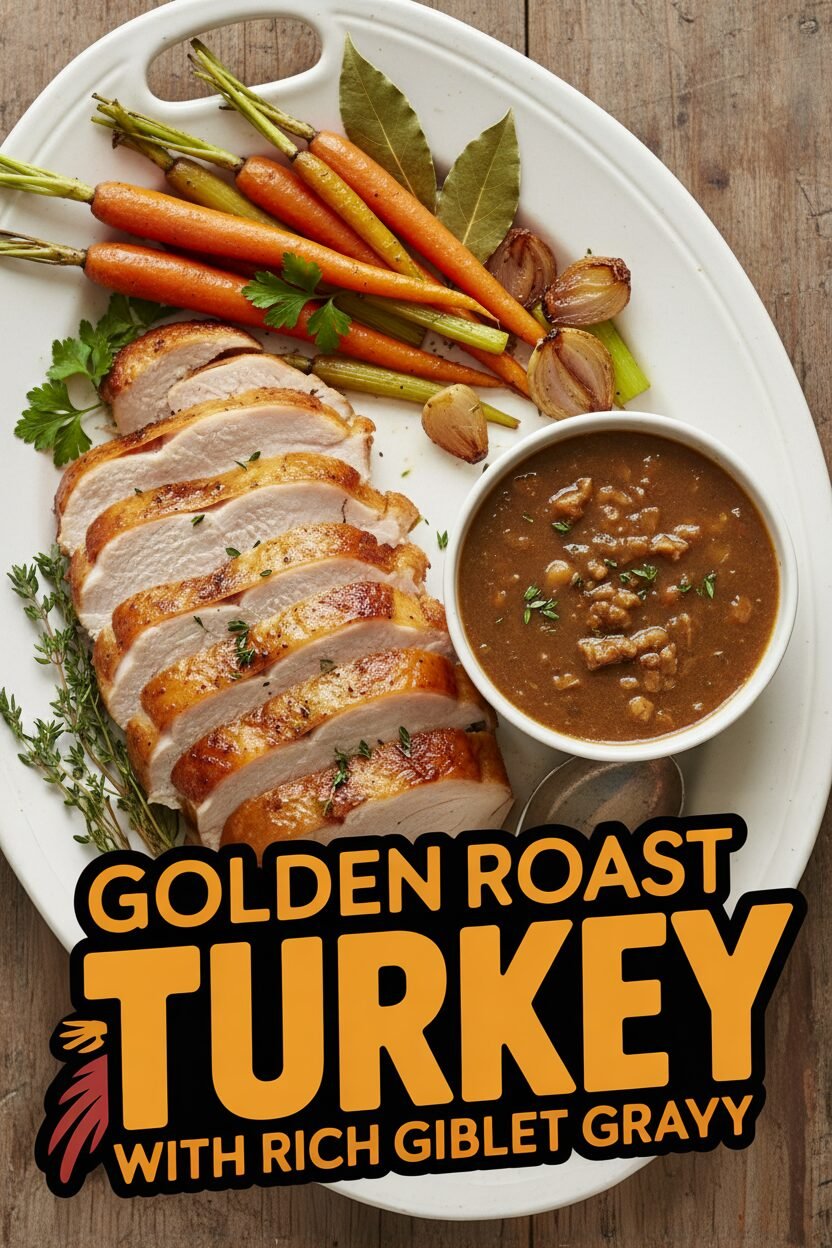
A classic centerpiece for your holiday feast, featuring a juicy, brined turkey roasted to golden perfection and served with a rich, homemade giblet gravy.
Ingredients
Instructions
- Place turkey in large stockpot or clean bucket. Add 2 gallons water and salt. Refrigerate or set in very cool (40 degrees or less) spot for 8 hours.
- Remove turkey from salt water and rinse both cavities and skin under cool running water for several minutes until all traces of salt are gone.
- Meanwhile, reserving liver, put giblets, neck, and tail piece, bay leaf, and one-third each of onions, carrots, celery, and thyme in large saucepan. Add 6 cups water and bring to simmer, skimming foam from surface as necessary. Bring to boil, then simmer, uncovered, to make a flavorful broth, about 1 hour (add reserved liver during last 5 minutes of cooking). Strain broth (setting giblets, neck, and tail aside), cool to room temperature, and refrigerate until ready to use. (You should have about 1 quart of broth.) Remove meat from neck and tail, cut giblets into medium dice, and refrigerate until ready to use.
- Heat oven to 250 degrees. Toss another third of the onions, carrots, celery, and thyme with 1 tablespoon butter and place in body cavity. Bring turkey legs together and perform simple truss; by using the center of a five foot length of cooking twine, tie the legs together at the ankles. Run the twine around the thighs and under the wings on both sides of the bird, pulling tightly. keeping the twine pulled snug, tie a firm knot around the excess flesh at the neck of the bird. Snip off excess twine.
- Scatter remaining vegetables and thyme in roasting pan; pour 1 cup water over vegetables. Set heavy-duty V-rack, adjusted to widest setting, in pan. Brush entire breast side of turkey with butter, then place turkey, breast side down, on V-rack. Brush entire back side of turkey with butter.
- Roast 3 hours, basting back side every hour or so and adding small quantities of water if vegetables look dry. Remove pan from oven (close oven door); baste with butter. With wad of paper toweling in each hand, turn breast side up. Continue to roast 1 hour, basting once or twice. With turkey still in oven, increase oven temperature to 400 degrees; roast until skin has browned and internal temperature of legs and breast registers about 165 degrees, about 1 hour longer. Transfer turkey to platter; let rest 20 to 30 minutes.
- Meanwhile, strain pan drippings into large saucepan (discard solids) and skim fat. Return roasting pan to stove and place over two burners set on medium heat. Add reserved broth to roasting pan, and using wooden spoon, stir to loosen brown bits. When juices start to simmer, strain into saucepan containing pan drippings along with reserved giblets; bring to boil. Mix cornstarch with 3 tablespoons water and gradually stir into pan juices. Bring to boil; simmer until sauce thickens slightly. Carve turkey; serve sauce passed separately.
Notes
- Ensure the turkey is completely thawed before brining. For food safety, do not brine the turkey in its original packaging. Letting the turkey rest after roasting allows the juices to redistribute, resulting in moister meat.