


My First Napoleon Disaster
I tried to make this cake for my husband’s birthday. It was our first year married. I was so nervous. I rolled the dough too thick. The layers came out like little breads. They were hard as rocks. We still ate it, laughing. I still laugh at that.
The trick is to roll the dough very, very thin. You should almost see the pan through it. Don’t be scared. The thin layers bake fast and get wonderfully flaky. This matters because the magic is in the crisp, light crunch. What’s the biggest kitchen mess you’ve ever made? I love those stories.
Why We Prick and Trim
You must prick the dough with a fork. Do this all over. It looks funny, I know. But it stops big bubbles from forming. Big bubbles make the custard slide off later.
Then, you trim the baked layer. Use a plate as a guide. Save every single scrap. Those golden crumbs are your treasure. They become the final, snowy coat for the cake. This step matters. It gives the cake its neat, beautiful shape. A little effort makes it look like it came from a fancy bakery.
The Secret in the Dough
The recipe uses vodka or cognac. This seems strange, right? Why put that in a cake? Here is a *fun fact*: alcohol creates steam fast in the hot oven. But it does not make the dough tough. This gives you those amazing, flaky layers.
You can use either one. Cognac adds a warm, gentle flavor. Vodka lets the butter’s taste shine. Which would you try first? I keep a little bottle of vodka just for baking.
Patience is Your Ingredient
This cake asks for your patience. You must chill the dough. You must cool the custard. Then, after you build it, you must wait again. This is the hardest part.
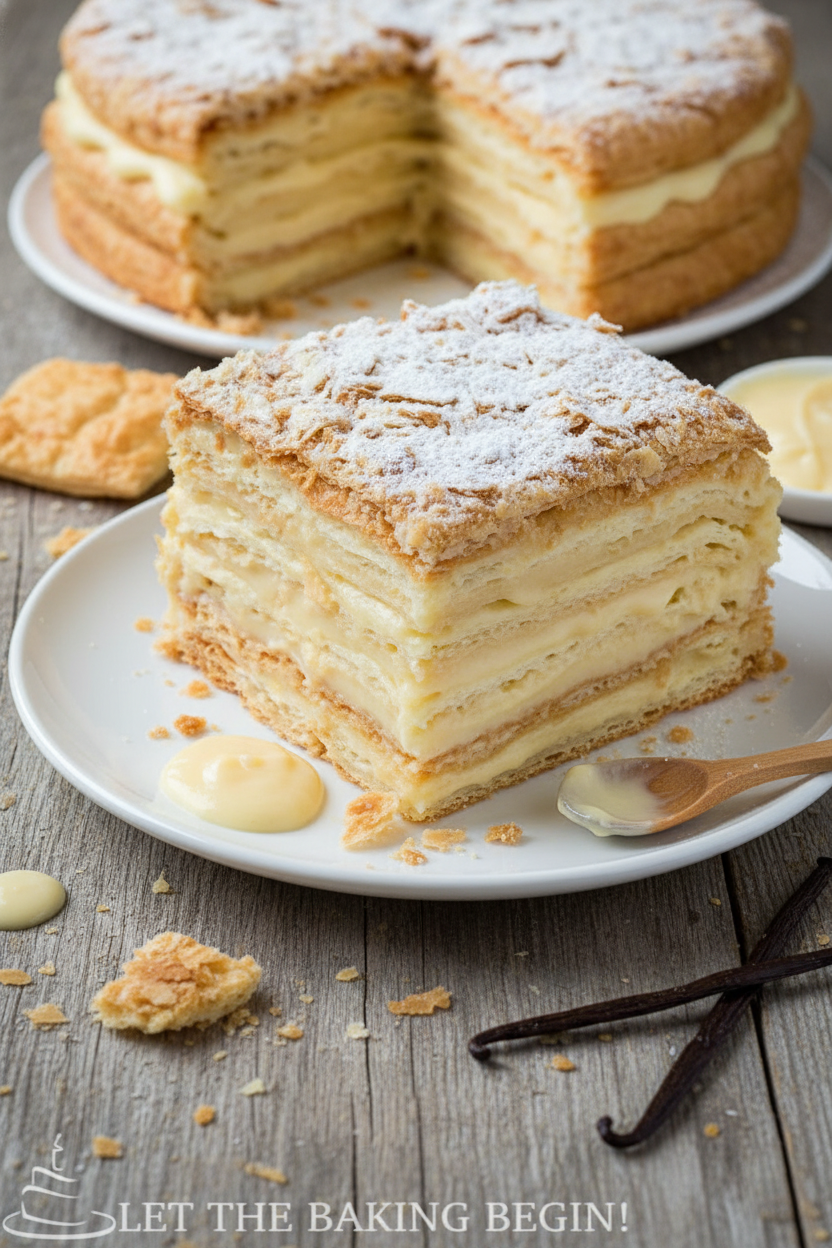
If you eat it in three hours, the layers are crisp. They shatter when you bite. If you wait a full day, something magical happens. The cake softens. The flavors melt together. It becomes one perfect, creamy bite. Doesn’t that sound amazing? Which texture do you think you’d like more?
A Cake of Love and Layers
This is not a quick cake. It has many steps. You make dough, then custard, then bake, then build. But each step is simple. Just take them one at a time.
When you serve it, you serve a story. A story of thin layers and careful spreading. A story of waiting. The result is pure love on a plate. It is meant to be shared with people you cherish. That is the real recipe. Who would you make this for?
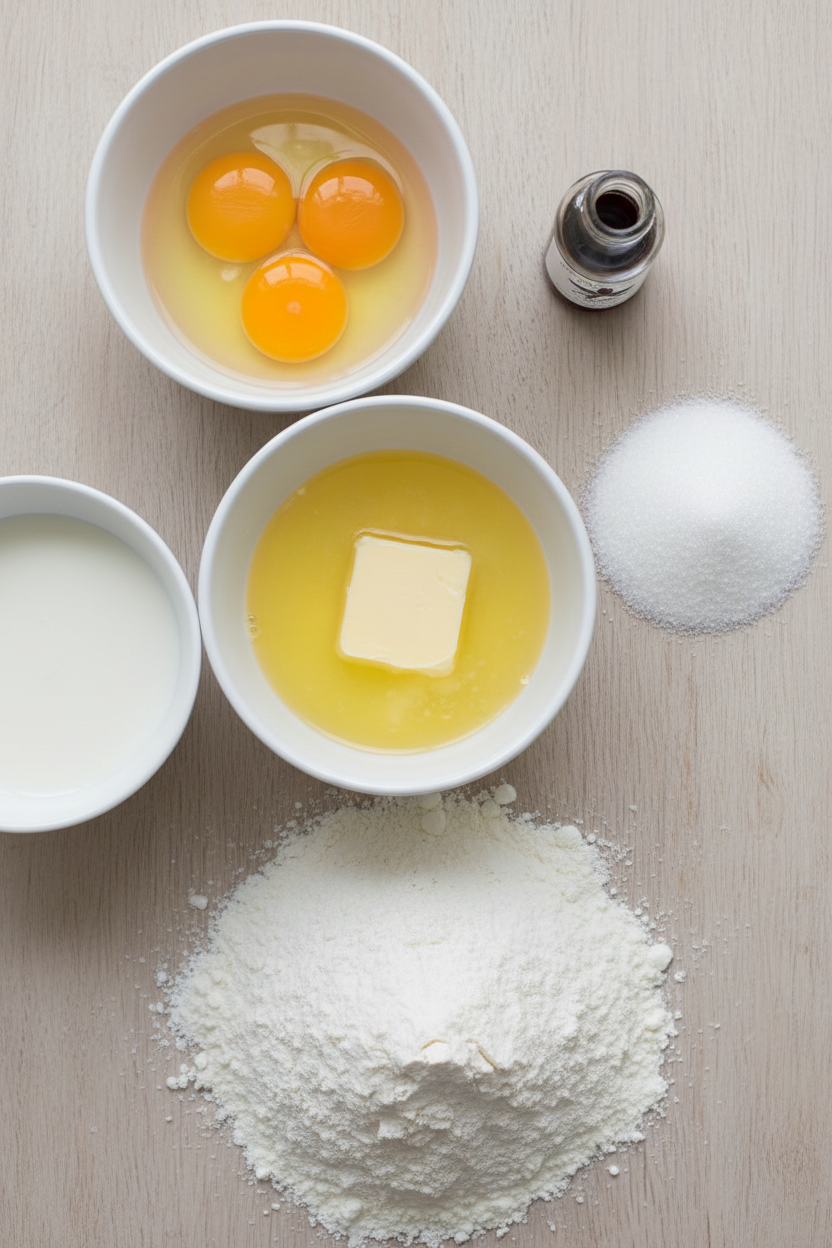
Ingredients:
| Ingredient | Amount | Notes |
|---|---|---|
| All-purpose flour | 6 cups | Sifted, for the puff pastry |
| Unsalted butter | 1 3/4 cups | Cold and cubed, for the puff pastry |
| Eggs | 2 | For the puff pastry |
| Kosher salt | ⅛ tsp | For the puff pastry |
| Water | ⅔ cup | For the puff pastry |
| White vinegar | 2 tbsp | For the puff pastry |
| Vodka or cognac | 3 tbsp | For the puff pastry |
| Egg yolks | 7 | For the custard |
| Granulated sugar | 2 cups | For the custard |
| Whole milk | 6 cups | Divided, for the custard |
| All-purpose flour | ⅔ cup | For the custard |
| Vanilla extract | 1 tbsp | For the custard |
| Unsalted butter | 1 ¾ sticks | For the custard |
Instructions
Step 1: Let’s make our dough. Whisk the eggs, salt, water, vinegar, and vodka. In your food processor, pulse the flour and cold butter. It should look like little peas. Pour in your egg mixture and pulse it just a bit. (Keep that butter cold for flaky layers!)
Step 2: Now for the sweet custard. Whisk the egg yolks and sugar in a big pot. Slowly whisk in the flour and some milk. Heat the rest of the milk until it boils. Pour the hot milk into your egg mix, whisking fast. This keeps the eggs from scrambling.
Step 3: Cook the custard until it boils and gets thick. Add the vanilla and butter, whisking until smooth. Pour it onto a baking sheet and cover it. Press the plastic right on top. Doesn’t that smell amazing? Let it cool completely. Why do we press plastic on the custard? Share below!
Step 4: Time to bake the layers. Roll one dough ball very thin on a floured pan. Prick it all over with a fork. Bake it until it’s just golden. I still laugh at how fast it puffs up! Trim it into a neat circle right away. Save all your crispy scraps for later.
Step 5: Let’s build our cake. Spread custard on a plate, add a layer, then more custard. Keep stacking them all up. Cover the whole cake with your saved crumbs. (A cake ring helps keep it neat!) Now, the hard part—waiting. Let it rest in the fridge. The magic happens as it sits.
Creative Twists
Add a layer of berry jam between the custard.
Mix lemon zest into the custard for a sunny flavor.
Use chocolate custard instead of vanilla for a change.
Which one would you try first? Comment below!
Serving & Pairing Ideas
Serve a slice with fresh berries on the side. A cup of hot tea or cold milk is perfect with it. For a fancy touch, dust the plate with powdered sugar. This cake is a celebration all by itself. Which would you choose tonight?
Storing Your Sweet Masterpiece
This cake is a labor of love. You will want it to last. Always keep your Napoleon cake in the refrigerator. Cover it well with plastic wrap or a dome. This keeps it fresh and safe to eat for several days.
You can freeze the whole cake or extra layers too. Wrap slices tightly in plastic, then foil. Thaw them in the fridge overnight. I remember my first Napoleon cake. I left it out on the counter by mistake. What a soggy mess that was!
Batch cooking the dough is a great idea. Make the dough disks ahead of time. They can wait in your fridge for days. This matters because it breaks the work into easy parts. You can bake when you feel ready. Have you ever tried storing it this way? Share below!
Common Cake Hiccups and Fixes
Sometimes, baking has little problems. Do not worry. First, dough can be sticky and hard to roll. Just use plenty of flour on your surface and rolling pin. I once used too little flour. My dough stuck to everything!
Second, layers might puff up too much in the oven. Pricking the dough well with a fork prevents this. This matters for even, flaky layers. Third, the custard might seem lumpy. Simply push it through a fine sieve. This gives you a perfectly smooth filling.
Fixing small issues builds your cooking confidence. It also makes the final flavor so much better. Every baker runs into these things. Which of these problems have you run into before?
Your Quick Questions, Answered
What is the traditional method for making Napoleon cake layers?
The traditional method is making a homemade puff pastry. You mix cold butter into flour. Then you add a liquid with eggs, water, vinegar, and vodka. The dough is rolled very thin into many circles. Each circle is baked separately until golden and flaky. This creates the signature, delicate layers that make the cake so special and delicious.
Can I use puff pastry instead of making homemade layers for Napoleon cake?
Yes, you can use store-bought puff pastry sheets. It is a great time-saver. Thaw the sheets according to the package. Then roll them out a bit thinner. Prick them with a fork and bake until golden. The texture will be slightly different but still very tasty. It is a wonderful shortcut for a busy day.
How do you prevent the custard from making the Napoleon cake soggy?
The key is to let your custard cool completely before assembling. A warm custard will melt the butter in the layers. Also, assemble the cake just a few hours before serving for crisp layers. If you want a soft cake, let it sit in the fridge for a day or two. The layers will gently soak up the custard evenly.
What are some tips for achieving perfectly flaky layers in Napoleon cake?
Keep your butter very cold and do not overwork the dough. Roll the dough out as thin as you can. Prick the rolled layers all over with a fork before baking. This stops big air bubbles. Bake them in a hot oven just until lightly golden. *Fun fact: The vodka in the dough evaporates quickly, helping create extra flakiness!*
Can Napoleon cake be made ahead of time and how is it stored?
Yes, it is perfect for making ahead. You can make the dough and custard days in advance. Keep them covered in the fridge. After assembling, the whole cake must be stored in the refrigerator. Cover it well with plastic wrap. It gets softer and more blended after 24 hours. This actually improves the flavor.
Are there any variations on the classic custard filling for Napoleon cake?
Absolutely. You can add different flavors to the custard. Try a bit of lemon zest for a fresh taste. Some people love adding a spoonful of rum extract. For a chocolate version, mix in some melted and cooled dark chocolate. These small changes let you make the cake your own special treat.
Which tip will you try first?
From My Kitchen to Yours
I hope you feel ready to try this beautiful cake. It is a project, but a joyful one. Every layer is a step toward something wonderful. I would love to hear about your baking adventure.
Please tell me all about it in the comments. Have you tried this recipe? I read every note you leave. Sharing stories is the best part of cooking.
Happy cooking!
—Danielle Monroe.

Homemade Napoleon Cake with Flaky Layers and Custard
Description
A classic, show-stopping dessert featuring incredibly flaky, homemade puff pastry layers and rich, smooth vanilla custard.
Ingredients
Instructions
- Make the puff pastry dough: In a large cup, whisk together 2 eggs and ⅛ tsp kosher salt. Stir in ⅔ cup water, then add 2 tbsp white vinegar and 3 tbsp vodka or cognac. Set aside. Add 6 cups sifted all-purpose flour and 1 3/4 cups cold, cubed unsalted butter to a food processor. Pulse until the mixture resembles peas. Pour the egg mixture into the flour-butter mixture and pulse until the dough begins to stick to itself and form, but is not fully formed. Turn the contents onto a work surface. Gather and stick the dough together with your hands, working as little as possible. Knead only a few times until it comes together. Do not overwork; the butter must remain in small chunks. Cut the dough into 4 equal pieces. Roll each into a ball, flatten into a disk, cover with plastic wrap, and refrigerate for 1-2 hours (or up to several days).
- Make the custard: In a 6-quart pot, whisk together 7 egg yolks and 2 cups granulated sugar, adding a little milk as needed to help mix. Whisk in ⅔ cup all-purpose flour until uniform and lump-free, adding bits of milk as needed. In a separate pot, heat the remaining 6 cups whole milk over medium heat, whisking continuously to prevent scorching, until boiling. Alternatively, microwave until boiling. Slowly pour the hot milk into the egg yolk mixture while whisking constantly to temper. Bring the mixture to a boil over medium heat, whisking continuously to prevent scorching. Once boiling, cook for 2-3 minutes until thickened and the flour taste dissipates. Add 1 tbsp vanilla extract and 1 ¾ sticks unsalted butter. Whisk until the butter is completely melted. If the custard has clumps, run it through a fine sieve. Pour the custard into a rimmed baking sheet. Cover with plastic wrap pressed directly onto the surface to prevent a skin. Allow to cool. (Can be refrigerated covered for up to 3 days.)
- Bake the cake layers: Preheat oven to 400°F with a rack in the middle. Turn a 12″x16″ baking sheet over (or use a flat cookie sheet right side up) and place on a damp kitchen towel to prevent slipping. Remove one dough ball from the fridge at a time. Divide it into 2 equal pieces. On the prepared baking sheet, dusted with flour as needed, roll each piece into a very thin 12 ½” circle. Prick the dough every 1-2 inches with a fork to prevent uneven rising. Bake for 5-7 minutes, or until lightly golden. Use a timer. Immediately after baking, place an 11-inch template (like a dinner plate) on the layer and trim around it with a sharp knife or pizza cutter. Collect the scraps in a separate bowl. Handle the round layers carefully to avoid cracking. Repeat with the remaining dough to make 8 layers total. Crumble the baked scraps into fine crumbs. Set aside for decorating.
- Assemble the cake: Divide the cooled custard into 8 equal portions. Place a dab of custard on a serving plate and top with the first cake layer. Press gently to adhere. Optionally, surround the layer with a cake ring secured with a ribbon or cake strip to keep edges tidy. Spread one portion of custard evenly over the cake layer inside the ring. Repeat with the remaining layers and custard, finishing with a layer of custard on top. Sprinkle some cake crumbs over the top to cover completely. Run a thin knife inside the cake ring to loosen, then remove the ring. Cover the sides of the cake with the remaining custard in an even layer. Press the remaining cake crumbs onto the sides, covering completely. Sprinkle any extra crumbs on top. Tap the serving plate to settle loose crumbs, clean the plate edges, and refrigerate until ready to eat.
Notes
- For a crispy, flaky texture, serve about 3 hours after assembly. For a soft, tender texture, wait 24-48 hours after assembly before serving. Keep covered in the refrigerator.