


My Kitchen at Easter
Easter means one thing in my kitchen. It is time to make Traditional Italian Easter Bread. We call it Pane di Pasqua. The whole house fills with the smell of sweet Italian bread and lemon. Doesn’t that smell amazing?
I have made this for fifty years. My own Nonna taught me. She said the braided ring means new life. The colored eggs in the bread are like little jewels. This matters because food tells our family’s story. It keeps our Italian Easter traditions alive.
The Dough That Tells a Story
This homemade Easter bread dough is soft and rich. You mix yeast, flour, sugar, and lemon. The lemon zest makes it sing. I still laugh at that. My grandson once used a whole lemon’s peel. The bread was very zesty!
Kneading the dough is my favorite part. You push and fold for five minutes. Your hands learn the feel of it. This matters. Good Easter baking is not rushed. It is a quiet, happy time. What is your favorite kitchen smell? Tell me in the comments.
Braids and Bright Eggs
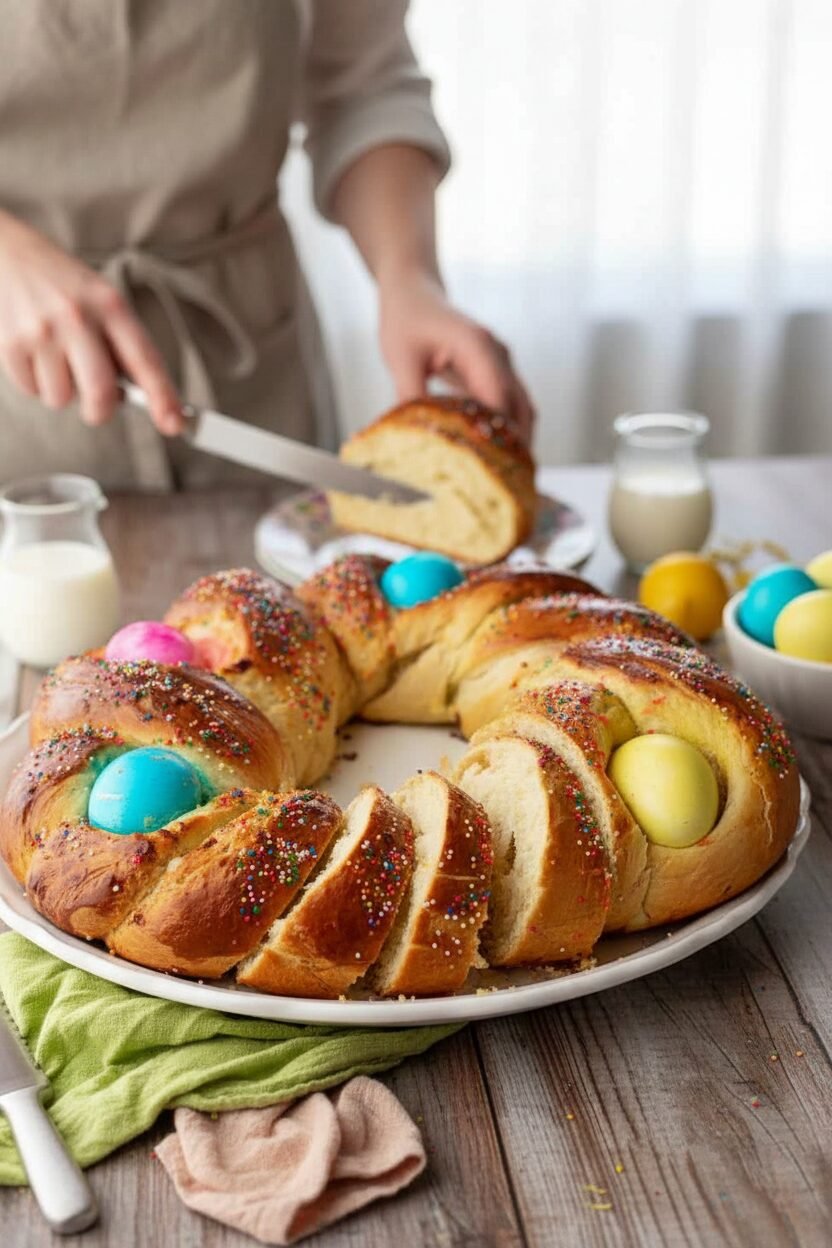
Now for the fun part. You roll the dough into two long ropes. Then you braid them into a big ring. This makes a braided Easter bread. It looks so pretty. You leave little spaces in the braid.
Those spaces are for your colored eggs. Use five uncooked, dyed eggs. Gently nestle them in the dough. *Fun fact*: The eggs bake right inside the bread! They come out set and beautiful. This Easter bread with eggs is a true celebration.
A Sweet Tradition
Why do we put eggs in bread? It is an old symbol. The egg means new life. The circle of bread means God’s love has no end. Every slice of this sweet Italian bread reminds me of that.
I love to add sprinkles before baking. It makes the loaf sparkle. This Italian Easter bread recipe is a gift. You give your time and care. Have you ever baked bread with your family? I would love to hear about it.
Your Turn to Bake
This recipe might look long. Do not worry. Just take it one step at a time. Let the dough rise slowly. The wait is worth it. You will have a golden, glorious loaf.
Serve it warm. The bread is soft and slightly sweet. It is perfect for a special breakfast. Will you try adding the colorful sprinkles? Or will you keep it simple? Let me know how your Easter baking turns out.
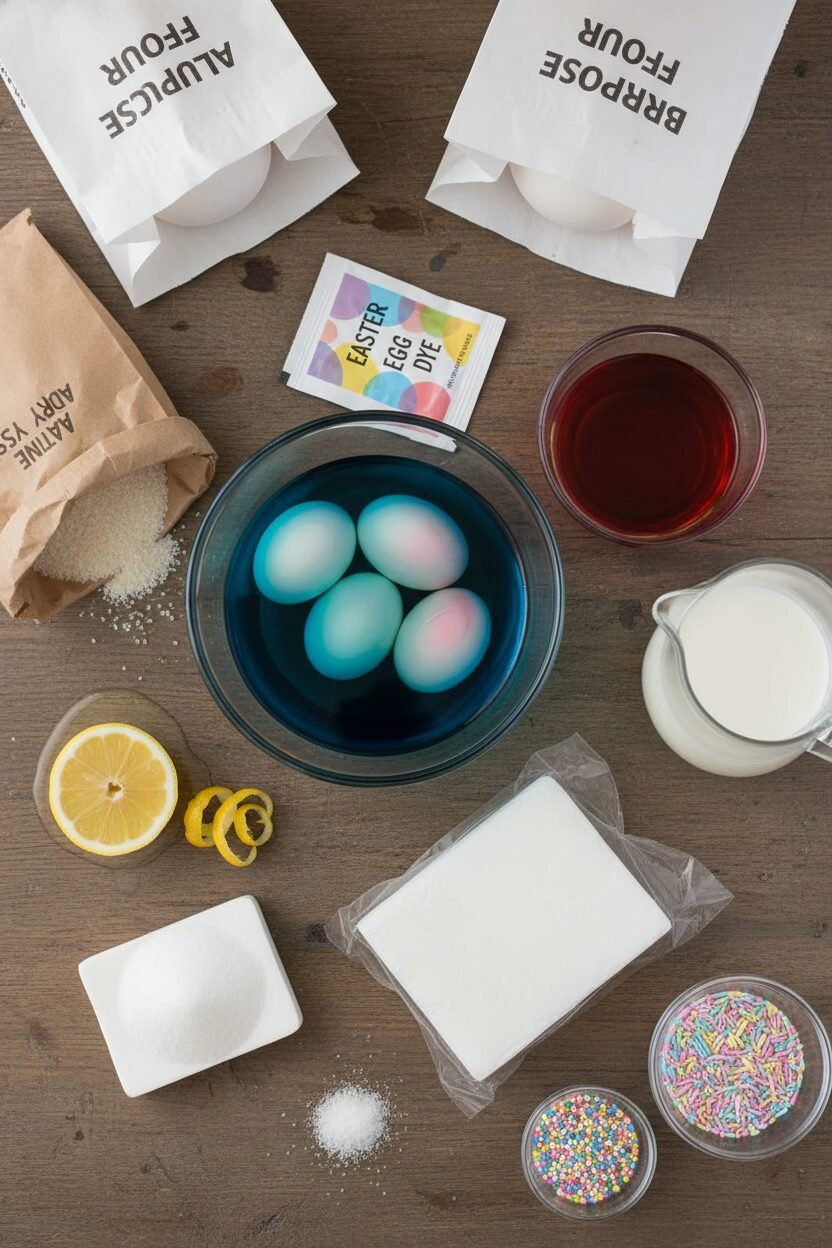
Ingredients:
| Ingredient | Amount | Notes |
|---|---|---|
| Eggs, uncooked | 8 large | Divided use |
| Food coloring or Easter egg dye | As needed | For decorating eggs |
| Warm water (approx. 110°F) | 1.5 cups | Divided use |
| Active dry yeast | 2 packages | |
| All-purpose or bread flour | 6 – 6 ¼ cups | Plus extra for kneading |
| Shortening | ¾ cup | |
| Fresh lemon juice | 2 Tablespoons | |
| Lemon zest, grated | 1 Tablespoon | |
| Granulated sugar | 1 cup | |
| Salt | 1 teaspoon | |
| Milk | 1 Tablespoon | For egg wash |
| Non-pareil candies or sprinkles | For decorating | Optional |
Instructions
Step 1: First, dye five eggs for your Easter bread with eggs. Let them dry in the fridge. Now, wake up the yeast. Mix it with warm water and a little flour. Watch it get foamy! This makes your sweet Italian bread rise. (Tip: Your water should feel like a warm bath.)
Step 2: Next, make the dough for your homemade Easter bread. Whip shortening with lemon zest. It smells so sunny! Mix in fluffy eggs and that bubbly yeast. Stir in flour until a soft dough forms. Knead it on the counter until it’s smooth. This part is fun, like play-dough.
Step 3: Let your dough rise in a greased bowl. Cover it with a towel. Find a warm spot for it. I use the oven with the light on. Wait until it doubles in size. This is the magic of Easter baking! What’s your favorite warm spot for dough to rise? Share below!
Step 4: Shape your braided Easter bread. Divide the dough and roll two long ropes. Braid them into a ring on your pan. Leave spaces for your colored eggs in bread. Gently nestle each egg into the braid. It looks so pretty and festive already.
Step 5: Finally, bake your Traditional Italian Easter Bread. Brush it with a yolk wash for shine. Add sprinkles for joy! Bake until it’s golden brown. Your kitchen will smell amazing. This pane di pasqua is a delicious Italian Easter tradition. (Tip: Let it cool a bit before slicing.)
Creative Twists
Use citrus zest from an orange instead of a lemon. Weave colorful ribbon through the cooled braid. Fill the dough with a handful of chocolate chips. Which one would you try first? Comment below!Serving & Pairing Ideas
Slice your sweet Italian bread for breakfast. It’s wonderful with soft butter and jam. For a special brunch, serve it with fresh berries. A glass of cold milk is the perfect partner. This homemade Easter bread is a celebration all by itself. Which would you choose tonight?
Keeping Your Easter Bread Fresh
Let’s talk about storing your beautiful braided Easter bread. Once it’s cool, wrap it tightly in plastic wrap. It will stay soft on the counter for two days. For longer keeping, I freeze mine. I slice it first and wrap slices in foil. This way, I can take out just one piece for my morning tea.
I remember my first loaf. I left it uncovered overnight. It was dry as dust by morning! Now I never forget to wrap it. To reheat, warm slices in a toaster oven or a regular oven. A quick 5-10 minutes at 300 degrees brings back that fresh-baked feel. Batch cooking this bread is a wonderful idea. You can make two braids at once. Enjoy one now and freeze one for later. This matters because it spreads the joy of your baking. You can share that homemade taste for weeks. Have you ever tried storing it this way? Share below!
Simple Fixes for Common Bread Troubles
Even grandmas have baking days that go a little wrong. Here are three common issues and their easy fixes. First, if your dough won’t rise, check your yeast. The water must be warm, not hot. Hot water will kill the yeast. I once used boiling water by mistake. My dough just sat there like a sad lump!
Second, if your bread is too dense, you may have added too much flour. Add the last cups slowly. The dough should be soft and slightly sticky. Third, if the bread browns too fast, tent it with foil. This stops the top from burning while the inside cooks. Fixing these issues builds your confidence. You learn that mistakes are just lessons. It also ensures your sweet Italian bread is light and golden every time. Which of these problems have you run into before?
Your Quick Questions, Answered
How to dye eggs for Italian Easter bread
You dye the raw eggs before baking. Use your favorite food coloring or Easter egg dye kit. Dip five uncooked eggs and let them dry in the fridge. This keeps the dye from running into your braided Easter bread dough. The colored eggs in bread make a beautiful, traditional centerpiece for your Easter table. It is a fun part of the Easter baking process.
Traditional Italian Easter bread recipe
The traditional Italian Easter bread, or Pane di pasqua, is a sweet, braided bread. Our recipe uses yeast, flour, sugar, lemon, and eggs. You braid the dough into a ring and bake colored eggs right into it. This homemade Easter bread is a cherished part of Italian Easter traditions. The process takes time for the dough to rise, but the result is so special.
Why do you put eggs in Easter bread?
The eggs are a symbol of new life and spring. Baking them into the bread is an old tradition. It turns the Easter bread with eggs into a beautiful centerpiece. The eggs are not meant to be eaten after baking. They are for decoration. This practice makes the sweet Italian bread extra meaningful for the holiday celebration.
Can you eat the eggs in Italian Easter bread?
No, you should not eat the baked colored eggs. They are raw eggs that bake in a low oven for a short time. They are not cooked enough to be safe for eating. They are purely for decoration. Enjoy the delicious braided Easter bread around them instead. Always remove the eggs before serving slices of your homemade Easter bread.
Sweet vs savory Italian Easter braid variations
The traditional Italian Easter bread recipe is sweet. It has sugar and lemon zest. Some families make a savory version. They might add cheese, pepper, or cured meats into the dough. The sweet version is the most common for the holiday. Both are part of lovely Italian Easter traditions. The sweet bread is often enjoyed as a breakfast or dessert treat.
How to store and reheat Easter bread
Store your cooled Easter bread wrapped tightly on the counter for two days. For longer storage, freeze it sliced and wrapped in foil. To reheat, warm slices in a 300-degree oven for 5-10 minutes. This brings back its soft texture. Remember to remove the decorative eggs before storing. This keeps your sweet Italian bread tasting fresh and delicious for days. Which tip will you try first?
A Final Word from My Kitchen to Yours
I hope you feel ready to make this special bread. Baking this Pane di pasqua connects us to generations of home cooks. *Fun fact: The braided ring shape is meant to represent a crown.* It is a recipe made with love and shared with joy. I would love to hear about your baking adventure.
Tell me all about it in the comments below. Have you tried this recipe? Did your family love it? Sharing our stories is the best part. Thank you for spending this time with me in my kitchen.
Happy cooking!
—Elena Rutherford

Italian Easter Braid with Dyed Eggs
Description
Traditional Italian Easter Bread Recipe
Ingredients
Instructions
- Generously grease a non-stick baking sheet or line with parchment paper or a silicone liner.
- Dip 5 of the eggs in the food coloring or egg dye and set aside to dry in the refrigerator.
- Add 1 cup of warm water into a large bowl and sprinkle the yeast over the top. Let sit for 5-10 minutes until it starts to foam.
- Add in the remaining ½ cup of warm water and sift in 1 ½ cups of the all purpose flour. Mix and beat well with a wooden spoon until mostly smooth.
- Cover the bowl with a towel or plastic wrap and let sit in a warm place for 1-2 hours or until doubled in size.
- In another large bowl, add the shortening with the lemon juice and lemon zest. Whip with an electric hand mixer until the shortening is softened and combined with the juice and zest.
- Slowly mix in the sugar and salt, whipping after each addition until the mixture is fluffy.
- Crack two of the remaining eggs into a medium bowl and separate the last egg. Add the egg white to the bowl with the whole eggs and reserve the egg yolk in the refrigerator for use later.
- Whip the eggs and egg whites with an electric hand mixer for 2-3 minutes until thick and piled softly.
- Add the egg mixture, in thirds, to the shortening mixture, whipping after each addition.
- Pour the risen yeast and flour mixture into the shortening and egg mixture and use a wooden spoon to mix by hand until smooth.
- Add one half of the remaining flour and beat until smooth.
- Gradually add in the last half of the flour mixture, a little bit at a time, until you have a smooth dough. All of the flour may not be used.
- Turn the dough out onto a lightly floured surface and knead for 4-5 minutes until the dough is smooth and elastic.
- Grease a clean large bowl with butter or baking spray and add the dough to the bowl. Flip it over so the dough is greased on all sides and then cover the bowl with a towel or plastic wrap. Let the dough rise for 1-2 hours or until doubled in size.
- Punch down the dough and then divide it into two pieces and shape into balls. Cover loosely with a towel on the counter and let rest for 10 minutes. While the dough is resting, preheat the oven to 350˚F.
- Roll each ball of dough into a long rope that is approximately 36 inches long and 1 ½ inches thick.
- Using the two long pieces of dough, loosely braid the dough into a ring, leaving spaces in the braid for the 5 colored eggs.
- Place the ring on the prepared baking sheet and place the colored eggs inside the spaces of the braid.
- Bake the bread for 10 minutes in the preheated oven. While the bread is baking, mix together the reserved egg yolk with the milk in a small bowl.
- Brush the top of the bread with the egg wash, add sprinkles and then place it back in the oven to bake for another 35-45 minutes until it is golden brown.
- Remove and let cool for 10 minutes before slicing and serving.
Notes
- The dyed eggs are baked raw inside the bread. Ensure the bread is fully baked and golden brown before removing from the oven.