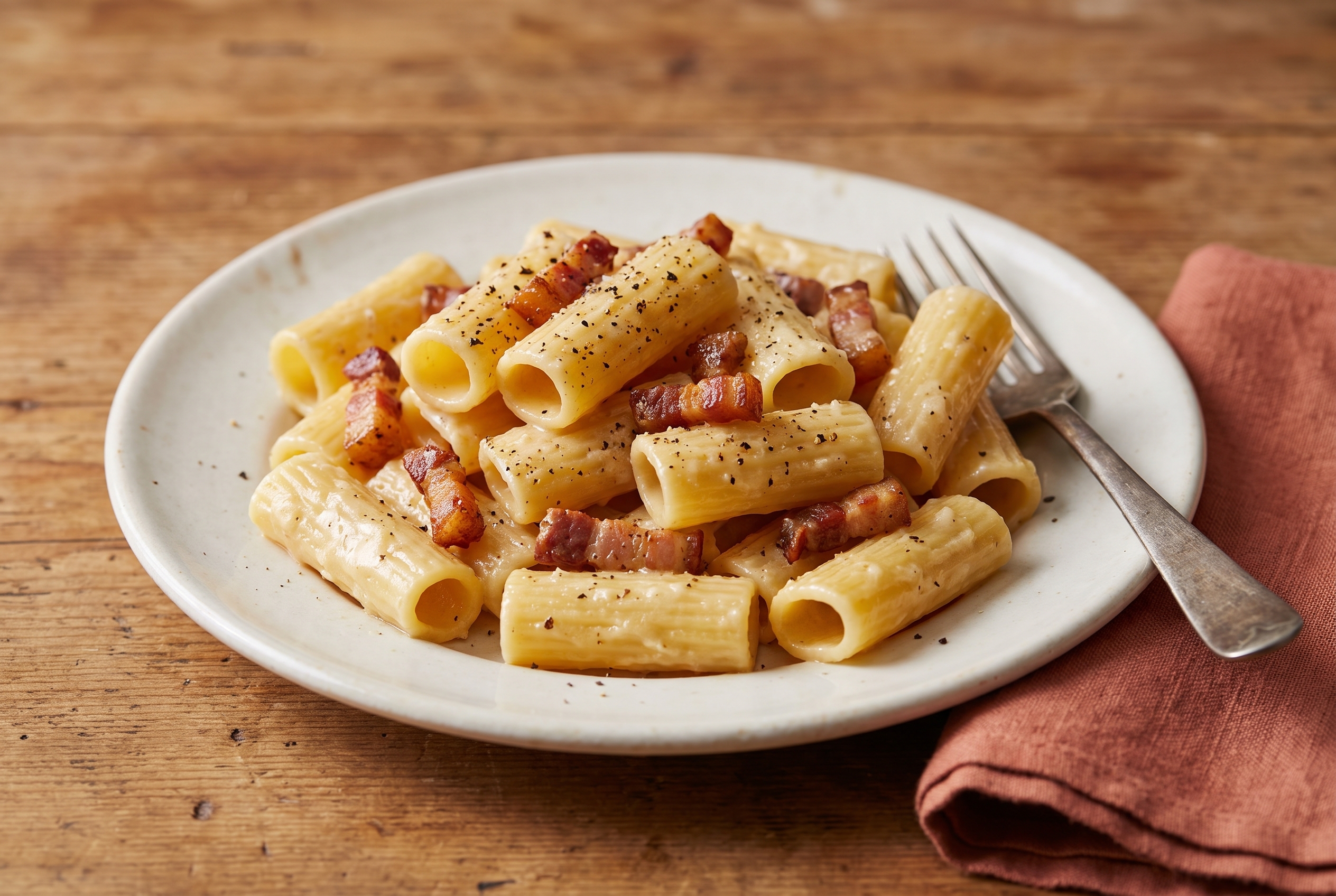
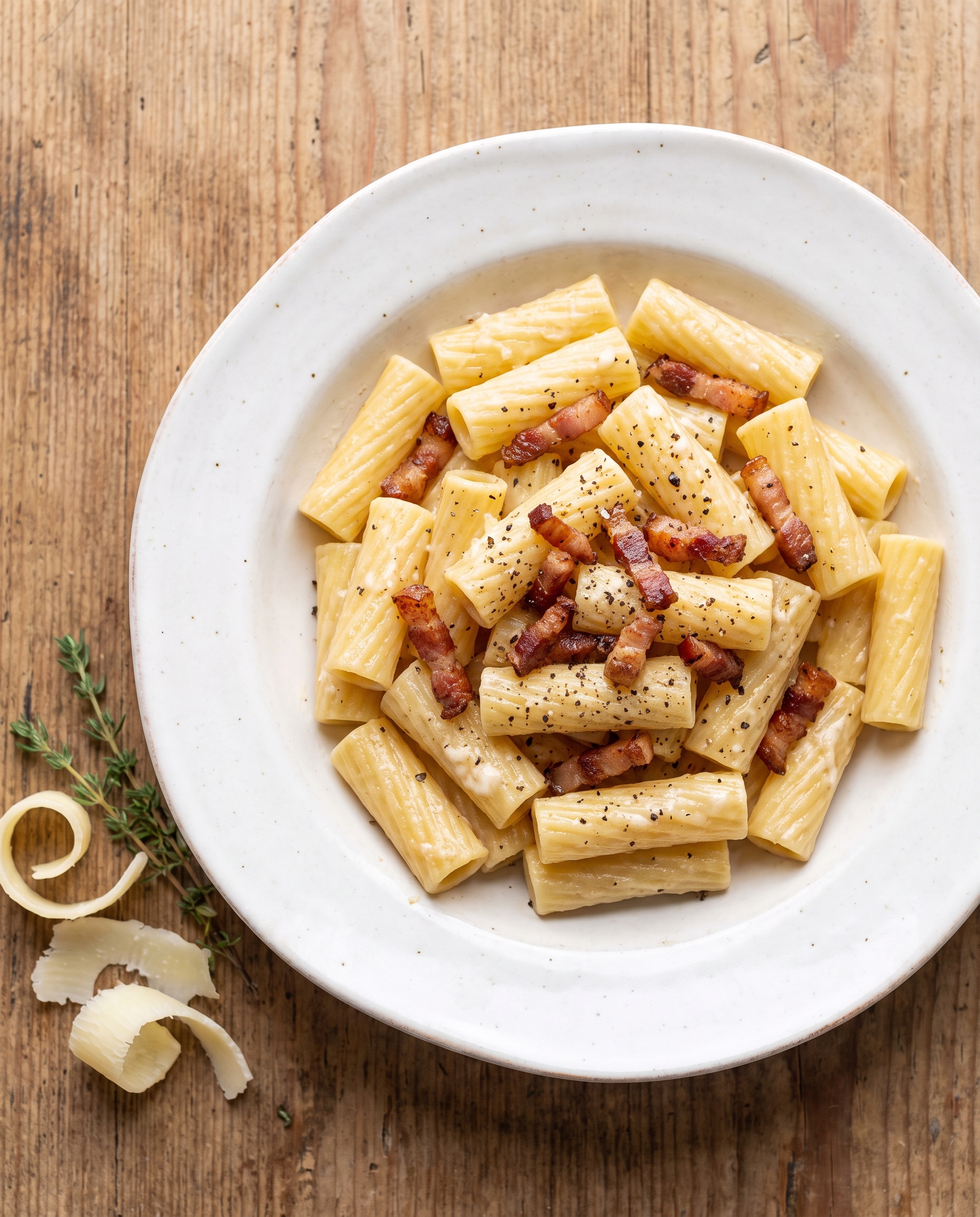
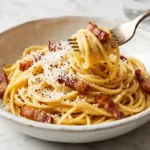
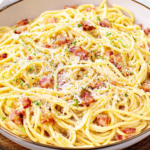
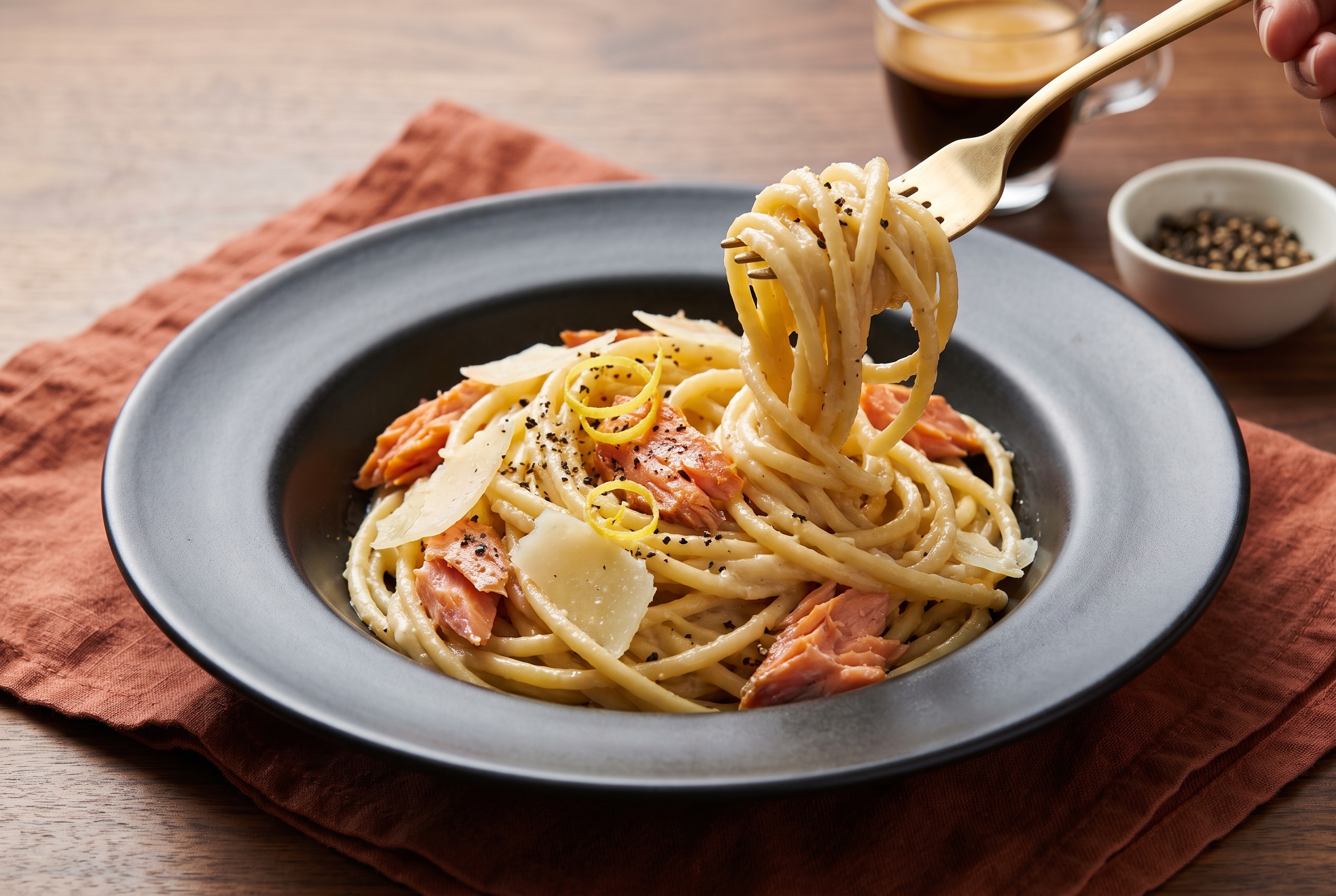
Have you ever fallen in love with a dish that has almost no ingredients? I did, the first time I twirled rigatoni in Rome’s Testaccio neighborhood. Four things, that’s it. Guanciale, pecorino, black pepper, pasta. The waiter set the bowl down and walked away like he had done nothing special, and the smell that came up was everything.
Pasta alla gricia is the dish that came before carbonara and amatriciana. Some Romans call it “white amatriciana” because the sauce is built on the same pork-and-cheese backbone, just without the tomato. If you have ever felt that the simplest pasta is the most honest, you are going to love this one.
Why Gricia Matters
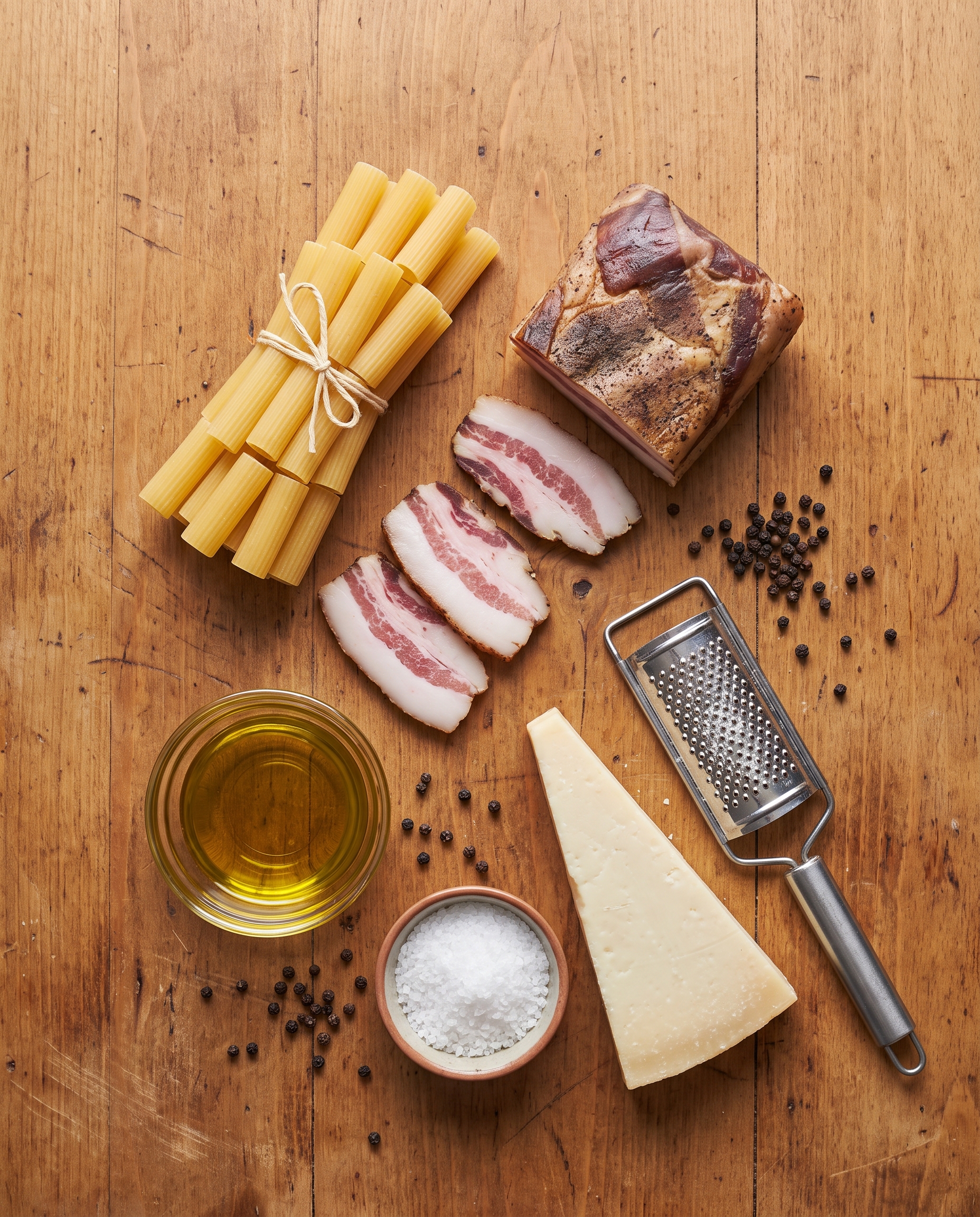
The technique that makes or breaks this dish is the second cook. You pull the pasta out of the water about two minutes before it is done, then finish it in the guanciale pan with a splash of cloudy pasta water. The starch, the rendered fat, and the pecorino all emulsify into a sauce that clings like it was always meant to be there. On ingredients: guanciale is cured pork jowl, not pancetta or bacon. Pancetta is too lean; bacon is smoked and fights the pecorino. Pecorino Romano, not Parmesan — the dish will not be the same if you swap them.
Best-Ever Pasta alla Gricia
What I love about this recipe is how unfussy it is. No sauce to reduce, no special equipment. Just a wide skillet, a big pot, and the attention to stir the cheese in slowly at the end. Twenty minutes start to finish. Serves four as a main, six as a starter.
Ingredients
1 tablespoon extra-virgin olive oil
6 ounces guanciale (cured pork jowl), cut into 3/4-inch pieces
8 ounces rigatoni
Kosher salt, for the pasta water
2 teaspoons coarsely ground black pepper, preferably freshly cracked
Step 1: Render the guanciale slowly. Heat the olive oil in a large skillet over medium-low. Add the guanciale and cook, stirring often, until the fat has rendered and the pieces are golden and crisp at the edges, 10 to 15 minutes. Transfer the guanciale to a small bowl with a slotted spoon, leaving the fat in the pan. Do not rush this — low and slow is what gives you the flavorful fat you will build the sauce on.
Step 2: Start the pasta. Bring a large pot of water to a rolling boil and salt it generously — it should taste like the sea. Add the rigatoni and cook it about two minutes shy of al dente. Before draining, scoop out 1 1/2 cups of that starchy water and set it aside. This is the backbone of your sauce.
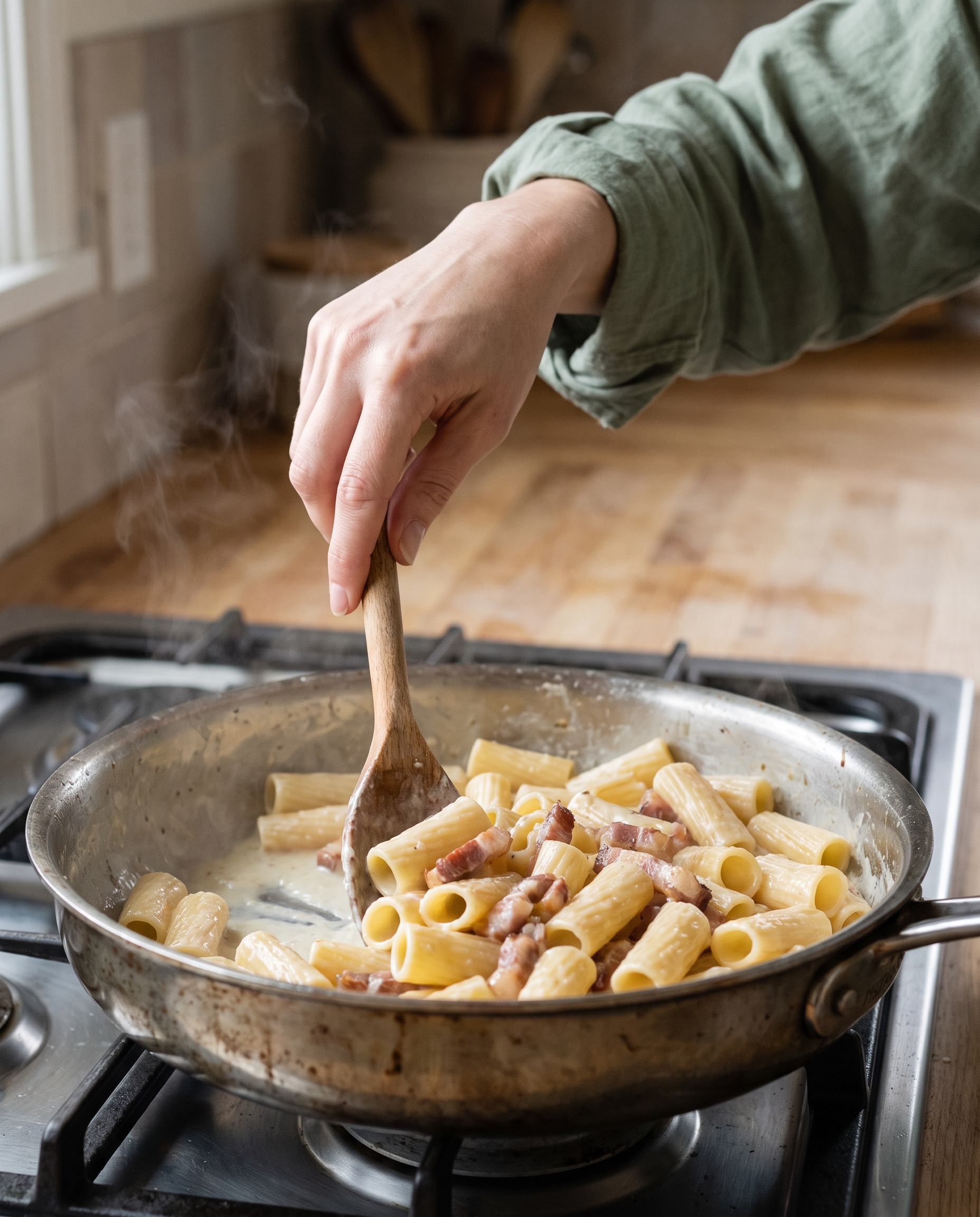
Step 3: Build the sauce. Pour 3/4 cup of the reserved pasta water into the skillet with the rendered fat. Bring to a gentle boil over medium heat, swirling often, until the mixture emulsifies, about 1 minute. Add the rigatoni and toss continuously, splashing in more pasta water as needed, until the pasta is al dente and the sauce coats the back of a spoon, 5 to 7 minutes. Have you ever noticed how a Roman sauce looks almost like cream? This is how.
Step 4: Bring it all together off the heat. Take the pan off the burner. Add the crispy guanciale, the cracked black pepper, and two-thirds of the grated pecorino. Toss vigorously until the cheese melts into a smooth, glossy sauce. If it looks tight, splash in a little more pasta water.
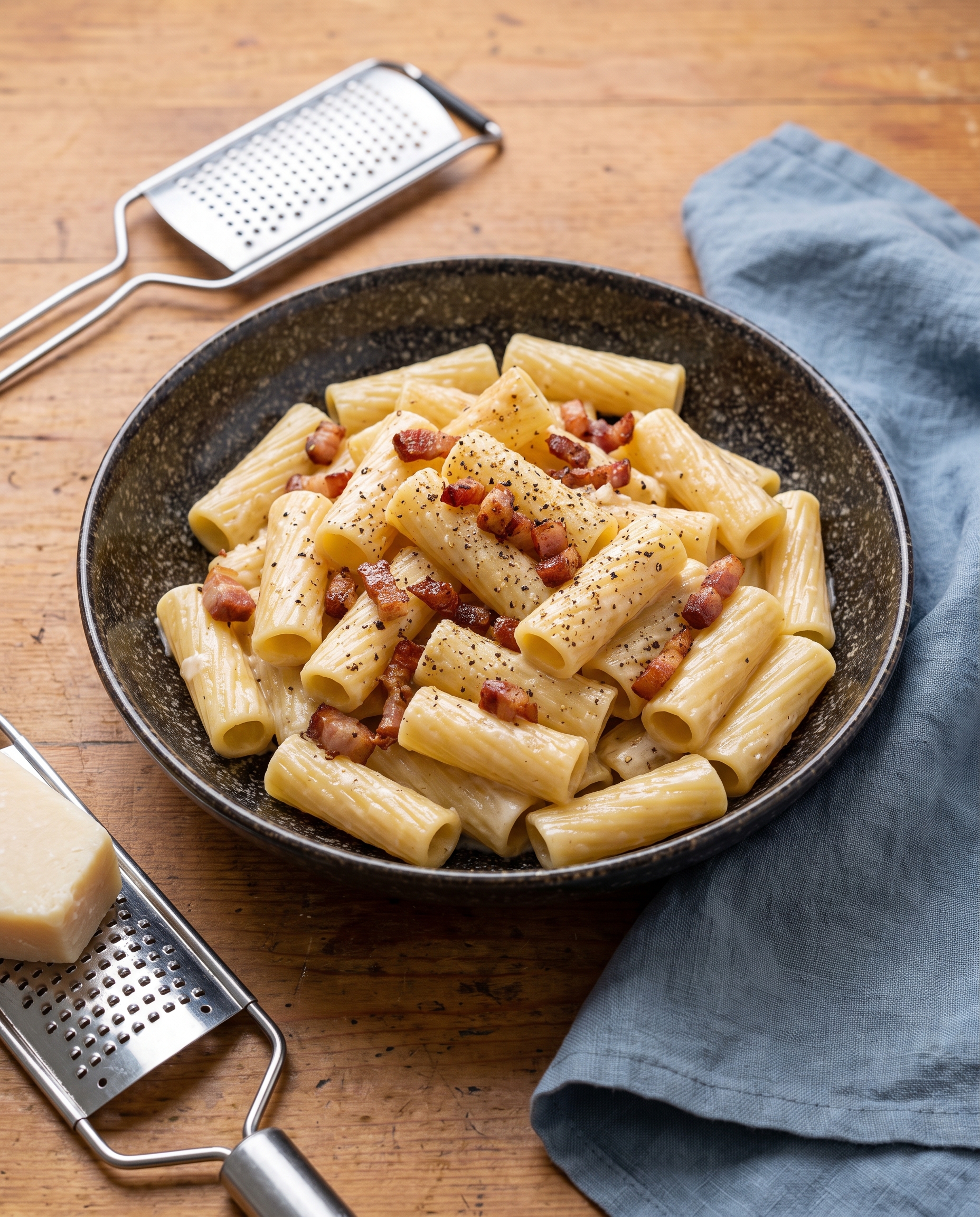
Step 5: Plate and finish. Divide the pasta among warm bowls, twirling the rigatoni with tongs. Top each portion with a shower of the remaining pecorino and one more crack of black pepper. Serve immediately, while the sauce is still glossy and loose. This pasta waits for no one.
Creative Twists
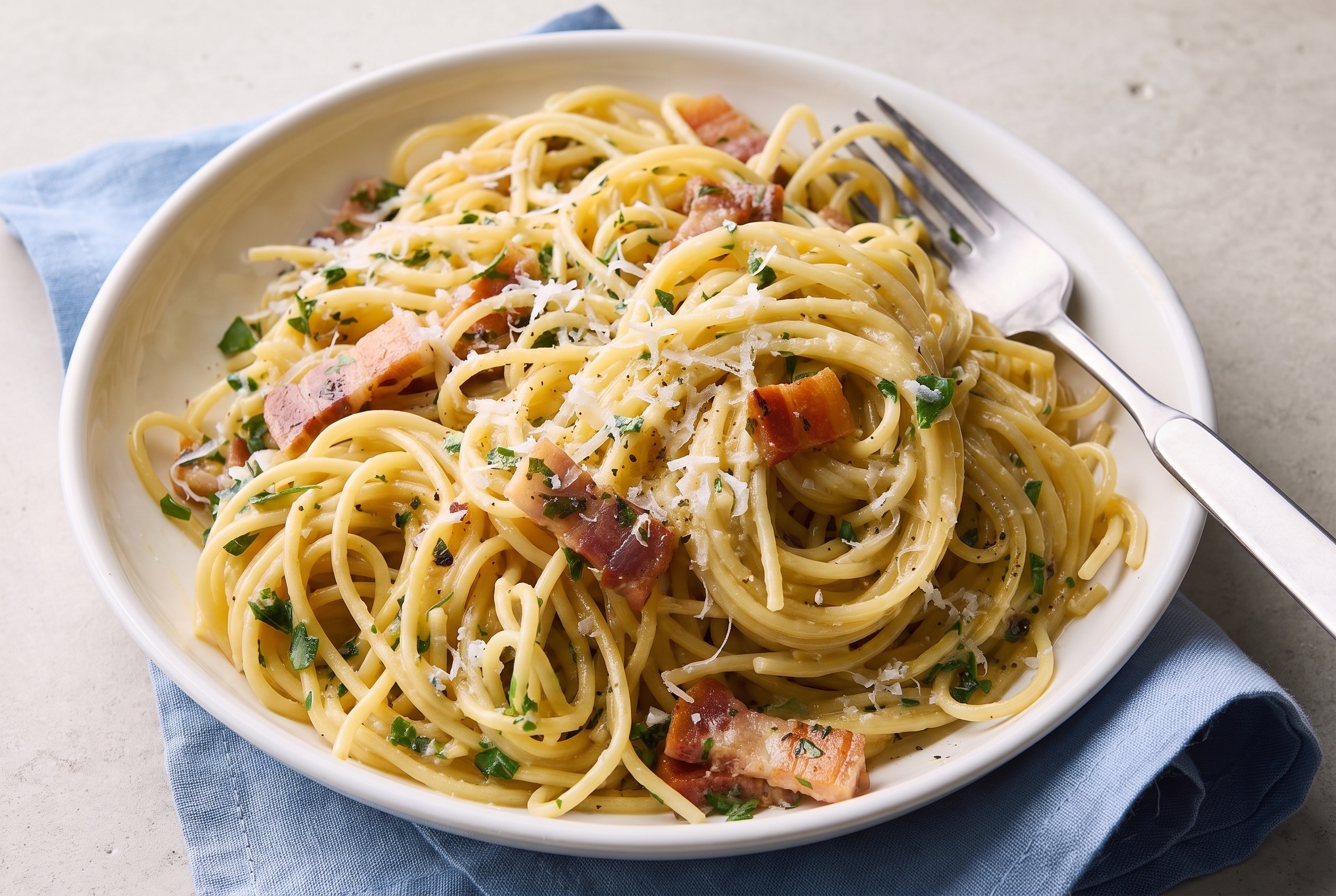
Bucatini alla Gricia — swap rigatoni for bucatini if you want something that twirls more elegantly. The hollow strand carries the sauce beautifully.
Spicy Gricia — add a pinch of crushed red pepper flakes to the guanciale fat. Just enough to wake up the back of your throat.
Pici alla Gricia — hand-rolled pici plays beautifully against the crispy guanciale if you have the time to roll it.
Pancetta Version — thick-cut, unsmoked pancetta works in a pinch, though the flavor will be a little less funky.
Add a Soft Egg Yolk — crack one room-temperature yolk into the finished pasta off the heat. Toss quickly so it just barely sets into a glossy sauce.
Serving & Pairing Ideas
What should I serve with pasta alla gricia? A simple green salad with a sharp lemon dressing, and a bottle of Italian red you actually want to drink — a young Chianti, a Montepulciano d’Abruzzo, or a Cesanese from Lazio. The wine should be bright and a little tannic, never jammy. For a more substantial meal, start with marinated olives, pecorino with honey, and grilled bread. Skip the garlic bread; gricia has its own bold flavors. For more weeknight inspiration, see my pasta recipe collection.
Why I Love This Recipe
There is something deeply satisfying about a recipe that respects you enough to leave well enough alone. Gricia is not a show-off dish. It does not need fancy equipment or hours of your afternoon. It asks for good guanciale, a wedge of pecorino, a pot of boiling water, and your full attention for fifteen minutes. In return, you get a pasta that tastes like a tiny restaurant in Trastevere where the nonna does not speak English and the menu is on a chalkboard.
For me, gricia is the pasta I cook when I want dinner to feel like a small, private celebration. Have you ever cooked a dish that made you slow down without realizing it? That is gricia for me.
Storage and Batch Cooking
Like most fresh pastas with a cheese sauce, gricia is best eaten the moment it is made. If you do have leftovers, store them in an airtight container in the fridge for up to two days; reheat gently in a skillet with a splash of water. For batch cooking, render the guanciale and grate the pecorino up to three days in advance, then finish the dish in ten minutes when you are ready. Freezing is not a great option — the sauce breaks when it thaws.
Troubleshooting Your Gricia
My sauce looks greasy and separated. Almost always means the heat was too high when you added the pecorino, or you did not have enough pasta water. Take the pan off the heat, add another splash of warm pasta water, and toss vigorously. The emulsion should come back together.
The cheese clumped into little balls. Either the pecorino was grated too coarsely, or the pan was too hot. Always grate pecorino on the small holes of a box grater, and always add it off the heat.
The pasta is gummy and stuck together. Not enough water in the pot, or it sat in the colander too long. Generously salted, rapidly boiling water is the answer.
Your Quick Questions, Answered
Can I make pasta alla gricia without guanciale? You can substitute thick-cut, unsmoked pancetta in a pinch, though the flavor will be different. Guanciale is what makes the dish what it is. If you can find it, use it.
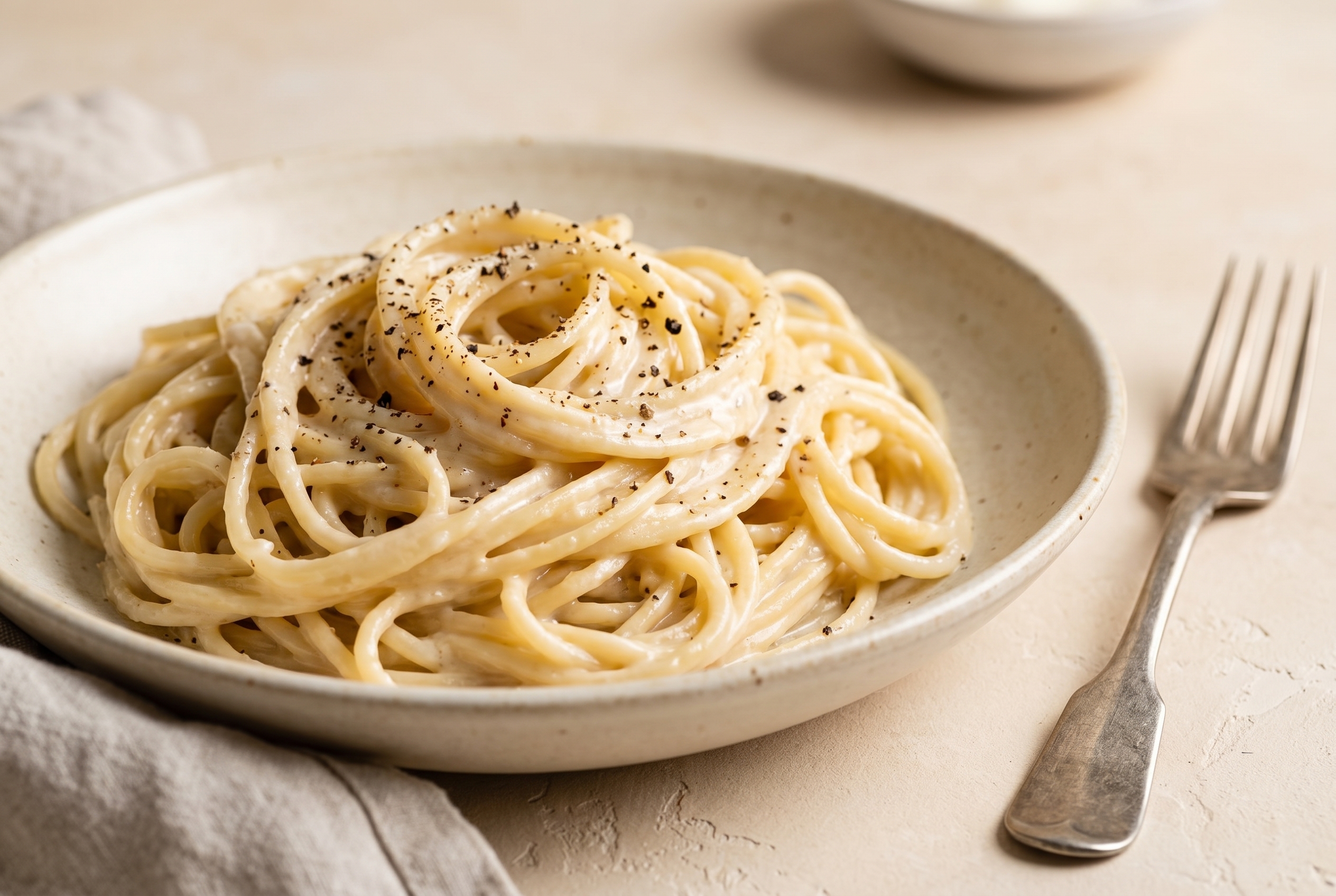
Is pasta alla gricia the same as cacio e pepe? Close cousins but not the same. Cacio e pepe is just pecorino, black pepper, and pasta — no pork. Gricia adds guanciale, which gives the sauce a deeper flavor and a crispy salty element on top. Both are wonderful.
What pasta shape works best? Rigatoni is the classic. Bucatini, mezze maniche, tortiglioni, and pici all work well too. Anything with ridges or holes holds onto the sauce. Avoid long thin shapes like spaghetti.
Can I use Parmesan instead of pecorino? You can, but the dish will taste noticeably different. Pecorino is sharper and saltier, and that assertiveness balances the richness of the guanciale. If you are cooking for someone who finds pecorino too strong, do half-and-half.
A Few Last Thoughts
If you have never cooked a Roman pasta at home, let this be the one you start with. Gricia is forgiving enough for a beginner and satisfying enough for a seasoned cook. It teaches you the single most important pasta technique I know — finishing the pasta in the sauce with a splash of starchy water — and that technique will change the way you cook everything from aglio e olio to cacio e pepe.
Twenty minutes from now, you could have a bowl of pasta that tastes like a Roman holiday, even on a Tuesday in July. Let me know how yours turns out. For more cozy weeknight pasta, see my pasta recipes or my other Roman classics.
A Roman classic with just four ingredients: rigatoni, crispy guanciale, sharp pecorino Romano, and a generous crack of black pepper. Ready in 20 minutes.
Ingredients
Notes
Use guanciale, not pancetta or bacon, for the authentic flavor. Always grate pecorino on the small holes of a box grater and add it off the heat to prevent clumping.
Keywords:pasta alla gricia, roman pasta, guanciale, pecorino, rigatoni, 20 minute pasta
Elowen Thorn I cook, photograph and re-test every recipe in an ordinary home kitchen before it goes up, so what you make matches what you see. Savory Discovery is where simple weeknight cooking, seasonal ideas and the odd bit of kitchen craft sit side by side — written plainly, and worth cooking twice.