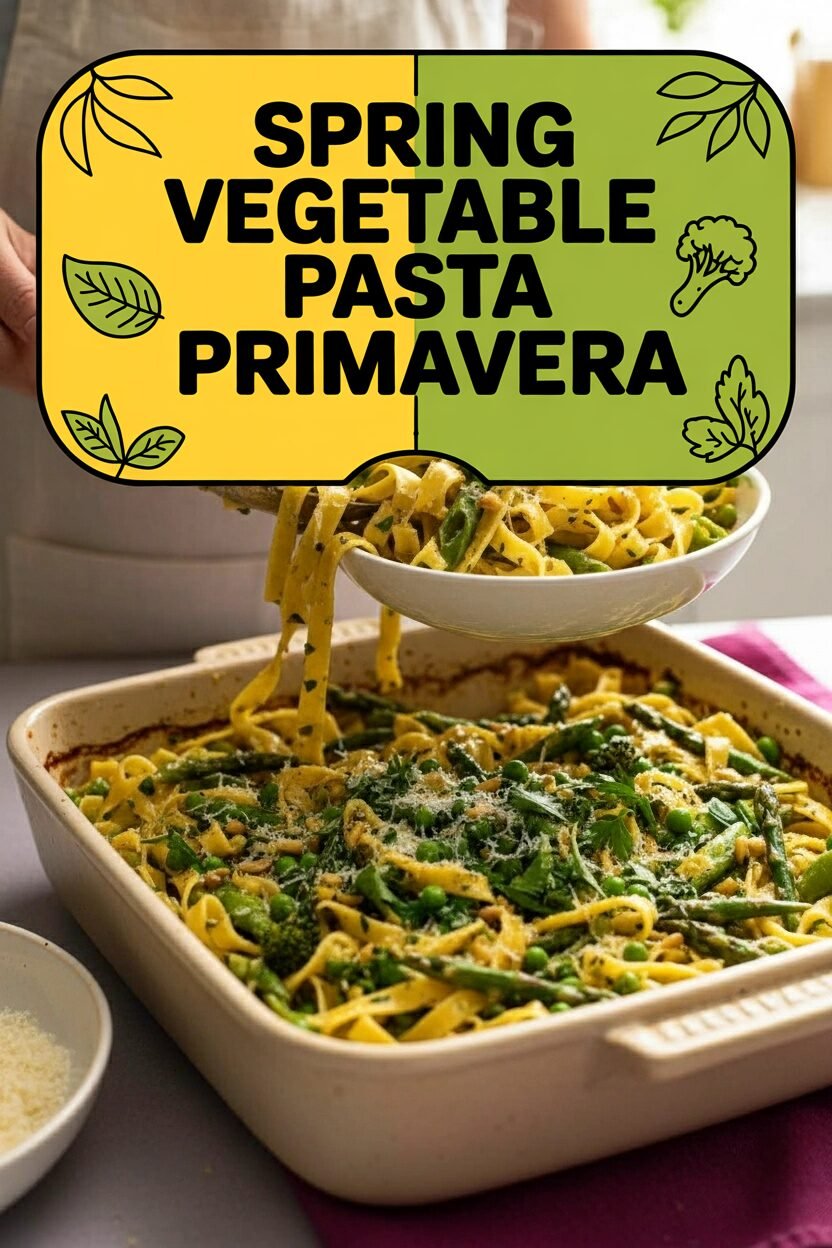
My Spring Garden on a Plate
This pasta primavera recipe is like a sunny day. It is full of bright green spring vegetables. Think crisp asparagus and sweet peas. They all get tossed in a creamy pasta sauce.
I make it when my garden starts to wake up. The colors make me so happy. Doesn’t that smell amazing? It tastes like hope on a fork. This is my favorite fresh spring pasta.
A Little Kitchen Story
I learned this from a chef named J. Kenji López-Alt. His pasta primavera is famous. He taught me to blanch each veggie alone. This keeps their perfect crunch and color.
My first try was a mess. I cooked them all together! The broccolini got soft and the peas were lost. I still laugh at that. Now I take my time. It matters because each bite should sing.
The Secret is in the Sauce
This is a creamy pasta primavera, but not heavy. We use crème fraîche pasta sauce. It is tangy and rich. You mix it with starchy pasta water. This makes magic in the pan.
You add lemon zest and fresh herbs at the end. This wakes everything up. *Fun fact*: “Primavera” means “spring” in Italian. So you are literally making “spring pasta”! What is your favorite spring vegetable to cook with?
Why This All Matters
This pasta with asparagus and peas is a celebration. It honors the season’s first gifts. Cooking this way connects us to the earth. It is a simple, joyful ritual.
It also shows how to make pasta primavera that feels special. You treat each part with care. The result is a beautiful, vegetarian pasta recipe. It feeds your body and your spirit. Do you have a food that makes you feel this way?
Your Turn in the Kitchen
This is an easy pasta primavera to try. You can use dried pasta if you like. The key is to prep your spring vegetables first. Have everything ready by the stove.
Then it all comes together fast. Toss the pasta, sauce, and veggies. Finish it with lots of cheese. The final dish is so creamy and bright. Will you use fettuccine or penne for yours? I would love to hear how it turns out.
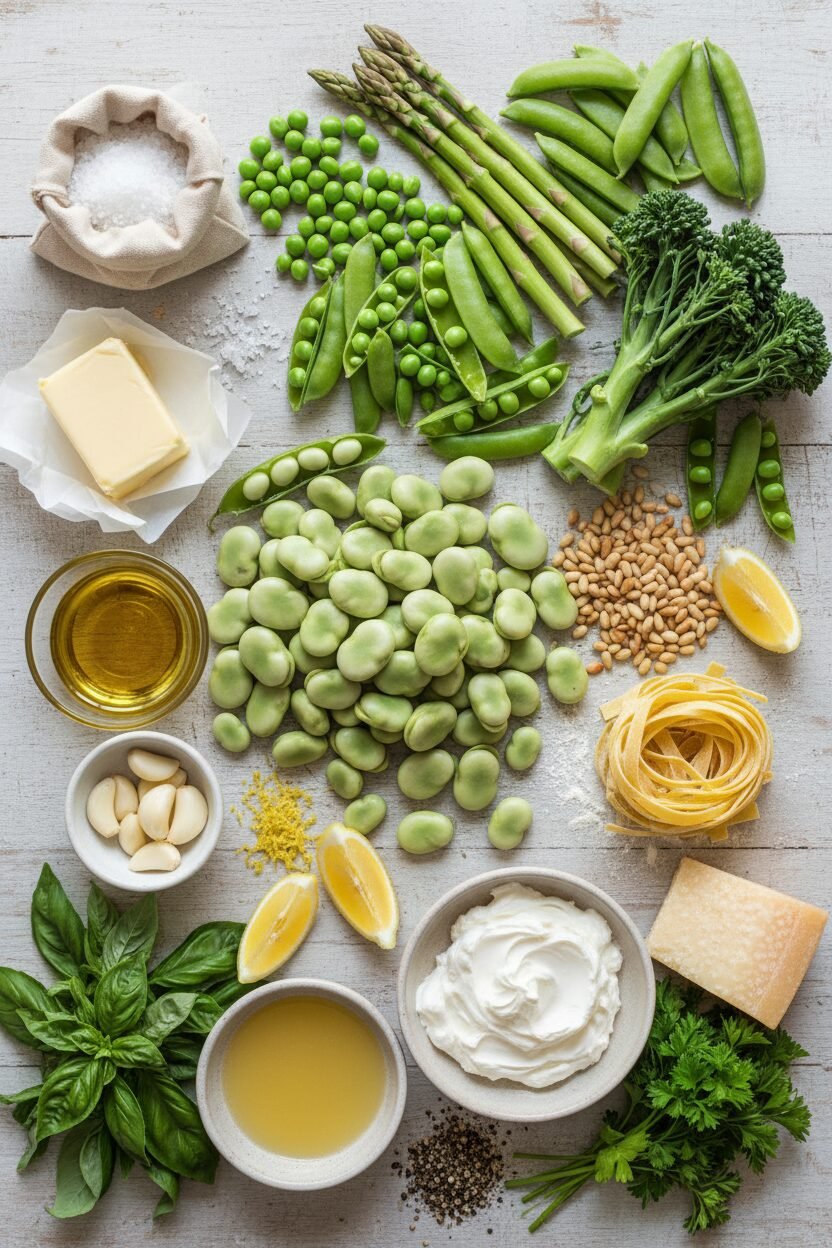
Ingredients:
| Ingredient | Amount | Notes |
|---|---|---|
| Fava beans (shucked) | 4 ounces (120 g) | or 12 ounces in pods |
| English peas (shucked) | 4 ounces (120 g) | or 12 ounces in pods |
| Kosher salt | As needed | For blanching and pasta water |
| Asparagus | 8 ounces (225 g) | Woody ends removed, cut on bias into 1-inch pieces |
| Snap peas | 6 ounces (170 g) | Strings removed, cut on bias into 1/2-inch slices |
| Broccolini | 8 ounces (170 g) | Woody ends removed, cut on bias into 1-inch pieces |
| Unsalted butter | 4 tablespoons (50 g) | |
| Extra-virgin olive oil | 2 tablespoons (30 ml) | Plus more for serving |
| Garlic cloves | 2 whole | Lightly smashed |
| Pine nuts | 3 ounces (90 g) | |
| Fresh egg pasta (e.g., fettuccine) | 1 pound (450 g) | See note for dried pasta substitution |
| Crème fraîche | 6 ounces (170 ml) | |
| Lemon zest (finely grated) | 2 teaspoons (5 g) | |
| Lemon juice (fresh) | 1 teaspoon (5 ml) | |
| Fresh basil leaves (minced) | 1/2 ounce (15 g) | About 1/2 cup packed |
| Fresh parsley leaves (minced) | 1/2 ounce (15 g) | About 1/2 cup packed |
| Parmigiano-Reggiano (grated) | To taste | |
| Freshly ground black pepper | To taste |
Instructions
Step 1: First, shuck your fava beans and peas. Bring a big pot of salted water to a boil. We’ll blanch each spring vegetable for just one minute. Plunge them into an ice bath to stop the cooking. This keeps their bright green color. (Peeling the fava bean skins is worth the extra minute, I promise.)
Step 2: Now, let’s make the sauce base. Gently heat butter, oil, garlic, and pine nuts together. Swirl the pan until the nuts are golden. The smell is just amazing. Discard the garlic cloves. Toss in all your beautiful, blanched spring vegetables. This easy pasta primavera is coming together!
Step 3: Cook your fresh egg pasta in that boiling water. It only takes about a minute! Save a cup of the starchy water. Drain the pasta and add it to the pan. Stir in the crème fraîche pasta sauce, lemon, and herbs. What’s the secret to a creamy sauce? Share below!
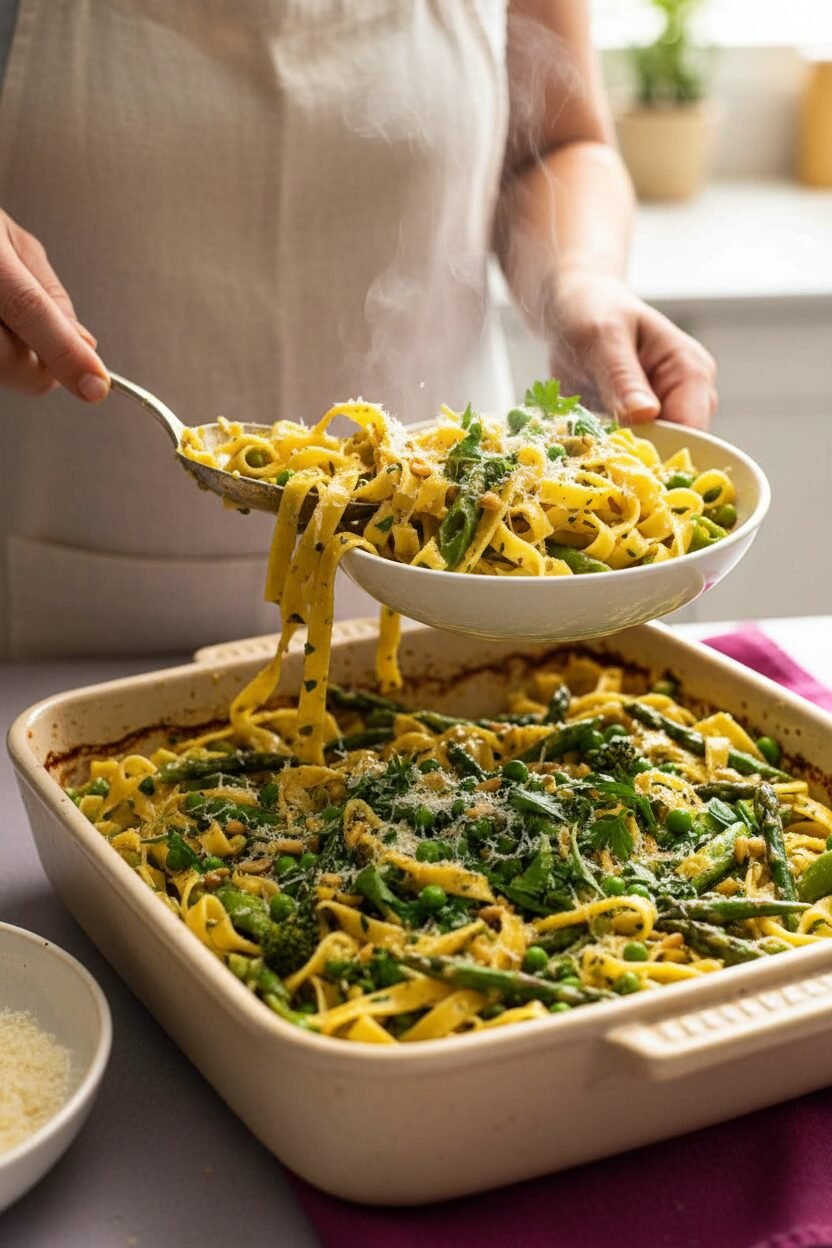
Step 4: Finally, take the pan off the heat. Stir in a big handful of grated cheese. Season with salt and pepper. This creamy pasta primavera is ready to serve. Drizzle with a little more oil and extra cheese. Doesn’t that look like a perfect fresh spring pasta?
Creative Twists
Swap crème fraîche for ricotta. It makes a lighter, fluffy sauce.Use sugar snap peas instead of English peas. They add a wonderful sweet crunch.Try toasted breadcrumbs instead of pine nuts. It’s a tasty, crunchy topping.Which one would you try first? Comment below!
Serving & Pairing Ideas
Serve this spring vegetables pasta with a simple green salad. A loaf of crusty bread is perfect for soaking up the creamy sauce. For a pretty plate, garnish with a few whole basil leaves. This vegetarian pasta recipe is a full meal. Which would you choose tonight?
Keeping Your Spring Pasta Fresh
Let’s talk about storing this lovely dish. Cool it completely first. Then put it in an airtight container. It will keep in the fridge for about three days. You can also freeze it for a month. I remember my first big batch. I was so proud I made extra for my neighbor.
Batch cooking this pasta primavera recipe is a smart move. It saves you time on a busy weeknight. You get a delicious, home-cooked meal in minutes. This matters because good food should make life easier, not harder. Just reheat it gently in a pan with a splash of water or milk. This helps the creamy pasta primavera sauce come back to life.
Have you ever tried storing it this way? Share below!
Simple Fixes for Common Hiccups
Sometimes cooking has little problems. Do not worry. Here are easy fixes. First, soggy vegetables. Blanch them quickly in boiling water. Then shock them in ice water. This keeps their bright color and crisp bite. I once forgot the ice bath. My snap peas were a sad, gray green.
Second, a broken or greasy sauce. If your butter and oil separate, add a spoonful of pasta water. Stir fast. It will bring it all together. Third, bland flavor. Always taste at the end. Add more salt, lemon, or cheese until it sings. Getting these right builds your cooking confidence. It also makes the flavor of your fresh spring pasta truly shine.
Which of these problems have you run into before?
Your Quick Questions, Answered
What is the best way to cook vegetables for pasta primavera?
The best way is to blanch them. Boil each spring vegetable for just one minute. Then plunge them into ice water. This stops the cooking. It keeps them crisp and bright green for your spring vegetables pasta. This step is key in the J. Kenji López-Alt pasta primavera method. It makes every bite perfect.
Can I use frozen vegetables for pasta primavera?
Yes, you can for an easy pasta primavera. Use frozen peas and asparagus. There is no need to blanch them. Just thaw them first. Pat them dry with a towel. This prevents extra water from making your dish soggy. It is a great shortcut for a quick vegetarian pasta recipe on a busy night.
What is a good sauce for spring vegetable pasta?
A simple, creamy pasta primavera sauce is wonderful. This recipe uses crème fraîche pasta sauce. It is rich but light. Lemon zest and juice add a fresh sparkle. The starchy pasta water helps it coat everything. It lets the taste of the pasta with asparagus and peas be the star.
How do you keep pasta primavera from getting soggy?
Do not overcook your pasta. Cook it just shy of al dente. It will finish cooking in the sauce. Also, make sure your blanched vegetables are very dry. A fun fact: pasta keeps cooking from its own heat after you drain it. So taking it out early is a smart trick every time.
What protein goes well with pasta primavera?
This vegetarian pasta recipe is hearty on its own. But you can add protein. Grilled chicken or shrimp are lovely. For a plant-based option, try white beans or chickpeas. They are mild and creamy. They will blend right into your dish without overpowering the delicate spring flavors.
Is pasta primavera served hot or cold?
It is best served hot, right from the pan. The creamy sauce is silky and warm. The vegetables are tender-crisp. You can eat leftovers cold, like a pasta salad. But the fresh, just-made texture is truly special. That is the secret to how to make pasta primavera a memorable meal.
Which tip will you try first?
From My Kitchen to Yours
I hope you love making this dish. Cooking with the seasons is a joy. It connects us to the earth’s rhythm. This pasta celebrates spring on a plate. It is a meal to share with people you love. I would love to hear about your cooking adventure in your own kitchen.
Have you tried this recipe? Tell me all about it in the comments below. Did your family enjoy it? What little change did you make to make it your own? I read every note from my kitchen table.
Happy cooking!
—Grace Hollander.