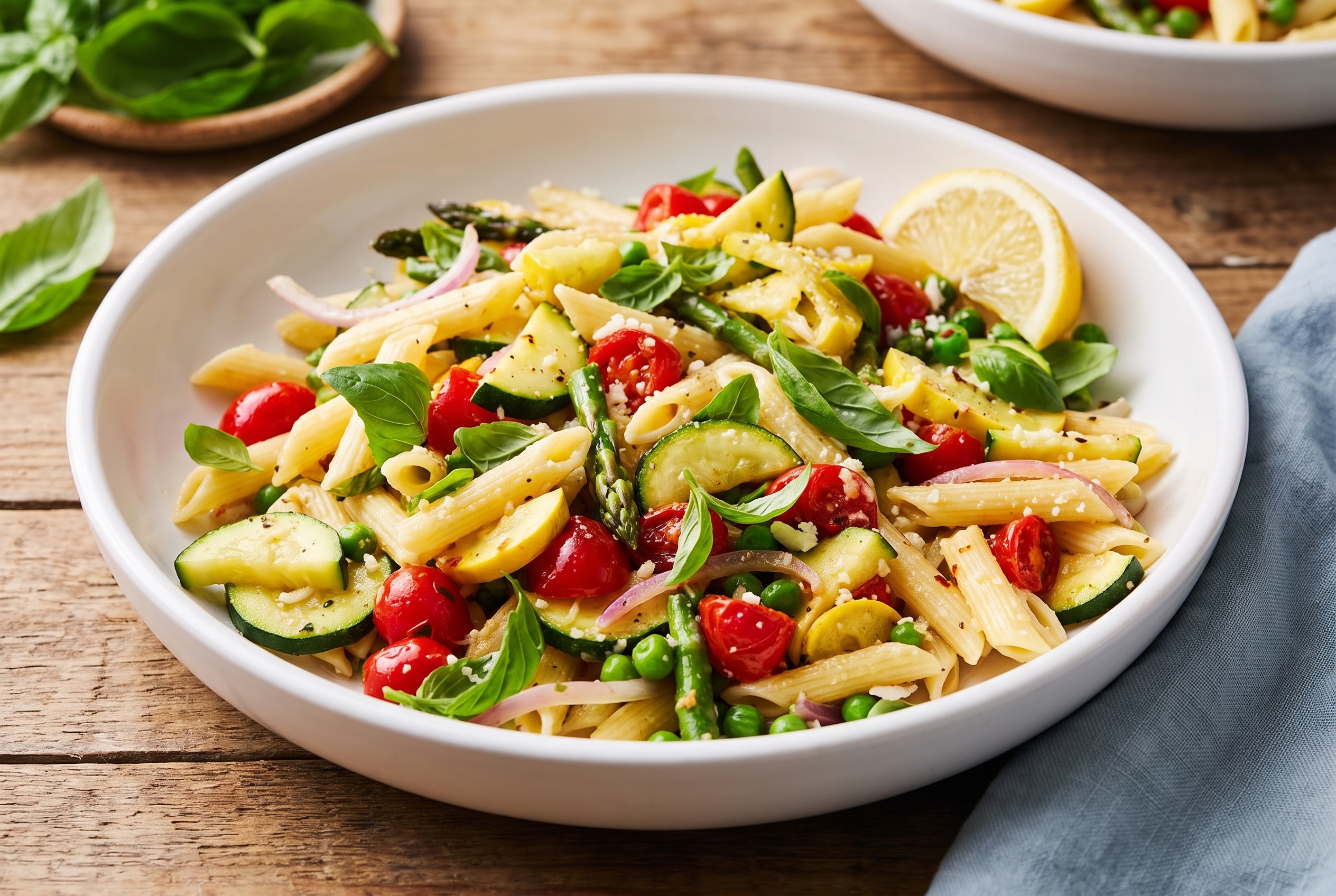
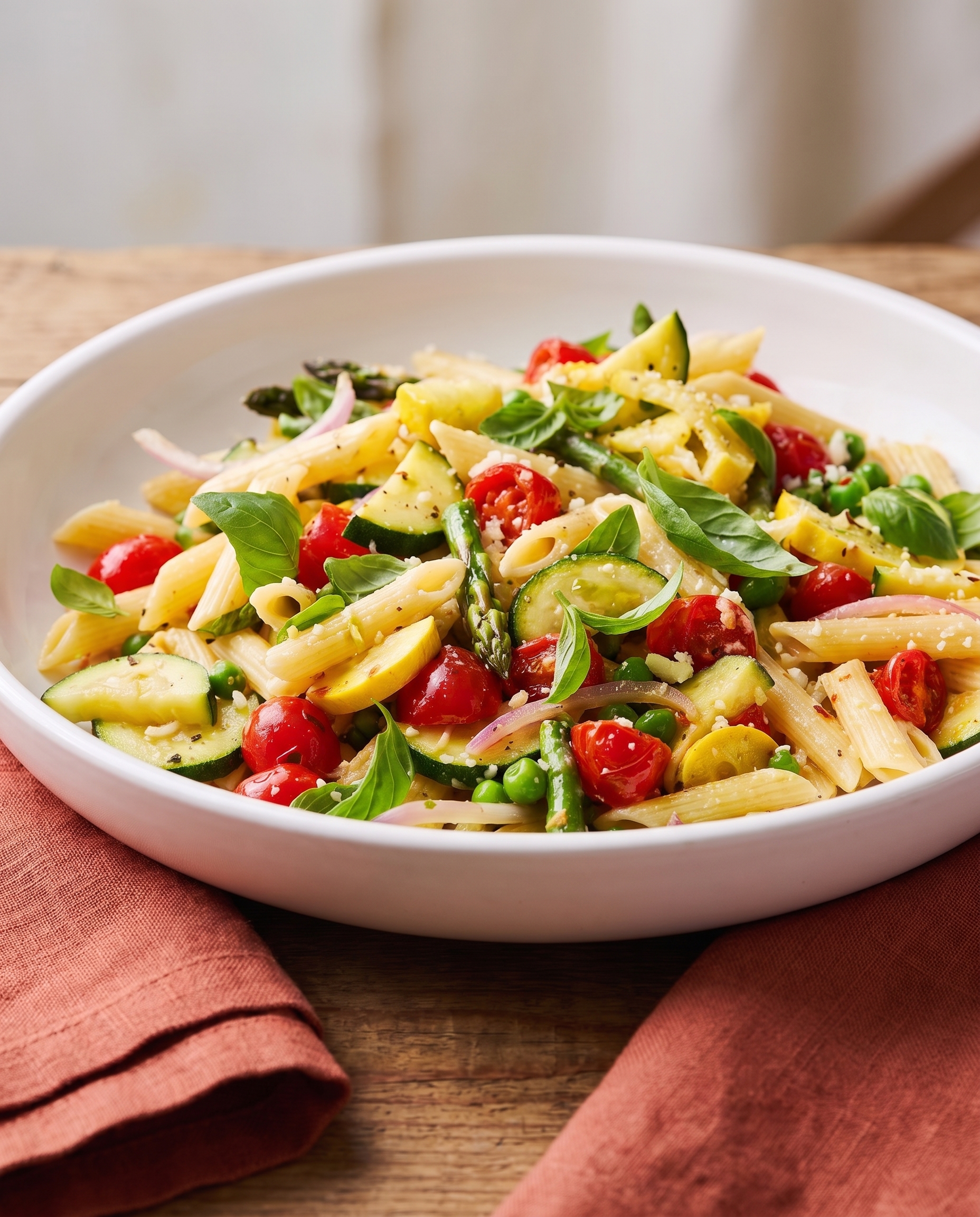
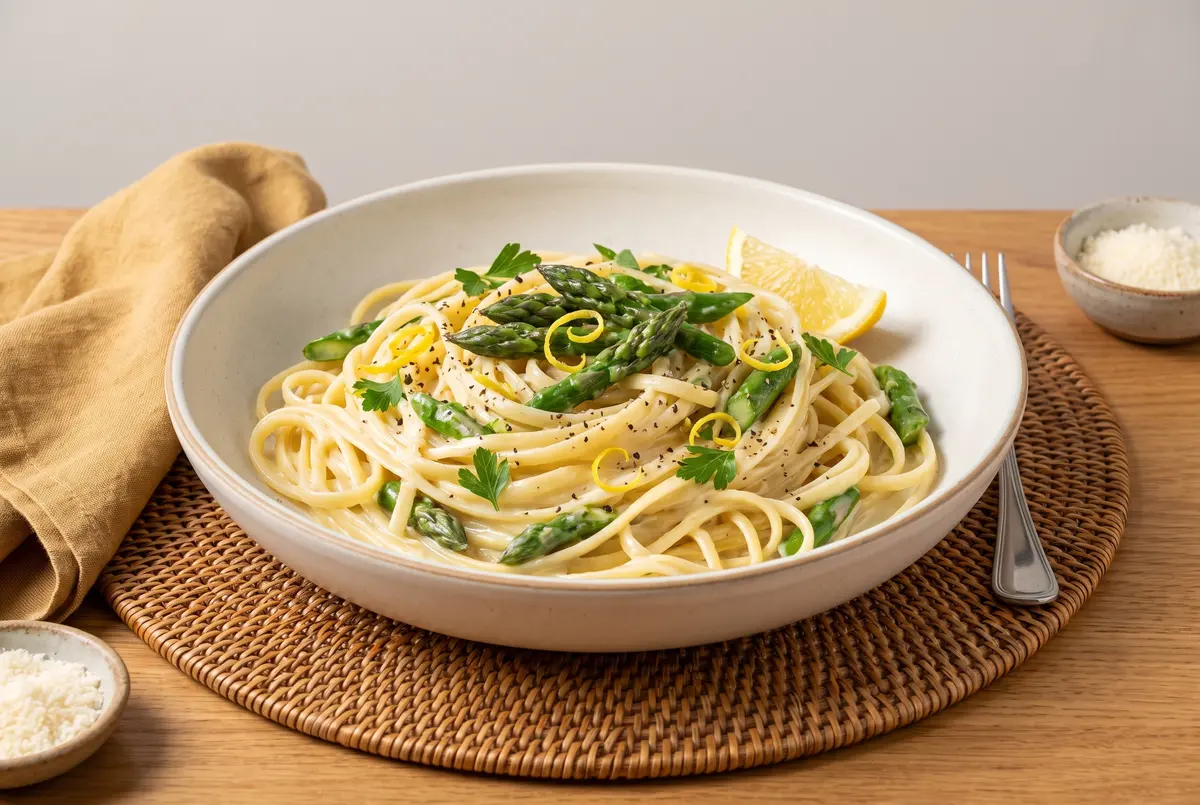
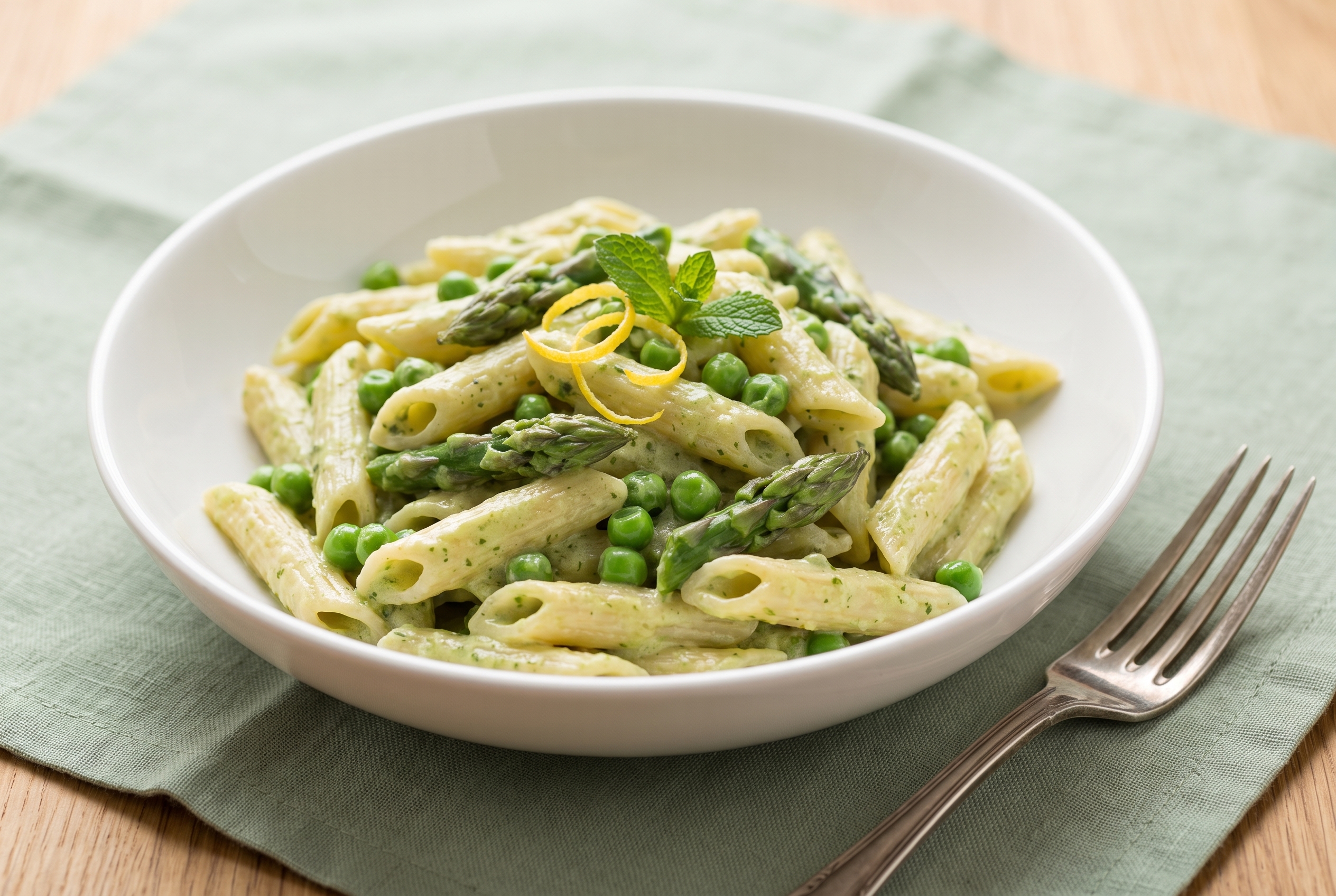
My grandmother had a wooden bowl that always seemed to be overflowing with whatever the garden was giving her. In late May it would be asparagus. By July the tomatoes were coming in. One of her favorite warm-weather meals was a big, glossy bowl of pasta with all those vegetables tumbled through it. Have you ever cooked a dish that tastes like a season? That is what pasta primavera has always meant to me. It is the version I come back to all spring and summer: light, bright, a squeeze of lemon, and a snowfall of pecorino for a creamy body without the heaviness.
Why Spring Vegetables Matter Here
The magic of pasta primavera is that the vegetables are the star, not a side note. The trick is to cook each kind just long enough to soften, but not so long that it loses color. I learned this the hard way one summer when I dumped everything into a hot pan at once and ended up with a sad, grayish bowl of limp vegetables. The lesson is high heat, a wide pan, and patience. You want a hot sear on the cherry tomatoes so they burst and make a little sauce. The other piece that matters is the pasta water. Do not, I repeat, do not pour it down the sink. That starchy, salty water is the secret to making the cheese and lemon cling to the penne instead of sliding off into a puddle. I always reserve a full mug before I drain.
Pasta Primavera
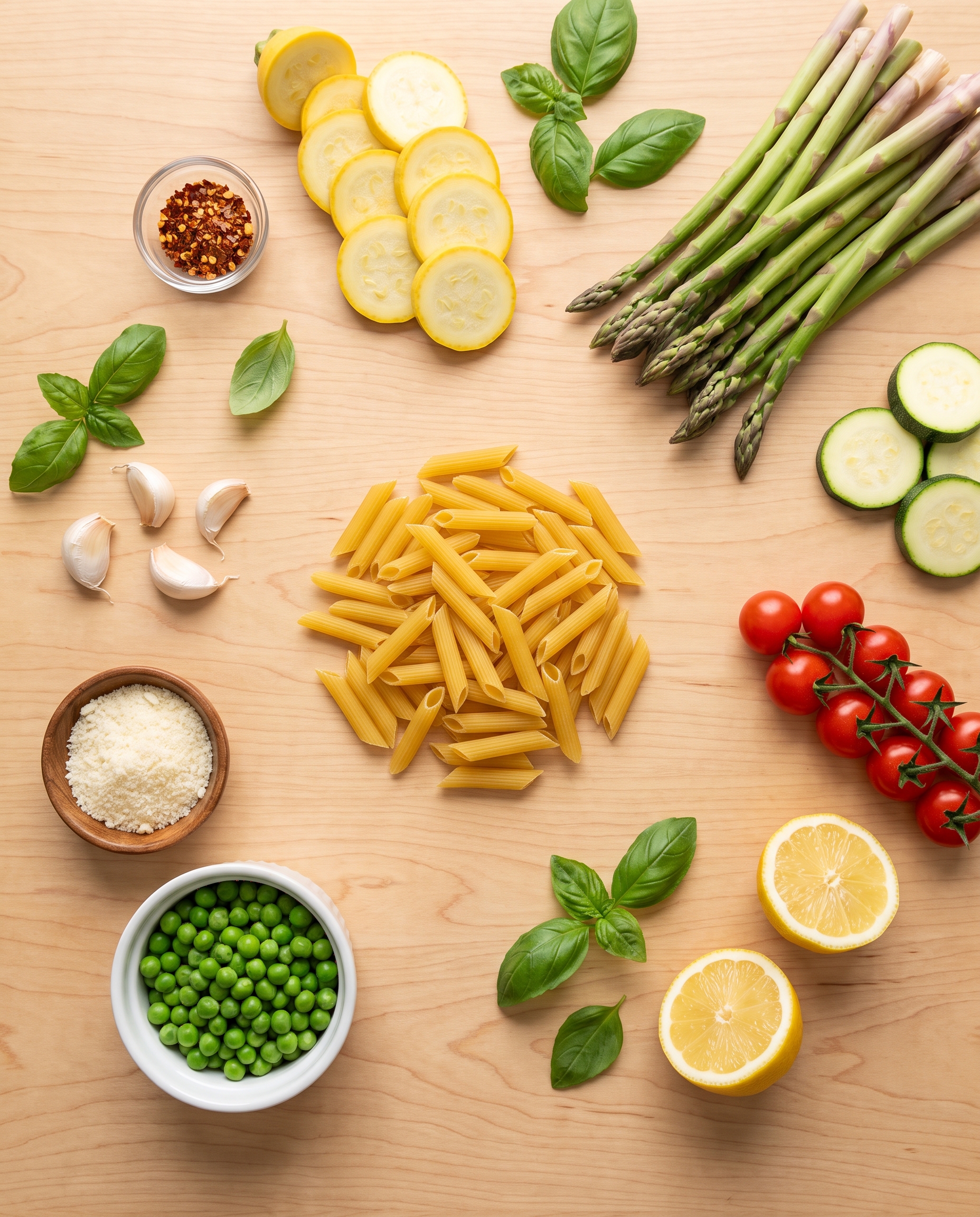
Below is the ingredient list for this pasta primavera, which serves four. You can swap in whatever fresh vegetables you have on hand. The method stays the same.
Ingredients
10 ounces penne pasta
2 tablespoons extra-virgin olive oil, plus more for drizzling
4 garlic cloves, sliced
1 yellow squash, sliced into thin half-moons
1 zucchini, sliced into thin half-moons
1 bunch asparagus, chopped into 1-inch pieces
1 cup cherry tomatoes, halved
1 cup thinly sliced red onion
1 teaspoon sea salt
½ cup frozen peas, thawed
¾ cup grated pecorino cheese
3 tablespoons fresh lemon juice
Red pepper flakes, to taste
1 cup fresh basil leaves, plus more for garnish
¼ cup fresh tarragon, optional
Freshly ground black pepper
From Pot to Plate: My Method
Step 1: Salt the water and cook the pasta. Bring a large pot of water to a rolling boil. The water should taste like the sea. Cook the penne to just al dente, a minute shy of the package time. Reserve a full mug of the cooking water before you drain, then toss the drained pasta with a small drizzle of olive oil.
Step 2: Bloom the aromatics. Heat two tablespoons of olive oil in a wide, deep skillet over medium heat. Add the sliced garlic and let it sizzle for about thirty seconds until fragrant but not browned. Burnt garlic is the fastest way to ruin a dish like this, so keep it moving.
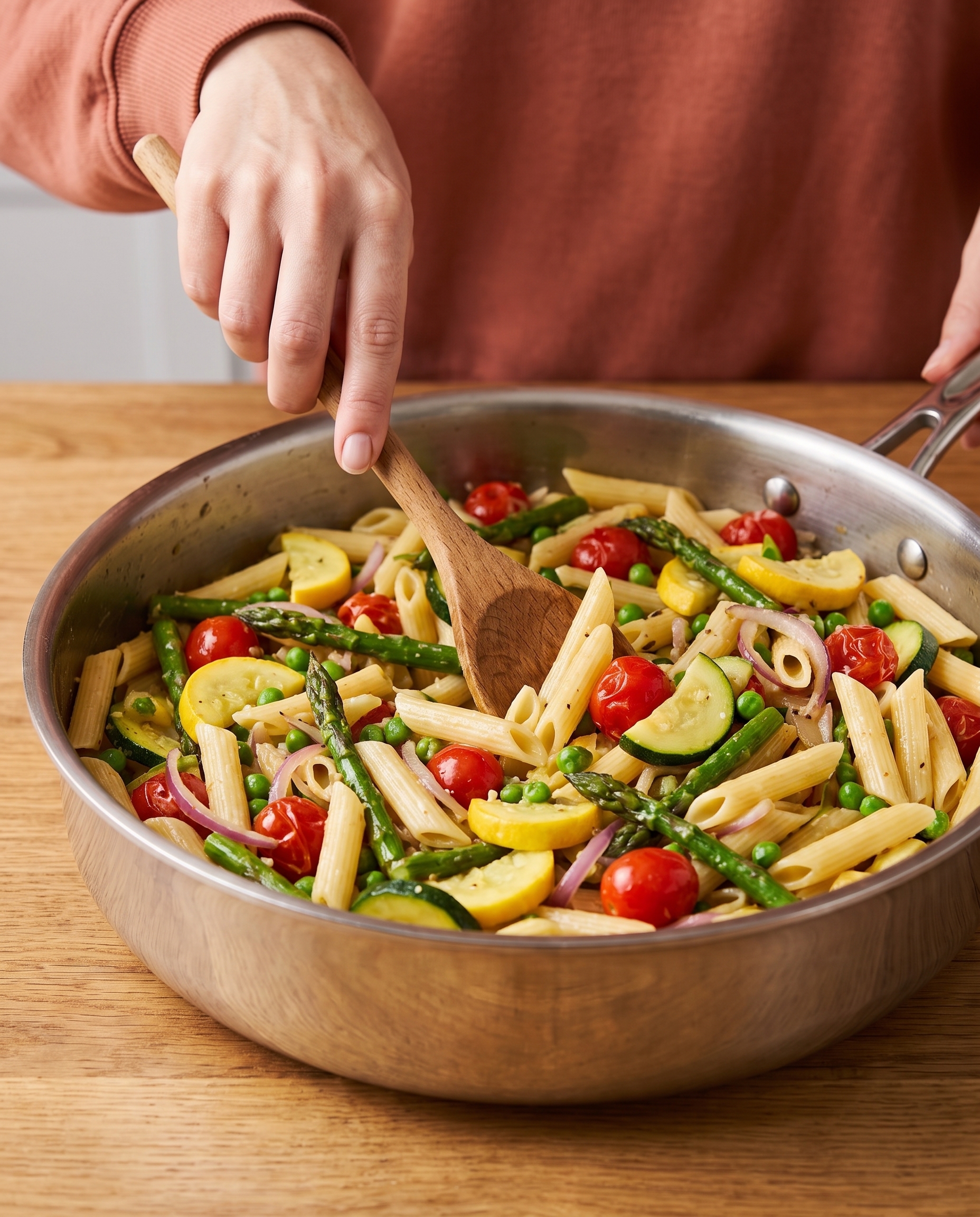
Step 3: Sauté the vegetables. Add the yellow squash, zucchini, asparagus, cherry tomatoes, red onion, salt, and a few grinds of black pepper. Toss often for three to four minutes, until the vegetables are just tender and the cherry tomatoes are starting to burst.
Step 4: Bring it all together. Add the cooked pasta along with the peas, pecorino, lemon juice, and a pinch of red pepper flakes. Toss for about a minute until the cheese melts into a light sauce that clings to the pasta, splashing in pasta water if the pan looks dry.
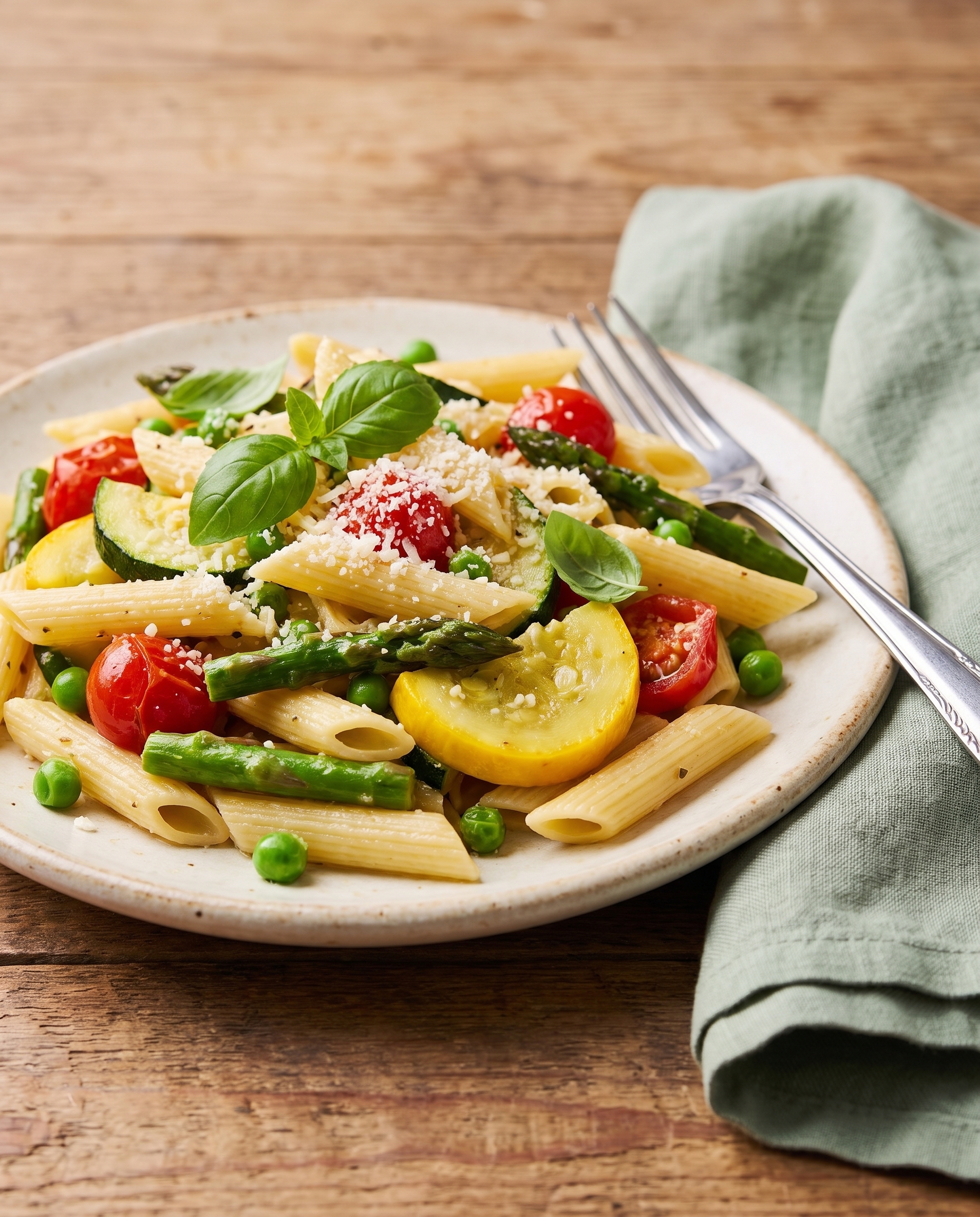
Step 5: Finish and serve. Stir in the fresh basil and tarragon, if using. Taste and adjust the salt, pepper, and lemon. I almost always add another squeeze of lemon at the end because the brightness wakes the whole dish up. Serve right away with more basil and a little extra pecorino at the table.
Creative Twists Worth Trying
One of the things I love most about this recipe is how forgiving it is. Once you have the method down, the rest is a seasonal scavenger hunt.
Roasted version: Roast the harder vegetables at 425°F for twenty minutes until they caramelize, then toss with the pasta and sauce. Deeper, nuttier flavor.
Add a protein: A cup of cooked chickpeas turns this into a heartier main, or top with a soft-poached egg.
Try a different cheese: Parmesan in place of pecorino, or fresh goat cheese crumbled on top.
Switch the pasta shape: Orecchiette, fusilli, farfalle, and rigatoni all work. Orecchiette is my favorite because the cups catch the tomato juices.
Go fully spring: Swap in fresh English peas, baby leeks, and fava beans when they show up at the market.
Serving and Pairing Ideas
What should I serve with pasta primavera? This pasta is wonderful on its own, but for a fuller meal, keep the sides simple. A slice of warm garlic bread for dragging through the sauce, a crisp green salad with a sharp lemon vinaigrette, and a glass of cold, dry white wine. You can find more of my favorite [simple side salads](https://savorydiscovery.com/category/pasta/) on the site. For a cozier dinner, I have been known to put a bowl of this next to a simple [roasted chicken](https://savorydiscovery.com/about/) and call it a week. It is also a great potluck dish.
Why I Love This Pasta
There is something about a bowl of pasta primavera that makes a kitchen feel like summer. Maybe it is the colors, green and yellow and red all tossed together. Maybe it is the fact that it comes together in one pan and the whole house smells incredible. Or maybe it is just that this is the dish I always come back to when I want something that tastes like a season. Which pasta are you reaching for when summer rolls around? I would love to hear about it.
Storage and Batch Cooking
Pasta primavera is best the day it is made, but leftovers keep in a sealed container in the fridge for up to three days. The vegetables will soften, but the flavor is honestly even better on day two. To reheat, add a splash of water to a hot skillet and warm gently, or eat it cold with a little extra lemon juice and fresh basil for an easy pasta salad.
I do not love freezing this one. The vegetables get watery and the pasta texture turns mushy. If you want to prep ahead, chop all the vegetables the day before and store them in the fridge. The whole dish then comes together in about fifteen minutes the next night.
Troubleshooting Your Pasta
A few small things can go sideways, but they are all easy to fix once you know what to look for.
Vegetables are mushy and gray: Your pan was overcrowded, or the heat was too low. Use a wide skillet and keep the heat at medium-high. You want a quick sear, not a slow steam.
Sauce is too watery: Either the tomatoes released more liquid than expected, or you added too much pasta water. Let the pan sit over heat for another minute and toss.
Sauce is too dry and clumpy: Splash in a little more pasta water, a tablespoon at a time, and keep tossing over the heat.
Pasta tastes bland: Salt the water properly, taste before serving, and do not be shy with the lemon. A final pinch of flaky salt on top is sometimes the only thing missing.
Your Quick Questions, Answered
Can I make pasta primavera ahead of time? Yes, but hold off on combining the pasta and vegetables. Store them separately and toss together with the lemon, cheese, and pasta water right before serving.
Is pasta primavera vegetarian? Yes. The original Le Cirque version had cream and butter, but mine gets its creamy body from pecorino and pasta water. For vegan, skip the cheese and add a swirl of olive oil and toasted pine nuts.
What pasta shape works best? Penne, because the tubes catch the cherry tomato juices. Orecchiette, farfalle, and fusilli all work too. Long noodles are fine but harder to serve with chunky vegetables.
Can I use frozen vegetables? Thaw and pat dry first. They release a lot of water and you want a sear, not a steam. Save peas and corn for frozen; use fresh for asparagus and zucchini.
A Few Last Thoughts
Cooking pasta primavera is one of those small kitchen rituals that makes me feel like the season is exactly where it is supposed to be. A hot pan, good olive oil, the freshest vegetables you can find, and a generous hand with the lemon. The rest takes care of itself. If you try this recipe, I would love to know what vegetables you ended up using. Make it for someone you love this week.
Elowen Thorn I cook, photograph and re-test every recipe in an ordinary home kitchen before it goes up, so what you make matches what you see. Savory Discovery is where simple weeknight cooking, seasonal ideas and the odd bit of kitchen craft sit side by side — written plainly, and worth cooking twice.