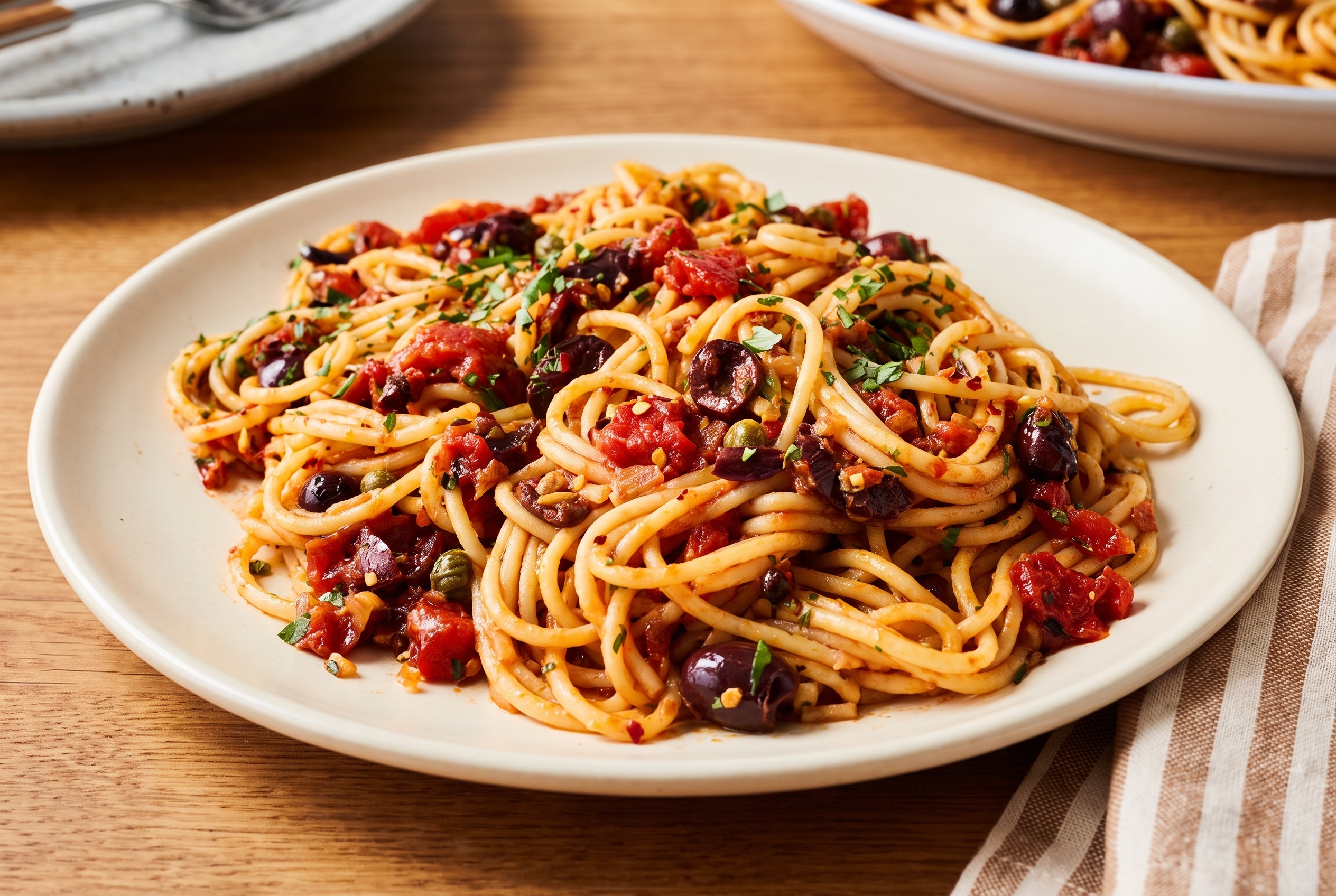
I have a small confession. When I open my fridge on a Tuesday night and find almost nothing in it, my heart doesn’t sink — it lifts. Nine times out of ten, a good puttanesca is waiting to happen. Pasta, a can of tomatoes, a few salty little jewels from a jar, and you’ve got a meal that tastes like you planned it three days ago.
My grandma used to call this kind of cooking “kitchen sink pasta.” You stir together whatever good things you have, and somehow the dish always knows what it wants to be. Have you ever made a meal from mostly pantry staples and felt oddly proud? That’s the puttanesca spirit — no fuss, no long simmer, just a hot pan and thirty minutes.
Why This Sauce Works So Beautifully
Here’s the secret that makes puttanesca sing: contrast. The briny pop of capers against the sweet acidity of San Marzano tomatoes. The deep, almost meaty salt of kalamata olives against the gentle sweetness of slow-cooked shallot. A whisper of red pepper flake for warmth. Each ingredient is loud on its own, and together they make a harmony no jarred sauce has ever managed.
The second trick is patience with the aromatics. Shallots, garlic, capers, and olives all spend a few minutes together in good olive oil before the tomatoes show up — that’s where the magic begins. The third thing, and I cannot stress this enough, is reserving pasta water. That cloudy, starchy water is the bridge between your sauce and your noodles. A splash tossed at the end is what turns a bowl of pasta with sauce on top into a glossy plate where every strand is dressed. Don’t skip it.
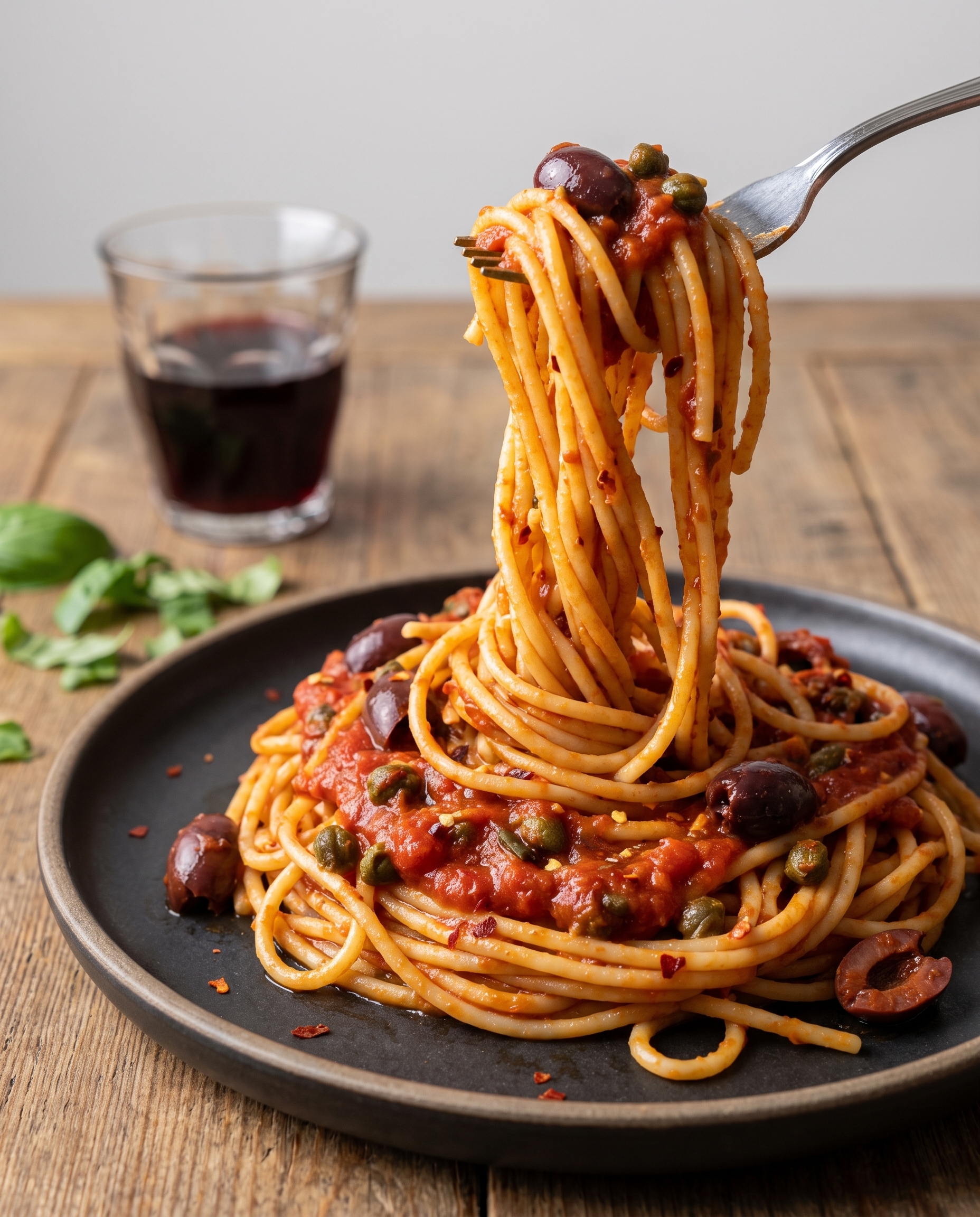
Pasta Puttanesca with Olives and Capers
This is the version I make most often at home. It’s built on the classic, but I lean a little heavier on the olives and capers because that’s the whole point — I want every forkful to deliver a tiny burst of brine. It also keeps beautifully. Tuck leftovers into the fridge and reheat gently with a splash of water the next day; the flavors actually deepen overnight.
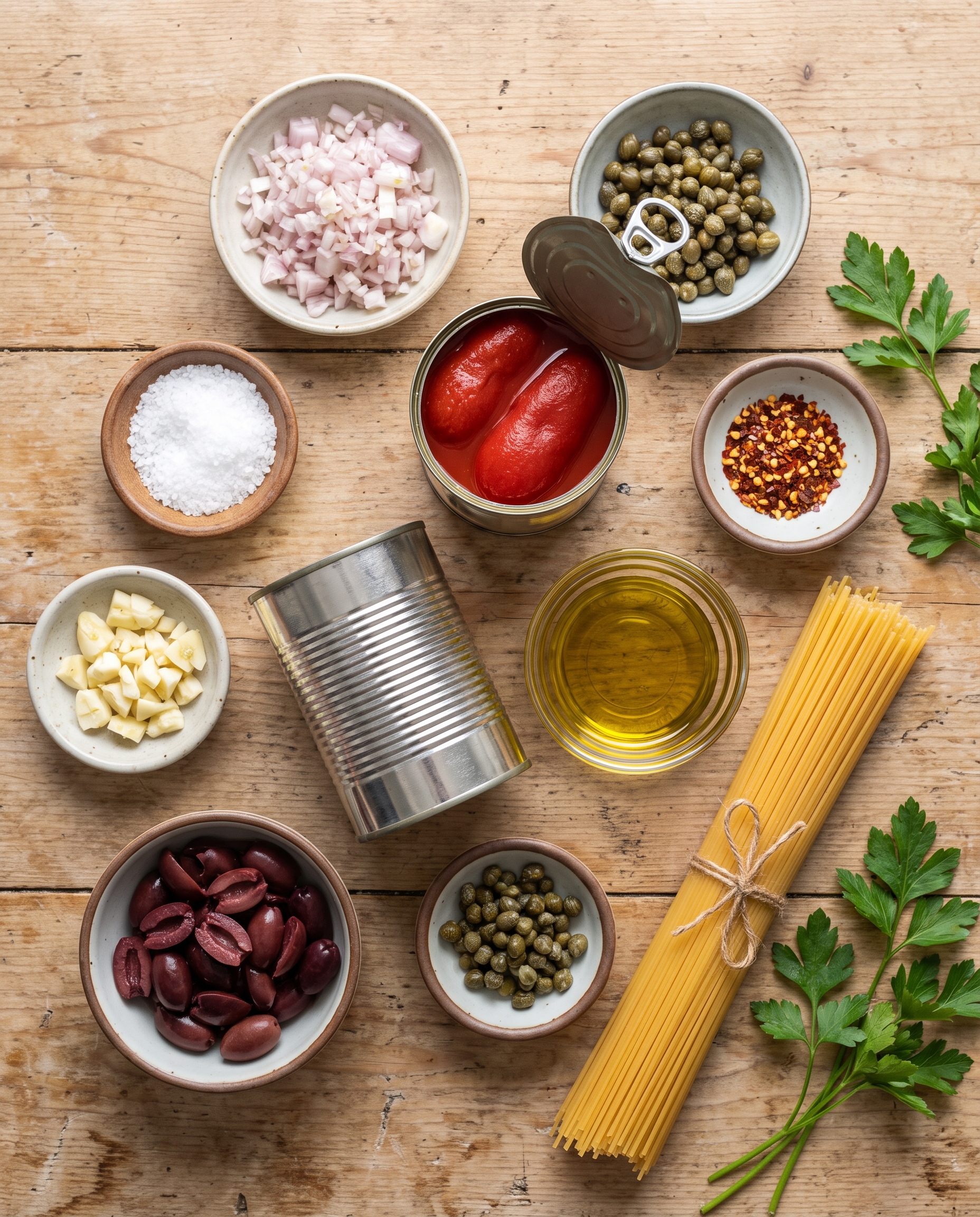
Ingredients
1 (28-ounce) can whole peeled San Marzano tomatoes, drained
¼ cup extra-virgin olive oil
1 shallot, finely chopped (about ⅓ cup)
¼ teaspoon sea salt, plus more for the pasta water
3 garlic cloves, finely chopped
¼ teaspoon red pepper flakes
2 tablespoons capers, drained and roughly chopped
½ cup pitted kalamata olives, roughly chopped
12 ounces spaghetti (or another long pasta you love)
¼ cup chopped fresh parsley, plus more for serving
From Pot to Plate — My Step-by-Step Method
Step 1: Place the drained tomatoes in a large bowl and crush them with your clean hands until they break down into a rough, rustic sauce. Set aside. Get a large pot of salted water on to boil for the pasta at the same time.
Step 2: Heat the olive oil in a large skillet over medium heat. Add the shallot and the sea salt and cook, stirring occasionally, for 4 to 5 minutes, until softened. Add the garlic, red pepper flakes, capers, and olives. Stir and sizzle for another 2 minutes — your kitchen is going to smell incredible right about now.
Step 3: Pour in the crushed tomatoes and let everything simmer gently for 8 to 10 minutes. You’re not looking for a thick sauce here — puttanesca should be loose enough to coat the pasta, not sit on top of it. Taste and adjust with a pinch more salt if needed.
Step 4: Drop the spaghetti into the boiling salted water and cook until al dente, a minute or two shy of the package directions. Right before draining, scoop out about a cup of the starchy pasta water and set it aside. This is the secret to a glossy, well-coated bowl of pasta. Drain the pasta.
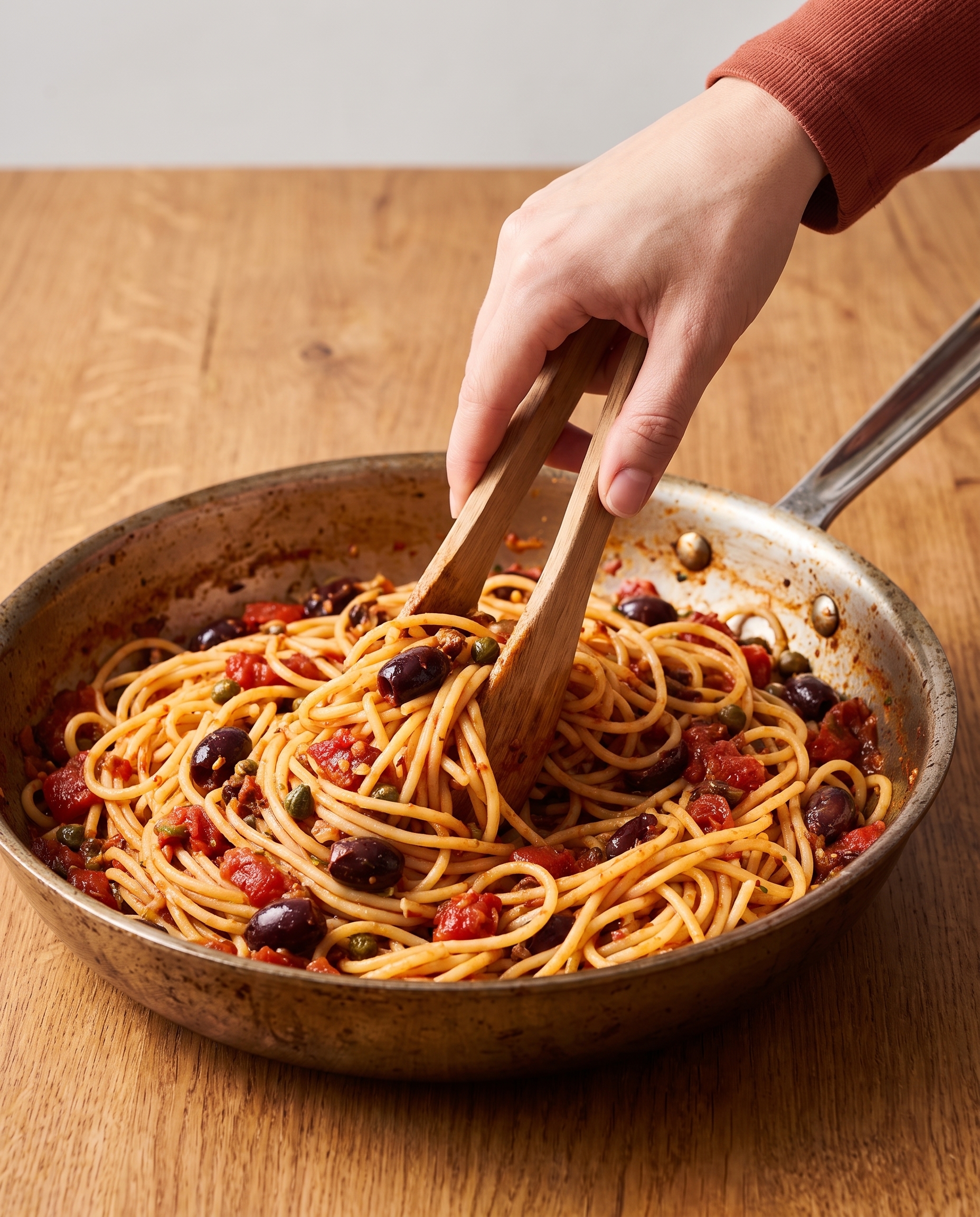
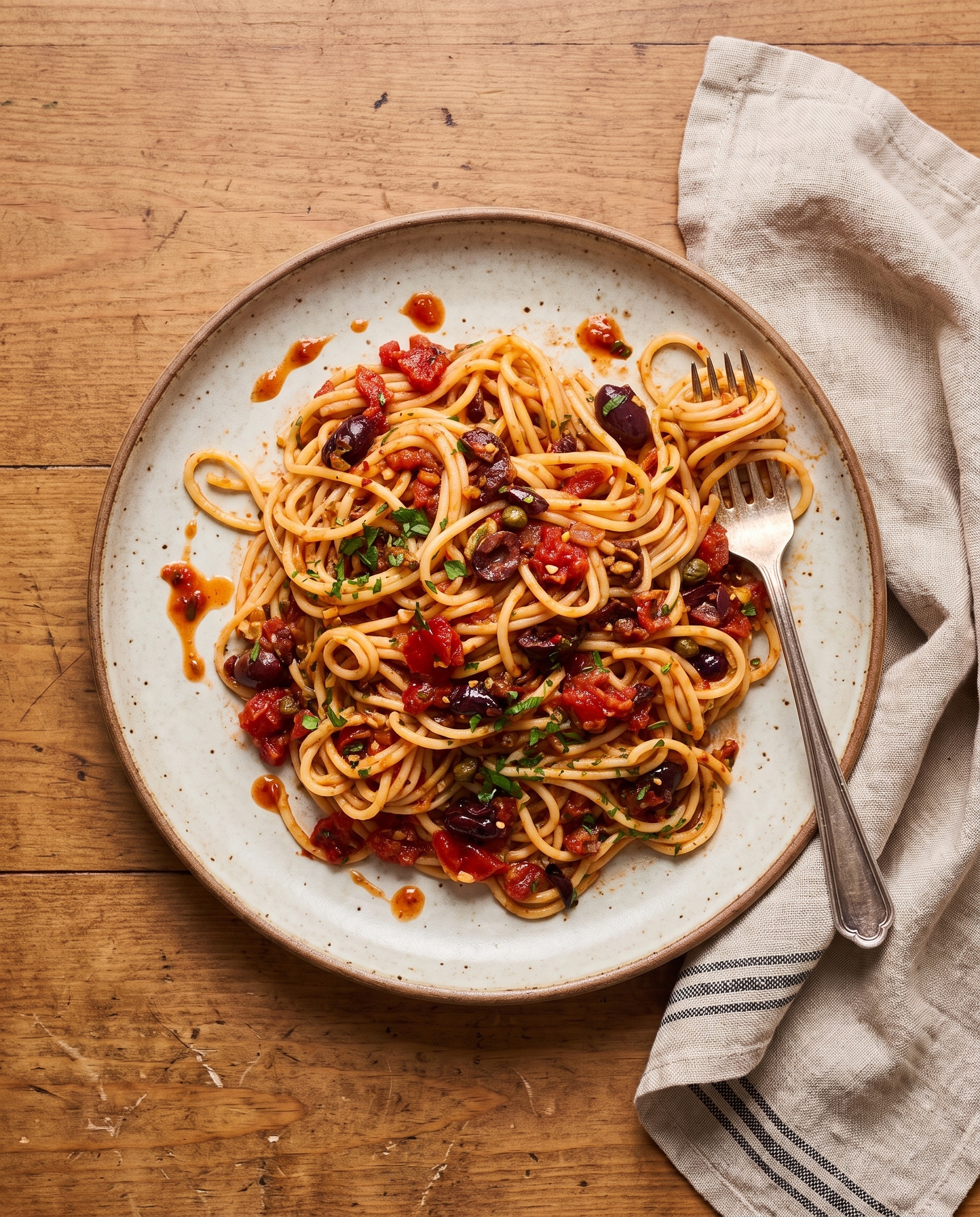
Step 5: Add the drained pasta and ½ cup of that reserved pasta water straight into the skillet with the sauce. Toss everything together over low heat for a minute or two, adding another splash of pasta water if it looks dry. The sauce should cling to every strand. Stir in the chopped parsley, give it one final taste, and serve immediately with a little more parsley scattered on top.
Creative Twists Worth Trying
Puttanesca is one of those wonderfully forgiving recipes that invites a little improvisation:
Add a few anchovies. Traditional puttanesca almost always includes them. They melt into the oil with the shallots and add an even deeper umami backbone. Start with three or four fillets.
Swap spaghetti for bucatini or linguine. The hollow strands of bucatini catch the sauce in a really fun way.
Stir in toasted breadcrumbs at the very end for crunch. It mimics bruschetta and adds a beautiful golden finish.
Use Castelvetrano olives instead of kalamata. They’re milder and buttery — a softer, rounder character.
Finish with a tiny squeeze of lemon and a drizzle of really good olive oil.
Serving & Pairing Ideas
What should I serve with this puttanesca? A green salad, something crunchy and bright, and a glass of wine. A peppery arugula salad with shaved Parmesan and a squeeze of lemon is a dreamy partner. Crusty bread, warm from the oven, is non-negotiable for mopping up the sauce. For wine, a chilled glass of dry Italian red — a Chianti or Sangiovese — sits beautifully alongside the salty, briny notes. For a cozier pasta night, pair this with my Lobster Mac and Cheese.
Why I Love This Recipe So Much
There are a few recipes I consider anchor recipes — ones I can make with my eyes closed and share with new friends because they always turn out great. Puttanesca is one of them. The original was reportedly invented in mid-century Naples by women who worked late and came home with little in the fridge, who threw together the boldest things they had and turned it into a classic. I love that it scales: cooking for one or for eight, the recipe doesn’t care. It just wants to be made.
Storage and Batch Cooking
Fridge: Leftover puttanesca keeps well in an airtight container for 3 to 4 days. When reheating, add a splash of water and warm gently in a skillet over low heat — the stovetop keeps the noodles from turning gummy.
Freezer: The sauce itself (without the pasta) freezes beautifully for up to 3 months. Cool completely, transfer to a freezer-safe container, and thaw overnight in the fridge. Cook a fresh pot of pasta and you’ve got a puttanesca night on a random Wednesday. For another freezer-friendly favorite, my Creamy Chicken Bacon Alfredo is worth batching.
Troubleshooting Your Puttanesca
Too salty. The most common issue. The olives and capers are doing the heavy lifting, so balance with a pinch of sugar or an extra splash of pasta water. A tiny squeeze of lemon also helps.
Too thin or too thick. Too thin? Simmer a few more minutes uncovered. Too thick? Loosen with a splash of reserved pasta water.
The garlic burned. Sadly, start that part over — garlic goes from golden to acrid in seconds. Next time, add the garlic after the shallots have softened.
The pasta is sticky. Not enough water in the pot, or skipping the salt. Use at least 4 quarts of water per pound and a generous tablespoon of salt.
Your Quick Questions, Answered
Can I make puttanesca without anchovies? Absolutely. This recipe skips them and is still deeply flavorful. If you want to add them, three or four fillets melted into the oil is the way.
What pasta shape works best? Spaghetti is classic, but any long strand works — linguine, bucatini, even angel hair. Penne works too, though it doesn’t catch the sauce the same way.
Can I use fresh tomatoes instead of canned? You can, but cook the sauce longer to concentrate the flavor. About 6 to 8 ripe tomatoes, peeled and crushed, will do. In winter, canned San Marzanos are almost always the better choice.
Is puttanesca spicy? It can be as spicy as you want. The ¼ teaspoon here gives gentle warmth. Double it for more heat, or leave it out for kids.
A Few Last Thoughts
I’ve been making this pasta for years, and it still surprises me how something so simple can feel so special. There’s a quiet confidence in puttanesca — a dish that doesn’t ask for compliments but quietly earns them. It belongs on your weeknight rotation and on a table shared with people you love.
If you make this, I’d love to hear how it turned out. Did you go heavy on the olives? Finish the whole pot in one sitting? Tell me everything. Cooking is a conversation, and I always want to hear what you have to say. Keep your pantry stocked, your pasta water salty, and your kitchen a little messy. For more cozy inspiration, peek around savorydiscovery.com or browse our pasta recipes.
A bright, briny weeknight pasta with crushed San Marzano tomatoes, kalamata olives, capers, garlic, and a whisper of red pepper flake. Ready in 30 minutes from mostly pantry staples.
Ingredients
Notes
For an even deeper umami flavor, melt 3-4 chopped anchovy fillets into the oil with the shallots. The sauce (without pasta) freezes beautifully for up to 3 months.
Keywords:pasta puttanesca, puttanesca recipe, olives and capers pasta, weeknight pasta, Italian pasta, pantry pasta
Elowen Thorn I cook, photograph and re-test every recipe in an ordinary home kitchen before it goes up, so what you make matches what you see. Savory Discovery is where simple weeknight cooking, seasonal ideas and the odd bit of kitchen craft sit side by side — written plainly, and worth cooking twice.