I have made this pesto pasta salad more times than I can count. It started as a way to use up basil from my mother’s garden before the first frost hit. She grew it right by the back door in an old galvanized tub.
That woman could make anything taste like it cost more than it did. And this salad? It is proof of that.
Have you ever had a dish that just shows up at every family get-together without anyone asking for it?
The Pasta Part
You want spiral pasta for this. Rotini, fusilli, cavatappi. Something that grabs onto the pesto and holds it tight. I learned that lesson the hard way with angel hair once. What a mess.
Cook it just past al dente. Not mushy, mind you. But not crunchy either. And save that pasta water. That is the trick my grandma taught me.
She said the water had starch in it from the pasta. That starch makes the pesto creamy without adding cream. I still make it this way every single time.
Why the Water Matters
Reserving that pasta water is not fancy. It is just smart. You add half a cup to the pesto and pasta, and suddenly everything gets silky. No extra oil needed.
Here is the thing. Store-bought pesto can be thick and heavy. A little pasta water loosens it up and makes it feel homemade. That is a real trick for busy weeknights.
You can also use cottage cheese if you want an even lighter sauce. I tried it once when I was out of pine nuts, and my husband did not even notice the swap.
Fun fact: pesto was originally made with a mortar and pestle, not a food processor. That is why it is called pesto. “Pestare” means to pound in Italian. I just think that is neat.
The Tomatoes and Cheese
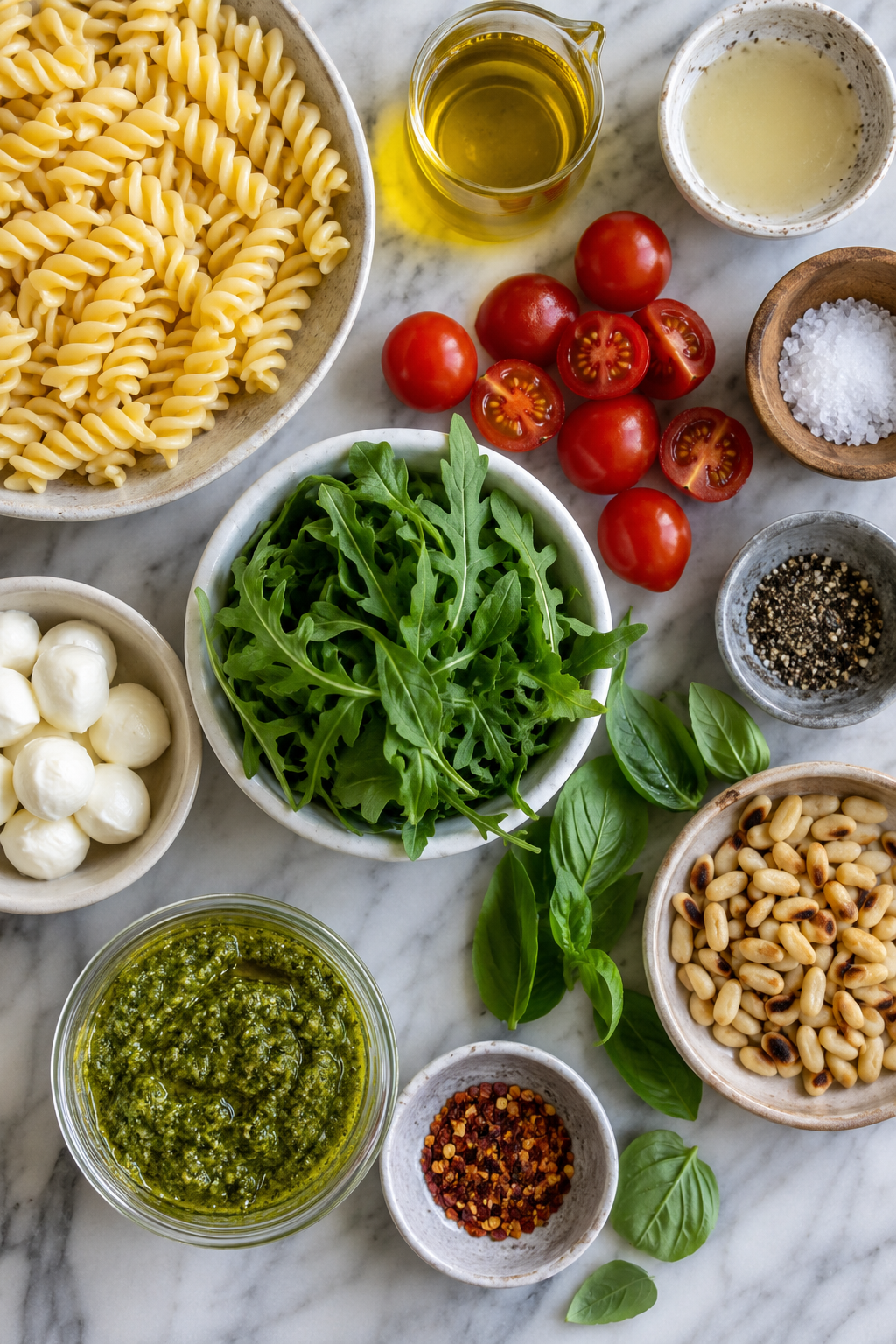
Cherry tomatoes are non-negotiable here. You want them halved so they release a little juice into the salad. That juice mixes with the pesto and makes everything taste like summer.
Mini mozzarella balls are the other half of that equation. They are mild and soft. They balance out the bold basil and garlic in the pesto. My kids never complained about this one, not even once.
And the arugula? That was my addition. My mama never used it. But that little peppery bite wakes the whole dish up. It is like a secret handshake for your taste buds.
What is the one ingredient you add to a recipe that your family never sees coming?
The Toppings That Make It Pretty
Toasted pine nuts are optional, but they add a crunch that makes you slow down while you chew. And fresh basil leaves on top? That is just for showing off.
A pinch of red pepper flakes gives it a little warmth. Not spicy. Just a nudge. I sprinkle that on right before serving so people can see the red flecks.
This salad is best at room temperature. That is when the flavors really settle in together. You can make it a few hours ahead and just let it sit on the counter. It gets better as it waits.
If you want to add protein, try some lemon garlic shrimp on the side. Or even a simple Cajun shrimp if you like a little heat.
Why This Salad Sticks Around
I have brought this to church potlucks, backyard barbecues, and Sunday lunches after service. It never comes home with leftovers. That tells you everything.
Here is why it matters. This salad does not need to be hot. It does not need last-minute attention. You make it, you set it out, and people help themselves. That is real hospitality right there.
I want you to try this once and see if it does not become your go-to. It is forgiving. You can swap out the arugula for spinach. Use walnuts instead of pine nuts. It still works.
Cooking like this is not about being perfect. It is about making something that feels good to share. That is what my grandma always said, anyway.
So what is the dish you always bring when you need to feed a crowd? I would love to hear about it.
Pesto Pasta Salad
Pesto Pasta Salad
You know the kind of dish that just saves a hot day? This is it. I learned to make pasta salad from my neighbor Betty, who never measured a thing. She’d toss in whatever was fresh, and it always turned out perfect. This one has that same feel. You can pretty much make it with your eyes closed.
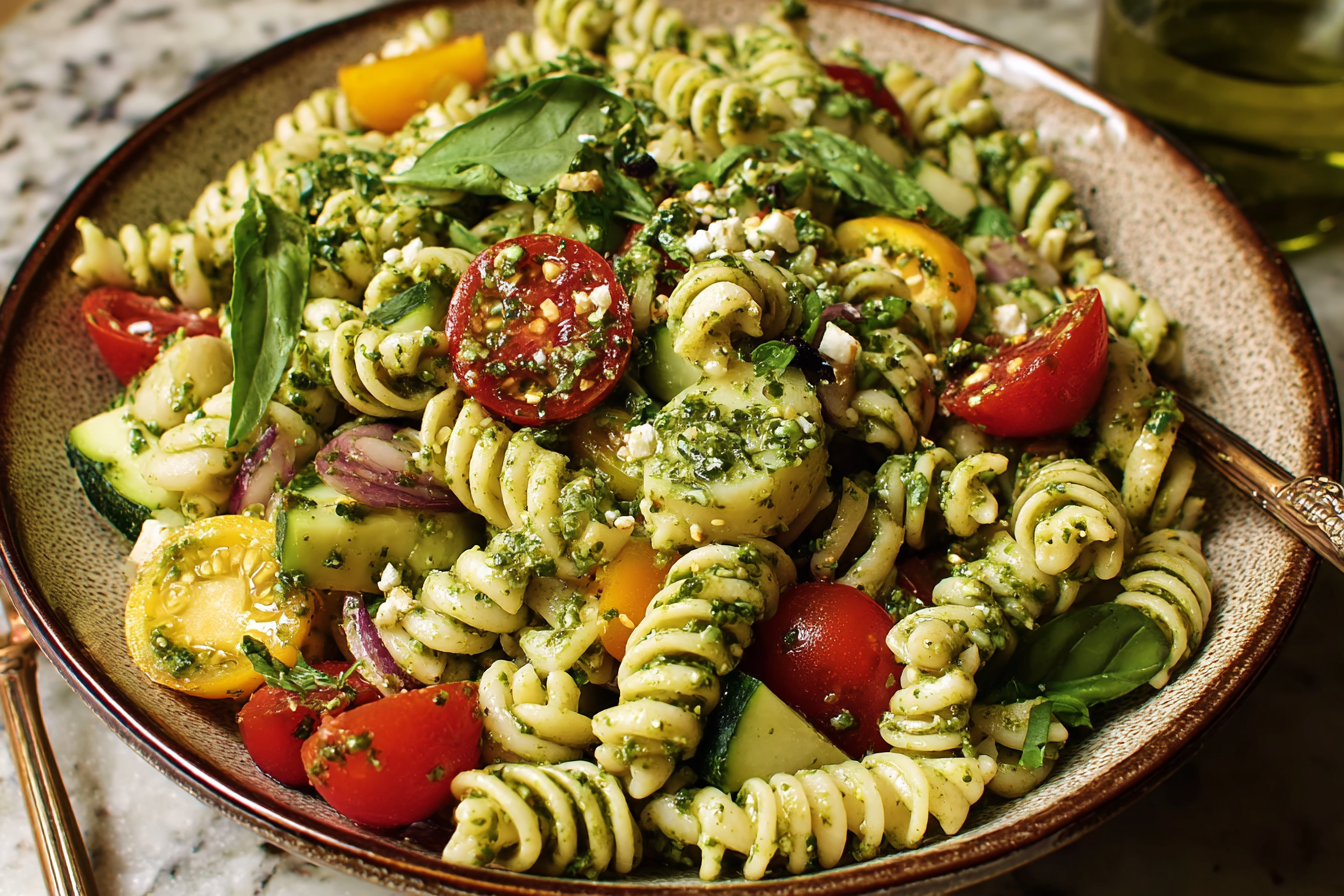
I love that it uses spiral pasta because the pesto gets caught in all those little grooves. The cherry tomatoes burst when you bite them, and the arugula adds a little pepper kick. My kids never complained about this one. It’s the kind of thing you can throw together when you don’t have much time. Thirty minutes, start to finish.
You can use store-bought pesto, and I won’t tell a soul. But if you’ve got fresh basil in the garden, go ahead and make your own. It takes just a few minutes in the food processor. Either way, don’t skip the pasta water. That little trick makes the dressing creamy without any extra cream.
Ingredients
Grab a box of your favorite spiral pasta—I go with rotini or fusilli. You’ll need about 12 ounces, but honestly, eyeballing it from the bag works fine. The other stuff is pretty simple too: cherry tomatoes, mini mozzarella balls, arugula, pine nuts, and fresh basil. Oh, and a good jar of basil pesto. Don’t forget the lemon juice and salt.
Reserve a cup of pasta water before you drain it. That’s the secret. It helps the pesto stretch and coat every bit of pasta without getting gluey. I still make it this way every single time. It’s just one of those small things that makes a big difference.
Instructions
Step 1: Cook your pasta until it’s just past al dente—about a minute more than the box says. Before you drain it, scoop out 3/4 cup of that starchy pasta water. Toss the hot pasta with a drizzle of olive oil so it doesn’t stick, then let it cool down. (Here’s a tip I learned the hard way: never rinse the pasta with cold water, or the pesto won’t stick right.)
Step 2: In a big mixing bowl, dump in the cooled pasta, your pesto, and about half of that reserved pasta water. Add the lemon juice, a good pinch of salt, and some black pepper. Toss it all together until everything looks glossy and coated. What’s your go-to pasta shape for salads? Share below!
Step 3: Fold in the halved cherry tomatoes, the mini mozzarella balls, and the arugula. If it looks a little dry, add more of that pasta water a splash at a time. You want it lightly creamy, not soupy. It should look like everything is just barely hugged by the pesto.
Step 4: Finish it off with a sprinkle of toasted pine nuts and some torn fresh basil leaves on top. A pinch of red pepper flakes gives it a little warmth if you like that. Serve it at room temperature, not straight from the fridge. That’s when the flavors really come alive.
Creative Twists
Swap the arugula for chopped spinach or kale—it wilts just enough when you toss it with the warm pasta. Add grilled chicken or shrimp to make it a full meal, like this one-pot garlic parmesan chicken pasta but cold. Use sun-dried tomatoes instead of cherry ones for a chewier, tangier bite. Which one would you try first? Comment below!
Serving & Pairing Ideas
Serve this with a crusty piece of garlic bread on the side, or next to a simple easy Greek pasta salad for a double-pasta situation. A handful of extra fresh basil on top makes it look pretty. It goes great alongside grilled chicken or a cold creamy Cajun shrimp pasta if you’re feeling fancy. Which would you choose tonight?
Pesto Pasta Salad
I still remember the first time I made this pesto pasta salad. It was a hot July afternoon, and I had nothing in the fridge but some tired basil and a bag of cherry tomatoes. My neighbor Mary had just dropped off a jar of her homemade pesto, so I threw it all together. My kids never complained about this one. They ate it right there on the back porch, no plates needed.
Why This Salad Works for Busy Weeks
This is the kind of dish you make when you want something cold and filling but don’t want to turn on the oven. The spiral pasta grabs every bit of that pesto, so each bite tastes like summer. I love how the arugula adds a little peppery bite without being too strong. And the mozzarella balls? They stay soft and milky, even after a day in the fridge. It’s a real crowd-pleaser for potlucks or just a quiet Tuesday dinner.
Fun fact: Pesto was originally made with a mortar and pestle, not a food processor. My grandma used to crush basil with a wooden spoon just to prove she could. I still make it this way when I have the time.
Storage and Batch Cooking Tips
This salad keeps beautifully in the fridge for about three days. Just pop it in a sealed container and give it a good stir before serving. If it looks dry, add a splash of olive oil or a little leftover pasta water. I once stored it overnight and forgot to stir it, and the top was all dried out. A quick toss brought it right back to life. You can double the recipe easily for a week of lunches. Have you ever tried storing it this way? Share below!
For freezing, I don’t recommend it with the mozzarella and arugula. Those get watery and sad. But you can freeze the pesto and pasta separately, then mix in fresh stuff later. That’s what I do when basil is cheap at the farmers market.
Troubleshooting Common Problems
First problem: the pasta soaks up all the pesto and gets dry. Fix it by keeping that reserved pasta water handy. Just add a tablespoon at a time until it looks silky again. I remember when I learned that trick from my aunt. She said, “Don’t you dare serve dry pasta in my house.”
Second problem: the arugula gets soggy and sad. Fix it by folding it in right before serving, not when you first mix everything. That way it stays bright and fresh. Why this matters: wilted greens make the whole dish feel heavy. Fresh arugula keeps it light and peppery.
Third problem: the flavors taste flat or boring. Fix it with a good pinch of salt and a squeeze of lemon. Pesto can be a little shy on its own. A little acid wakes it right up. Why this matters: a boring pasta salad is just sad. A bright, tangy one gets eaten in minutes. Which of these problems have you run into before?
Your Quick Questions, Answered
Can I use store-bought pesto for this?
Absolutely. I use store-bought pesto all the time when I’m short on time. Just look for one in the refrigerated section near the fresh pasta. Those tend to have brighter flavor and less oil than the jars on the shelf. I’ve used both, and honestly, nobody at the table has ever complained about this shortcut.
What other veggies can I add?
You can toss in almost anything you have on hand. I love adding roasted red peppers or thinly sliced zucchini in the summer. Chopped artichoke hearts work great too, especially if you drain them well first. Just keep the total veggie amount around 3 cups so the pesto can coat everything evenly without getting watery.
Can I make this ahead for a party?
Yes, and I actually prefer it that way. Make it the morning of your party and let it sit in the fridge for a few hours. The flavors meld together and get even better. Just wait to add the arugula and pine nuts until right before you serve it. That keeps everything fresh and crunchy. Which tip will you try first?
A Simple Invitation
I hope this salad finds its way into your kitchen soon. It’s one of those recipes that feels like a warm hug on a busy day. Have you tried this recipe? I’d love to hear how it turned out for you. Drop a comment below and tell me what you added or changed. That’s how good cooking gets passed down, after all. One neighbor to another.
Elowen Thorn I cook, photograph and re-test every recipe in an ordinary home kitchen before it goes up, so what you make matches what you see. Savory Discovery is where simple weeknight cooking, seasonal ideas and the odd bit of kitchen craft sit side by side — written plainly, and worth cooking twice.