


The Duck’s Secret Nap
Let’s talk about the duck’s long nap in the fridge. You sprinkle it with salt and pepper. Then you let it sit for hours. This is the secret. The salt pulls moisture from the skin. This makes it get very crispy later. I still laugh at that. The best part needs a nap first.
Why does this matter? Crispy skin is everything with duck. It’s the best bite. Without this step, the skin can be chewy. We don’t want that. Do you prefer crispy or soft textures on your meat? I always choose crispy.
A Sauce from Storybooks
The sauce feels like magic. You put port wine, figs, and vinegar in a pot. It bubbles and smells like an old forest. Doesn’t that smell amazing? The figs get plump and happy. The whole thing turns syrupy and rich.
Fun fact: The Black Mission fig got its name from Spanish missionaries. They planted the trees in California long ago. This sauce matters because it’s sweet and sour together. That balance cuts the rich duck fat. It makes the whole dish sing.
Patience in a Pan
Cooking the duck needs a cool start. Put it in a cold pan, skin side down. Then turn on the heat. This slowly melts the fat. You must be patient. It takes nearly 20 minutes. I listen to the radio while I wait.
All that golden fat in the pan is a treasure. Save it! You can cook potatoes in it later. They will taste incredible. Have you ever saved cooking fat to use again? Tell me what you made.
The Final Rest
After cooking, let the duck rest. Tent it with foil for ten minutes. This is not a suggestion. It is a kindness to the meat. The juices settle back in. If you cut it right away, all the good juice runs out onto the board.
Why this matters? A rested duck breast is tender and moist. Every slice will be perfect. It shows care. Good food is about these small acts of care. Do you think resting meat makes a difference? I sure do.
Bringing It to the Table
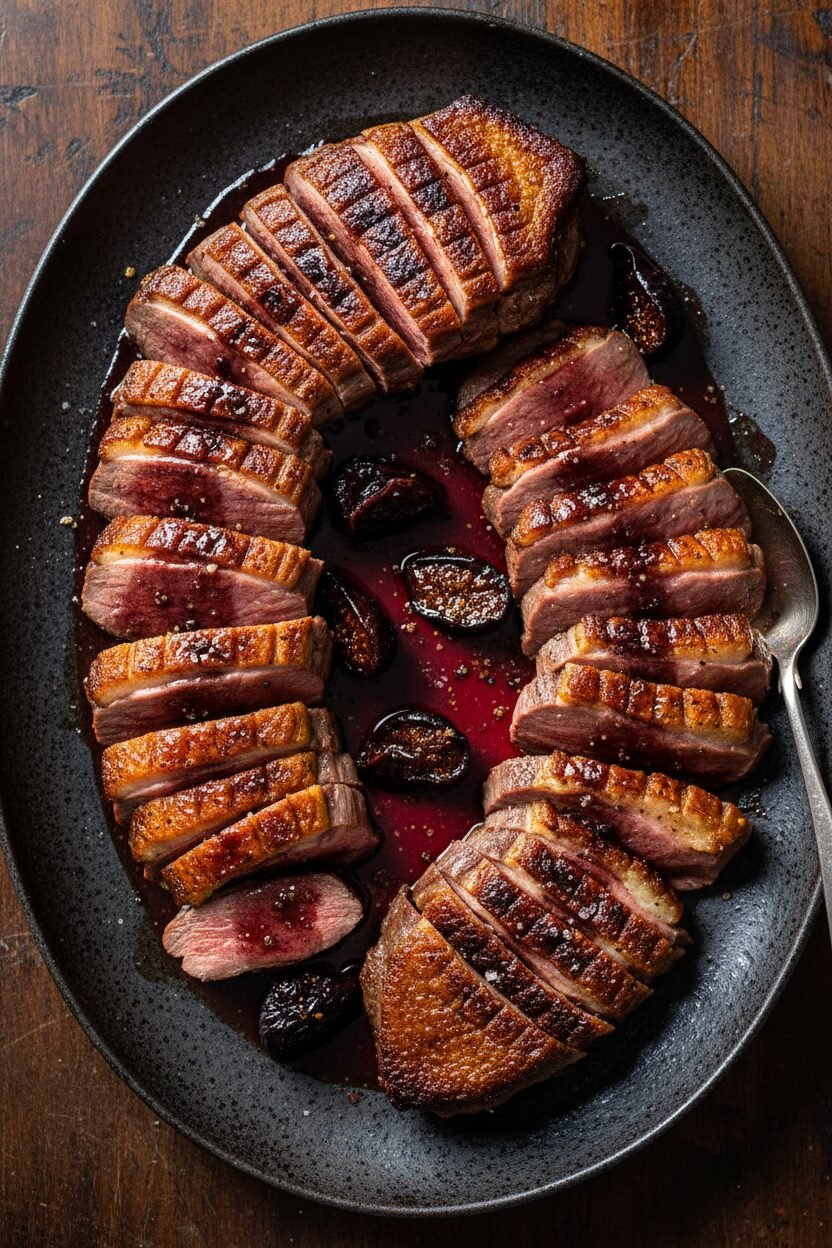
Slice the duck thin. Fan it on a plate. Drizzle that dark fig sauce over the top. The colors are beautiful. Deep red sauce on golden, crispy skin. It looks fancy but feels like home.
I love to serve this with simple buttered greens. The meal feels special. It’s for a slow Sunday or a small celebration. What would you serve on the side with this duck? Mashed potatoes or maybe some roasted carrots? Share your favorite pairings with me.
Ingredients:
| Ingredient | Amount | Notes |
|---|---|---|
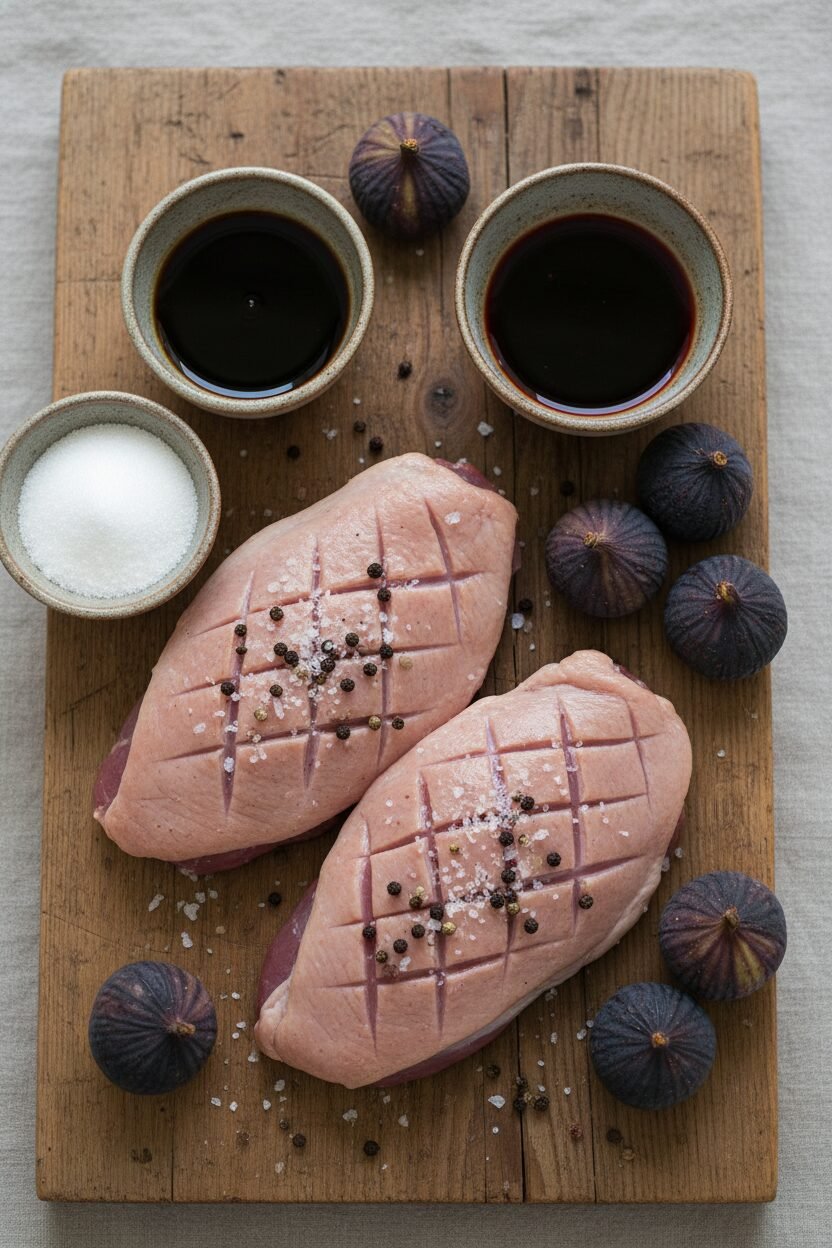
| Boneless duck breasts | 4 (7- to 8-ounce) | |
| Kosher salt | 2 teaspoons | |
| Pepper | 1½ teaspoons | |
| Ruby port | ½ cup | For the sauce |
| Dried Black Mission figs | ¼ cup | Halved through stem, for the sauce |
| Red wine vinegar | ¼ cup | For the sauce |
| Sugar | 3 tablespoons | For the sauce |
Instructions
Step 1: First, dry your duck breasts with paper towels. Place them skin-side down. Use a sharp knife to trim the extra fat from the edges. This helps the skin crisp up beautifully later. I always save that fat in a jar. It makes the best roasted potatoes!
Step 2: Now, flip the breasts over. Gently cut a small crosshatch into the fat layer. Don’t cut into the meat. Sprinkle salt and pepper all over both sides. Place them skin-side up on a plate, cover, and chill. (This long salting makes the skin so crisp!)
Step 3: Let’s make the sweet sauce. Combine the port, figs, vinegar, and sugar in a small pot. Bring it to a boil, then let it bubble for about 15 minutes. It will become thick and syrupy. Doesn’t that smell amazing? Set it aside to cool.
Step 4: Time to cook the duck. Place the breasts skin-side down in a cold, dry pan. Turn the heat to medium. Let them cook slowly for 17-20 minutes. You’ll see lots of golden fat in the pan. That’s exactly what you want! What’s your favorite thing to cook in duck fat? Share below!
Step 5: Carefully flip the breasts. Reduce the heat to medium-low. Cook for just a few more minutes, depending on how you like it. Use a thermometer if you have one. Then, move them to a rack to rest for 10 minutes. (Letting it rest keeps all the juices inside.)
Step 6: Finally, slice the duck thinly. Arrange it on a warm platter. Drizzle that gorgeous fig sauce all over. I still laugh at how fancy this looks. And it all started with a little patience.
Creative Twists
This recipe is wonderful as-is. But sometimes, a little change is fun. Try one of these twists next time. They make the meal feel new again. My grandson loves the orange idea.
Swap the figs for dried apricots or cherries. The color and flavor will be a happy surprise.
Add a strip of orange zest to the sauce. It gives a lovely, bright note.
Use the sauce as a glaze for roasted carrots. They become sweet and sticky.
Which one would you try first? Comment below!
Serving & Pairing Ideas
This duck deserves a lovely plate. I like to serve it over creamy mashed potatoes. The sauce runs into them perfectly. Some simple green beans on the side are just right. It feels like a special dinner.
For a drink, a glass of the same ruby port is lovely. It sips like a sweet hug. For a non-alcoholic treat, try sparkling apple cider. Its bubbles cut through the rich sauce. Which would you choose tonight?
Storing Your Duck for Later
Let’s talk about saving some for tomorrow. Cooked duck keeps well. Store it in the fridge for up to three days. Wrap slices tightly in foil first.
You can freeze it too. Place cooled slices in a freezer bag. They will be good for two months. Thaw them in the fridge overnight.
Reheating is simple. Use a low oven or a skillet. Add a splash of water to keep it moist. I once reheated it too fast and it got tough.
You can make the sauce ahead. It lasts two weeks in the fridge. This matters because it makes a fancy dinner easy on a busy night. Have you ever tried storing it this way? Share below!
Fixing Common Duck Troubles
Even grandmas have kitchen mishaps. Here are three common ones. First, the skin isn’t crispy. This means your pan was too hot. Start with a cold pan for perfect crackling.
Second, the meat is tough. You probably cooked it too long. Use a thermometer for perfect doneness. I remember when I was scared of undercooking it.
Third, the sauce is too thin. Just let it simmer a bit longer. It will thicken as it cools. Getting the skin right matters for amazing texture. Using a thermometer builds your cooking confidence. Which of these problems have you run into before?
Your Quick Questions, Answered
Q: Is this gluten-free? A: Yes, all the ingredients listed are naturally gluten-free.
Q: Can I make any parts ahead? A: Absolutely. The sauce can be made up to two weeks early.
Q: What if I don’t have port or figs? A: Use a sweet red wine and a few prunes. It will still be lovely.
Q: Can I double the recipe? A: You can. Just use two skillets so the duck isn’t crowded.
Q: Any optional tips? A: Save the duck fat you cook out. It makes the best roasted potatoes. Which tip will you try first?
From My Kitchen to Yours
I hope you love this recipe. It feels special but is quite simple. Sharing good food is one of life’s great joys.
I would love to hear about your cooking adventure. Tell me how it went in your kitchen. Have you tried this recipe? Your stories make my day.
Thank you for cooking with me today. Happy cooking!
—Elowen Thorn.

Port Glazed Duck with Spiced Fig Sauce
Description
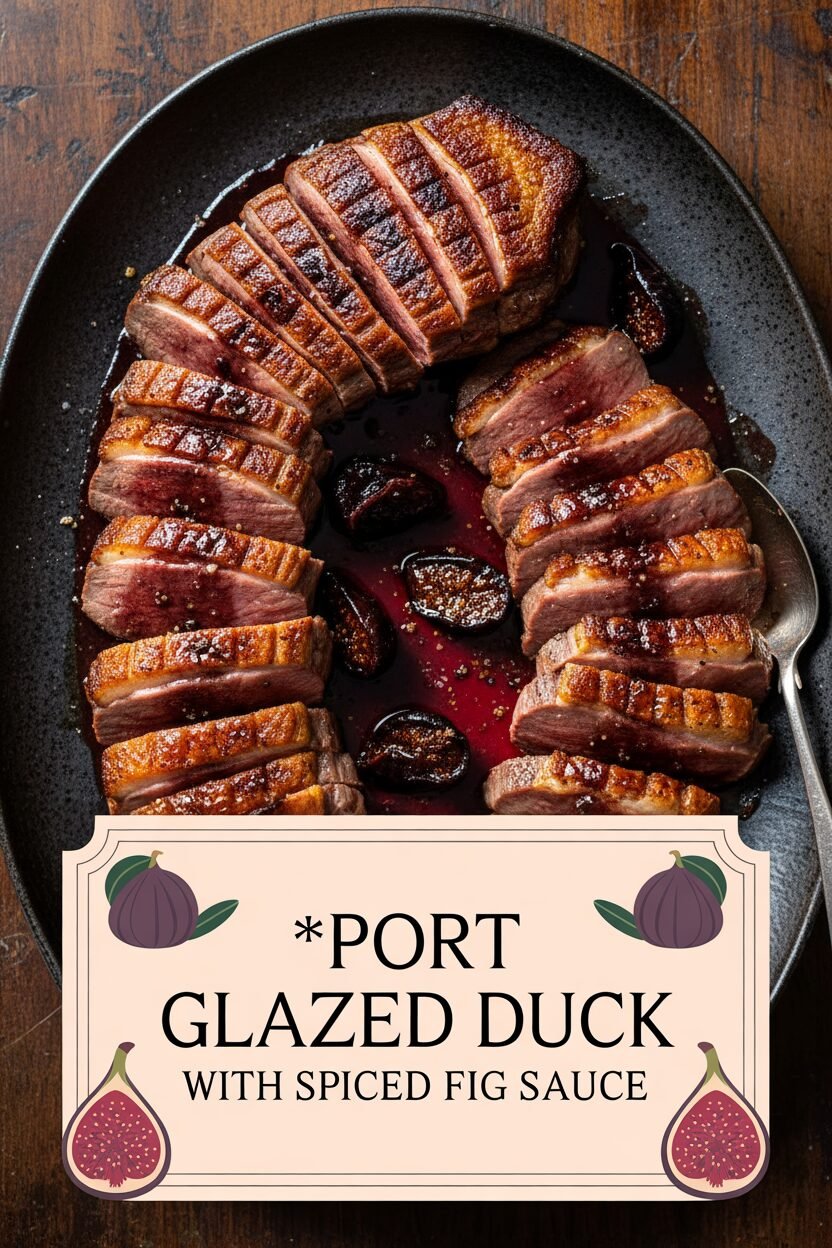
Succulent duck breasts with a crispy skin, served with a rich and syrupy port wine and fig sauce.
Ingredients
Instructions
- Pat duck breasts dry. Trim excess fat and silverskin. Score the fat in a ½-inch crosshatch pattern, careful not to cut the meat. Season all over with salt and pepper. Place skin side up on a plate, cover, and refrigerate for at least 6 hours or up to 24 hours.
- For the sauce: Combine port, figs, vinegar, and sugar in a small saucepan. Bring to a boil over medium heat and cook until reduced to about ½ cup, about 15 minutes. Set aside off heat; it will thicken as it cools. (Can be made ahead and stored.)
- Place duck breasts skin side down in a cold 12-inch nonstick skillet. Cook over medium heat until fat renders and skin is crispy and browned, 17 to 20 minutes.
- Flip breasts skin side up and reduce heat to medium-low. Cook to desired doneness: 1-2 min for medium-rare (125-130°F), 3-4 min for medium (130-135°F), 4-5 min for medium-well (135-140°F), or 7-8 min for well-done (145-150°F).
- Transfer duck to a wire rack set in a rimmed baking sheet. Tent with foil and let rest for 10 minutes.
- Slice duck ¼ inch thick and serve with the port-fig sauce.
Notes
- The sauce can be stored in an airtight container for up to 3 days at room temperature or refrigerated for up to 2 weeks.