


The Heart of a Classic Beef Stew
Let’s talk about a classic beef stew. It is the best comfort food. It warms you right down to your toes. My own grandma taught me this beef stew recipe. I still smile thinking of her old yellow pot.
Why does this matter? A good stew gathers everyone. It turns a simple family dinner into a special time. The smell alone makes a house feel like a home. Doesn’t that smell amazing?
Your Pot is Your Friend
This is a dutch oven beef stew. That heavy pot is magic. It goes from the stove to the oven. This makes the meat so tender. You can also make a slow cooker beef stew with these same steps.
Here is a fun fact for you. *Browning the meat first is the big secret.* It makes the flavor deep and rich. It is worth the few extra minutes. Do you have a favorite pot you love to cook in?
Spring’s Sweet Root Vegetables
I use spring root vegetables here. Carrots and rutabaga are sweet this time of year. They get soft and soak up all the good juice. They make the stew hearty and healthy.
This is an easy beef stew, truly. You just chop and toss them in. They do the rest of the work in the oven. The mix of flavors is just right. What is your favorite vegetable to find in a stew?
Making It Just For You
This stew is very friendly. Need a gluten-free beef stew? Just use your favorite gluten-free flour. Want a dairy-free beef stew? Use all olive oil, not butter. It will still taste wonderful.
Why does this matter? Food should fit your family. Little changes can make a recipe perfect for your table. Cooking is about love, not strict rules. I learned that from my grandma, too.
The Long, Slow Wait
The hardest part is waiting. The stew braises for hours. But that slow cook makes the beef fall apart. Your kitchen will fill with a wonderful smell.
I use this time to set the table. Or I just sit and enjoy the quiet. That quiet time is a gift. Do you listen to music or podcasts while you wait for dinner?
Ingredients:
| Ingredient | Amount | Notes |
|---|---|---|
| beef stew meat | 2 lbs | |
| all-purpose flour | 1/3 cup | seasoned with salt & pepper |
| fine sea salt & black pepper | 1 tsp each | for seasoning flour, plus more to taste |
| olive oil | 3 Tablespoons | divided |
| salted butter | 3 teaspoons | divided |
| beef stock | 3 cups | divided |
| red wine or beer | 1/3 cup | optional, for deglazing |
| French shallots | 6 | peeled and halved |
| small onions | 2 | peeled, cut into 8 |
| fresh thyme or dried | 1 tsp or 1/2 tsp | |
| dried rosemary | 1/2 teaspoon | crumbled |
| garlic | 2 cloves | minced |
| rutabaga | 1 lb | peeled and cut in 1-inch cubes |
| medium carrots | 3 | peeled and cut into coins |
| Dijon mustard | 1 teaspoon | |
| Worcestershire sauce | 1 Tablespoon |
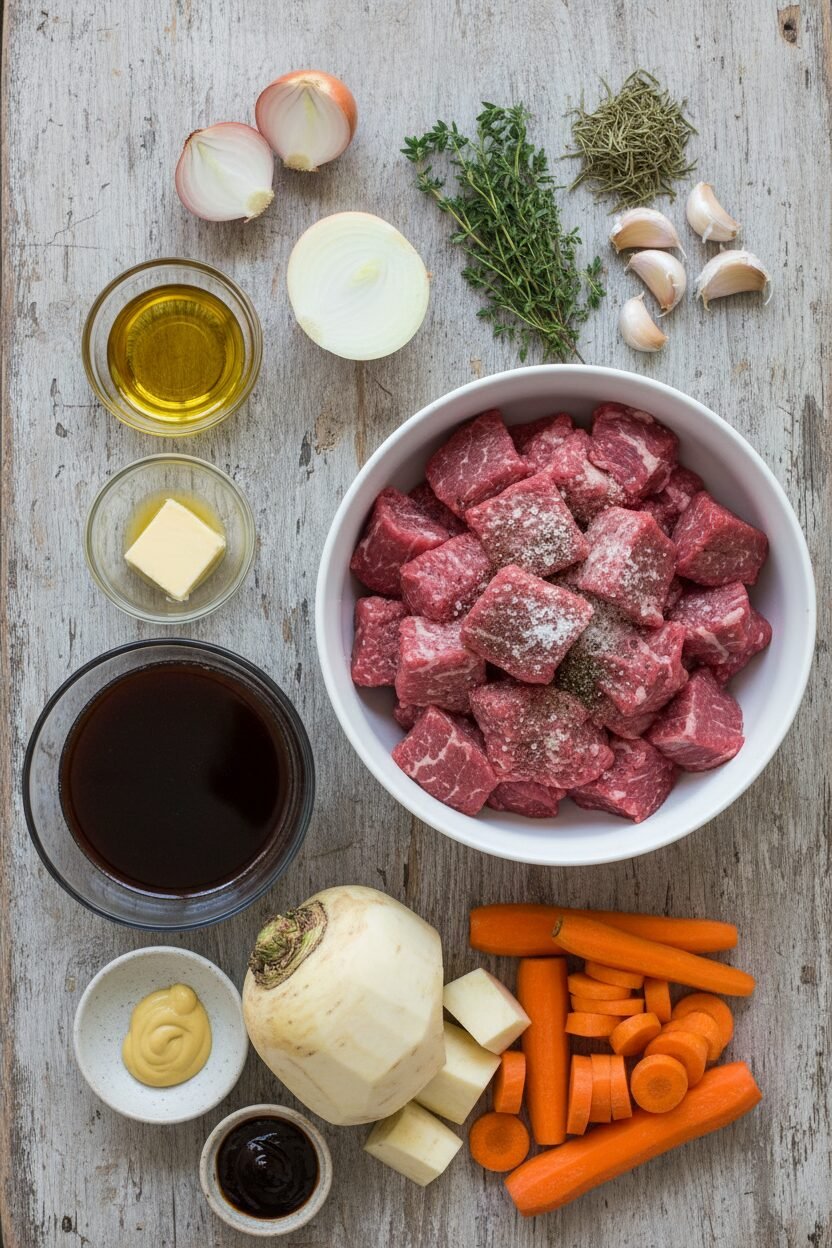
Instructions
Step 1: First, get your oven warm at 275°F. Prep all your root vegetables now. This makes the whole beef stew recipe flow like a song. I still hum while I chop. Doesn’t that smell amazing already?
Step 2: Dry your beef with a paper towel. Mix salt and pepper into the flour. Toss the beef in this seasoned flour. (Patting the beef dry helps it brown beautifully.) This is the secret to a perfect classic beef stew.
Step 3: Brown the beef in hot oil and butter in your Dutch oven. Do it in two batches. This keeps the pan from getting crowded. Why do we brown the meat first? Share below! It builds flavor for your family dinner.
Step 4: Cook your onions and those hardy root vegetables next. Stir in the last bit of flour. This will help thicken your easy beef stew. Pour in your beef stock and scrape the pot clean. I love that sound.
Step 5: Now, add everything back to the pot. Stir in the mustard and Worcestershire sauce. Cover it tight and let the oven work. This slow cooker beef stew method makes the meat so tender. Just wait, it’s the best comfort food.
Creative Twists
Swap the red wine for a dark beer. It gives a cozy, deep flavor. Use parsnips instead of rutabaga. They add a sweet, earthy note. Try it with chickpea flour for coating. You get a gluten-free beef stew that’s just as good. Which one would you try first? Comment below!
Serving & Pairing Ideas
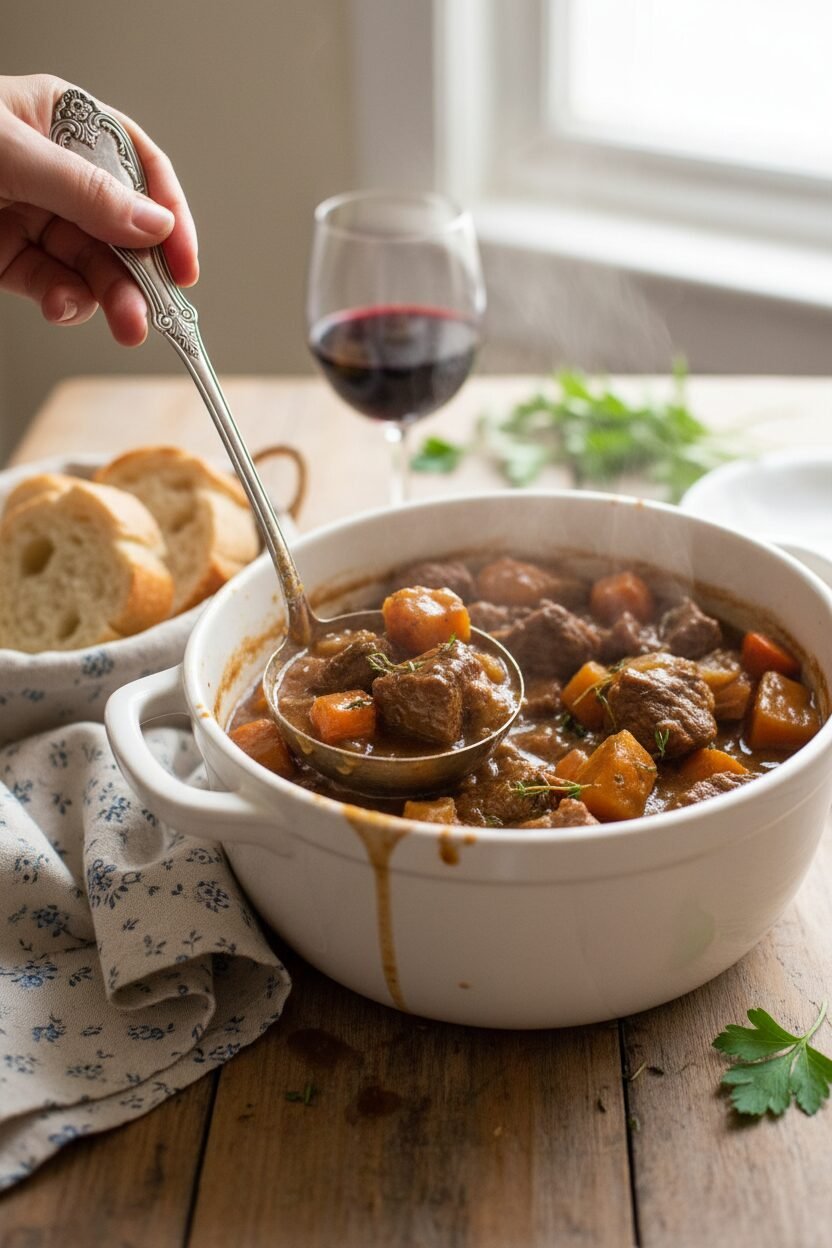
This Dutch oven beef stew loves a friend. Serve it over a big pile of creamy mashed potatoes. A simple green salad on the side is nice, too. Or just grab some crusty bread for dipping. It’s the perfect, easy family dinner. Which would you choose tonight?
Making It Last: Storing Your Stew
Let’s talk about keeping your stew cozy for later. Once cool, pop it in the fridge. It will be happy there for three days. For longer stays, the freezer is your friend. Use airtight containers and leave some space at the top. The stew will keep for three months.
I remember my first big batch. I filled my whole freezer! Reheating is simple. Thaw it in the fridge overnight. Warm it gently on the stove. Add a splash of broth if it seems thick. This makes a quick family dinner any night.
Batch cooking like this matters. It turns cooking into a gift for your future, busy self. You get more time with your family. Have you ever tried storing it this way? Share below!
Simple Fixes for Common Stew Hiccups
Even grandmas run into little problems. Here are three easy fixes. First, is your stew too thin? Mix a tablespoon of flour with some broth. Stir this slurry back into the pot. It will thicken up nicely.
Second, is the meat tough? It just needs more time. Keep it cooking low and slow. I once took mine out too early. Patience makes it tender. Third, are the vegetables mushy? Add them later in the cooking process.
Fixing these issues matters. It builds your cooking confidence. It also makes sure every bite is full of flavor. Which of these problems have you run into before?
Your Quick Questions, Answered
What is the best cut of beef for a stew?
Chuck roast is the best cut. It has great flavor and marbling. This fat melts during slow cooking. It makes the meat incredibly tender. Tougher cuts like chuck become perfect in a classic beef stew. They are made for long, cozy braising.
How long does it take to cook beef stew until tender?
It takes about 3 to 4 hours. Cook it low and slow in the oven. The meat should fall apart easily. This time makes it the ultimate comfort food. Rushing will leave the beef chewy. Patience is the secret ingredient.
Can I make beef and root vegetable stew in a slow cooker?
Yes, you absolutely can. A slow cooker beef stew is very easy. Brown your meat first for best flavor. Then add everything to the pot. Cook on low for 8 hours. You will come home to a wonderful family dinner.
What root vegetables are best for a beef stew?
Carrots, potatoes, and rutabaga are the best. They hold their shape during long cooking. Parsnips and turnips are also lovely. These root vegetables add sweet, earthy flavor. They make the stew hearty and filling. *Fun fact: Rutabaga is sometimes called a Swedish turnip!*
How do you thicken a beef and vegetable stew?
You can thicken it a few ways. The flour on the meat is one way. For a gluten-free beef stew, use cornstarch. Mix a tablespoon with cold water. Stir it into the bubbling stew. It will thicken in minutes. This is an easy fix for any stew.
Can you freeze beef and root vegetable stew?
You can freeze it very well. Let the stew cool completely first. Store it in airtight containers. It will keep for three months. This makes your easy beef stew a ready-made meal. Thaw it in the fridge overnight before reheating.
Which tip will you try first?
From My Kitchen to Yours
I hope you love this cozy recipe. It is a hug in a bowl. Whether you use a Dutch oven or a slow cooker, it will warm your home. The smell alone is wonderful. It brings everyone to the table.
This dairy-free beef stew is made for sharing. I would love to hear about your cooking adventure. Tell me about your family dinner. Have you tried this recipe? Please share your story in the comments below.
Happy cooking!
—Grace Ellington.

Spring Beef and Root Vegetable Pot
Description
A hearty and comforting slow-braised beef stew with tender root vegetables, perfect for a spring meal.
Ingredients
Instructions
- Preheat the oven to 275°F. Adjust oven rack to bottom third so that your pot and lid fit easily. Have your vegetables prepped and ready to go.
- Place the beef on a tray. Pat the beef dry with a clean kitchen rag or paper towel. Stir in 1 teaspoon each fine sea salt and freshly ground black pepper to the flour. Sprinkle 4 Tablespoons of seasoned flour over the beef. Using clean hands or tongs, toss the beef thoroughly in the flour, making sure it is well-coated.
- Over medium heat, melt 1 Tablespoon olive oil and 1 teaspoon butter together in a large Dutch oven with a tight fitting lid. When the butter is bubbling, add half the beef and brown the meat all over, turning each piece with tongs. It should sizzle when added.
- When the beef is browned on all sides, transfer it to a clean bowl. Pour about 1/2 cup of beef stock into the pan to deglaze; scrape the bottom with a firm rubber spatula to get up all the browned bits. Pour this gravy over the browned beef.
- Set the pan back over medium heat. Repeat steps 2 and 3 with remaining beef, this time, deglazing with the red wine. Transfer to a bowl.
- Over medium heat, melt together the final teaspoon of butter and a tablespoon of olive oil in the pot. Tumble in the shallots and onion. Sauté for 2 minutes. Sprinkle over the dried herbs and garlic; add the rutabaga, carrots as well. Saute for 3-4 minutes until the vegetables have softened around the edges. Sprinkle remaining seasoned flour over the vegetables (about 2 Tablespoons) and stir well to coat. Cook for about a minute, then pour in the remaining beef stock. Scrape the bottom well.
- Return the beef and all juices to the pot. Add Dijon and Worchestershire. Stir well. The stock should just barely cover the meat and vegetables. Cover the pot with a tight fitting lid and place in the oven.
- Slow braise the stew for 3 hours. Remove the lid and cook for an additional hour. Allow the stew to cool for about 15 minutes before serving. It will thicken slightly as it cools. Season generously with additional salt and pepper, tasting each time.
- Serve with crusty bread and butter or a mountain of mashed potatoes.
Notes
- For best results, use a good quality, well-marbled beef stew meat. The stew tastes even better the next day after the flavors have melded.