


The Little Pot of Gold
Good gravy is the little pot of gold at the end of the big feast. It ties everything on your plate together. I think it’s the most important part of the meal. My grandson once called it “flavor sauce.” He was right.
This recipe makes a rich, deep gravy. It uses every bit of flavor from the bird. We start with a simple broth. This matters because it builds a base of love. It makes the gravy taste like more than just flour and butter.
A Story About a Neck
Let me tell you about the turkey neck. Most folks toss it out. What a shame! That neck holds so much goodness. I brown it with the giblets in a bit of oil. The smell fills the whole kitchen.
Then it simmers with onion and herbs for a long time. This makes a beautiful, golden broth. That broth is your secret weapon. Fun fact: Simmering the bones pulls out gelatin. This gives your gravy a lovely, silky feel.
The Magic of Patience
The next step is the roux. That’s just butter and flour cooked together. You must stir it slowly. Watch it turn a cozy, nutty brown. This takes about 10 minutes. I listen to the radio while I stir.
Why does this matter? That browning adds a toasty, warm flavor. It’s the difference between pale gravy and grand gravy. Then you whisk in your hot broth. Whisk like you mean it! No lumps allowed. Does your family prefer smooth gravy or one with little bits in it?
The Best Part is in the Pan
After the turkey is done, don’t you dare clean that roasting pan! All those crispy, brown bits stuck to the bottom are flavor treasure. We call them “fond.” You pour a little wine and broth into the hot pan.
Then you scrape all those bits up. Doesn’t that smell amazing? That liquid gets strained right into your gravy. It adds a powerful punch of savory taste. This step makes your gravy truly special.
Bringing It All Home
Finally, you skim the fat off the turkey drippings. Add the good juice underneath to your gravy. Now, you decide. Do you add the diced giblets? Some folks love them, some don’t. I always add the heart and gizzard. They’re tender and tasty.
Let the whole pot simmer for a few minutes. Taste it. This matters because gravy should taste like the whole holiday, rich and thankful. What’s one food that always tastes like a holiday to you? I’d love to know.
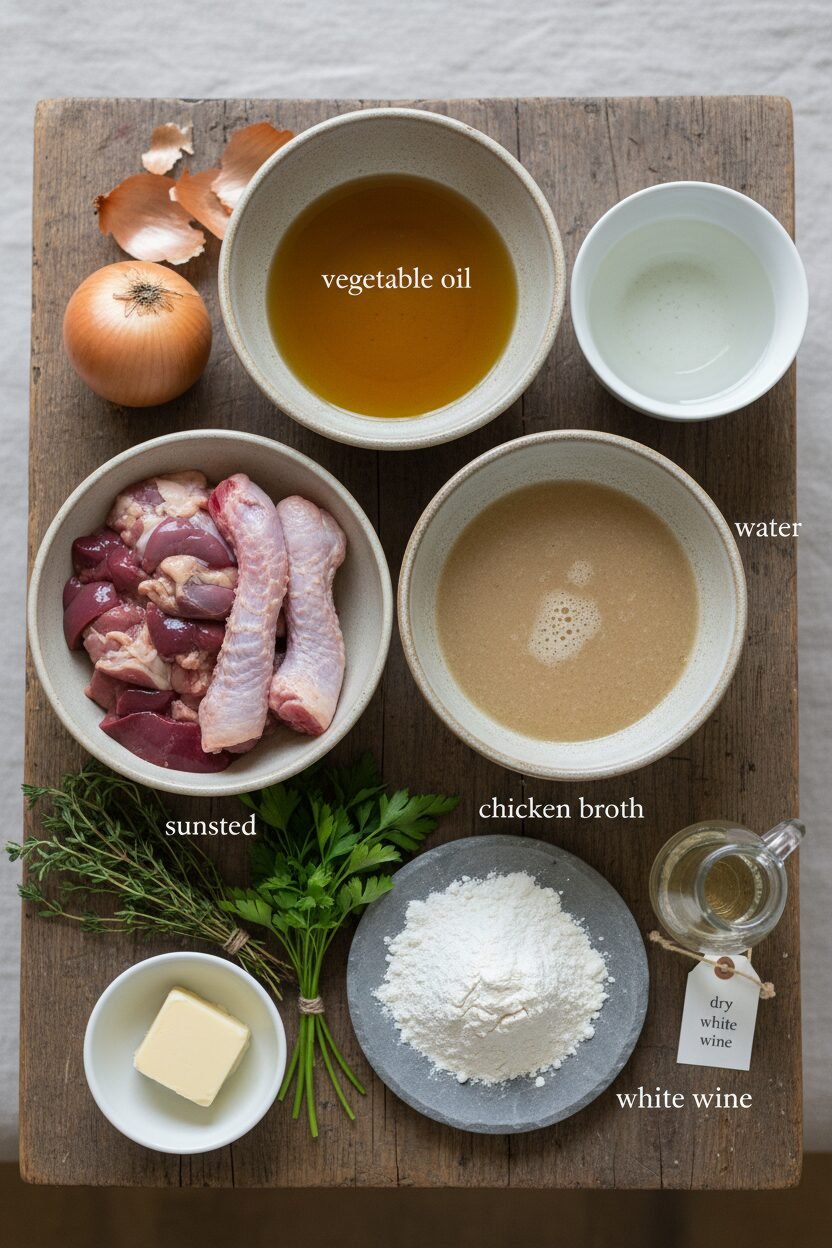
Ingredients:
| Ingredient | Amount | Notes |
|---|---|---|
| Vegetable oil | 1 tablespoon | |
| Reserved turkey giblets and neck | from 1 turkey | |
| Onion | 1, unpeeled and chopped | |
| Low-sodium chicken broth | 4 cups | |
| Water | 2 cups | |
| Fresh thyme | 2 sprigs | |
| Parsley stems | 8 stems | |
| Unsalted butter | 3 tablespoons | |
| All-purpose flour | ¼ cup | |
| Dry white wine | 1 cup |
The Secret to Perfect Turkey Gravy
Hello, my dear. Come sit by the stove. This gravy is my favorite story to tell. It starts with the little bits from the turkey, the giblets. My own grandma called them “the secret keepers.” They hold so much flavor. We simmer them into a rich, golden broth. Doesn’t that smell amazing? It fills the whole kitchen with promise.
The real magic is in the roux. That’s just butter and flour cooked together. You must stir it until it smells like toasted nuts. I still laugh at the time I got distracted. Let’s just say we had lumpy gravy that year! But you will do it perfectly. Just keep whisking and trust your nose.
Instructions
Step 1: First, make your special broth. Heat the oil in your big pot. Brown the turkey neck and giblets for five minutes. Then add the chopped onion and cook a bit more. Now, cover the pot and let it all whisper together on low heat for twenty minutes. This gentle cooking coaxes out the deep flavors. (A good brown color on the meat now means more taste later.)
Step 2: Next, pour in the chicken broth and water. Use your spoon to scrape up any tasty bits from the pot bottom. Bring it to a happy little boil. Add the thyme and parsley stems. Let it simmer for thirty minutes. You’ll see a little foam rise to the top. Just skim it off with a spoon. What herb makes your kitchen smell like home? Share below!
Step 3: Time to strain your broth. Pour it through a fine mesh strainer into a bowl. Let the solids cool, then pick out the heart and gizzard. Dice them up small. Pop the clear broth and diced bits into the fridge until your turkey is done. This waiting is the hardest part. But good things take time, my dear.
Step 4: Now for the roux. Melt butter in a clean saucepan over medium-low heat. Whisk in the flour until it’s smooth. Cook and stir until it turns a lovely nutty brown. This takes patience, about ten to fifteen minutes. Meanwhile, warm your reserved broth on another burner. (Constant stirring is the only way to avoid a burnt taste.)
Step 5: Here’s the exciting part! Take one cup of warm broth and set it aside. Slowly pour the rest of the hot broth into your brown roux. Whisk like the wind to keep it smooth! Let the gravy simmer and thicken for thirty minutes. It will bubble softly. Then cover it and set it aside. Your gravy base is ready for its final act.
Creative Twists
Mushroom Magic: Sauté a handful of chopped mushrooms with the onion in step one. It adds an earthy, cozy flavor.
Herb Garden Swap: Use a sprig of rosemary instead of thyme. It makes the gravy feel wonderfully piney and fresh.
Sweet Onion Kiss: Use a sweet Vidalia onion. It gives the broth a gentle, friendly sweetness everyone loves. Which one would you try first? Comment below!
Serving & Pairing Ideas
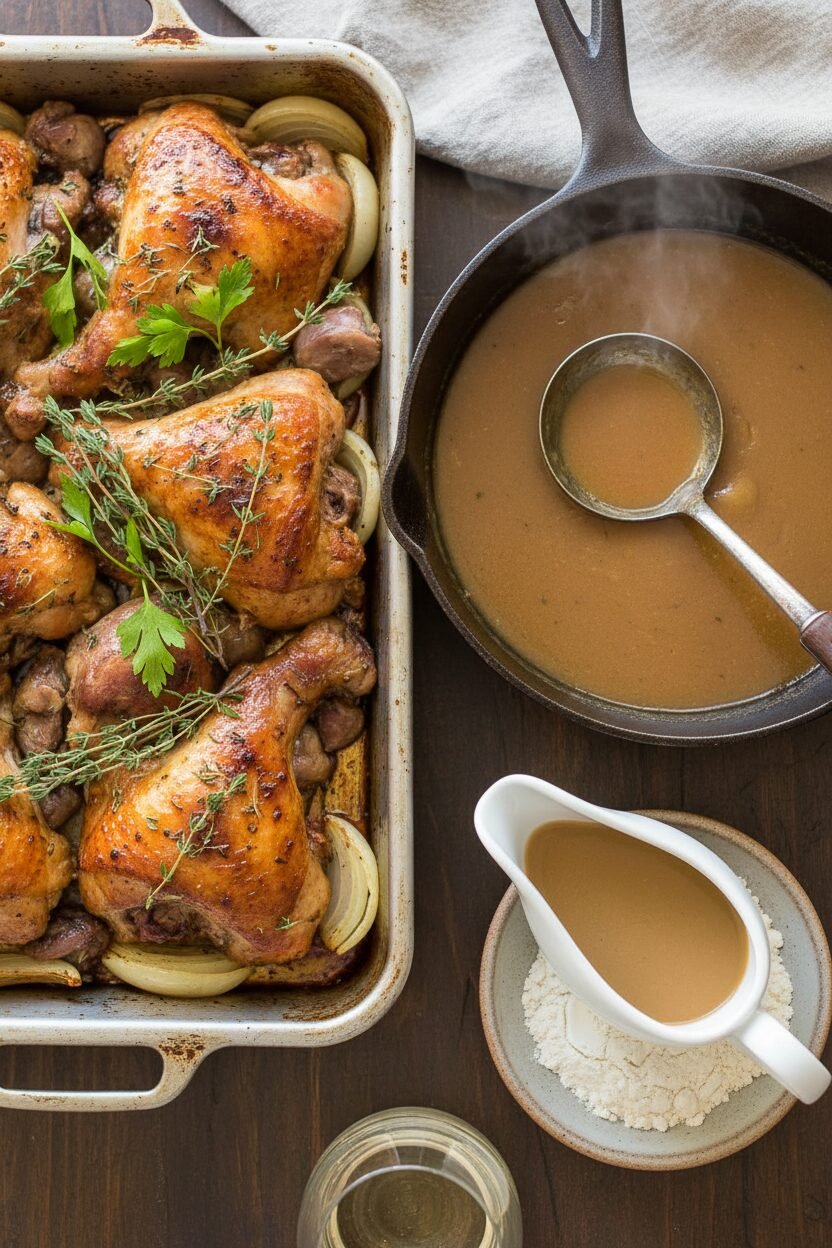
Pour this gravy into your prettiest pitcher. Let everyone drizzle it over their feast. It loves mashed potatoes most of all. A little cranberry sauce on the side is a perfect tart friend. For a drink, a crisp apple cider is wonderful. For the grown-ups, a glass of the same white wine you cooked with is just right. Which would you choose tonight?
Keeping Your Gravy Gracious
Good gravy is a treasure. You can keep it in the fridge for three days. Just let it cool first. Pour it into a clean jar with a lid.
It freezes beautifully for up to three months. I use old yogurt tubs. Leave an inch of space at the top. Thaw it overnight in the fridge.
Reheat it slowly in a pot. Add a splash of broth or water. Stir it often so it stays smooth. I once reheated it too fast. It got a little lumpy, but a whisk fixed it.
Making a big batch matters. It saves you time on a busy day. A ready-made meal feels like a hug from your past self. Have you ever tried storing it this way? Share below!
Gravy Troubles? Let’s Fix Them
First, lumpy gravy. This happens if you add broth too fast. Whisk your roux like you mean it. Then pour the hot broth in slowly.
Second, gravy that tastes flat. It needs salt! But taste it first. I remember when I added salt too early. The flavor became too strong.
Third, gravy that is too thin. Let it simmer a bit longer. It will thicken as it cooks. A fun fact: flour needs time to swell and do its job.
Fixing these issues builds your confidence. You learn how flavors and textures work. It also makes your whole meal taste better. Which of these problems have you run into before?
Your Quick Questions, Answered
Q: Can I make this gluten-free? A: Yes! Use a gluten-free flour blend. Make your roux the same way.
Q: Can I make it ahead? A: Absolutely. Follow the storage tips above. Reheat it gently before serving.
Q: What if I don’t have wine? A: Use more broth. Add a teaspoon of lemon juice for brightness.
Q: Can I make less? A: You can cut the recipe in half. Use a smaller saucepan.
Q: Are giblets optional? A: They add deep flavor, but you can skip them. Your gravy will still be lovely. Which tip will you try first?
From My Kitchen to Yours
I hope this recipe becomes part of your story. The best meals are shared with loved ones. Good food is a simple, powerful joy.
I would love to hear about your cooking adventures. Tell me about your family’s traditions. Have you tried this recipe? Let me know how it turned out.
Happy cooking!
—Elowen Thorn.

The Secret to Perfect Turkey Gravy
Description
Best Turkey Gravy
Ingredients
Instructions
- Make the Broth: Heat oil in large saucepan over medium-high heat. Brown turkey giblets and neck for 5 minutes. Cook onion for 3 minutes. Cover and cook over low heat for 20 minutes.
- Add chicken broth and water, scrape pan bottom, and bring to boil. Add herbs and simmer, skimming foam from surface, for 30 minutes.
- Pour broth through fine-mesh strainer. Reserve and dice heart and gizzard. Refrigerate broth and diced giblets until ready to use.
- Make the Roux and Thicken the Broth: Melt butter in large saucepan over medium-low heat. Whisk in flour. Cook, stirring constantly, until nutty brown and fragrant, 10 to 15 minutes. Bring reserved turkey broth to simmer.
- Reserve 1 cup of broth for deglazing roasting pan (see #9). Gradually add remaining hot turkey broth to roux. Vigorous and constant whisking at this point is key to avoiding lumps.
- Simmer gravy, stirring occasionally and skimming scum from surface with spoon, until thickened, about 30 minutes. Set aside, covered, until turkey is done.
- Deglaze the Pan and Add the Drippings To the Gravy: Pour drippings through mesh strainer set over measuring cup. Let liquid settle until fat rises to top. Return vegetables in strainer to roasting pan.
- Tilt measuring cup and use wide, shallow soup spoon to skim fat off surface. Reserve defatted drippings. Return gravy in saucepan to simmer.
- Place roasting pan over two burners at medium-high heat. Add wine and reserved 1 cup broth and scrape up browned bits in pan. Boil until liquid reduces by half, 5 minutes.
- Strain roasting pan liquid into gravy, pressing on solids to extract all liquid. Add defatted drippings to taste. Stir in giblets and serve.
Notes
- For a smoother gravy, you can use an immersion blender after adding the drippings. If you don’t have turkey drippings, you can use additional chicken broth.