


My Italian Easter Bread Story
My Nonna taught me this recipe. She called it “Brioche di Pasqua.” We made it every spring. I still laugh at that. I was so messy with the flour.
It is a sweet, soft bread. You twist it into a wreath shape. Then you tuck colored eggs right into the dough. It bakes up shiny and golden. Doesn’t that smell amazing? This is the true Traditional Italian Easter Bread.
Why This Bread Matters
The wreath shape means no beginning and no end. It is a circle of life. The eggs are a sign of new beginnings. That is the real Significance of Easter Bread.
Making it connects me to my family. It is more than food. It is a story you can eat. Sharing this Italian Easter Bread recipe keeps our story alive. What is a food that tells your family’s story?
Tips for Your Sweet Brioche Dough
The dough is like a soft pillow. It needs time to grow. This is called proofing. My best Easter Bread dough proofing tips are simple. Be patient. Keep it in a warm, quiet spot.
Fold it every 30 minutes. This builds strength. Then add the soft butter bit by bit. Your hands will know when it feels right. It should be smooth and not sticky. This is How to make Easter Bread that is light and fluffy.
All About Those Colored Eggs
You use uncooked eggs! They bake right in the bread. It makes a wonderful surprise. For your Easter Bread with colored eggs, you can buy dye. Or you can try something from your kitchen.
*Fun fact*: You can make a Natural dye for Easter eggs with onion skins. They turn the eggs a deep, rusty gold. It’s so pretty. Have you ever tried coloring eggs with food from your fridge?
Shaping and Keeping Your Bread
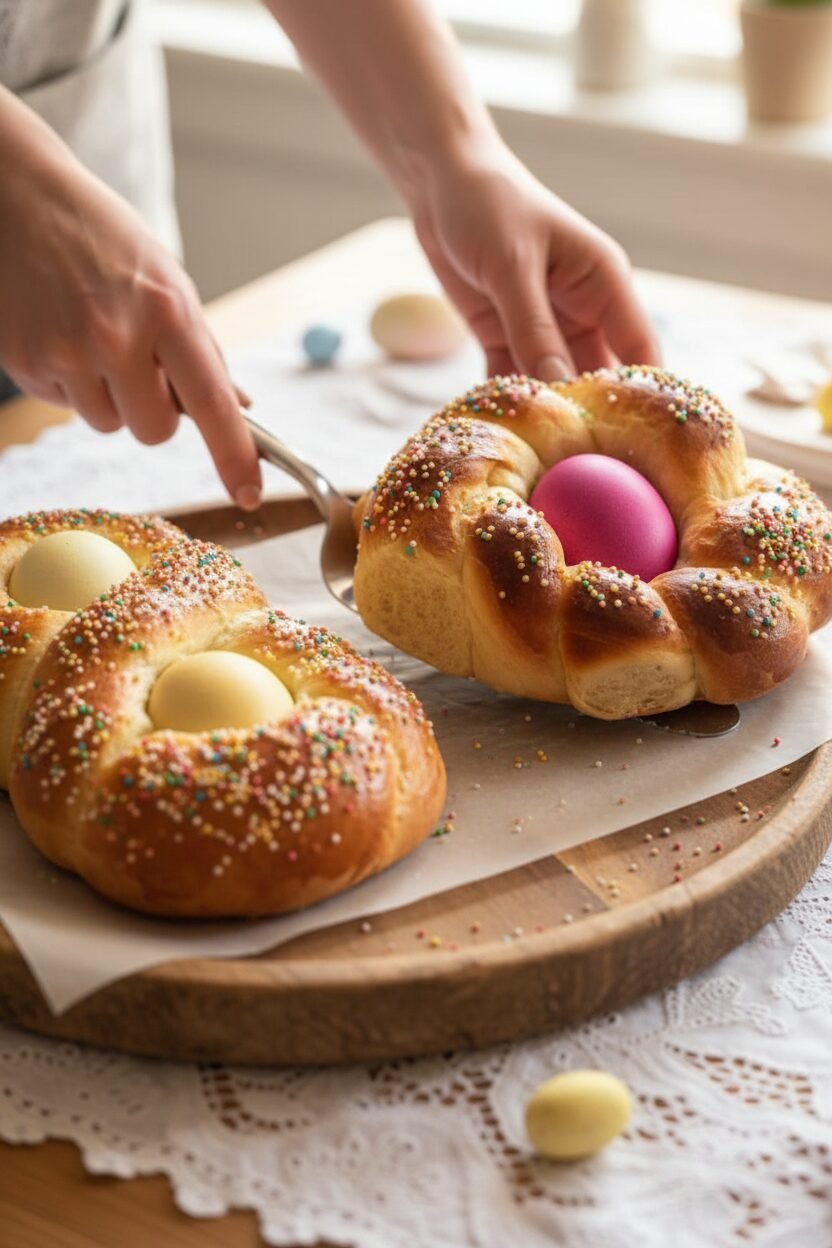
Roll your dough into two long ropes. Twist them together. Then connect the ends to make your Sweet brioche dough wreath. Tuck an egg in the center. It’s like putting a jewel in a crown.
Once baked, let it cool completely. For Storing Italian Easter Bread, wrap it well. It will stay soft for two days on the counter. Does your family prefer sweet breads warm or at room temperature?
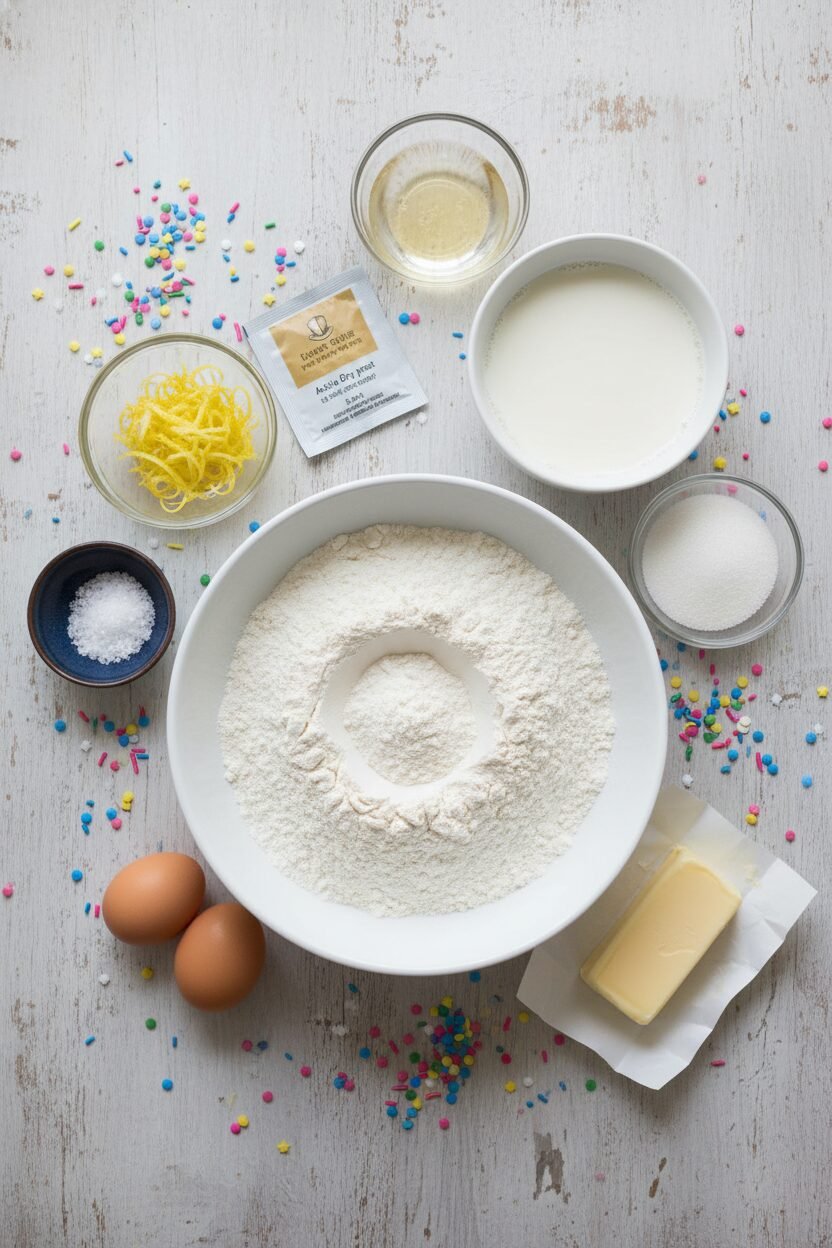
Ingredients:
| Ingredient | Amount | Notes |
|---|---|---|
| All purpose flour | 1¾ cups + 2 tablespoons (234g) | |
| Salt | 1 pinch | Add ¼ teaspoon if using unsalted butter |
| Lemon zest | 1 tablespoon | |
| Granulated sugar | 2½ tablespoons | |
| Lukewarm milk (2%) | ¼ cup | |
| Active dry yeast | 1½ teaspoons | |
| Eggs (room temperature) | 2 | Slightly beaten for the dough |
| Butter (room temperature) | ½ cup | |
| Egg | 1 | For the egg wash |
| Water | 1 tablespoon | For the egg wash |
| Uncooked eggs | 2-4 | Dyed, for topping |
| Sprinkles | 2-4 tablespoons | Optional, for topping |
Instructions
Step 1: First, make your sweet brioche dough. Whisk the flour, sugar, salt, and lemon zest. Make a well in the center. Add the lukewarm milk and yeast to the well. Mix it with a fork. Then add your two beaten eggs. Use a dough hook to mix it for one minute. This is the start of your Traditional Italian Easter Bread.
Step 2: Cover the bowl with plastic wrap. Let the dough rise for two hours. Every thirty minutes, fold the ends into the middle. Do this four times. This is a key Easter Bread dough proofing tip. It builds strength. I always set a timer so I don’t forget. The waiting is the hardest part!
Step 3: Now, add the soft butter. Mix it in a little at a time. Knead with the dough hook until smooth. Let it rest for ten minutes. Then knead again for five minutes. The dough won’t stick to the bowl. (Use room-temperature butter for best results). Place it in a greased bowl, cover it, and chill for one to two hours.
Step 4: Divide the dough into four parts. Roll each part into two long ropes. Twist two ropes together to form a wreath. Repeat to make a second wreath. Place them on a baking sheet. Cover and let rise again for one to two hours. This creates the classic Sweet brioche dough wreath shape. Doesn’t that smell amazing already?
Step 5: Preheat your oven. Gently place a dyed, uncooked egg in each wreath center. Brush the dough with egg wash. Be careful not to get any on the eggs. Sprinkle with colorful sprinkles. Bake until golden brown. Why do you think we use uncooked eggs? Share below! Your beautiful Italian Brioche di Pasqua is done!
Creative Twists
Use a natural dye for Easter eggs. Try beet juice for pink or turmeric for yellow. Add a citrus glaze. Mix lemon juice and powdered sugar for a sweet drizzle. Make mini breads. Form small twists for individual treats. Which one would you try first? Comment below!
Serving & Pairing Ideas
This Easter Bread with colored eggs is perfect for a celebration breakfast. Serve it with fresh berries and sweet whipped cream. For a simple treat, just enjoy a slice with a cup of hot tea. The Significance of Easter Bread is all about sharing joy. Storing Italian Easter Bread is easy; keep it wrapped at room temperature for two days. Which would you choose tonight?
Keeping Your Easter Bread Fresh and Happy
Let’s talk about storing your beautiful Easter Bread. Once it’s cool, wrap it tightly in plastic. It will stay soft on the counter for two days. For longer keeping, slice and freeze it in a bag. You can toast slices straight from the freezer.
I remember my first loaf. I left it out uncovered. It dried out so fast! Now I never forget to wrap it. Batch cooking is a wonderful trick. Make two loaves instead of one. Enjoy one now and save one for later.
This matters because good food should never go to waste. Sharing a homemade loaf with a friend weeks later is a special joy. Have you ever tried storing it this way? Share below!
Simple Fixes for Common Bread Troubles
Sometimes our baking doesn’t go as planned. Do not worry. Here are three easy fixes. First, if your dough won’t rise, check your yeast. Make sure your milk is just warm, not hot. Hot milk will stop the yeast from working.
Second, if your bread is too dense, you might need more kneading. Kneading builds strength in your Sweet brioche dough wreath. I once pulled my dough too early. The bread was heavy but still tasty!
Third, if the top browns too fast, tent it with foil. This lets the inside cook without burning. Fixing small issues builds your cooking confidence. It also makes the flavor and texture just right. Which of these problems have you run into before?
Your Quick Questions, Answered
How to dye eggs for Italian Easter bread
You need uncooked eggs. Use food coloring or make a Natural dye for Easter eggs with onion skins or beets. Mix dye, vinegar, and hot water in a cup. Lower the egg in with a spoon. Let it sit for five minutes or more for bright color. Dry the egg completely on a paper towel before using.
Traditional Italian Easter bread recipe
The classic Italian Easter Bread recipe is a sweet, enriched dough. It uses flour, sugar, eggs, butter, and yeast. You shape it into a wreath. The dough is soft and slightly sweet. Colored eggs are tucked into the braid before baking. This makes a beautiful centerpiece for your Easter table.
Why do you put eggs in Easter bread?
The eggs are a symbol of new life and spring. This is the heart of the Significance of Easter Bread. They are baked right into the loaf. This tradition is very old. It turns simple bread into a celebration. The eggs are often dyed bright, happy colors for the holiday.
How to keep dyed eggs from bleeding into dough
The key is to make sure the dyed eggs are very dry. Let them air dry on a rack for an hour. You can also rub them gently with a little oil. This creates a tiny barrier. Be careful when brushing on the egg wash. Try not to get any wash on the egg itself.
Italian Easter bread variations
You can shape this dough in many ways. Try making small individual braids instead of one big wreath. Some bakers add anise seed or orange zest for flavor. You can also use different colored sprinkles. A fun fact: In some regions, they bake many eggs into one large crown-shaped loaf.
How to tell when Italian Easter bread is done baking
The loaf will be a deep golden brown. It should sound hollow when you tap the bottom gently. This usually takes about 20 minutes. An instant-read thermometer can help too. The inside temperature should be about 190°F. Good Easter Bread dough proofing tips help ensure it bakes evenly.
I hope these tips help you make a perfect Italian Brioche di Pasqua. Which tip will you try first?
From My Kitchen to Yours
I have so loved sharing this Italian Easter Bread recipe with you. Baking this bread connects us to generations of home cooks. The smell of it baking is pure happiness.
I hope you feel confident to try How to make Easter Bread. Remember, my kitchen is always open for your questions. Please tell me all about your baking adventure.
Have you tried this recipe? I would love to hear how it turned out. Share your story or a photo in the comments below. Let’s keep the tradition alive, one beautiful loaf at a time.
Happy cooking!
—Grace Ellington.
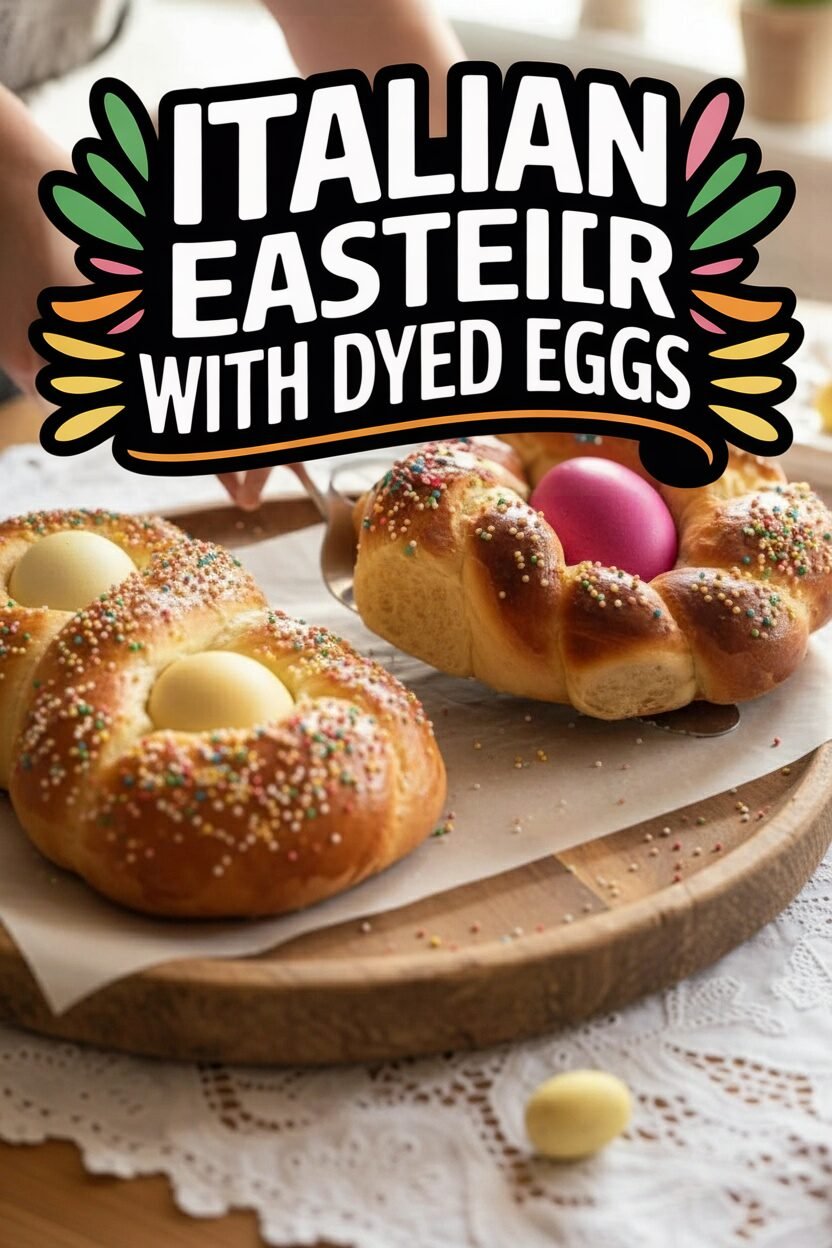

Italian Easter Braid with Dyed Eggs
Description
A festive, sweet bread braid with colorful dyed eggs baked right in, perfect for an Easter celebration.
Ingredients
EGG WASH
TOPPING
Instructions
- BRIOCHE DOUGH: In the bowl of a stand up mixer whisk together the flour, salt, zest and sugar, make a well in the centre and add the milk and yeast, mix together with a fork. Then add the eggs. With the dough hook attachment knead for approximately 1 minute just to combine.
- Cover the bowl with plastic and let rise 2 hours, every 30 minutes fold both ends into the middle (repeating 4 times).
- When the time has passed add the butter a little at a time, on medium high speed with the dough hook, knead just to combine all the butter, then let the dough rest 10 minutes. Knead again for 5-6 minutes until smooth and the dough does not stick to the sides of the bowl. Place the dough in a lightly greased bowl, cover with plastic and refrigerate for 1-2 hours.
- Move the dough to a lightly floured flat surface. Divide the dough into 4 parts. Roll each part into 2 ropes (10-12 inches / 25-30cm), join 2 ropes at the top and twist the ends one over the other, join the ends to form a wreath (circle) repeat with the remaining ropes. Place the wreaths on a parchment paper lined cookie sheet, cover and let rise in a warm draft free area for 1-2 hours or doubled in bulk.
- 15 minutes before rising time has finished pre heat oven to 390F (195C).
- EGG WASH: In a small bowl beat together the egg and water.
- Add a dyed uncooked egg (if desired) to the centre of the wreath then brush the wreaths with the egg wash (be careful not to brush the eggs) and sprinkle with the sprinkles. Bake for approximately 20 minutes or until golden, or when tapped on the bottom and there is a hollow sound. Immediately move the baked buns to a wire rack to cool. Let cool before serving.
Notes
- If using unsalted butter add ¼ teaspoon of salt to the dough.