


Why I Love a Good Peach Pie
The first time I made a peach pie, I was nineteen years old. My kitchen was hot, and the peaches were dripping with juice. I remember standing there, wondering if I had done something wrong. The pie looked a little lumpy and the crust was far from perfect. But when I pulled it out of the oven, that golden lattice and those bubbling pockets of fruit took my breath away. Doesn’t that smell amazing? That kind of goodness makes a mess worth it.
Why does this matter to you? Because baking a pie teaches you that perfect-looking doesn’t matter. What matters is what happens when you share it. I still laugh at that first pie. It was beautiful in its own messy way.
A Secret About the Peaches
Here is the most important tip: do not slice your peaches into long, thin pieces. This recipe wants you to cube them into little 1-inch chunks. Slicing makes them turn into mush. Cubing keeps them firm and lovely inside the pie. I learned this after making a very sad, soupy pie many summers ago.
Fun fact: Peaches are called “stone fruits” because of the hard pit inside. That pit is like a little rock holding a seed.
This matters because texture makes a pie memorable. When you bite into a slice and feel those tender, juicy chunks, you will know exactly what I mean. Have you ever had a pie filling that was too runny? Tell me about it in the comments.
The Little Things That Make a Big Difference
I will let you in on a small trick. After you weave the lattice crust on top, dot a little butter onto the filling through the spaces. Just cube up one tablespoon of unsalted butter and tuck it in there. This one step adds a rich, silky flavor to the peaches. It feels like a secret, but I am sharing it with you.
Also, do not skip the smoked paprika. I know it sounds funny. But it gives the pie a warm, cozy depth that cinnamon cannot quite match. Or use cinnamon if you prefer. Both are lovely. Why does this matter? Because small choices like smoked paprika or a dot of butter turn a good pie into a “can I have another slice?” pie.
That First Bite Reminds Me of Something
I remember my grandmother’s kitchen on a summer afternoon. She would set a pie on the windowsill to cool. The whole house smelled like sugar and warm peaches. We had to wait for hours before we could eat it. That wait felt like forever. But when we finally dug in, the crust flaked apart, and the filling was warm and soft, not runny at all.
That is why you must let the pie cool for two to three hours. It is hard to wait, I know. But the filling needs time to set. If you cut it too soon, it will spill everywhere. This matters because patience gives you a slice that holds its shape and tastes even better. What is the longest you have ever waited for a dessert?
How to Know When It Is Done
Your oven is your friend, but it can be tricky. Bake the pie at 400 degrees for 40 to 50 minutes. You will know it is ready when you see the filling bubbling up through the lattice. Once it bubbles, give it three to five more minutes. That extra time makes sure the starch cooks through and thickens the juice.
If the crust starts getting too dark before the time is up, just lay a piece of foil loosely over the top. No stress. This matters because a golden crust is beautiful, but a burnt crust is sad. We want neither. Do you like your pie crust light and flaky or deep golden brown? Let me know.
The Simple Pleasure of Sharing
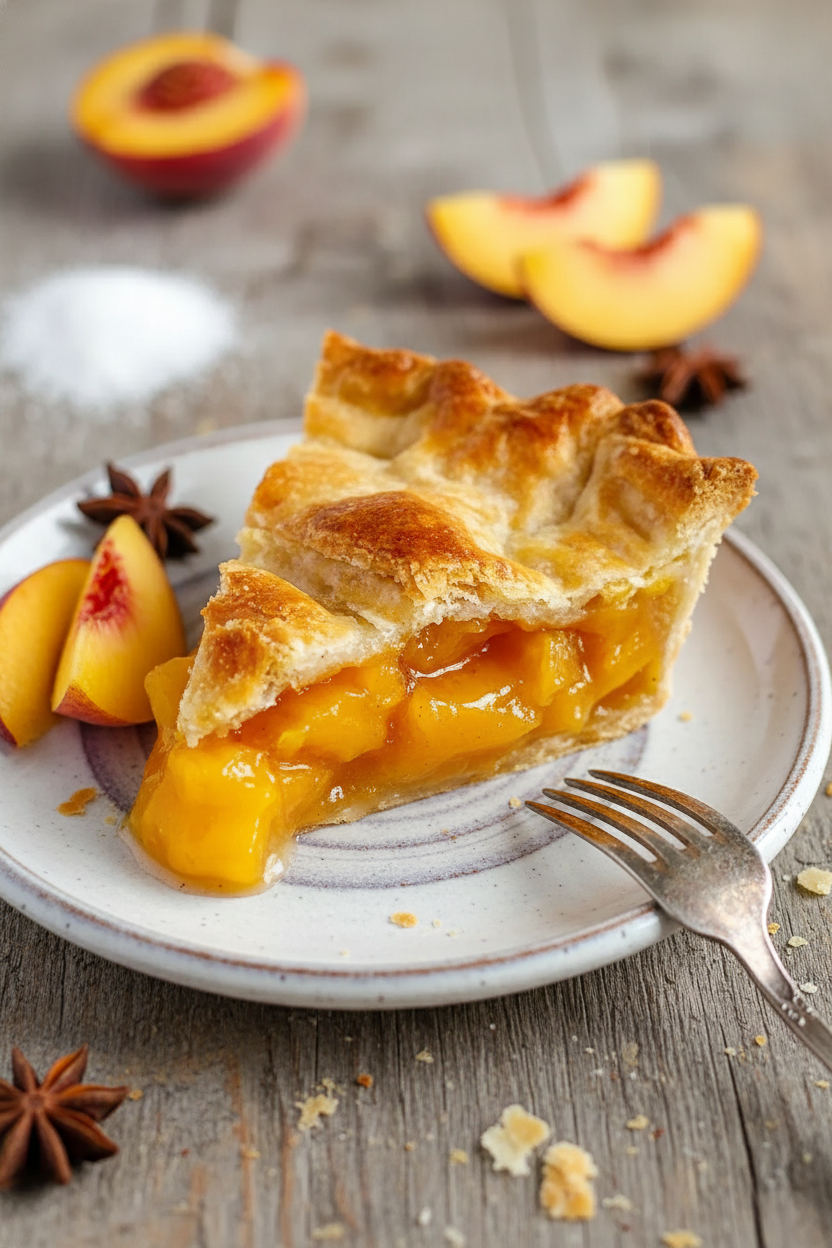
Once the pie has cooled, slice it up and serve it with a smile. You can add a scoop of vanilla ice cream or a little whipped cream. Or eat it plain, like I sometimes do. There is no wrong way to enjoy a homemade peach pie. The real joy is in the making and the sharing.
I hope you will try this recipe soon. If you do, I would love to hear how it turned out. Did you use smoked paprika or cinnamon? Did anyone ask for seconds? That is always my favorite question to hear.
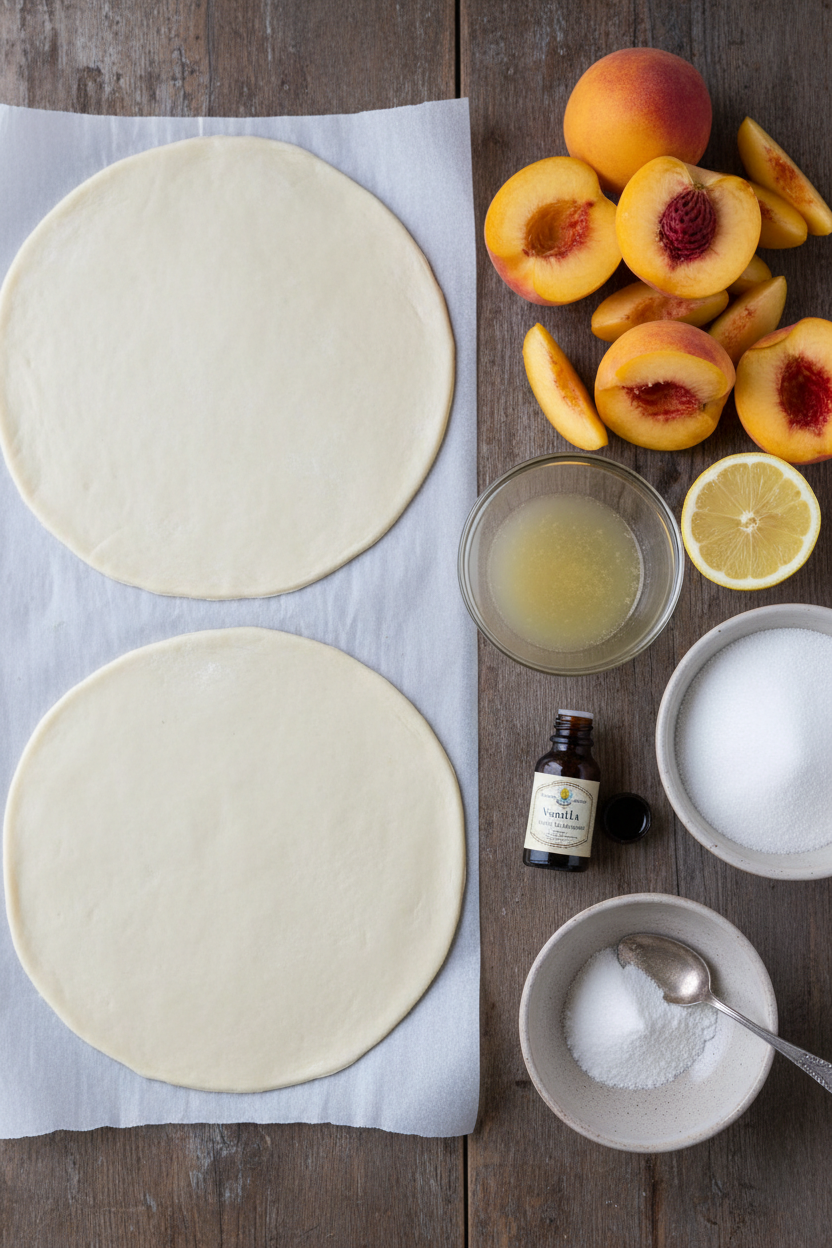
Ingredients:
| Ingredient | Amount | Notes |
|---|---|---|
| Pie dough rounds | 2 | Homemade or store-bought, chilled |
| Ripe yellow peaches | 2 lb (about 6 to 7) | Peeled and cut into 1-inch cubes |
| Lemon or lime juice | 2 tbsp | Freshly squeezed |
| Granulated sugar | 3/4 cup | For filling |
| Tapioca starch | 1/4 cup plus 1 tbsp | — |
| Vanilla extract | 1 tsp | — |
| Smoked or regular paprika | 1 tsp | Or use cinnamon if preferred |
| Unsalted butter | 1 tbsp | Cubed, for dotting on filling |
| Granulated sugar | 1 tbsp | For sprinkling on top crust |
| Egg yolk | 1 | Mixed with 1 tbsp milk for egg wash |
Instructions
Step 1: Peel and cube your ripe peaches into small, bite-sized pieces. I love how the kitchen smells when peaches are ready. (A ripe peach gives a little when you squeeze it gently.) What fruit smells best to you? Share below!
Step 2: In a big bowl, mix the peaches with sugar, lemon juice, and tapioca starch. Add a pinch of paprika or cinnamon for a secret warmth. My grandma always added a tiny bit of spice. Doesn’t that smell amazing?
Step 3: Roll out your first pie dough round and press it into a 9-inch dish. Pour the peach filling in, making sure to get all the juicy liquid from the bowl. I still laugh at how sticky my hands get during this step.
Step 4: Roll out the second dough round and cut it into six fat strips. Weave them over and under each other to make a pretty lattice top. Trim the edges and pinch them shut with your fingers.
Step 5: Brush the crust with egg wash and sprinkle sugar on top. Dot a little butter into the open spaces of the lattice. This butter makes the filling rich and shiny when it bakes.
Step 6: Bake at 400°F for 40-50 minutes until the filling bubbles and the crust is golden. If the edges brown too fast, cover them with foil. Let the pie cool for 2-3 hours so the filling sets. That wait is always the hardest part.
Creative Twists
… Swap the paprika for a teaspoon of fresh grated ginger for a zingy kick.
… Mix in a handful of fresh blueberries with the peaches for a color pop.
… Add a splash of almond extract to the filling for a nutty, sweet surprise.
Which one would you try first? Comment below!
Serving & Pairing Ideas
Serve a warm slice with a big scoop of vanilla ice cream. The cold and hot together are pure magic. I always save a little cream to drizzle on top, too. Pair it with a tall glass of cold milk for a cozy treat. A dusting of cinnamon on the plate looks beautiful. Which would you choose tonight?
Storing Your Peach Pie Like a Pro
Fresh peach pie is a thing of beauty. But what do you do with the leftovers? I remember my first peach pie. I left it on the counter overnight and woke up to a sad, soggy mess. Now I know better. Let the pie cool completely for two to three hours. Then wrap it tightly in plastic wrap or foil. You can keep it on the counter for two days. For longer storage, put it in the fridge. It will stay fresh for up to five days. You can also freeze it. Wrap the whole pie in plastic, then foil. It will keep for three months. To reheat, pop slices in a 350°F oven for 10 minutes. Batch cooking matters because you get to enjoy summer flavor all year. Have you ever tried storing it this way? Share below!
Three Common Peach Pie Problems Solved
We all run into trouble with pie. Let me help you fix three big ones. First, a runny filling. This happens when peaches are too juicy or you don’t use enough thickener. Use tapioca starch as the recipe says. It works like magic. Second, a soggy bottom crust. I once made a pie with a crust like wet cardboard. The fix is simple. Brush the bottom crust with egg white before adding the filling. It creates a barrier. Third, a lattice crust that falls apart. I remember weaving a beautiful lattice only to have it break when I lifted it. The trick is to chill the dough strips for 10 minutes before weaving. They become firm and easy to handle. Fixing these issues matters because it gives you confidence in the kitchen. It also makes your pie taste amazing. Which of these problems have you run into before?
Your Quick Questions, Answered
Why is my peach pie runny? Peaches are very juicy. If you don’t use a strong thickener, the liquid leaks out during baking. The recipe calls for tapioca starch, which absorbs extra moisture. You must also let the pie cool completely for two to three hours after baking. This allows the filling to set. If you cut it too early, it will run everywhere. Patience is key for a perfect slice.
How do you keep the bottom crust of a peach pie from getting soggy? A soggy bottom crust happens when juice soaks into the dough before it bakes. To prevent this, brush the bottom crust with a beaten egg white before adding the filling. The egg white creates a waterproof seal. Also, bake the pie on the lowest oven rack. The direct heat helps the bottom crust cook and crisp up.
Can you use canned peaches for this lattice crust pie? Yes, you can use canned peaches. But you must drain them very well. Pat them dry with paper towels. Canned peaches are packed in syrup or juice. If you add that extra liquid, your pie will be runny. Also, reduce the sugar in the recipe. Canned peaches are already sweet. Start with half the sugar and taste first.
What is the best thickener for peach pie filling? The best thickener for peach pie is tapioca starch. It is the star of this recipe. Tapioca starch handles high heat well and creates a clear, glossy filling. It does not make the filling cloudy like flour can. Cornstarch works too, but it can break down if you bake the pie too long. For the best texture, stick with tapioca starch.
Do I need to pre-cook the peaches for peach pie? No, you do not need to pre-cook the peaches. This recipe uses raw peaches. You cube them and mix them with the sugar and starch. The heat of the oven cooks them perfectly. Pre-cooking can make the peaches too soft and mushy. For a pie with nice peach chunks, use them raw. The baking time is long enough to soften them just right.
How do you make a lattice crust not fall apart? A lattice crust falls apart when the dough is too warm or too thin. First, keep your dough cold. Cut the strips and chill them on a baking sheet for 10 minutes. Second, make your strips about two inches wide. Thin strips break easily. Third, use a bench scraper or spatula to lift the strips. Do not pull them with your fingers. Gentle hands make a pretty lattice. Which tip will you try first?
*Fun fact: Peach pie was a favorite dessert of American pioneers because peaches dried well and kept all winter long.*
My Final Thoughts for You
I hope you feel ready to bake this beautiful peach pie. It is a little work, but the reward is so sweet. The smell of peaches and cinnamon will fill your whole house. That is the smell of summer and love all mixed together. Have you tried this recipe? I would love to hear how it turned out. Tell me in the comments if you added your own twist. Happy cooking! —Grace Ellington.

My Foolproof Peach Pie With Lattice Crust
Description
A classic peach pie with a golden lattice crust featuring ripe peaches, warm spices, and a tender flaky crust.
Ingredients
Instructions
- Prepare the Pie Dough: 2 pie dough rounds (homemade or store-bought). If making homemade pie dough, follow your preferred recipe or my recommendation and prepare two rounds of pie dough. Alternatively, use two store-bought pie dough rounds. Once made, chill the dough in the refrigerator. You can make this step up to a day in advance to save time.
- Prepare the Peaches: 2 lb ripe yellow peaches (about 6 to 7). Peel the ripe yellow peaches and cut them into 1-inch cubes. I recommend cubing rather than slicing, as peaches are soft and juicy, and slicing can lead to a mushy filling.
- Mix the Peach Filling: cubed peaches from Step 2, 2 tbsp lemon or lime juice (freshly squeezed), 3/4 cup granulated sugar, 1/4 cup plus 1 tbsp tapioca starch, 1 tsp vanilla extract, 1 tsp smoked or regular paprika, or use cinnamon if preferred. In a large bowl, combine the cubed peaches, freshly squeezed lemon or lime juice, granulated sugar, tapioca starch, vanilla extract, and smoked or regular paprika (or cinnamon). Stir together gently until the peaches are evenly coated and the mixture is well combined. I like to let the mixture sit for a couple of minutes so the flavors can meld together.
- Assembly and Prepare the Pie: 1 pie dough round from Step 1, peach filling from Step 3. Preheat your oven to 400°F (200°C). On a lightly floured surface, roll one disc of pie dough into a 12-inch circle (about 30 cm). Place the dough in a 9-inch pie dish, gently pressing it into the bottom and sides. Add the peach filling, making sure to pour in all the extra liquid from the bowl.
- Make and Arrange the Lattice Crust: 1 pie dough round from Step 1. Remove the second disc of pie dough from the refrigerator and roll it into a 12-inch circle. With a sharp knife, cut out 6 strips, each about 2 inches wide. Lay the strips over and under one another on top of the filled pie, weaving them to form a lattice. Trim any excess dough from the edges and press them into the bottom crust, fluting or crimping the edges to seal.
- Add Finishing Touches: 1 egg yolk mixed with 1 tbsp milk (for brushing), 1 tbsp granulated sugar, 1 tbsp unsalted butter. In a small bowl, mix the egg yolk with 1 tablespoon of milk to make an egg wash. Brush the top crust with the egg wash, then sprinkle 1 tablespoon of granulated sugar evenly over the top. Finally, cube the butter and dot it onto the pie filling in the spaces left between the lattice strips. I think a little butter on top really adds a rich flavor to the finished pie.
- Bake and Cool the Pie: Place the pie on the middle rack of your preheated oven and bake for 40–50 minutes, or until the filling is bubbling and the crust is golden brown. If the crust is browning too quickly, cover loosely with foil to prevent burning. Once bubbling, let it bake for another 3–5 minutes. Allow the pie to cool at room temperature for 2–3 hours before serving to help set the filling and enhance the flavors.
Notes
- Estimated nutrition for the whole recipe (without optional ingredients): Calories: 2500-2700, Protein: 27-32 g, Fat: 90-100 g, Carbohydrates: 420-450 g. For a single serving (8 servings), approximately 325 calories per serving.