

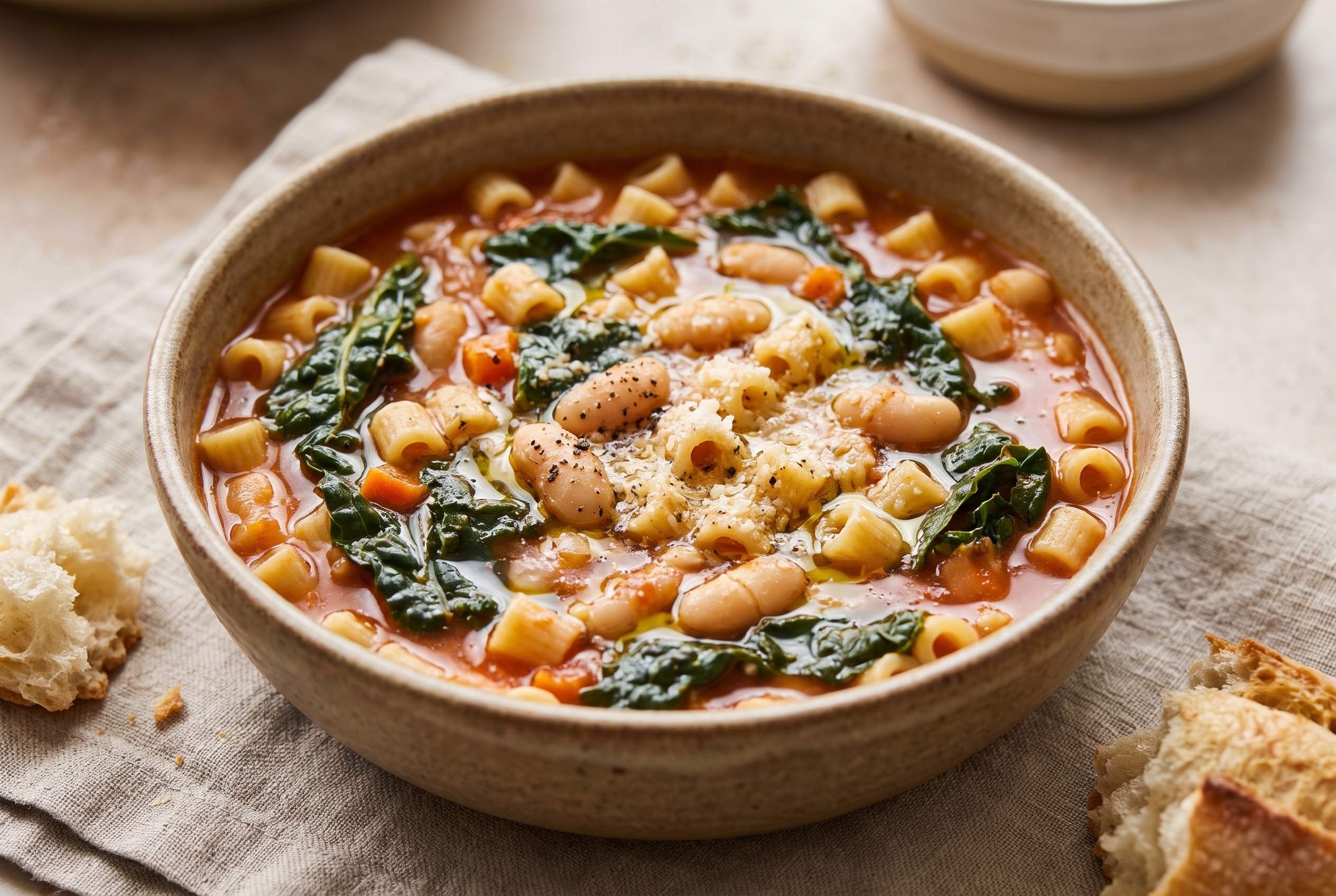
The Soup That Tastes Like a Long Sunday
There are pots of soup that quietly take over the whole house. The lid rattles, the broth goes from a whisper to a low laugh, and the room smells like someone’s grandmother is in charge. That’s what Pasta e Fagioli does to me, every time. Have you ever had a soup that fills you up somewhere other than your stomach?
I fell hard for pasta e fagioli on a rainy October trip through northern Italy — a tiny osteria, a wobbly table, the only thing on the chalkboard I couldn’t pronounce. The bowl was humble: a thin broth, a few short tubes of pasta, pale beans, a slick of green oil. I took one bite and wanted to write my grandmother a letter of apology for not making this sooner.
Today I’m walking you through the version I make most often — a soffritto-rich, ham-hock-deep, brothy bowl that still feels light enough to eat in spring. Tie your apron.
Why a Slow Sofritto Matters
The flavor of a great pasta e fagioli lives in the soffritto — that slow-cooked tangle of carrot, leek, and garlic that gives the pot its backbone. I learned this the hard way, by trying to rush it and wondering why my soup tasted like boiled vegetables.
The technique is simple but asks for patience. Pulse the carrots, leek, and garlic until finely chopped, then cook in olive oil over medium-low heat, covered, stirring every few minutes. The goal is soft and juicy, not brown. You’re coaxing water out of the vegetables until they collapse into a sweet, fragrant mush. Skip this step and you get a perfectly nice bean soup. Do it, and you get the soup people ask you about for years.
Classic Pasta e Fagioli
What follows is the version I make most often — a Northern Italian-leaning pot with white beans, ditalini, lacinato kale, a smoked ham hock, and a Parmesan rind quietly melting into the broth. It’s a one-pot recipe and it scales up beautifully for a crowd. Which, by the way, you should — this soup is better shared.
Ingredients
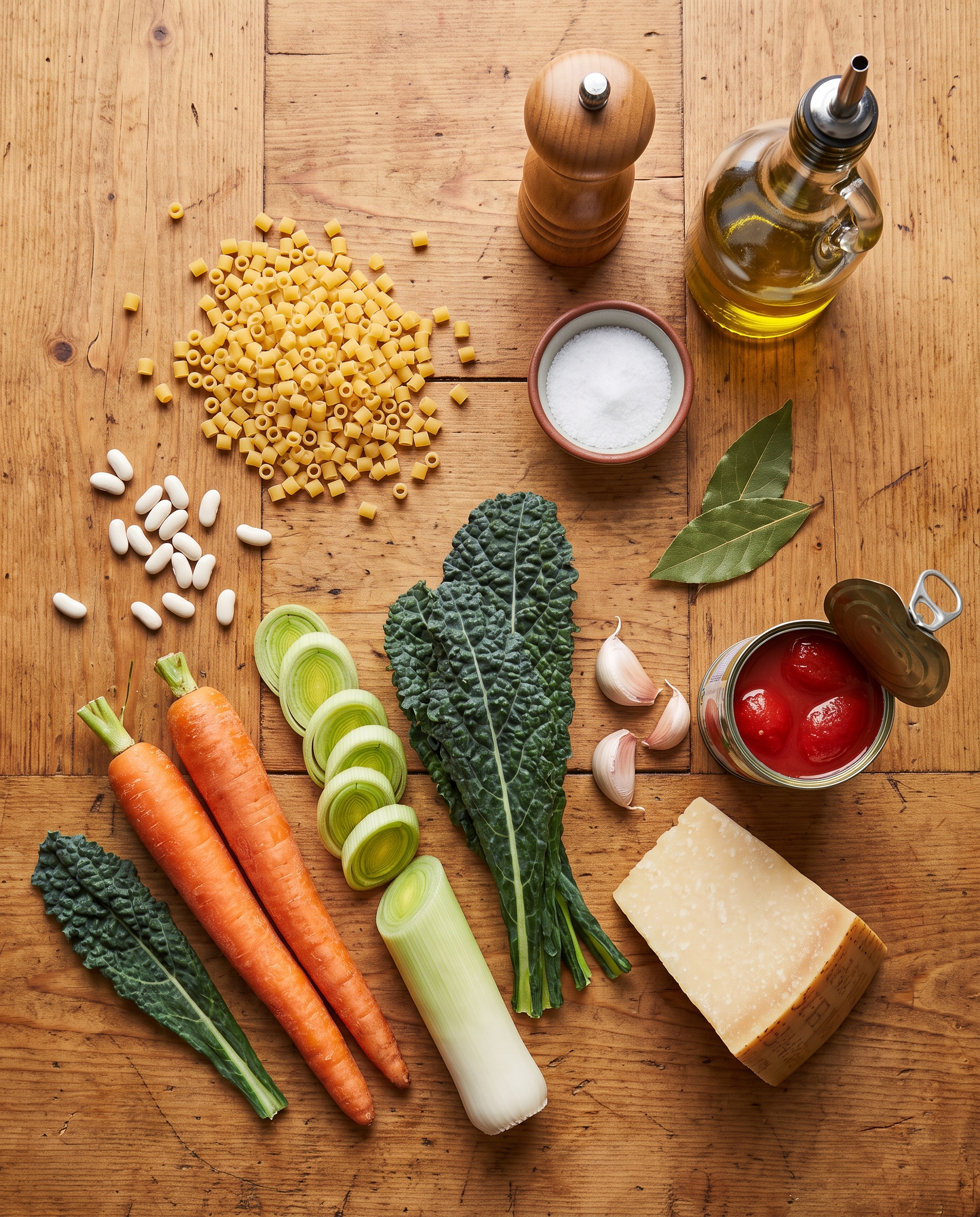
- 8 oz. dried medium white beans (such as cannellini), soaked overnight if possible
- Kosher salt, plus more for the pasta water and to taste
- 4 carrots, scrubbed and coarsely chopped
- 1 leek, white and pale green parts only, halved lengthwise and coarsely chopped
- 6 garlic cloves
- ⅓ cup extra-virgin olive oil, plus more for drizzling
- Freshly ground black pepper
- 1 smoked ham hock (about 1 to 1½ lb)
- 1 (15-oz.) can whole peeled tomatoes, hand-crushed
- 1 bunch lacinato (Tuscan) kale, ribs and stems removed, leaves torn
- 1 to 2 Parmesan rinds (optional, but very welcome)
- 2 bay leaves
- 8 oz. small pasta, such as ditalini or small shells
- Finely grated Parmesan, crushed red pepper flakes, and crusty bread, for serving
From Pot to Plate: My Step-by-Step Method
Step 1: Soak the beans. The night before, sort and rinse the beans, then cover with a few inches of cool water. If you forgot, power-soak: cover with water by 1 inch, bring to a boil, kill the heat, stir in a palmful of salt, cover, and let sit 1 hour.
Step 2: Build the soffritto. Pulse the carrots, leek, and garlic until finely chopped. Warm ⅓ cup olive oil in a Dutch oven over medium. Add the vegetables, season, and cook until they sweat, about 4 minutes. Drop to medium-low, cover, and cook, stirring every 5 minutes, until very soft, about 15 minutes. Add the ham hock and cook, uncovered, stirring every 5 minutes, until the soffritto is starting to brown in places, about 10 minutes more.
Step 3: Simmer low and slow. Add the beans and their soaking liquid, the tomatoes, and the kale. Season, bring to a boil, then add the Parmesan rinds and bay leaves. Drop to a gentle simmer, lid askew, and cook 1 to 3 hours, adding water to keep beans submerged by 1 inch, until creamy.
Step 4: Shred the ham and cook the pasta separately. Fish out the rinds. Lift out the ham hock, cool, and pull the meat off the bone. Return the meat to the pot; discard the bone. Boil the ditalini in well-salted water until very al dente, about 3 minutes shy of package directions. Drain and stir into the soup. Adjust salt and pepper.
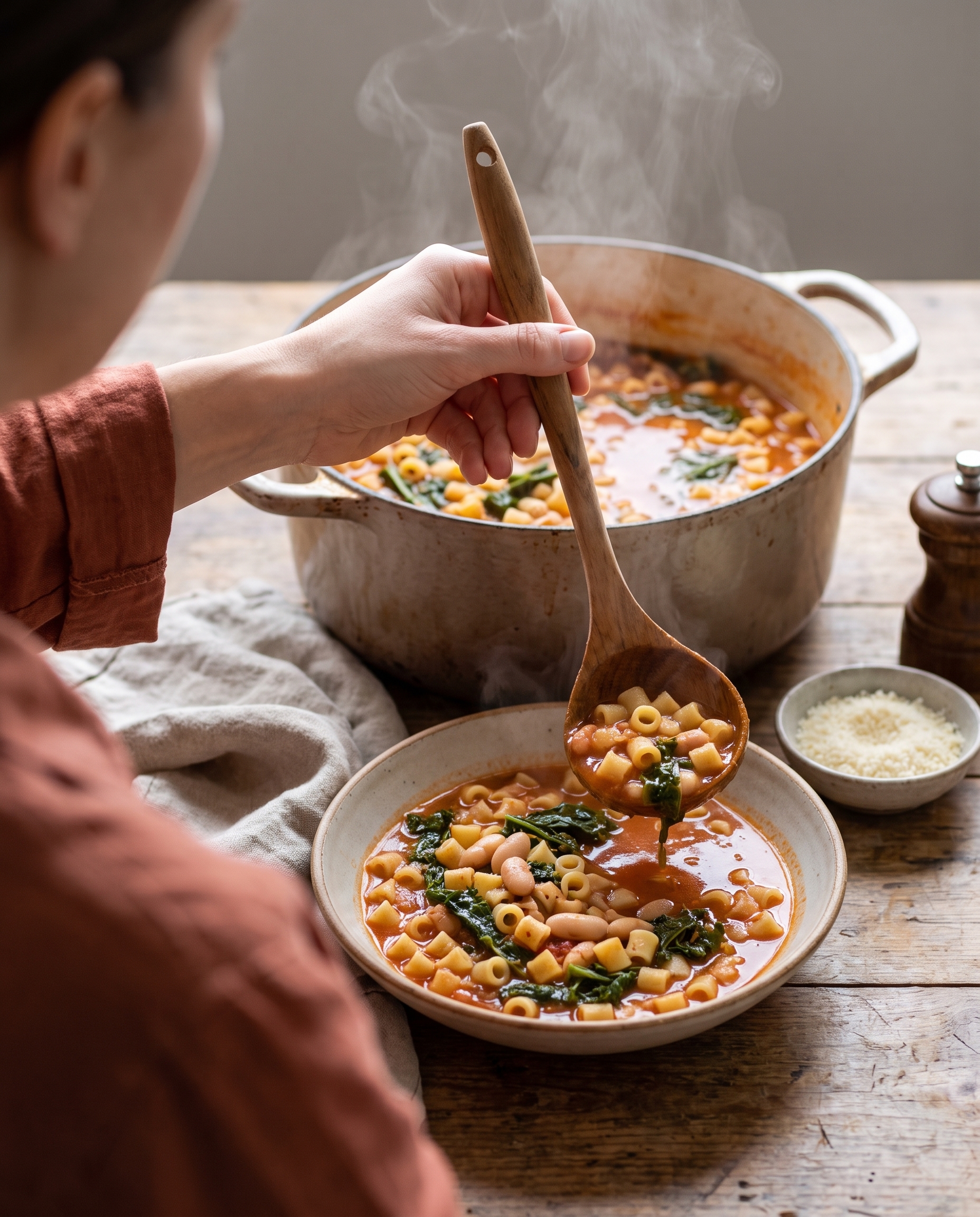
Step 5: Ladle and serve. Divide among warm bowls. Top with Parmesan, a drizzle of really good olive oil, crushed red pepper flakes, and black pepper. Serve with torn crusty bread — non-negotiable.
Creative Twists
- Make it vegetarian: Skip the ham hock, double the Parmesan rinds, and stir in a spoonful of white miso for a savory hum.
- Use borlotti or cranberry beans: They give the broth a pinkish tint and a sweeter, earthier flavor.
- Spice it up: Add a pinch of Calabrian chili paste with the garlic, or stir in harissa at the end. The heat plays beautifully off the creamy beans — pair a bowl with my creamy harissa pasta for a spicy dinner.
- Switch up the pasta: Small shells, tubetti, or broken spaghetti work. Just keep it small so a spoon scoops up beans, pasta, and broth in one bite.
- Go full Tuscan: Stir a spoonful of basil pesto into each bowl. The grassy oil cuts through the smoky ham and quiets the table.
Serving & Pairing Ideas
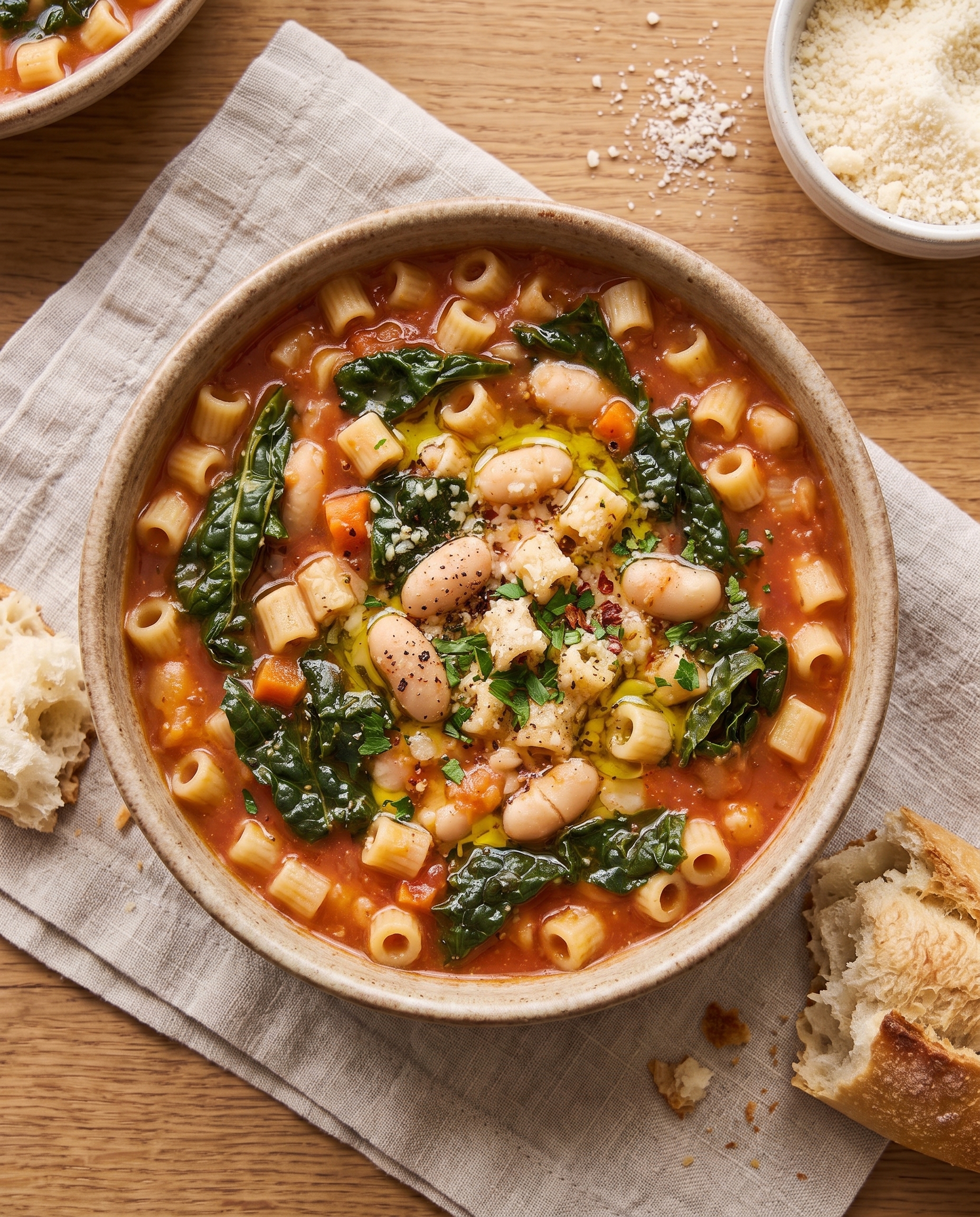
What’s the right way to plate this? Warm bowls, a generous shower of Parmesan, a fat drizzle of olive oil, and a slab of bread on the side. This is not a soup that needs a side salad — it is the whole dinner. For a multi-course meal, start with a fennel and orange salad, then follow with my garlic butter steak pasta for the pasta lovers at the table.
Wine-wise, reach for a high-acid red — Chianti, Barbera, Sangiovese, or a dry Lambrusco for bubbles. The acidity cuts through the richness of the broth and lifts the bowl.
Why I Love This Pasta e Fagioli
What I love most is the way it scales. A small pot on a Tuesday for two, or a triple batch for a big family lunch — it behaves the same way. The ingredients are forgiving: swap a carrot for celery, leave out the kale, use bacon instead of ham hock, and the soup still feels like itself. That’s the magic of humble food. It bends; it doesn’t break.
And the leftovers — oh, the leftovers. Pasta e fagioli is one of those rare soups that tastes better on day two, after the pasta has soaked up a little more broth and the beans have settled into a deeper, creamier place. Make a double batch on Sunday and let it do the work for you all week.
Storage and Batch Cooking
To store, let cool to room temperature, then transfer to airtight containers and refrigerate for up to 5 days. The pasta will continue to soak up the broth, so add a splash of water or stock when you reheat. Warm gently over medium-low heat.
For freezing, my one rule is this: freeze the soup before you add the pasta — cooked pasta turns mushy after thawing. Freeze the brothy base in individual or family-sized containers for up to 3 months. Thaw overnight, bring to a simmer, and cook a fresh pot of ditalini to stir in.
Troubleshooting Your Pasta e Fagioli
- The soup tastes flat. Almost always a salt issue, not a flavor issue. Add salt in small pinches, stirring and tasting. A squeeze of lemon at the end can wake the whole pot up.
- The beans are still hard after hours. Older beans take forever. Add a pinch of baking soda (¼ teaspoon per quart) and give them another 30 minutes. Don’t add salt too early — it slows softening.
- Too thick or too thin. Too thick: splash in more broth or water. Too thin: mash a cup of beans against the side of the pot — they release starch and thicken the soup.
- The pasta turned gummy. You cooked it in the soup, didn’t you? Next time, cook it separately and add to each bowl individually.
- The broth tastes greasy. Skim with a large spoon, or chill overnight and lift off the solidified fat.
Your Quick Questions, Answered
Can I use canned beans instead of dried? Yes. Use two (15-oz.) cans of cannellini, drained and rinsed; skip the soaking and add them with the tomatoes. Simmer 30 minutes instead of hours.
What if I don’t have a ham hock? A meaty bacon or pancetta, browned first, gives you much of the same smoky depth. For vegetarian, double the Parmesan rinds and add a splash of soy sauce or miso.
Can I make this in a slow cooker? Yes. Do the soffritto on the stovetop through Step 2, then transfer to a slow cooker with the beans, tomatoes, kale, rinds, bay leaves, and enough water to cover by 1 inch. Cook on low 6 to 8 hours.
What’s the difference between pasta e fagioli and minestrone? Minestrone is more vegetable-driven and often tomato-heavy. Pasta e fagioli is centered on pasta and beans, with a thinner, broth-forward texture. Both are wonderful. They’re cousins, not twins.
A Few Last Thoughts
This is the kind of recipe I want everyone to have in their back pocket — a soup that doesn’t ask for much, gives back a lot, and somehow tastes like more than the sum of its parts. Make it twice and you’ll be adjusting it to your own taste, which is what Italian nonnas have been doing for generations.
If you give this Pasta e Fagioli a try, I’d love to hear how it turned out. Did you go classic with the ham hock, or did you make the vegetarian version? Tell me in the comments — I read every one. For another cozy bowl, try my slow cooker beef stroganoff or spaghetti carbonara with pancetta.
Happy cooking!
—Elowen Thorn
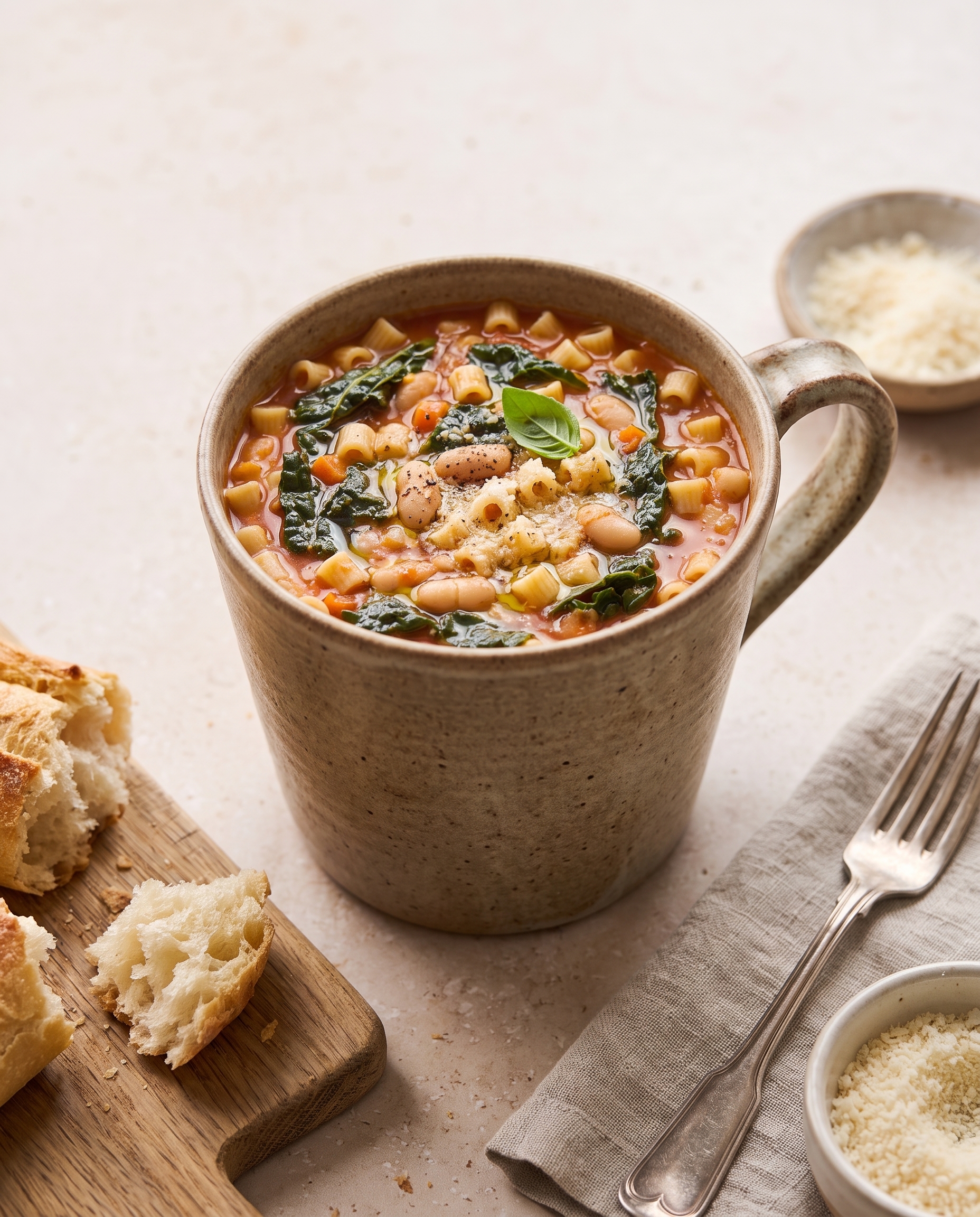
Classic Pasta e Fagioli
Description
A Northern Italian-leaning pot of pasta and white beans with a slow-cooked soffritto base, smoked ham hock, lacinato kale, and ditalini, finished with Parmesan and a generous drizzle of olive oil. Cozy, brothy, and even better the next day.
Ingredients
Instructions
- If you haven’t soaked the beans, do a power soak: place beans in a large pot, cover with water by 1 inch, and bring to a boil. As soon as the water boils, remove from heat, stir in a palmful of salt, cover, and let sit 1 hour.
- Pulse carrots, leek, and garlic in a food processor until finely chopped. Heat ⅓ cup oil in a large pot or Dutch oven over medium. Add the chopped vegetables, season with salt and pepper, and cook, stirring often, until they start to sweat, about 4 minutes. Reduce heat to medium-low, cover, and cook, stirring every 5 minutes, until the vegetables are very soft and have lost a lot of volume, about 15 minutes. Add the ham hock and cook, uncovered, stirring every 5 minutes, until the soffritto is starting to brown in places and has lost at least half its volume, about 10 minutes more.
- Add the beans and their soaking liquid, the tomatoes, and the kale; season with salt and pepper. Bring to a boil, then add the Parmesan rinds and bay leaves. Reduce heat and simmer gently, lid askew, adding water as needed to keep beans submerged by 1 inch, until beans are very tender, 1 to 3 hours. Fish out and discard the Parmesan rinds. Remove the ham hock, pull the meat off the bone, return the meat to the soup, and discard the bone and any large pieces of fat.
- Cook the pasta in a large pot of boiling well-salted water, stirring occasionally, until very al dente, about 3 minutes less than package directions. Drain and stir the pasta into the soup. Taste and adjust salt and pepper.
- Divide the soup among warm bowls. Top with Parmesan, drizzle with olive oil, and sprinkle with red pepper flakes. Serve with crusty bread for dunking.
Notes
- The pasta will continue to absorb broth as the soup sits. If you’re making this ahead, cook the pasta separately and add it to each bowl individually. For freezing, freeze the soup before adding the pasta and cook fresh ditalini when you reheat. The soffritto step is non-negotiable — give the vegetables time to soften and you’ll be rewarded with a deeper, sweeter broth.