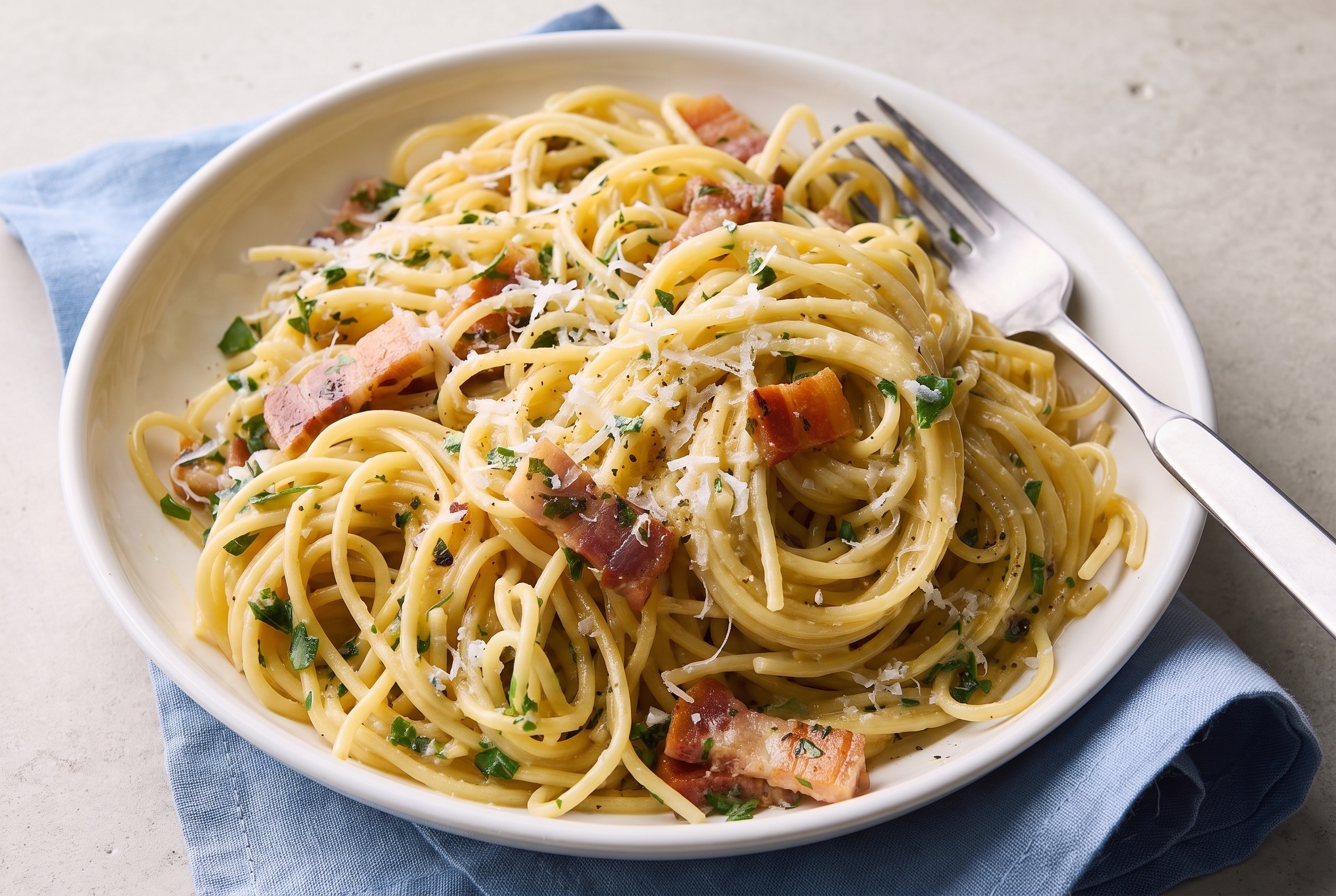
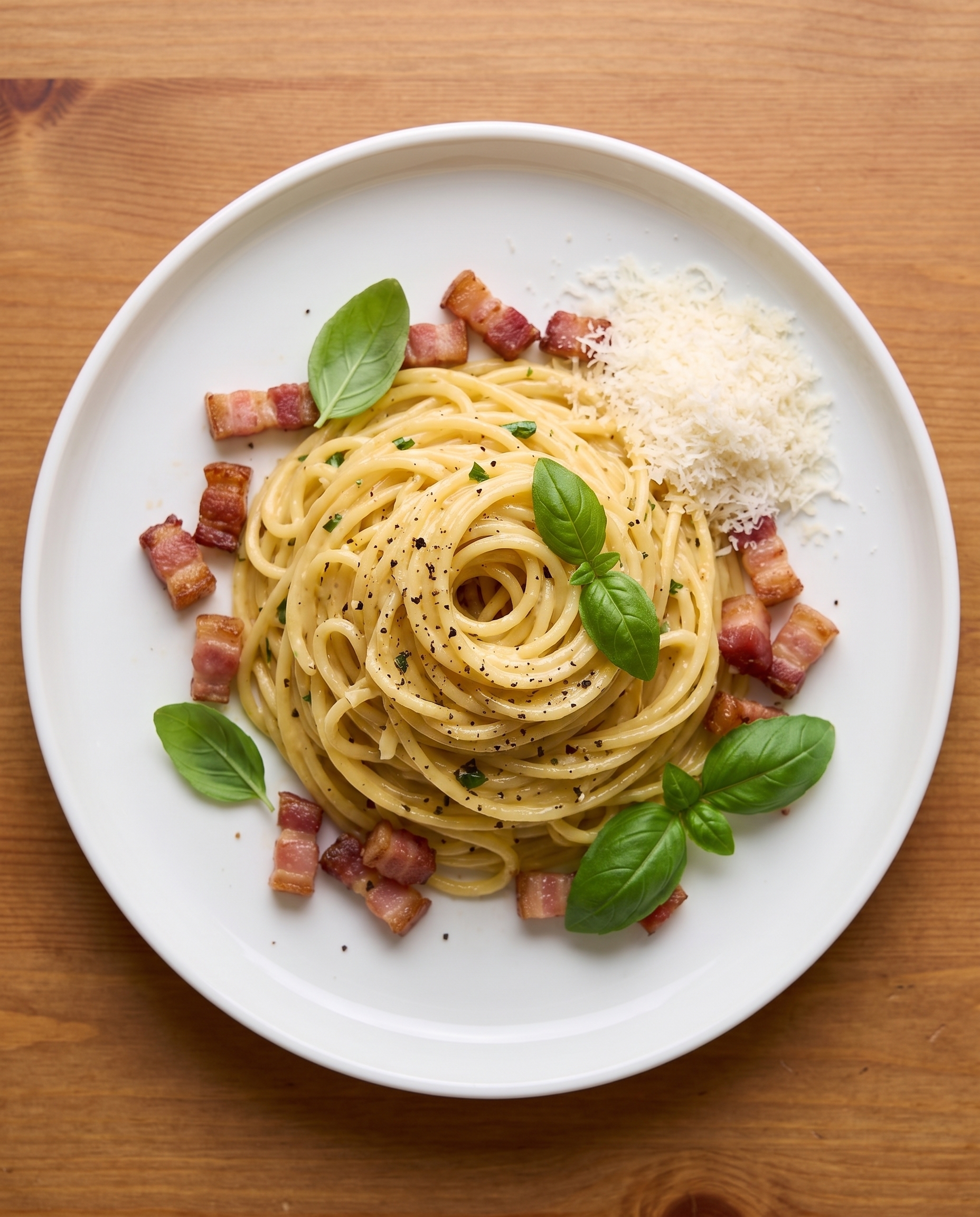
Have you ever stood in front of the pantry at 6 p.m. on a Tuesday with absolutely nothing planned, and somehow the answer is always pasta? That’s how this spaghetti carbonara with pancetta was born in my kitchen — not from a grand plan, but from a hungry belly and a memory of my grandmother’s kitchen. Real carbonara, she told me, gets its silkiness from patience and eggs, never cream. She wasn’t wrong.
I learned carbonara the hard way when I was twenty-three, scrambling my eggs in the hot pan like a terrified little sous chef. My grandmother would have laughed, then told me to start over. Carbonara doesn’t ask for much — a few good ingredients, a heavy pan, and a calm hand. If you’ve tried my pappardelle with chicken, you’ll recognize the same warm comfort here. Want more kick? The creamy harissa pasta is a great next stop.
Why Carbonara With Pancetta Matters
Carbonara earns its place in any home cook’s rotation because it’s a masterclass in technique disguised as a 20-minute dinner. No roux, no long simmer, no list of twenty spices. Just five real ingredients and the discipline to keep your pan off the heat at the right moment. Get it wrong and you’ll see clumps of scrambled egg in your spaghetti. Get it right and you’ll have a glossy sauce that clings to every strand.
Using pancetta instead of guanciale is a meaningful choice for American kitchens. Pancetta is easier to find, often pre-diced, and has a slightly milder flavor that lets the pecorino shine. You lose a little of guanciale’s funky depth, but you gain consistency. For a weeknight carbonara, pancetta is the right call. If you love this kind of cozy pasta work, try my pasta with brown butter and mizithra next.
Spaghetti Carbonara With Pancetta
This is the version I come back to most often — minimal prep, quick cooking, and a finished dish that feels like a hug in a bowl. The key is having every ingredient measured and ready before you turn on the burner. Once carbonara starts, it doesn’t wait for you.
Ingredients
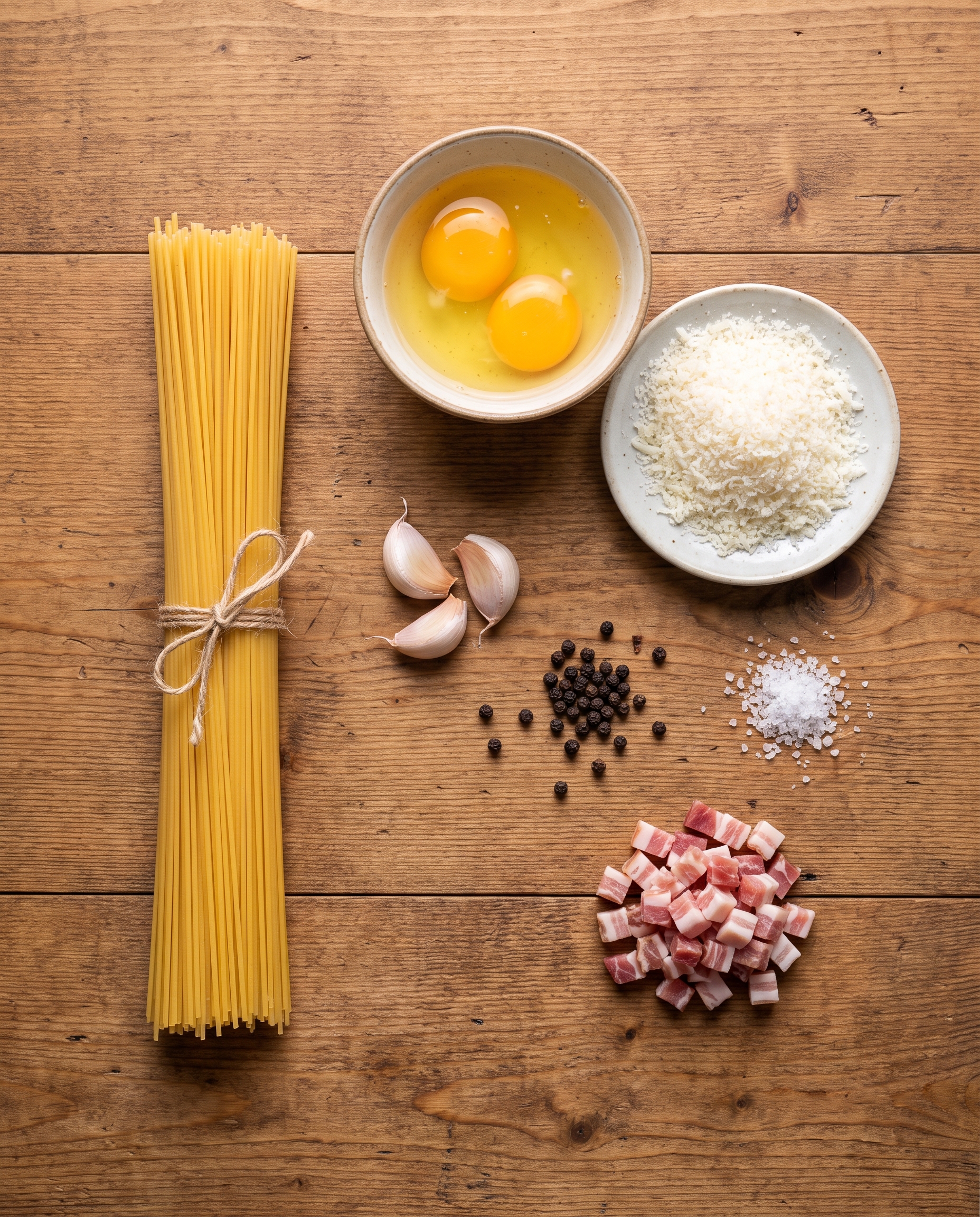
12 ounces spaghetti
4 ounces pancetta, diced into 1/4-inch cubes
2 tablespoons extra virgin olive oil
3 garlic cloves, finely chopped
1 handful fresh flat-leaf parsley, finely chopped
4 large egg yolks
1 large whole egg
1 cup finely grated Pecorino Romano, plus more for serving
1 teaspoon freshly cracked black pepper, plus more to taste
Kosher salt, for the pasta water
From Pot to Plate
Step 1: Bring a large pot of generously salted water to a rolling boil — it should taste like the sea. Add the spaghetti and cook until al dente, about 9 minutes. Reserve a full cup of that starchy pasta water before draining. The pasta water is your secret weapon for the sauce.
Step 2: While the pasta cooks, dice the pancetta into 1/4-inch cubes. Heat a large deep skillet over medium heat with the olive oil. Add the pancetta and render slowly until golden and crispy at the edges, about 6 to 8 minutes. Don’t rush it.
Step 3: Add the garlic and parsley to the pancetta and stir for 30 seconds until fragrant. Pull the pan off the heat — the pan is now warm enough to gently cook your egg sauce without scrambling it.
Step 4: In a medium bowl, whisk together the egg yolks, whole egg, grated pecorino, and cracked black pepper. The mixture should be thick and golden.
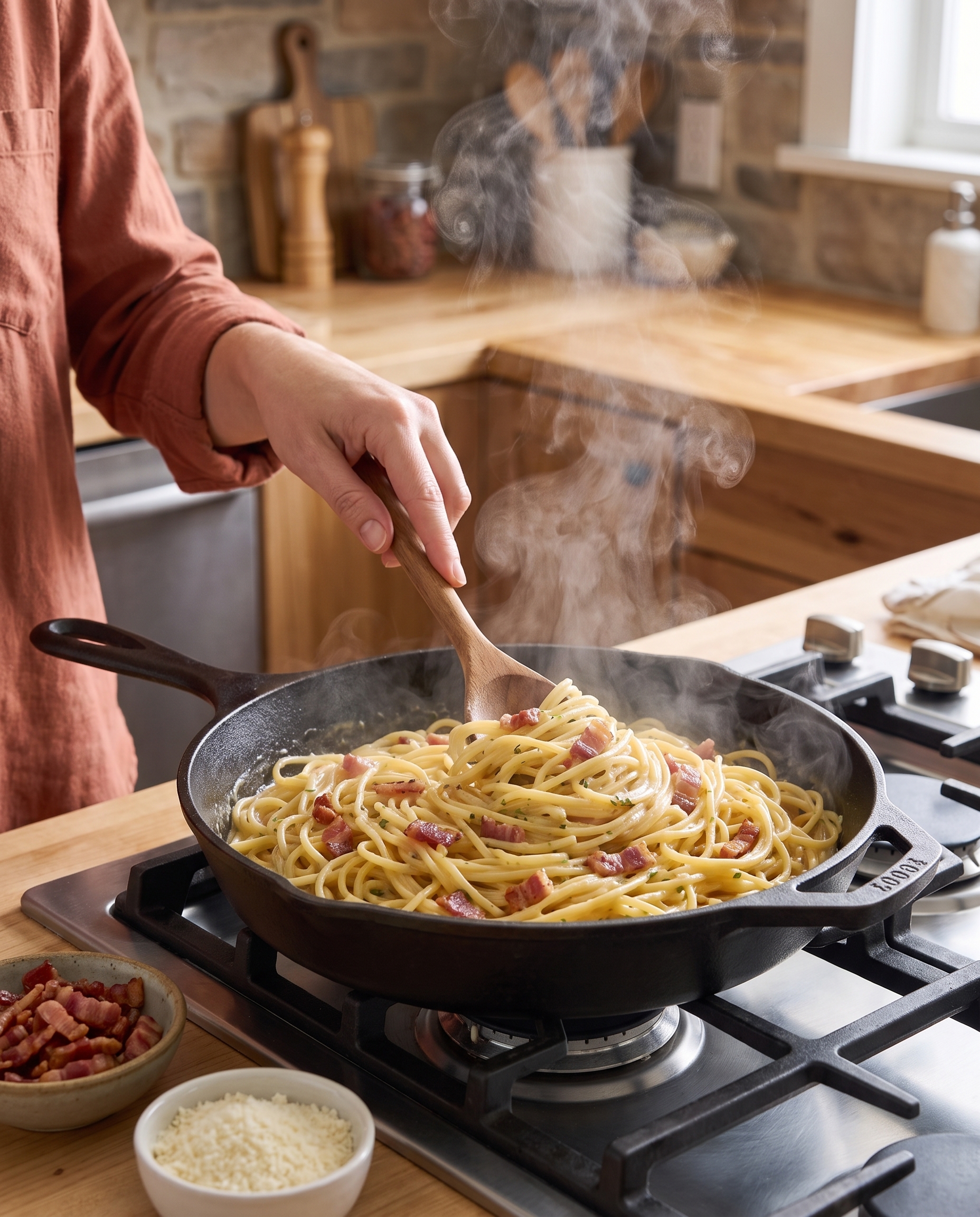
Step 5: Add the drained spaghetti to the warm pancetta skillet and toss over low heat for 30 seconds. Ladle 1/4 cup of reserved pasta water into the egg-pecorino bowl and whisk vigorously — this tempering keeps the eggs from scrambling. Pour into the skillet and toss continuously with tongs for about 90 seconds. The sauce will turn glossy and cling to every strand. Too thick? Add more pasta water. Too thin? Keep tossing over very low heat until it tightens.
Step 6: Take the pan off the heat. Taste and adjust with more pecorino, pepper, or salt. Pile into warmed bowls, top with more pecorino and a final crack of black pepper, and serve right away.
Creative Twists
Once you’ve mastered the classic, carbonara is a wonderful canvas for small swaps. Try a handful of frozen peas in the last minute — the kids go wild. A few tablespoons of heavy cream in the egg mixture loosens the sauce for nervous cooks. Swap the pancetta for thick-cut bacon for a smokier flavor.
Bucatini is the most traditional Roman choice — the hollow strand grabs the sauce beautifully. Rigatoni works too, catching pancetta in its ridges. A handful of baby arugula tossed in at the end adds a peppery note. Shave a little truffle over the top right before serving if you have one — the only “fancy” addition I think is worth it.
Serving & Pairing Ideas
What should I serve with carbonara? Something crisp and acidic — a simple arugula salad with lemon, olive oil, and shaved parmesan is the classic Roman move. Roasted broccolini with garlic works too, and a glass of chilled Pinot Grigio cuts the richness beautifully.
For a heartier dinner, serve smaller portions as a starter before roasted chicken or a peppery arugula pizza. Leftovers make a brilliant next-day frittata — crack a few extra eggs into the cold pasta and pan-fry until set. If you love this kind of cozy pasta work, try my lobster mac and cheese for a special occasion, or the slow cooker beef stroganoff for an even cozier comfort meal.
Why I Love This Carbonara
What I love most about this recipe is how unfussy it is. No fancy equipment, no hard-to-find ingredients, no three-hour simmer. Just a pot of boiling water, a heavy skillet, a bowl, and a wooden spoon. The more you make it, the more instinctive it becomes.
More than anything, this is a recipe I cook when I want to slow down. There’s a rhythm to it — boil, render, whisk, toss — that pulls me out of whatever chaos the day has brought. I hope it does the same for you.
Storage and Batch Cooking
Carbonara is best eaten the moment it comes off the stove — the sauce is at its glossiest in those first few minutes. That said, leftovers are still delicious if you handle them right. Store extras in an airtight container for up to two days. To reheat, add a splash of water to a nonstick skillet over low heat and toss gently. Don’t microwave — the eggs will turn rubbery.
For batch cooking, prep components ahead instead of cooking the whole dish in advance. Dice the pancetta, grate the pecorino, and pre-mix the egg-pecorino sauce a day ahead in separate containers — the actual cooking takes less than 15 minutes when you’re ready to serve.
Troubleshooting Your Carbonara
The most common carbonara disaster is scrambled eggs, almost always because the pan is too hot. The moment your egg mixture hits a pan still over direct heat, the proteins seize up. The fix is patience — pull the pan off the heat, let it cool 30 seconds, then add the tempered egg mixture while tossing constantly. If you’ve already scrambled, call it a “pasta frittata” for brunch.
If your sauce looks thin, you likely added too much pasta water. Let the carbonara sit in the warm pan (off the heat) for an extra minute. Too thick? Add another splash of pasta water. Tastes flat? It almost always needs more pecorino or pepper. Pancetta not crisping? Your pan wasn’t hot enough.
Your Quick Questions, Answered
Can I use bacon instead of pancetta? Absolutely. Bacon gives a smokier flavor and works beautifully. Dice it the same way and render slowly. Use a little less olive oil since bacon has more fat.
Do I really need Pecorino? Can I substitute Parmesan? You can use Parmesan, but the flavor will be more mellow. Pecorino has the sharper, saltier bite that’s traditional in carbonara. If you substitute, go with a good Parmigiano-Reggiano and add extra black pepper.
Why are my eggs scrambling? Two reasons: pan is too hot, or you didn’t temper the eggs first. Always pull the pan off the heat and temper with hot pasta water before pouring.
A Few Last Thoughts
If there’s one thing I hope you take away from this recipe, it’s that carbonara is so much easier than the internet makes it look. You don’t need culinary school, fancy imported guanciale, or a thermometer. Just a heavy pan, a good wooden spoon, and the willingness to trust the process. That’s the goal — not perfection, but the easy confidence that comes from making something a dozen times.
I’d love to hear how your carbonara turns out — classic, with peas, swapped pancetta, or a new shape. Every cook brings something different to this dish, and that’s what makes it worth making again. For more cozy pasta ideas, swing by the pasta category, or read the about page for the full story.
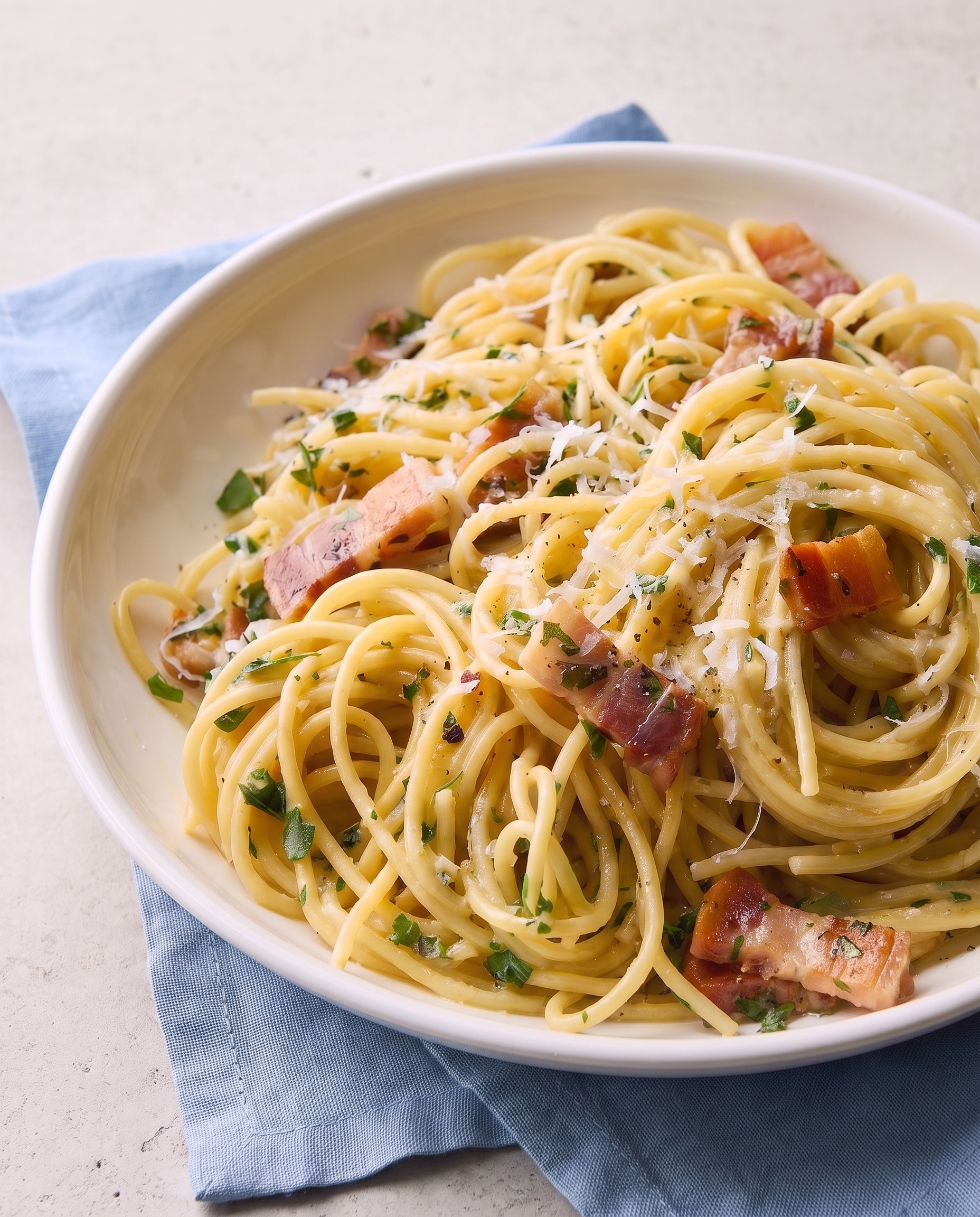
A weeknight-friendly, restaurant-quality spaghetti carbonara with crispy pancetta, glossy egg-pecorino sauce, and a finishing shower of black pepper. No cream needed.
Notes
The cardinal rule of carbonara: never add the egg mixture to a hot pan over direct heat. Pull the pan off the burner first and toss continuously so the residual warmth gently cooks the eggs into a glossy sauce.
Keywords:carbonara, spaghetti, pancetta, pasta, italian
Elowen Thorn I cook, photograph and re-test every recipe in an ordinary home kitchen before it goes up, so what you make matches what you see. Savory Discovery is where simple weeknight cooking, seasonal ideas and the odd bit of kitchen craft sit side by side — written plainly, and worth cooking twice.