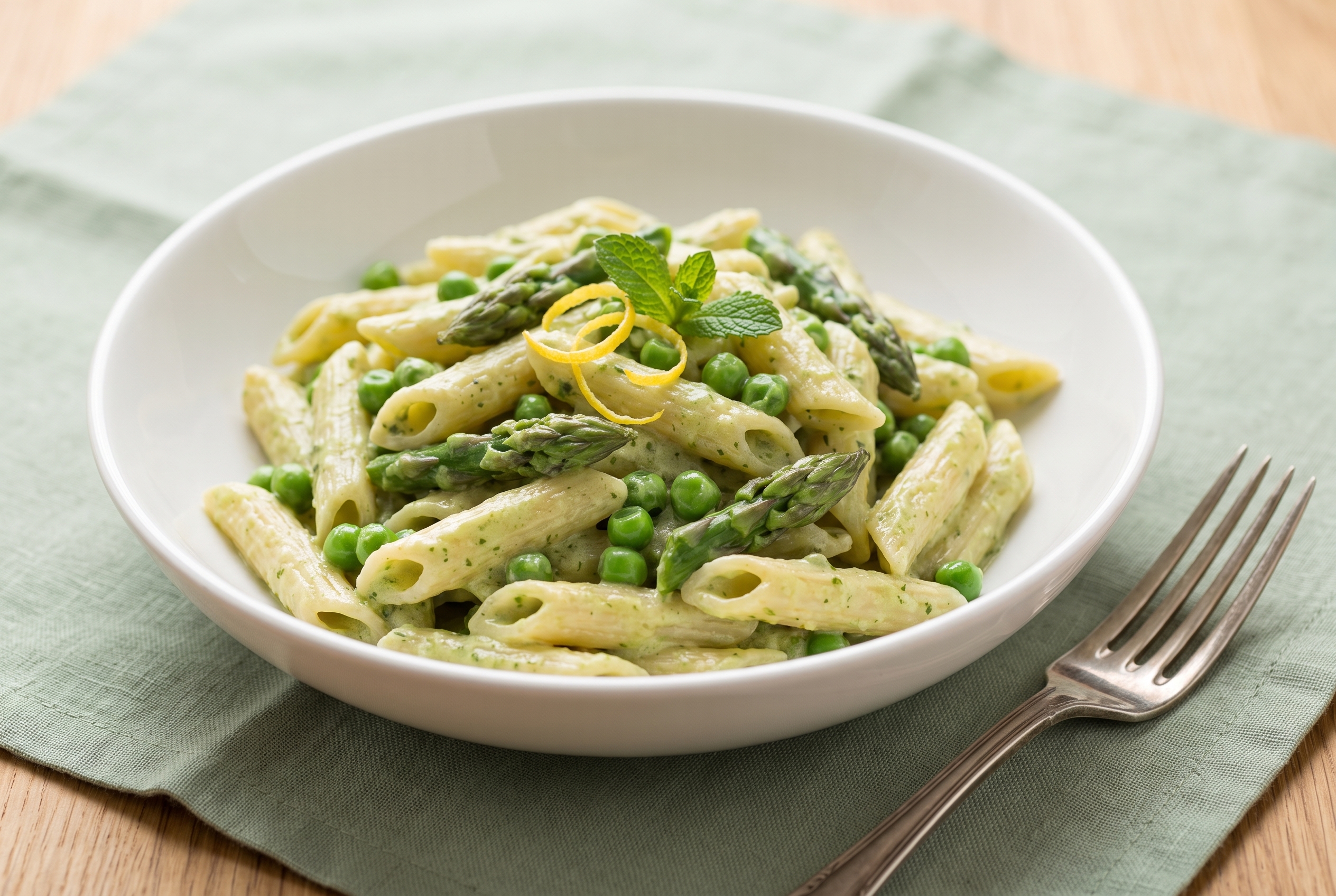
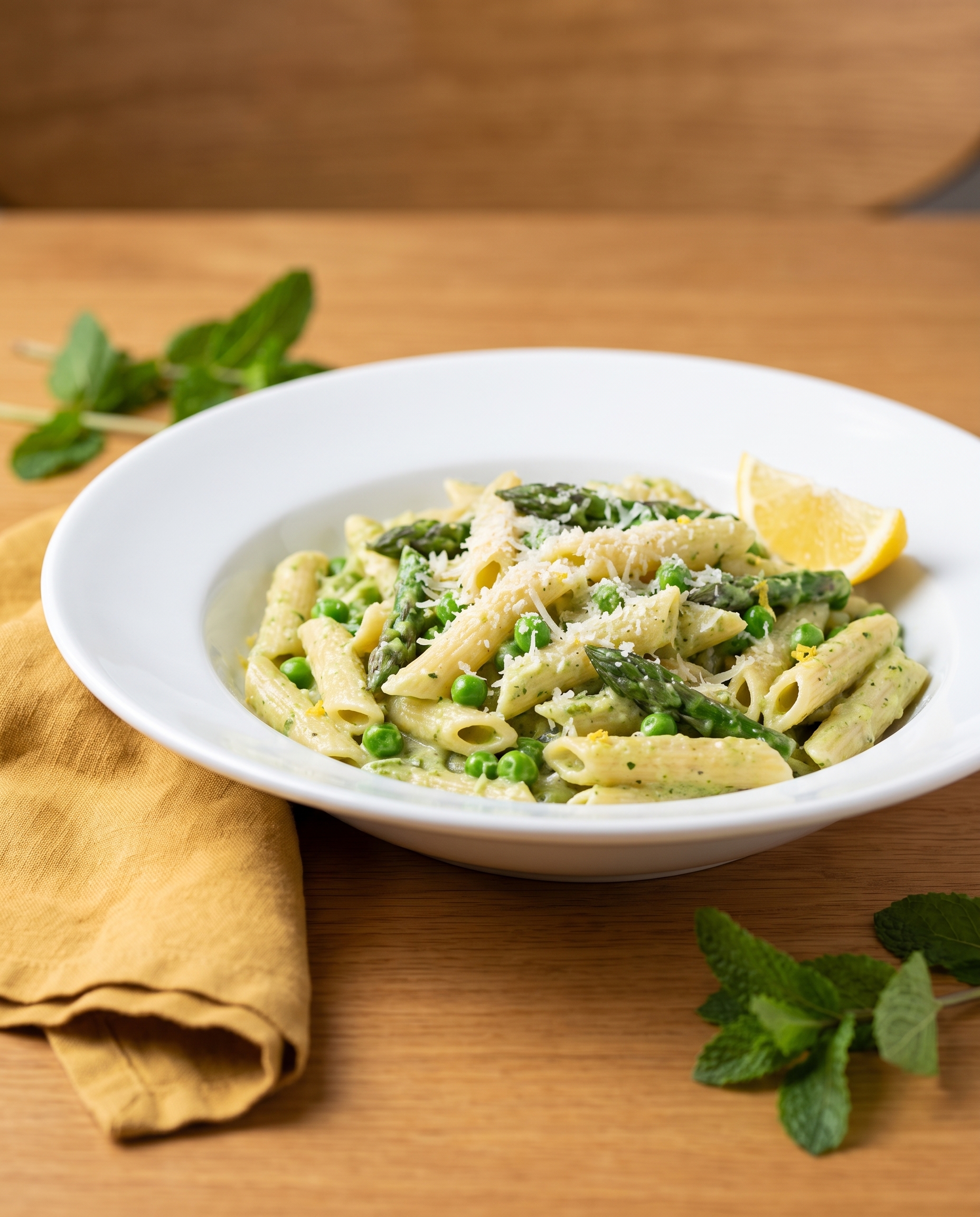
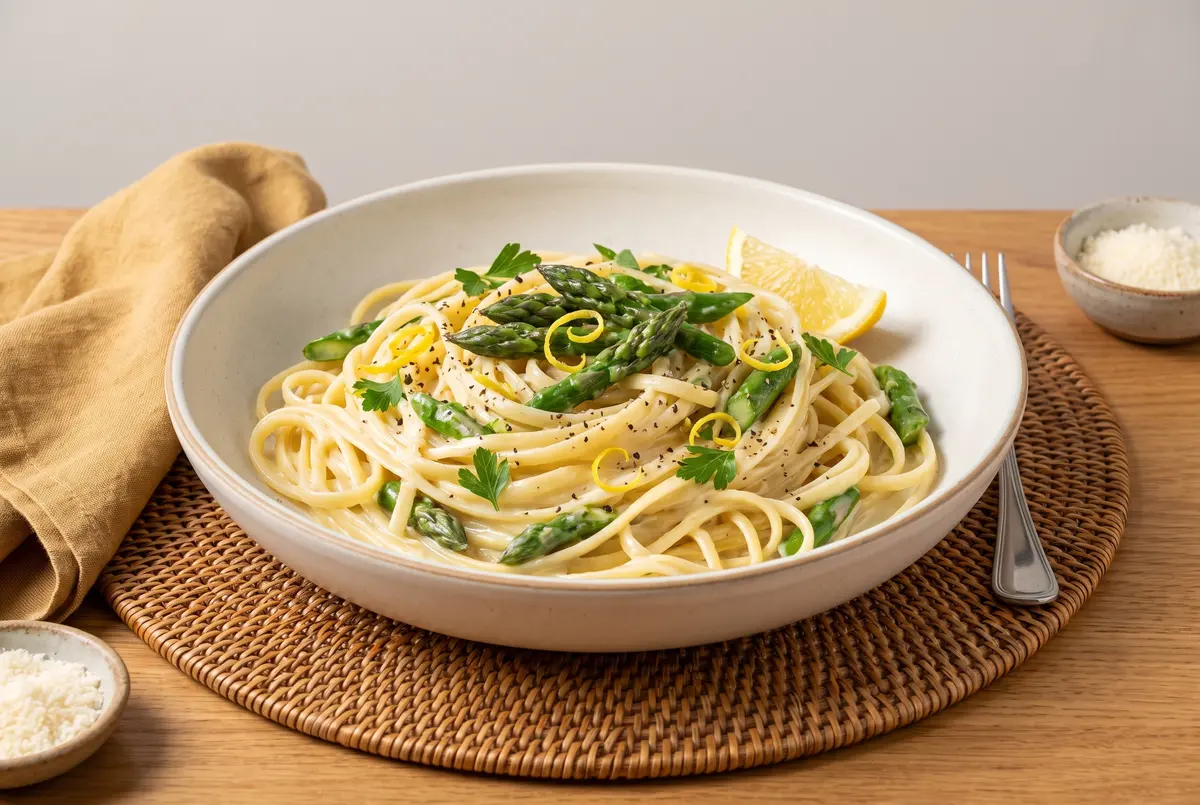
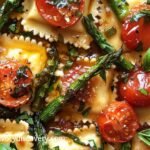
That first warm afternoon in spring when the produce at the market suddenly looks like a painting? That is the afternoon that inspired this creamy asparagus pea pasta. It is a bowl full of spring that takes about twenty-five minutes, and it tastes like the season itself — fresh, green, bright from the lemon, and just rich enough to feel like comfort food. The trick is not cream. It is crème fraîche stirred in at the end with grated parmesan and a generous squeeze of lemon, giving you that silky sauce without the pasta ever feeling heavy. The peas and asparagus stay bright and just-tender, and the whole thing comes together while the pasta is still in the colander.
Why Spring Veggies and a Tangy Cream Sauce Just Work
Asparagus and peas are both a little sweet and grassy, and they love fat and acid in equal measure. Pair them with a heavy cream sauce and the dish goes dull; skip the cream and the pasta feels thin, especially next to a sturdy tube like penne. That is where crème fraîche earns its keep. It is a French-style cultured cream that brings the silky body of cream plus just enough tang to lift the green vegetables up. Snap peas, English peas, even frozen peas all work here. Save a little of the starchy pasta water — a splash at the end brings the sauce together and makes the whole thing look glossy and intentional, even on a weeknight.
Creamy Asparagus Pea Pasta
This is what I call my “happy spring bowl.” The pasta boils, the vegetables take a quick sauté in olive oil with shallots, and the sauce comes together right in the same pan. The result is creamy without being heavy, with bright pops of peas and tender bites of asparagus. If you are cooking for someone who claims they do not like vegetables, hand them a bowl of this and watch what happens.
Ingredients
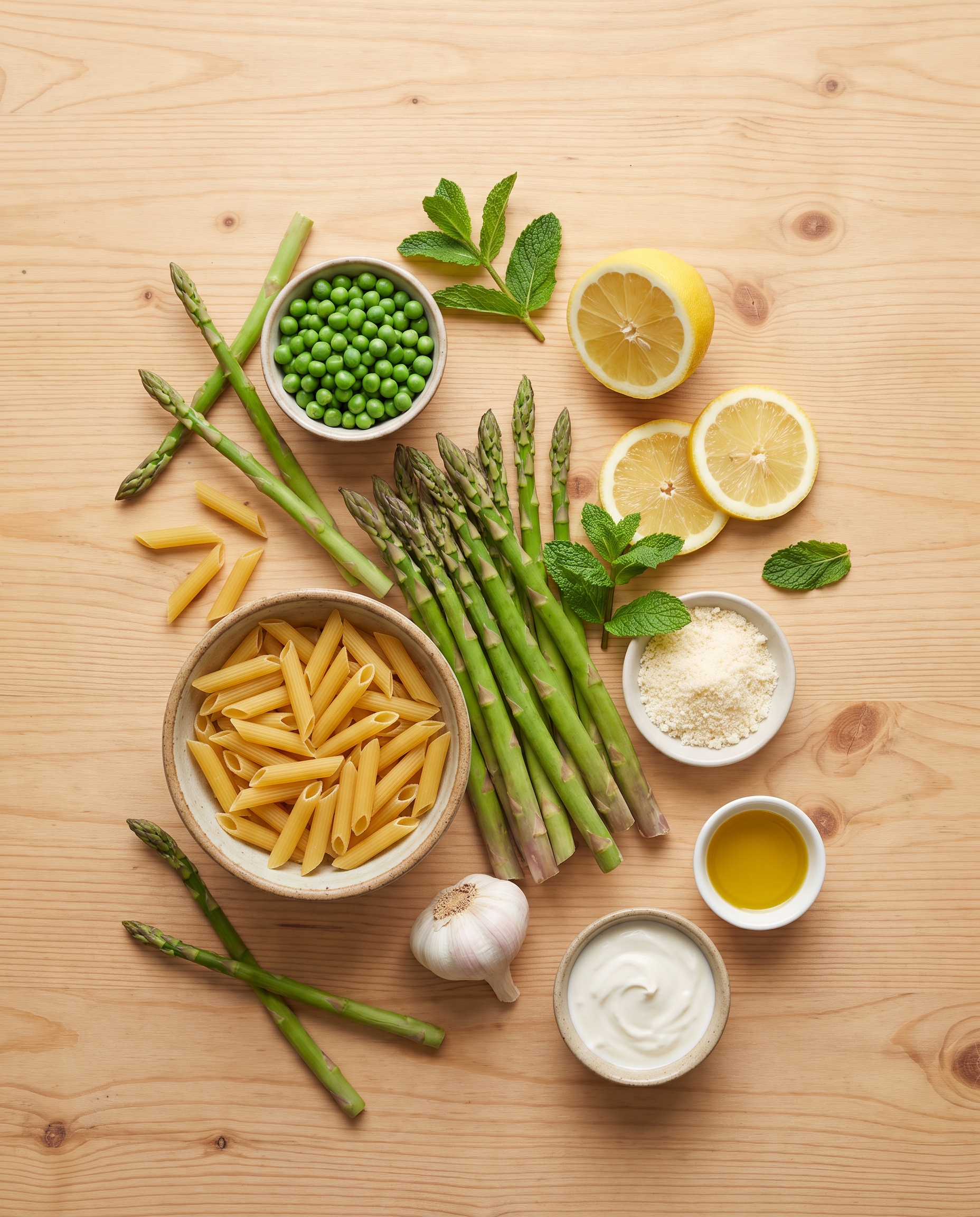
12 ounces dried pasta, such as penne, fusilli, or rigatoni
1 tablespoon extra-virgin olive oil
¾ cup thinly sliced spring onions (or thinly sliced red onion or shallots)
½ teaspoon freshly ground black pepper, plus more to taste
¾ teaspoon salt, plus more to taste
Juice and zest of 1 lemon (about 2 tablespoons juice)
3 tablespoons crème fraîche (see notes)
3 tablespoons roughly chopped fresh mint
¼ cup finely grated Parmesan cheese, plus more to pass at the table
From Pot to Plate in Twenty-Five Minutes
Step 1: Salt the water like you mean it. Bring a large pot of water to a boil and add enough salt that it tastes like the sea — that is your only chance to season the pasta itself. Add the pasta and cook according to the package directions until al dente. Reserve about ½ cup of the cooking water before draining, then drain the pasta and give it a good shake.
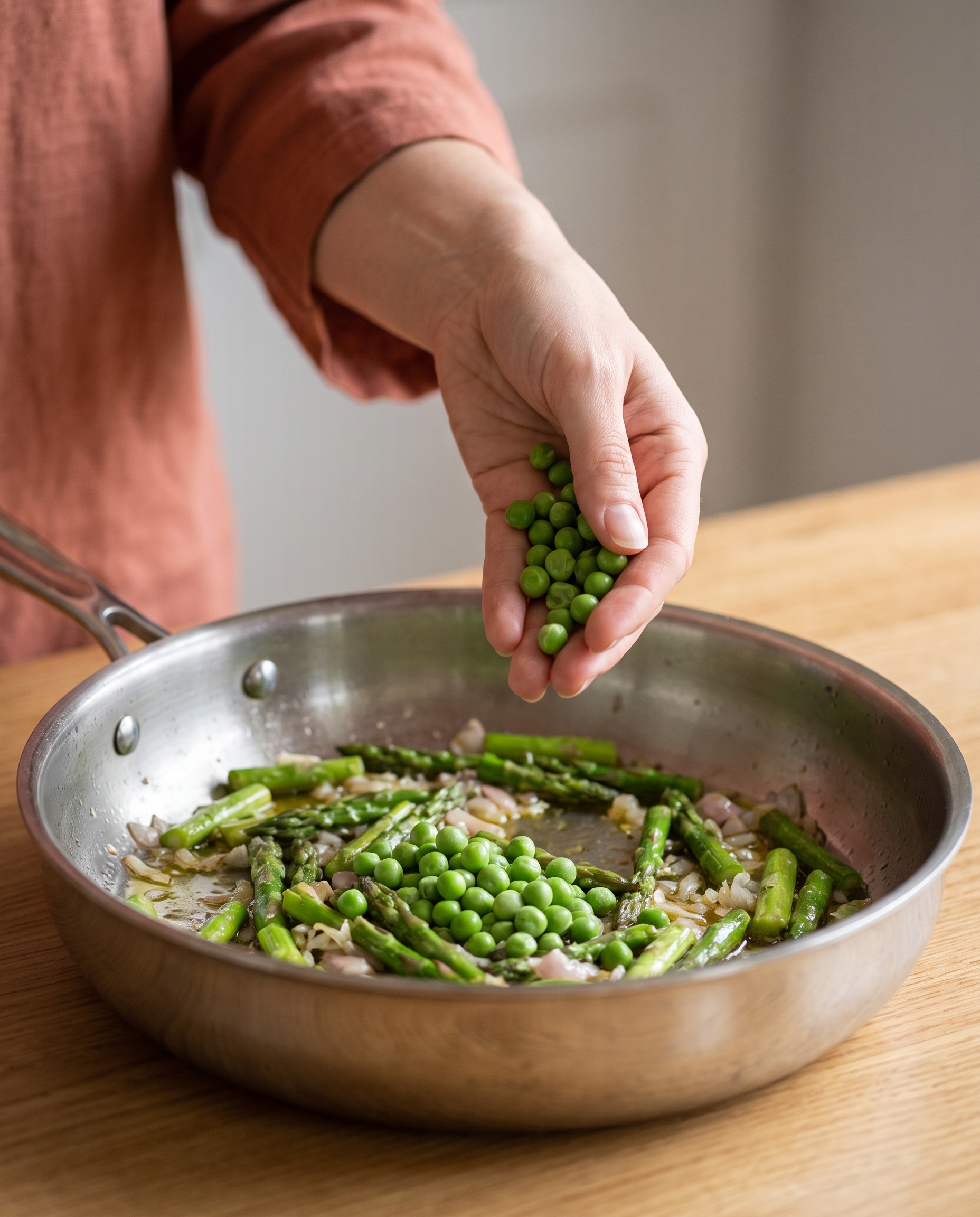
Step 2: Build the flavor base. While the pasta cooks, heat the olive oil in a large skillet over medium. Add the spring onions and sauté until tender, about 3 minutes.
Step 3: Bring in the green team. Add the asparagus, snap peas, English peas, salt, and pepper and sauté until crisp-tender, about 3 to 4 minutes. You want them bright green and still a little snappy. If they go dull, you have gone a minute too far.
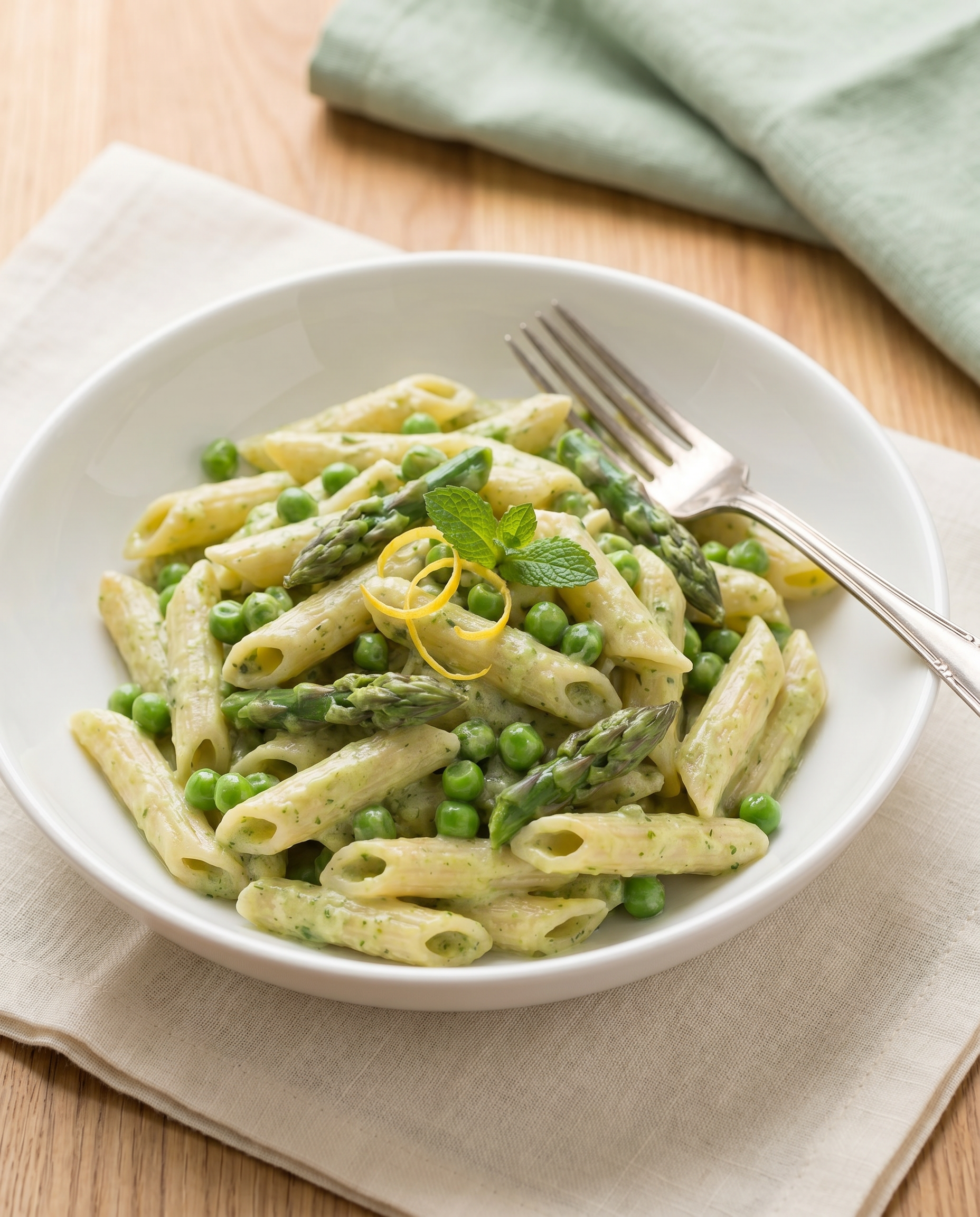
Step 4: Marry everything in the pan. Return the skillet to low heat. Add the drained pasta, lemon zest and juice, crème fraîche, mint, Parmesan, and a couple of tablespoons of the reserved pasta water. Toss until glossy and clings to the noodles, adding more pasta water as needed. Adjust seasoning.
Step 5: Finish and serve. Pile into shallow bowls. Top with more Parmesan, a few extra mint leaves, and a twist of black pepper. Serve right away — this is not a pasta that improves from sitting around.
Creative Twists Worth Trying
Once you have the method down, the swaps are almost endless. The ones that earned a permanent spot in my notes:
Burrata on top. Tear a ball of cold burrata over each bowl right before serving. The cream melts into the warm pasta beautifully.
Toasted breadcrumbs. Toast panko in olive oil with a smashed garlic clove until golden, then sprinkle over for crunch.
Lemony ricotta swirl. Stir a few spoonfuls of whole-milk ricotta into the sauce at the end for an extra-velvety bowl.
Swap the herbs. If you do not have mint, try fresh basil, dill, or chives.
Add a little heat. A pinch of red pepper flakes with the shallots is wonderful if you like a subtle warmth.
Go vegan. Use vegan cream cheese or cashew cream in place of the crème fraîche, and nutritional yeast in place of the Parmesan.
Serving and Pairing Ideas
Keep it simple: a crisp green salad with a lemony vinaigrette, warm bread with good butter, and a glass of something cold. For a fuller dinner, add a simple roast chicken. The creamy spinach and feta pasta makes a great companion on a pasta night, and the creamy garlic mushroom pasta is a wonderful earthy contrast. A chilled sauvignon blanc loves the lemon and herbs.
Why I Love This Creamy Asparagus Pea Pasta
There is something about a bowl of pasta that uses up a whole bunch of asparagus and most of a bag of peas that just makes me happy. Recipes like this save me from wasting any of that beautiful produce. It also feels like the kind of dinner that does not try too hard — creamy and rich, yes, but bright, quick, and unpretentious. The lemon and the crème fraîche make it taste like spring in a bowl.
Storage and Batch Cooking
Honest truth: this pasta is best within an hour or two of being made. The sauce tightens in the fridge as the pasta soaks up the cream. I keep leftovers in an airtight container for up to 3 days and reheat gently in a skillet over low heat with a splash of water. Skip the microwave on high — the cream will break. For batch cooking, store the vegetable mixture separately and toss with fresh pasta when ready. The creamy white wine garlic pasta uses a similar trick.
Troubleshooting Your Creamy Asparagus Pea Pasta
Even a simple pasta can have its little hiccups. Most common fixes:
Sauce looks thin or watery. Probably too much pasta water. Let it sit on low heat, tossing, and it will tighten. A little extra Parmesan also helps.
Sauce looks thick or gummy. Splash in more reserved pasta water, a tablespoon at a time.
Vegetables are dull or mushy. You likely cooked them a minute or two too long. Pull them off while still bright and crisp-tender next time.
Flavor feels flat. Almost always a salt or acid issue. Add a pinch more salt, a squeeze of lemon, and cracked pepper.
Crème fraîche broke or curdled. The pan was too hot. Add it with the heat off or on the lowest setting.
Your Quick Questions, Answered
Can I use heavy cream instead of crème fraîche? Yes. Use about ¼ cup heavy cream and add an extra squeeze of lemon at the end. The sauce will be a bit richer and a little less bright, but still lovely.
What if I cannot find snap peas? Skip them and add a little more English peas, or use thinly sliced snow peas. The dish is forgiving.
Is there a good dairy-free swap for the crème fraîche? Full-fat coconut cream, cashew cream, or a thick dairy-free yogurt all work. Cut the lemon juice in half if you are using coconut cream.
Can I make this pasta ahead for a dinner party? Cook the vegetables and sauce base ahead and store them together. Boil the pasta and finish the toss right before serving. The assembly takes about 5 minutes once your prep is done.
A Few Last Thoughts
This creamy asparagus pea pasta has become one of those recipes I look forward to every spring — the way I look forward to the first tomato of summer. It is simple enough for a weeknight, special enough for company, and uses up the very best of what spring has to offer. If you have been on the fence about crème fraîche, let this be the recipe that converts you.
When you make it, I would love to hear how it turned out. Tell me in the comments, or tag me on the Savory Discovery site. For more spring pasta inspiration, the pasta category is full of cozy bowls. Until next time, happy cooking!
A bright, springy pasta with crisp-tender asparagus, sweet peas, lemon zest, and a tangy crème fraîche-Parmesan sauce. Comes together in about 25 minutes.
Ingredients
Notes
Crème fraîche brings the perfect balance of richness and tang. If you cannot find it, substitute sour cream or full-fat Greek yogurt and cut the lemon juice in half to keep the sauce balanced. The pasta is best enjoyed fresh but keeps in the fridge for up to 3 days — reheat gently with a splash of water or butter.
Keywords:asparagus pasta, pea pasta, spring pasta, creamy pasta, creme fraiche pasta
Elowen Thorn I cook, photograph and re-test every recipe in an ordinary home kitchen before it goes up, so what you make matches what you see. Savory Discovery is where simple weeknight cooking, seasonal ideas and the odd bit of kitchen craft sit side by side — written plainly, and worth cooking twice.