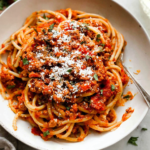
I used to think every pasta sauce needed hours on the stove. Long simmers, deep flavor, all of that. And then one Tuesday night, with a half-empty bottle of pinot grigio and a single bulb of garlic on the counter, I made this creamy white wine garlic pasta in about twenty minutes flat. My grandmother would have laughed at how simple it was — and then asked for seconds. Have you ever had one of those recipes that feels almost too easy to be that good?
That’s the magic here. White wine, garlic, a little cream, a good handful of cheese. The kind of dinner that looks like you fussed, even though you barely broke a sweat. This is the pasta I make when I want something cozy but I don’t want to think too hard.
Why This Sauce Actually Works
The trick to a glossy, restaurant-style cream sauce isn’t really the cream. It’s the wine. A dry white wine — nothing sweet, nothing too oaky — gives the sauce a brightness that balances all the richness from the butter and pecorino. Without it, the sauce can taste heavy, like it’s clinging to the pasta instead of hugging it. With it, the whole thing lifts.
The other thing people get wrong is rushing the garlic. You want it just barely fragrant, never brown. Brown garlic turns bitter, and once that happens, there’s no going back. I keep the heat on medium-low and stir almost constantly for the first minute. The moment your kitchen smells like the best thing you’ve ever cooked, you’re there.
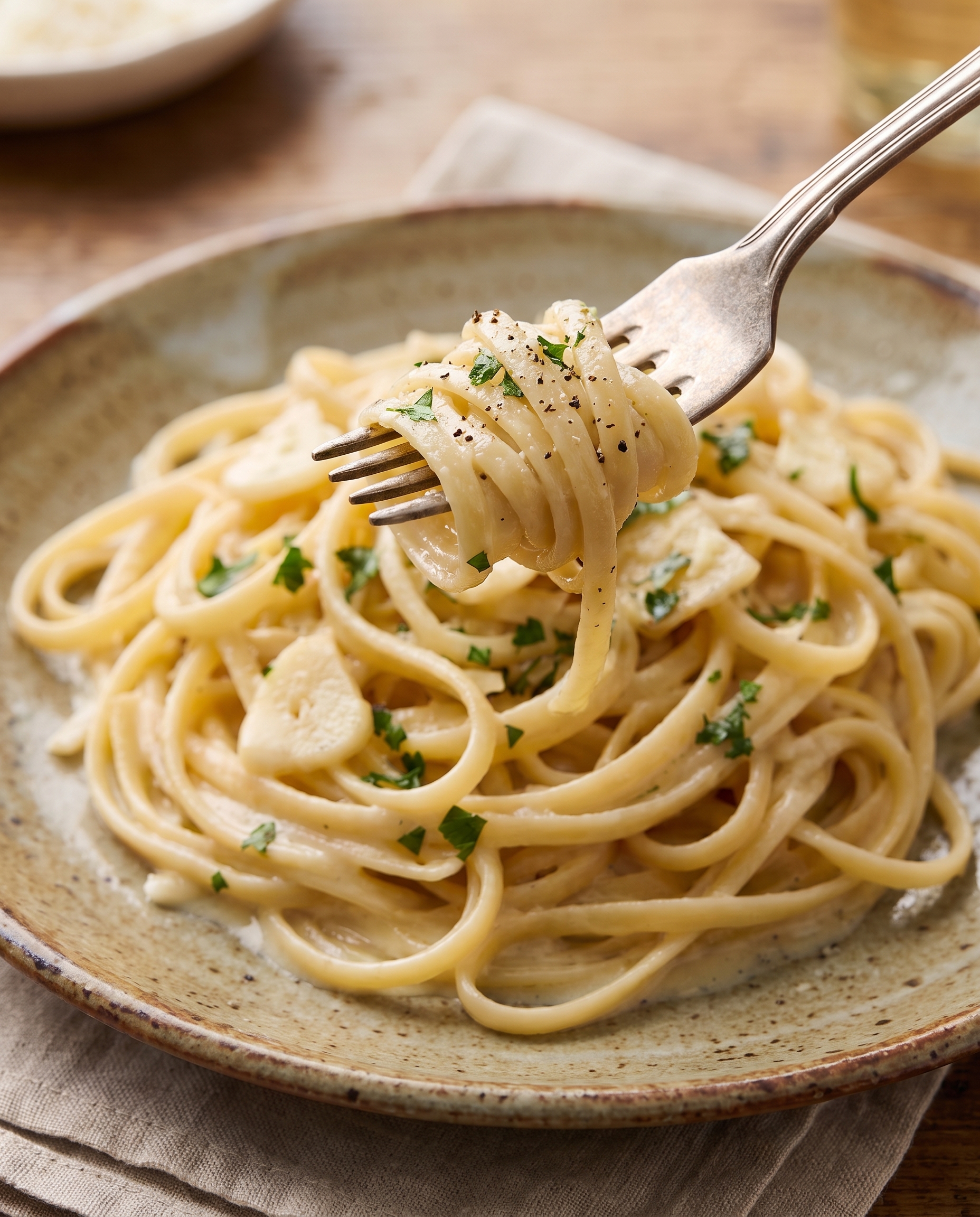
Creamy White Wine Garlic Pasta
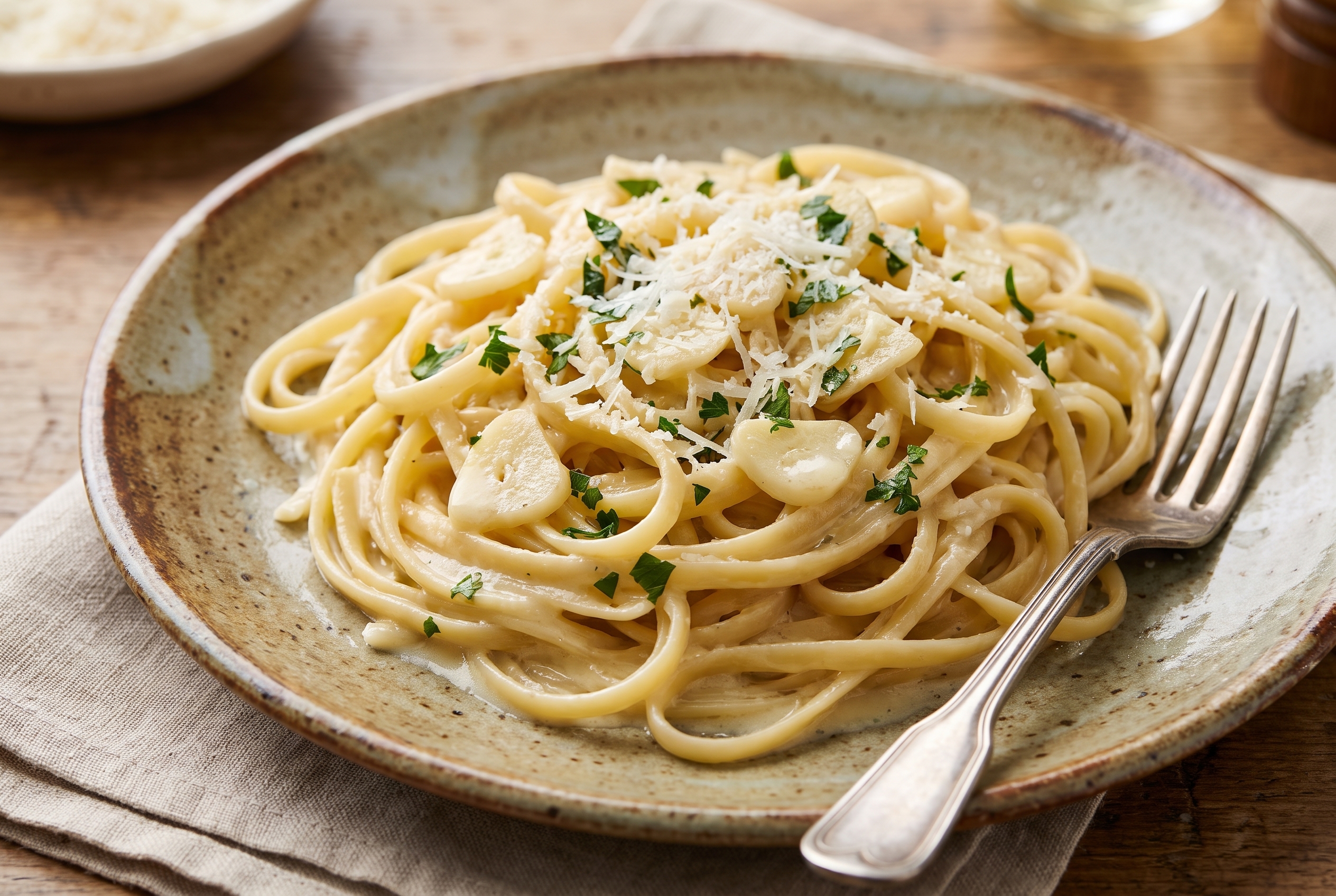
This is the kind of weeknight pasta that makes you feel like you have your life together. Linguine, a glossy cream sauce, a forkful of pecorino at the end. If you love simple pasta recipes, try my lobster mac and cheese for something more indulgent, this creamy Tuscan salmon pasta for a seafood spin, or this creamy harissa pasta if you like a little heat.
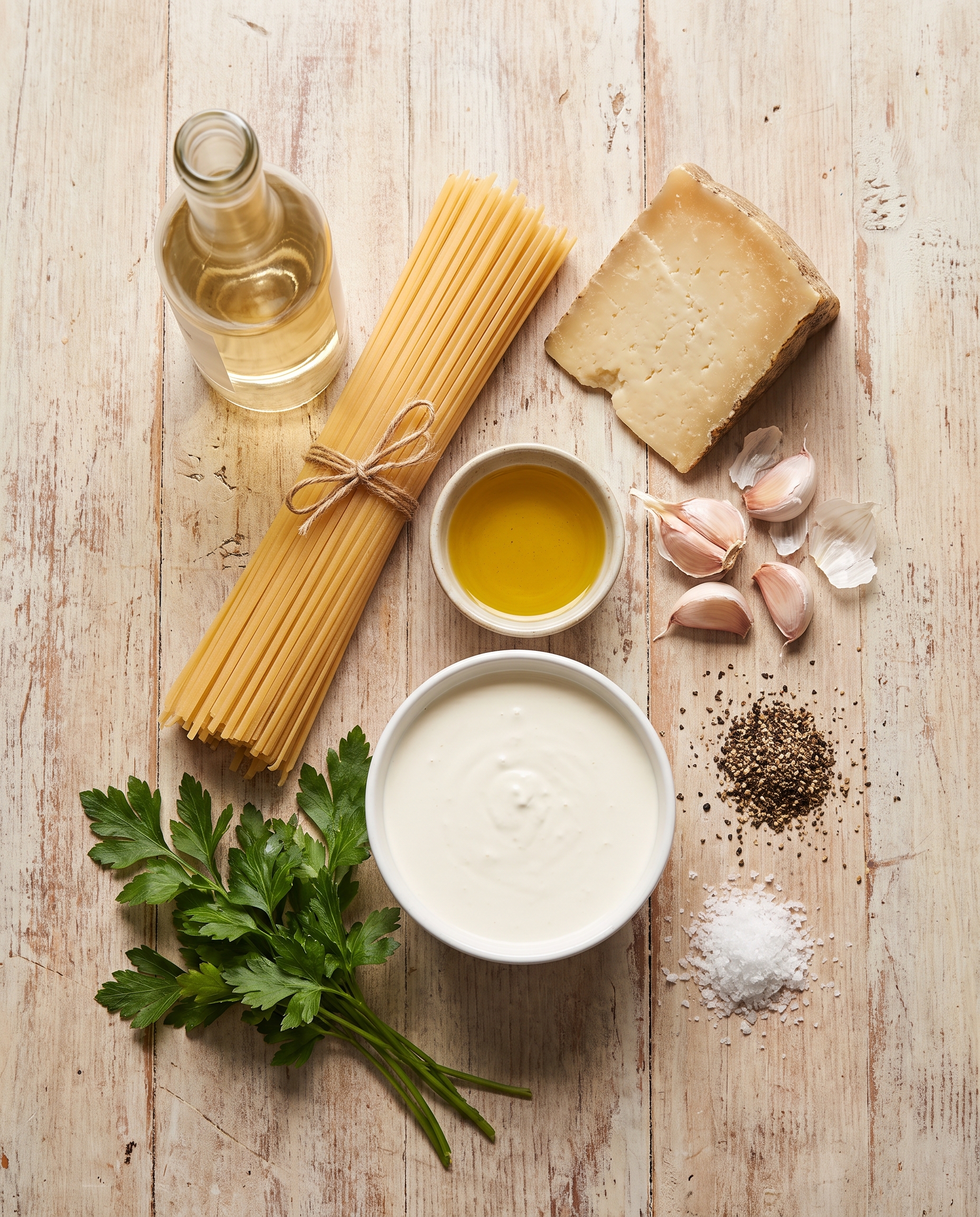
Ingredients
200 grams linguine (or any long pasta you have on hand)
1 tablespoon olive oil
1 small onion, finely chopped
2 large cloves of garlic, finely chopped
100 ml dry white wine (about ⅖ of a cup)
80 ml single cream (or heavy cream, in a pinch)
50 grams pecorino cheese, finely grated
1 small handful of fresh parsley, finely chopped
Salt and freshly ground black pepper, to taste
From Pot to Plate
Step 1: Boil the pasta. Bring a large pot of generously salted water to a rolling boil — it should taste like the sea. Add the linguine and cook until al dente, about 9 minutes. Before draining, scoop out a mug of that starchy pasta water. Trust me, that cloudy liquid is liquid gold for bringing the sauce together later.
Step 2: Soften the onion. Heat the olive oil in a large frying pan over medium heat. Add the chopped onion and a small pinch of salt. Cook 3 to 4 minutes, stirring occasionally, until soft and translucent. Don’t rush this part — sweet onions are the quiet backbone of the whole sauce.
Step 3: Add the garlic. Stir in the chopped garlic for about a minute. You want it fragrant, not browned. If edges start to color, drop the heat a little. The second your kitchen smells like heaven, you’re ready for the next step.
Step 4: Deglaze with the wine. Turn the heat up a touch and pour in the white wine. Let it bubble away until most of the liquid has evaporated, about 2 to 3 minutes. The wine lifts all those toasty bits from the bottom of the pan and turns them into flavor.
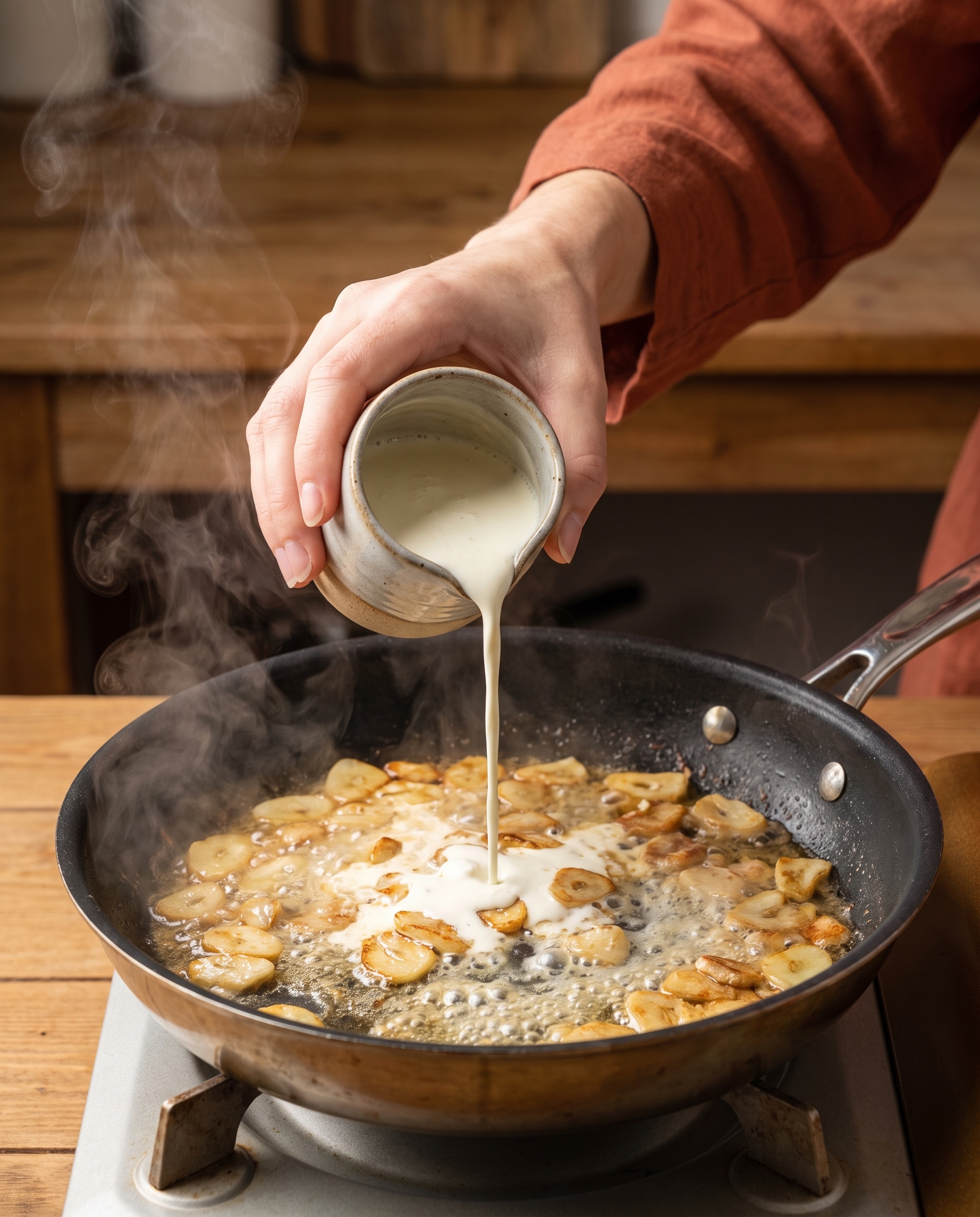
Step 5: Build the cream sauce. Drop the heat to low. Pour in the cream, then add the grated pecorino, parsley, and a few grinds of black pepper. Stir gently until the cheese melts into the sauce. Taste before adding any extra salt — pecorino and pasta water are both salty, so chances are you’re good.
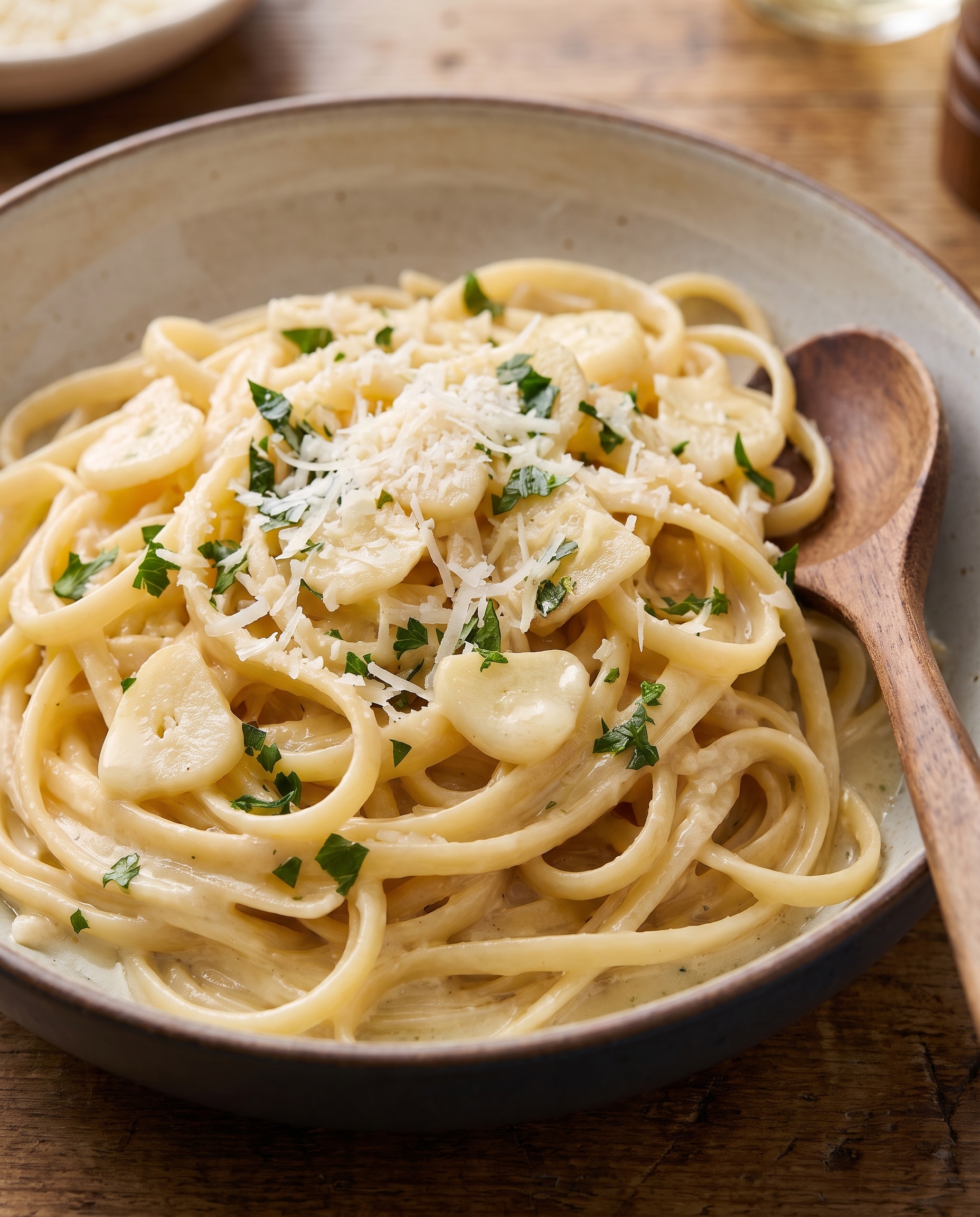
Step 6: Bring it all together. Lift the linguine into the sauce with tongs. Add a ladleful of reserved pasta water, then more as needed. Toss for about a minute, until the sauce clings to every strand and looks glossy, not clumpy.
Step 7: Finish and serve. Plate, hit it with extra pecorino, a few leaves of parsley, and another crack of black pepper. Eat it while it’s hot.
Creative Twists
Once you’ve nailed the base, this sauce is a wonderful canvas. A few of my favorite ways to shake things up:
Add lemon zest. A little lemon zest stirred in at the end makes the whole thing brighter, especially in the spring.
Stir in baby spinach. A couple of big handfuls wilt right into the sauce in under a minute. Feels virtuous, tastes indulgent.
Swap pecorino for parmesan. Either works, but pecorino has a slightly saltier, sharper bite. Use what you have.
Add crispy pancetta or bacon. Cook it first, then use the rendered fat instead of olive oil for the onions. Game changer.
Use shrimp instead of just pasta. Quick-sear some shrimp in a separate pan and toss them in at the end. Feels fancy, takes five minutes.
Try a different pasta shape. Linguine is classic, but this sauce clings beautifully to rigatoni, fusilli, or even tortellini.
Serving & Pairing Ideas
What should I serve alongside this creamy white wine garlic pasta? Honestly, almost nothing. A simple green salad with a sharp lemon vinaigrette is all you need to balance the richness. Warm, crusty bread for mopping up the sauce is never a bad idea either, and a glass of whatever dry white you used in the pan makes the whole meal feel like a little Italian escape.
To round it out into something heartier, roast a tray of broccolini or asparagus while the pasta cooks — both go beautifully with the cream and wine. Roasted mushrooms are another favorite of mine; toss them in with the onions at the start and let them get good and golden.
Why I Love This Recipe
There are a thousand fancy pasta recipes out there. This one isn’t trying to be fancy. It’s trying to be dinner. It’s the recipe I make when I get home late and I still want something that feels like I cared. And somehow, every single time, it works.
I also love that it scales beautifully. Cooking for one? Halve everything. Feeding a crowd? Double the sauce, keep the ratios. It forgives almost any mistake. Overcook the garlic a little? Add more cream. Use spaghetti instead of linguine? Still delicious. The sauce is the star, and the sauce is generous.
Storage and Batch Cooking
This pasta is best eaten the day it’s made, but leftovers keep surprisingly well. Store pasta and sauce together in an airtight container in the fridge for up to 3 days. To reheat, add a splash of water to a small pan over low heat and warm gently, stirring often. The sauce may look separated at first, but it comes back together as it heats.
I don’t recommend freezing the finished dish — cream sauces can split and turn grainy when thawed. But you can absolutely make the sauce ahead of time on its own. Keep it in a jar in the fridge for up to 3 days, then cook fresh pasta and toss them together when you’re ready to eat. That’s my weeknight secret weapon.
Troubleshooting Your Sauce
Sauce too thin? Simmer a little longer, or use less pasta water. A handful of extra pecorino will thicken it up.
Sauce too thick? Add another splash of reserved pasta water, a little at a time. Skip the milk or cream — pasta water is what you want here.
Sauce looks split or greasy? The heat was likely too high. Take the pan off the heat, whisk in a small splash of cold pasta water, and it should come back together.
Garlic tastes bitter? It browned too much. Next time, lower the heat and stir constantly for the first minute. The garlic should be fragrant and pale, never golden-brown.
Your Quick Questions, Answered
Can I use a different pasta? Absolutely. Linguine is traditional, but spaghetti, fettuccine, tagliatelle, or even short shapes like rigatoni and fusilli all work. Just cook until al dente and toss in the same way.
What kind of white wine should I use? Anything dry and crisp — pinot grigio, sauvignon blanc, a dry vermouth. Skip the “cooking wine” from the grocery shelf, which is salty and full of additives. If you wouldn’t drink a small glass, don’t cook with it.
Can I make this without wine? You can, but you’ll lose the brightness. A good substitute is a splash of chicken or vegetable stock plus a small squeeze of lemon. It won’t be quite the same, but it’ll still be lovely.
Is this recipe kid-friendly? It really is. The sauce is mild and creamy, and the wine cooks off almost entirely, leaving just a hint of bright flavor. My grandchildren gobble this up every time. Skip the parsley on picky eaters’ portions.
A Few Last Thoughts
This creamy white wine garlic pasta is one of those recipes that proves simple really is best. No long list of fancy ingredients, no special equipment, no hours of simmering. Just a few good things brought together with a little care. That’s the kind of cooking I love most — the kind that fits into real life but still tastes like something special.
I hope you make this on a quiet weeknight with a glass of wine in hand, the kind of evening where dinner becomes the best part of the day. If you try it, drop a comment and let me know what twists you added. Cooking is more fun when we share it, don’t you think?
Elowen Thorn I cook, photograph and re-test every recipe in an ordinary home kitchen before it goes up, so what you make matches what you see. Savory Discovery is where simple weeknight cooking, seasonal ideas and the odd bit of kitchen craft sit side by side — written plainly, and worth cooking twice.