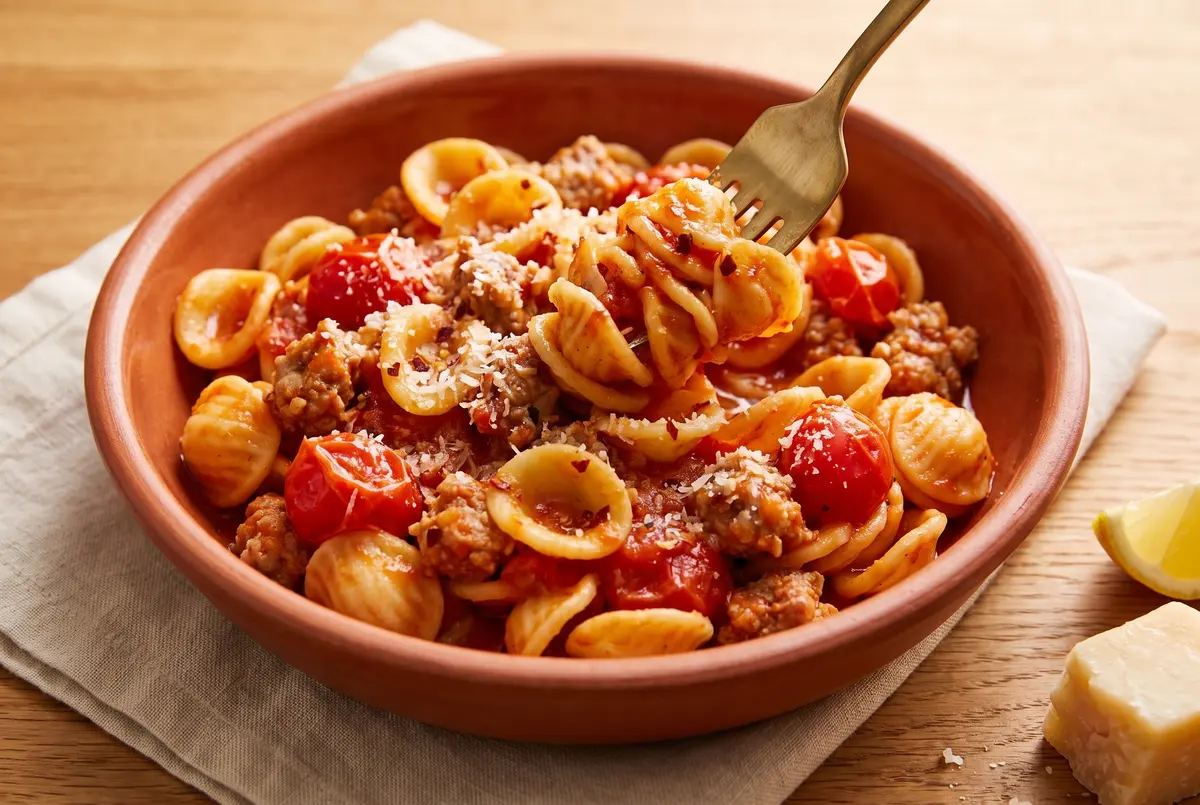
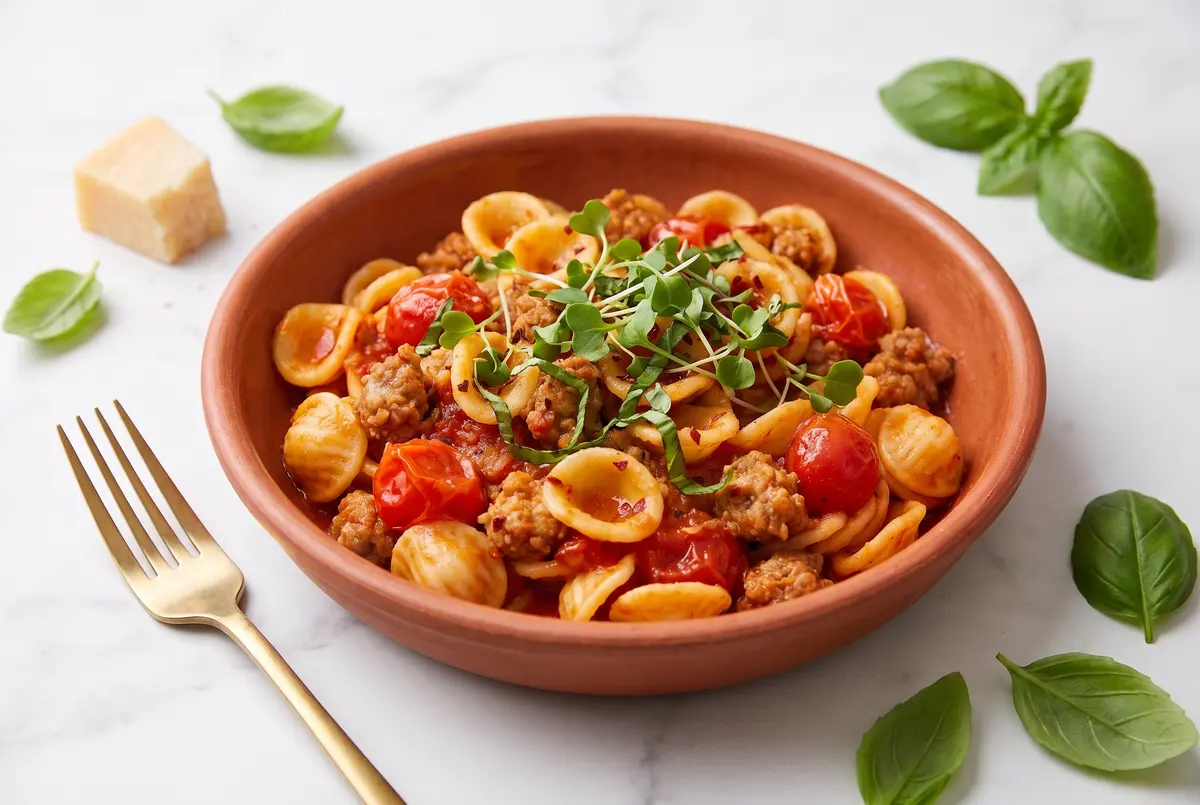
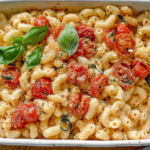
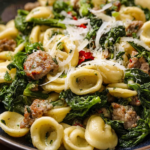
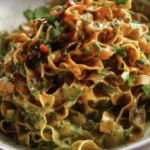
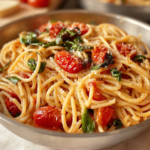
Have you ever had one of those nights where the house smells so good your family actually comes to the kitchen before you call them? That’s this orecchiette. It’s the pasta I make when I want dinner on the table in thirty minutes but I refuse to settle for anything that tastes like an afterthought. Tiny ear-shaped noodles, crumbled Italian sausage, sweet cherry tomatoes that burst into a glossy sauce, and just enough Calabrian chili to make the back of your tongue tingle — that’s the whole trick. Nothing fancy, just a really good combination of well-seasoned ingredients cooked in one pan.
I first had something like this at a friend’s Sunday dinner years ago, and I remember watching her toss everything in a single skillet with the kind of confidence I hadn’t developed yet. She told me, “Elowen, the secret is the chili. Don’t be shy, and don’t drown it either — let the tomatoes do the work.” I’ve been chasing that balance ever since, and this version is the one my family asks for by name. The first time I made it for my grandson he went back for seconds, which if you know teenagers is the highest compliment possible.
Why This Works So Well
There are a few things happening in this dish that make it taste much bigger than the ingredient list suggests. The orecchiette — those little ear-shaped pastas — are perfect for catching crumbled sausage and tiny tomato pieces in their little cups, so every bite has a bit of everything. Browning the sausage first leaves fond on the bottom of the pan, and that fond is where all the deep flavor comes from. The shallot and garlic go into that fat, then the tomatoes break down into it, and finally a splash of starchy pasta water brings it all together as a sauce that clings to every noodle.
The Calabrian chiles are the real magic. They’re sold jarred in oil, packed with vinegar and salt, and they have this fruity, smoky heat that’s nothing like a regular red pepper flake. You only need a teaspoon or two for a full pound of pasta, but you can absolutely add more if you’re feeding heat-seekers. Start small, taste, and adjust. I like to tell people the heat should be present but not dominant — you should still taste the sausage, the tomato, the garlic, and the basil at the end.
And then the basil at the very end. Don’t skip it. Fresh basil stirred in at the last second gives the whole dish this bright, almost peppery green note that cuts through the richness of the sausage. If you grow nothing else, grow basil — even a little pot on a sunny windowsill gives you enough for a few pasta dinners through the summer.
From Pot to Plate
Step 1: Bring a big pot of generously salted water to a boil — it should taste like the sea. Cook the orecchiette according to the package directions until al dente. Before you drain, scoop out about a half cup of that cloudy pasta water and set it aside. That starchy water is going to be your secret weapon for bringing the sauce together. Drain the pasta and toss it with a tiny drizzle of olive oil so it doesn’t clump while you finish the sauce.
Step 2: While the pasta is cooking, heat a large skillet over medium-high heat. Add the Italian sausage, breaking it up with a wooden spoon into bite-sized crumbles. You want some pieces to get a little crispy and brown — that’s where the flavor is. Once the sausage is cooked through, use a slotted spoon to transfer it to a plate and pour off most of the grease, leaving just a thin film in the pan.
Step 3: Lower the heat to medium and add the olive oil to the same skillet. Drop in the sliced shallot and cook for two or three minutes until it softens and turns translucent. Add the halved cherry tomatoes, a pinch of salt, and let them cook down for about ten minutes. You’ll see them wrinkle, burst, and release their juices — that’s the base of your sauce. Stir occasionally so nothing sticks.
Step 4: Stir in the minced garlic and the chopped Calabrian chiles. Cook for just one minute more — you want the garlic to be fragrant but not browned. Pour in a quarter cup of the reserved pasta water and use your spoon to scrape up all those brown bits from the bottom of the pan. That fond is the heart of the dish, and you’ll see the sauce turn a beautiful rusty red color as it deglazes.
Step 5: Add the cooked orecchiette and the browned sausage back to the skillet. Toss everything together so every noodle is coated in the sauce. If it looks a little dry, add another splash of pasta water — the starch in it helps the sauce cling to the pasta. Taste for salt and pepper, then remove from the heat. Stir in the fresh chopped basil right at the end so it keeps its color and flavor. Serve immediately with extra grated parmesan on the side.
Creative Twists Worth Trying
Swap the Italian sausage for spicy chorizo and add a pinch of smoked paprika — totally different flavor profile, same weeknight ease.
Use rigatoni or mezze maniche instead of orecchiette if that’s what’s in your pantry. Anything with a tube or cup shape works beautifully here.
Stir in a few spoonfuls of ricotta at the end for a creamier, more comforting version. My daughter swears this is the only way she’ll eat it.
Add a handful of baby arugula along with the basil for a peppery green boost that wilts in the residual heat.
Roast the cherry tomatoes in the oven for twenty minutes first if you want a deeper, jammier sauce. Worth the extra step on a slow Sunday.
For a briny kick, toss in a tablespoon of capers or a handful of halved Castelvetrano olives with the tomatoes.
Serving & Pairing Ideas
What should I serve with this pasta? A simple green salad with a sharp lemon vinaigrette is the perfect counterpoint — peppery arugula, shaved cucumber, a little shaved parmesan. Crusty bread is non-negotiable in my house, the kind you can tear and use to swipe the bowl clean at the end. If you want a vegetable side, try roasted broccoli with garlic and lemon or quickly charred broccolini with a drizzle of good olive oil. For wine, a chilled glass of Nero d’Avola or any medium-bodied Italian red plays beautifully with the chili heat. Or if you’re not drinking, a sparkling water with lemon is just as lovely.
Why I Love This Orecchiette
This is the recipe I come back to when I don’t have the bandwidth to think too hard. It’s forgiving — you can swap sausage for turkey, cherry tomatoes for canned San Marzanos in a pinch, basil for parsley if that’s all you have. It scales up beautifully for a crowd; just double everything and use the biggest skillet you own. It’s also the kind of dish that tastes even better the next day once the flavors have had time to meld in the fridge, which is rare for a pasta.
What I love most is how it makes people feel. There’s something about a bowl of pasta with just enough spice and a ton of bright tomato flavor that loosens everyone up. My family gravitates to the kitchen when this is on the stove. The kids argue over who gets the last of the parmesan. My husband goes back for a second helping without being asked. That’s the whole point, isn’t it? Food that brings people to the table.
Storage and Batch Cooking
Store any leftovers in an airtight container in the fridge for up to four days. The pasta will absorb some of the sauce as it sits, so when you reheat, add a splash of water or chicken broth and warm it gently in a skillet over medium-low heat. I don’t love microwaving pasta because it can turn gummy, but if you must, do it covered with a damp paper towel and stir halfway through.
This dish doesn’t freeze particularly well because the orecchiette can turn soft and the tomatoes get watery upon thawing. If you want to meal-prep, I recommend making just the sausage and tomato sauce ahead and storing it separately, then cooking fresh pasta when you’re ready to eat. The sauce keeps for about five days in the fridge and reheats beautifully.
Troubleshooting Your Sauce
Why is my sauce bland? You probably didn’t salt the pasta water enough, or you didn’t deglaze the pan properly. Make sure your water tastes like the sea before you drop the pasta in, and don’t skip that step of scraping up the brown bits — that’s where the depth comes from.
My pasta is dry and clumpy. Add more of the reserved pasta water, a tablespoon at a time, and toss vigorously. The starch in that water is what makes the sauce silky and cling to the noodles. If you forgot to reserve it, regular hot water with a pinch of salt works in a pinch.
It’s too spicy for the kids. Calabrian chiles vary in heat jar to jar. Start with just half a teaspoon and taste before adding more. You can also serve the dish with a side of mascarpone or ricotta — a little cool, creamy dollop balances the heat beautifully.
The tomatoes are too watery. Let them cook down longer before adding the garlic. They should look jammy and reduced, not soupy. Higher heat and a wider pan helps the moisture evaporate faster.
Your Quick Questions, Answered
Can I use a different pasta shape? Absolutely. Orecchiette is traditional for Puglia, but small shells, fusilli, or cavatappi all work. Just avoid long noodles like spaghetti — the chunky sauce needs something to cling to.
Where do I find Calabrian chiles? Most well-stocked grocery stores carry them in the Italian or international aisle, usually in a small jar packed in oil. Trader Joe’s sells their own version, and online retailers carry several brands. Once you start using them, you’ll find a hundred ways to sneak them into weeknight cooking.
Can I make it vegetarian? Yes. Skip the sausage and add a can of drained cannellini beans or chickpeas for protein. You might want to add a splash more olive oil and a pinch of smoked paprika to round out the flavor.
Is this kid-friendly? It’s great for introducing kids to a little heat, because the Calabrian chiles are warming rather than punishing. If your kids are heat-averse, use just a quarter teaspoon and let them add chili flakes at the table.
Can I use fresh tomatoes instead of cherry tomatoes? You can, but cherry tomatoes have a higher sugar-to-water ratio and they break down into a more concentrated sauce. If you only have larger tomatoes, dice them small and cook them down a bit longer.
How do I know when orecchiette is done? Al dente means it should still have a tiny bit of bite in the center when you bite into it. The package will give you a range, but start testing a minute or two before the shortest time listed. Better slightly firm than overcooked and mushy.
A Few Last Thoughts
What I love about this dish, and what I hope you take away from it, is that good food doesn’t have to be complicated. It’s a pound of pasta, a pound of sausage, a few cloves of garlic, and a jar of something interesting from the back of your pantry. The whole thing comes together in the time it takes to boil water and set the table, and it tastes like you spent hours on it. That’s the kind of cooking I want more of in my life — recipes that are generous, easy, and leave everyone at the table asking for the leftovers to take home.
So grab your biggest skillet, pour yourself a glass of something cold, and let the smell of browning sausage fill your kitchen. You’ve got this.
A 30-minute weeknight pasta with crumbled Italian sausage, sweet cherry tomatoes, and a glossy Calabrian chili tomato sauce. Spicy, bright, and deeply satisfying.
Ingredients
Notes
For a milder version, start with just 1/2 teaspoon of Calabrian chiles and taste before adding more. Leftovers keep in the fridge for up to 4 days. Reheat gently in a skillet with a splash of water or broth.
Keywords:calabrian chili, orecchiette, italian sausage, weeknight pasta, 30 minute dinner
Elowen Thorn I cook, photograph and re-test every recipe in an ordinary home kitchen before it goes up, so what you make matches what you see. Savory Discovery is where simple weeknight cooking, seasonal ideas and the odd bit of kitchen craft sit side by side — written plainly, and worth cooking twice.