The whole point of a monthly meal plan: one blank page, one sitting, four weeks of dinners answered.
Most meal plans fail in the same week they were made. Not because the cooking was too hard, but because the plan was a fantasy written on a Sunday afternoon by a person who had forgotten what Wednesday actually feels like.
A monthly meal plan is different. It works on a longer horizon, which changes the maths completely. Instead of deciding twenty-eight separate dinners, you decide a handful of repeatable ones, slot in the nights you know will be chaos, and let the rest of the month inherit the structure. And then — crucially — you stop thinking about it.
This guide is the version that survived contact with real life. It is built around the four things that actually break meal plans: the unmade decision, the unplanned night, the second shop of the week, and the ingredient you bought for a meal you never cooked. Fix those four and the rest is just filling in boxes.
What you will get from this
A repeatable four-week dinner grid, a two-list shopping system that cuts your trips to the supermarket to roughly twice a month, a no-decision bank for breakfasts and lunches, a Sunday reset that takes fifteen minutes, and a printable planner kit that puts all of it on one page you can stick to the fridge. Free, and yours to keep.
One thing before we start, because it matters more than any tactic below. A meal plan is not a contract. It is a set of defaults. The goal is not to follow it perfectly — it is to make the easy choice the good choice, so that on the nights you have nothing left, dinner is already decided for you.
Why a monthly plan beats a weekly one
Weekly planning has one structural weakness: it makes you do the hardest part of the job every single week. You sit down, you stare at a blank grid, you try to remember what you cooked last week so you do not repeat it, you give up around Thursday and order in. Then next Sunday you do it all again.
A monthly plan collapses that work into one sitting. You still cook the same number of dinners. You just stop re-deciding them.
The monthly sitting is the whole trick. Forty minutes, once, replaces four separate weekly planning sessions.
The decision tax you are already paying
Food decisions are unusually expensive, cognitively speaking, because there are so many of them and they arrive several times a day. Research on decision fatigue in food choice found that adults make somewhere in the region of 226 food-related decisions every day, while being consciously aware of only about fifteen of them. The other two hundred or so happen below the waterline — but they still draw on the same finite pool of self-control.
That is the honest reason “what’s for dinner?” feels disproportionately heavy. It is not one decision. It is the end of a very long day of small ones, arriving at the exact hour when your capacity to make a good choice is lowest.
Pre-structured meals change this. When the choice has already been made and written down, the moment of exhaustion stops being a moment of decision. Dinner stops being a question and becomes a fact you look up. That is not a small convenience — it is the difference between cooking and not cooking.
The mechanism in one line: a monthly plan does not reduce the work of cooking. It removes the work of deciding, which is the part that was wearing you down.
Four benefits that compound
There is a version of this argument that is purely about money, and there is a version about sanity. In practice they turn out to be the same argument, because the nights you abandon the plan are the nights you also spend the most.
You stop shopping reactively. Most grocery overspend is not the planned shop. It is the four extra trips for the one ingredient you forgot, each of which adds three things you did not need.
Ingredients get used before they die. A plan tells you which meal a bunch of spinach belongs to, so it gets eaten on purpose instead of discovered limp at the back of the drawer.
The hard nights are pre-solved. Knowing in advance that Thursday is a write-off means Thursday gets a twenty-minute meal instead of a takeaway.
The mental load drops, and it stays down. That is the bit people notice first, and the bit that makes the system worth maintaining.
Why not just plan weekly and be done?
Because the weekly version keeps the decision in the loop. You can absolutely run this system week by week — the grid works the same way, and if a weekly rhythm suits your household better, use it. The monthly version just front-loads more of the thinking, and thinking is the expensive part.
There is also a practical reason the month is the right unit for food. Your freezer runs on a monthly cycle, your pantry staples run on a monthly cycle, and your budget runs on a monthly cycle. Planning on the same rhythm as the things you are actually managing makes everything line up.
Next: the setup. It is genuinely forty minutes, and it is the only part of this system that requires you to sit down.
The 40-minute setup, step by step
Before any meal gets written down, you need three things open in front of you: your calendar, your freezer, and something to write on. In that order, because each one constrains the next.
Here is the whole system in six steps. Everything after this section is just the detail behind each one.
Step
What you do
Time
1
Write in your weekly repeats — the meals you already cook on a fixed night
8 min
2
Check the calendar and mark the nights that are already busy
5 min
3
Fill the remaining slots from your shortlist of family favourites
12 min
4
Set breakfasts, lunches and snacks once — not per day
6 min
5
Turn the grid into two shopping lists: the monthly run and the fresh top-up
7 min
6
Note what you will prep on Sunday and what you already have in stock
4 min
Start with what you already own
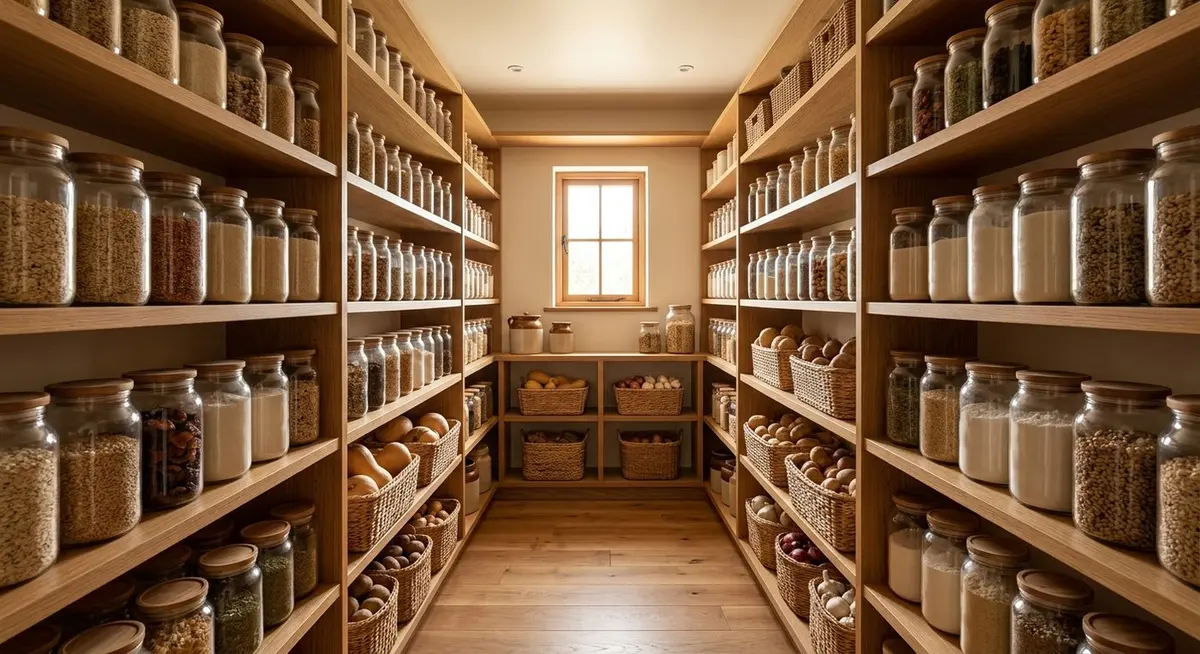
This is the step almost everyone skips, and it is the one that pays immediately. Before you plan a single new meal, walk the pantry and the freezer and write down what is in there. Not everything — just the things that will go to waste if nothing happens to them, and the things you have doubled up on.
That list becomes the skeleton of your month. A bag of frozen prawns becomes a planned Tuesday. Two tins of tomatoes become a pasta night. Half a bag of rice becomes the base for three different meals you have not had to buy anything for.
Shopping your own pantry first is the single highest-return five minutes in the whole system.
The inventory rule
Only write down what you can name. “Some pasta” is not inventory. “Two open boxes of rigatoni, one bag of orzo” is. Vague inventory produces a vague plan, which produces the same shopping trip you would have made anyway.
Then read the calendar, not your appetite
Most meal plans are written for an ideal week that never turns up. The fastest way to make yours realistic is to mark the difficulty of each night before you decide what to cook on it. We will do that properly in the next section — but the principle belongs here, because it is what makes the difference between a plan you follow and a plan you feel guilty about.
Once those two constraints are on the page — what you already have, and how hard each night will be — the actual meal choices are easy. There is surprisingly little left to decide.
Step 1: build the four-week dinner grid
Here is the core of the system, and it is deliberately unglamorous. A grid. Seven days down, four weeks across. Twenty-eight boxes. The trick is not filling all of them creatively — it is filling them in the right order.
Fill the repeats first, and watch the month shrink
Almost every household already has two or three meals that happen on a fixed night, whether or not anyone calls it a plan. Taco Tuesday. Pizza on Friday. Breakfast for dinner when the week has gone sideways. Write those into every single week before you do anything else.
Three repeats a week is twelve dinners decided in about ninety seconds. You are suddenly planning sixteen meals instead of twenty-eight, and you have not had to be creative once.
A fixed repeat night removes a decision and creates a ritual. Both are worth having.
The one thing to get right
Your repeat meals should be things you can cook without thinking, from ingredients you always keep. If a “repeat” needs a special shopping trip, it is not a repeat — it is a new recipe wearing a disguise, and it will be the first thing to fall over on a bad Tuesday.
Then build a shortlist, not a menu
Now write down eight to twelve meals your household genuinely likes, all of them manageable on a weeknight. Not aspirational dishes. Not the thing you saw on a video at 11pm. The meals you already know how to cook, that nobody complains about, that use ingredients you can get locally.
This shortlist is what you draw from for the remaining sixteen slots. Twelve options across sixteen slots means you repeat a few — which is fine, and in fact desirable. Households that rotate a stable set of eight to twelve meals eat better than households that chase variety, because the shopping stays predictable and the cooking gets faster.
Match the meal to the night
This is where a plan becomes realistic. Work through the grid and match effort to energy:
The easy thirty percent of your slots are “assembly” nights, not cooking nights. A tray of one-pot pasta, a sheet-pan dinner, or leftovers with a fresh side. On these nights you open the fridge and finish, you do not start.
The middle forty percent are standard weeknight meals. Something with a pan and a pot, done in half an hour. This is what your shortlist is for — and where the fast pasta dinners earn their keep.
The top thirty percent are the nights you actually have time. Sunday, a day off, a quiet evening. This is where a slower dish goes — the slow-cooker kind, or something you cook in a bigger batch than you need.
Getting this match right is most of what makes a monthly plan survive to week four. A plan where every night needs forty minutes of active cooking is not a plan. It is a warning.
Where to put new recipes
Somewhere in the month, leave one or two slots open for something new. Keep them at the end of a slower week, not the start of a busy one, and never on a night you know is going to be difficult. A failed new recipe on a chaotic Thursday is how people conclude that meal planning does not work for them.
Step 2: read your calendar before you write a single meal
This is the step that separates a plan that works from one that sounds nice. Before you decide a meal, you decide how much energy that night will have.
Pull up the actual month and mark it in three colours. It takes five minutes and it is the difference between a grid that survives and a grid that becomes a list of things you meant to do.
Night type
What it means
What goes in that box
Easy
Late finish, evening activity, sport, commuting, a day that tends to run long
Assembly meals, leftovers, a tray dinner, something already in the freezer, or a planned takeaway
Medium
A normal day. Home at a normal hour, some energy left
Your shortlist meals — one pan, half an hour, ingredients on hand
Open
A free evening, a day off, a Sunday, someone else home early
The slower cook, the batch cook, something worth the time
Including the things that are not cooking
A realistic month has more than twenty-eight dinners in it. It also has nights that are not happening at home at all, or nights where you have already decided not to cook. Both belong in the grid, and leaving them out is a quiet way of setting yourself up to fail.
Write in:
Birthdays, holidays and family occasions. If there is an actual celebration in the month, it should occupy a slot instead of ambushing you on the day.
Planned takeaway and eating out. Not guiltily, not accidentally — scheduled. A takeaway you decided on a week earlier costs what you budgeted for. A takeaway you ordered at 7:40pm on a Wednesday because everything fell apart costs whatever the delivery app felt like charging.
Away nights and travel. Early in the month or late in the week, these slots are not meals. Marking them stops you buying food for nights nobody is home.
Why this works: a plan that assumes every night is equal is a plan built for a fiction. Once you accept that Thursday is going to be hard, Thursday stops being the night that breaks everything.
The busy-night rule
For your two or three hardest nights, decide two things: what you are eating, and where it will be. That second half is what people miss. The meal needs to physically be reachable — which usually means it moved from the freezer to the fridge the night before.
The busy night is decided a day early. The meal is out of the freezer before you are tired.
That single habit is the point of the whole system on a Tuesday. Not that you have a plan — that the plan is standing between you and the decision at the moment the decision would go badly.
Step 3: the no-decision bank
Dinner gets all the attention, but breakfast and lunch are where the same decision gets made twenty times a week. Nobody plans them, so nobody decides them, so the same three things happen on rotation until everyone is bored of them.
The fix is the same trick as the dinner grid, applied to a smaller unit. Decide once, write it down, stop choosing.
Breakfasts: pick six and be done
Most households already eat the same handful of breakfasts. The only difference between a household that feels organised at 7am and one that does not is whether those six things are decided and stocked, or rediscovered daily.
Write down six that always work for you. Then make sure the ingredients for all six are on your monthly list. That is the entire system. Options worth keeping on the list:
Something that needs no cooking at all. Yogurt with fruit and something crunchy, overnight oats, or a bowl of cottage cheese with seeds and berries.
Something that takes ninety seconds. Eggs and toast, or an omelette with whatever is in the fridge.
Something from the freezer. Batch-cooked items you can reheat without thinking.
Something portable. For the mornings nobody is sitting down.
If your mornings involve getting children out of the door, it helps to give them a short, closed list rather than an open question. Two or three options they can pick from — and, where it is safe and age-appropriate, ingredients they can get out themselves. The point is to shorten the decision, not to add a task to your morning.
Lunches: build a component shelf
Packed lunches go wrong when you plan them meal by meal. They go right when you keep a shelf of components and assemble from it. Think in categories rather than recipes:
Whatever was prepped on the weekend, plus a bag of something frozen as backup
A carb
Bread, wraps, crackers, cooked grains, cold pasta
A fruit
Whatever is in season and cheap that week
Pick one from each column and lunch is built. No recipe, no plan, no decision of any weight. Leftovers from dinner slot straight into the protein and carb columns, which is exactly how the system pays for itself.
One basket, one shelf, one rule. Snacks stop being a negotiation when the answer is visible.
Snacks: decide the rules, not the snacks
If you have children in the house, snacks are the category that quietly eats the food budget. A box of individually wrapped anything costs several times what the same food costs loose, and it disappears faster than anything else you buy.
Rather than planning snacks, set two or three rules and let them run:
A designated snack shelf or drawer. If it is in there, it is fair game. If it is not, it is not.
Snacks at set times. Between meals, not continuously through them.
A structure, not a free-for-all. One thing from the shelf plus a fruit or vegetable is a simple rule that covers most afternoons.
Keeping one realistic savoury option and one sweet option available stops the shelf being raided and then pronounced boring. That sounds trivial until you have lived through the fourth consecutive afternoon of it.
Step 4: shop twice a month, not twice a week
This is the step that actually moves money, and it is the one most people never try because it sounds extreme. It is not. It is simply splitting your shopping into two kinds of trip with two different jobs.
Two lists, two rhythms
Everything in your plan falls into one of two buckets, and they should never be on the same list:
Salad, herbs, berries, bread, milk if you use a lot, and anything that genuinely will not keep
Weekly, and kept deliberately small
The monthly run is where you buy volume and save money. The fresh top-up is a short, targeted trip — ideally fifteen minutes, ideally a list you can hold in one hand. The reason this saves money is not the bulk discount. It is that you have cut the number of times you walk into a shop, and every extra visit is another chance to buy things that were not on the list.
Two baskets, two jobs. The bulk run stays dry; the fresh run stays small.
Make the list impossible to ignore
Keep one running list somewhere everyone can reach it — a pad on the fridge, a shared note, a whiteboard. The moment something runs out, it goes on the list. By the time your shopping day arrives, most of the list has written itself and you have not had to remember anything.
Ordering online is not cheating
If a monthly shop feels unmanageable in person, order it. A delivery slot and a pre-filled basket remove the two things that cause overspend: walking past things you did not plan to buy, and shopping while tired or hungry. It also makes the monthly run genuinely practical for anyone who cannot easily do a large shop in person.
If you do shop across more than one shop for prices, keep it to one visit a month each. Chasing every saving across three shops costs more in time and impulse buys than it returns.
The one rule that saves the fresh list
Buy fresh food with a meal attached to it. If you cannot name the meal a bunch of herbs belongs to, do not buy the herbs. This single rule is the difference between a fresh shop that gets eaten and a fresh shop that gets thrown away — and it is exactly how you cut the food waste that was costing you real money.
Step 5: the fifteen-minute reset
One short job, once a week, is what keeps a monthly plan alive into week four. Do it and the whole week gets easier. Skip it and Tuesday goes back to being a coin toss.
It takes fifteen minutes and it is entirely mechanical. Nothing here requires a decision.
Time
What you do
10 min
Look at the week ahead and move the proteins you need from the freezer to the fridge, in the order you will eat them
3 min
Wash and cut whatever vegetables go into the first few days, and put them in one container where they are visible
2 min
Check what is missing for the week and put it on the fresh top-up list now, while you are still thinking about it
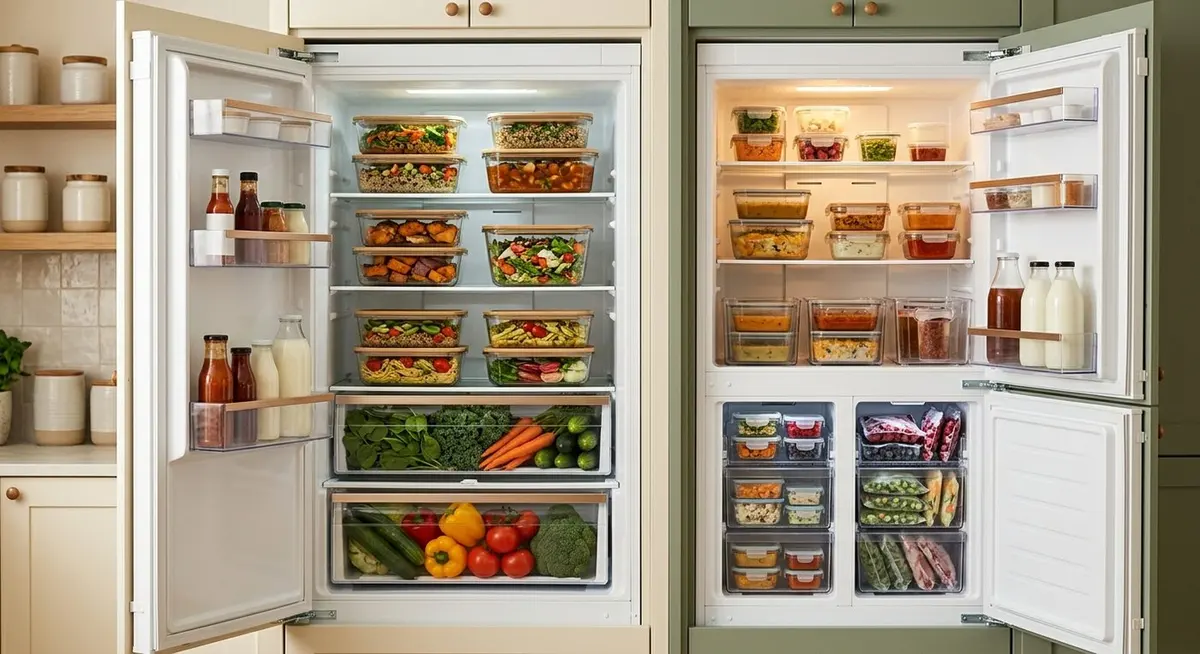
That is the whole thing. The thawing is the part people skip and then regret — a frozen meal on a busy night is not a rescue, it is a delay. Getting it into the fridge the night before is what turns “there is food in the house” into “dinner is basically already handled.”
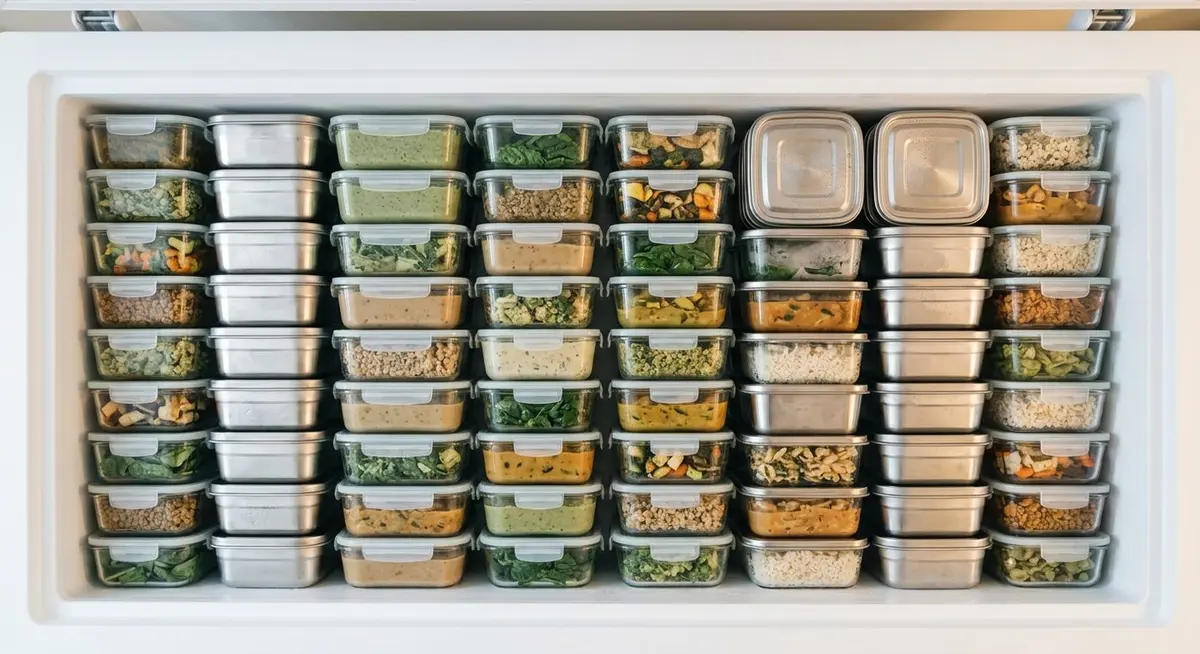
A freezer that is organised is a freezer you actually use. Chaos in there is the same as having nothing.
A small habit with a large return: the fifteen-minute reset is the cheapest maintenance in this entire system. It costs a quarter of an hour and it protects every weeknight that follows.
Free printable · 13 pages
The Monthly Meal Plan System
The 4-week dinner grid, two-list shopping planner, freezer inventory, budget tracker, leftovers map and the backup-meal card — all of it on one printable kit.
If fifteen minutes is too much, do these five instead. They take about the same time as reading this section:
Move tomorrow’s protein out of the freezer.
Sort breakfast so the morning decision is already made.
Note anything that could be built into a lunch.
Put one pot or tray of something on, if you have the energy.
Read tomorrow’s box on the grid so nothing surprises you.
Step 6: prep components, not meals
There is a lot of advice about batch cooking a whole week of meals in advance, and for some people that works. For most households it does not, for a simple reason: five identical containers of the same meal get boring by Wednesday, and by Thursday you are ordering in anyway.
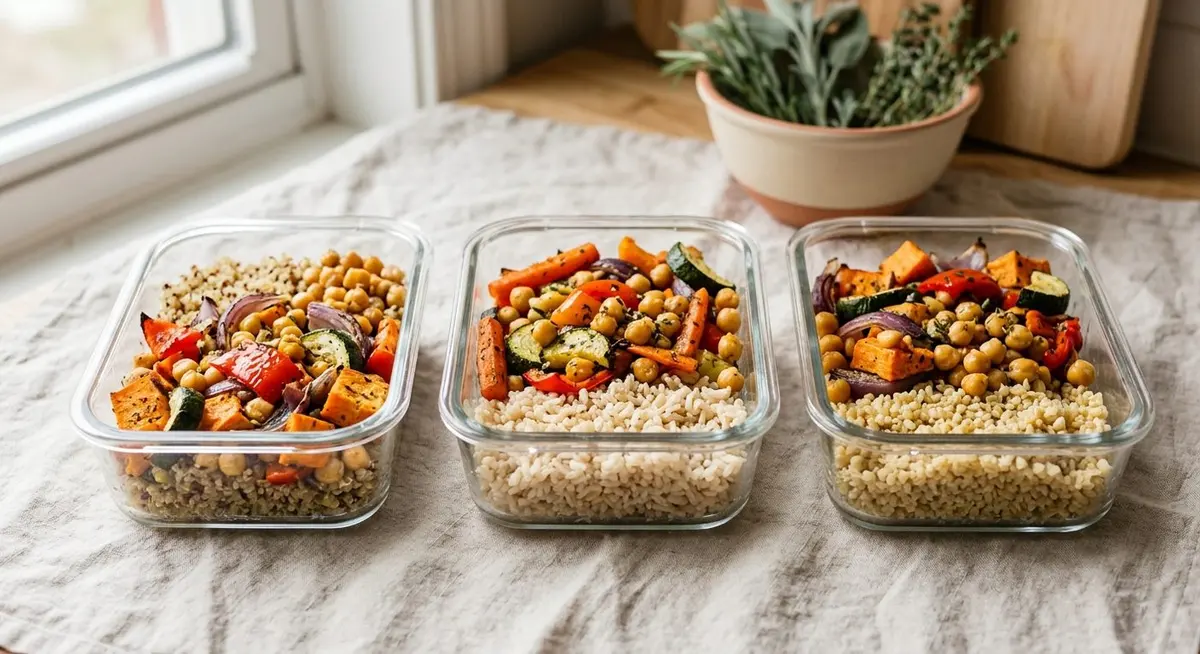
The alternative is to prep the components and assemble the meals fresh. You do about an hour of work once, and it buys you four or five very fast weeknights — without the monotony.
What is worth prepping
A grain. Rice, farro, couscous, or quinoa. Cooks once, holds for days, goes into bowls, salads and quick fries.
A roast tray of vegetables. Whatever is cheap and in season. They reheat, they go cold into salads, they fill a wrap.
A protein. Browned mince, a tray of chicken thighs, a pot of beans. This is the component that saves the most time.
A sauce or dressing. One jar that makes plain components taste intentional.
Hard-boiled eggs. The single most useful thing in the fridge on a low-effort day.
Components, not clones. Grains, vegetables and a protein can become four different dinners without repeating one.
Cook once, eat twice
The most reliable version of batch cooking is doubling what you were already making. If you are browning mince, brown twice as much and freeze half. If you are roasting a chicken, use the meat across two meals and make stock from the frame.
Shredded, cooked protein is the most flexible thing in the freezer. Tacos, salads, soups, wraps — all from one pot.
A few protein habits that pay off repeatedly:
Buy it in the larger pack and portion it before freezing. Flat bags freeze faster and thaw quicker than a solid block.
Keep one cooked protein in the freezer at all times. Shredded chicken, browned mince, or a tray of meatballs. This is your emergency stock.
Move it to the fridge the night before. The same rule as the reset — the thaw is what makes it usable.
The container test
If you cannot see what is in a container, you will not use it. Clear containers, or labels on the lid, are not fussiness — they are what stops a freezer drawer becoming a place food goes to be forgotten. Anything unidentified at the back gets eaten this week or goes in the bin, and you get to choose which.
What this actually saves you
You will read a lot of confident numbers about meal planning. It is worth being careful with them, because the honest answer is that the saving depends entirely on how you were shopping before. What is well documented is where the money goes — and almost all of it is the same three leaks.
Leak one: food you buy and never eat
The most consistent finding in the research is how much food households throw away. Estimates put wasted food at somewhere between 30 and 40 percent of the food supply. The US Environmental Protection Agency puts the cost at household level: the average family of four spends close to $3,000 a year on food that never gets eaten, and reducing waste could free up something in the region of $56 a week.
Read that second figure again, because it is the one that matters here. That is not a saving you have to earn through discipline or couponing. It is money you have already spent. The only question is whether it leaves as dinner or as bin liner.
A monthly plan attacks this directly, because every fresh ingredient gets attached to a specific meal before it is bought. Nothing is bought “because it looked nice” with no plan for it.
Leak two: the extra trips
The monthly run and the fresh top-up are not a gimmick — they are a count of how often you walk into a shop. Every additional visit is another opportunity to buy something that was not on the list, and impulse purchases are concentrated at exactly the times you are least organised: after work, before dinner, with children in tow.
Cutting the number of trips in half does more for a food budget than most loyalty schemes. You are not buying less food. You are buying fewer things you did not intend to buy.
Leak three: the unplanned takeaway
The third leak is the one people feel most keenly. Takeaway is not expensive because of the food — it is expensive because of when it happens. Ordered in advance, from a plan, at a known price, it is a line in a budget. Ordered at 7:40pm on a difficult Wednesday, it is whatever the app decides, and it is usually accompanied by the feeling that you failed at something.
Scheduling the takeaway changes its cost and its meaning at the same time. It stops being the thing that happened to you and becomes the thing you chose.
The nights you abandon the plan are the nights you also spend the most. Fixing the plan fixes both.
A quick note on how much you should be spending
For context, if you want a benchmark: the US Department of Agriculture’s thrifty food plan for a family of four sits at roughly $950 a month, with the moderate-cost plan around $1,374. Broader surveys of actual household spending put total food — groceries plus eating out — nearer $1,500 a month for a typical household.
Those figures vary enormously by country, city, age and appetite, so treat them as a rough ruler rather than a target. The useful move is to find your own number, which is what the tracker below is for.
Track it for one month and you will know
Write down your monthly food budget, then record what you actually spend each week across four simple categories: the grocery run, the fresh top-up, takeaway, and the small shops you do not count. Almost nobody who does this takes it past week two — not because it is hard, but because the answer is obvious by then, and it is rarely the grocery run.
What good looks like
You will know it is working when three things happen. Your fresh shop gets smaller. The number of unplanned takeaway nights falls without any conscious effort. And you stop buying the same ingredient twice in a fortnight because you already knew you had it.
None of that requires a spreadsheet. It requires knowing what you are cooking, which is the only thing this whole system is really about. If you keep breakfast from becoming a daily decision as well, the same logic applies to your mornings — a short batch of make-ahead breakfast burritos covers a whole week of them.
Cooking with the season (and the leftovers map)
Two habits sit underneath everything above, and both of them save money without feeling like economising. The first is eating what the season is already giving you. The second is building the second night of a meal into the plan on purpose.
Plan around the season, not the recipe
Food that is in season is cheaper, tastes better, and needs less done to it. A recipe that calls for a specific ingredient may be more expensive than a recipe built around whatever is cheap and good that week.
Season
What to build meals around
How it tends to get cooked
Spring
Asparagus, peas, new potatoes, leafy greens, radishes, herbs
Light, fast, barely cooked
Summer
Tomatoes, courgette, peppers, stone fruit, berries, sweetcorn
This changes the shape of your month. A December plan should look different from a June plan, and it should lean on different equipment — the slow cooker in winter, the grill in summer. When the seasonal produce is cheap, that is the week to buy a little more of it and cook something bigger.
Four seasons, four different meal plans. Buying to the season is the cheapest thing you can do without trying.
The leftovers map
Most households already cook more than they eat and then treat the rest as a leftover. The shift is to plan the second meal deliberately, so it becomes dinner instead of discarding.
What you cooked
Night one
Night two
Lunch
Roast chicken
Roast with vegetables
Wraps, salad or a traybake with the shredded meat
Chicken salad
Browned mince
Something with pasta or rice
Chilli, tacos or a pie
In a wrap or with grains
A pot of beans
Stew or a bowl
Blended into a soup or folded through pasta
Mashed onto toast
Roasted vegetables
As a side
Tossed through grains or pasta
In a wrap with something creamy
This is how one cooking session covers three meals without any of them feeling repetitive. It is also what keeps the fresh produce moving through the kitchen instead of past its date — the plan tells each thing what it is for.
The single most useful line in this guide: on purpose, cook enough for two nights. A planned second night is dinner. An unplanned one is food in the bin.
A note on the slow ones
Slow cooking is the natural ally of a monthly plan, because it converts a cheap cut and a long afternoon into dinner plus leftovers. Batch cook in it, freeze half, and you have bought yourself a future easy night. Pasta bakes work the same way — roll-ups freeze individually and reheat straight from frozen, which makes them an ideal resident of your backup shelf.
When the plan falls apart anyway
It will. Recipes fail, someone gets ill, a meeting runs late, a child has a meltdown at exactly the wrong hour. A plan that only works when nothing goes wrong is not a plan — it is a coincidence.
What matters is that you have already decided what happens next. That is not pessimism; it is the difference between a bad night and a derailed week.
Build the backup shelf before you need it
Keep three things in the house at all times, and keep them genuinely separate from the rest of your food:
One frozen meal. A portion of something you actually like, not a sad emergency item you will never choose. A tray of slow-cooker mac and cheese portions out and freezes beautifully, which makes it a natural resident.
One tin or jar meal. Something that becomes dinner from the cupboard in ten minutes, with no shopping trip involved.
One “breakfast for dinner” night. Eggs, toast, something green. Ten minutes, no plan, everyone eats it.
None of these require you to go anywhere. That is the whole point — a backup only works if it is already in the house when the night goes wrong.
The bad-night toolkit
Three habits that carry a difficult evening:
Use the easy shelf first, without guilt. The twenty-minute pasta dinners in your shortlist exist precisely for this. Reaching for one is the plan working, not the plan failing.
Pre-empt the requests you know are coming. If you know what everyone will ask for, decide in advance whether the answer is yes, and when. A pre-made decision cannot be worn down.
Let something be a side instead of a meal. A make-ahead side you already had in the freezer plus a protein from the fridge is a genuine dinner. It does not need a recipe name.
The rule that protects the rest of the month: when a night goes sideways, move the meal you planned to a later free slot instead of deleting it. Nothing is wasted and next week is already half-planned.
The evening logjam
There is one more reason dinner goes wrong that has nothing to do with food. The hour between getting home and getting everyone to bed is the most compressed part of the day, and dinner is only one of the things competing for it.
If the evenings in your house feel like a nightly emergency, the food is often only half the problem. The other half is that there is no agreed sequence for what happens after dinner — so every night gets negotiated from scratch. Building a predictable evening routine alongside the meal plan is genuinely the same job as this one: decide once, write it down, stop re-deciding. If that sounds like your household, our bedtime routine system covers the other half of the evening properly.
Do the two together and the whole stretch from dinner to lights out stops being something you improvise at the end of a long day.
Your first month, week by week
Do not try to run the full system perfectly in month one. Build it in layers, and by week four you will have something that runs almost on its own.
Before you start: the one sitting
Everything in the setup section happens here, once. Pantry and freezer inventory, calendar marked, repeats written in, remaining slots filled, both shopping lists built. Forty minutes, and you are done for the month.
One inventory walk turns a wish list into a plan built around what you already own.
Week one: keep it deliberately easy
Use only meals you already know how to cook. Do not add a single new recipe — the point of week one is to feel the system working, not to test it. Focus on the two shopping rhythms and get the monthly run done.
This is also the week to lean on anything that scales without effort. A big pot of something that becomes two dinners, or a family-sized pasta bake, buys you an easy night later in the month for no extra work now.
Week two: add the reset
Introduce the fifteen-minute Sunday job. This is usually the week the plan stops feeling like a chore and starts feeling like relief, because the difference it makes to a Tuesday is immediately obvious.
It is also a good week to notice which meals you actually skipped. Whatever you keep avoiding is either too much work for a weeknight or simply not something you want — either way, take it out of the rotation. A plan that includes meals you never want to cook is a plan that will quietly collapse.
By week two the repeats are automatic, and dinner stops being a nightly negotiation.
Week three: add the prep block
Now that the structure is holding, add an hour of component prep. Cook a grain, roast a tray of vegetables, get one protein ready. This is the week the weeknights start feeling genuinely fast — and where the meal-prep approach earns its place.
If a whole hour feels unrealistic, do twenty minutes instead. Half a job done weekly beats a perfect job abandoned.
Week four: reuse and refine
Now look at what worked and keep it. This is the part most people miss: you do not have to build a new plan next month. Reuse the grid, swap out the two or three meals that did not land, and adjust for what the month ahead actually looks like.
From here the monthly job gets shorter every time. By month three it is fifteen minutes and a glance at the calendar — and the plan is closer to a habit than a project.
What to change next month
Swap two or three meals, add one new recipe if you have the appetite for it, and update the seasonal produce. Everything else stays. The goal is a plan that gets easier to run each month, not one you rebuild from scratch every time. If you want to expand the rotation without rebuilding anything, there are plenty of weeknight options to slot into the slots that need freshening — and if you have never tried making pasta from scratch, a weekend batch is a genuinely nice thing to have in the freezer.
Questions people actually ask
Isn’t a whole month too rigid?
Only if you treat it as a contract. A monthly plan is a set of defaults, and moving a meal to a different night costs nothing. The rigidity people fear is not real — what you actually lose is the nightly decision, which is the thing you wanted gone.
How long does the monthly sitting really take?
About forty minutes the first time, once you have done the pantry and freezer inventory. After the first month you are mostly reusing last month’s grid and swapping a few meals, which takes ten to fifteen minutes.
What if we don’t like leftovers?
Then plan the second meal to be a different dish rather than the same plate reheated. Shredded chicken becomes tacos on night two; roasted vegetables become a pasta or a grain bowl. Same cooking session, different meal.
Can this work for one or two people?
Yes, and it works particularly well, because the savings are mostly in waste and trips rather than volume. Scale the recipes down or cook the full amount and freeze half — the second option is usually the cheaper one and gives you a backup meal for free.
Do I need special containers or equipment?
No. You need something to write on and somewhere cold to put food. Clear containers help because you use what you can see, but that is a convenience, not a requirement. A slow cooker or a large tray is useful if you have one, and neither is necessary to start.
How do I handle fussy eaters?
Keep the structure and let the specifics flex. A repeat night the household already likes removes most of the friction, and serving components separately rather than assembled lets people take what they want without a negotiation. Involve them in choosing the shortlist — food you helped pick gets eaten with less complaint.
What if I don’t want to plan breakfast and lunch?
Then do not. The dinner grid alone captures most of the benefit, and you can add the no-decision bank later if breakfast and lunch become the point of friction. Start where the pain is.
How do I stop the plan going stale?
Swap two or three meals a month and add one new recipe at most. Rotation, not reinvention. A stable set of eight to twelve meals you can cook without thinking is the goal — variety beyond that belongs at the weekends, not on a Tuesday.
Start tonight
Print the Monthly Meal Plan System
All thirteen pages — the four-week dinner grid, two shopping lists, freezer inventory, budget tracker, no-decision bank, leftovers map and the backup-meal card for the fridge.
If you only do one thing, do the forty-minute sitting. Write the repeats in, mark the hard nights, build the two lists. Everything else in this guide is refinement.
And if even that feels like too much this week, do the smallest useful version: pick three dinners for the next three nights, get the protein out of the freezer tonight, and buy only what those three meals need. That is the whole system, running at one percent — and it is enough to make Thursday easier than it would have been.
You do not need a perfect plan. You need tomorrow decided.
Elowen Thorn writes about food, shopping and the practical side of feeding a household at Savorydiscovery.com — the systems that survive real weeks, not the ones that look good on a Sunday afternoon.
Elowen Thorn I cook, photograph and re-test every recipe in an ordinary home kitchen before it goes up, so what you make matches what you see. Savory Discovery is where simple weeknight cooking, seasonal ideas and the odd bit of kitchen craft sit side by side — written plainly, and worth cooking twice.