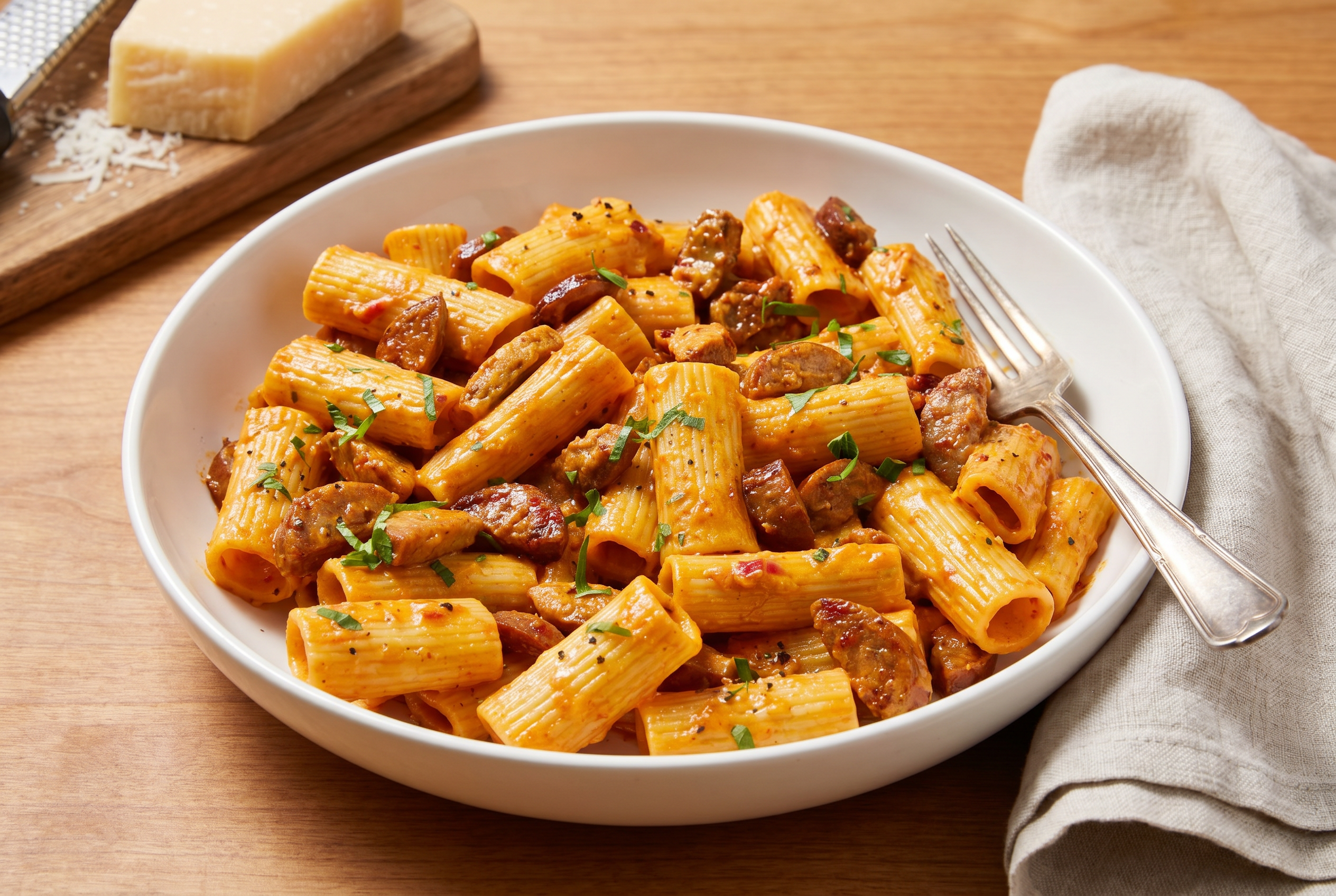
Have you ever made a pasta dish that you didn’t even get to sit down for? I had a version of this creamy chorizo pasta on a Friday night a few weeks ago, and by the time I set the bowl on the table, my partner had already snuck two forkfuls. So much for the cheese-grating photo I’d been planning. That’s how I knew it had to live on the blog.
I’m Elowen, and this is the kind of recipe I make when I want something that feels a little bit special but doesn’t ask for much. It’s weeknight-quick, deeply savory, and has just enough smoky paprika and sherry vinegar to make the cream feel grown-up. If you’ve been stuck in a red-sauce rut, this is the door out.
Let me show you how I make it, and then we’ll talk about the little tricks that turn a basic cream pasta into the one your family asks for on repeat.
Why the Chorizo Trick Works
Chorizo is the kind of ingredient that does a lot of work for very little effort. The Spanish kind, the cured one sliced into coins, is packed with smoked paprika and garlic. Drop those coins into a hot pan and they release a brick-red oil that tastes like someone already did half the seasoning for you. When cream goes into that oil, you skip the step of building a flavor base from scratch. It just shows up.
The other quiet hero is tomato paste cooked down until it turns rust-colored. This is my grandma’s move, and it works every time. A tablespoon of paste fried for a minute loses its tinny edge and turns deep and almost sweet. Combined with the chorizo oil, you have a sauce base that tastes like it simmered for an hour and a half, even though you’ve been cooking for about ten minutes. Which is exactly the lie I like to tell on a Tuesday.
One last thing: a tiny splash of sherry vinegar at the end. Don’t skip it. Cream wants acid the way a long week wants a long walk. The vinegar brightens everything and keeps the sauce from feeling heavy. Trust me on this one.
Creamy Chorizo Pasta
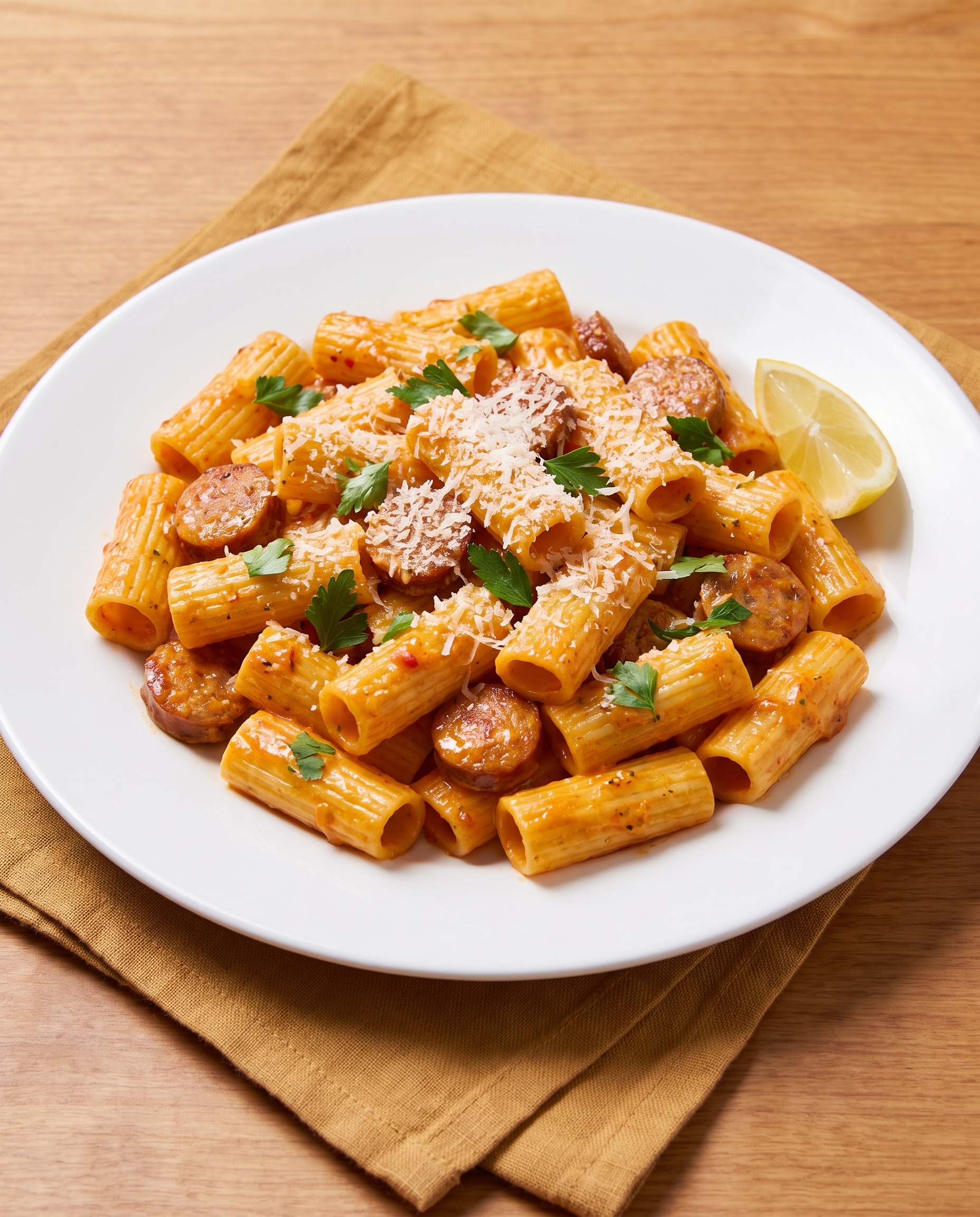
This is the recipe I come back to when I want something fast that doesn’t taste fast. Short rigatoni catches the sauce inside the tubes, which is honestly the only reason I don’t use spaghetti. You can swap in penne or even shells if that’s what you have. The chorizo is the star, so try not to use the Mexican crumbly kind here — the Spanish sliced kind is what makes this dish what it is.
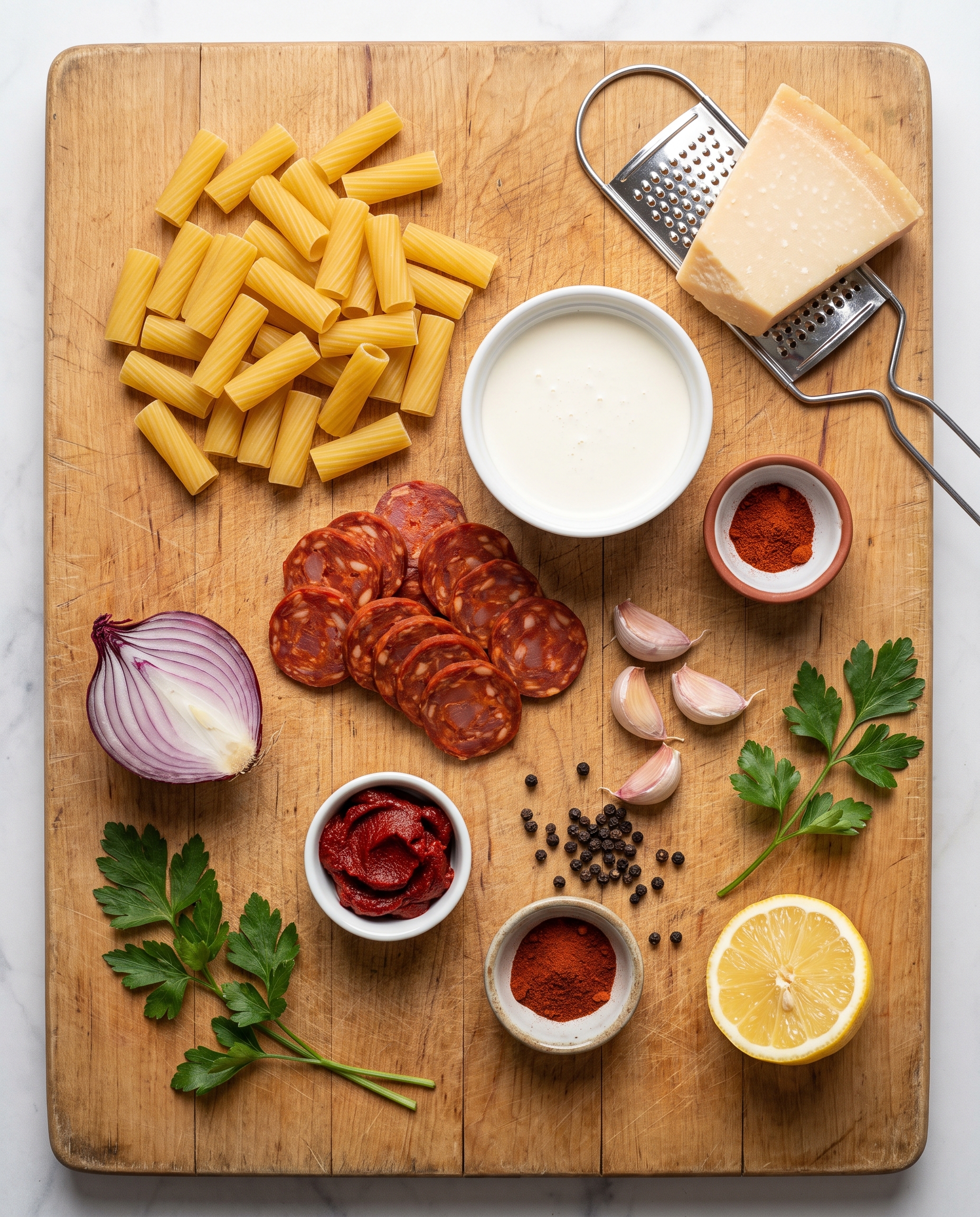
Ingredients
Kosher salt, for the pasta water
16 oz. rigatoni
1/4 c. extra-virgin olive oil
1 (12-oz.) package cooked chorizo-style sausage, cut into 1/2″-thick half-moons
1/2 medium red or yellow onion, finely chopped
3 tbsp. tomato paste
6 garlic cloves, finely chopped
1 1/2 tsp. smoked paprika
1/4 tsp. freshly ground black pepper
4 tsp. (or more) sherry vinegar or red wine vinegar
1/2 c. heavy cream
4 tbsp. unsalted butter, softened
1/4 c. fresh parsley leaves, coarsely chopped
1 oz. Parmesan, finely grated (about 1/2 cup)
From Pot to Plate
Step 1: Get the pasta going. Bring a large pot of well-salted water to a rolling boil and drop in the rigatoni. Cook it about 2 to 3 minutes shy of the package directions — the pasta will finish in the sauce, and that final minute of cooking is what lets the sauce cling to every tube. Before you drain, scoop out a generous cup of that starchy water and set it aside. That cloudy water is your secret weapon for a glossy sauce.
Step 2: Brown the chorizo hard. While the pasta cooks, heat the olive oil in a large high-sided skillet over medium heat. Add the chorizo coins in a single layer and let them sit for a minute before you stir. You’re looking for deep golden edges and a pan full of brick-red oil. Transfer the chorizo to a plate, but leave every drop of that oil in the skillet. That oil is the entire soul of this dish.
Step 3: Soften the onion, then build the base. Lower the heat to medium-low and add the chopped onion to the chorizo oil. Cook it for about 5 minutes, stirring occasionally, until it goes soft and translucent. Stir in the tomato paste and let it cook for 2 minutes — it should turn from bright red to a deep rusty brick color. Add the garlic, smoked paprika, and black pepper, and stir just until fragrant, about 1 minute. If your kitchen smells like a Spanish tapas bar right now, you’re doing it right.
Step 4: Bring the cream in. Pour in the sherry vinegar and stir to combine — it will bubble and smell incredible. Add the heavy cream and the softened butter, and stir until the butter melts. Turn the heat down to low and let it all hang out for a minute while the pasta finishes. This is when the sauce thickens just enough to coat the back of a spoon.
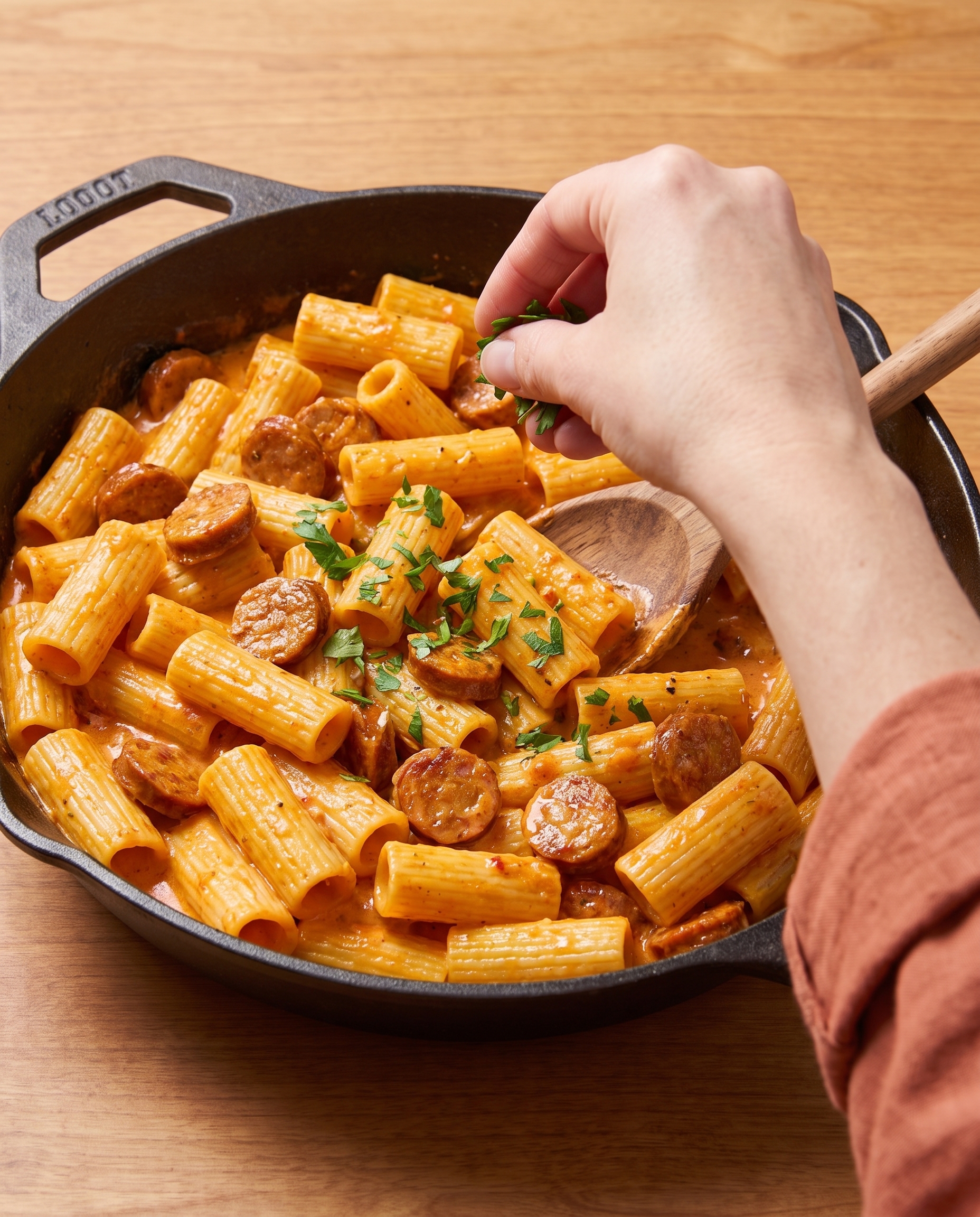
Step 5: Marry the pasta and sauce. Using a slotted spoon, transfer the under-done rigatoni straight into the skillet. Crank the heat up to high and add a third of a cup of the reserved pasta water. Stir vigorously — I mean really stir, like you’re mad at it — until the sauce goes glossy and the pasta is exactly al dente. Add more pasta water a splash at a time if it looks tight. Return the chorizo and any collected juices to the pan and toss to combine. Taste, and add another teaspoon of vinegar or a pinch of salt if it needs it.
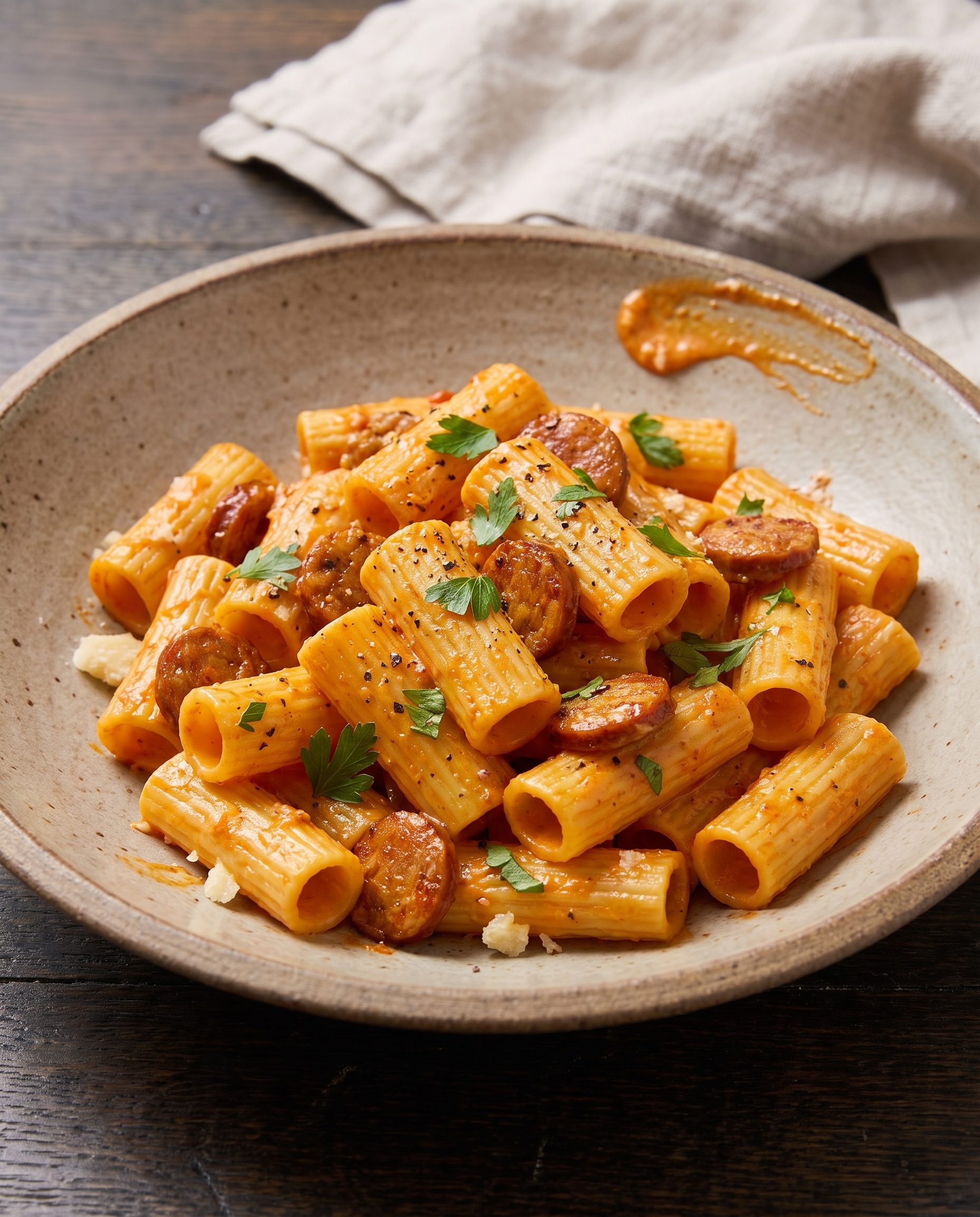
Step 6: Finish and serve. Divide the pasta into shallow bowls. Top with the chopped parsley, a shower of grated Parmesan, and a few extra cracks of black pepper. Eat it hot, ideally with something green on the side, and definitely with a glass of something cold. If you’ve ever wanted to know what a Tuesday night can feel like with just a few ingredients and twenty-five minutes, this is it.
Creative Twists
The base of this recipe is friendly to small changes. Try a few of these when you make it the second or third time:
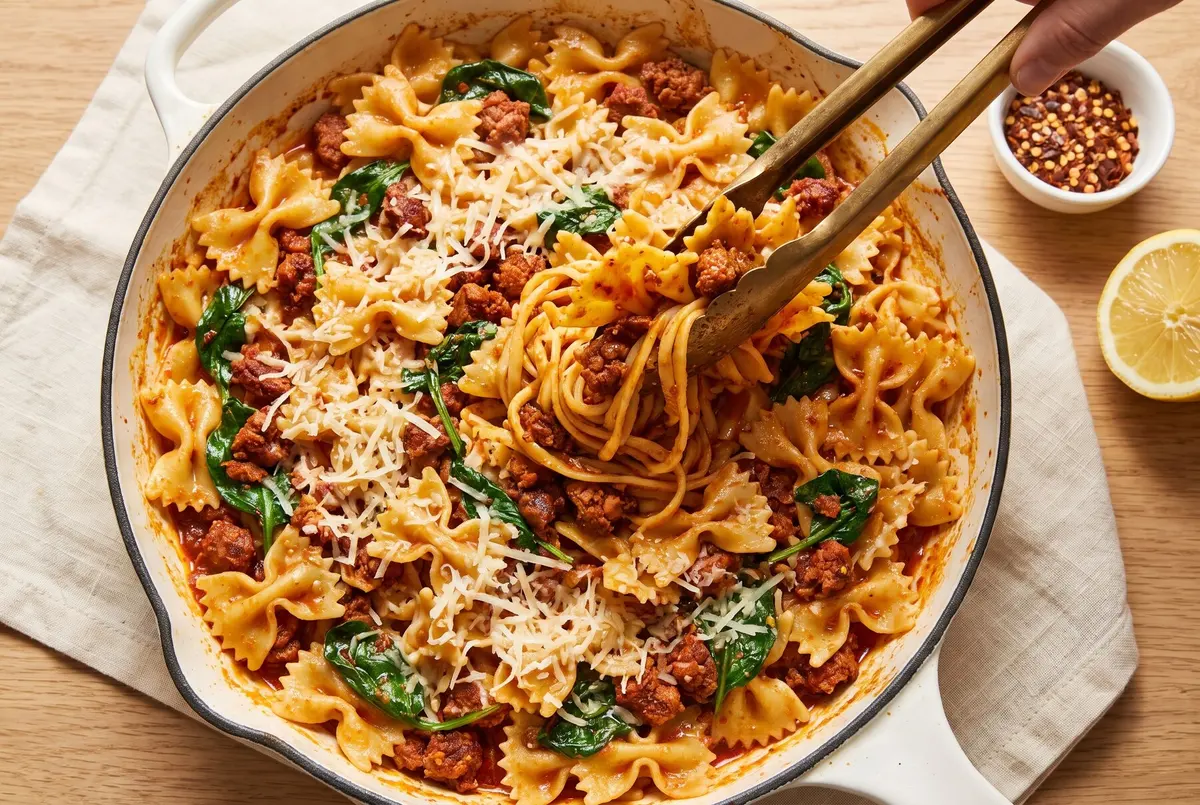
Add a handful of baby spinach at the end and stir until it wilts. It adds color and a quiet earthiness, and it makes the dish feel like it has a vegetable in it, which your mother will appreciate.
Swap in sun-dried tomatoes for some of the chorizo oil’s brightness. A small handful, chopped fine, gives a sweet-tangy note that plays beautifully with the paprika.
Use shrimp instead of chorizo for a seafood version. Sear them in the chorizo oil, set them aside, and add them back at the end. The oil is the gift that keeps on giving.
Top with a fried egg for a brunch version that would make a Sunday morning in Madrid proud. The runny yolk becomes part of the sauce.
Try a smoky chipotle in adobo finely chopped, in place of some of the smoked paprika, if you want a deeper, spicier warmth.
Serving & Pairing Ideas
What should I serve alongside this pasta? I love a simple peppery arugula salad with lemon and olive oil — the bitter greens cut through the cream. Crusty bread for sauce-mopping is non-negotiable in our house. A glass of dry Spanish red, a Tempranillo if you can find one, is a perfect match. For a non-alcoholic option, a sparkling water with lemon and a few drops of bitters feels grown-up and refreshing.
If you want to make it a bigger dinner party plate, roasted broccolini with chili flakes or a tray of blistered shishito peppers are both wonderful next to this. Want something cozy? A pot of creamy pumpkin sage pasta later in the week is the autumn cousin of this dish. For a Sunday supper feel, try it next to creamy chicken bacon alfredo on the menu — both dishes make a table feel generous.
Why I Love This Creamy Chorizo Pasta
I’ve made a lot of cream sauces in my life, and most of them are good. This one is great because of the chorizo oil. That paprika-tinted oil does the work of a slow-cooked base in about ten minutes. There’s no wine to reduce, no stock to simmer, no bouquet garni. The trick is right there in the package of sausage, and the recipe just lets it speak.
I also love that it’s a one-pan pasta — well, one skillet and one pot. The pasta finishes in the sauce, which means the starch from the noodles and the pasta water emulsify everything into a glossy, clingy coating. None of that watery, sad pasta-sitting-in-a-pool-of-sauce situation. Each tube of rigatoni comes out dressed.
And honestly? It looks more impressive than it is. That’s my favorite kind of recipe. If you’re hosting friends on short notice, this is the one. They’ll think you spent hours. You’ll know it took less time than it took to dry your hair.
Storage and Batch Cooking
Leftover creamy chorizo pasta keeps in the fridge for up to 3 days in a sealed container. The sauce will thicken as it chills, so when you reheat, do it gently on the stove with a splash of milk or water to loosen it back up. I don’t love the microwave for cream sauces — they can split — but a low-and-slow stovetop reheat works beautifully.
You can also cook the chorizo sauce up to 2 days in advance and store it separately from the pasta. When you’re ready to eat, boil fresh pasta, toss it into the warm sauce with a splash of pasta water, and you’re 10 minutes from dinner. It’s the kind of make-ahead move that turns a weeknight into something easier than takeout.
I do not recommend freezing this dish. Cream sauces don’t always freeze gracefully, and the chorizo loses some of its texture when thawed. If you want to freeze, freeze just the chorizo-onion base before adding cream, and add the cream fresh when you reheat.
Troubleshooting Your Creamy Chorizo Pasta
The sauce is too thin. Let it simmer on low for a few more minutes before adding the pasta. The cream will reduce, and the pasta water starch will help it thicken once the rigatoni goes in. Don’t be shy with the stirring at the end — that’s what emulsifies everything.
The sauce looks broken or greasy. This usually means the heat was too high when you added the cream. Take it off the heat for a minute, add a splash of cold pasta water, and whisk hard. The sauce should come back together. Keep the temperature at a low simmer, never a rolling boil, once the cream is in.
The pasta tastes under-seasoned. Salt your pasta water like the sea — that’s not a cute phrase, it’s a rule. Cream and starch both need salt to taste like themselves. If you’ve done that and it still tastes flat, finish with another pinch of salt and a tiny bit more vinegar. Acid and salt are the two levers you have to balance a cream sauce.
The chorizo is too spicy for the kids. Use a mild Spanish chorizo (it’ll say “dulce” on the package) and skip the extra black pepper. The smoked paprika brings the flavor, the chorizo brings the fat, and the cream rounds everything off. You can always add a sprinkle of red pepper flakes at the table for the adults.
Your Quick Questions, Answered
Can I use Mexican chorizo instead of Spanish? You can, but you’ll need to crumble it and cook it differently, and the flavor profile will be quite a bit different — more cumin and chili, less smoked paprika. If that’s what you have, it will still be a good pasta, just a different pasta. For the dish as written, look for the cured Spanish chorizo at the deli counter.
What pasta shape works best? Rigatoni is my first pick because the tubes catch the sauce inside them, but penne, casarecce, and medium shells are all great. Avoid long noodles like spaghetti or linguine — they don’t have anywhere to hold the chunky chorizo.
Can I make this dairy-free? Honestly, the cream and butter are doing a lot of the work here, so it’s a tough swap. A full-fat oat cream with a tablespoon of olive oil in place of the butter is the closest you can get. The flavor won’t be identical, but it’ll still be a comforting, smoky pasta.
How long does it keep? Up to 3 days in the fridge, in a sealed container. Reheat gently on the stove with a splash of water or milk. I don’t recommend freezing it — the cream sauce tends to split when thawed.
A Few Last Thoughts
This creamy chorizo pasta is the kind of recipe I make when I want my kitchen to smell like I tried harder than I did. It looks beautiful on the table, it tastes like comfort, and it disappears faster than any pasta has a right to. The trick — the real trick — is letting the chorizo oil do the work and trusting the tomato paste to deepen everything underneath the cream.
If you make it, I’d love to know how it goes. Did you add spinach? Did you double the chorizo? Did someone sneak a bite before you got to the table? Tell me in the comments. And if you’re looking for your next weeknight pasta to fall in love with, take a look at my creamy white wine garlic pasta — same energy, totally different mood. You can also browse all of my pasta recipes here for more inspiration.
A weeknight-friendly pasta with seared Spanish chorizo, a quick tomato-paste base, and a glossy paprika cream sauce. Done in about 30 minutes.
Instructions
In a large pot of boiling salted water, cook the rigatoni 2 to 3 minutes shy of the package directions. Reserve 1 cup of pasta water, then drain.
Meanwhile, heat the olive oil in a large high-sided skillet over medium heat. Add the chorizo and cook 4 to 5 minutes until golden brown. Transfer to a plate, leaving the oil in the skillet.
Lower the heat to medium-low. Add the onion and cook about 5 minutes until translucent. Stir in the tomato paste and cook 2 minutes until brick-red. Add the garlic, smoked paprika, and pepper, and cook 1 minute until fragrant.
Stir in the sherry vinegar, then the cream and butter. Reduce heat to low and let the sauce gently thicken.
Using a slotted spoon, transfer the pasta to the sauce. Increase heat to high and add 1/3 cup of the reserved pasta water, stirring vigorously. Add more pasta water as needed until the sauce is glossy and the pasta is al dente. Return the chorizo and any juices to the pan, taste, and adjust with more vinegar or salt.
Divide among bowls and top with parsley and Parmesan.
Notes
Use Spanish chorizo (cured, sliced) rather than Mexican crumbles for the flavor this dish is built around. Add a handful of baby spinach at the end for a green boost, or a fried egg on top for a brunch version.
Keywords:creamy chorizo pasta, chorizo pasta, weeknight pasta, smoked paprika pasta
Elowen Thorn I cook, photograph and re-test every recipe in an ordinary home kitchen before it goes up, so what you make matches what you see. Savory Discovery is where simple weeknight cooking, seasonal ideas and the odd bit of kitchen craft sit side by side — written plainly, and worth cooking twice.