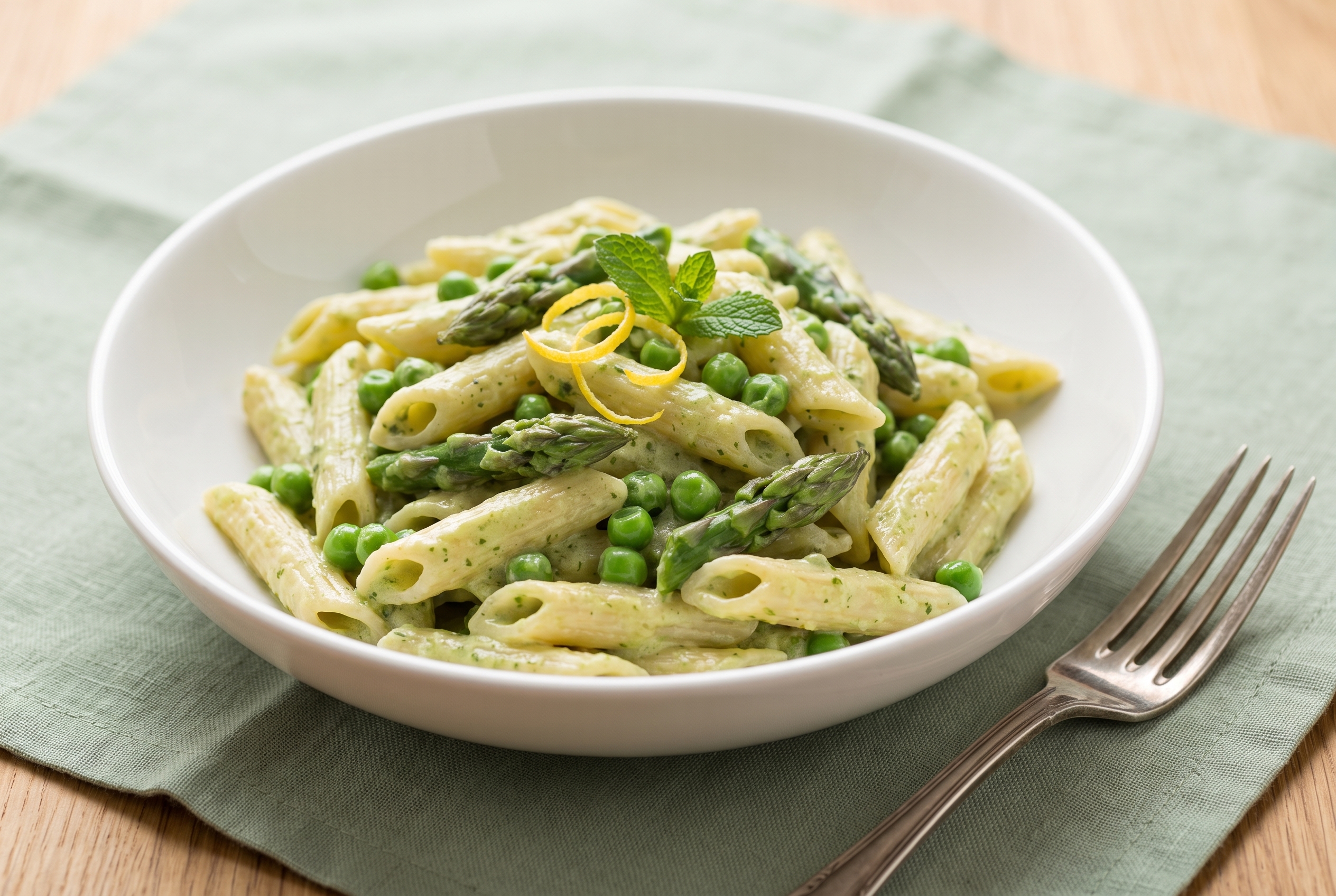
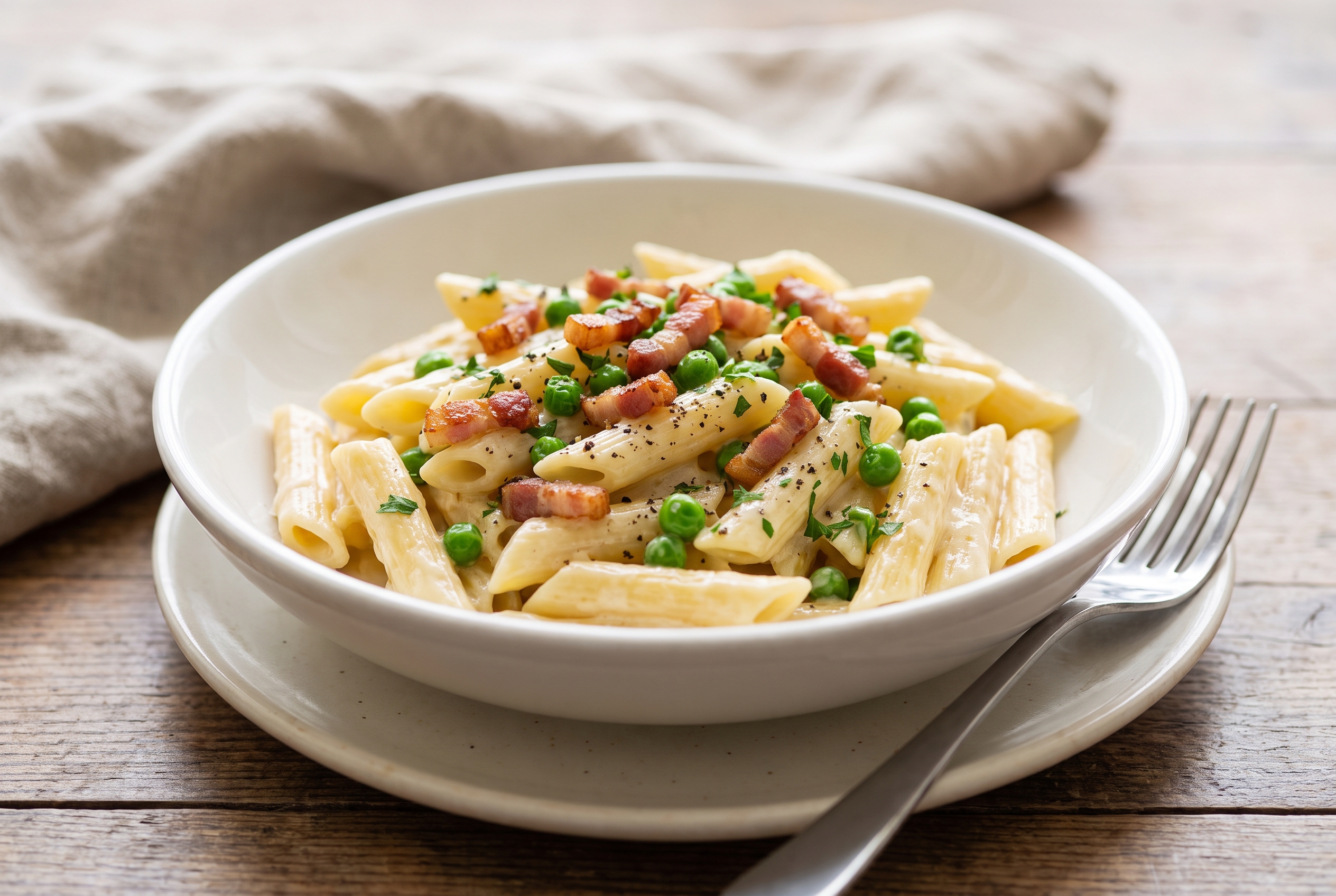
Have you ever made a pasta that disappeared so fast the pot barely had time to cool? That is what this lemon basil pea pasta does in my kitchen. It comes together in the time it takes to boil water, the sauce is silky and bright, and the peas give it just enough sweetness to balance the lemon. There is something deeply unfair about how easy it is for how good it tastes.
My grandmother used to keep a pot of cream cheese on the counter all summer, “for the peas,” she would say. I never quite understood what she meant until I started making this pasta. The cream cheese melts into the starchy pasta water and turns into a sauce so silky you will want to eat it with a spoon. The lemon juice wakes everything up. The basil at the end makes the whole thing feel like sunshine in a bowl. Which pasta shape are you going to use?
This is the kind of weeknight dinner I lean on when I want something that feels like a small treat but takes almost no thought. It feeds a hungry table of four in about twenty minutes, it uses ingredients I almost always have on hand, and the leftovers are honestly better cold the next day, straight from the fridge, standing at the counter. I am not even a little sorry about that.
Best-Ever Lemon Basil Pea Pasta
This is a bright, creamy vegetarian pasta built on a cream cheese and parmesan sauce with sweet green peas, fresh basil, and a generous squeeze of lemon. It takes about twenty minutes start to finish, uses one pot for the pasta and one food processor for the sauce, and the flavor is so much bigger than the effort would suggest. Bright, herby, rich but not heavy — exactly the kind of weeknight pasta you find yourself craving again two days later.
The trick is the cream cheese. It melts into the hot pasta and starchy water to make a sauce that clings to every strand without any of the fuss of a traditional cream sauce. No roux, no constant whisking, no risk of breaking. Just toss everything in the pot and let the heat do the work. Add the lemon at the end so the flavor stays bright instead of dulled by the heat.
From Pot to Plate
Step 1: Boil the pasta. Bring a big pot of well-salted water to a strong boil. Add the pasta and cook according to the package directions until al dente. Before draining, scoop out and reserve one full cup of that starchy cooking water — this is the secret to the sauce. Drain the pasta and return it to the pot off the heat.
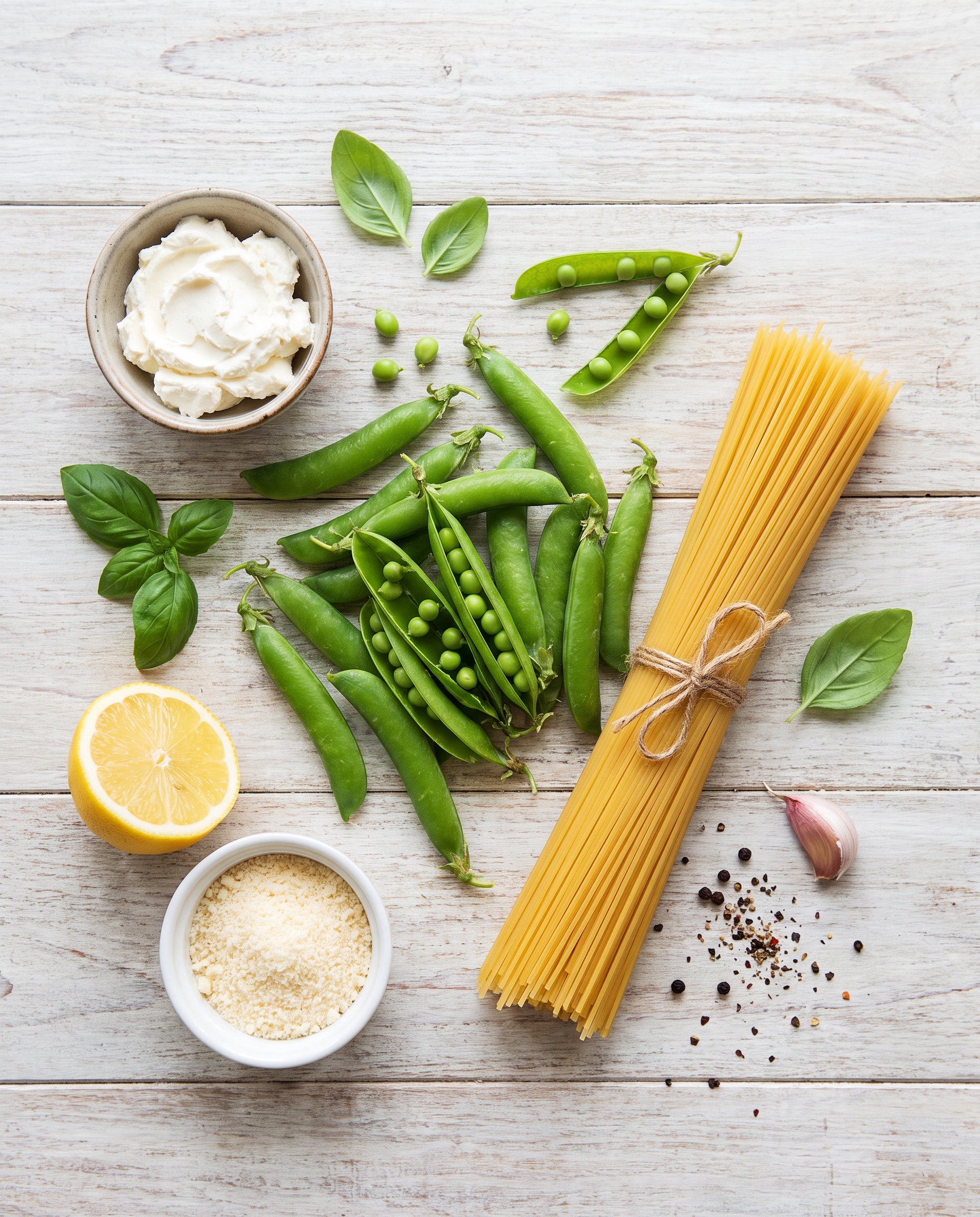
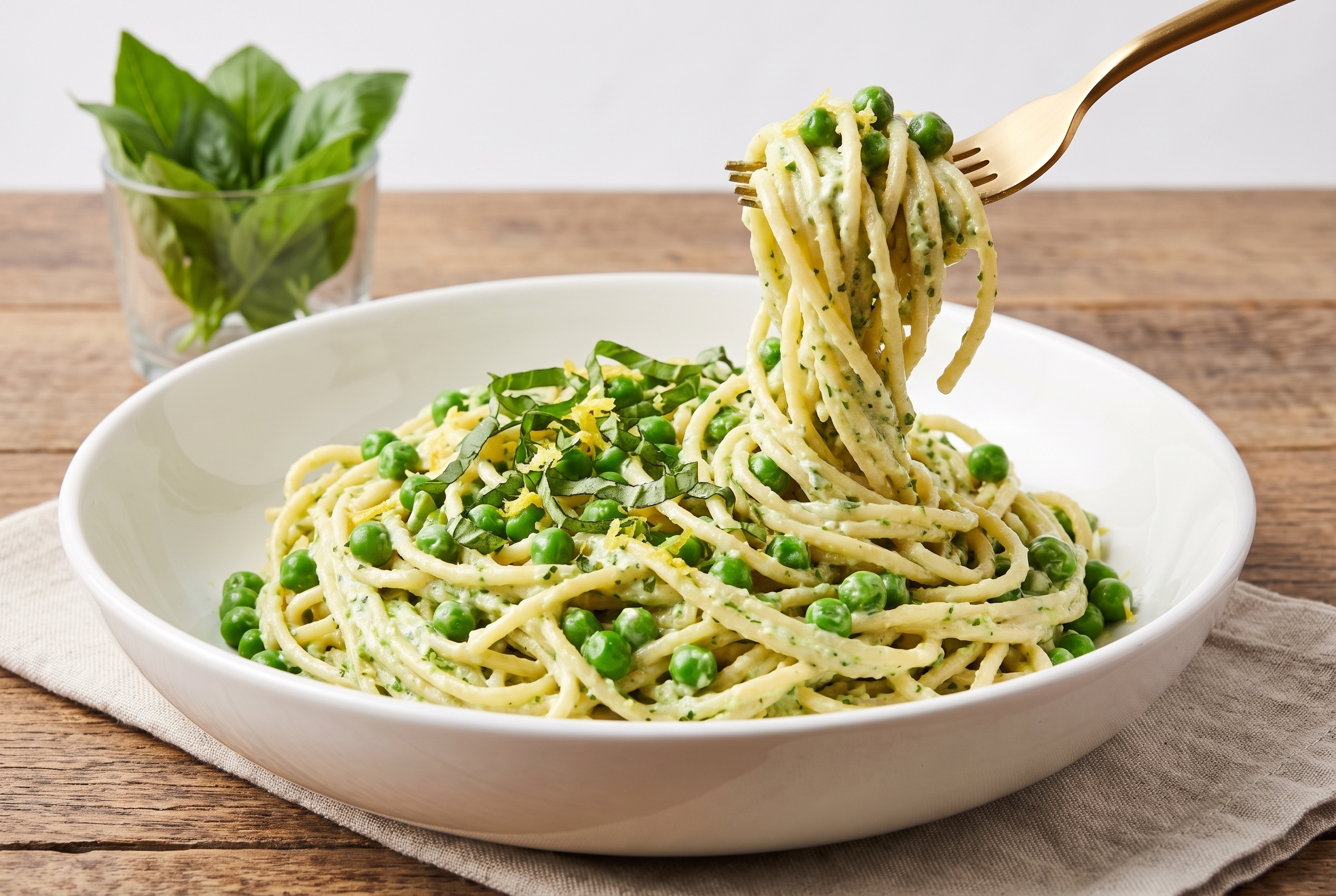
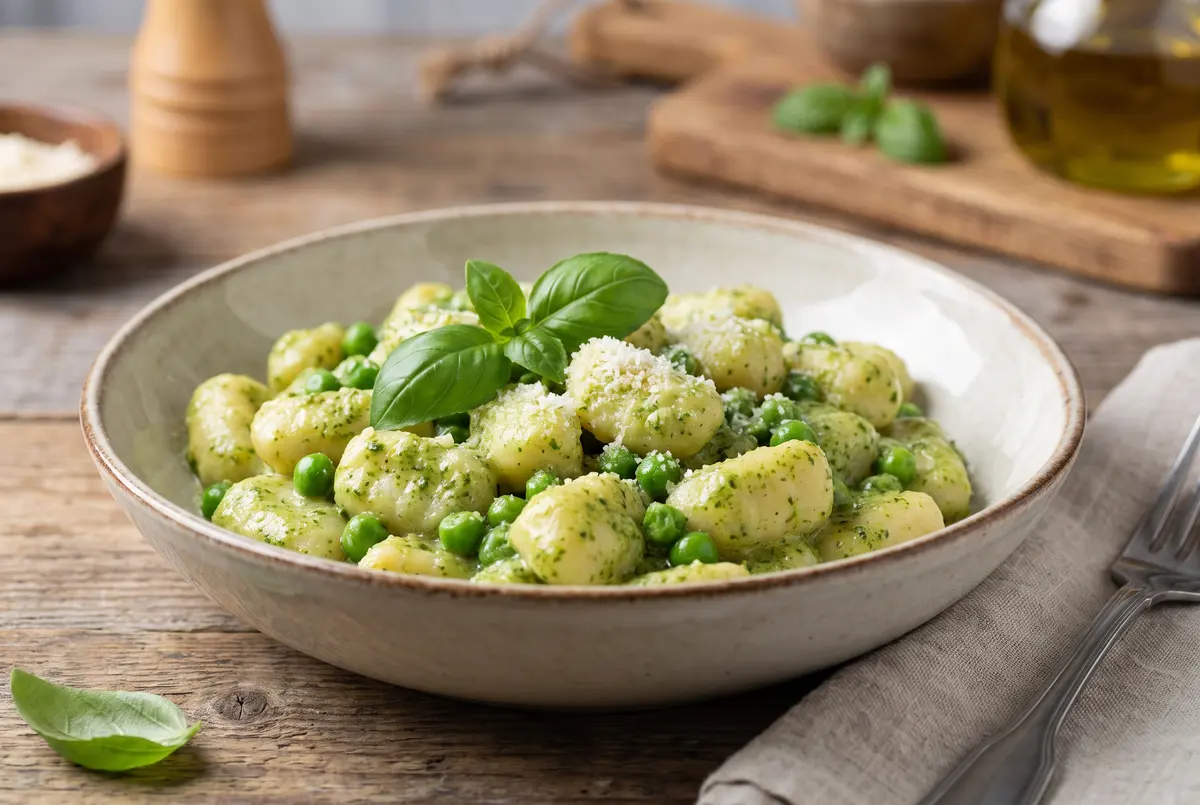
Step 2: Make the green sauce. While the pasta cooks, add the thawed peas, fresh basil, lemon juice, garlic, salt, and pepper to a food processor or blender. Pulse until smooth and bright green. Add the softened cream cheese and grated parmesan, then pulse again until the sauce is silky and well combined. It will look like a thick green pesto, which is exactly right.
Step 3: Bring it together. Pour the green pea sauce over the hot pasta in the pot. Add a generous splash of the reserved pasta water — start with about a quarter cup and add more as needed. Toss gently over low heat for a minute or two until everything is glossy and clinging to the noodles. The sauce loosens as it warms, so do not panic if it looks thick at first.
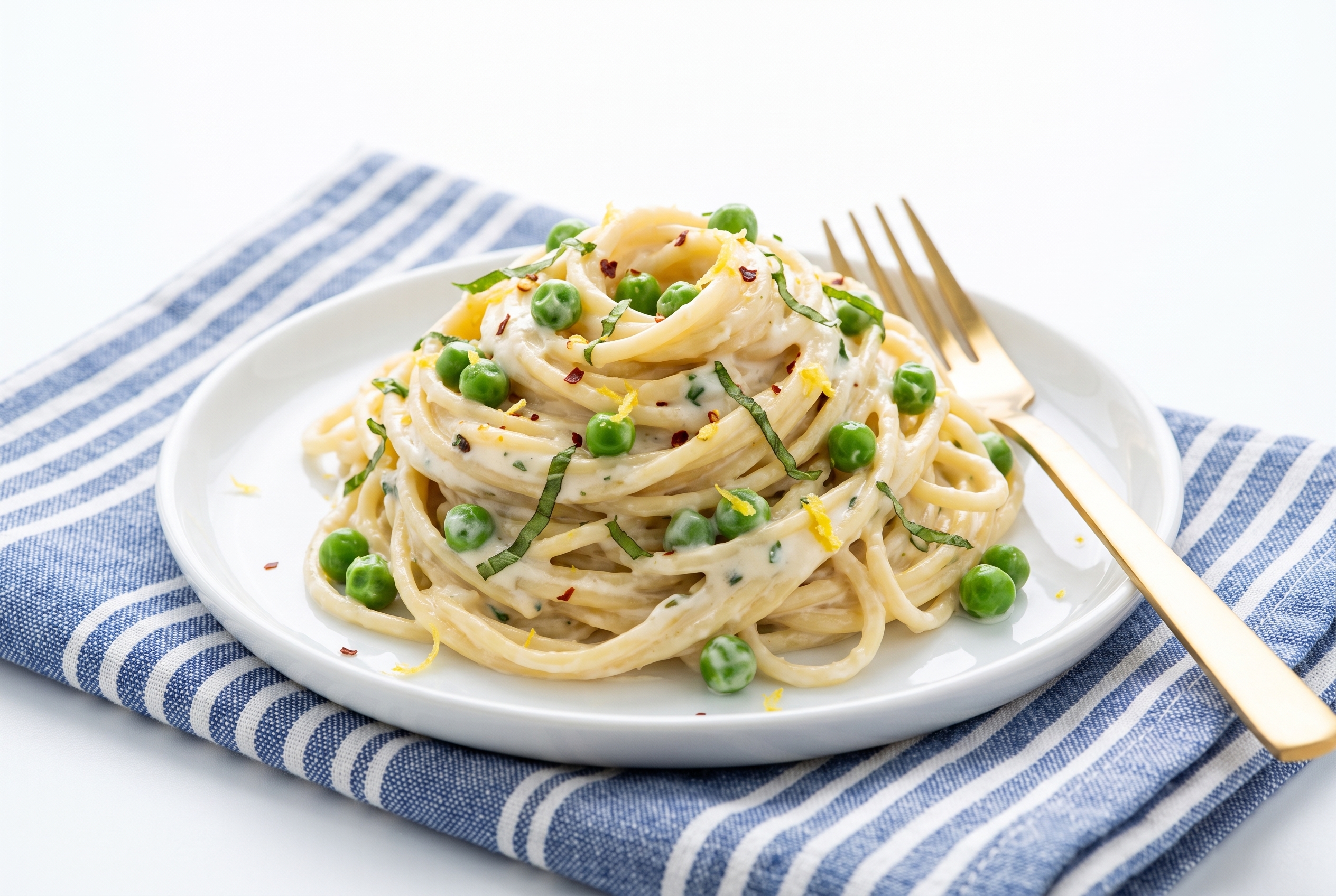
Step 4: Finish and serve. Taste and adjust with more salt, pepper, or lemon juice. Plate the pasta and top with extra grated parmesan, a chiffonade of fresh basil, and a few grinds of black pepper. A small drizzle of good olive oil over the top is never a bad idea. Serve immediately while everything is still silky.
Creative Twists
Once you have the base down, this pasta becomes a wonderful blank canvas. A few favorites I have tested:
Spring herb swap: Replace half the basil with fresh mint or baby spinach for a slightly different green note.
Toasted breadcrumb topping: Toast panko in butter with a smashed garlic clove until golden, then sprinkle on top for crunch and a little something special.
Sun-dried tomato addition: Stir in a handful of chopped oil-packed sun-dried tomatoes at the end for sweet-tangy depth.
Roasted garlic version: Swap the raw garlic clove for three or four cloves of roasted garlic. Sweeter, mellower, lovely.
Protein boost: Top each bowl with a handful of toasted pine nuts or chopped toasted pistachios for crunch and a little staying power.
Lemon-pepper pasta: Add an extra half teaspoon of cracked black pepper and a bit more lemon zest for a more grown-up, peppery finish.
Serving and Pairing Ideas
What should you serve alongside a bright, lemony pasta like this? Honestly, the pasta does most of the work, so keep the sides simple. A peppery arugula salad with shaved parmesan and a squeeze of lemon is perfect. Some warm, crusty bread for catching the last of the sauce is a given. A glass of cold pinot grigio or sauvignon blanc loves the lemon. For a non-alcoholic pour, sparkling water with lemon and a sprig of mint is the move.
Why I Love This Recipe
There is a reason this pasta shows up in my kitchen at least twice a month all summer. It is the recipe I make when I am tired and do not want to think, when guests are coming in an hour and the fridge looks sparse, when the kids are hovering at the counter asking what is for dinner. The ingredient list is short, the steps are forgiving, and the result looks like you tried much harder than you did.
I also love that it is genuinely vegetarian without trying to be. There is so much going on in the bowl — sweet peas, bright basil, tangy lemon, salty parmesan, the cream-cheesy silk of the sauce — that nobody leaves the table wishing there was meat in it. If you wanted, a poached egg on top is a beautiful move, but it is absolutely not necessary. Speaking of which — let us talk about leftovers.
Storage and Make-Ahead
This pasta keeps in the fridge in a covered container for up to three days. The sauce will thicken as it sits, so loosen it with a splash of warm water or a tiny bit of cream when you reheat. I actually prefer to eat it cold, the way you would eat a good pasta salad, tossed with a little more olive oil and lemon juice. The basil flavor gets even better overnight.
If you want to get ahead, make the green pea sauce up to two days in advance and store it in a jar in the fridge. Cook the pasta fresh when you are ready to eat, and warm the sauce gently in a small pot while the pasta boils. Toss everything together with a splash of pasta water and dinner is on the table in fifteen minutes flat. You can also freeze the sauce for up to a month — thaw overnight in the fridge before using.
Troubleshooting Your Sauce
A few things I have learned the hard way, so you do not have to:
My sauce is grainy. The cream cheese was probably too cold. Let it sit on the counter for 10 to 15 minutes next time so it softens before you blend it.
The sauce looks thin and watery. Add a few more tablespoons of grated parmesan or let everything toss together over low heat for another minute or two. The sauce tightens as the cheese melts in.
The lemon flavor is too sharp. You probably added the lemon juice too early, before the sauce had a chance to mellow. Add a little more parmesan or a small splash of cream to round it out.
The pasta is dry after sitting. Pasta keeps drinking the sauce even after you plate it. A tablespoon or two of warm pasta water, stirred in gently, brings it right back.
The color is dull, not bright green. You probably overcooked the peas or added the lemon too soon. A quick squeeze of fresh lemon right before serving perks the color right back up.
Your Quick Questions, Answered
Can I use frozen peas straight from the freezer? Yes. Run them under warm water for a minute to thaw them quickly, or microwave them for 30 seconds. They do not need to be cooked, just thawed enough to blend smoothly.
What pasta shape works best? Long strands like spaghetti, linguine, or bucatini catch the sauce beautifully. Short shapes like penne or fusilli also work — they just hold more sauce in every bite. Use what you have.
Can I make this dairy-free? Yes. Use a plant-based cream cheese (the Kite Hill and Violife ones both melt nicely) and skip the parmesan or use a vegan parmesan. The lemon and basil will still carry the flavor.
How do I keep the basil from turning brown? Blend the basil last and add the lemon juice right away — the acid slows the browning. The sauce stays bright green in the fridge for a day or two. By day three, the color softens a little but the flavor is still great.
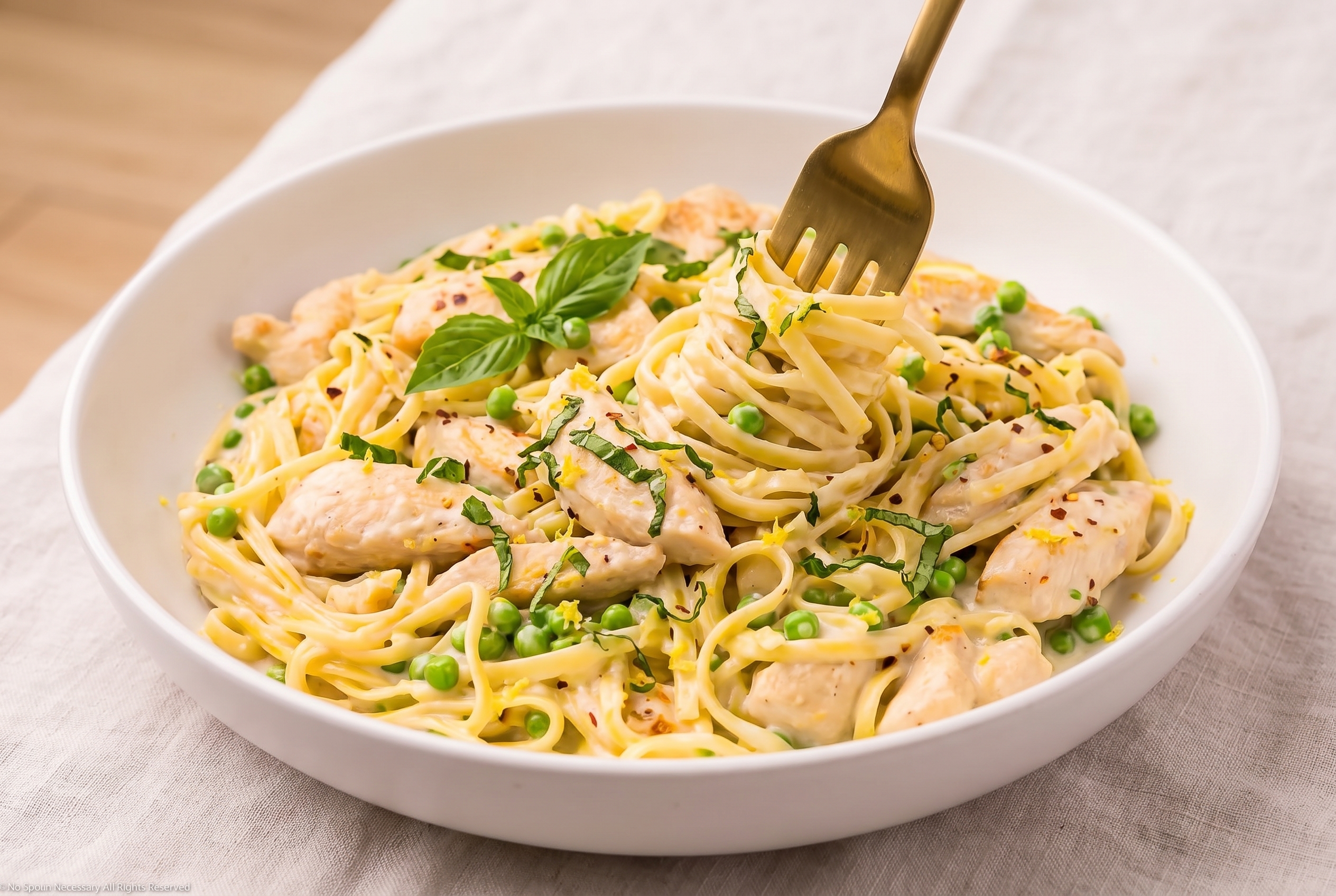
Can I add chicken to make it more of a main course? Absolutely. A pan-seared chicken breast sliced on top, or shredded rotisserie chicken stirred in at the end, both work beautifully. Just do not add it to the sauce itself — keep it as a topping so the sauce stays silky.
A Few Last Thoughts
If you have been hunting for a pasta that feels a little bit like sunshine, this lemon basil pea pasta is it. It is the recipe I send friends when they tell me they only have twenty minutes and a hungry family, and the one I make for myself when nobody else is watching and the only thing I want for dinner is something bright and quiet and good.
So grab a pot, get the water boiling, and keep the basil close. And if you make it, I would love to hear how it turned out — did you lean more lemon or more basil? Drop me a note in the comments and tell me all about it. Happy cooking, friends.
A bright, creamy vegetarian pasta made with a silky green pea and cream cheese sauce, fresh basil, lemon, and parmesan. Comes together in about 20 minutes and tastes like sunshine.
Ingredients
Instructions
Bring a large pot of well-salted water to a strong boil. Add the pasta and cook according to the package directions until al dente. Before draining, scoop out and reserve 1 cup of the starchy cooking water, then drain the pasta and return it to the pot off the heat.
While the pasta cooks, add the thawed peas, basil, lemon juice, garlic, salt, and pepper to a food processor or blender. Pulse until smooth and bright green, scraping down the sides as needed.
Add the softened cream cheese and grated parmesan to the food processor. Pulse again until the sauce is completely smooth and well combined, about 30 seconds. It should look like a thick bright green pesto.
Pour the green pea sauce over the hot pasta in the pot. Add a generous splash of the reserved pasta water (start with 1/4 cup) and toss gently over low heat for 1 to 2 minutes, until everything is glossy and the sauce clings to the noodles. Add more pasta water as needed to loosen.
Taste and adjust with more salt, pepper, or lemon juice as needed. Plate and top with extra grated parmesan, fresh basil chiffonade, a few grinds of black pepper, and a small drizzle of good olive oil. Serve immediately.
Notes
Make ahead: the green pea sauce keeps in the fridge for up to 2 days. Cook the pasta fresh and warm the sauce gently in a small pot while the pasta boils. The sauce also freezes well for up to 1 month — thaw overnight in the fridge.
Keywords:lemon basil pea pasta, creamy pea pasta, vegetarian pasta, weeknight pasta, 20 minute pasta
Elowen Thorn I cook, photograph and re-test every recipe in an ordinary home kitchen before it goes up, so what you make matches what you see. Savory Discovery is where simple weeknight cooking, seasonal ideas and the odd bit of kitchen craft sit side by side — written plainly, and worth cooking twice.