


The Day I Learned to Stop Peeling
My grandma used to spend all day peeling fruit for jam. I remember her fingers turning pink from the peaches. I thought that was the only way to do it. Then I tried this nectarine recipe, and it changed everything. You just chop them up, skins and all. The skins melt right into the jam as it cooks. Doesn’t that sound like a little kitchen miracle? I still laugh at how much time I wasted with that peeler.
Here is why this matters. When you leave the skins on, you keep all the good stuff inside. That includes fiber and flavor you would just throw away. It also saves you about twenty minutes of boring work. Have you ever spent a whole afternoon peeling fruit for a project?
A Little Help from My Freezer
Before you even touch a nectarine, put a couple of small plates in the freezer. This is the secret to knowing when your jam is done. You will drop a little bit of hot jam on the cold plate. Then you push your finger through it. If the jam wrinkles up like a tiny ocean wave, it is ready. If it stays runny, you just boil it for two more minutes and try again.
I messed this up the first time. I tested the jam on a warm plate from the dishwasher. It never got wrinkly, and I boiled my jam into chewy candy. My husband called it nectarine toffee. We still joke about that. It tasted good, but it was terrible on toast.
Why You Do Not Need That Box of Pectin
Pectin is the stuff that makes jam get thick and jiggly. Most recipes tell you to buy it in a box. But nectarines have their own natural pectin, especially when they are a little bit firm. You just need to add a splash of lemon juice. The lemon juice wakes up the pectin and helps it work. That is the whole science lesson for today.
Here is the second reason this matters. You get to control exactly what goes into your jam. There are no weird powders or chemicals. Just fruit, sugar, lemon juice, and a little water. If you have a jar of this in your fridge, you know every single thing inside it.
Which do you like better, chunky jam or smooth jam? Let me know in your heart.
The Sounds of a Good Jam
You have to listen to your jam as much as you look at it. When you first put the sugar in the pan, stir it gently over low heat. Listen for a crunching sound against the side of the pan. That crunch means the sugar has not melted yet. Keep stirring until the crunching stops. Then you know it is time to turn up the heat.
Turning the heat up high makes it boil fast and furious. This is called a rolling boil. Stand there and stir the whole time for ten minutes. I set a timer on my phone and dance a little in the kitchen. *Fun fact: You can also use a candy thermometer. When it hits 221 degrees Fahrenheit, your jam is perfect.*
Mashing and Skimming and Filling
Once your jam passes the wrinkly plate test, you get to have some fun. Grab your potato masher and squish the nectarine chunks. Some people like their jam really smooth. I like to leave a few little pieces so you know it came from real fruit. You do what feels right for your own kitchen.
Then you will see a little bubbly foam on top of the jam. That is called scum. Do not be scared of it. Just push it to one side with a spoon and scoop it out. Your jam will look clear and pretty without that foam. I throw the scum into a bowl and eat it with a spoon when nobody is looking.
Have you ever eaten something straight from the pot before it was done? Tell me I am not the only one.
The Quiet Part at the End
Ladle the hot jam into your clean, hot jars. Screw the lids on tight right away. Then you have to do the hardest part of all. You have to let the jars sit completely still until they are cool. I usually set them on the counter and walk away. If I peek at them, I just get impatient.
When they are cool, you will hear a little popping sound from the lids. That is the sound of a good seal. That pop means your jam will stay fresh for months in the pantry. Or you can put it in the fridge and eat it right away. I have never been good at waiting. I usually open one jar before dinner is even on the table.
What is your favorite thing to put jam on besides toast? Biscuits? Pancakes? A spoon?
Ingredients:
| Ingredient | Amount | Notes |
|---|---|---|
| Nectarines, stoned and cut into roughly 1.5 cm chunks | 900 g (2 lb) | |
| Granulated sugar | 720 g (3 2/3 cups) | |
| Lemon juice | 2 tablespoons (30 ml) | |
| Water | 4 tablespoons (60 ml) |

Instructions
Step 1: Wash and chop your nectarines into small chunks. Leave the skins on, they add color and flavor. I love how the kitchen starts smelling like summer already. (Don’t worry about peeling, the skins soften right into the jam.)
Step 2: Put the nectarines, sugar, lemon juice, and water into a big pot. Stir it gently over low heat until the sugar dissolves completely. Listen for a soft crunching sound against your spoon — that means it’s ready. What fruit are you most excited to use? Share below!
Step 3: Turn the heat up high and bring the mixture to a rolling boil. Set a timer for 10 minutes and stir the whole time. My grandma always said this step builds character in the jam.
Step 4: Test if the jam is ready by dropping a little on a cold plate from the freezer. Push your finger through it — if it crinkles a bit, it’s set. If not, boil for two more minutes and test again.
Step 5: Mash the chunks with a potato masher until you like the texture. Skim off any foam on top with a big spoon. Ladle the hot jam into clean, warm jars and screw the lids on tight. Let it cool completely before you taste it.
Creative Twists
… Swap half the nectarines for ripe peaches or apricots for a mixed stone fruit jam. … Add a vanilla bean split open while the sugar dissolves for a warm, cozy flavor. … Stir in a pinch of cinnamon or ginger before boiling for a spicy kick. Which one would you try first? Comment below!
Serving & Pairing Ideas
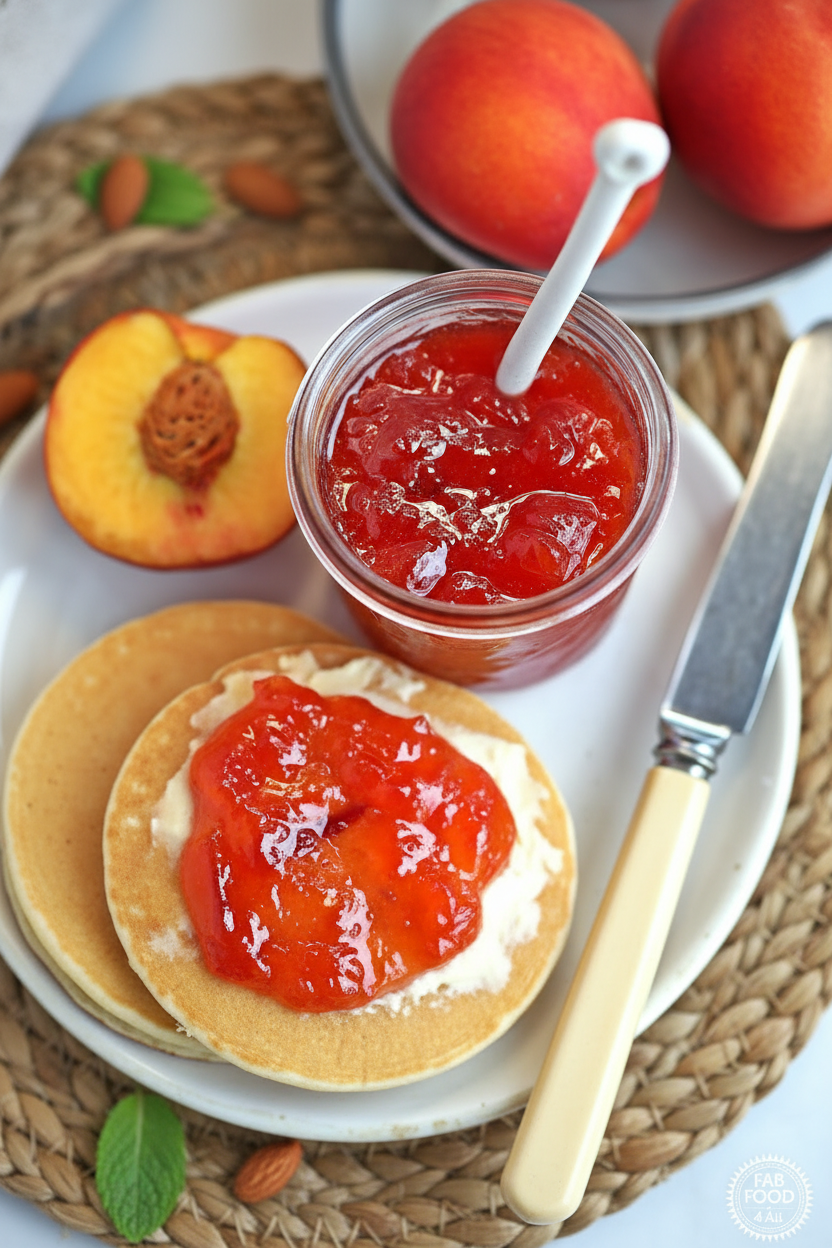
Spread this jam on warm buttered toast or flaky biscuits for a simple breakfast. It is also lovely swirled into yogurt or spooned over vanilla ice cream. I love pairing it with sharp cheddar cheese on crackers for a sweet and salty snack. Which would you choose tonight?
My Best Tips for Storing Your Nectarine Jam
Let the jam cool completely before you put the lids on tight. This keeps the seal strong and safe. I once left a jar open on the counter by mistake. It grew mold in just a few days. Now I always check my seals right away.
Store your sealed jars in a cool, dark pantry or cupboard. Heat and light can ruin the flavor over time. Once you open a jar, keep it in the fridge. Use it within three weeks for the best taste and texture.
You can freeze this jam too. Just leave an inch of space at the top of the jar for expansion. It will keep in the freezer for up to one year. Thaw it in the fridge overnight before using. Batch cooking matters because it saves you money and time. You get to enjoy summer flavor all winter long. Have you ever tried storing it this way? Share below!
Three Common Jam Problems and Easy Fixes
Your jam might be too runny. This happens if it did not boil long enough. Next time, keep it at a rolling boil for the full ten minutes. Use the chilled saucer test to check for a gel-like set.
Your jam might have foam on top. This is called scum and it is harmless. I remember my first batch had lots of foam and I worried. Just skim it off with a metal spoon before you pour the jam into jars. It makes the jam look clear and pretty.
Your jam might be too thick or sugary. This can happen if you boil it too long. The sugar caramelizes and the texture gets sticky. Why this matters: fixing these problems makes you a more confident cook. You learn to trust your eyes and your spoon. Why this also matters: good texture means better toast and biscuit spreading. Which of these problems have you run into before?
Your Quick Questions, Answered
How do you test if nectarine jam is set?
Place a small plate or saucer in the freezer before you start cooking. When you think the jam is ready, drop a spoonful of hot jam onto the cold plate. Put the plate back in the fridge for about thirty seconds. Then push your finger through the jam. If the surface crinkles and stays separate like soft jelly, it is set. If it runs back together like syrup, boil for two more minutes and test again. This simple trick saves you from guessing and works every time.
Why is my nectarine jam runny?
Runny jam usually means it did not boil long enough to reach the setting point. The sugar and fruit need a rolling boil for at least ten minutes to activate the natural pectin. Another reason could be that your nectarines were very ripe and soft. Overripe fruit has less natural pectin to help it gel. You can fix this by boiling the jam for a few more minutes and retesting on a cold saucer. Patience is the secret to perfect jam.
Can I use frozen nectarines for jam?
Yes, frozen nectarines work very well for jam. Thaw them completely in a colander set over a bowl to catch extra liquid. Use that liquid as part of your measured water in the recipe. Frozen fruit sometimes makes the jam slightly softer, so you may need to boil for an extra two minutes. The flavor will still be bright and sweet. This is a great way to use up fruit from your summer garden or a big sale at the store.
How long does homemade nectarine jam last?
Unopened jars stored in a cool, dark pantry will stay fresh for up to one year. The key is a tight seal and clean lids. Once you open a jar, keep it in the refrigerator and use it within three weeks. If you see any mold, fizz, or off smells, throw it away. Canned goods can spoil, so trust your nose and eyes. Always label your jars with the date so you know exactly how old they are.
Do I need pectin for nectarine jam?
No, you do not need added pectin for this recipe. Nectarines naturally have enough pectin to make a good set when paired with sugar and lemon juice. The lemon juice is important because it adds acid, which helps the pectin work. Using no pectin gives you a softer, more spreadable jam with a pure fruit flavor. This is perfect for anyone who wants a simpler ingredient list. Plus, it saves you a trip to the store for special supplies.
Can I reduce the sugar in nectarine jam?
You can reduce the sugar, but it will change the texture and shelf life. Sugar helps the jam set and prevents mold from growing. Cutting the sugar by more than a quarter cup may give you a runnier jam that spoils faster. If you want a lower-sugar jam, you can use special low-sugar pectin and follow its instructions. For the best results with this recipe, stick to the full amount. The jam is still sweet, but the fruit flavor shines through.
Which tip will you try first?
A Warm Farewell from My Kitchen to Yours
I hope you feel ready to make your own batch of golden nectarine jam. There is nothing quite like the smell of fruit cooking on the stove. It fills your home with warmth and happy memories. Have you tried this recipe? I would love to hear how your jars turned out. Tell me about any twists you added, like a pinch of cinnamon or a splash of vanilla. Your stories make this kitchen feel full of friends. Happy cooking!
Fun fact: Nectarines are just peaches with a smooth gene. They taste almost the same.
—Grace Ellington.

My Easy Nectarine Jam Recipe with Setting Test
Description
Full Instructions
Ingredients
Instructions
- Start by sterilising your jars and placing saucers into the freezer (see instructions in notes below).
- Put chopped nectarines, lemon juice, water and granulated sugar into a preserving pan or similar.
- Place the pan over a low heat to gently dissolve the sugar. Stir with a wooden spoon until the sugar dissolves completely. Do not allow mixture to simmer.
- Once the sugar has dissolved (listen out for any crunching against the spoon) turn the heat up high and bring the mixture to a rolling boil. Time for 10 minutes, stirring continuously. (Alternatively, if you have a digital thermometer boil until a temperature of 105°C or 221°F is reached.))
- Remove from heat and test for set by placing a few drops of jam on a chilled saucer and place in fridge for 30 seconds.
- Push a finger through the jam and if it forms gentle crinkles and is gel like then it has reached setting point. If setting point hasn’t been reached then bring the jam back to a rolling boil for 2 minutes. Repeat steps as necessary until setting point is reached.
- Use a potato masher to crush nectarine chunks to desired consistency.
- Push any scum that’s formed over to one side and skim off with a large metal spoon
- Pot up the hot jam into hot sterilised jars using a ladle and jam funnel.
- Screw on lids immediately.
- Allow to cool completely before serving. (See post above for storage information).
Notes
- Before you start:
Place 2 – 3 saucers/small plates in the freezer.
Sterilise 4 x 240 ml jars (or equivalent). Start by washing the jars in hot soapy water (or take straight from dishwasher), fill with boiling water, empty and then place in the oven for 20 minutes at 140°C, Fan 120°C or 465°F. Leave jars here until the jam is ready. Washed lids should be sterilised with boiling water and then left to drain (if still wet place in oven once you’ve turned the heat off and run with just the fan for a few minutes).
Makes approximately 4 x 240 ml jars of jam.