


My First Time Making Jam
I remember my first batch of jam like it was yesterday. My kitchen was a sticky, sweet mess. I had fig seeds stuck to my hair and strawberry juice under my fingernails. I still laugh at that image when I think about it. Making jam is messy, but that is part of the fun. Doesn’t that smell amazing? The whole house fills with fruit and sugar cooking down. It is a cozy feeling that a candle just can’t copy.
The first time you watch fruit turn into jam, it feels like magic. You start with solid little pieces. Then you get a thick, glossy spread. This is a skill you can keep for your whole life. Have you ever made jam before, or is this your first try? I would love to hear your jam story in the comments.
Why Strawberry and Fig Are Best Friends
Strawberries are bright and sunny. Figs are deep and sweet like honey. When you put them together in a pot, they become best friends. The strawberry keeps things cheerful, and the fig adds a rich hug. This is why this jam is so special. It has two different kinds of sweetness that play together.
I also love tossing in a splash of balsamic vinegar. It might sound funny, but trust your kitchen-grandma on this. The vinegar makes the fruit taste more like itself. It cuts through the sugar and wakes everything up. You can also make a vanilla version that tastes like a warm cookie. Which sounds better to you, the tangy balsamic or the cozy vanilla?
A Little Secret About Testing the Jam
There is a simple trick for knowing when your jam is done. You do not need a fancy thermometer. Just put a small plate in the freezer before you start cooking. When you think the jam is ready, drop a spoonful onto the cold plate. Let it sit for a minute. If you push it with your finger and the surface wrinkles, it is perfect.
I always keep a stack of cold plates ready when I make jam. It makes me feel like a scientist in the kitchen. This trick works every single time. It is a little piece of wisdom passed down from old cooks. Fun fact: This cold plate test is called the “wrinkle test,” and jam makers have used it for over a hundred years.
Why This Jam Matters Beyond Breakfast
This jam is not just for toast, though it is lovely on toast. It can change a whole meal. Spoon some over a block of baked brie cheese. The warm, salty cheese with the sweet jam is a party in your mouth. You can also swirl it into yogurt or spoon it over vanilla ice cream. It turns a simple snack into a fancy treat.
Why this matters: When you make your own jam, you know exactly what is inside. There are no weird chemicals or corn syrup. Just fruit, sugar, and a little love. That is a powerful thing. You are taking care of your family with real food. What is your favorite way to eat jam? On toast, with cheese, or straight from the spoon?
The Fig Story I Still Tell
One autumn, my neighbor had a fig tree that was bursting with fruit. She knocked on my door with a basket overflowing with figs. They were so delicate and soft, like little purple jewels. I did not know what to do with all of them. So I made my very first fig jam. I called her that night to thank her. She said the smell had drifted across the fence and made her want to dance.
That is the thing about making jam. It is not just about saving fruit. It is about sharing a moment. When you give a jar of jam as a gift, you are giving a piece of your kitchen. You are giving time and care. This is why it matters: A homemade gift says “I thought of you” louder than anything from a store. Have you ever given or received a homemade gift? I bet you still remember it.
Filling the Jars With Love
When your jam is ready, you need clean jars. Wash them in hot soapy water, then rinse well. You can also boil them for a few minutes to be extra safe. Leave about a quarter inch of space at the top of each jar. This space is called headspace, and it helps the jam seal. Wipe the rims clean or the lids will not stick.
Screw the lids on tight, but do not crank them like a strongman. Just snug and comfy. If you want the jam to last in your pantry, you need to process the jars in a boiling water bath. Boil them for ten minutes. When you take them out, flip them upside down for twelve hours. When you press the center of the lid, it should not pop. That means it is sealed. Do you like to decorate your jars with fabric and ribbon? I always tie a little tag on mine with the date.
Ingredients:
| Ingredient | Amount | Notes |
|---|---|---|
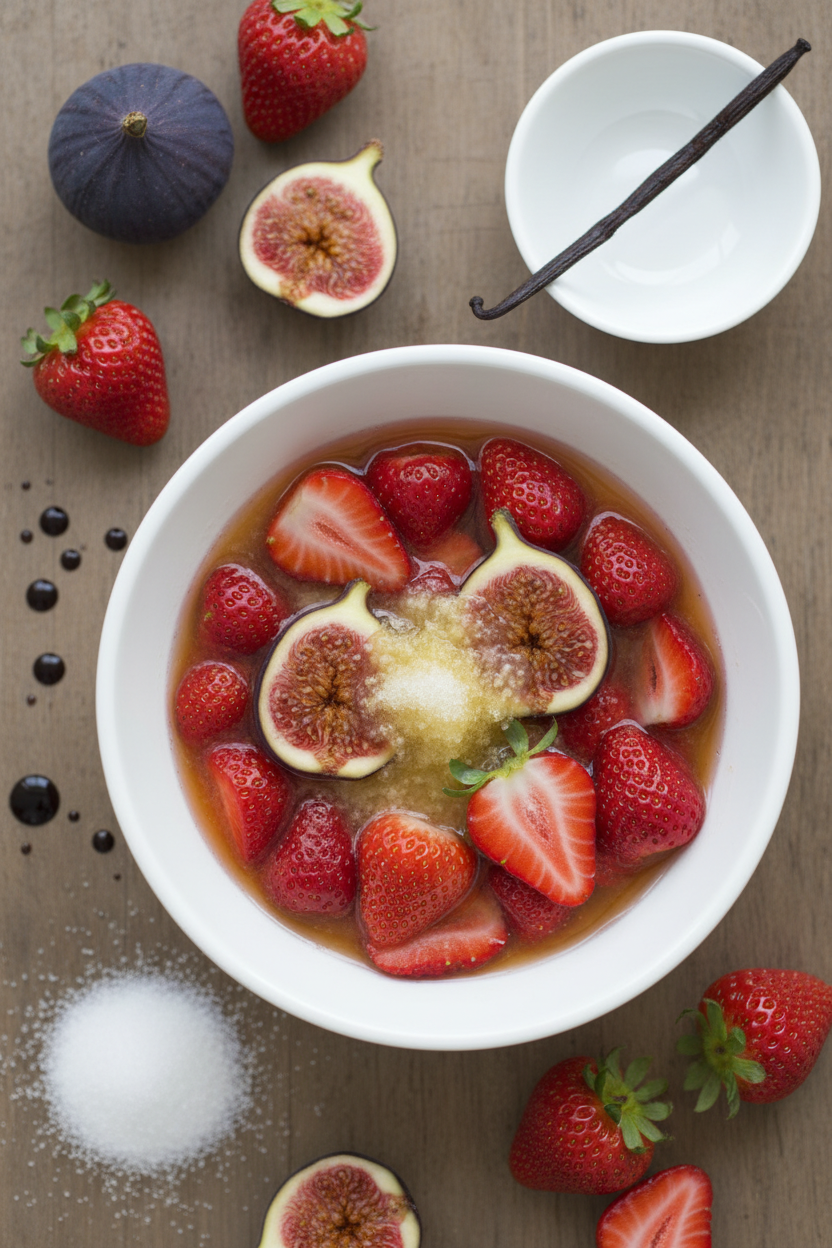
| Fresh Figs | 1 pound (500g) | Washed, stems removed, chopped |
| Strawberries | 1 pound (500g) | Washed, stems removed, chopped |
| Sugar | 2 cups | For Strawberry Fig Jam |
| Lemon Juice | Juice of 1 lemon or 3 tablespoons | Freshly squeezed preferred |
| Balsamic Vinegar | 2 tablespoons | Stir in before bottling |
Instructions
Step 1: Wash your strawberries and figs gently. Slice off the stems and chop everything into small pieces. I still laugh when my grandson tried to sneak a fig when my back was turned.
Step 2: Place the fruit into a large saucepan. Add your sugar and lemon juice, then bring it to a boil. (The secret is to stir often so it doesn’t burn on the bottom.)
Step 3: Turn the heat to medium-low and let it simmer for 25 to 30 minutes. The kitchen will smell like heaven. Doesn’t that smell amazing?
Step 4: For the strawberry fig version, stir in the balsamic vinegar now. For the vanilla version, scrape the vanilla bean seeds into the pot. Do you add jam to your morning toast or your afternoon cheese plate? Share below!
Step 5: Test if it’s done by putting a small spoonful on a cold plate. If it wrinkles when you push it with your finger, it is ready to jar.
Step 6: Ladle the hot jam into sterilized jars, leaving a little space at the top. Wipe the rims clean and twist the lids on tight.
Step 7: Let the jars cool completely on the counter. Press the center of each lid to make sure it sealed. That little pop sound always makes me smile.
Creative Twists
… Add a pinch of black pepper for a surprising warm kick.
… Stir in some fresh rosemary leaves for a garden-fresh flavor.
… Swap half the sugar for honey for a softer, floral sweetness.
Which one would you try first? Comment below!
Serving & Pairing Ideas
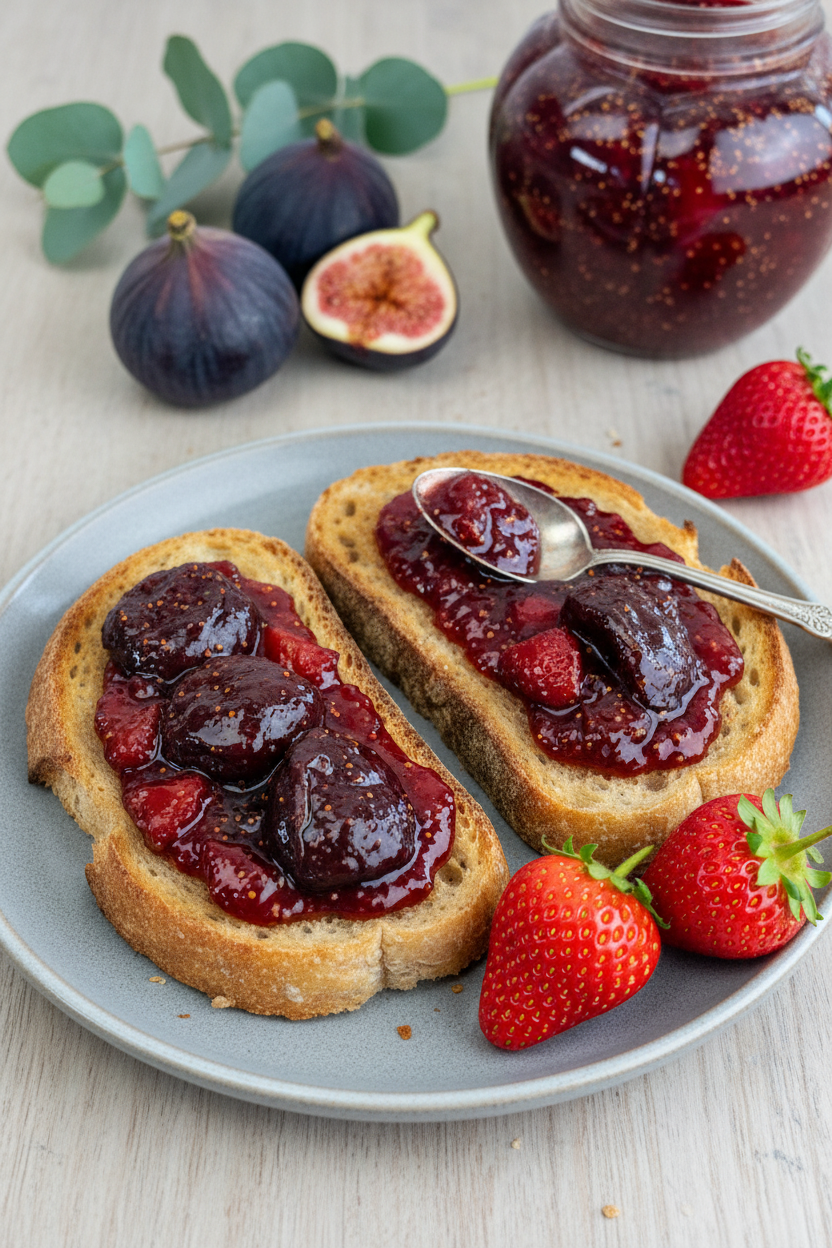
Spread this jam on a warm buttermilk scone for a cozy breakfast treat. It tastes wonderful on a cheese board next to sharp cheddar or creamy brie. You can also swirl a spoonful into yogurt for a quick, sweet snack. Which would you choose tonight?
The Best Way to Store Your Fig Jam
I remember the first time I made strawberry fig jam. I was so proud of those ruby jars. But I stored one in the cupboard without a proper seal. It spoiled in just a few weeks. What a waste of good fruit.
Now I know better. If you want your jam to last, you must seal it right. After you fill the jars, process them in a boiling water bath for ten minutes. This creates a vacuum seal. That keeps the jam shelf-stable for up to one year.
Once you open a jar, always keep it in the fridge. It will stay good for about three weeks. You can also freeze jam for up to six months. Just leave an inch of space at the top of the jar. The jam expands as it freezes.
Batch cooking this jam saves time and money. You pick the fruit when it is cheap and ripe. Then you have gifts and treats all year long. Have you ever tried storing it this way? Share below!
Three Common Jam Problems and Easy Fixes
I once made a batch of jam that was too runny. It looked more like syrup. I felt so silly. But I learned a simple trick. Always test the jam on a cold plate. If it wrinkles when you push it, it is ready.
Another problem is burnt jam. It happens when you walk away from the stove. I remember stirring my pot while talking to my neighbor. I came back and the bottom was black. Now I set a timer and stir every few minutes. Why this matters: Burnt jam ruins the whole batch. It wastes your time and your fruit.
Sometimes jam gets moldy on top. This happens if air gets into the jar. The fix is filling the jar to the very top. Leave only a quarter inch of space. Then seal it tightly. This helps your jam stay fresh for months. Why this matters: When your jam stays good, you enjoy it longer. You feel proud of your work. Which of these problems have you run into before?
Your Quick Questions, Answered
How long does strawberry fig balsamic jam last?
If you seal the jars properly in a boiling water bath, your jam will last up to one year on the shelf. That is because the heat kills any bacteria inside. Once you pop that lid open, keep the jar in your fridge. It will stay tasty for about three weeks. The balsamic vinegar gives it a special tang that gets better over time. I always make a few extra jars for holiday gifts. My family loves this recipe.
Do I need to peel the figs for jam?
You do not have to peel the figs at all. The skin is thin and soft. It cooks down nicely as the jam simmers. The skin also adds beautiful little flecks of color to the jam. Leaving the skin on gives the jam a nice texture. It also saves you a lot of work. I never peel my figs when making this recipe. It is one less step to worry about in the kitchen.
Can I use dried figs instead of fresh?
Yes, you can use dried figs, but you must rehydrate them first. Soak the dried figs in warm water for about thirty minutes. This plumps them up again. Then chop them like you would fresh figs. The jam will be a little thicker and sweeter than with fresh fruit. You might need to add a splash more lemon juice to balance the taste. I have done this during winter when fresh figs are hard to find. It works great.
What is the best pectin to use for this jam?
This recipe already has natural pectin from the fruit. The lemon juice helps it set too. You do not need to buy extra pectin at the store. If you want a firmer jam, you can use a powdered pectin like Sure-Jell. Just follow the directions on the box. Pour it in while the fruit is still cold. Then bring it to a full boil. I like the soft spread of the natural pectin best. It feels more like homemade jam from my childhood.
Why did my jam turn out too runny?
Runny jam usually means you did not cook it long enough. The fruit needs time to release its natural pectin. Cook the jam for a full twenty-five to thirty minutes. Stir it often so it does not burn. The cold plate test is your best friend here. Put a spoonful on a frozen plate. Wait a minute. Push it with your finger. If it wrinkles, it is done. If it stays watery, let it simmer another five minutes. Patience is the secret to perfect jam.
Can I reduce the sugar in this recipe?
You can reduce the sugar, but the jam will be looser. Sugar helps the jam set and keeps it from spoiling. If you cut the sugar in half, the jam will be more like a sauce. It will still taste delicious on ice cream or yogurt. For a firmer jam with less sugar, use a low-sugar pectin. Follow the instructions on that package carefully. I have made a half-sugar batch before. It was very good, but I kept it in the fridge the whole time. Which tip will you try first?
A Sweet Farewell from My Kitchen
Thank you for spending this time with me in my kitchen. I hope you feel ready to make your own strawberry fig jam. It fills your home with a lovely smell and your pantry with sweet treasures.
Remember, every jar you make holds a little bit of your love. *Fun fact: Figs are actually tiny flowers turned inside out. So you are cooking with flowers!*
Have you tried this recipe? I would love to hear how it turned out. Tell me in the comments below. Your stories make my day. Happy cooking!
—Grace Ellington.

My Experience Making Strawberry Fig Balsamic Jam
Description
Experience the delightful contrast of textures and flavors with this Strawberry Fig Balsamic Jam, featuring fresh strawberries and figs with a balsamic tang.
Ingredients
Instructions
- Wash Strawberries and Figs. Slice off the stems and chop fruit into small pieces, ie. Cut in half, then into quarters.
- Place chopped Strawberries and Figs into a Saucepan. Add Sugar and Lemon Juice and bring to a boil. Reduce heat to medium-low and allow to simmer for 25-30 minutes.
- Stir in Balsamic Vinegar when jam is done, before bottling to maintain tang.
- Place a small spoonful of jam on a chilled plate. If it wrinkles when pushed with your finger, then it’s ready.
- Using a ladle, carefully spoon the Fig Jam into sterilized jars, leaving 1/4 inch of space from the top. Wipe rims with a clean, damp cloth. Place lids on jar and turn to seal.
- If wanting shelf stable jam, place jars into a boiling water bath, ensuring they are covered with water for at least 1 inch. Boil for at least 10 minutes to properly seal.
- Carefully remove, flip upside down and allow to cool undisturbed for at least 12 hours. Check that centre of seal doesn’t pop up when pressed. Should be shelf stable for 1 year. Keep refrigerated when opened.
- Keep refrigerated when opened, or refrigerate jars that haven’t sealed. Serve for breakfast on toast, Scones, Charcuterie or with Baked Brie and Jam as an appetizer.
Notes
- For vanilla fig jam variation: use 2.2 pounds (1kg) fresh Figs, 2 cups Sugar, Juice of a Lemon or 3 Tbsp Lemon Juice, 1 Vanilla Bean or 1 Tbsp Vanilla Extract. Cook figs with lemon juice and vanilla seeds (including pod) for 25-30 minutes, remove pod before jarring. Process in water bath for shelf stable.