


The First Peach I Ever Peeled
My grandma handed me a ripe peach and a small knife. I was maybe ten years old. She showed me how to score the bottom with an X, then drop it in boiling water. The skin slipped right off like a little coat. I felt so proud, like I had done real magic.
I still laugh at that moment. I held up the naked peach and said, “Look, it’s a ball of sunshine.” She just smiled and put it in the pot. Now every time I make jam, I think of her standing there in her apron.
Have you ever peeled a peach before? Was it tricky or did it just slide off?
Why We Skip the Pectin
Most store jams have pectin powder added to make them thick. But you don’t need it. Peaches have their own natural stuff inside that does the job. All you need is patience and a wooden spoon.
Why this matters: When you skip the pectin, the taste stays pure and fruity. You taste the peach, not the powder. Plus, it saves you a trip to the store. Two cups of sugar and a splash of lemon juice is all you need.
Doesn’t that smell amazing when it starts bubbling on the stove?
How Long Until It’s Ready?
You boil the peaches, sugar, and lemon juice together for 15 to 25 minutes. You stir and stir, watching the color go from pale yellow to deep gold. The trick is the spoon test. Dip your spoon in and lift it sideways. If the jam sticks to it like a little blanket, you are done.
*Fun fact: The lemon juice isn’t just for flavor. It helps keep the color bright and the jam safe to store in jars.*
Here is a question for you: Do you like your jam chunky or smooth? I like a few small pieces in mine.
Filling the Jars the Right Way
You fill your clean jars up to 1/4 inch from the top. That little space is called headspace. It lets the jam expand without pushing the lid off. Then you put on the two-piece lids and screw them just finger-tight.
Pop the jars into a water bath canner for 10 minutes. When they come out, you will hear a soft popping sound. That is the lid sealing shut. It sounds like a tiny happy burp.
Why this matters: A good seal keeps your jam fresh for a whole year. You can open a jar in January and taste summer again.
The Best Way to Eat Peach Jam
Sure, you can spread it on toast. But try it on a warm biscuit with a pat of butter. Or swirl a spoonful into plain yogurt. My neighbor puts it on top of vanilla ice cream. She says it tastes like a peach cobbler without the work.
I once gave a jar to my mailman. He came back the next day and asked for the recipe. That made me smile.
What is your favorite thing to put jam on? Drop your idea in the comments.
One Batch, Many Memories
Seven half-pint jars. That is what this recipe makes. That is enough to share with friends and still keep a few for yourself. I like to write the year on the lid with a marker. That way I remember when I made it.
Last August, I opened a jar from two years ago. It was still perfect. The color was a bit darker, but the taste was just as sweet. I sat on the porch and ate it straight from the spoon. No bread, no biscuit. Just me and the peaches.
Here is one last question for you: What fruit would you turn into jam next? Strawberries? Plums? Something else?
Ingredients:
| Ingredient | Amount | Notes |
|---|---|---|
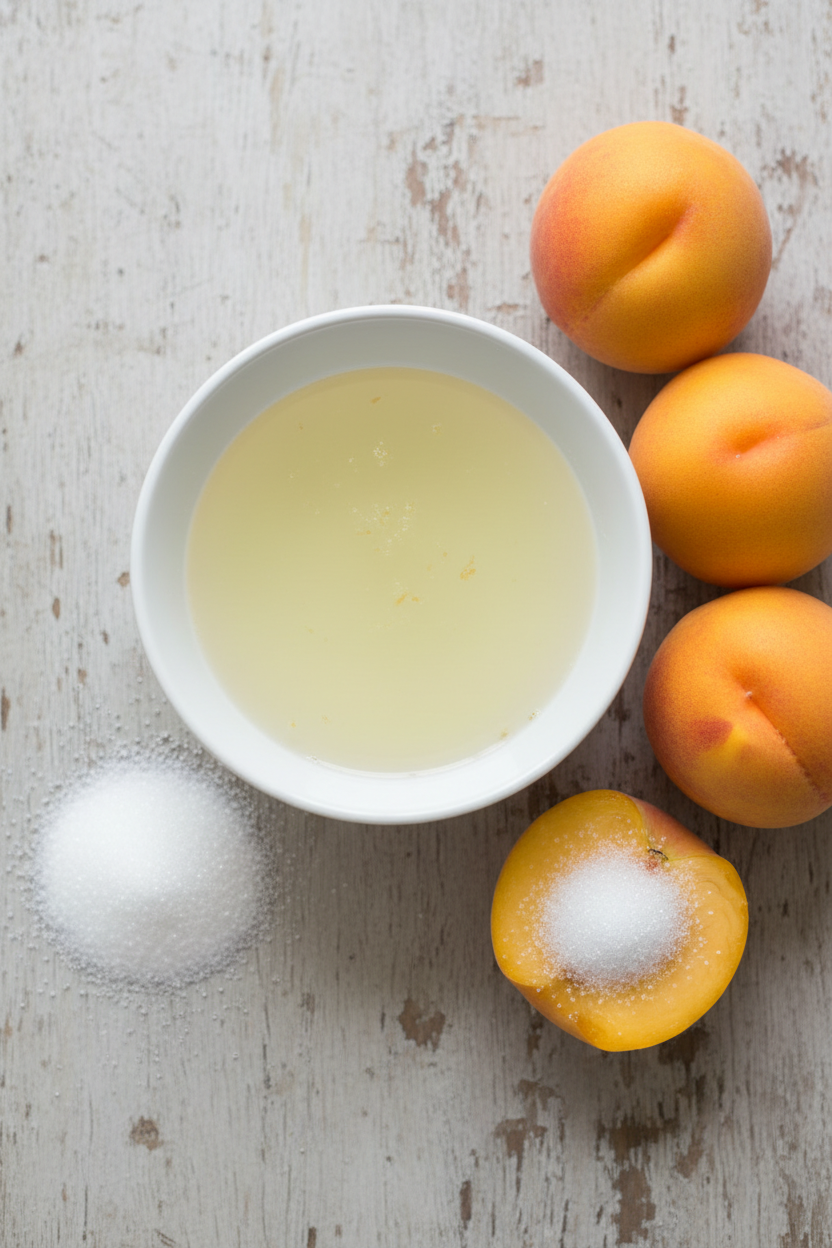
| Half pint jars | 7 | With 2-piece lids |
| Peaches | 4 pounds | Blanched, peeled, pitted, chopped |
| Sugar | 2 cups | |
| Lemon juice | 2 tbsp |
Instructions
Step 1: Wash your peaches well. Blanch them in boiling water for 30 seconds, then plunge into ice water. The skins will slip right off, just like magic. (I still remember my first time doing this—I felt like a real canning queen.)
Step 2: Remove the pits and chop the peaches into small chunks. Add them to a large saucepan with the sugar and lemon juice. Stir it all together until it looks glossy and sweet. Doesn’t that smell amazing?
Step 3: Mash the peaches with a potato masher or use an immersion blender for a smooth jam. I like a few lumps, but you do you. Bring the mixture to a boil, stirring often so it doesn’t scorch.
Step 4: Boil for 15 to 25 minutes, stirring frequently. The jam is ready when it sticks to your spoon when lifted and turned sideways. (This is the moment my grandma called “the wobble test.”) What fruit would you put in this jam? Share below!
Step 5: Ladle the hot jam into clean jars, leaving a 1/4 inch of space at the top. Wipe the rims, add the lids, and process in a water bath canner for 10 minutes. Listen for the happy “pop” as they seal.
Creative Twists
… Add a vanilla bean or a cinnamon stick while cooking for a warm, cozy flavor twist.
… Stir in a handful of fresh raspberries halfway through for a pretty pink color and extra zing.
… Swap half the sugar for honey for a floral, golden taste that bees would approve of.
Which one would you try first? Comment below!
Serving & Pairing Ideas
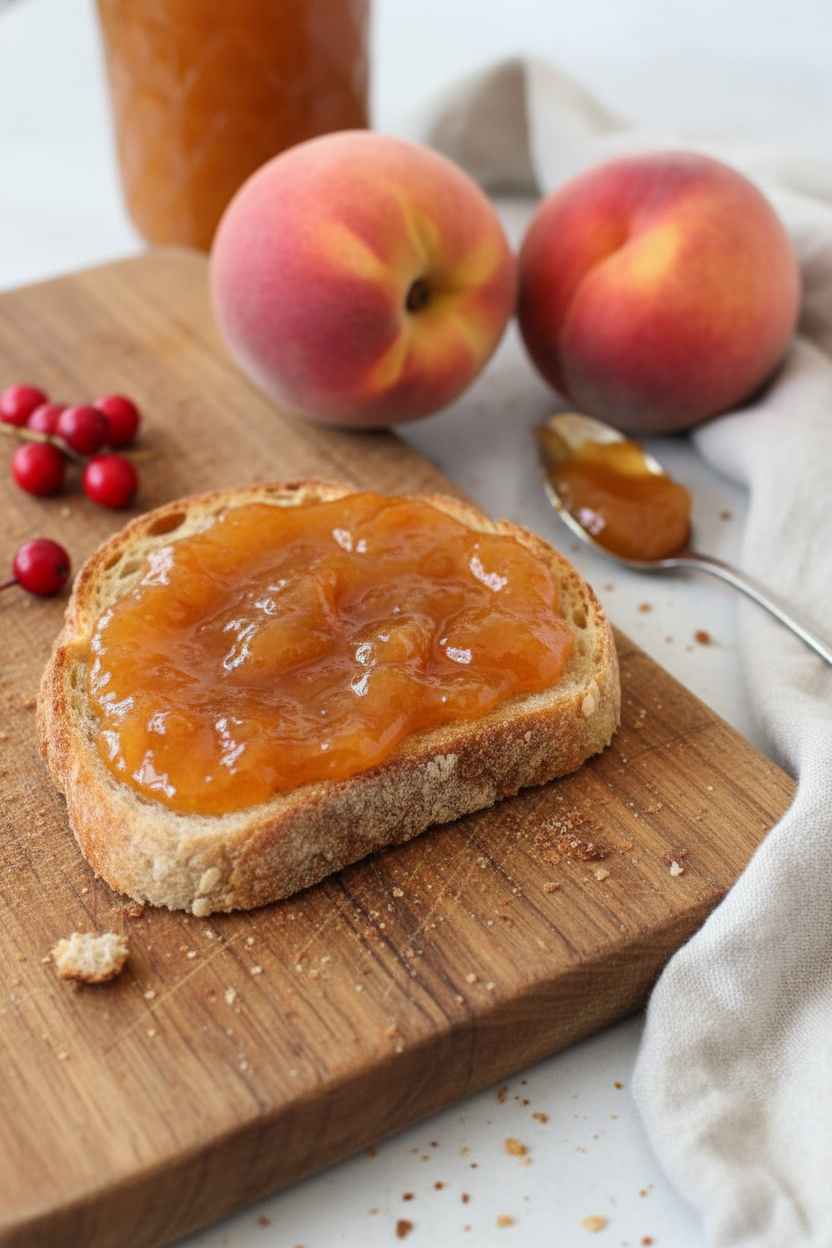
Slather this jam on warm, buttered toast for the coziest breakfast. It is also perfect spooned over vanilla ice cream for a sunny summer dessert. For a fancy touch, swirl it into yogurt or oatmeal for a sweet surprise. Which would you choose tonight?
Your Peach Jam, Stored Right
Fresh peach jam is a treasure. You want it to last. After you make your jam, let the jars cool completely on the counter. You will hear a little pop sound. That is the lids sealing shut.
Store sealed jars in a cool, dark pantry. They will stay good for up to one year. Once you open a jar, put it in the fridge. Use it within three weeks. I remember my first batch. I left a jar on the counter by accident. It got moldy fast. What a sad lesson.
You can also freeze your jam. Leave an inch of space at the top of the jar. The jam expands as it freezes. Frozen jam lasts for six months. Let it thaw in the fridge overnight. Batch cooking matters because you save time later. You will always have a sweet gift ready for toast or yogurt. Have you ever tried storing it this way? Share below!
Oops! Fixing Common Jam Problems
Sometimes jam does not turn out perfect. Do not worry. It happens to everyone. Here are three common problems and how to fix them.
First, your jam is too runny. This means you did not cook it long enough. Next time, cook it until it sticks to a cold spoon. I once rushed the cooking. My jam was like peach syrup. It was still tasty on pancakes though.
Second, your jam is too thick and stiff. You probably cooked it too long. Just add a little water or apple juice to thin it out.
Third, your jam tastes scorched. You likely did not stir enough. Stir often, especially near the end. This matters because fixing these problems makes you a better cook. You learn what to look for. Your next batch will be even better. Which of these problems have you run into before?
Fun fact: Peach jam made without pectin actually has a softer, more natural texture than store-bought jam.
Your Quick Questions, Answered
How long does homemade peach jam last? When you water-bath can your jam and store it in a cool, dark pantry, it will last for up to one year. This is because the heat kills bacteria and the seal keeps air out. Once you open the jar, keep it in the fridge. Use it within three weeks for the best flavor. Always check for mold or off smells before eating.
Why is my peach jam runny? Your jam is runny because it did not cook long enough to release the natural pectin from the peaches. You need to boil it until it thickens. Try the spoon test. Dip a cold metal spoon in the hot jam. Lift it out and turn it sideways. If the jam slowly slides off like a sheet, it is ready. If it drips like water, keep cooking.
Can I use frozen peaches for jam? Yes, you can absolutely use frozen peaches for this jam recipe. Just thaw them completely first. Drain off any extra liquid before you start. The liquid can make your jam too runny. Frozen peaches work well because they are picked at peak ripeness. They will give you a lovely, flavorful jam.
Do I need pectin for peach jam? No, you do not need pectin for this recipe. Peaches have natural pectin in their skins and pits. By cooking the jam for a long time, you help that natural pectin work. This gives you a soft, spreadable jam. It is simpler than using store-bought pectin. Plus, it lets the pure peach flavor shine through.
How do I know when peach jam is set? You use the plate test or the spoon test. For the plate test, put a small plate in the freezer. Drop a spoonful of hot jam on the cold plate. Wait 30 seconds. Push the jam with your finger. If it wrinkles and holds its shape, it is set. The spoon test works too, as described above.
How much sugar do I need for peach jam? This specific recipe uses 2 cups of sugar for 4 pounds of peaches. This is a low-sugar jam. The sugar helps preserve the jam and brings out the peach flavor. You can adjust slightly, but do not go too low. Less sugar means a softer set and shorter shelf life. For a firmer jam, keep the sugar as written.
Which tip will you try first?
A Sweet Goodbye From My Kitchen to Yours
I hope you feel ready to make this lovely peach jam. It is a simple joy to spread on warm biscuits. Remember, the first batch is just practice. Every jar you make teaches you something new. I would love to hear how yours turns out. Have you tried this recipe? Tell me about it in the comments below. Sharing stories makes cooking so much sweeter. Happy cooking!
—Grace Ellington.

My First Batch of Homemade Peach Jam
Ingredients
Instructions
- Blanch and peel the peaches, remove the pits and chop into chunks. Add peaches, sugar, and lemon juice to large saucepan. You can use a masher to mash the peaches, or process them into a smooth texture with an immersion blender or food processor.
- Bring peaches to a boil, stirring frequently. Continue to boil and stir, until peaches reduce and reach desired consistency. (Anywhere from 15 to 25 minutes – jam should stick to spoon when lifted and turned sideways.)
- Fill clean pint or half-pint jars leaving a 1/4 inch headspace and add the 2-piece lids. Process in a water bath canner for 10 minutes.
Notes
- Nutrition Facts: Homemade Peach Jam. Amount Per Serving (1 tbsp): Calories 21, Calories from Fat 1, Fat 0.1g (0% DV), Saturated Fat 0.003g (0% DV), Polyunsaturated Fat 0.01g, Monounsaturated Fat 0.01g, Sodium 2mg (0% DV), Potassium 20mg (1% DV), Carbohydrates 5g (2% DV), Fiber 0.2g (1% DV), Sugar 5g (6% DV), Protein 0.1g (0% DV), Vitamin A 53IU (1% DV), Vitamin C 1mg (1% DV), Calcium 1mg (0% DV), Iron 0.1mg (1% DV). Percent Daily Values are based on a 2000 calorie diet.