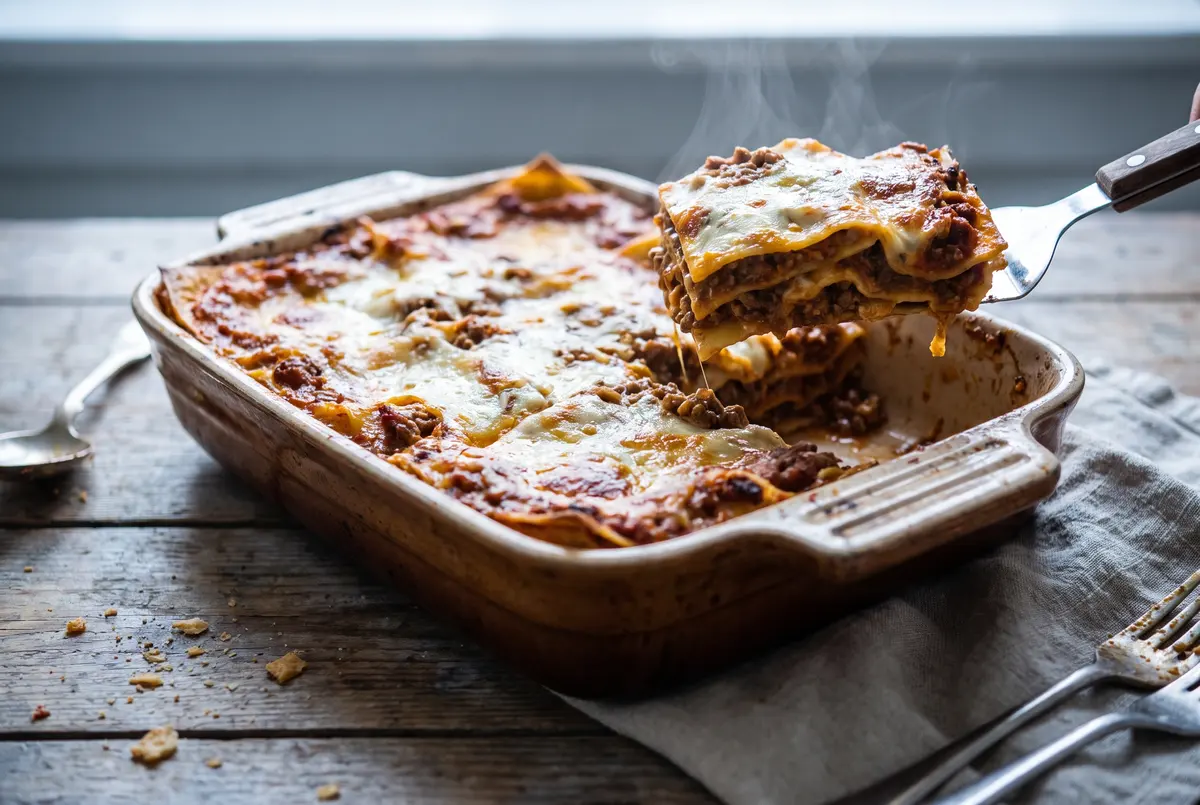
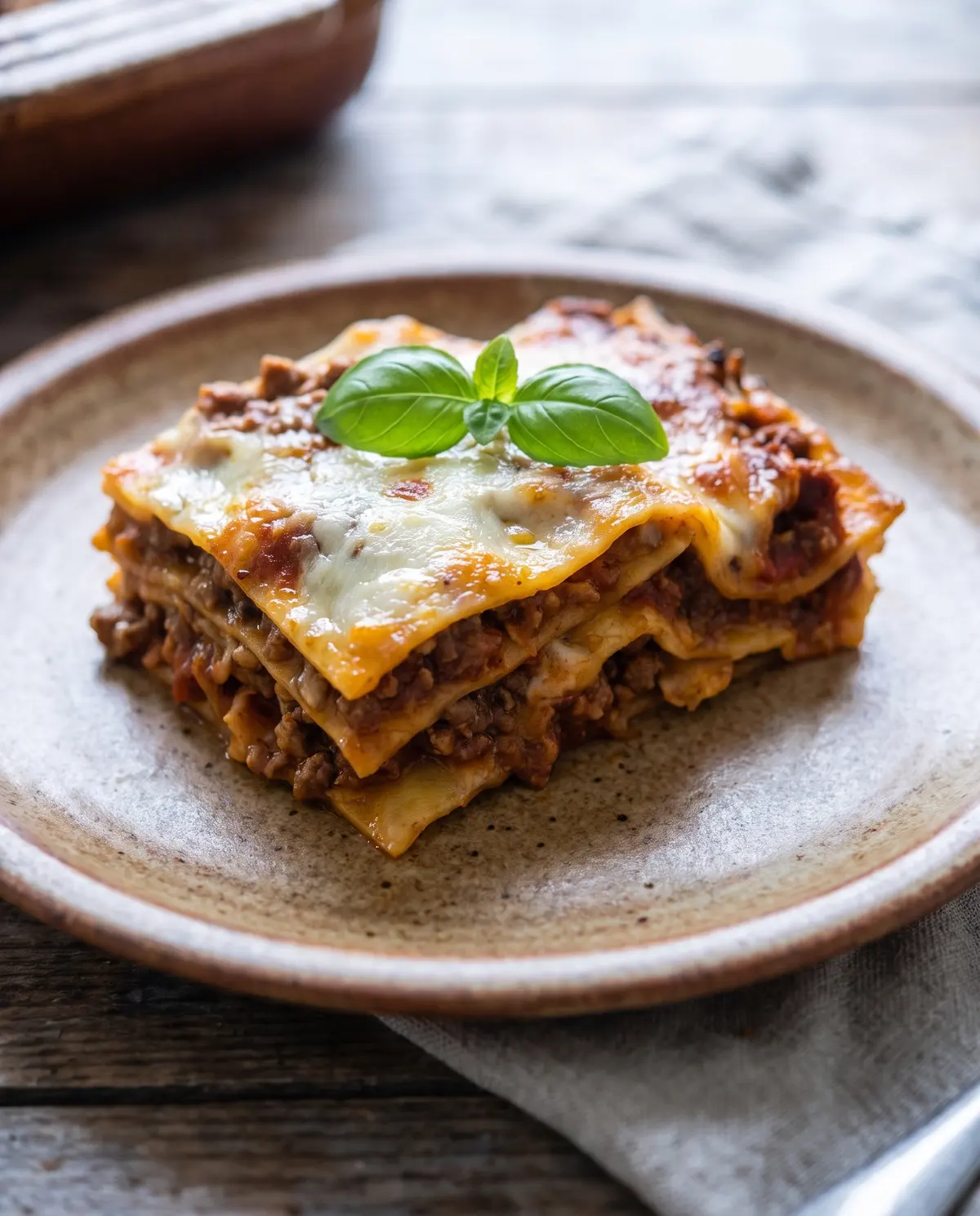
I have made a lot of lasagnas in my time. Some were soupy. Some were just noodles and cheese with nothing in between. This one is the one I come back to every time. The meat sauce is rich, the cheese is creamy, and the noodles hold their shape under all that weight.
My grandma used to make lasagna on holidays. The whole family would show up an hour late just so they could smell the house when they walked in. I started making this bolognese version years later when I wanted something that felt like a hug from the inside.
And that is the thing about a good lasagna. It takes time, but it rewards you for the wait. You make it on Sunday, eat it for dinner, and then thank yourself on Monday when the leftovers are even better.
Have you ever made a lasagna that just stuck with you? Tell me about it in the comments.
Why the Sauce Is the Whole Lasagna
I used to use jarred sauce. I figured it was the same thing as homemade. Then my neighbor Betty brought over a pot of her bolognese one night and I changed my mind after the first bite.
A real bolognese is not just tomato sauce with ground beef in it. It is a slow-simmered meat sauce where the beef is just one note among many — carrots, celery, onion, garlic, a little wine, a little tomato paste, a lot of patience. The trick is browning the vegetables first until they are soft and jammy. That step alone takes 15 minutes. Skip it and your sauce tastes raw and thin.
And the wine? Do not skip it. A cup of dry red wine deglazes the pan and lifts the whole sauce up. It adds depth and a slight tang that the tomatoes alone cannot give you. Substitute with beef broth and a splash of red wine vinegar if you must, but the real thing is so much better.
Why this matters: A lasagna is only as good as its sauce. The cheese and noodles are just the delivery system. Spend your time on the sauce and the rest will take care of itself.
The Cheese Layer That Holds It All Together
Ricotta, mozzarella, and parmesan. That is the trio. The ricotta gives the lasagna its creamy, almost custardy middle. The mozzarella gives you those stretchy, melty bites. The parmesan gives you the salty, nutty backbone that makes the whole thing taste like Italy.
Do not use the part-skim ricotta. It is grainy and watery and your lasagna will not set up the way you want. Whole milk ricotta is the way to go. Mix it with an egg, a little parmesan, and a handful of fresh parsley, and you have the cheese layer that holds the whole lasagna together.
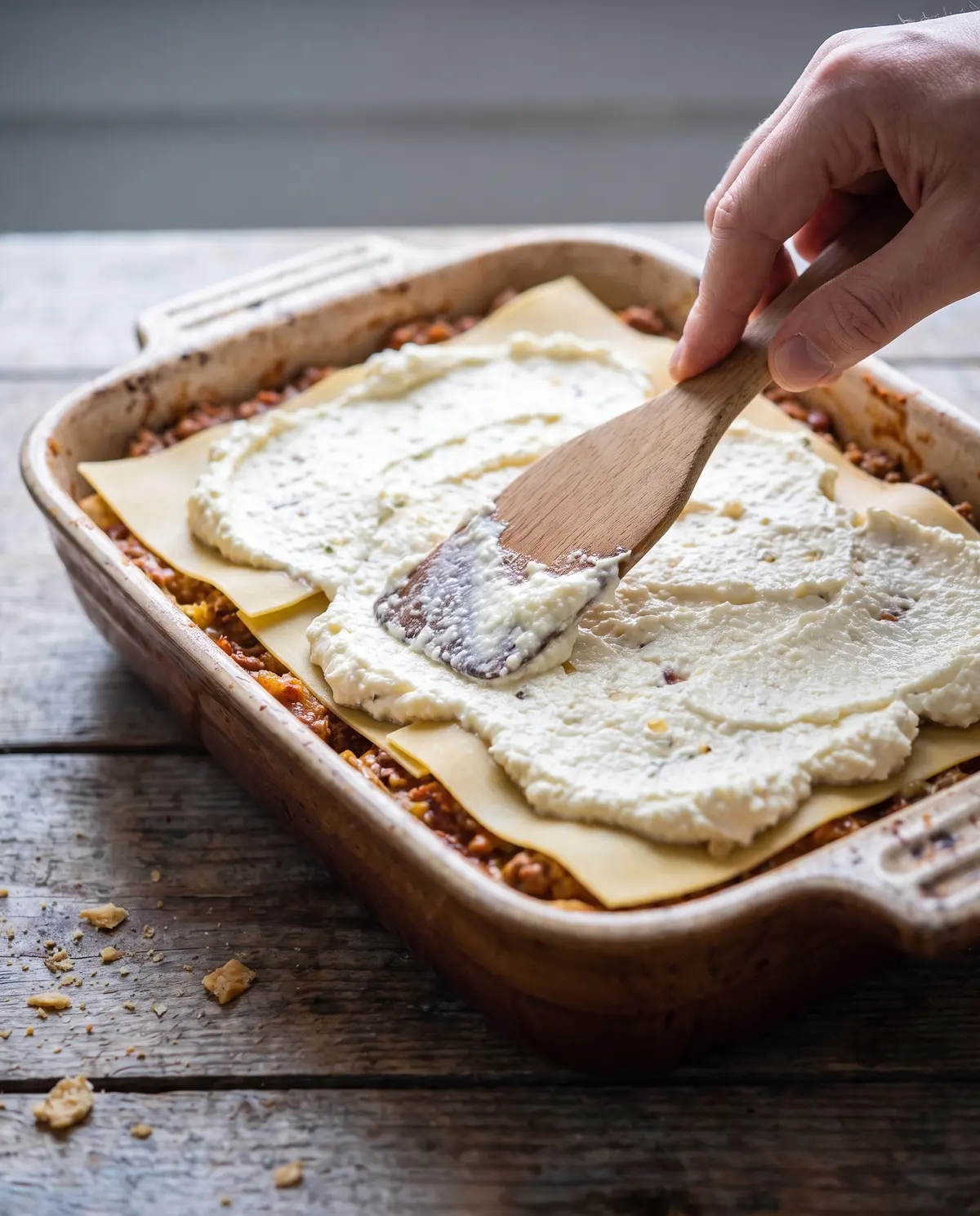
The trick is spreading the ricotta mixture in a thin, even layer. Do not dump it in big globs. Use the back of a spoon to push it all the way to the edges of the noodles so every bite has some cheese in it. I learned that the hard way the first time I made lasagna and ended up with a cheese volcano in the middle and dry noodles around the edges.
Do you mix your ricotta ahead of time or do you just plop it on? I have done both. The mixed version is so much better.
Classic Beef Lasagna Bolognese
I started making this lasagna when I had a slow Sunday and a package of ground beef in the fridge. It turned into the recipe my husband requests every time I ask what he wants for dinner. My kids never complained about this one. For more on how I build a slow Sunday dinner, visit my about page.
The trick is letting the lasagna rest for at least 15 minutes after you pull it out of the oven. If you cut into it right away, all that cheese and sauce will run out and you will have a puddle on the plate. Patience here is the difference between a lasagna and a lasagna experience. You can find more pasta recipes on the site that work just as well for slow Sundays.
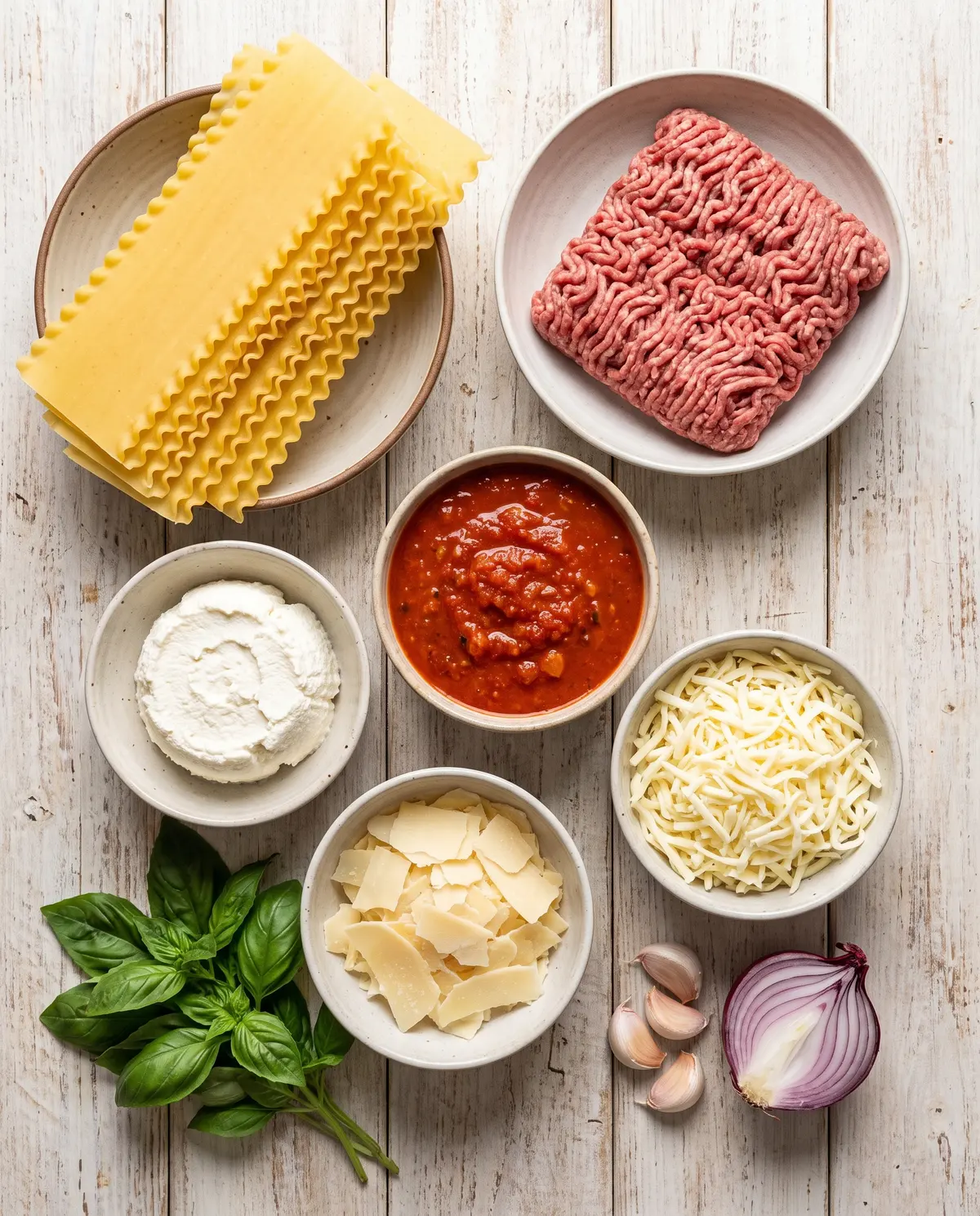
Ingredients
Instructions
Step 1: Heat the olive oil in a large pot over medium heat. Add the diced carrots, celery, and onion. Cook them for 15 to 20 minutes, stirring now and then, until they are deep golden brown. (Do not rush this part. Burnt edges are fine, but black is not.) What is your favorite lasagna pan to use? Share below!
Step 2: Push the vegetables to the sides of the pot. Add the ground beef to the center and season it with salt. Let it sit for a few minutes without stirring, so it gets a nice brown crust. Then break it up and mix everything together. I always use 80/20 ground beef for lasagna because the fat is what carries the flavor.
Step 3: Stir in the garlic and tomato paste. Cook for about 2 to 3 minutes until it smells really good. Pour in the red wine and scrape up any stuck bits from the bottom of the pot. Let the wine cook down for about 5 minutes until most of the liquid is gone.
Step 4: Add the crushed tomatoes, tomato sauce, bay leaves, oregano, and a pinch of sugar. Bring it to a gentle simmer, then cover partially and let it cook for at least 45 minutes, stirring occasionally. The longer you let this simmer, the better the lasagna will be. I usually let mine go for an hour and a half.
Step 5: While the sauce simmers, cook the lasagna noodles in salted water until they are just shy of al dente — about 7 minutes. They will finish cooking in the oven. Drain and lay them flat on a sheet pan drizzled with olive oil so they do not stick together.
Step 6: In a medium bowl, mix the ricotta with the egg, half of the parmesan, the chopped parsley, and a pinch of salt and pepper. Stir until smooth and set aside.
Step 7: Preheat the oven to 375°F. Spread a thin layer of meat sauce on the bottom of a 9×13 baking dish. Layer 4 noodles, a third of the ricotta mixture, a third of the remaining sauce, and a third of the mozzarella. Repeat the layers two more times, ending with sauce, mozzarella, and the remaining parmesan on top. Which would you choose tonight?
Step 8: Cover the dish tightly with foil and bake for 25 minutes. Remove the foil and bake for another 25 minutes until the cheese is bubbly and the top is golden brown. Let the lasagna rest for at least 15 minutes before slicing. This step is non-negotiable. The lasagna needs time to set up or it will fall apart when you cut it.
Creative Twists
Swap the beef for Italian sausage for a spicier, more herby flavor. Add a layer of fresh spinach (wilted and squeezed dry) for some greens. Use a mix of ricotta and mascarpone for an even creamier cheese layer. Stir some red pepper flakes into the sauce for a little heat. Which one would you try first? Comment below!
Serving & Pairing Ideas
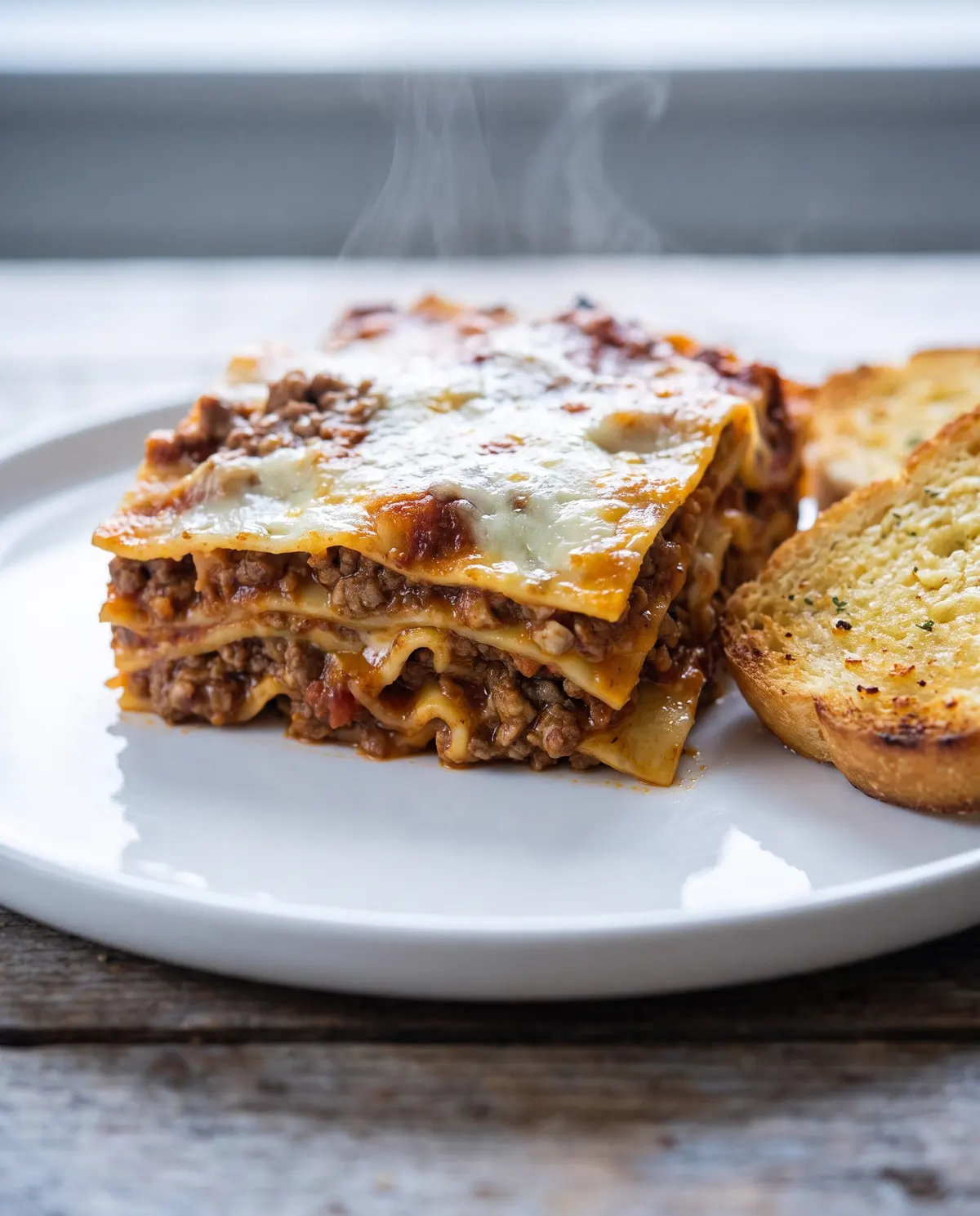
Serve the lasagna in thick squares with extra parmesan and a few grinds of black pepper on top. A simple Caesar salad or a peppery arugula salad cuts through the richness. Garlic bread is non-negotiable here. A glass of the same red wine you used in the sauce makes the whole meal feel like a celebration. Which would you choose tonight?
Why I Love This Lasagna Bolognese
I learned to make lasagna from my grandma, who learned from her mother. Three generations of Italian women, all of them telling me the same thing — the sauce is the whole lasagna. And they were right. I ruined plenty of pans of lasagna before I learned that lesson. I still make it this way on slow Sundays when I want something that feels like a real dinner. For more on my approach to slow cooking, visit the home page.
Truth is, lasagna is a project. But it is the kind of project that fills your house with good smells and gives you leftovers for days. My kids never complained about this one. Not once. The cheese pulls, the sauce is rich, and the noodles hold their shape. That is the whole goal.
Storage and Batch Cooking
This lasagna keeps in the fridge for up to 4 days and actually tastes even better the next day once the flavors have melded. Reheat individual portions in the microwave or warm the whole pan in a 350°F oven covered with foil for 20 minutes. I usually make this on Sunday and portion it out for quick weeknight dinners. For more tips on meal prep, visit the about page.
You can freeze the unbaked lasagna for up to 3 months. Assemble it completely, wrap it tightly in plastic wrap and then foil, and freeze. Thaw it overnight in the fridge before baking as directed. You can also freeze individual cooked portions for quick grab-and-go meals. Just microwave from frozen with a splash of water on top to keep the noodles from drying out.
Troubleshooting Your Lasagna
One problem I see is watery lasagna. That usually means your ricotta was too wet, or you did not let the sauce simmer down long enough. Strain the ricotta in a fine mesh sieve for 30 minutes before mixing, and let that sauce cook down until it is thick and rich. Another issue is noodles that are still crunchy. You probably did not cook them enough before assembling. Always cook them until they are just shy of al dente. Why does this matter? Because nobody wants a lasagna that fights back when you cut into it.
I remember the first time I made lasagna, the cheese slid right off the noodles when I served it. The ricotta mixture was too thin and the noodles were not cooked enough. I learned my lesson. Strain the ricotta, cook the noodles, and let the whole thing rest before you cut into it. Getting these little things right builds real confidence in the kitchen. Which of these problems have you run into before?
Your Quick Questions, Answered
Can I use no-boil lasagna noodles?
You can. They will absorb moisture from the sauce as the lasagna bakes, so make sure your sauce is a little thinner than usual. Some people swear by no-boil noodles. I prefer the regular kind because I like the control of pre-cooking them just shy of al dente. Both work. Use what you have. For another baked pasta that uses regular noodles, try my baked ziti with three cheeses.
Can I make this lasagna ahead of time?
Absolutely. You can assemble the entire lasagna up to 24 hours in advance and keep it covered in the fridge until you are ready to bake. You might need to add 10 to 15 minutes to the baking time since you are starting with a cold dish. I do this all the time when I have guests coming for dinner. It is honestly the best way to make a stress-free dinner party.
Do I have to use red wine?
You can substitute with beef broth plus a splash of red wine vinegar or balsamic vinegar. The flavor will be a little different but still delicious. I have made this lasagna without wine for friends who do not drink, and the family never noticed. The trick is the long simmer — that is what builds the depth, not the wine itself. For another no-wine pasta, look at my lemon ricotta pasta.
Which tip will you try first?
A Few Last Thoughts
I hope you give this classic beef lasagna a try on a slow Sunday when you have a couple of hours to let the sauce do its thing. It is one of those recipes that fills your house with warmth and gives you leftovers for days. Leave a comment and let me know how it turned out for you. I love hearing about your kitchen wins. Have you tried this recipe?
A slow-simmered bolognese meat sauce layered with creamy ricotta, melty mozzarella, and parmesan — the lasagna that anchors every Sunday.
Ingredients
Instructions
Heat olive oil in a large pot over medium heat. Add carrots, celery, and onion. Cook 15-20 minutes until deep golden brown.
Push vegetables aside. Add ground beef to the center, season with salt, and brown undisturbed for a few minutes. Break it up and combine.
Stir in garlic and tomato paste. Cook 2-3 minutes. Add red wine and scrape up the brown bits. Let wine reduce 5 minutes.
Add crushed tomatoes, tomato sauce, bay leaves, oregano, and sugar. Simmer partially covered for 45-90 minutes, stirring occasionally.
Cook lasagna noodles in salted water until just shy of al dente, about 7 minutes. Drain and lay flat on an oiled sheet pan.
Mix ricotta with egg, half the parmesan, parsley, and a pinch of salt and pepper.
Preheat oven to 375°F. Spread a thin layer of sauce in a 9×13 baking dish. Layer 4 noodles, 1/3 ricotta, 1/3 sauce, 1/3 mozzarella. Repeat twice. Top with remaining sauce, mozzarella, and parmesan.
Cover with foil and bake 25 minutes. Uncover and bake 25 more minutes until bubbly and golden. Rest 15 minutes before slicing.
Notes
The sauce is the heart of this lasagna — let it simmer as long as you can for the deepest flavor.
Elowen Thorn I cook, photograph and re-test every recipe in an ordinary home kitchen before it goes up, so what you make matches what you see. Savory Discovery is where simple weeknight cooking, seasonal ideas and the odd bit of kitchen craft sit side by side — written plainly, and worth cooking twice.