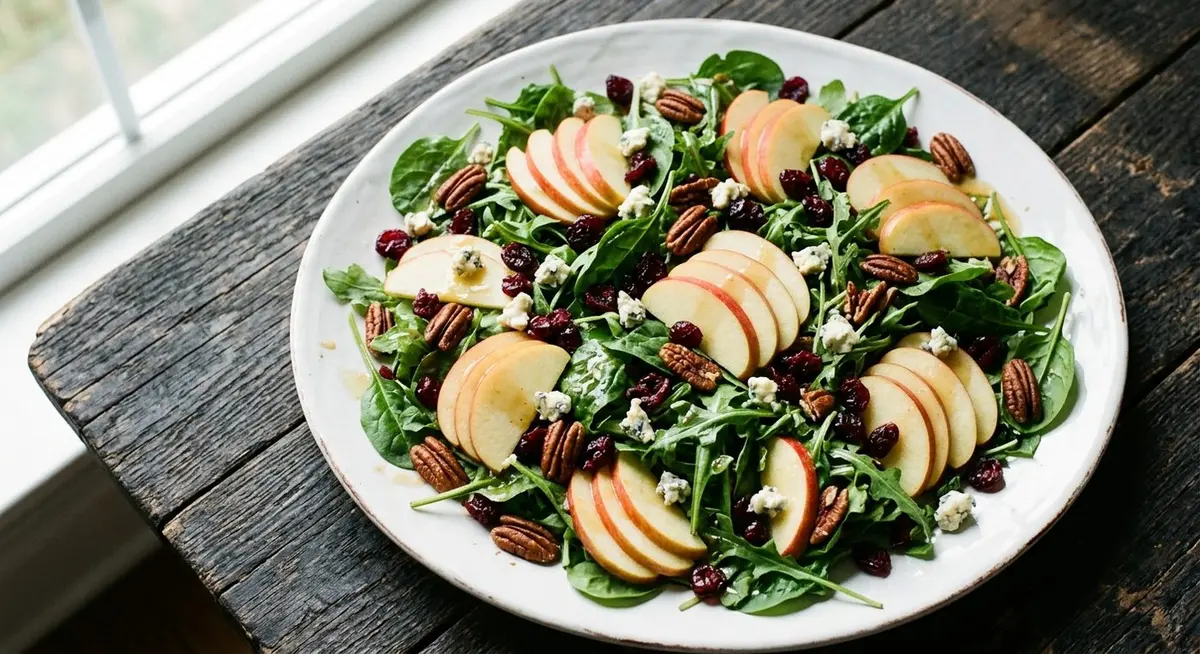
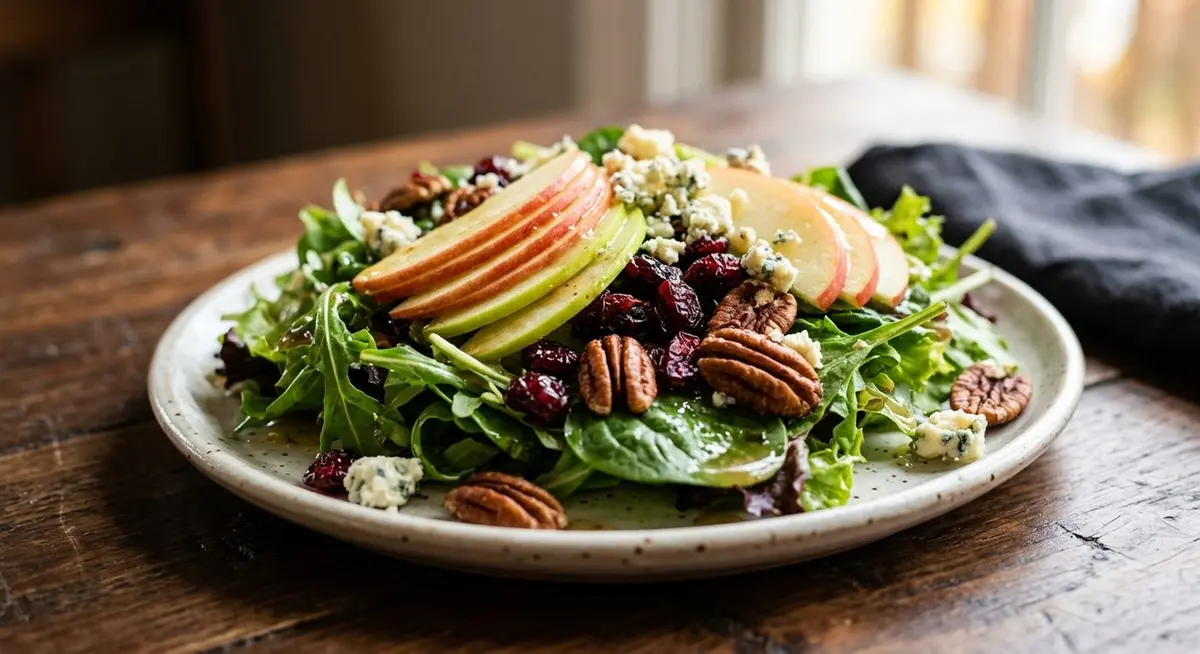
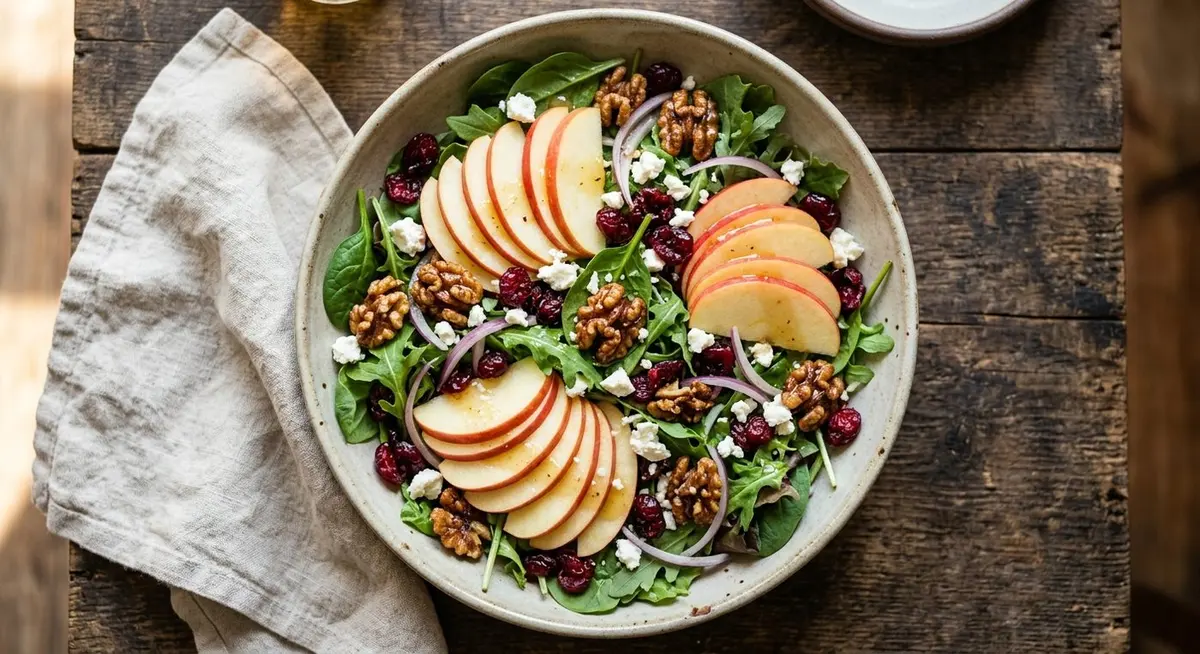
This is the salad I bring to every table between the first cold morning and the end of the year. Crisp apples, tart dried cranberries, toasted pecans, a sharp blue cheese and a maple Dijon vinaigrette that you build from a ratio rather than a recipe card. Twenty minutes, one jar, one platter — and it looks like you spent an afternoon on it.
Almost every autumn gathering has one dish that disappears before anything else is touched, and it is almost never the one that took the longest. This is that dish. It has four textures fighting politely with each other — the snap of cold apple, the chew of dried cranberry, the crunch of toasted pecan, the salt-and-butter collapse of blue cheese — and a dressing that ties them together without drowning any of them.
The reason most versions of this salad disappoint is that they are assembled in the wrong order and dressed too early. Greens go into a bowl wet, get drowned in a sweet dressing, and sit on a buffet for forty minutes until everything has the same soft, tired texture. Doing three small things differently fixes all of it, and none of them take extra time.
First, the greens go in bone dry. Water on a leaf is the enemy of dressing — it slides off and pools in the bottom of the bowl, taking the vinaigrette with it. Second, the dressing is built as a ratio, not a recipe, so it tastes right whether you are making enough for four people or twenty. Third, everything gets dressed in the last ten minutes before it hits the table. That is the whole trick.
A wide shallow platter, not a deep bowl, keeps the greens from crushing under their own weight.
This is a twenty-minute salad, and almost all of it is knife work. If you can slice an apple and shake a jar, you can make it. The only thing that genuinely matters is timing it so it goes to the table dressed and fresh.
What Goes In, and Why Each Thing Is There
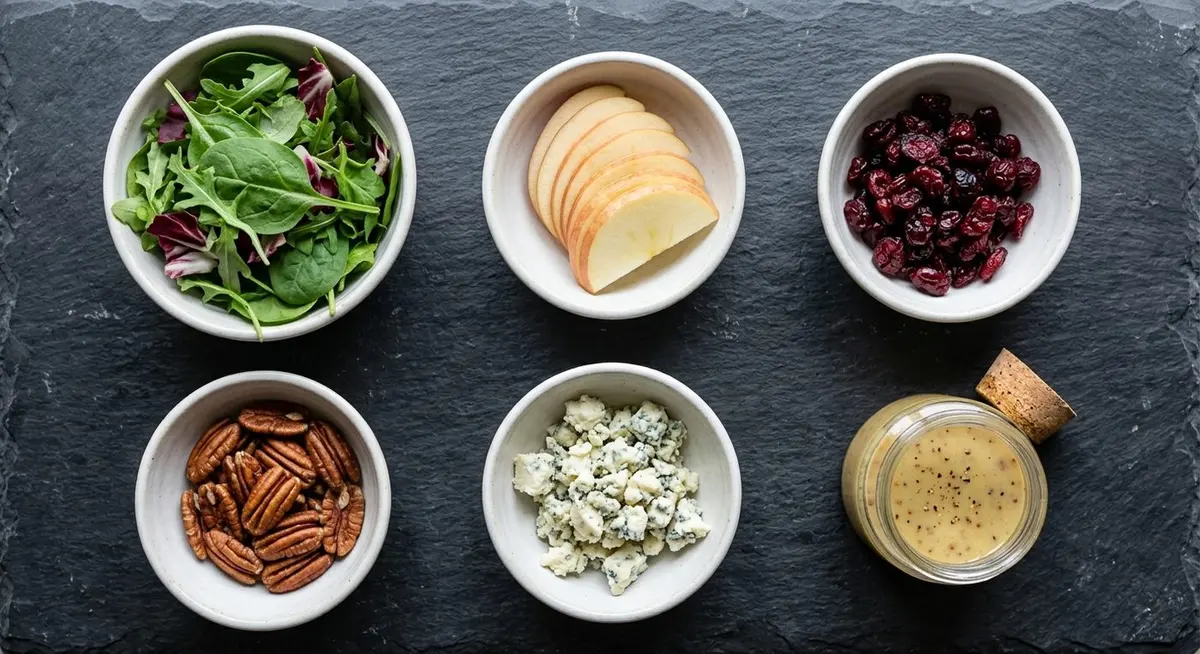
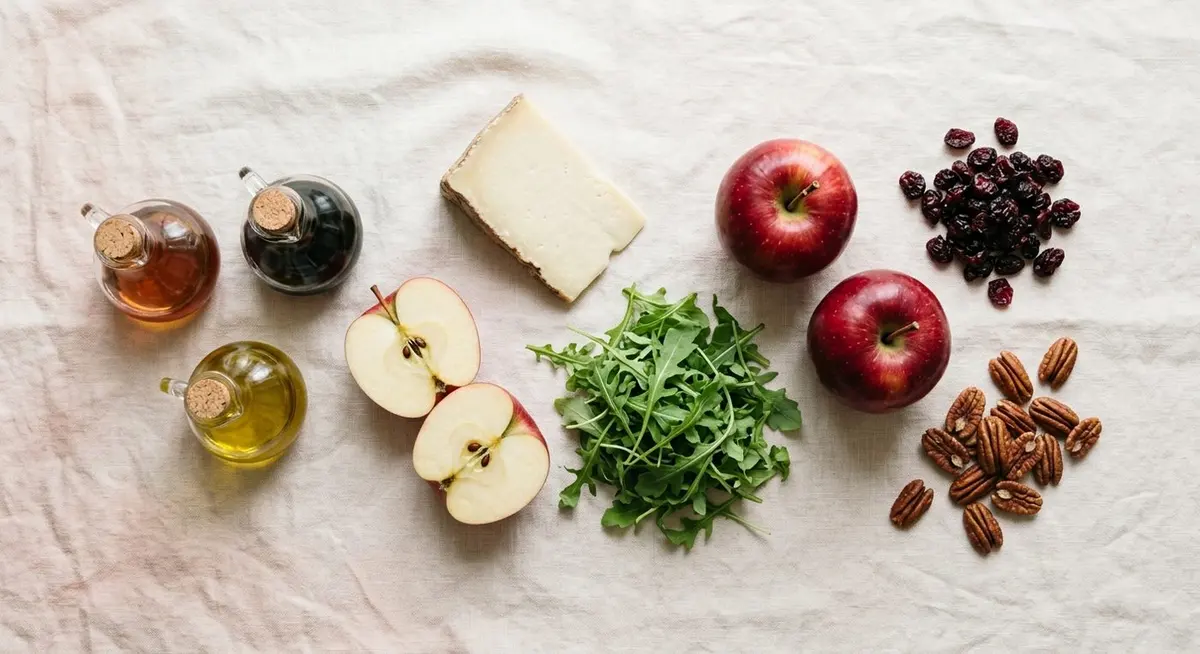
This is a short ingredient list by design. Each item has a job, and once you know what the job is you can swap intelligently instead of guessing. The proportions below serve four as a side dish, or six if it is one of several things on a holiday table.
Everything measured before you start. It takes two minutes and makes the assembly genuinely thoughtless.
Ingredients and what each one is doing
Ingredient
Amount
What it is doing
Mixed baby greens
5 oz (1 clamshell)
The base. Arugula, spinach and baby kale together give you both pepper and softness
Crisp apples
2 medium
Sweetness, crunch and the cold snap that makes the whole plate feel fresh
Dried cranberries
1/2 cup
Chewy, tart and festive. They carry the seasonal note more than any other ingredient
Pecans or walnuts
1 cup
The crunch that stops the salad being soft. Toasted, always
Blue cheese
1/2 cup crumbled
Salt, fat and the sharp edge that cuts the maple in the dressing
Olive oil
1/4 cup
The body of the vinaigrette and the thing that makes a salad feel like a meal
Pure maple syrup
2 Tbsp
Balances the vinegar’s acidity and gives the dressing its autumn character
White wine vinegar
2 Tbsp
Acidity. Cider vinegar works just as well and is a touch fruitier
Dijon mustard
2 Tbsp
The emulsifier. It is what stops the oil and vinegar separating on the leaf
Garlic powder
1/2 tsp
A soft background savoury note. Fresh garlic is too aggressive raw here
Fine salt and black pepper
to taste
Salt especially — added at the end, never before
Buy the plain dried cranberries if you can find them. Sweetened ones are far more common and will make the dressing taste sweeter than intended. If sweetened is all you have, drop the maple syrup to one tablespoon and taste before adding more.
Toasting the Pecans (Do Not Skip This)
Raw pecans straight from the bag taste like nothing much — flat, faintly woody, and slightly soft. Eight minutes in a dry pan changes them completely: the oils come out, the texture goes from chewy to brittle, and the flavour turns deep and almost buttery. This is the single cheapest improvement you can make to the salad.
Put the pecans in a dry skillet over medium heat. No oil, no butter, no salt — just the nuts.
Move them around every thirty seconds or so, so no side sits against the metal long enough to scorch.
Watch for the moment they smell warm and toasted and the colour has gone a shade darker and slightly glossy. That is usually five to eight minutes.
Tip them immediately onto a plate to cool. Leaving them in the hot pan keeps them cooking and they will turn bitter.
Cool completely before they go anywhere near the salad. Warm nuts steam the greens and soften the whole plate.
If you are making this for a crowd, toast a double batch. Toasted pecans keep for two weeks in an airtight jar at room temperature, so there is no reason to toast nuts for one salad when you can do enough for three.
The oven method, if you would rather not stand over a pan: spread them on a sheet pan and bake at 350°F for six to nine minutes, shaking the pan once halfway. Set a timer — nuts go from toasted to burnt in under a minute, and they do not smell like they are burning until it is already too late.
The Maple Dijon Vinaigrette, Built as a Ratio
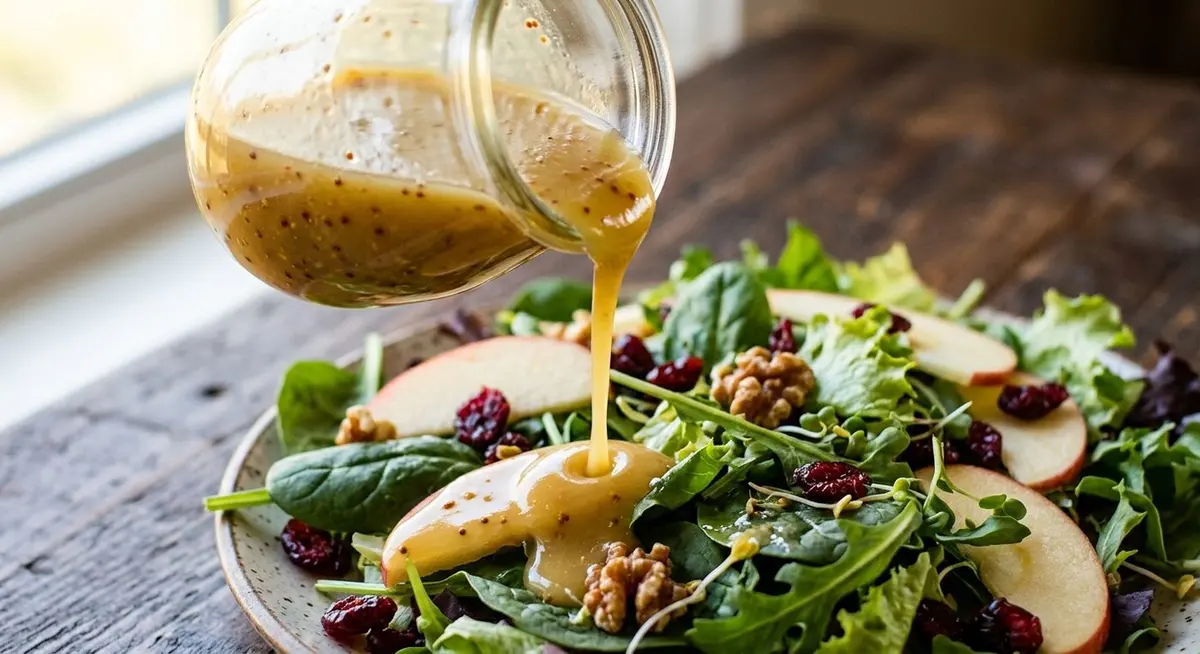
Forget the recipe card for a moment, because a vinaigrette is arithmetic. Four parts oil, two parts vinegar, two parts mustard, two parts maple syrup, plus salt and seasoning. Once you have made it twice you will never measure it again, and more usefully, you can make it in any quantity without scaling anything on paper.
Shake it in a jar and it comes together in about fifteen seconds. No whisking, no slow drizzle.
The ratio, and what it looks like for four servings
Component
Ratio
For 4 servings
Olive oil
4 parts
1/4 cup
White wine vinegar or cider vinegar
2 parts
2 Tbsp
Dijon mustard (smooth and mild)
2 parts
2 Tbsp
Pure maple syrup
2 parts
2 Tbsp
Garlic powder
a pinch
1/2 tsp
Fine salt and black pepper
to taste
to taste
Put everything in a jar with a tight lid and shake hard for fifteen seconds. That is it. The mustard does the emulsifying, which is why this dressing holds together on a leaf instead of sliding off it, and why you do not need to stream the oil in slowly the way you would for a plain oil-and-vinegar dressing.
Use a smooth, mild Dijon rather than a coarse-grained or a hot one. The dressing is on every bite of salad, so a mustard with real heat in it will dominate everything else on the plate. If all you have is a strong one, start with one tablespoon and taste before adding the second.
Keeping It Emulsified, and Rescuing It If It Breaks
A mustard vinaigrette is stable, but it is not permanent. It will separate if it sits for a while, and it will definitely separate in the fridge overnight. That is not a fault — it is what dressing does.
Shake before every single pour. Not just the first time. A dressing that has been sitting on the counter for twenty minutes has already begun to split.
Bring it to room temperature if you can. Cold dressing does not coat leaves evenly and tastes flatter. Twenty minutes out of the fridge is enough.
If it has fully split in the fridge, let it sit out for ten minutes, then shake hard. It will come back together. Oil that is still cold is much harder to emulsify than oil that is not.
If it still will not come together, add another teaspoon of mustard and shake again. Mustard is the emulsifier, so a broken dressing usually just needs more of it.
If you accidentally over-sweetened it, add a splash more vinegar rather than more oil. Acidity corrects sweetness; oil just dilutes everything and makes it taste thin.
A jar, not a bowl. Vinaigrette made in a bowl needs a whisk and a slow drizzle and still separates faster. A lidded jar shaken hard for fifteen seconds makes a better emulsion in a fraction of the time, and it is the same jar you store it in.
Choosing and Cutting the Apples
The apple is the ingredient people notice and the one most often chosen carelessly. A soft apple turns the whole salad mealy within twenty minutes, and a bland one contributes nothing but bulk. You want something firm enough to hold an edge and sweet enough to stand against the vinegar.
Apple varieties and what they do here
Apple
Texture and flavour
Best for
Honeycrisp
Explosively crisp, very juicy, honeyed
The showpiece platter — best all-round choice
Fuji
Very crisp, consistently sweet
Buying out of season; it holds quality year round
Pink Lady
Firm, snappy, sweet-tart and balanced
Cutting through the sweetness of the dried cranberries
Jazz
Dense and crunchy with a tangy finish
Standing up to a heavy blue cheese
Gala
Softer, mild and sweet
Feeding children — but it browns faster than any other
Granny Smith
Sharp, green and very firm
Only if you love a sour note — halve the maple syrup
Cut them however you like, but cut them thin. Quarter the apple, cut out the core, then slice each quarter into pieces about an eighth of an inch thick. Slices that are too thick are awkward to eat with a fork and they push the greens out of the way rather than sitting among them. Leave the skin on; it is where the colour and most of the structure live.
The browning fix that actually works. Drop the slices into a bowl of cold water with a good pinch of salt in it, and leave them there until you assemble. Salt slows the enzyme that turns apples brown without the sour edge that lemon juice leaves behind. Drain them well before they go into the salad — a wet apple is as bad for the dressing as a wet leaf.
Assembly, Step by Step
The order matters more than the instructions suggest, and the reason is texture. Anything that can soften the greens — liquid, weight, warmth — goes in last or goes in carefully. Work through it in this sequence and the salad will still look and taste the way it should twenty minutes after it is dressed.
Toast the pecans and set them aside to cool completely. If you are doing this ahead, they can sit in a jar for two weeks.
Make the dressing. Combine the olive oil, vinegar, Dijon, maple syrup, garlic powder, salt and pepper in a jar, lid on, and shake hard for fifteen seconds. Set it aside.
Wash and dry the greens properly. A salad spinner is ideal, but a clean tea towel and a gentle pat works too. They need to be genuinely dry — this is the step that decides whether the dressing ends up on the leaves or in the bottom of the bowl.
Slice the apples and hold them in the cold salted water while you finish the rest.
Drain the apples thoroughly and pat them dry.
Build the salad in a wide shallow bowl or on a platter. Start with the greens as a loose, airy layer rather than a packed clump.
Scatter the apples, cranberries, pecans and crumbled blue cheese over the greens. Do not stir yet.
Shake the dressing once more, then pour over about two-thirds of it and toss gently with your hands or two spoons, lifting from the bottom rather than stirring.
Taste a leaf. Add more dressing only if it genuinely needs it, then season with salt and pepper and toss once more.
Serve immediately, with any extra dressing and a small bowl of extra pecans on the side.
Dress it in the last ten minutes, toss gently, and take it straight to the table.
How to Toss So Nothing Crushes
Tossing a salad sounds like something you cannot get wrong, and yet it is the step that most often ruins a good one. Greens are fragile, and the instinct to stir them like a pot of pasta is exactly the wrong motion.
Use your hands if you are willing. Clean hands are the gentlest tool you own. Slide them under the pile and lift, turning the salad over rather than stirring it around.
Lift, do not stir. Every stir drags leaves past each other and bruises them. Lifting simply rearranges.
Dress two-thirds at first. You can always add more, but you cannot take dressing off a leaf once it is there.
Add salt last, then toss once more. Salt draws water out of leaves, so it needs to be the final act, not the first.
Do not toss a salad you are not about to serve. Dressed greens begin softening immediately. Ten minutes is the window.
If you are taking this to someone else’s table, carry the components separately in three containers — dry greens, dressing, and everything else — and toss it on arrival. It takes ninety seconds and it is the difference between a salad people talk about and a salad nobody notices.
The Make-Ahead Timeline
This is the most useful part of the whole article, because the difference between a relaxed cook and a frantic one on a holiday is entirely in the days before. Almost every component can be done in advance. Only the apples and the final toss are genuinely last-minute.
What to do, and when
When
What to do
How to store it
Up to 3 days ahead
Toast the pecans and cool them completely
Airtight jar, room temperature, never the fridge
Up to 2 days ahead
Make the dressing and shake it well
Lidded jar in the fridge; shake before use
Up to 1 day ahead
Wash and thoroughly dry the greens
Bowl lined with paper towel, covered, in the fridge
Up to 1 day ahead
Measure out cranberries and crumble the cheese
Separate small containers, refrigerated
1 hour ahead
Slice the apples into cold salted water
Bowl of cold water, out of direct sun
10 minutes ahead
Drain the apples, layer the salad, dress and toss
On the platter it will be served from
Never ahead
Salting and dressing the greens
This is the part that must be last
The greens deserve a note of their own. Dry them properly before you put them away — a spinner is best, and if you do not have one, a clean tea towel and a few gentle turns will do. Then store them in a bowl lined with paper towel, covered, in the fridge. That paper towel absorbs the last of the surface moisture and buys you a full extra day of crispness.
Do not dress it early thinking the flavours will meld. This is not a slaw or a grain salad. Dressed greens begin to collapse within twenty minutes, and by an hour the whole plate has the same soft texture regardless of what you put in it. Everything else can wait; the dressing cannot.
Swaps, Add-Ins and Variations
This salad is built to be adapted, and after a couple of times through it you will probably stop reading the list and start improvising. Here is what works, what changes, and what to watch out for.
The cheese
Gorgonzola is my default — creamy, sharp, and it crumbles into soft lumps that cling to the leaves.
Roquefort is sharper and saltier. Use a little less, or it will overwhelm the maple.
Goat cheese is milder and creamier; it makes the salad feel softer and slightly less punchy.
Feta is the most crowd-friendly and the least assertive. It also holds its shape best on a buffet.
Shaved Parmesan is a good choice if you want the salad to feel more Italian than autumnal.
Dairy-free: a firm dairy-free feta-style block crumbles acceptably, and a handful of salted roasted pumpkin seeds fills in for the salty tang.
The greens
Arugula alone makes it peppery and grown-up, and is my favourite version for a dinner party.
Baby spinach alone is softer and milder — the version to make for children.
Baby kale holds dressing beautifully and will not wilt on a buffet the way spinach does.
Butter lettuce is the most delicate option and needs a lighter hand with the dressing.
Add radicchio for a bitter note and a flash of deep red if you want a more striking platter.
Adding Protein or Bulk
As a side dish this is light. As a main course it needs a little more weight behind it, and there are several ways to get there without changing its character.
Shredded roast chicken — a cup and a half turns it into a proper lunch. Use the meat from a store-bought roast bird and the whole thing still takes twenty minutes.
Hard-boiled eggs — halved and arranged around the edge rather than tossed through, so the yolks stay intact.
Cooked farro or quinoa — a cup of either gives it a grain-salad feel. Cook it in salted water and cool it completely before it goes in, or it will wilt the greens.
Crumbled cooked bacon — a small amount goes a long way, and it plays very well against the maple.
White beans — drained and rinsed, they are the quietest way to add substance, and they take the dressing well.
Griddled halloumi — salty, squeaky and substantial. Pat it dry before it hits the pan so it browns instead of steaming.
If you add a warm ingredient, let it cool to room temperature first. Warm chicken or hot grains will steam the greens underneath them and undo every bit of care you took drying the leaves. It costs ten minutes and it is worth it.
What to Serve With It
This salad is built for a table with other things on it. It is sharp, sweet and crunchy, so it wants company that is rich, soft and savoury — which is why it belongs next to a roast rather than in place of one.
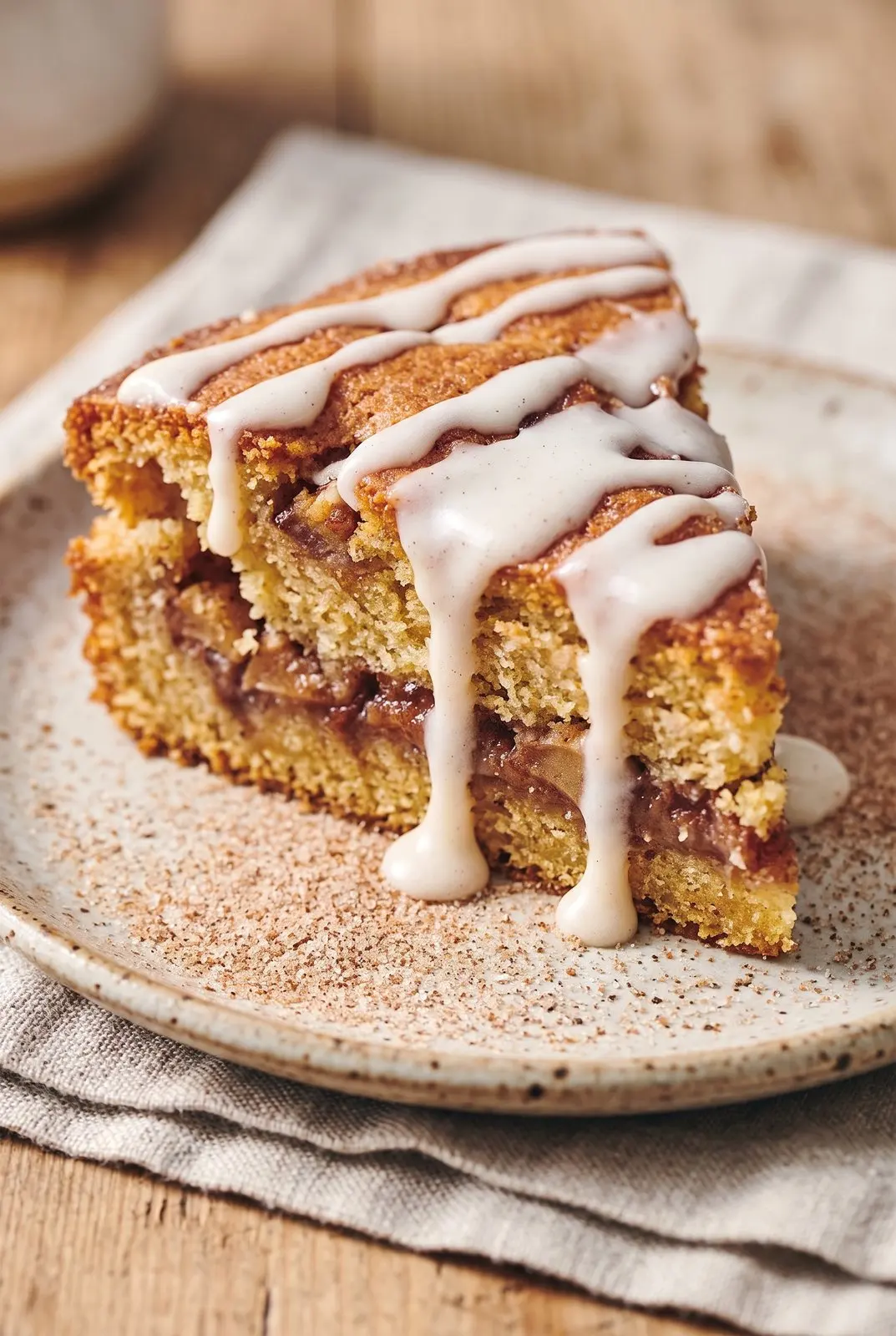
With a holiday spread, it sits naturally beside a sweet potato casserole and a bowl of butternut squash soup, and it holds its own against the heavier, creamier sides that usually dominate those menus. If you are building an autumn table, a apple cider cake or a slice of apple pie afterwards keeps the whole thing in the same key.
Roast chicken or turkey — the classic pairing, and the reason this salad exists in November.
Grilled or pan-seared steak — the sharp cheese cuts the richness of red meat beautifully.
Roast salmon — a lighter option that still feels like a proper dinner.
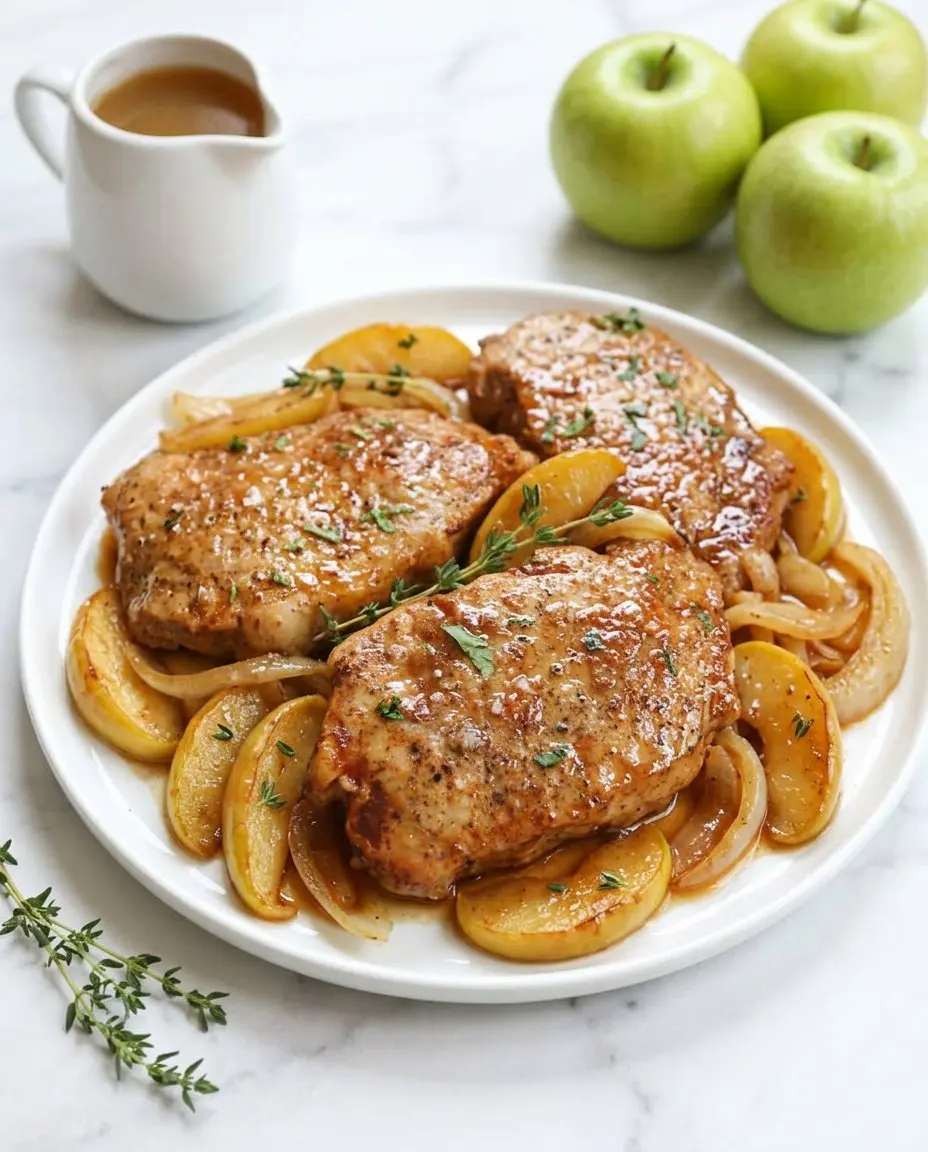
Pork tenderloin — especially if you have glazed it with anything sweet. The acidity in the dressing balances it.
Pasta — something plain and buttery, like one pot lemon orzo, so the salad stays the interesting thing on the table.
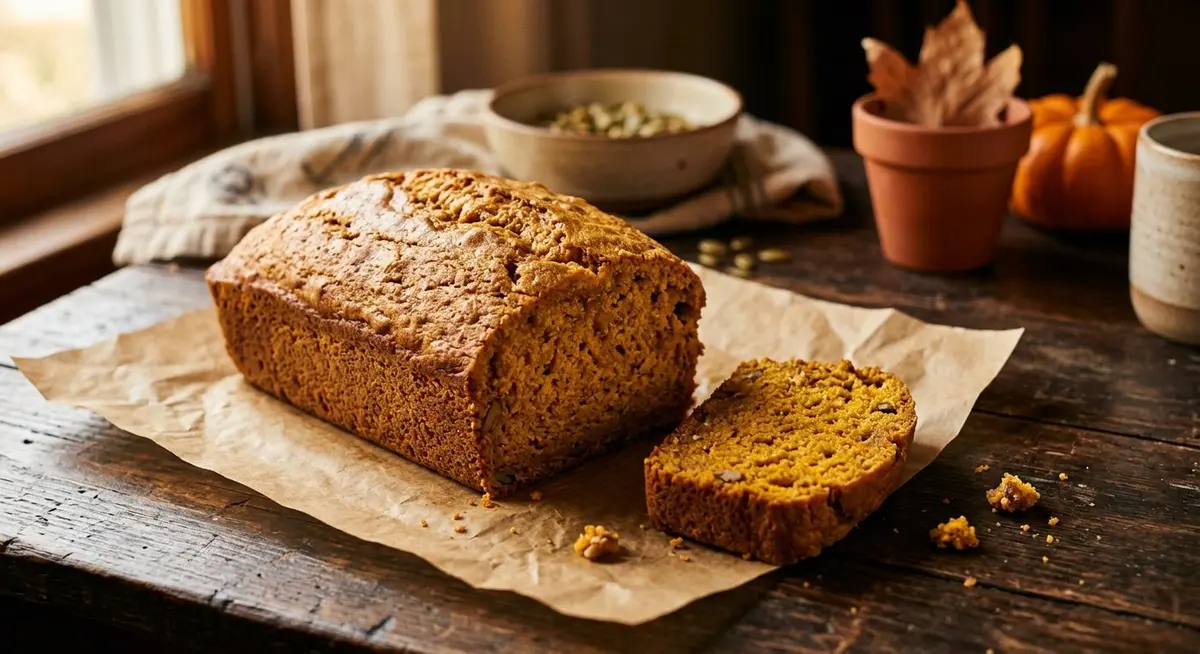
A warm bread — and if you have the time, fresh egg pasta or a loaf of pumpkin bread makes it a meal rather than a side.
If you are serving it as a starter, keep the portions modest — a loose handful per person on a small plate. It is rich enough that a large bowl before a big meal is a mistake. And if you want a second salad on the same table, a cucumber salad with sesame or a simple corn salad gives you contrast without repeating the autumn flavours.
On a buffet, put it at the end of the table. Everything before it is usually heavier, and people who reach it last take a proper portion instead of a token spoonful they never eat.
Scaling It for a Crowd
The ratio makes scaling straightforward, with one caveat: dressings do not scale perfectly linearly. As the quantity grows, the dressing coats a little more efficiently, so the largest batches need proportionally slightly less. The numbers below are calibrated for that.
How much of everything, by guest count
Guests
Greens
Apples
Cranberries
Nuts
Cheese
Dressing
4
5 oz
2
1/2 cup
1 cup
1/2 cup
1/4 cup oil
8
10 oz
4
1 cup
2 cups
1 cup
1/2 cup oil
12
15 oz
6
1 1/2 cups
3 cups
1 1/2 cups
3/4 cup oil
20
24 oz
10
2 1/2 cups
5 cups
2 1/2 cups
1 1/4 cups oil
30
36 oz
15
4 cups
7 cups
4 cups
1 3/4 cups oil
Past twelve servings, stop trying to build it in one vessel. Two wide platters dress more evenly than one enormous bowl, look better on a table, and let people serve themselves from both sides without the salad at the bottom turning to mush under the weight of everything above it.
Toast the nuts and make the dressing for any size in one batch. Both keep, both are the tedious part, and doing them together for a large gathering takes barely longer than doing them for four. The only thing that genuinely scales with your guest count is the apple slicing.
Leftovers, Storage and Food Safety
This is not a salad that improves overnight, and pretending otherwise is how people end up throwing away a bowl of sad greens. The honest guidance is short: eat it fresh, store components separately, and be realistic about what a dressed salad becomes by the next afternoon.
What to do with what is left
Situation
What to do
How long it keeps
Dressed salad
Sealed container in the fridge, but the greens will soften quickly
Next day only, and expect softness
Undressed components
Each in its own container; greens dry, apples in salted water
Greens 2 days, apples 1 day
Dressing on its own
Lidded jar in the fridge; it will separate, so shake before use
5 days
Toasted nuts
Airtight at room temperature, never the fridge
2 weeks
Cumbled cheese
Airtight in the fridge, wrapped so it does not dry out
1 week
Dried cranberries
Airtight in the pantry
Several months
Reviving day-old dressed salad
Add a handful of fresh dry greens and a splash of new dressing
Serve immediately, do not store again
Food safety note. A dressed salad left out at room temperature should not sit beyond two hours, and on a warm day that drops to one. Cheese and cut fruit left out longer than that should be discarded rather than refrigerated and eaten later. If you are unsure how long it has been on the table, throw it out — it is a bowl of salad, not worth the risk.
Troubleshooting and Common Questions
These come up every time I make this for someone, and almost all of them trace back to one of three things: wet greens, a dressing tasted only after it was poured, or apples cut far too far in advance.
My salad went soggy almost immediately. What went wrong?
Almost certainly wet greens or dressing added too early. Leaves must be genuinely dry before they meet any dressing, and the salad needs to be dressed within about ten minutes of serving. If it must wait, dress it with two-thirds of the dressing and keep the rest in the jar for a top-up at the table.
Can I make the whole thing the night before?
Not assembled, no. You can make the dressing, toast the nuts, wash and dry the greens, crumble the cheese and measure the cranberries the night before, and that gets you about ninety percent of the way. Slice the apples and toss it just before you serve.
The dressing tastes too sharp. How do I fix it?
Add maple syrup a teaspoon at a time until it balances. If it tastes too sweet instead, add vinegar rather than more oil — acidity corrects sweetness, while oil only thins everything out. And taste before you pour, every time.
Can I use bottled dressing instead?
You can, but a bottled dressing is usually sweeter and thinner than this one, and it will not coat the leaves the same way. If you are short on time, a good quality honey mustard or poppy seed dressing is the closest stand-in.
Is there a nut-free version?
Yes. Replace the pecans with toasted pumpkin seeds, or with a mixture of pumpkin and sunflower seeds for a bit more texture. Toast them the same way, in a dry pan, and they will crunch just as well.
Can I make this dairy-free or vegan?
Yes. Use a dairy-free crumble or a firm dairy-free feta-style block in place of the blue cheese, and check that your Dijon mustard is made without honey or other animal products — most are, but a few are not. Replace the cheese’s saltiness with a few extra salted roasted seeds.
What if I do not have white wine vinegar?
Apple cider vinegar is the closest substitute and arguably a better match for the other flavours. Sherry vinegar also works and is a little more complex. Avoid balsamic here — it is too dark and too sweet and it will discolour the apples.
A Few More Questions
A handful of smaller things that come up once people have made it a couple of times.
How far ahead can I slice the apples?
Two hours if they are held in cold salted water, one hour if they are not. After that they soften and lose the snap that makes them worth having in the salad at all.
My blue cheese is too strong for my guests. What should I do?
Swap to feta or goat cheese and serve the blue cheese on the side in a small dish. Letting people add it themselves solves the problem better than compromising the salad for everyone.
Do I need a salad spinner?
It helps, but it is not essential. A clean tea towel and a few gentle turns works, as does laying the greens out on a towel and patting them dry. What matters is that no water is pooling in the bowl before the dressing goes in.
Free Printable: The Maple Dijon Fall Salad Planner
A printable companion to this salad — the market list, the vinaigrette ratio card, an apple variety chart, a make-ahead timeline, an assembly checklist, scaling numbers for up to thirty guests, and cut-out labels for the containers you send home.
Elowen Thorn I cook, photograph and re-test every recipe in an ordinary home kitchen before it goes up, so what you make matches what you see. Savory Discovery is where simple weeknight cooking, seasonal ideas and the odd bit of kitchen craft sit side by side — written plainly, and worth cooking twice.