


Why I Still Make Pickles the Easy Way
I remember my first batch of pickles. I was twenty-two and scared of canning. My grandmother laughed and showed me this trick. No boiling water bath. No special equipment. Just a jar and a fridge.
Doesn’t that smell amazing? Fresh dill and garlic together make my kitchen feel like a summer garden. These are called refrigerator pickles because they never sit on a shelf. They live in the cold, staying crisp and bright.
Why this matters: You can make pickles without learning scary canning methods. Anyone can do this, even a kid after school.
The Trick to Crunchy Cucumbers
English cucumbers are my favorite for this recipe. They have thin skin and tiny seeds. That means less mush and more crunch. Mini cucumbers work great too. Just slice them how you like—spears, chips, or whole.
Pack them into the jars snug but not stuffed. You want the brine to flow all around each piece. Leave a little wiggle room at the top. I still laugh at my first attempt when I crammed too many in. They floated like a raft! Live and learn.
Here is a fun fact: Cucumbers are actually fruits, not vegetables. They belong to the melon family. So you are technically pickling fruit!
The Brine Is the Boss
Warm water helps the salt dissolve fast. Do not use cold water or you will be stirring forever. Just warm tap water works fine. White vinegar gives a classic tang. Cider vinegar makes them a little sweeter and warmer in flavor.
Why this matters: Salt is not just for taste. It pulls water out of the cucumbers. That keeps them firm and stops them from going soft. No salt means sad, limp pickles.
Pour the brine over the cucumbers until they are completely covered. If a few pieces poke up, that is okay. Just press them down with a clean spoon before closing the lid.
Patience Pays Off (But Not Too Much)
You have to wait at least 24 hours. I know, I know. It feels like forever. But trust me, the first bite is worth it. By 48 hours, the garlic and dill have really moved in. The peppercorns add little pops of spice.
I once opened a jar after only 12 hours. They tasted like plain cucumber in salty water. Total disappointment. Now I set a timer on my phone. The longer they sit, the deeper the flavor gets.
What is your favorite pickle shape? Spears for dipping, chips for burgers, or whole for snacking? Tell me in the comments below.
A Little Heat Goes a Long Way
Red pepper flakes are optional but I never skip them. They do not make the pickles spicy. They just add a tiny warmth at the end. Like a friendly pat on the back. If you love heat, double the flakes.
Garlic is another star here. Smash each clove with the flat side of your knife. This wakes up the flavor. Whole cloves are too shy. Smashed cloves are bold and friendly.
Have you ever tried making pickles with herbs besides dill? Some folks use tarragon or thyme. I would love to hear your experiments.
How Long Do They Last?
These pickles stay fresh in the fridge for three to four weeks. That is plenty of time to eat them all. But I bet they disappear faster. My family finishes a jar in three days flat.
Never leave these out on the counter. They are not shelf-stable like canned pickles. If you forget them overnight, toss them. Better safe than sorry.
Do you have a favorite snack to eat with pickles? I love them with cheese and crackers. Some people dip them in ranch. What is your go-to combo?
One Last Tip Before You Go
Save your pickle brine after the pickles are gone. You can reuse it for a second batch. Just add fresh cucumbers and garlic. The flavor will be a little milder, but still delicious.
Pickles are a great way to use up extra cucumbers from the garden. They also make wonderful gifts. Tie a ribbon around the jar and write the date on the lid. Your friends will think you are a kitchen genius.
I hope you try these easy refrigerator dill pickles. They are simple, crunchy, and full of love. Let me know how yours turn out!
Ingredients:
| Ingredient | Amount | Notes |
|---|---|---|
| English cucumbers (or mini/Persian) | 2 large (or about 1.3 lbs / 600g) | Sliced into desired shape |
| Fresh dill fronds | 8–12 fronds | 2 per jar + 1 on top |
| Garlic cloves | 4 cloves | Smashed |
| Black peppercorns | 4 teaspoons | 1 tsp per jar |
| Red pepper flakes | ½ teaspoon | ⅛ tsp per jar |
| Water (warm) | 4 cups | For the brine |
| White vinegar (or cider vinegar) | ½ cup (8 Tbsp) | For the brine |
| Salt | 1 tablespoon | Dissolved in brine |
Making Your Own Fridge Pickles
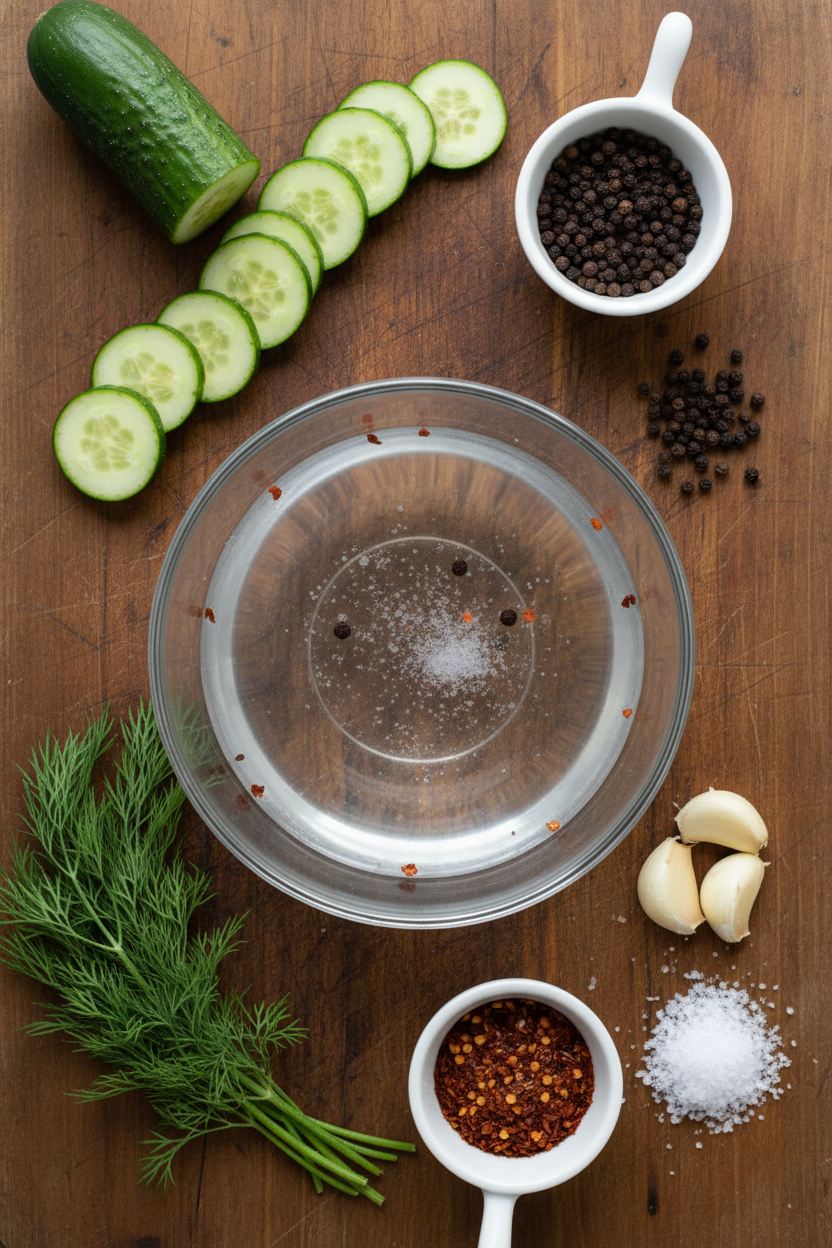
Step 1: Start by packing your jars. Drop in one smashed garlic clove, a teaspoon of peppercorns, a pinch of red pepper flakes, and two dill fronds per jar. I still remember my grandma saying a pickle without dill is just a sad cucumber.
Step 2: Slice your cucumbers into spears, chips, or crinkle cuts. Divide them among the jars, packing them snug but not bursting. Does that little pile of fresh dill on top remind you of a garden?
Step 3: Make the brine by stirring warm water, vinegar, and salt until the salt dissolves completely. Carefully pour it over the cucumbers until they are covered. (A tiny tip: warm water helps the salt vanish faster, so your brine is smooth.)
Step 4: Screw on the lids and pop the jars in the fridge. Wait 24 to 48 hours before tasting. They get even better with time, like a secret they are keeping. What is your favorite pickle shape to munch on? Share below!
Creative Twists
… Swap the white vinegar for apple cider vinegar for a mellow, fruity tang.
… Toss in a thin slice of fresh jalapeno for a gentle, happy heat.
… Add a small sprig of fresh thyme or a bay leaf for an herby surprise.
Which one would you try first? Comment below!
Serving & Pairing Ideas
These pickles love sitting next to a big, juicy burger or a simple grilled chicken breast. They also add a bright crunch to a tuna salad wrap. For a cozy night, serve them beside a warm bowl of tomato soup. Which would you choose tonight?
How to Keep Your Pickles Crisp and Fresh
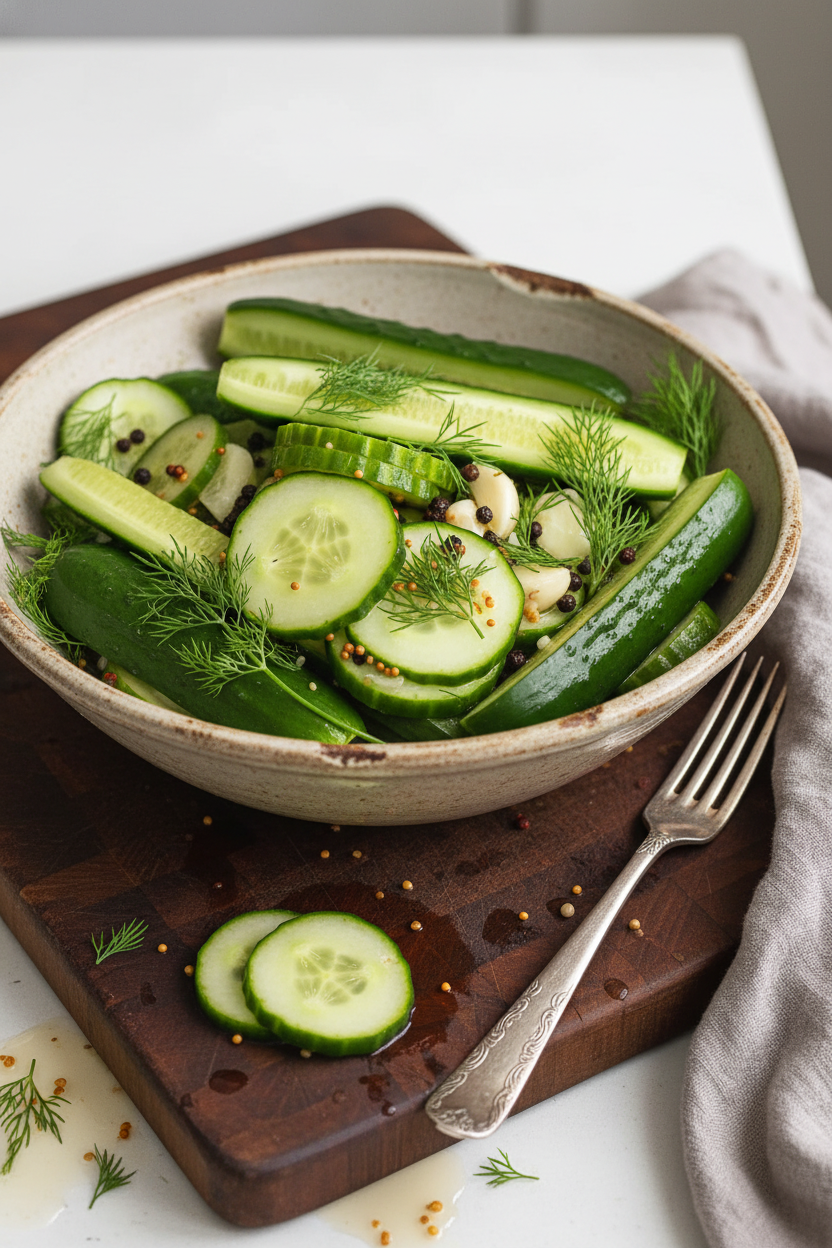
Storing these pickles is easy once you know the trick. Always keep them in the fridge, not the pantry. They stay fresh for 3 to 4 weeks that way.
Batch cooking is great for busy weeks. I remember making a double batch before a big family picnic. We had pickles for weeks, and they got better every day.
To reheat? No need. These are cold pickles. Just pull them out when you are ready. The flavor grows stronger the longer they sit in the brine.
Why does this matter? Storing them right saves you time and waste. You always have a crunchy snack ready. Have you ever tried storing it this way? Share below!
Three Common Pickle Problems (And Easy Fixes)
First problem: soft pickles. I once left my pickles on the counter overnight by mistake. They went mushy fast. Next time, I popped them in the fridge right away.
Fix this by always refrigerating within two hours. Cold keeps them crisp. That makes cooking easier and more fun for you.
Second problem: too salty. I remember a batch that tasted like sea water. The fix is easy. Use less salt next time, or add a little more water.
Third problem: bland flavor. I forgot the red pepper flakes once. The pickles were boring. Simple fix: add more dill or peppercorns next time.
Why does fixing these issues matter? It builds your confidence in the kitchen. You learn to trust your taste buds. Which of these problems have you run into before?
Your Quick Questions, Answered
How long do simple refrigerator dill pickles last?
These pickles stay fresh in your fridge for 3 to 4 weeks. That is plenty of time to enjoy them. They are not safe on the shelf at room temperature. Always keep them cold. The flavor gets better as they sit. After about two weeks, they taste the best. Just store them with the lid on tight. That keeps them crunchy and delicious for you.
Can I use regular table salt instead of pickling salt?
Yes, you can use regular table salt. But be careful. Table salt has iodine and anti-caking agents. These can make your brine cloudy. They might also change the flavor a little. Pickling salt is pure, so it dissolves cleanly. If you use table salt, use the same amount. The pickles will still taste good. Just expect a slightly cloudy look. That is fine for eating.
Do I need to boil the brine for refrigerator pickles?
No, you do not need to boil the brine. That is what makes these pickles so easy. Just stir warm water with vinegar and salt. Make sure the salt dissolves fully. Warm water helps it mix fast. Boiling is only for canning. Since these are fridge pickles, you skip that step. It saves time and keeps your kitchen cool. Pour the brine right over the cucumbers and refrigerate.
Why are my refrigerator pickles soft or mushy?
Soft pickles usually come from two mistakes. One: you left them out too long. Cucumbers like cold. The other problem is old cucumbers. Fresh, firm cucumbers make crisp pickles. Also, too much salt can soften them. Stick to the recipe for best results. Always refrigerate within two hours. If you want extra crunch, add a grape leaf to the jar. That old trick really works.
Can I reuse the brine for another batch of pickles?
You can reuse the brine once, but it is not ideal. The first batch takes flavor from the brine. The second batch will be weaker. The salt and vinegar get used up. Also, leftover bits of dill or garlic can spoil. If you try it, use the brine within a week. Add fresh dill and garlic for extra taste. The second batch will still be good, just less punchy. I prefer making fresh brine each time.
How do I make them more or less salty or sour?
It is easy to adjust the taste. For less salty, use a little less salt next time. Try 2 teaspoons instead of 1 tablespoon. For more salty, add a pinch more. To change sourness, play with the vinegar. Use less vinegar for milder pickles. Use more for a sour kick. White vinegar is sharp. Apple cider vinegar is gentler. Start with small changes. Taste the brine before pouring. That way you get it just right for your family.
Which tip will you try first?
A Warm Goodbye from My Kitchen
I hope these tips help you make perfect pickles every time. Cooking is about sharing and learning together. Every batch is a little different, and that is okay.
*Fun fact: Cucumbers are actually fruits, not vegetables. They are berries, believe it or not.*
Have you tried this recipe? Tell me how your pickles turned out. I love hearing your stories and ideas.
Happy cooking!
—Grace Ellington.

Simple Refrigerator Dill Pickles by a Home Cook
Description
Crisp, tangy refrigerator pickles with garlic, dill, and peppercorns—ready in 24-48 hours.
Ingredients
FOR THE PICKLES:
FOR THE PICKLE BRINE:
Instructions
- Combine Seasonings. In each pint jar, place 1 smashed garlic clove, 1 tsp. peppercorns, 1/8 tsp. red pepper flakes, and 2 fronds of dill.
- Prepare your cucumbers by slicing them into your desired shape–whole mini cucumbers, pickle spears, pickle chips, or crinkle cut pickle chips.
- Divide the prepared cucumbers among the pint jars. Pack them close together, but not so tightly that they’re full to bursting. If you have it, place one more frond of dill on top of the cucumbers.
- Prepare the pickle brine by stirring together warm water, vinegar and salt until the salt is completely dissolved. Carefully pour the vinegar mixture into each jar, filling to cover the cucumbers, if possible.
- Refrigerate the pickles. Secure lid on each pickle jar and refrigerate 24-48 hours before enjoying. (They’ll continue to develop flavor the longer they sit in the brine.) Pickles should remain fresh 3-4 weeks in the refrigerator. They are not safe for long-term storage at room temperature.
Notes
- Serving size: 0.5 cup (1/4 pint). Nutrition per serving: Calories: 13kcal | Carbohydrates: 2.8g | Protein: 0.5g | Fat: 0.1g | Sodium: 440mg | Fiber: 0.5g | Sugar: 1g