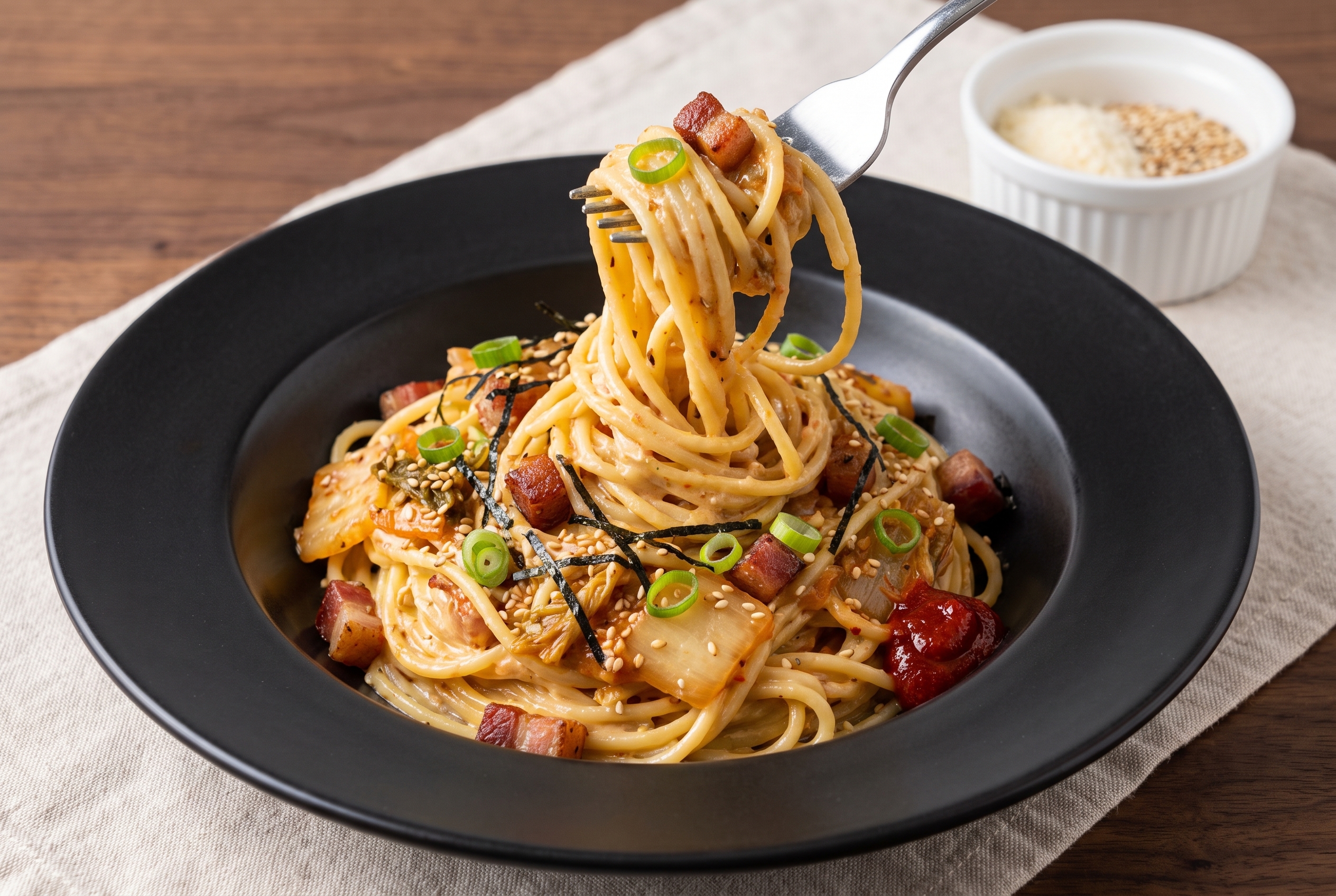
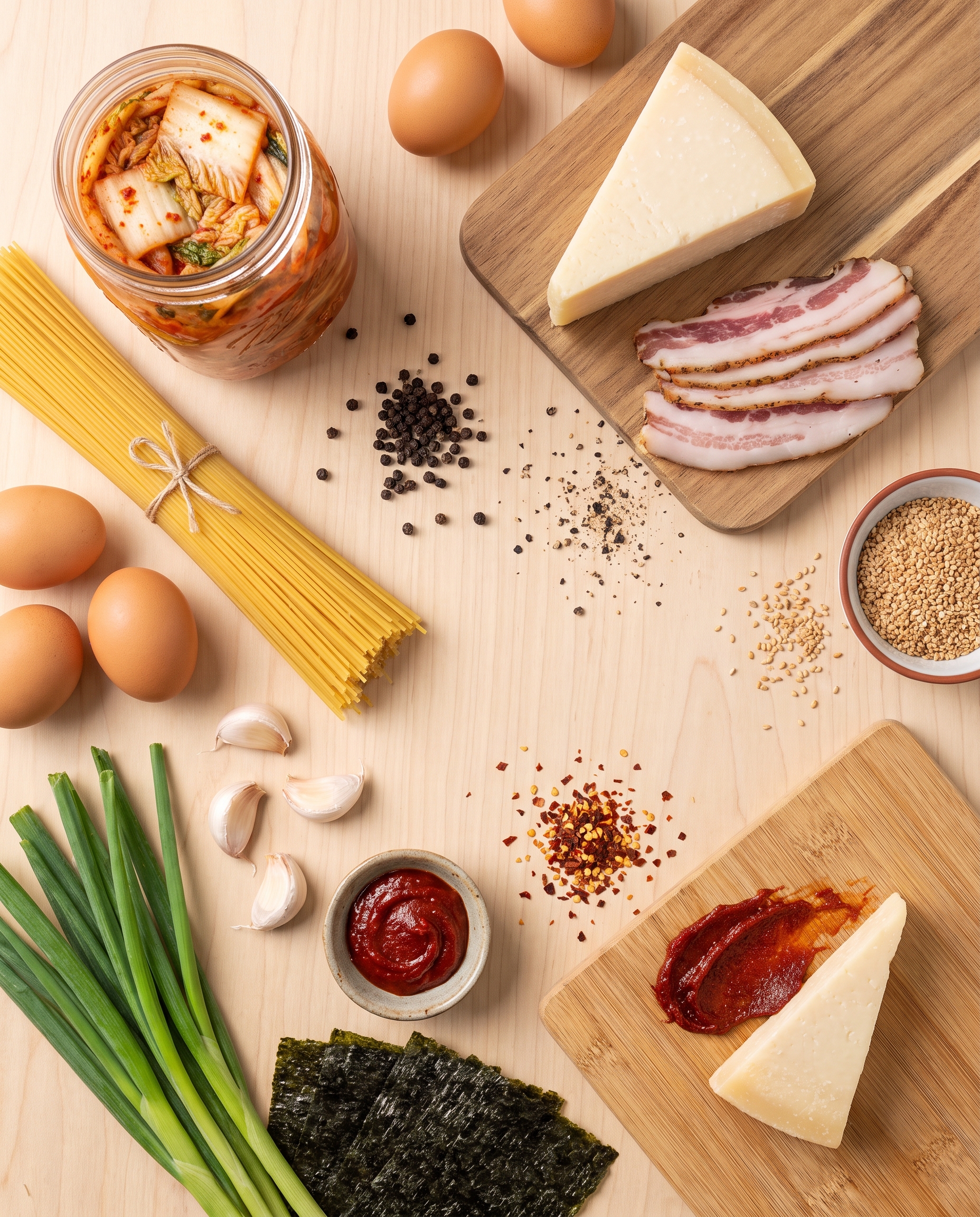
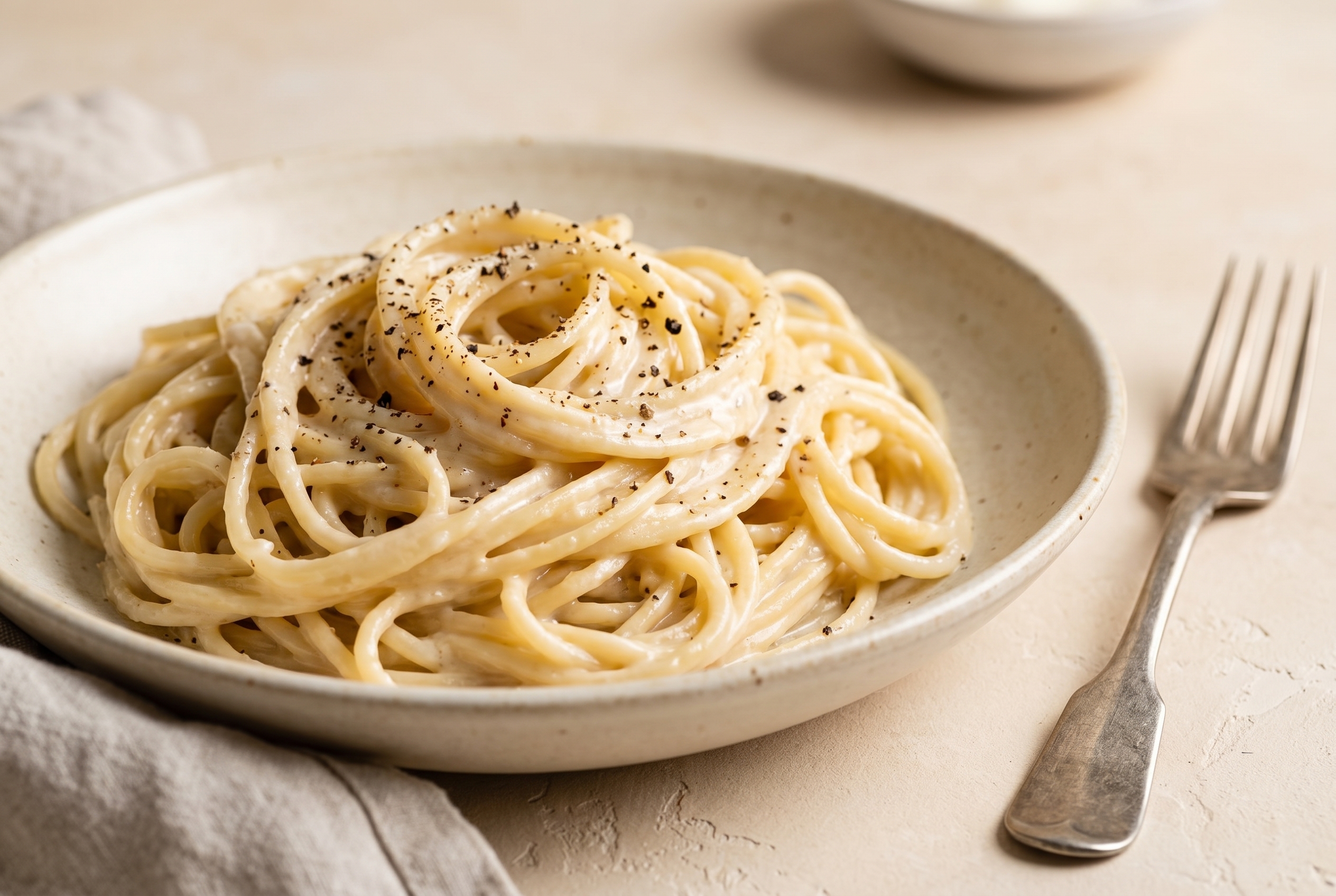
I want to tell you about a happy accident. Last winter, I had half a jar of napa cabbage kimchi sitting in my fridge and absolutely no plan for dinner. I also had four eggs, a wedge of pecorino, a stick of guanciale, and a box of bucatini. The carbonara part felt obvious. The kimchi part felt like a gamble. I caramelized the kimchi in the rendered guanciale fat — the way you would in a kimchi fried rice — and then built the carbonara around it. The result was smoky, funky, peppery, and creamy in a way I had never had before. Have you ever taken a risk on a leftover and ended up with something that becomes a regular? That is this pasta.
I made it for my neighbor, Theo, that weekend. He took one bite and said, “Okay, you need to make this every week.” I have made it about every other week since. It hits that perfect intersection of cozy and exciting — the carbonara part is rich and comforting, the kimchi adds tang and a little fire, and the crispy guanciale crumbles on top are the kind of texture that makes you close your eyes for a second. Which one are you more excited about — the carbonara or the kimchi? Honestly, I do not think either works without the other.
The trick, and I will say this three times, is to caramelize the kimchi properly. You are not just warming it up. You are cooking it in the rendered guanciale fat over medium-high heat until the moisture evaporates and the edges start to char. That step is the difference between kimchi that tastes like a condiment and kimchi that tastes like the soul of the dish. Skimping on it will give you a watery carbonara with a raw cabbage situation on top. Do not skimping on it.
Best-Ever Spicy Kimchi Carbonara
Carbonara is one of those dishes that intimidates people, and I get it. The egg can scramble if the pan is too hot. The cheese can clump if the pasta is too cold. The whole thing can go sideways in about fifteen seconds. But this version is more forgiving than a traditional carbonara because the kimchi brings so much flavor that even if your sauce is slightly off, you will not notice. And once you make it once, you will have the muscle memory for the second. I promise.
My Method: Putting It All Together
Step 1: Boil the pasta water: Bring 4 quarts of water to a boil in a large pot and add 2 tablespoons of kosher salt. It should taste like the sea. While the water comes up, you can do everything else — by the time the sauce is ready, the pasta will be done.
Step 2: Build the egg-cheese base: In a large heatproof bowl, whisk together 4 eggs, 2 cups of finely grated pecorino romano (or parmesan), and 1 teaspoon of freshly ground black pepper. Whisk until completely smooth with no streaks. Set this aside. The bowl needs to be big enough to hold all the pasta later, so do not use a tiny cereal bowl.
Step 3: Render the guanciale: Slice 8 ounces of guanciale about a quarter-inch thick, then cut into bite-sized rectangles. Add it to a large high-sided skillet with 1 tablespoon of olive oil. Spread it into a single layer and cook over medium-low heat, stirring occasionally, until the fat has rendered and the guanciale is deeply browned and crispy — about 8 to 12 minutes. Use a slotted spoon to transfer the crispy pieces to a paper-towel-lined plate. Pour the rendered fat into a heatproof bowl or measuring cup. You will need 3 tablespoons of it for the next step.
Step 4: Caramelize the kimchi (the most important step): Return 3 tablespoons of the rendered guanciale fat to the skillet and place over medium-high heat. Add 2 cups of well-drained, chopped napa cabbage kimchi. Cook, stirring occasionally and scraping the bottom of the pan, until all the moisture has evaporated and the kimchi starts to caramelize around the edges — about 6 to 8 minutes. You are looking for the kimchi to turn a deeper brick-red color and to look slightly sticky. Do not rush this. Remove the pan from the heat while you cook the pasta.
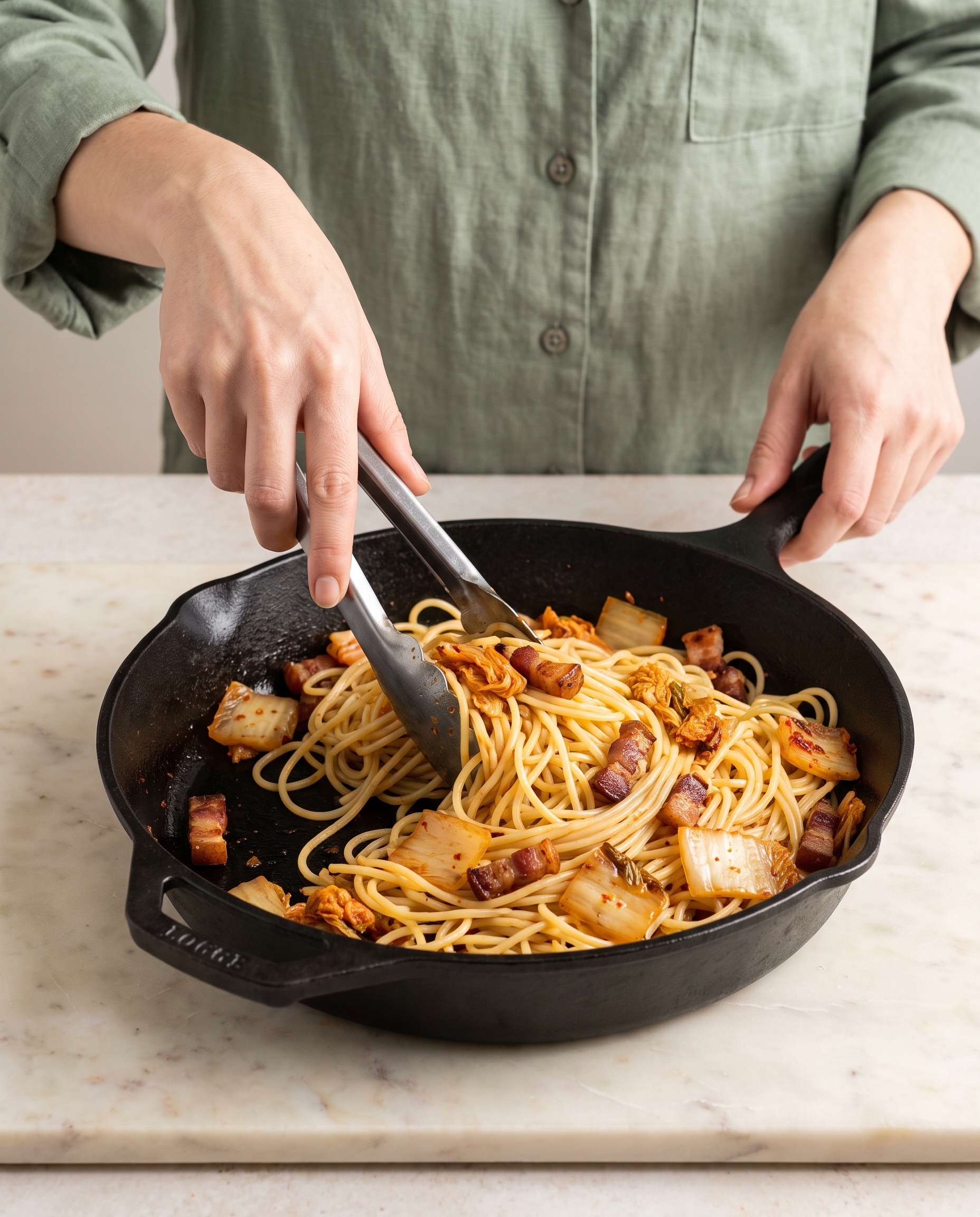
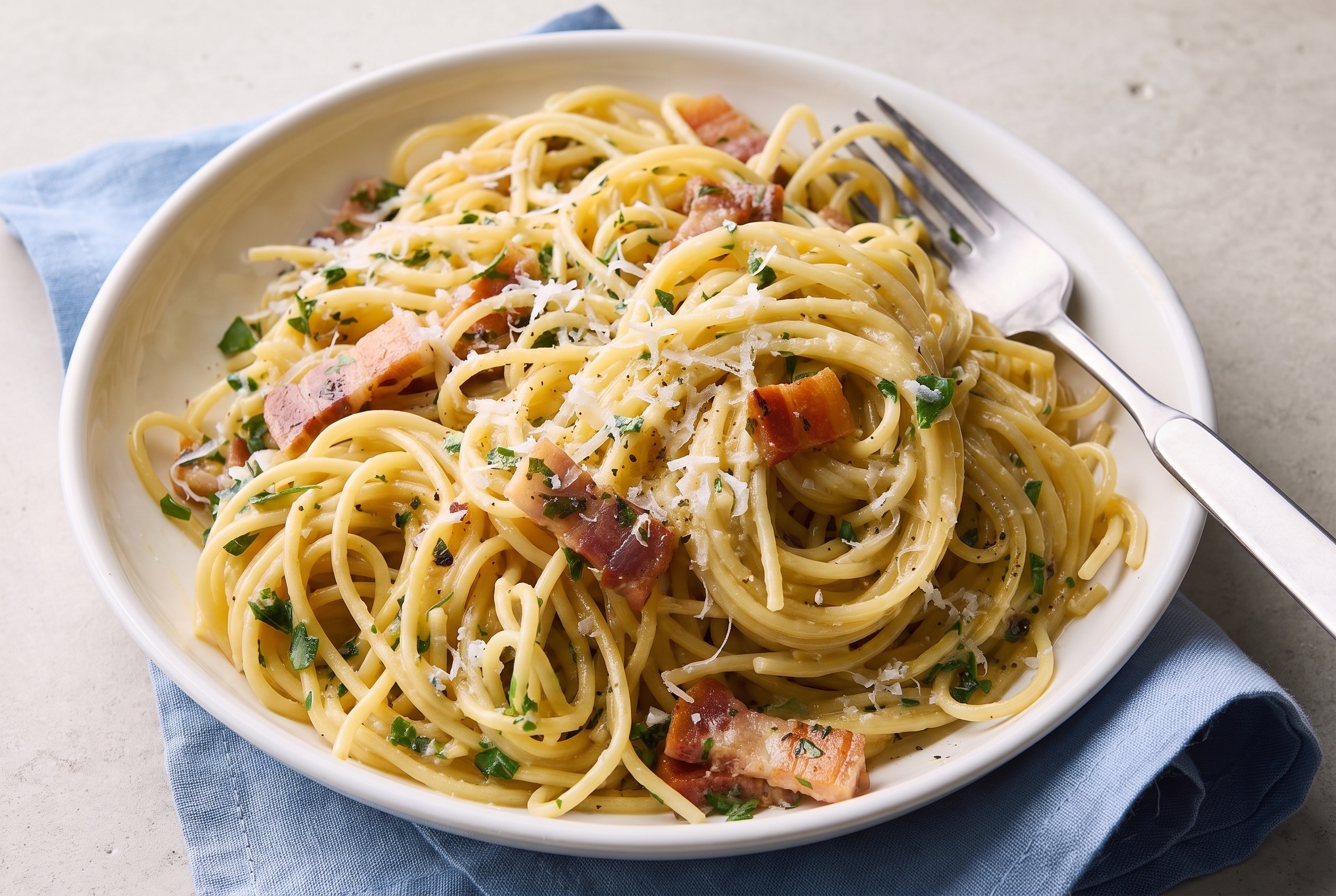
Step 5: Cook the pasta: Drop 1 pound of spaghetti (or bucatini or rigatoni) into the boiling salted water and cook 1 minute less than the package says. Reserve 1 cup of pasta water before draining. Using tongs, transfer the pasta directly from the pot into the skillet with the kimchi. Return the skillet to medium-high heat, add the reserved crispy guanciale, and toss constantly for 1 to 2 minutes until the pasta is evenly coated with the kimchi mixture and heated through.
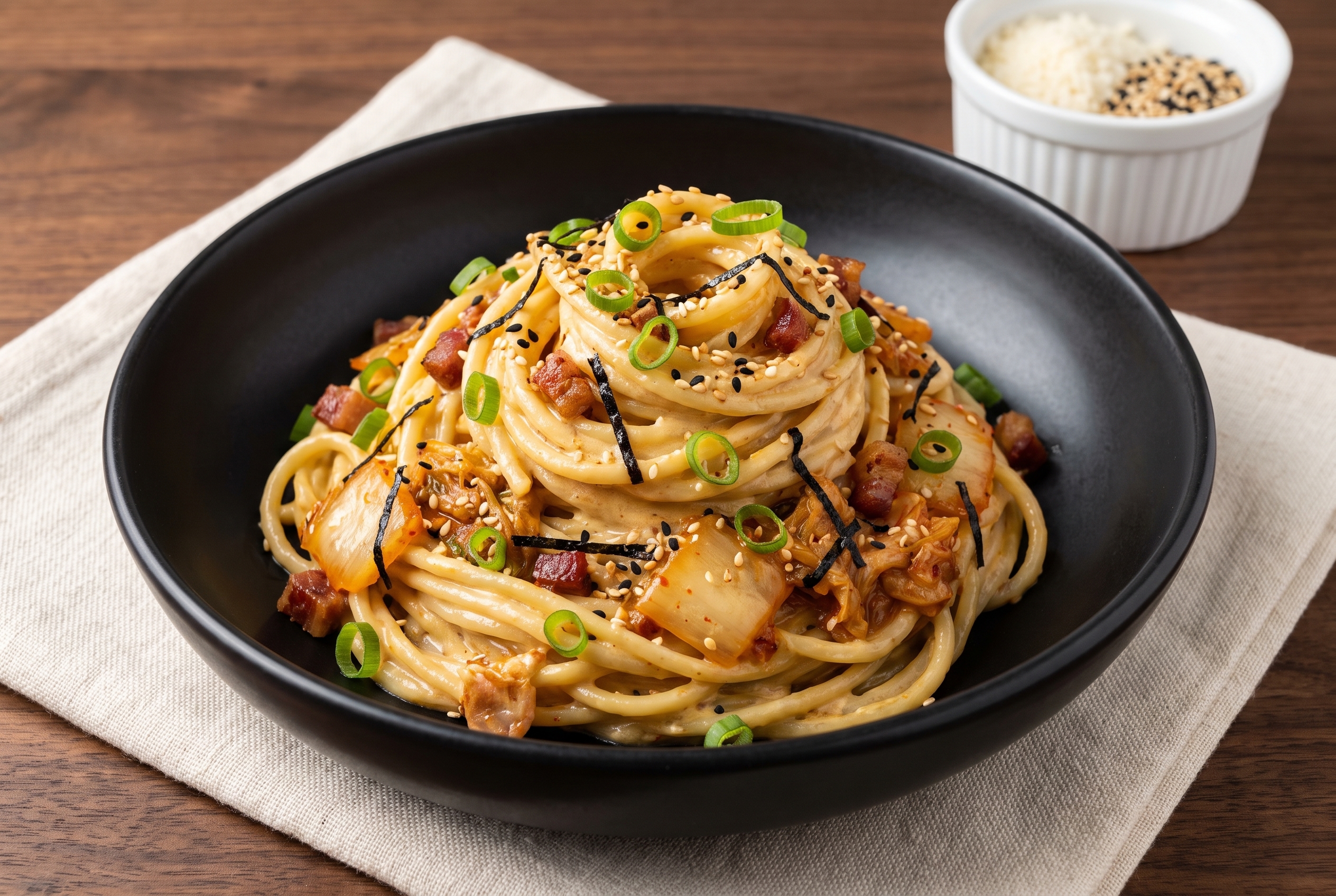
Step 6: Bring it all together: Immediately transfer the pasta to the bowl with the egg-cheese mixture. Add 1/2 cup of the reserved pasta water and toss rapidly and constantly with a heatproof rubber spatula. The residual heat of the pasta will cook the eggs into a glossy sauce. Keep tossing for 1 to 2 minutes — the sauce will look loose at first, then it should thicken and cling to every strand of pasta. If it gets too thick, add another splash of pasta water, a tablespoon at a time. If the sauce looks too runny, keep tossing — it will come together. Serve immediately, topped with more pecorino, cracked black pepper, thinly sliced scallions, and a tiny dab of gochujang if you want extra heat.
Creative Twists on the Recipe
Add a crispy egg on top: A fried egg with runny yolk on top of the carbonara is divine. The yolk adds another layer of richness and looks beautiful.
Use bacon instead of guanciale: Pancetta or thick-cut bacon both work in a pinch. Guanciale is the traditional choice and has the deepest flavor, but I have made this with bacon many times and it is still excellent.
Add a little gochujang: Stir a teaspoon of gochujang into the egg-cheese mixture for a more pronounced heat and a deeper red color. My husband prefers it this way.
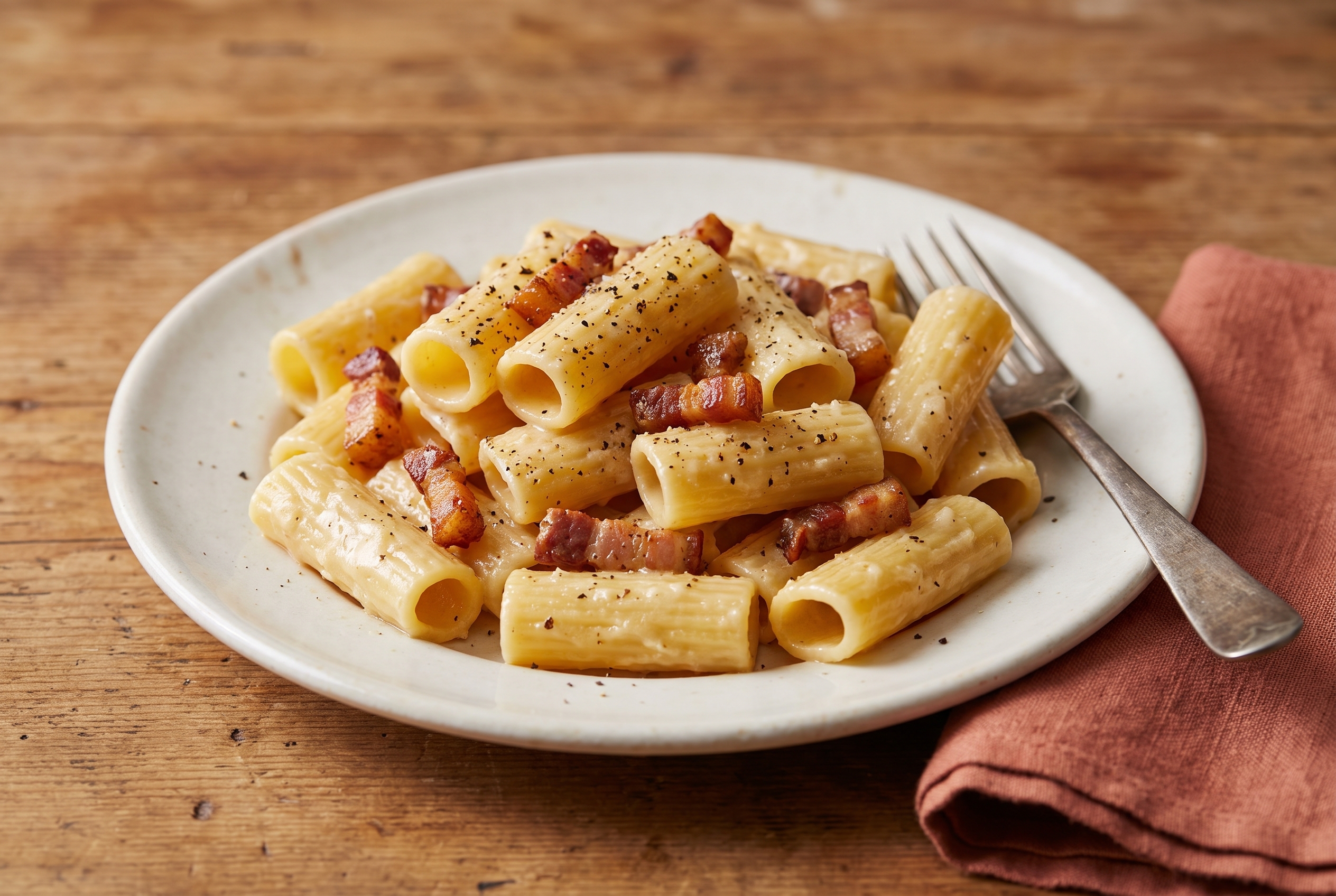
Try rigatoni instead of spaghetti: The tubes catch the sauce in a way that long noodles do not, and it makes for a heartier bite. Both are great — it just depends on your mood.
Make it vegetarian: Skip the guanciale and use 1/4 cup of good olive oil to caramelize the kimchi. The dish becomes a little lighter but still incredibly flavorful.
Serving & Pairing Ideas
What should I serve with this pasta? Honestly, I usually serve it on its own with a small green salad on the side — something with cucumber, scallion, and a sesame-ginger dressing if you want to lean into the Korean side, or a simple arugula salad with lemon if you want to keep it Italian. For wine, a crisp riesling or a sparkling wine balances the richness beautifully. And if you want to make it a heartier meal, a bowl of simple miso soup alongside is unexpected and lovely.
Why I Love This Recipe
I love a recipe that breaks rules. Classic carbonara purists will tell you that you should never add anything besides guanciale, eggs, pecorino, and black pepper. They are not wrong — that is a transcendent dish on its own. But cooking is also about play, and kimchi is one of the most flavorful ingredients you can put in a pan. The umami from the kimchi juice, the sweetness from the caramelization, the tang from the fermentation — it transforms the carbonara into something new without losing the soul of either cuisine. Have you ever cooked a recipe and felt like you discovered something rather than just followed it? That is the energy I want in my kitchen.
It is also a dish that fits into real life. It takes about 40 minutes from start to finish. It uses one skillet and one pot. It is impressive enough for guests and quick enough for a Tuesday. And if you have leftover kimchi in the back of your fridge — the way I always do — it is a great way to use it up before it gets too sour.
Storage and Make-Ahead Tips
Carbonara is best eaten immediately, the way pasta carbonara always is. The sauce continues to thicken as it sits, and the residual heat keeps cooking the egg if you do not serve it right away. If you have leftovers, store them in the fridge for up to 2 days. To reheat, add a splash of water to a skillet over low heat and toss gently until warmed through. Do not microwave it if you can avoid it — the eggs will get rubbery.
You can caramelize the kimchi a day in advance and store it in the fridge, which makes the final assembly very fast. Just reheat the kimchi in a dry skillet for a minute or two before adding the pasta. The egg-cheese mixture can also be made ahead and refrigerated, but bring it back to room temperature before tossing with the pasta so it does not clump.
Troubleshooting Common Carbonara Problems
The eggs scrambled. This means the pasta was too hot when you mixed it in, or you did not toss fast enough. The fix is to let the pasta cool for about 30 seconds after draining, and to toss the egg mixture in quickly with lots of movement. If the eggs do scramble a little, do not panic — it will still taste good, just less silky. Next time, pull the pan off the heat entirely while you mix.
The sauce is too thick. Add more pasta water, a tablespoon at a time, until it loosens up. The sauce should look glossy and just barely loose — it will tighten as it sits. Pasta water is the secret to almost every pasta sauce, so do not forget to reserve it.
The sauce is too thin and watery. This usually means the pasta was not hot enough to cook the eggs, or the eggs were added too slowly. Keep tossing vigorously over low heat — the friction and residual heat will help thicken it. If it is truly broken, you can rescue it by adding another egg yolk to the bowl and tossing that in.
The kimchi tastes raw, not caramelized. You did not cook it long enough. Get the pan hotter and let it sit undisturbed for a minute or two between stirs so the edges can really char. This is the step that makes or breaks the dish.
Your Quick Questions, Answered
Can I use bacon instead of guanciale? Yes. Pancetta or thick-cut bacon both work. Guanciale has the deepest, most savory flavor because it is cured pork jowl, but bacon will still give you a delicious dish. Just use a little less olive oil since bacon renders more fat than guanciale.
What kind of kimchi should I use? Traditional napa cabbage kimchi is the most common and works beautifully here. Use one that is well-fermented and tangy — the older it is (within reason), the more flavor it has. Avoid super-fresh kimchi that has not had time to develop flavor.
Can I make this vegetarian? Yes. Skip the guanciale entirely and use 1/4 cup of good olive oil to caramelize the kimchi. The result is lighter but still packed with flavor. You can also add a few shiitake mushrooms for an umami boost.
Is this dish very spicy? It depends on your kimchi. Most napa cabbage kimchi has a moderate heat that is more flavorful than spicy. If you want it spicier, add a teaspoon of gochujang to the egg mixture or top with gochugaru. If you want it milder, use a less fermented kimchi and skip the gochujang.
Can I use a different pasta shape? Absolutely. Spaghetti, bucatini, rigatoni, and even fresh tagliatelle all work. Bucatini is my personal favorite because the hollow center catches the sauce. Rigatoni is great for heartier appetites.
How do I store leftovers? In an airtight container in the fridge for up to 2 days. Reheat gently in a skillet with a splash of water. The sauce will not be quite as silky as fresh, but it is still very good.
A Few Last Thoughts
This pasta has become one of my weeknight workhorses, right up there with my [creamy garlic parmesan pasta](https://savorydiscovery.com/category/pasta/) and my [one-pot lemon orzo](https://savorydiscovery.com/category/pasta/). It is the kind of recipe that makes a Tuesday night feel a little more like a Friday. I hope you make it, and I hope you make it your own — add a little more heat, swap the pasta, use bacon if that is what you have. The bones of the recipe are solid, and the rest is up to you.
If you love this kind of fusion comfort food, you might also enjoy my [creamy miso pasta](https://savorydiscovery.com/category/pasta/) or my [spicy vodka pasta](https://savorydiscovery.com/category/pasta/). Both have that same cozy-yet-exciting energy. And for a more traditional Italian take, my [classic cacio e pepe](https://savorydiscovery.com/category/pasta/) is a great place to start.
Difficulty:Beginner: 10 minutes: 30 minutes: 40 minutes: 4 minutes:612 kcal per serving Best Season:Summer
Description
A fusion carbonara that marries the rich, peppery Italian classic with tangy, caramelized napa cabbage kimchi. Smoky, savory, and a little fiery — ready in about 40 minutes.
Ingredients
Instructions
Bring 4 quarts of water and 2 tablespoons of kosher salt to a boil in a large pot.
In a large heatproof bowl, whisk together 4 eggs, 2 cups of grated pecorino, and 1 teaspoon of black pepper until smooth. Set aside.
Slice the guanciale into 1/4-inch-thick rectangles. Add to a large high-sided skillet with 1 tablespoon of olive oil. Cook over medium-low heat, stirring occasionally, until fat renders and guanciale is deeply browned, 8 to 12 minutes. Transfer to a paper-towel-lined plate. Reserve 3 tablespoons of the rendered fat in the skillet.
Add the chopped kimchi to the skillet with the rendered fat. Cook over medium-high heat, stirring and scraping, until moisture evaporates and the kimchi caramelizes around the edges, 6 to 8 minutes. Remove from heat.
Drop the pasta into the boiling salted water and cook 1 minute less than the package says. Reserve 1 cup of pasta water before draining.
Using tongs, transfer the pasta directly into the skillet with the kimchi. Return to medium-high heat, add the crispy guanciale, and toss constantly for 1 to 2 minutes until heated through.
Immediately transfer the pasta to the bowl with the egg mixture. Add 1/2 cup of the reserved pasta water and toss rapidly with a rubber spatula until the sauce is glossy and clings to the pasta, 1 to 2 minutes. Add more pasta water 1 tablespoon at a time if needed.
Serve immediately, topped with more pecorino, cracked black pepper, sliced scallions, and a dab of gochujang if desired.
Notes
Carbonara is best eaten right away. Leftovers keep in the fridge for up to 2 days — reheat gently in a skillet with a splash of water. For a spicier version, stir 1 teaspoon of gochujang into the egg-cheese mixture. The kimchi can be caramelized a day in advance and stored in the fridge to speed up final assembly.
Keywords:kimchi carbonara, spicy pasta, fusion carbonara, guanciale pasta, weeknight pasta
Elowen Thorn I cook, photograph and re-test every recipe in an ordinary home kitchen before it goes up, so what you make matches what you see. Savory Discovery is where simple weeknight cooking, seasonal ideas and the odd bit of kitchen craft sit side by side — written plainly, and worth cooking twice.