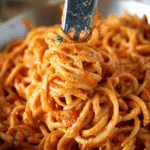
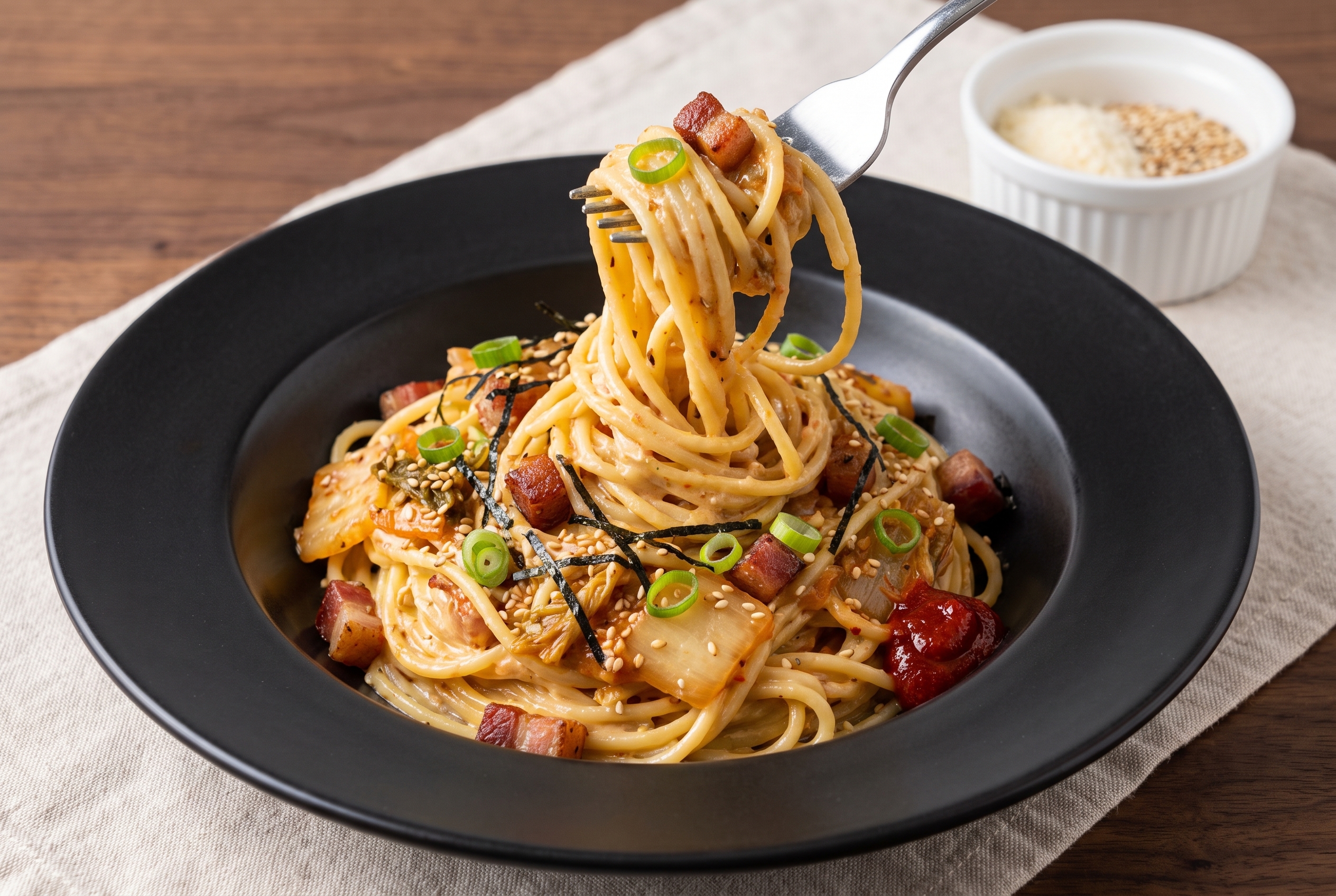
Have you ever looked at a tub of gochujang sitting in your fridge and thought, “That would be incredible in a cream sauce”? That’s exactly the thought that started this whole love affair, and once you taste it, there’s no going back to a plain tomato pasta. Bold Korean heat, mellowed by cream and parmesan, all glossy and pink in a wide bowl — this is the kind of dinner that makes a Tuesday feel like a small celebration.
I’ve been making pasta with gochujang for about three years now, ever since a friend in Seoul sent me a jar with a sticky note that said “Trust me.” I trusted her, and I’ve been trusting that little red tub ever since. The trick isn’t the heat — it’s coaxing the gochujang into the cream so the spice blooms and the dairy rounds it out. Done right, you get a sauce that hits every corner of your tongue at once: savory, sweet, a touch smoky, and gently spicy.
Why Gochujang Works in a Cream Sauce
Here’s the thing about gochujang: it’s not just hot, it’s complex. It brings fermented depth, a kiss of sweetness from the rice and sugar, and a deep umami that tomato paste alone could never deliver. When you bloom it in butter and stir it into heavy cream, all those layers melt into something that tastes far more grown-up than the sum of its parts. A little soy sauce wakes it up at the end, and a snowfall of parmesan pulls the whole sauce together.
My second trick, and this one took me a while to learn: reserve that starchy pasta water. The starch is what makes the sauce cling to every rigatoni ridge and spaghetti strand. Without it, the sauce slides off and pools sadly at the bottom of the bowl. With it, every bite is evenly coated and glossy.
Spicy Korean Gochujang Cream Pasta
Enough about the why — let’s get to the bowl. This pasta comes together in about 20 minutes, and most of that is just waiting for water to boil. It’s the kind of recipe you can pull off on a weeknight with one skillet and a pot, and it’s the kind of recipe that makes everyone at the table go quiet for a minute, which is the highest compliment I know how to give a dinner.
What You’ll Need
8 oz dry rigatoni or short pasta (shells, penne, or fusilli all work)
2 tablespoons butter, divided
1 tablespoon minced garlic (about 3 cloves)
1 heaping tablespoon tomato paste
2 tablespoons gochujang (Korean red pepper paste)
1/2 cup heavy cream
1 teaspoon soy sauce
1/3 cup grated parmesan, plus more for serving
Sliced green onions, toasted sesame seeds, and chili oil to finish
1 soft-boiled or fried egg per serving (optional but wonderful)
From Pot to Bowl: My Method
Step 1: Boil the pasta. Bring a large pot of well-salted water to a rolling boil — it should taste like the sea. Drop in your rigatoni and cook until al dente, about 1 minute shy of the package directions. Before you drain, scoop out a generous cup of that cloudy starchy water. This is your secret weapon.
Step 2: Bloom the gochujang. While the pasta cooks, melt 1 tablespoon of butter in a large skillet over medium-low heat. Add the garlic and let it sizzle gently for 30 seconds — just until fragrant, not browned. Stir in the tomato paste and the gochujang. Cook for another 30 seconds, stirring constantly. The kitchen will smell like the best thing you’ve ever made.
Step 3: Build the sauce. Pour in the heavy cream and add the soy sauce. Whisk or stir until the gochujang fully melts into the cream, turning it a beautiful rose-pink color. Let it gently simmer for 2 minutes to thicken slightly. Taste it — you should be able to taste the warmth of the gochujang, but the cream should keep it from feeling harsh.
Step 4: Marry the pasta and sauce. Drain the pasta (don’t rinse it) and add it straight to the skillet. Pour in about half of the reserved pasta water and toss vigorously. Add the parmesan and the remaining tablespoon of butter. Keep tossing over low heat until the sauce clings to every piece of pasta, adding more pasta water a splash at a time if it looks tight. This is the moment you want to slow down for.
Step 5: Taste and adjust. Give it a taste. Need more salt? A tiny splash of soy sauce will do it, even though you already added some. Want it spicier? Stir in another half tablespoon of gochujang. Want it richer? A small knob of butter melted through at the end. The dish is yours now — trust your tongue.
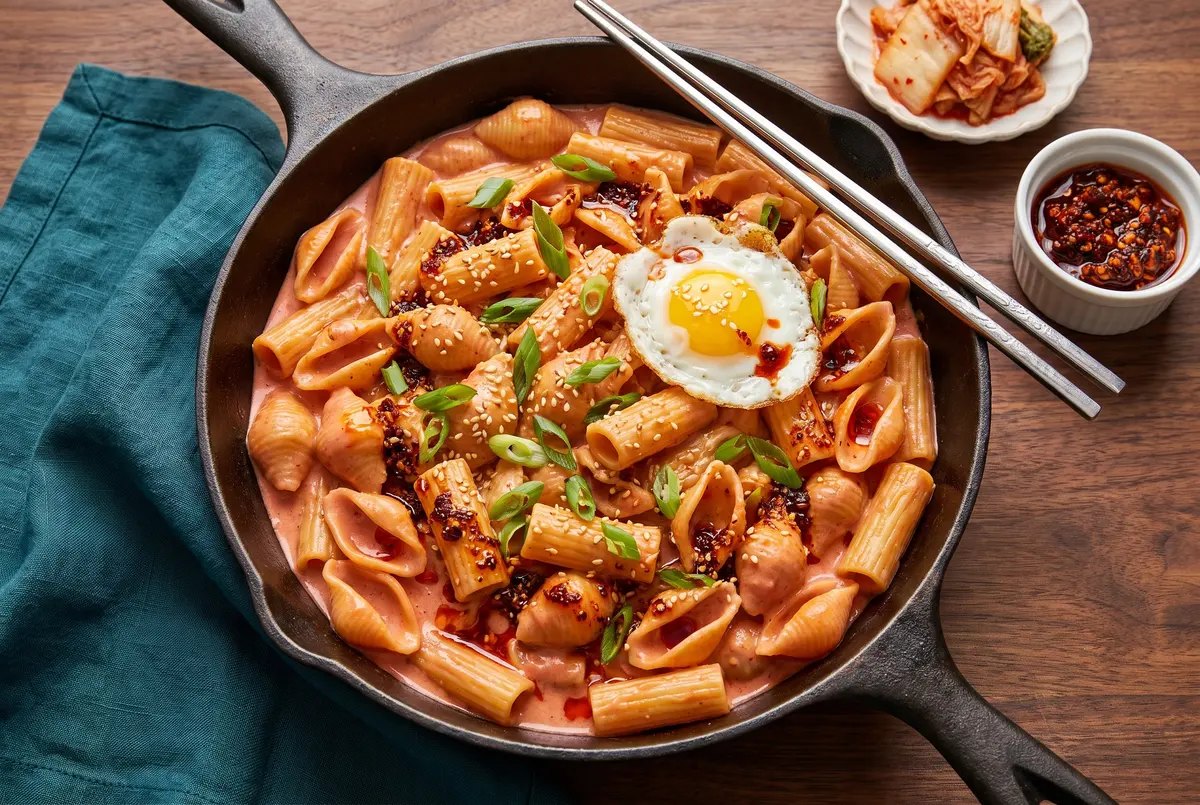
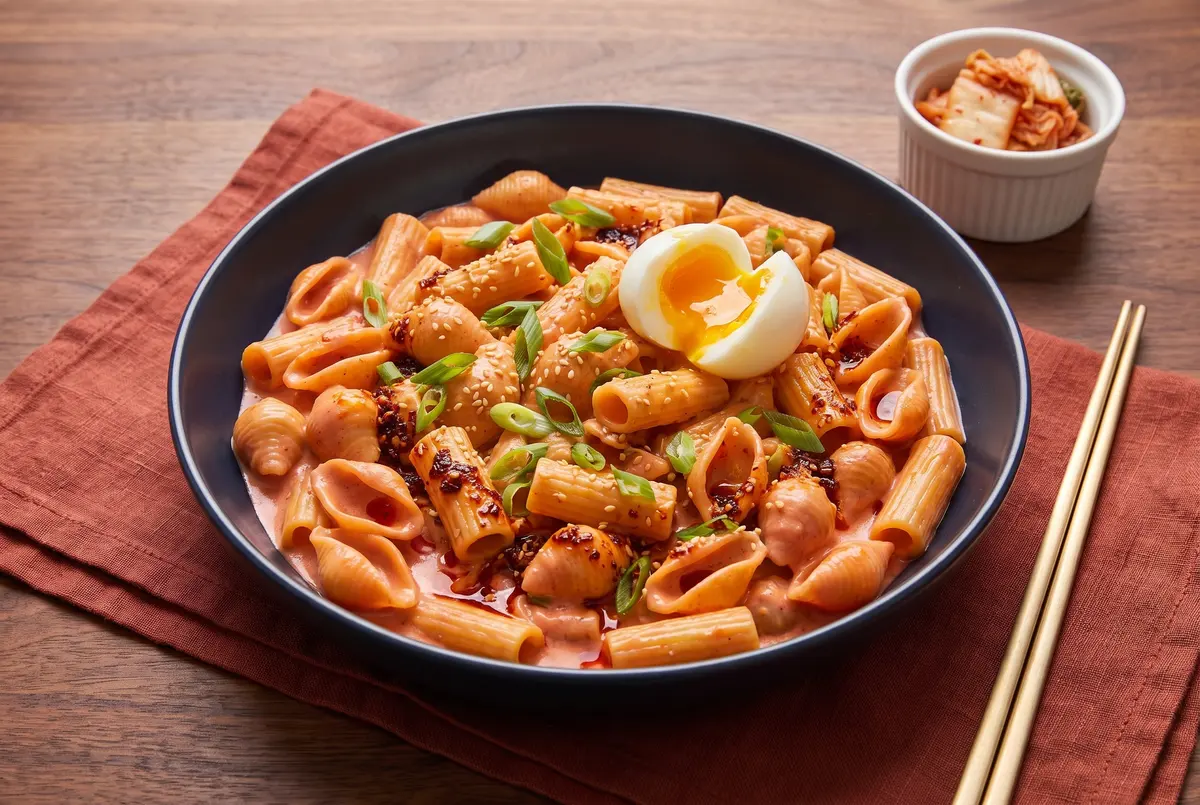
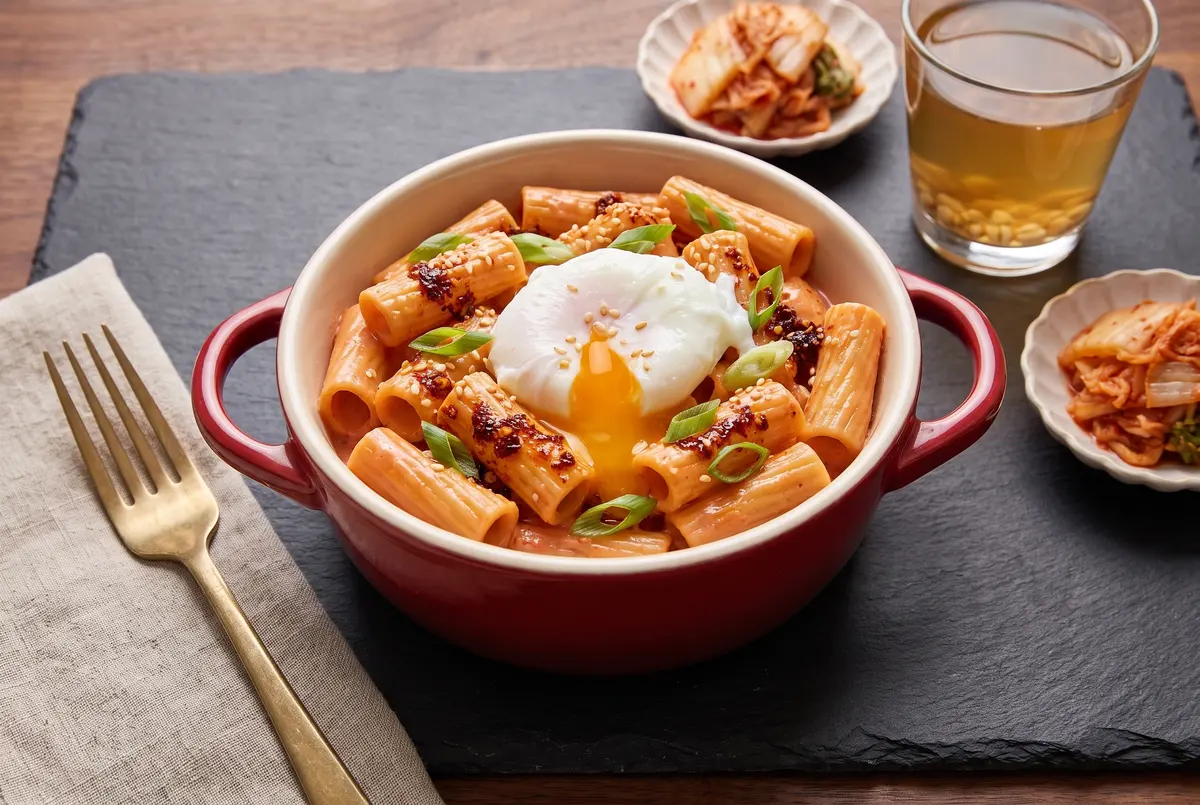
Step 6: Plate and finish. Pile the pasta into warm bowls, top with a soft-boiled or fried egg if you like (I always do — the runny yolk swirling into the pink sauce is a small piece of heaven), and shower with sliced green onions, toasted sesame seeds, and a thin drizzle of chili oil. Extra parmesan is never a bad idea. Serve immediately while everything is glossy and hot.
Creative Twists Worth Trying
… Kimchi carbonara vibe: fold in 1/2 cup of chopped, well-drained aged kimchi with the cream for a tangy, funky depth that pairs beautifully with the gochujang.
… Peanut butter version: swap the tomato paste for 1 tablespoon of smooth peanut butter — it adds richness and a subtle nutty sweetness that’s incredible with the chili.
… Seafood spin: toss in a handful of seared shrimp or flaked salmon at the end for a more substantial dinner that still feels light.
… Vegetarian bulking: stir in roasted shiitake mushrooms or cubes of crispy fried tofu to make it a heartier meatless meal.
… Cacio e pepe remix: finish with extra black pepper and skip the green onions for a Korean-Italian mashup that tastes far more elegant than it has any right to.
Serving & Pairing Ideas
What do you drink with gochujang pasta? Honestly, a cold crisp lager or a glass of off-dry riesling is the perfect counterpoint to the spice. If you’re skipping alcohol, a glass of cold barley tea (bori-cha) is shockingly good — nutty, slightly toasty, and very refreshing against the heat. A simple cucumber and sesame salad on the side keeps things cool, and a bowl of steamed rice turns it into a Korean-Italian hybrid dinner that will make your guests very happy.
Storage and Make-Ahead
This pasta is best eaten the moment it’s made, because cream sauces tighten up as they cool. If you do have leftovers, store them in an airtight container in the fridge for up to 2 days. Reheat gently in a skillet over low heat with a generous splash of milk or cream to loosen the sauce back up — microwaving tends to make cream sauces break and go grainy. I don’t recommend freezing this one; the dairy doesn’t thank you.
For a make-ahead dinner party shortcut, you can prep the sauce base (garlic, gochujang, tomato paste, cream) up to 2 days in advance and keep it in a jar in the fridge. When guests arrive, just boil pasta, warm the sauce, toss together, and finish with the garnishes. The whole plating takes about 5 minutes.
Troubleshooting Your Sauce
Sauce too thin? Let it simmer a bit longer before adding the pasta, or skip some of the reserved pasta water. The starch in the pasta water does thicken it, but if you’re working with a wide pan and a lot of water, you might need to reduce further.
Sauce broke and looks greasy? Take the pan off the heat, add a couple of tablespoons of cold cream, and whisk vigorously. Usually it comes back together. The next time, keep the heat gentler when adding the dairy.
Too spicy? Add more cream, more parmesan, and a small splash of milk. A teaspoon of honey or sugar also rounds out aggressive heat. The gochujang brands vary wildly in spice level — if you’re using a Korean brand for the first time, start with 1 tablespoon and taste before adding more.
Bland, even after tasting? It almost always needs a little more soy sauce. Salt is the difference between flat and vibrant, and soy sauce adds salt plus a layer of savory depth that plain salt doesn’t deliver.
Your Gochujang Pasta Questions, Answered
Is gochujang very spicy? It depends on the brand, but most Korean gochujang sits at a medium warmth — about the same as a chipotle in adobo, but with more complexity and a touch of sweetness. When balanced with cream and parmesan, the heat feels warming rather than aggressive. If you’re heat-shy, start with 1 tablespoon and adjust.
Can I substitute something for gochujang? You can mimic the flavor with a mix of miso, a little sriracha, and a pinch of sugar, but it won’t taste exactly the same. Gochujang has a unique fermented depth that’s hard to fake. If there’s an Asian grocery within driving distance of you, it’s worth picking up a tub — it keeps in the fridge for months and shows up in so many weeknight dinners.
Can I make this dairy-free? Yes. Substitute the butter with olive oil or vegan butter, use full-fat coconut milk in place of the heavy cream (the coconut actually pairs beautifully with gochujang), and skip the parmesan or use a vegan parmesan alternative. The result is every bit as satisfying.
What pasta shape works best? Anything with ridges or cups — rigatoni, shells, penne, or fusilli. The sauce clings beautifully to textured surfaces. Spaghetti and linguine also work, but you’ll want to be more careful with the sauce-to-pasta ratio since smooth strands don’t hold as much.
Can I add protein to make it more filling? Absolutely. Crispy fried tofu, shredded rotisserie chicken, thinly sliced beef, or even a can of drained chickpeas all work well. Add the protein in the last minute or two of tossing so it warms through without overcooking.
A Few Last Thoughts from My Kitchen
Some recipes feel like a small adventure, and this is one of them. There’s something deeply satisfying about taking a tub of fermented chili paste from one cuisine and weaving it into a cream sauce from another. It tastes like the kind of dinner that wouldn’t have existed 30 years ago, when fusion felt forced — and now it just feels like dinner. The best kind of dinner, honestly.
If you make this gochujang pasta, I’d love to hear how it turned out. Did you go classic with a fried egg on top, or did you try one of the twists? Did you add extra chili for a sinus-clearing kick, or did you keep it mellow? Drop me a comment below — I read every one, and I learn so much from the way you all cook in your own kitchens. Until next time, keep your spice rack well-stocked and your pasta water starchy.
Elowen Thorn I cook, photograph and re-test every recipe in an ordinary home kitchen before it goes up, so what you make matches what you see. Savory Discovery is where simple weeknight cooking, seasonal ideas and the odd bit of kitchen craft sit side by side — written plainly, and worth cooking twice.