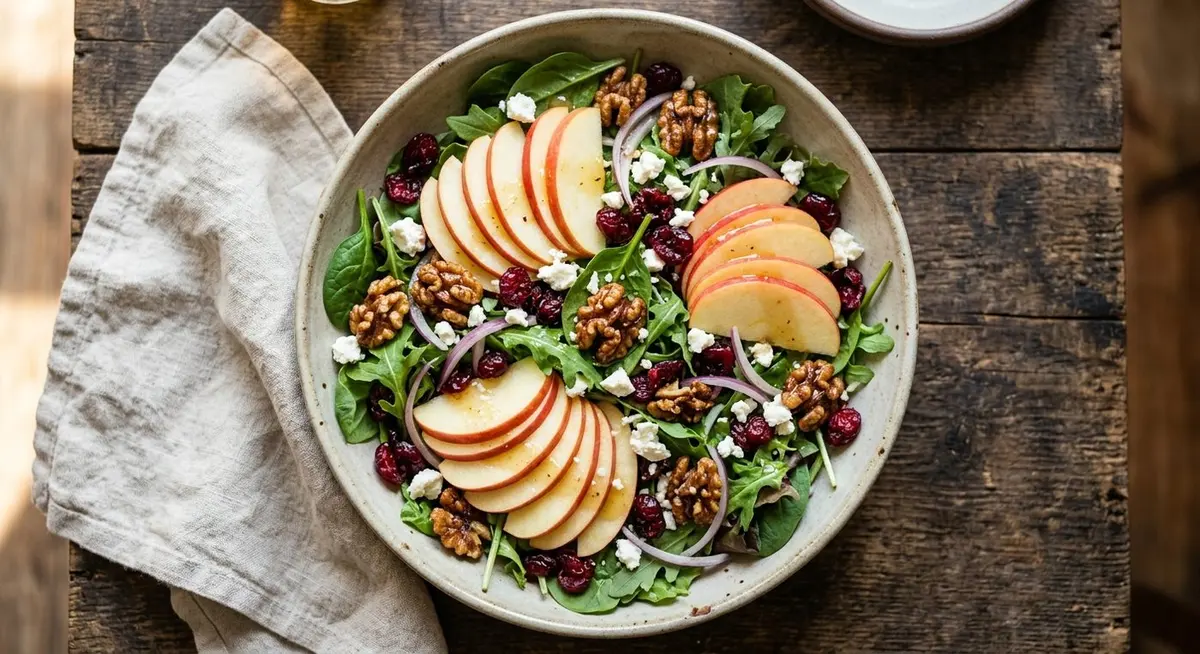
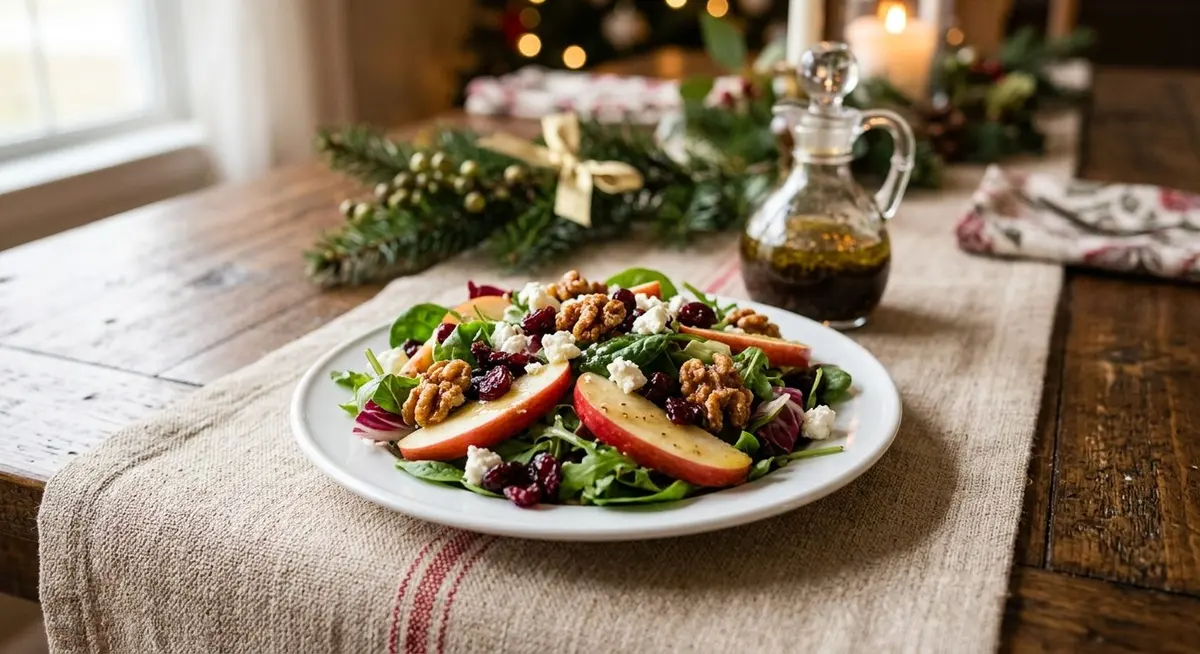
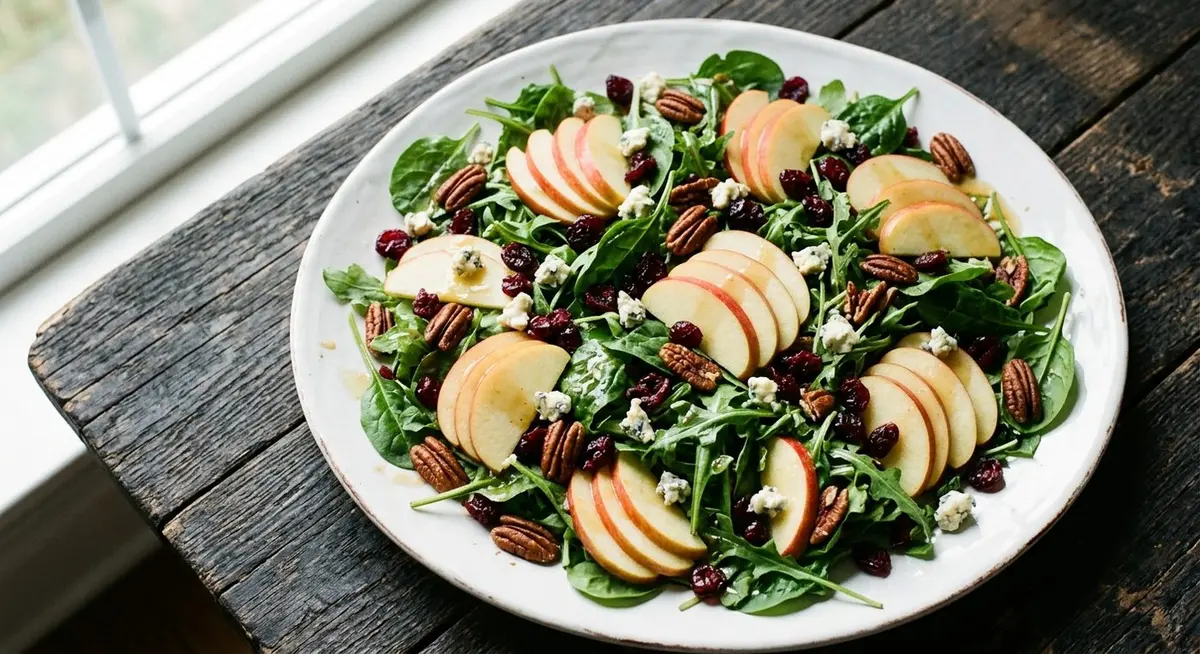
This is the salad I take to every table between October and December. Crisp apples, deep-red dried cranberries, candied walnuts and a salty crumble of blue cheese, all pulled together by a maple Dijon vinaigrette that takes ninety seconds in a jar. It is built to be made ahead, it travels without wilting, and it looks like far more work than it is.
Most autumn salads are one note. They are all sweetness, or all crunch, or a bowl of leaves with a handful of dried fruit thrown in and called seasonal. This one is balanced on purpose, and every ingredient is there to do a specific job rather than to fill space.
There are four textures working at once — the snap of a cold apple, the chew of a dried cranberry, the shatter of candied walnut, the soft bite of blue cheese — and four flavours in tension. The apples are sweet and tart at the same time because you use two varieties. The cranberries are sweet. The cheese is salty and sharp. The vinaigrette is acidic and only faintly sweet. Nothing dominates, and that is why people go back for a second spoonful.
The salad is built in layers rather than tossed together, which is what keeps the apples and walnuts sitting on top where they can be seen.
The make-ahead trick that matters most. Dress the greens in the bottom of the bowl, then layer everything else on top and do not toss until you are standing at the table. The leaves sit under the weight of the fruit, the dressing stays where it is needed, and a salad assembled this way still looks fresh two hours later.
The Four-Texture Rule
Once you understand why this salad works, you can rebuild it from whatever is in the fridge without following a recipe at all. It is built on four textures and four flavours, and every ingredient belongs to one of them. Get one of each on the fork and the salad tastes finished.
The framework
Texture
What it does
What can fill it
Crunch
The cold snap that makes the salad taste fresh rather than soft
The creamy contrast that binds everything else together
Soft cheese, avocado, roasted squash, a jammy egg
Then the flavours: something sweet, something sharp, something salty, something bitter. Here that is the apple, the cider vinegar, the cheese and the walnuts. If your salad tastes flat, it is almost never missing an ingredient — it is missing one of these four.
The fastest way to fix a disappointing salad is to add salt and acid, in that order, and taste again. Not more cheese, and not more dressing. Nine times out of ten a salad that tastes dull is under-salted or under-acidic, and everything else on the plate was already doing its job.
What Goes In, and What Each Thing Does
This is a salad, so there is room to improvise — but the balance is deliberate, and the amounts below are what keeps it balanced. The dressing in particular should be made as written the first time; once you have tasted it, you will know which way you want to push it.
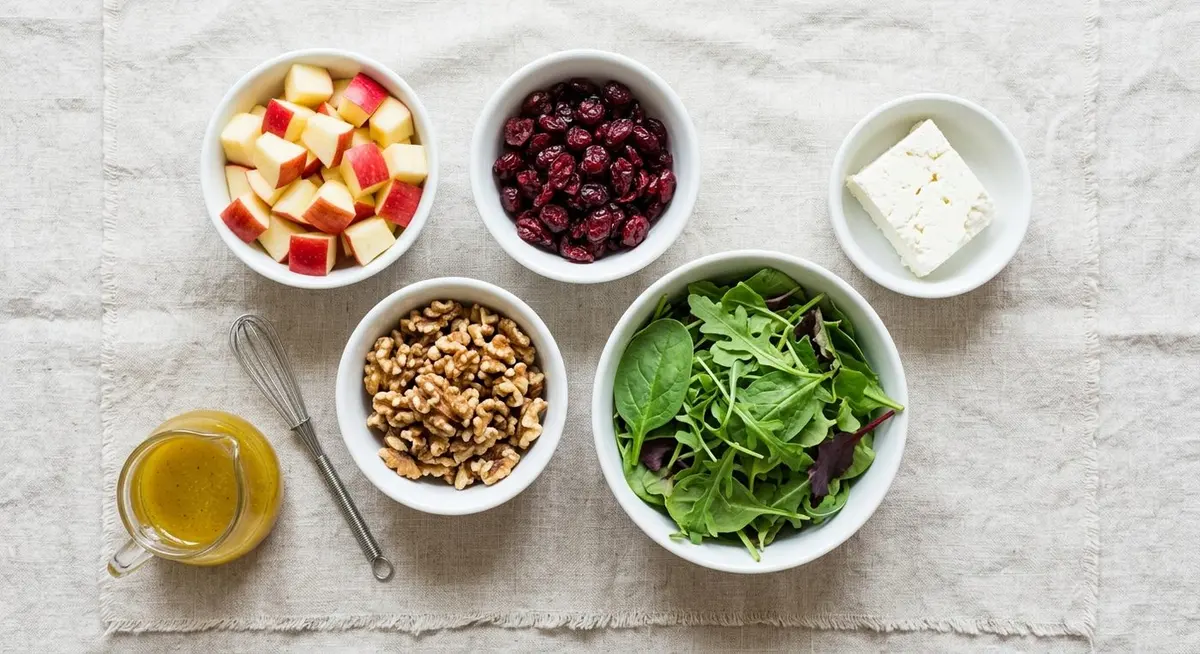
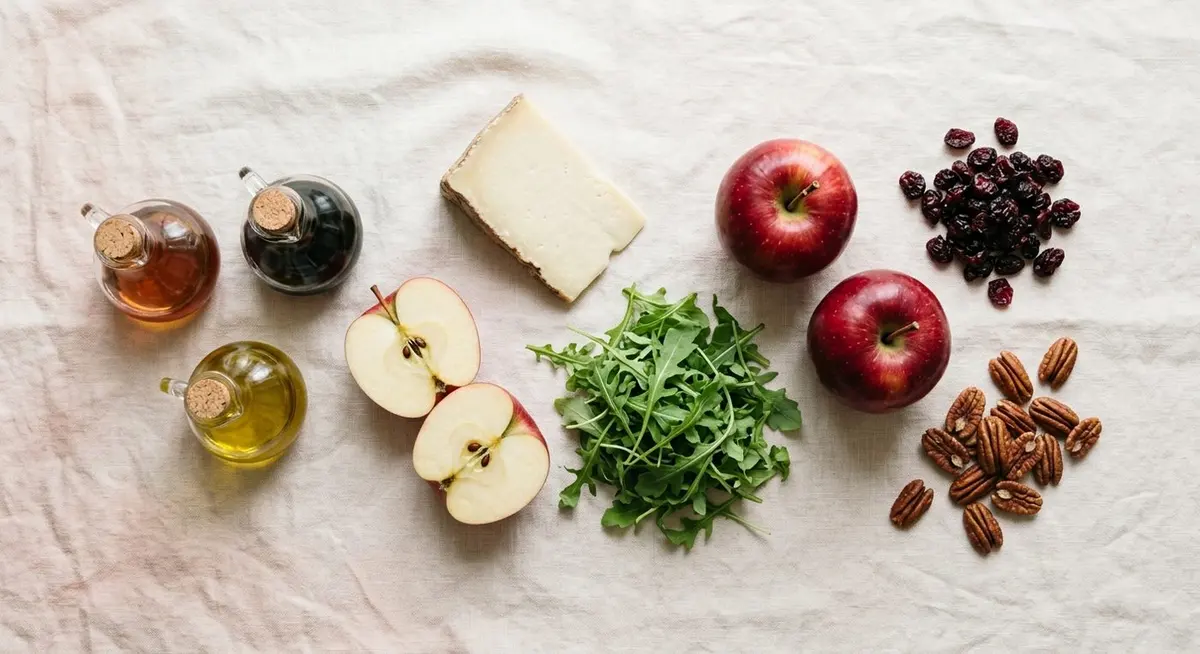
Ingredients and their job
Ingredient
Amount
What it is doing
Baby greens
5 oz / 140 g
Arugula, baby spinach or a spring mix — peppery leaves that stand up to a sweet dressing
Apples
2, one red and one green
Sweetness and acidity together; the crunch the whole bowl is built around
Dried cranberries
3/4 cup
Chewy sweetness and the deep red that makes the plate look seasonal
Walnut halves
1 cup
The bitter note that stops everything tasting sugary; candied, they also add shatter
Blue cheese or feta
4 oz, crumbled
Salt and sharpness. This is the ingredient that makes the dressing taste finished
Red onion
1/2 small, shaved
A clean raw bite that cuts through the fruit
Apple cider vinegar
1/4 cup
The acid backbone of the dressing
Pure maple syrup or honey
3 tbsp
Sweetness that rounds the vinegar without flattening it
Dijon mustard
2 tsp
Emulsifier — it is what stops the dressing separating on the plate
Garlic
1 small clove, grated
A savoury undertone; you should not be able to identify it
Extra-virgin olive oil
2/3 cup
Carries the flavour and softens the vinegar’s edge
Fine sea salt
3/4 tsp
Under-salted dressing tastes thin, not light
Flaky salt and black pepper
to finish
Added at the table, where it actually lands on the food
The single most common mistake with this salad is an under-seasoned dressing. A vinaigrette made with the right ratio of oil to vinegar but too little salt tastes watery even though nothing is wrong with it. Salt it until it tastes almost too savoury on the spoon — on a leaf, it will be exactly right.
Everything out and measured before you start. This salad comes together in five minutes once the chopping is done, and not before.
Choosing and Slicing the Apples
The apple is the ingredient most people get wrong, and almost always by using only one variety. A salad made with two Honeycrisps tastes sweet and flat. Pair a sweet apple with a tart one and the bowl suddenly tastes seasoned — the same reason you add lemon to a sweet sauce. Use one of each.
Which varieties to buy
Apple varieties, ranked for this salad
Apple
Flavour
Why it works here
Holds colour
Honeycrisp
Sweet, very juicy
The best all-rounder; crisp and clean on the plate
Average
Pink Lady
Tart-sweet
The ideal red partner for a Granny Smith
Good
Fuji
Sweet, dense
Holds its crunch longer than most
Good
Granny Smith
Sharply tart
Balances a sweet dressing; use it as the green apple
Good
Braeburn
Balanced, faintly spicy
The best choice if you must slice hours ahead
Best
Gala
Mildly sweet
Fine, and cheap; needs a tart partner to carry it
Average
Red Delicious
Bland, softens fast
Skip it here — it goes mealy in twenty minutes
Poor
How to slice them so they stay crisp
Cut the apples into quarters, cut the core out of each quarter with a single angled stroke, then slice each quarter crossways into pieces a little thicker than a coin. That is thick enough to keep a snap and thin enough to eat with a fork alongside the leaves.
If you are serving within twenty minutes, slice them straight into the bowl. Any longer than that and you need to stop them browning, which takes one extra step.
The browning fix that actually works. Submerge the sliced apples in cold salted water — about a teaspoon of salt to a cup of water — for five minutes, then drain and pat them dry. Salt slows the enzyme that turns apples brown far more effectively than a squeeze of lemon, and unlike lemon it does not leave the fruit tasting sour. You can also stir a tablespoon of honey into the water instead; both work, and neither is detectable once the fruit is dressed. Slice the apples last regardless — ten minutes before serving is the sweet spot.
Candied Walnuts in One Pan
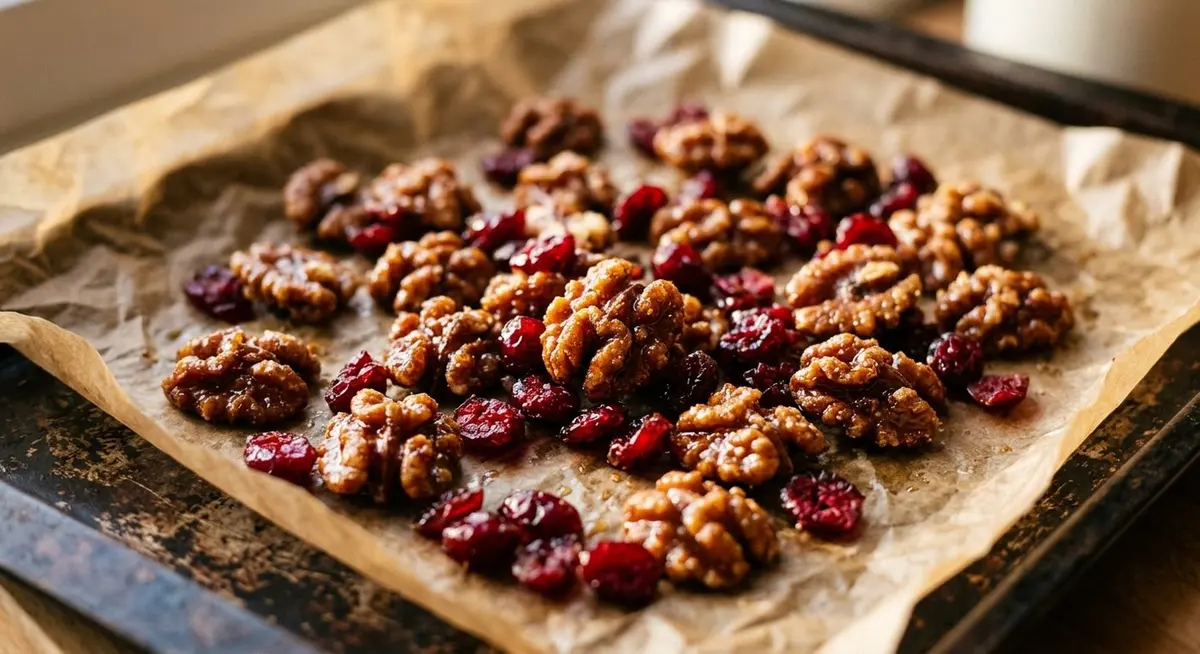
Candied walnuts are the one part of this salad that people assume was bought. They take about eight minutes in a single pan, and they are so much better than the sugared ones in a packet that it is worth doing even on a weeknight. You will end up with more than the cup the salad needs, which is never a problem.
Line a baking tray with parchment and set it beside the hob before you start. Melted sugar waits for nobody, and you cannot go looking for paper once the pan is going.
Warm 1 cup of walnut halves in a dry non-stick pan over medium heat for three to four minutes, until they smell toasted and darken by a shade. Keep them moving so they colour evenly.
Add 2 tablespoons of sugar and 1 tablespoon of butter. Stir without stopping for three to five minutes.
Keep going until the sugar melts, darkens to the colour of weak tea and coats every walnut. If it starts to smoke, lift the pan off the heat for ten seconds and keep stirring.
Tip the nuts straight onto the parchment and spread them into a single layer. Do not touch them yet — hot caramel will burn you far worse than boiling water.
Leave for fifteen minutes to set hard, then break them into clusters with your hands. Store in an airtight jar for up to a week.
Spread them into one layer the moment they come out of the pan. Piled up, they set into a single block you have to break with a knife.
Safety, and it matters. Melted sugar reaches well past the boiling point of water and sticks to skin as it burns. Use a dry spoon, keep water away from the pan, and never tilt it towards you to see how the colour is coming along. If the sugar seizes into a solid lump instead of melting, add a teaspoon of water and keep stirring over low heat until it loosens — it is recoverable.
The Maple Dijon Vinaigrette
A vinaigrette is a ratio, not a recipe. Learn the proportion and you can make it without measuring within a week: one part acid, a little sweetness, a little mustard, then one and a half parts oil. This version uses cider vinegar because it echoes the apples, and maple syrup because it dissolves cleanly into cold liquid where honey can stubbornly sit at the bottom of the jar.
The vinaigrette
Ingredient
Amount
Note
Apple cider vinegar
1/4 cup
Balsamic or white wine vinegar both work; cider tastes most autumnal
Pure maple syrup
3 tbsp
Honey works but needs longer shaking to dissolve
Dijon mustard
2 tsp
Do not skip it — this is what keeps the dressing from separating
Garlic
1 small clove, grated
Grate it on a microplane so no raw chunks survive
Fine sea salt
3/4 tsp
Adjust up; under-salted dressing tastes watery
Black pepper
1/2 tsp, freshly ground
Coarse grind, so it stays visible on the leaves
Extra-virgin olive oil
2/3 cup
Something peppery and assertive, not a delicate oil
How to make it, and how to fix it
Put everything except the oil in a jar and shake hard for ten seconds. Add the oil and shake again for twenty. It will look like a thin cream, which is right. If you are whisking by hand, whisk the oil in steadily rather than all at once to keep the emulsion together.
Taste it on a leaf rather than a spoon — dressing always reads sharper off the spoon than it does on greens, and you will over-correct if you judge it that way. If it tastes flat, add salt. If it tastes oily, add vinegar a teaspoon at a time. If it tastes astringent, add maple.
You will have more dressing than you need. One batch makes about a cup, which is enough for two of these salads. It keeps in a jar in the fridge for two weeks; let it sit out for ten minutes and shake it again before using, because cold olive oil solidifies and cold vinaigrettes taste duller than they are.
Choosing and Prepping the Greens
The greens are the least interesting part of this salad and the part most likely to ruin it. Two decisions matter: which leaves you buy, and whether they are dry when they go into the bowl.
Which leaves to use
Arugula — peppery and assertive, and the best match for a sweet dressing. This is what I reach for first.
Baby spinach — mild and soft, with none of the bitterness. Use it if you are feeding children or anyone who finds arugula aggressive.
Spring mix — the safe all-rounder, and the one most likely to be on offer. Look for a bag with a decent share of darker leaves rather than all pale iceberg.
Watercress — sharper and more peppery than arugula, with a lovely delicate stem. Excellent, but it wilts faster than anything else here.
Shaved Brussels sprouts — not technically a leaf, but the best winter version of this salad: much crunchier, and it holds dressing without going limp for a full hour.
How to wash and dry them
Fill a large bowl with cold water and swish the leaves through it with your hands. Grit sinks; leaves float. Lift them out rather than pouring the bowl through a colander, or you put the dirt straight back on.
Spin them dry if you have a salad spinner. If you do not, shake them hard over the sink, then roll them loosely in a clean tea towel and press gently.
Bag them in the same towel, or in a box lined with paper towel, and refrigerate until you are ready to dress them.
Dress them only when the rest of the meal is on the table. Wet leaves dilute the vinaigrette and go soft within minutes.
The one-step test for whether your greens are dry enough: pick up a handful and shake it. If you can feel or hear water, they are not ready. Dress wet leaves and you will not be eating a salad — you will be eating a vinaigrette with leaves in it, and the bottom of the bowl will be a puddle by the time you sit down.
How to Assemble It So Nothing Wilts
There is one rule in this recipe, and everything else is improvisation: dress the greens in the bottom of the bowl, then build upwards. Tossing the whole salad with the dressing is what turns it into a soft, dark, tired-looking bowl within twenty minutes. Layering keeps each element where it belongs.
Put the washed, thoroughly dried greens in the bottom of a wide shallow bowl. Wet leaves are the single biggest cause of a soggy salad — if they still hold water, roll them in a clean tea towel and pat them dry.
Pour over about a third of the dressing and toss the leaves with your hands until every leaf is lightly coated. You should be able to see the shine on them, not puddles in the bottom.
Scatter the shaved red onion and half the cranberries over the dressed leaves.
Fan the apple slices across the top in a single loose layer, alternating red and green.
Break the candied walnuts over the top in clusters rather than crumbs, then crumble the cheese over the gaps between the apples.
Drizzle the remaining dressing over the fruit and nuts — not the leaves — and finish with flaky salt and a coarse grind of pepper at the table.
Serve straight from the bowl rather than plating each portion in the kitchen — a salad this layered is ruined by being moved twice.
Do not toss it before you carry it. If the bowl is going in the car, leave it assembled and untossed, lid pressed on, dressing in a separate jar. Toss it in the doorway of the room you are eating in. It takes four seconds and it is the difference between the salad you described and the one that arrives.
Use a wide, shallow bowl rather than a deep one. A deep bowl forces you to dig for the leaves and buries the apple and walnut under them, and there is no way to serve a salad like this without it looking bruised.
Making It Ahead of Time
This is a genuinely good salad for cooking in advance, because almost every element can be prepared separately and held for days. What you cannot do is assemble the whole thing the night before.
What to do when
When
What to do
Hold it
A week ahead
Candy the walnuts; store airtight at room temperature, away from the hob
1 week
A week ahead
Make the vinaigrette and refrigerate it in a jar
2 weeks
Two days ahead
Crumble the cheese and measure the cranberries
5 days
Two days ahead
Slice the onion and keep it in a bowl of cold water in the fridge
2 days
Eight hours ahead
Wash and dry the greens and bag them in a tea towel
2 days
Two hours ahead
Slice the apples into salted water, then drain and dry
Overnight
Last five minutes
Dress the leaves, layer everything else on top, do not toss
Serve now
Keep the onion in water. Ten minutes in cold water takes the harshness out of a raw red onion and keeps it crisp, which matters more in a salad like this than it sounds. Drain it and pat it dry before it goes anywhere near the greens.
Bag the greens in a towel. Wash them, spin or shake them, then roll them loosely in a clean tea towel inside a bag. They stay crisp for a day and a half and you are not drying leaves with a paper towel while guests arrive.
Do not dress anything early. The dressing is oil and acid; both attack leaves on contact. Everything else in this salad can wait, but the moment the greens meet the vinaigrette you have about thirty minutes.
Salt the apples, not the bowl. If you salt the assembled salad early, the salt pulls water out of the fruit and you will find a puddle at the bottom within the hour.
Variations and Substitutions
The skeleton of this salad holds up to a lot of swapping. Keep the four-texture principle intact and you can rebuild it around whatever is in the fridge.
Swaps that work
Instead of
Try
What changes
Dried cranberries
Dried cherries, golden raisins or chopped dates
Cherries are darker and tarter; dates are sweeter and softer
Candied walnuts
Candied pecans, toasted almonds or pumpkin seeds
Pecans candy faster; seeds need no pan at all
Blue cheese
Feta, goat cheese or shaved Parmesan
Feta is milder and less divisive; Parmesan is drier and saltier
Arugula
Baby spinach, watercress or a shaved Brussels sprout base
Sprouts make it a much crunchier, more wintry salad
Maple syrup
Honey, or brown sugar dissolved in a splash of hot water
Honey needs longer shaking; brown sugar tastes deeper
Cider vinegar
Balsamic or white wine vinegar
Balsamic makes it sweeter and darker; use a little less maple
Red onion
Shallot or pickled red onion
Shallot is gentler; pickled onion adds its own acidity, so use less dressing
Add bacon if you are feeding people who are suspicious of salad. Six slices, cooked crisp and broken into shards, scattered with the walnuts. It is not the same salad any more, but it is a very good one, and it converts the person at the table who was going to skip the vegetables.
Turning It into a Main Course
As written this serves six alongside a roast. With two additions it becomes a full dinner for four, which is how we eat it most weeknights.
What to add
Protein: sliced roast chicken, warm shredded duck, seared halloumi or a soft-boiled egg. Warm protein against cold apple is the whole point — add it at the last minute so it does not wilt the leaves.
Heft: cooked farro, wild rice or quinoa, tossed with the greens before they are dressed. It soaks up the vinaigrette and turns a side into a bowl you can eat with a spoon.
Bread: torn sourdough, tossed in olive oil and toasted until it is closer to crouton than crumb.
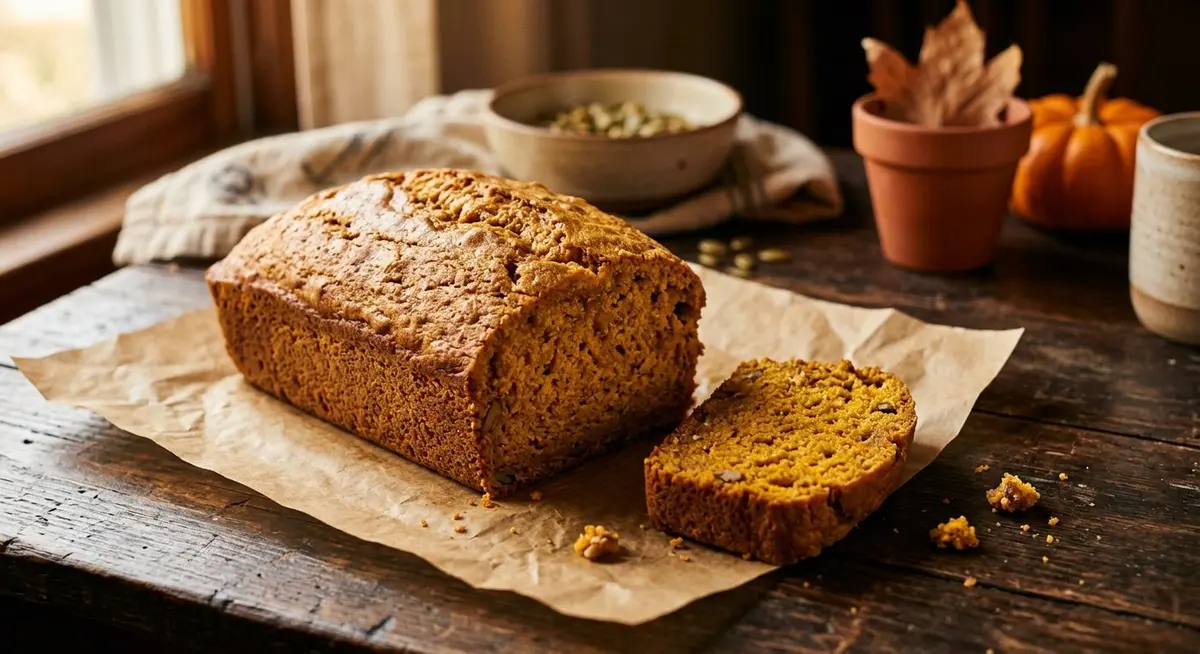
On the side, a bowl of soup is the obvious match — this salad sits well beside anything with squash or lentil in it. And if you are already cooking your way through the season, the same apple-and-cider flavour logic shows up in a slow-cooked apple butter and in a crisp apple salad with cheddar and candied pecans, which uses the same trick of pairing sweet fruit with something sharp and salty. If your table needs a baked dish alongside, a straightforward five-ingredient pasta bake or a one-bowl pumpkin bread carries the same autumn flavours without competing.
Storage and Leftovers
This salad behaves well as long as you are honest about which state it is in. Undressed components keep for days. A dressed salad keeps for about a day, and it will never be as good as it was in the first hour — that is simply what acid does to leaves.
How long everything keeps
What
How to keep it
Keeps
Undressed salad
Airtight box, chilled, apples and walnuts kept separate
2 days
Dressed salad
Airtight box, chilled; expect the leaves to soften
1 day
Vinaigrette
A jar in the fridge; bring to room temperature and shake before use
2 weeks
Candied walnuts
Airtight jar at room temperature, away from the hob
1 week
Sliced apples
Submerged in salted water in the fridge, drained and dried before serving
Overnight
Crumbled cheese
Airtight box in the fridge
5 days
Food safety note. Nothing here contains raw egg so the dressing itself is stable, but a dressed salad that has sat out at room temperature for more than two hours should be thrown away rather than chilled and served again. If you are feeding a crowd, keep the bowl over ice or in the shade and top it up in batches rather than leaving one large bowl out all afternoon.
Feeding a Crowd
This is a holiday-side salad, so the quantities above rarely match the number of people at the table. Scale from this table and build in two bowls rather than one enormous one.
Scaled quantities
Guests
Greens
Apples
Walnuts
Cranberries
Cheese
Dressing
6
5 oz
2
1 cup
3/4 cup
4 oz
3/4 cup
12
10 oz
4
2 cups
1 1/2 cups
8 oz
1 1/2 cups
24
20 oz
8
4 cups
3 cups
1 lb
3 cups
Two bowls, not one. A salad deeper than your hand cannot be tossed without crushing the leaves, and the bottom half never gets any dressing — you end up with a dry bowl and a swamp. Build each bowl separately, set them at opposite ends of the table, and let people serve themselves from whichever is nearer.
Troubleshooting
The salad went soggy before it reached the table. The leaves were wet, the dressing went on too early, or it was tossed and then left standing. Dry the greens in a towel, dress in the bottom of the bowl, and toss at the last second.
The walnuts came out sticky and soft. The sugar did not reach the hard-crack stage. Keep stirring past the point where it looks done — it should darken to the colour of weak tea — and cool them completely on parchment before breaking them up.
The dressing tastes flat. Salt. A vinaigrette with too little salt tastes thin even when the oil and vinegar are perfectly balanced, and it is almost always the answer.
The dressing separated in the fridge. That is normal and not a fault. Olive oil solidifies when cold. Let the jar stand for ten minutes and shake it hard.
The apples browned in the bowl. They were sliced too far ahead without protection. Submerge them in salted water or honey water next time, and slice them no more than twenty minutes before serving.
The onions are too aggressive. Soak the slices in cold water for ten minutes, drain, and pat dry. It takes the raw edge off without removing the bite.
The cheese disappeared into the salad. It was crumbled too finely. Aim for pieces about the size of a hazelnut — big enough to taste, small enough to spread through the bowl.
Questions and Answers
These are the questions that come up most often about this salad, usually the first time someone makes it for a holiday table.
Can I make this salad the night before?
You can prepare every component the night before, but do not assemble it. Candy the walnuts, make the vinaigrette, crumble the cheese, slice the onion and wash the greens. Slice the apples and dress the leaves on the day. An assembled salad that sits overnight turns dark and soft, and there is no way to bring it back.
What is the best apple for this salad?
Use two: one sweet and one tart. Honeycrisp or Fuji for sweetness, Granny Smith or Pink Lady for acidity. A single variety tastes flat, and the pairing is what makes the bowl taste seasoned rather than just sweet.
How do I keep the apples from turning brown?
Submerge the slices in cold salted water for five minutes — about a teaspoon of salt per cup of water — then drain and pat dry. Salt slows browning more effectively than lemon juice and does not leave the fruit tasting sour. Honey water works too.
Can I use feta instead of blue cheese?
Yes, and it is the version to make if you are feeding people who dislike blue cheese. Feta is milder and less divisive, though the salad loses some of its sharpness and you may want an extra pinch of salt in the dressing to compensate.
How long does the dressing keep?
About two weeks in a sealed jar in the fridge. It will separate and the olive oil will solidify when cold, which is normal. Let it stand at room temperature for ten minutes and shake it hard before using.
Is this salad good for a potluck?
It is one of the best things to take. Assemble it untossed in a bowl with a lid, carry the dressing in a separate jar, and toss it in the doorway when you arrive. Do not add the dressing before you leave the house.
Can I make it without candying the walnuts?
Yes. Toasting them in a dry pan for four minutes gets you most of the flavour, and a handful of store-bought glazed walnuts is a perfectly fine shortcut. The salad will be less crunchy but nobody will complain.
What can I serve with it?
It sits beside roast chicken, pork, duck or a nut roast without competing. As a main course, add shredded chicken or warm halloumi and a cooked grain tossed through the undressed leaves. A squash soup is the classic pairing.
Free Printable: The Fall Salad Planner
A printable companion to this salad — the shopping list, the vinaigrette ratio card, the apple variety chart, the make-ahead timeline, the assembly checklist and scaled quantities for feeding twenty-four.
Elowen Thorn I cook, photograph and re-test every recipe in an ordinary home kitchen before it goes up, so what you make matches what you see. Savory Discovery is where simple weeknight cooking, seasonal ideas and the odd bit of kitchen craft sit side by side — written plainly, and worth cooking twice.