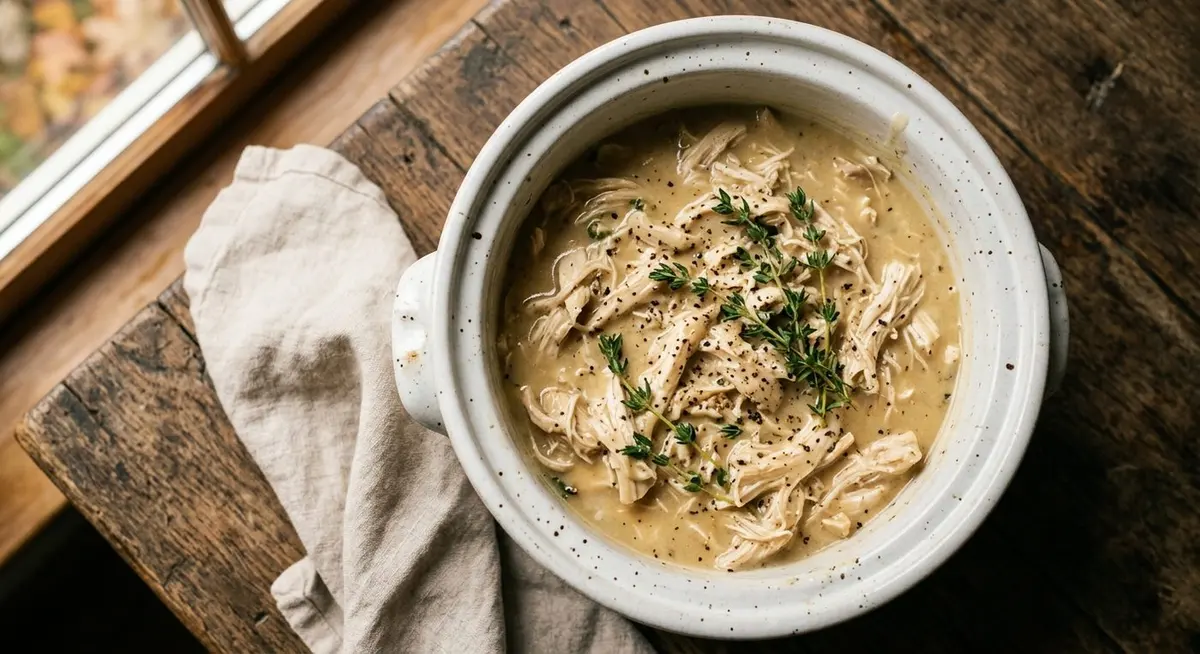
This is the dinner I make on the days when the afternoon has already run away from me. Four ingredients go into the pot in the morning, and by six o’clock there is shredded chicken sitting in a glossy, savoury gravy that tastes like it took all day. It did take all day. It just did not take any of my day.
A slow cooker is a sealed, humid, low-temperature braise. That is the whole trick, and it is also the whole risk. Because the pot traps moisture, anything you add as liquid stays liquid — which is why so many slow cooker dinners end up as soup with a protein floating in it. This recipe wins by starting with a sauce that is deliberately too thick and letting the chicken thin it from the inside.
The second thing it gets right is temperature. Boneless chicken breast is safe at 165°F, but it is not pleasant at 165°F — it is still tense and it tears into strings when you pull it. Somewhere between 195°F and 205°F the muscle fibres give way and the meat shreds with almost no resistance, which is exactly the texture this dish is built around. A slow cooker on low sits in that range comfortably. Your oven does too, if you set it low enough.
Shredded in the pot, not on a board. Every drop of juice that comes out of the chicken goes back into the gravy.
The one rule that matters most: whisk the dry gravy mix into the water before it goes anywhere near the pot. Dry powder hitting hot liquid is what makes lumps, and lumps cannot be cooked out of a slow cooker sauce.
The Recipe, at a Glance
Crockpot Chicken & Gravy
Yield
Serves 6
Prep
10 minutes
Cook
4 hours on low
Total
4 hours 10 minutes
Ingredients
3 to 4 boneless skinless chicken breasts (about 2 to 2 1/2 lb)
2 envelopes (0.87 oz each) dry chicken gravy mix
1 can (10.5 oz) condensed cream of chicken soup, unsalted if you can find it
1/2 cup water or unsalted chicken broth
1 tsp garlic powder
1/2 tsp onion powder
1/2 tsp sweet paprika
1/4 tsp freshly cracked black pepper
1/2 tsp fine salt, or to taste
1 tsp chopped fresh thyme, plus more to finish
2 tbsp cornstarch + 2 tbsp cold water, only if the gravy needs tightening
Cooked rice, mashed potatoes, egg noodles or biscuits, to serve
Instructions
Whisk the two envelopes of dry gravy mix into the 1/2 cup of water until there are no dry pockets left, then let it sit for a minute.
Stir the condensed soup, garlic powder, onion powder, paprika and pepper into the dissolved gravy mix. Leave the salt out for now.
Pat the chicken dry and lay it in the slow cooker in a single layer. Cut any very thick breasts in half horizontally and season lightly with the salt.
Pour the sauce over the chicken and spread it to the edges with the back of a spoon. Do not stir it again after this point.
Cover and cook on LOW for 4 to 5 hours, or on HIGH for 2 1/2 to 3 hours, without lifting the lid for the first two hours.
Check at the earliest time: the chicken should shred with almost no resistance and read 200 to 205 F at the thickest point.
Shred the chicken right in the pot with two forks, stir it back through the gravy, then leave the pot uncovered for 5 minutes to let the sauce tighten.
If it is looser than you want, whisk the cornstarch with the cold water and stir it in, then cook on HIGH uncovered for 10 to 15 minutes. Finish with fresh thyme and serve.
Notes
Use the gravy mix as dry powder. Do not prepare the gravy first.
Do not add water to the soup — the can is your liquid measurement.
Unsalted condensed soup and unsalted broth keep this from tipping over into too salty; you can always add salt at the end, and you cannot take it out.
Thighs give a richer, more shreddable result and forgive a longer cook far better than breasts do.
Four to five hours on low is the sweet spot. Six is the outer limit, and eight will give you stringy chicken and a grainy sauce.
Leftovers reheat beautifully over low heat with a splash of broth — never boil the sauce, or it will split.
The Ratio That Makes the Gravy
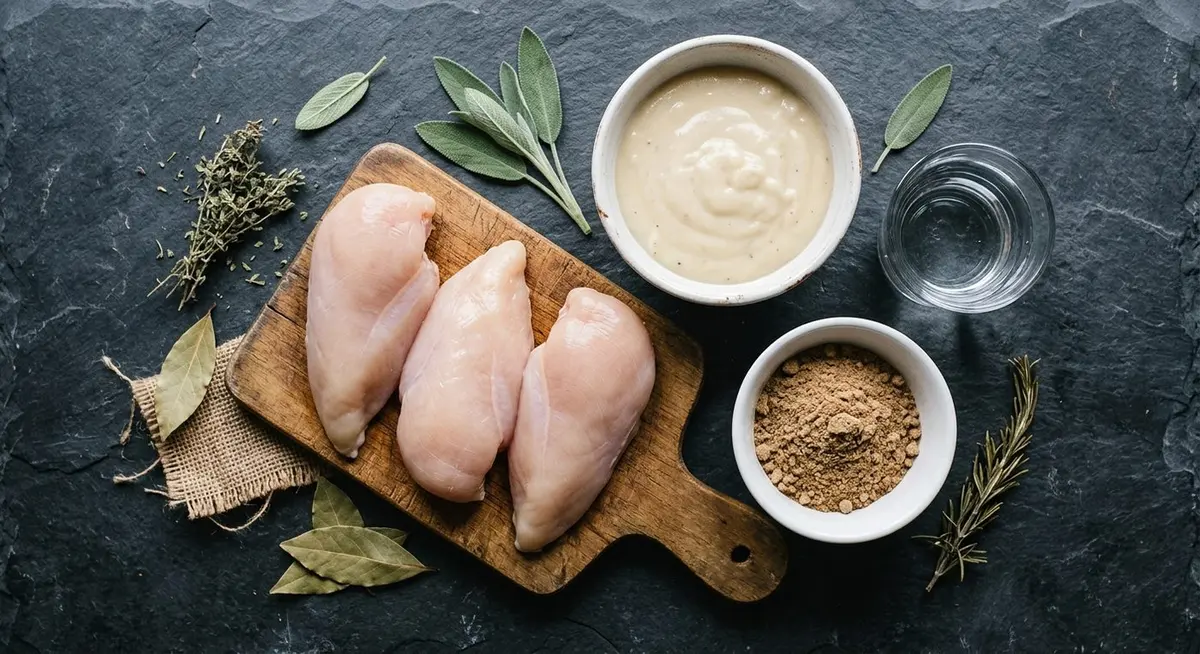
Everything the sauce needs, measured and waiting. Whisk the dry mix into the water first, then add the soup.
Once you understand the ratio you stop needing the recipe. The sauce is a starch thickener, a dairy body and a controlled amount of water, and the chicken supplies the rest. Get those three in proportion and you can scale this pot up for a crowd or down to two without changing anything else.
The gravy ratio
Component
Per 6 servings
Per 2 servings
What it is doing
Dry chicken gravy mix
2 envelopes (1.74 oz)
1 envelope (0.87 oz)
The starch that sets the sauce and the savoury backbone
Condensed cream of chicken soup
1 can (10.5 oz)
1/2 can (5.25 oz)
Body, dairy fat and a second layer of seasoning
Water or unsalted broth
1/2 cup
1/4 cup
Controls final consistency — err on the low side
Chicken
2 to 2 1/2 lb
3/4 to 1 lb
Releases roughly 3/4 cup of juice per 6 servings
Cornstarch slurry, if needed
2 tbsp + 2 tbsp water
1 tbsp + 1 tbsp water
Emergency tightening, on HIGH and uncovered
Spice support, per 6 servings
Seasoning
Amount
Why
Garlic powder
1 tsp
Gives the sauce a savoury base the packets do not have
Onion powder
1/2 tsp
Rounds out the savoury note without adding sweetness
Sweet paprika
1/2 tsp
Colour and a mild warmth that reads as comfort food
Black pepper
1/4 tsp, plus more to finish
Heat that survives a long cook; fresh pepper at the end is brighter
Fresh thyme
1 tsp at the end
Cuts the richness and makes it taste finished rather than simmered
Salt
1/2 tsp, then to taste
The soup and mix are already salty — always taste before adding more
Scale the pot, not just the sauce. Doubling this into a 6-quart cooker works beautifully. Doubling it into a 4-quart cooker does not — the sauce needs surface area to reduce, and an over-filled pot just steams the chicken in its own liquid.
How to Build It, Step by Step
Start with the sauce, not the chicken
Put the dry gravy mix in a small bowl and add the half cup of water, then whisk until it is completely smooth and let it stand for a minute. It will look like a thin sludge, and that is correct. Now stir in the condensed soup, the garlic powder, the onion powder, the paprika and the pepper. You are looking for a sauce noticeably thicker than what you want on the plate, because the chicken is about to add close to three-quarters of a cup of its own juices.
Layer the chicken in one level
Pat the breasts dry, then lay them in the pot so they overlap as little as possible. If you have one or two that are much thicker than the rest, slice them horizontally through the middle — an even layer cooks evenly, and an even layer is what lets you pull the whole pot at the same moment. Season lightly now and hold the rest of the salt until the end.
Pour over and leave it alone
Spread the sauce to the edges with the back of a spoon. Then put the lid on and stop touching it. Every time you lift the lid the pot loses its trapped heat and the temperature drops by roughly fifteen to twenty degrees; it takes about twenty minutes to climb back. Three peeks in an afternoon is an hour of cooking time you did not plan for, and it is the most common reason a four-hour recipe is still tough at five.
Shred in the pot
When the chicken is ready, shred it right where it sits with two forks, then fold it back through the gravy. Shredding on a board and returning the meat would leave behind exactly the juice you want in the sauce. Once it is folded in, leave the lid off for five minutes — that short rest is when the gravy goes from loose to clingy, and it costs you nothing.
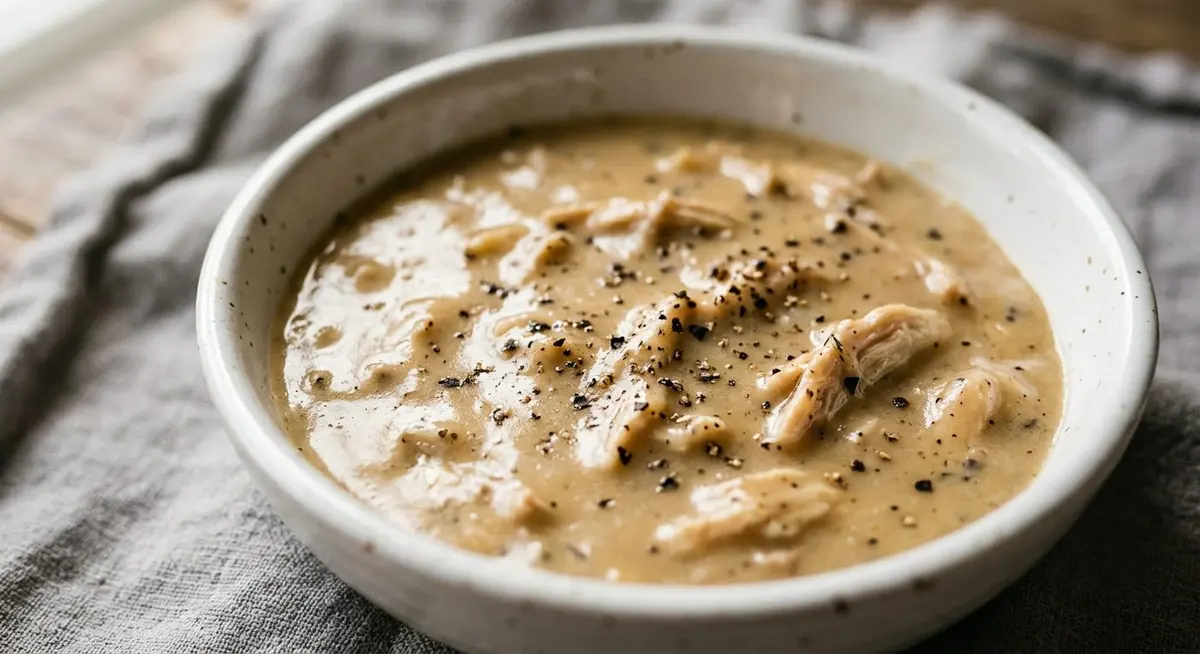
The finished gravy should coat the back of a spoon and hold a line drawn through it.
Low, High or Oven: Timing That Holds
The single most useful thing you can do for this dish is to stop treating it as an all-day recipe. It is a four-to-five-hour recipe. Past six hours the chicken does not get more tender — it gets stringy, and the starch in the sauce starts to break down and turn grainy.
Timing by method
Setting
Time
Pot temperature
What you get
LOW
4 to 5 hours
190 to 210 F
Shreds with a fork, still juicy — the target
LOW
6 hours
190 to 210 F
Still good, slightly drier at the edges
LOW
8 hours
190 to 210 F
Chalky and stringy; the sauce goes grainy
HIGH
2 1/2 to 3 hours
290 to 300 F
Firmer and less shreddable, but a genuine shortcut
Oven, 325 F
1 hour 45 min to 2 hours
200 F internal
Closest to a stove-top braise; use a lidded Dutch oven
From frozen, LOW
5 to 6 hours
190 to 210 F
Works, but cut the added water to 1/4 cup
Probe, do not guess. A digital thermometer in the thickest piece is the only reliable signal. You are looking for 200°F to 205°F — below that the chicken will tear into strings instead of shredding, and well above it there is no benefit left.
Getting the Gravy to the Right Thickness
Thickness is the one part of this dish that is genuinely about your pot rather than your recipe. Slow cookers vary enormously in how much steam they vent, and the chicken itself releases a variable amount of juice. So treat the finished consistency as something you adjust at the end, not something you get right at the start.
Quick fixes
Problem
Cause
Fix
Too thin
Extra liquid, or the lid came off too often
Whisk 1 tbsp cornstarch with 1 tbsp cold water per cup, stir in, cook on HIGH uncovered 10 to 15 minutes
Too thick
Too much dry mix for the liquid volume
Add unsalted broth one tablespoon at a time, whisking, until it pours
Greasy or split
Dairy sauce pushed too hot too fast
Off the heat, rest 5 minutes, then whisk in 1 tsp Dijon or a squeeze of lemon
Lumpy
Dry mix hit hot liquid
Strain into a jug and return it to the pot with the shredded chicken
Flat
Almost always under-salting rather than under-cooking
Salt in quarter-teaspoon increments, then a dash of Worcestershire or lemon
Grainy after reheating
Boiled during the reheat, or reheated at full power
Reheat on low with a splash of broth, stirring often; never let it boil
What to Serve It Over, and Beside
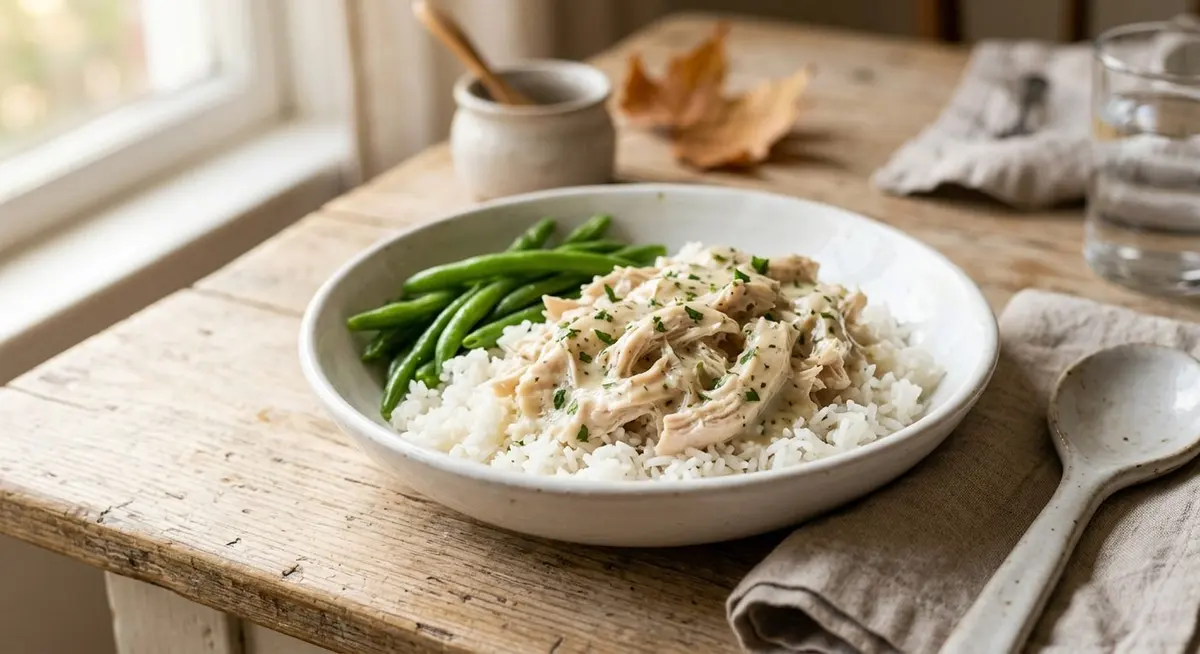
One base, one green, one bread. Dinner is done in the last twenty-five minutes.
Because the chicken arrives already sauced, the base you choose is doing more work than usual. Pick something that soaks rather than something that competes.
Steamed orzo or plain white rice, started twenty-five minutes before you serve — neutral, and it takes the most gravy
Mashed potatoes, which turn the sauce into the whole point of the plate
Egg noodles or wide pasta, cooked just under al dente so they finish in the sauce
Biscuits or fresh pasta for a more substantial plate
For a lower-carb base, cauliflower rice or spaghetti squash both hold the sauce surprisingly well
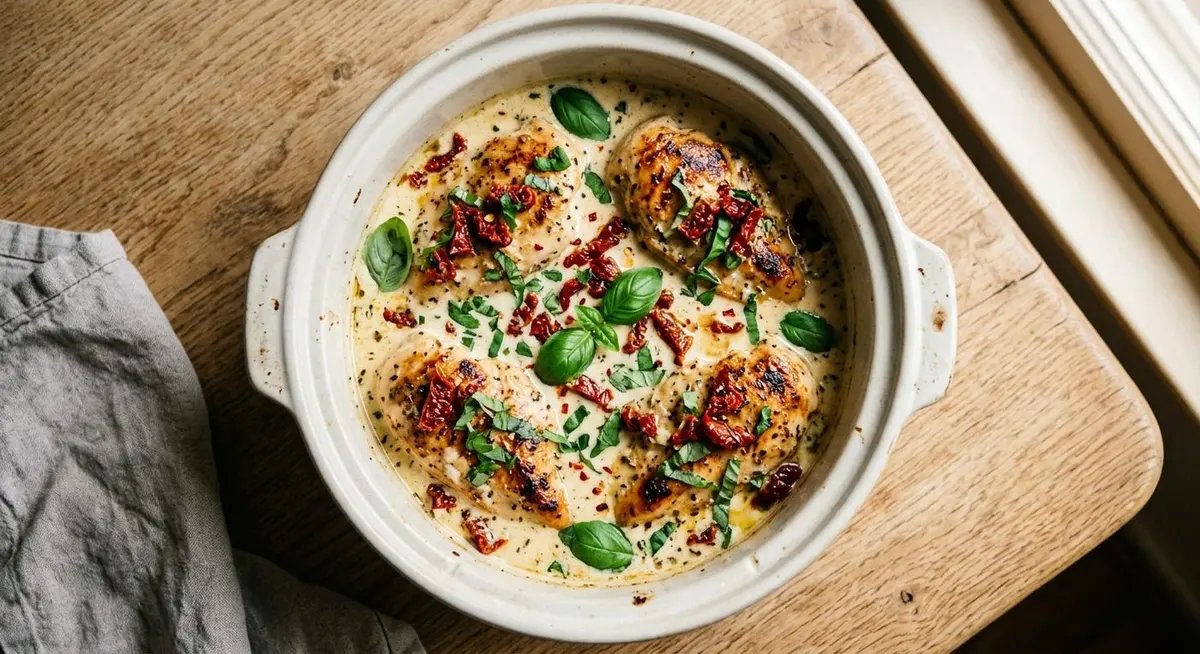
If you want to stay in the same family of slow-cooked comfort food, the slow-cooker marry me chicken is the creamier, sun-dried-tomato cousin of this dish, and the old-fashioned chicken and dumplings uses much the same shredded-chicken technique with a dumpling topping instead of rice.
Make-Ahead, Storage and Reheating
What you can do in advance
Whisk the sauce the night before and refrigerate it in a lidded jar — in the morning you pour one jar and walk away
Trim and halve the chicken breasts so they are all one thickness
Cook the rice the day before; rice reheats better than it cooks under pressure
Chop the thyme and have it ready in the fridge, dry, in a small container
Line a plan around the monthly meal plan so you are not deciding at five o’clock
Keeping and reheating
Method
How
Keeps
Notes
Refrigerator
Cool within 2 hours, shallow airtight container
4 days
Gravy thickens cold; loosen with broth as it reheats
Freezer, combined
Flat zip bag, air pressed out
3 months
Dairy sauces can separate — whisk hard as it thaws
Stove-top reheat
Low heat, splash of broth, stir often
Best method
Do not let it boil, or the sauce will split
Microwave reheat
50 percent power, 1-minute bursts
Works in a hurry
Full power makes the gravy grainy
Second-day sandwich
Over split biscuits or Texas toast
Up to 4 days
The best reason to make extra
Freeze before the first reheat, not after. If you know you will freeze half, portion it out the day you cook it. A sauce that has already been cooled and reheated once is at the end of its life, not the middle of it.
Troubleshooting and Questions
Can I use frozen chicken breasts?
Yes, but add them still frozen and cook 5 to 6 hours on low, and cut the added water to a quarter cup because a partial thaw adds liquid. Thawing overnight in the fridge gives you a much more predictable result, since all the pieces then start at the same temperature.
Do I really not make the gravy first?
Correct — the envelopes go in as dry powder. Whisk the powder into the water to dissolve it, and that mixture becomes your sauce base. Preparing the gravy on the stove first and pouring it in gives you a thinner, sweeter sauce that the long cook cannot tighten.
Why is my gravy watery?
Nearly always one of two things: extra liquid you did not need, or a lid that came off too often so no steam was lost. Sodium, not liquid, is usually the real reason: if the sauce tastes thin and salty, it is concentrated enough and just needs starch. Whisk cornstarch with cold water and finish on high, uncovered.
Can I use cream of mushroom or cream of celery instead?
Yes, and both are good. Mushroom makes it earthier, celery makes it more like a pot pie filling. If you use either, keep the amounts identical, and if you are cooking gluten-free, confirm your brand of soup and gravy mix is labelled that way, because both often contain wheat.
How do I stop it going stringy?
By cooking it for four to five hours, not eight. There is no technique that rescues chicken left in a slow cooker all day. If your schedule genuinely needs a longer window, use boneless thighs, which hold up far better, and check the pot at the five-hour mark.
Can I add vegetables to the pot?
You can, with one caution: watery vegetables like mushrooms, zucchini and frozen mixes release liquid and will loosen the gravy. Root vegetables are the safe choice. Add them under the chicken in the first ten minutes so they braise in the sauce rather than steaming on top of it.
Why does the sauce taste too salty?
Because the condensed soup, the gravy mix and any salted broth each carry their own salt. This is why the recipe calls for unsalted soup and unsalted broth, and why the salt goes in at the end rather than the beginning. If you have already overshot, stir in a teaspoon of sugar and a tablespoon of cream, and serve it over unsalted rice.
Can I make this in an Instant Pot?
Yes. Use the same quantities, cook on high pressure for 12 minutes with a natural release of 10, then shred and finish with the saute function to tighten the sauce. The texture is closer to poached chicken than to the slow-cooked version, so it is a good shortcut rather than a true equivalent.
Is it worth using thighs?
For many people, yes. Thighs give you a richer sauce, never dry out, and forgive a cook that runs long. Breasts give you a cleaner, lighter sauce that is closer to a classic diner plate. Either works in the same ratio — just watch the internal temperature rather than the clock.
What do I do with the leftovers?
Reheat them gently on the stove with a splash of broth and spoon the whole thing over split biscuits, or fry a batch of sheet pan chicken fajitas another night and keep this pot for lunches. It keeps four days, and the flavour is arguably better on day two.
The Crockpot Chicken & Gravy Kitchen Card
The recipe card, the gravy ratio, timing for every setting, a consistency-fix card, a side-dish pairing chart, a make-ahead timeline, storage and reheating, a troubleshooting card plus batch logs and freezer labels — all on one printable set for the fridge door.
Elowen Thorn I cook, photograph and re-test every recipe in an ordinary home kitchen before it goes up, so what you make matches what you see. Savory Discovery is where simple weeknight cooking, seasonal ideas and the odd bit of kitchen craft sit side by side — written plainly, and worth cooking twice.