Easy Twists To Try
- Add stone fruit. Sliced ripe peaches or nectarines are spectacular with burrata. The sweetness of the fruit against the cream is the kind of combination you will dream about for the rest of the summer.
- Drizzle with pesto. A spoonful of good basil pesto (homemade or store-bought) spooned over the top adds a beautiful punch of flavour and a gorgeous green colour.
- Use heirloom tomatoes. If you can find them, big colourful heirloom tomatoes sliced thick are stunning here. Salt them lightly and let them sit for 10 minutes to release some juice before plating.
- Add some crunch. Toasted pine nuts, slivered almonds, or even a few crushed pistachios scattered over the top add a beautiful textural contrast to the cream and the soft tomatoes.
- Try a different vinegar. Aged balsamic, white balsamic, or even a good sherry vinegar all work beautifully in place of the red wine vinegar. Each one brings a slightly different character to the dish.
Common Mistakes & Easy Fixes
- The burrata is dense and rubbery. It is too cold. Take it out of the fridge 30 to 60 minutes before serving. Room temperature is the magic here.
- The salad is bland. Almost always a salt issue. Salt draws out the tomato juices and seasons the cream. Taste and adjust right before plating — you will almost certainly want more salt than you think.
- The bread is soggy by the time you serve it. Toast it just before plating, not earlier. If you have to make it ahead, do not put the tomatoes on top until the very last minute.
- The burrata broke open and the cream leaked out before you got it to the table. Carry it on a separate plate and cut it at the table. This is the move every restaurant uses for exactly this reason.
A Few Questions You Might Have
What is burrata, exactly? Burrata is a fresh Italian cheese made from mozzarella and cream. The outside is a thin shell of mozzarella, and the inside is a soft, almost liquid centre of stracciatella (shredded mozzarella soaked in cream). When you cut into it, the cream spills out — that is the magic moment.
Can I substitute fresh mozzarella? You can, but the dish will be different. Fresh mozzarella is firm and milky; burrata is soft and creamy. If you can only find fresh mozzarella, slice it thick and let it come to room temperature, then proceed. It will not be the same dish, but it will still be lovely.
How far ahead can I make the marinated tomatoes? Up to 24 hours. They actually taste better the longer they sit, so make them the day before if you can.
What if I cannot find baby plum tomatoes? Any ripe tomato will work. Cherry tomatoes, grape tomatoes, or even diced larger tomatoes (scoop out the seedy pulp first) are all fine. The key is using the best tomatoes you can find — they should smell like tomatoes and feel heavy for their size.
Can I skip the bread? You can, but I would not recommend it. The bread is what turns this from a beautiful side dish into a complete, satisfying bite. If you are gluten-free, a sturdy gluten-free baguette or some gluten-free crackers will do the same job.
A Few Last Thoughts
This is the salad that taught me that the best summer cooking is barely cooking at all. It is the dish I make when I have bought a particularly beautiful ball of burrata and I want to let it be the star. It is the recipe I give to friends who think they cannot cook, because it is essentially impossible to mess up. And it is the plate I put down in the middle of the table when I want everyone to stop talking and just eat for a minute — which, in the middle of a long summer afternoon, is exactly the right thing to do.
If you make it, I’d love to hear how it turned out. Leave a note below, or come and find me over on the Savory Discovery blog — I read every single comment. And if you discover a new twist, please tell me about it; I am always looking for the next reason to justify buying extra burrata.
—Elowen Thorn
Burrata Salad
Description
A simple and elegant Italian burrata salad with marinated tomatoes, fresh basil, garlic-rubbed toasts, and extra virgin olive oil.
Ingredients
Instructions
- Take the burrata out of the refrigerator at least 30 minutes before serving and leave it in its container with the cream to bring it to room temperature.
- In a wide shallow dish, whisk together 2 tablespoons olive oil, red wine vinegar, red onion, chopped basil, parsley, kosher salt, and black pepper. Add the tomatoes and toss gently to coat. Cover and refrigerate for at least 30 minutes, ideally 1 to 2 hours or overnight.
- Heat the oven to 400°F (200°C). Arrange the baguette slices on a baking sheet, brush both sides with olive oil, and toast for 4 to 5 minutes, flipping once, until golden and crisp. Rub one side of each warm slice with the cut garlic clove.
- Arrange the garlic toasts on a large serving plate. Use a slotted spoon to mound the marinated tomatoes on and around the toasts. Drizzle any remaining marinade over the tomatoes. Drain the burrata and place it in the center.
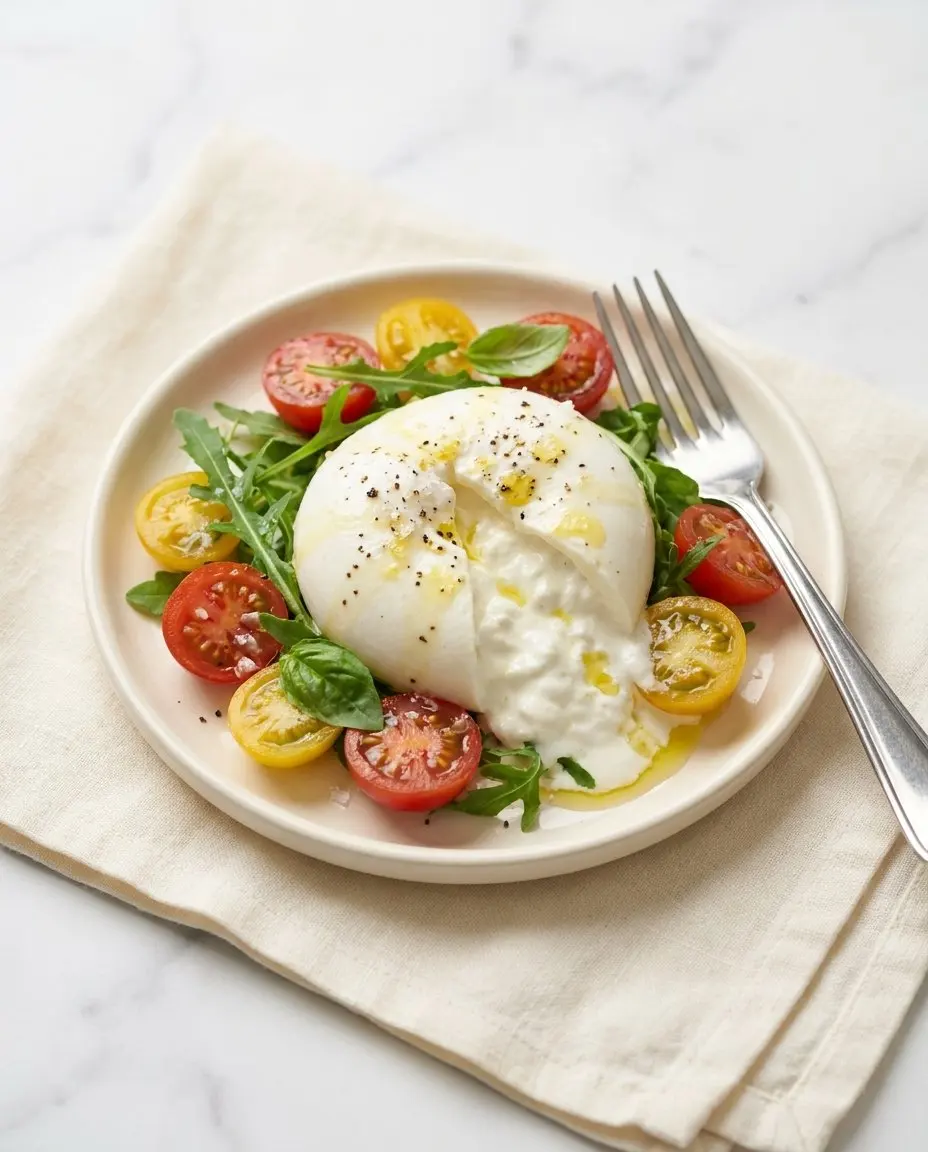
- Carefully cut open the burrata at the table so the cream spills over the tomatoes and toast. Drizzle with the remaining olive oil, scatter the basil leaves over the top, and finish with flaky sea salt and black pepper. Serve immediately with extra bread.
Notes
- Marinated tomatoes can be prepared up to 3 days ahead and stored refrigerated. Garlic toasts can be made a few hours ahead and stored at room temperature. Bring the burrata to room temperature 30 to 60 minutes before serving. Fresh mozzarella can be substituted for burrata, although the texture will be different.
A Few Tips From My Kitchen
- Always bring the burrata to room temperature. This is the single most important rule. Cold burrata is dense and rubbery; room-temp burrata is soft, almost liquid, and full of the creamy stracciatella that makes it magical. Take it out of the fridge at least 30 minutes before you want to serve it.
- Marinate the tomatoes overnight if you can. Even 30 minutes is good, an hour is better, and overnight is best. The tomatoes soften slightly, release some of their juices into the marinade, and become little flavour bombs that absolutely make the salad.
- Use the very best olive oil you have. This is not the place for your everyday cooking oil. Burrata is mild, tomatoes are mild, the dressing is simple — the olive oil needs to be loud and grassy and peppery. Save the good stuff for this.
- Cut the burrata at the table. The drama of the cream spilling out is half the fun. Let your guests see it happen.
- Don’t skip the bread. Burrata without bread is a missed opportunity. The bread catches the cream and the tomato juices and turns every bite into a complete little meal.

How To Serve It
This salad is at its best served as a starter, a light lunch, or part of an antipasto spread. It pairs beautifully with a simple green salad, some grilled bread, and a glass of cold white wine. For a more substantial meal, add a slice of prosciutto, a few slices of salami, some marinated olives, and a bowl of good pasta. It is the perfect dish for a long summer lunch on the patio with people you love, served in the late afternoon when the light is golden and nobody is in any hurry to do anything at all.
Storing & Reheating
This salad does not store well once assembled — the burrata is best within 30 minutes of being cut, and the toasts go soggy fast. However, the marinated tomatoes will keep in the fridge for up to 3 days, and the garlic toasts can be made a few hours ahead and stored at room temperature. When you are ready to serve, just bring the burrata to room temperature, plate everything, and cut the cheese at the table.
Easy Twists To Try
- Add stone fruit. Sliced ripe peaches or nectarines are spectacular with burrata. The sweetness of the fruit against the cream is the kind of combination you will dream about for the rest of the summer.
- Drizzle with pesto. A spoonful of good basil pesto (homemade or store-bought) spooned over the top adds a beautiful punch of flavour and a gorgeous green colour.
- Use heirloom tomatoes. If you can find them, big colourful heirloom tomatoes sliced thick are stunning here. Salt them lightly and let them sit for 10 minutes to release some juice before plating.
- Add some crunch. Toasted pine nuts, slivered almonds, or even a few crushed pistachios scattered over the top add a beautiful textural contrast to the cream and the soft tomatoes.
- Try a different vinegar. Aged balsamic, white balsamic, or even a good sherry vinegar all work beautifully in place of the red wine vinegar. Each one brings a slightly different character to the dish.
Common Mistakes & Easy Fixes
- The burrata is dense and rubbery. It is too cold. Take it out of the fridge 30 to 60 minutes before serving. Room temperature is the magic here.
- The salad is bland. Almost always a salt issue. Salt draws out the tomato juices and seasons the cream. Taste and adjust right before plating — you will almost certainly want more salt than you think.
- The bread is soggy by the time you serve it. Toast it just before plating, not earlier. If you have to make it ahead, do not put the tomatoes on top until the very last minute.
- The burrata broke open and the cream leaked out before you got it to the table. Carry it on a separate plate and cut it at the table. This is the move every restaurant uses for exactly this reason.
A Few Questions You Might Have
What is burrata, exactly? Burrata is a fresh Italian cheese made from mozzarella and cream. The outside is a thin shell of mozzarella, and the inside is a soft, almost liquid centre of stracciatella (shredded mozzarella soaked in cream). When you cut into it, the cream spills out — that is the magic moment.
Can I substitute fresh mozzarella? You can, but the dish will be different. Fresh mozzarella is firm and milky; burrata is soft and creamy. If you can only find fresh mozzarella, slice it thick and let it come to room temperature, then proceed. It will not be the same dish, but it will still be lovely.
How far ahead can I make the marinated tomatoes? Up to 24 hours. They actually taste better the longer they sit, so make them the day before if you can.
What if I cannot find baby plum tomatoes? Any ripe tomato will work. Cherry tomatoes, grape tomatoes, or even diced larger tomatoes (scoop out the seedy pulp first) are all fine. The key is using the best tomatoes you can find — they should smell like tomatoes and feel heavy for their size.
Can I skip the bread? You can, but I would not recommend it. The bread is what turns this from a beautiful side dish into a complete, satisfying bite. If you are gluten-free, a sturdy gluten-free baguette or some gluten-free crackers will do the same job.
A Few Last Thoughts
This is the salad that taught me that the best summer cooking is barely cooking at all. It is the dish I make when I have bought a particularly beautiful ball of burrata and I want to let it be the star. It is the recipe I give to friends who think they cannot cook, because it is essentially impossible to mess up. And it is the plate I put down in the middle of the table when I want everyone to stop talking and just eat for a minute — which, in the middle of a long summer afternoon, is exactly the right thing to do.
If you make it, I’d love to hear how it turned out. Leave a note below, or come and find me over on the Savory Discovery blog — I read every single comment. And if you discover a new twist, please tell me about it; I am always looking for the next reason to justify buying extra burrata.
—Elowen Thorn
Step 2 — Toast the bread. Heat your oven to 400°F (200°C) or turn on the broiler. Arrange the baguette slices on a baking sheet in a single layer, brush both sides generously with olive oil, and toast for 4 to 5 minutes, flipping once, until deeply golden and crisp. If you are using the broiler, watch them like a hawk — they go from golden to charred in about 30 seconds. Once they come out of the oven, rub one side of each slice with the cut side of the garlic clove. This is the secret that takes the toast from “nice” to “I cannot stop eating these.”
Step 3 — Plate. Arrange the garlic toasts in a single layer on a large serving plate (or 4 individual plates). Use a slotted spoon to mound the marinated tomatoes on top of and around the toasts, leaving some of the bread peeking out. Drizzle any remaining marinade over the tomatoes. Carefully drain the burrata and place the whole ball in the centre of the plate (or one ball per plate).
Step 4 — Finish and serve. Use a sharp knife to carefully cut open the burrata at the table so the cream spills out across the tomatoes and toast. Drizzle the remaining 1 tablespoon of good olive oil over everything, scatter the small basil leaves on top, and finish with a generous pinch of flaky sea salt and another grind of black pepper. Serve immediately, with extra bread on the side for mopping up the cream and tomato juices.
A Few Tips From My Kitchen
- Always bring the burrata to room temperature. This is the single most important rule. Cold burrata is dense and rubbery; room-temp burrata is soft, almost liquid, and full of the creamy stracciatella that makes it magical. Take it out of the fridge at least 30 minutes before you want to serve it.
- Marinate the tomatoes overnight if you can. Even 30 minutes is good, an hour is better, and overnight is best. The tomatoes soften slightly, release some of their juices into the marinade, and become little flavour bombs that absolutely make the salad.
- Use the very best olive oil you have. This is not the place for your everyday cooking oil. Burrata is mild, tomatoes are mild, the dressing is simple — the olive oil needs to be loud and grassy and peppery. Save the good stuff for this.
- Cut the burrata at the table. The drama of the cream spilling out is half the fun. Let your guests see it happen.
- Don’t skip the bread. Burrata without bread is a missed opportunity. The bread catches the cream and the tomato juices and turns every bite into a complete little meal.

How To Serve It
This salad is at its best served as a starter, a light lunch, or part of an antipasto spread. It pairs beautifully with a simple green salad, some grilled bread, and a glass of cold white wine. For a more substantial meal, add a slice of prosciutto, a few slices of salami, some marinated olives, and a bowl of good pasta. It is the perfect dish for a long summer lunch on the patio with people you love, served in the late afternoon when the light is golden and nobody is in any hurry to do anything at all.
Storing & Reheating
This salad does not store well once assembled — the burrata is best within 30 minutes of being cut, and the toasts go soggy fast. However, the marinated tomatoes will keep in the fridge for up to 3 days, and the garlic toasts can be made a few hours ahead and stored at room temperature. When you are ready to serve, just bring the burrata to room temperature, plate everything, and cut the cheese at the table.
Easy Twists To Try
- Add stone fruit. Sliced ripe peaches or nectarines are spectacular with burrata. The sweetness of the fruit against the cream is the kind of combination you will dream about for the rest of the summer.
- Drizzle with pesto. A spoonful of good basil pesto (homemade or store-bought) spooned over the top adds a beautiful punch of flavour and a gorgeous green colour.
- Use heirloom tomatoes. If you can find them, big colourful heirloom tomatoes sliced thick are stunning here. Salt them lightly and let them sit for 10 minutes to release some juice before plating.
- Add some crunch. Toasted pine nuts, slivered almonds, or even a few crushed pistachios scattered over the top add a beautiful textural contrast to the cream and the soft tomatoes.
- Try a different vinegar. Aged balsamic, white balsamic, or even a good sherry vinegar all work beautifully in place of the red wine vinegar. Each one brings a slightly different character to the dish.
Common Mistakes & Easy Fixes
- The burrata is dense and rubbery. It is too cold. Take it out of the fridge 30 to 60 minutes before serving. Room temperature is the magic here.
- The salad is bland. Almost always a salt issue. Salt draws out the tomato juices and seasons the cream. Taste and adjust right before plating — you will almost certainly want more salt than you think.
- The bread is soggy by the time you serve it. Toast it just before plating, not earlier. If you have to make it ahead, do not put the tomatoes on top until the very last minute.
- The burrata broke open and the cream leaked out before you got it to the table. Carry it on a separate plate and cut it at the table. This is the move every restaurant uses for exactly this reason.
A Few Questions You Might Have
What is burrata, exactly? Burrata is a fresh Italian cheese made from mozzarella and cream. The outside is a thin shell of mozzarella, and the inside is a soft, almost liquid centre of stracciatella (shredded mozzarella soaked in cream). When you cut into it, the cream spills out — that is the magic moment.
Can I substitute fresh mozzarella? You can, but the dish will be different. Fresh mozzarella is firm and milky; burrata is soft and creamy. If you can only find fresh mozzarella, slice it thick and let it come to room temperature, then proceed. It will not be the same dish, but it will still be lovely.
How far ahead can I make the marinated tomatoes? Up to 24 hours. They actually taste better the longer they sit, so make them the day before if you can.
What if I cannot find baby plum tomatoes? Any ripe tomato will work. Cherry tomatoes, grape tomatoes, or even diced larger tomatoes (scoop out the seedy pulp first) are all fine. The key is using the best tomatoes you can find — they should smell like tomatoes and feel heavy for their size.
Can I skip the bread? You can, but I would not recommend it. The bread is what turns this from a beautiful side dish into a complete, satisfying bite. If you are gluten-free, a sturdy gluten-free baguette or some gluten-free crackers will do the same job.
A Few Last Thoughts
This is the salad that taught me that the best summer cooking is barely cooking at all. It is the dish I make when I have bought a particularly beautiful ball of burrata and I want to let it be the star. It is the recipe I give to friends who think they cannot cook, because it is essentially impossible to mess up. And it is the plate I put down in the middle of the table when I want everyone to stop talking and just eat for a minute — which, in the middle of a long summer afternoon, is exactly the right thing to do.
If you make it, I’d love to hear how it turned out. Leave a note below, or come and find me over on the Savory Discovery blog — I read every single comment. And if you discover a new twist, please tell me about it; I am always looking for the next reason to justify buying extra burrata.
—Elowen Thorn
From Counter to Plate in Twenty Minutes
Take the burrata out of the fridge at least 30 minutes before serving. It needs to come to room temperature to be at its best — cold burrata is a sad, dense thing, while room-temp burrata is the soft, almost-liquid centre-of-the-cheese-world experience it was meant to be. Leave it in its tub with the cream.
Step 1 — Marinate the tomatoes. In a wide shallow dish (a pie plate works beautifully), whisk together 2 tablespoons of the olive oil, the red wine vinegar, the finely diced red onion, the chopped basil and parsley, the kosher salt, and the black pepper. Add the halved tomatoes and toss gently to coat every piece in the marinade. Cover and refrigerate for at least 30 minutes, ideally 1 to 2 hours, or even overnight. The longer they sit, the more flavour they absorb.
Step 2 — Toast the bread. Heat your oven to 400°F (200°C) or turn on the broiler. Arrange the baguette slices on a baking sheet in a single layer, brush both sides generously with olive oil, and toast for 4 to 5 minutes, flipping once, until deeply golden and crisp. If you are using the broiler, watch them like a hawk — they go from golden to charred in about 30 seconds. Once they come out of the oven, rub one side of each slice with the cut side of the garlic clove. This is the secret that takes the toast from “nice” to “I cannot stop eating these.”
Step 3 — Plate. Arrange the garlic toasts in a single layer on a large serving plate (or 4 individual plates). Use a slotted spoon to mound the marinated tomatoes on top of and around the toasts, leaving some of the bread peeking out. Drizzle any remaining marinade over the tomatoes. Carefully drain the burrata and place the whole ball in the centre of the plate (or one ball per plate).
Step 4 — Finish and serve. Use a sharp knife to carefully cut open the burrata at the table so the cream spills out across the tomatoes and toast. Drizzle the remaining 1 tablespoon of good olive oil over everything, scatter the small basil leaves on top, and finish with a generous pinch of flaky sea salt and another grind of black pepper. Serve immediately, with extra bread on the side for mopping up the cream and tomato juices.
A Few Tips From My Kitchen
- Always bring the burrata to room temperature. This is the single most important rule. Cold burrata is dense and rubbery; room-temp burrata is soft, almost liquid, and full of the creamy stracciatella that makes it magical. Take it out of the fridge at least 30 minutes before you want to serve it.
- Marinate the tomatoes overnight if you can. Even 30 minutes is good, an hour is better, and overnight is best. The tomatoes soften slightly, release some of their juices into the marinade, and become little flavour bombs that absolutely make the salad.
- Use the very best olive oil you have. This is not the place for your everyday cooking oil. Burrata is mild, tomatoes are mild, the dressing is simple — the olive oil needs to be loud and grassy and peppery. Save the good stuff for this.
- Cut the burrata at the table. The drama of the cream spilling out is half the fun. Let your guests see it happen.
- Don’t skip the bread. Burrata without bread is a missed opportunity. The bread catches the cream and the tomato juices and turns every bite into a complete little meal.

How To Serve It
This salad is at its best served as a starter, a light lunch, or part of an antipasto spread. It pairs beautifully with a simple green salad, some grilled bread, and a glass of cold white wine. For a more substantial meal, add a slice of prosciutto, a few slices of salami, some marinated olives, and a bowl of good pasta. It is the perfect dish for a long summer lunch on the patio with people you love, served in the late afternoon when the light is golden and nobody is in any hurry to do anything at all.
Storing & Reheating
This salad does not store well once assembled — the burrata is best within 30 minutes of being cut, and the toasts go soggy fast. However, the marinated tomatoes will keep in the fridge for up to 3 days, and the garlic toasts can be made a few hours ahead and stored at room temperature. When you are ready to serve, just bring the burrata to room temperature, plate everything, and cut the cheese at the table.
Easy Twists To Try
- Add stone fruit. Sliced ripe peaches or nectarines are spectacular with burrata. The sweetness of the fruit against the cream is the kind of combination you will dream about for the rest of the summer.
- Drizzle with pesto. A spoonful of good basil pesto (homemade or store-bought) spooned over the top adds a beautiful punch of flavour and a gorgeous green colour.
- Use heirloom tomatoes. If you can find them, big colourful heirloom tomatoes sliced thick are stunning here. Salt them lightly and let them sit for 10 minutes to release some juice before plating.
- Add some crunch. Toasted pine nuts, slivered almonds, or even a few crushed pistachios scattered over the top add a beautiful textural contrast to the cream and the soft tomatoes.
- Try a different vinegar. Aged balsamic, white balsamic, or even a good sherry vinegar all work beautifully in place of the red wine vinegar. Each one brings a slightly different character to the dish.
Common Mistakes & Easy Fixes
- The burrata is dense and rubbery. It is too cold. Take it out of the fridge 30 to 60 minutes before serving. Room temperature is the magic here.
- The salad is bland. Almost always a salt issue. Salt draws out the tomato juices and seasons the cream. Taste and adjust right before plating — you will almost certainly want more salt than you think.
- The bread is soggy by the time you serve it. Toast it just before plating, not earlier. If you have to make it ahead, do not put the tomatoes on top until the very last minute.
- The burrata broke open and the cream leaked out before you got it to the table. Carry it on a separate plate and cut it at the table. This is the move every restaurant uses for exactly this reason.
A Few Questions You Might Have
What is burrata, exactly? Burrata is a fresh Italian cheese made from mozzarella and cream. The outside is a thin shell of mozzarella, and the inside is a soft, almost liquid centre of stracciatella (shredded mozzarella soaked in cream). When you cut into it, the cream spills out — that is the magic moment.
Can I substitute fresh mozzarella? You can, but the dish will be different. Fresh mozzarella is firm and milky; burrata is soft and creamy. If you can only find fresh mozzarella, slice it thick and let it come to room temperature, then proceed. It will not be the same dish, but it will still be lovely.
How far ahead can I make the marinated tomatoes? Up to 24 hours. They actually taste better the longer they sit, so make them the day before if you can.
What if I cannot find baby plum tomatoes? Any ripe tomato will work. Cherry tomatoes, grape tomatoes, or even diced larger tomatoes (scoop out the seedy pulp first) are all fine. The key is using the best tomatoes you can find — they should smell like tomatoes and feel heavy for their size.
Can I skip the bread? You can, but I would not recommend it. The bread is what turns this from a beautiful side dish into a complete, satisfying bite. If you are gluten-free, a sturdy gluten-free baguette or some gluten-free crackers will do the same job.
A Few Last Thoughts
This is the salad that taught me that the best summer cooking is barely cooking at all. It is the dish I make when I have bought a particularly beautiful ball of burrata and I want to let it be the star. It is the recipe I give to friends who think they cannot cook, because it is essentially impossible to mess up. And it is the plate I put down in the middle of the table when I want everyone to stop talking and just eat for a minute — which, in the middle of a long summer afternoon, is exactly the right thing to do.
If you make it, I’d love to hear how it turned out. Leave a note below, or come and find me over on the Savory Discovery blog — I read every single comment. And if you discover a new twist, please tell me about it; I am always looking for the next reason to justify buying extra burrata.
—Elowen Thorn
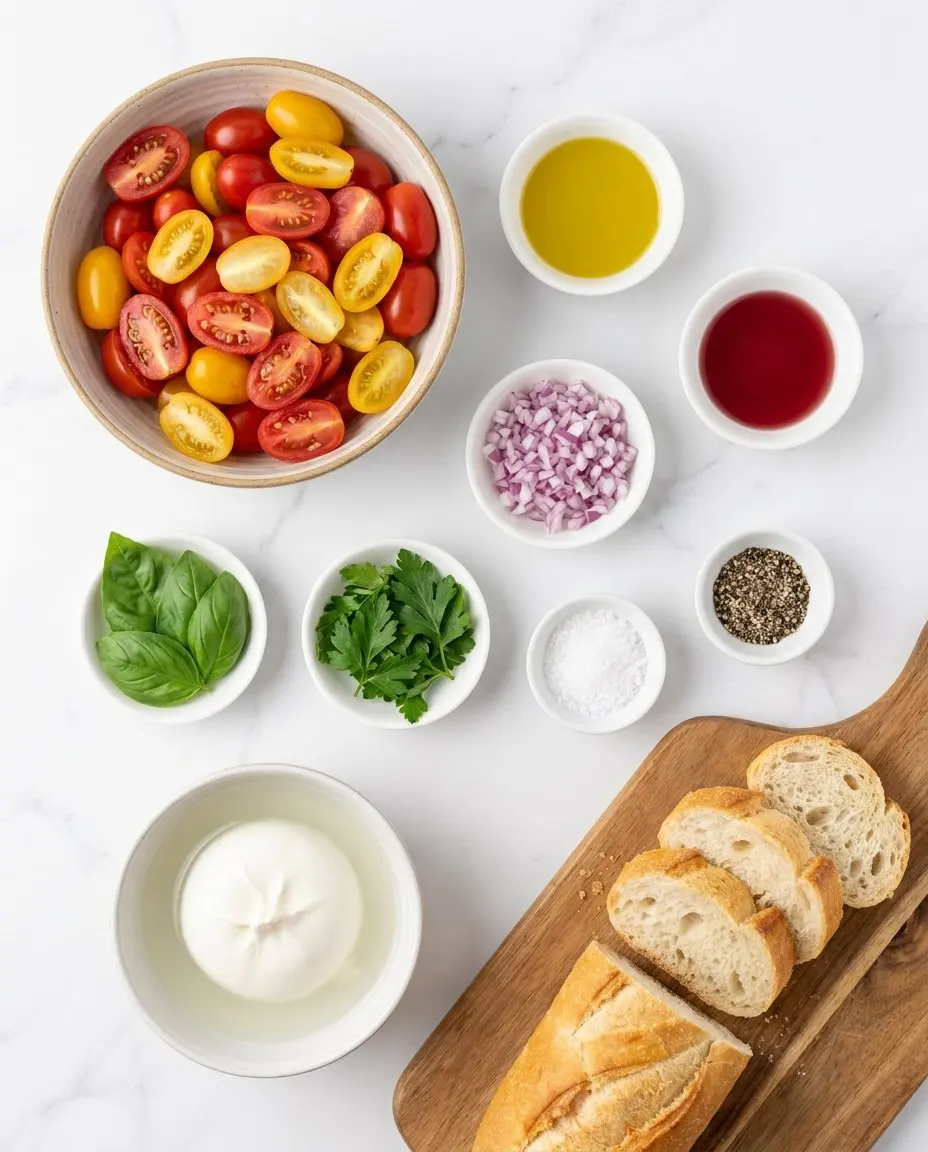
Five ingredients, most of which are in your kitchen right now. The one thing you may need to pick up is the burrata — look for it in the specialty cheese section of a well-stocked grocery store, or at a real cheese shop or Italian deli if you have one nearby. The 8- to 10-ounce ball serves 4 generously as a starter or 2 as a main course.

- 1/2 lb (250 g) baby plum or cherry tomatoes, halved (mix of red and yellow if possible)
- 3 tbsp good extra virgin olive oil, divided, plus more for finishing
- 1 tbsp red wine vinegar
- 2 tbsp very finely diced red onion (about 1/2 small onion)
- 2 tsp very finely chopped fresh basil, plus a few small leaves to serve
- 2 tsp very finely chopped fresh parsley
- 1/2 tsp kosher salt, plus more to taste
- 1/4 tsp freshly ground black pepper, plus more to taste
- 1 (8 oz / 225 g) ball of fresh burrata cheese, at room temperature
- 1 small baguette, sliced 1/2 inch thick
- 1 clove garlic, peeled and halved (optional)
- Flaky sea salt, for finishing
From Counter to Plate in Twenty Minutes
Take the burrata out of the fridge at least 30 minutes before serving. It needs to come to room temperature to be at its best — cold burrata is a sad, dense thing, while room-temp burrata is the soft, almost-liquid centre-of-the-cheese-world experience it was meant to be. Leave it in its tub with the cream.
Step 1 — Marinate the tomatoes. In a wide shallow dish (a pie plate works beautifully), whisk together 2 tablespoons of the olive oil, the red wine vinegar, the finely diced red onion, the chopped basil and parsley, the kosher salt, and the black pepper. Add the halved tomatoes and toss gently to coat every piece in the marinade. Cover and refrigerate for at least 30 minutes, ideally 1 to 2 hours, or even overnight. The longer they sit, the more flavour they absorb.
Step 2 — Toast the bread. Heat your oven to 400°F (200°C) or turn on the broiler. Arrange the baguette slices on a baking sheet in a single layer, brush both sides generously with olive oil, and toast for 4 to 5 minutes, flipping once, until deeply golden and crisp. If you are using the broiler, watch them like a hawk — they go from golden to charred in about 30 seconds. Once they come out of the oven, rub one side of each slice with the cut side of the garlic clove. This is the secret that takes the toast from “nice” to “I cannot stop eating these.”
Step 3 — Plate. Arrange the garlic toasts in a single layer on a large serving plate (or 4 individual plates). Use a slotted spoon to mound the marinated tomatoes on top of and around the toasts, leaving some of the bread peeking out. Drizzle any remaining marinade over the tomatoes. Carefully drain the burrata and place the whole ball in the centre of the plate (or one ball per plate).
Step 4 — Finish and serve. Use a sharp knife to carefully cut open the burrata at the table so the cream spills out across the tomatoes and toast. Drizzle the remaining 1 tablespoon of good olive oil over everything, scatter the small basil leaves on top, and finish with a generous pinch of flaky sea salt and another grind of black pepper. Serve immediately, with extra bread on the side for mopping up the cream and tomato juices.
A Few Tips From My Kitchen
- Always bring the burrata to room temperature. This is the single most important rule. Cold burrata is dense and rubbery; room-temp burrata is soft, almost liquid, and full of the creamy stracciatella that makes it magical. Take it out of the fridge at least 30 minutes before you want to serve it.
- Marinate the tomatoes overnight if you can. Even 30 minutes is good, an hour is better, and overnight is best. The tomatoes soften slightly, release some of their juices into the marinade, and become little flavour bombs that absolutely make the salad.
- Use the very best olive oil you have. This is not the place for your everyday cooking oil. Burrata is mild, tomatoes are mild, the dressing is simple — the olive oil needs to be loud and grassy and peppery. Save the good stuff for this.
- Cut the burrata at the table. The drama of the cream spilling out is half the fun. Let your guests see it happen.
- Don’t skip the bread. Burrata without bread is a missed opportunity. The bread catches the cream and the tomato juices and turns every bite into a complete little meal.

How To Serve It
This salad is at its best served as a starter, a light lunch, or part of an antipasto spread. It pairs beautifully with a simple green salad, some grilled bread, and a glass of cold white wine. For a more substantial meal, add a slice of prosciutto, a few slices of salami, some marinated olives, and a bowl of good pasta. It is the perfect dish for a long summer lunch on the patio with people you love, served in the late afternoon when the light is golden and nobody is in any hurry to do anything at all.
Storing & Reheating
This salad does not store well once assembled — the burrata is best within 30 minutes of being cut, and the toasts go soggy fast. However, the marinated tomatoes will keep in the fridge for up to 3 days, and the garlic toasts can be made a few hours ahead and stored at room temperature. When you are ready to serve, just bring the burrata to room temperature, plate everything, and cut the cheese at the table.
Easy Twists To Try
- Add stone fruit. Sliced ripe peaches or nectarines are spectacular with burrata. The sweetness of the fruit against the cream is the kind of combination you will dream about for the rest of the summer.
- Drizzle with pesto. A spoonful of good basil pesto (homemade or store-bought) spooned over the top adds a beautiful punch of flavour and a gorgeous green colour.
- Use heirloom tomatoes. If you can find them, big colourful heirloom tomatoes sliced thick are stunning here. Salt them lightly and let them sit for 10 minutes to release some juice before plating.
- Add some crunch. Toasted pine nuts, slivered almonds, or even a few crushed pistachios scattered over the top add a beautiful textural contrast to the cream and the soft tomatoes.
- Try a different vinegar. Aged balsamic, white balsamic, or even a good sherry vinegar all work beautifully in place of the red wine vinegar. Each one brings a slightly different character to the dish.
Common Mistakes & Easy Fixes
- The burrata is dense and rubbery. It is too cold. Take it out of the fridge 30 to 60 minutes before serving. Room temperature is the magic here.
- The salad is bland. Almost always a salt issue. Salt draws out the tomato juices and seasons the cream. Taste and adjust right before plating — you will almost certainly want more salt than you think.
- The bread is soggy by the time you serve it. Toast it just before plating, not earlier. If you have to make it ahead, do not put the tomatoes on top until the very last minute.
- The burrata broke open and the cream leaked out before you got it to the table. Carry it on a separate plate and cut it at the table. This is the move every restaurant uses for exactly this reason.
A Few Questions You Might Have
What is burrata, exactly? Burrata is a fresh Italian cheese made from mozzarella and cream. The outside is a thin shell of mozzarella, and the inside is a soft, almost liquid centre of stracciatella (shredded mozzarella soaked in cream). When you cut into it, the cream spills out — that is the magic moment.
Can I substitute fresh mozzarella? You can, but the dish will be different. Fresh mozzarella is firm and milky; burrata is soft and creamy. If you can only find fresh mozzarella, slice it thick and let it come to room temperature, then proceed. It will not be the same dish, but it will still be lovely.
How far ahead can I make the marinated tomatoes? Up to 24 hours. They actually taste better the longer they sit, so make them the day before if you can.
What if I cannot find baby plum tomatoes? Any ripe tomato will work. Cherry tomatoes, grape tomatoes, or even diced larger tomatoes (scoop out the seedy pulp first) are all fine. The key is using the best tomatoes you can find — they should smell like tomatoes and feel heavy for their size.
Can I skip the bread? You can, but I would not recommend it. The bread is what turns this from a beautiful side dish into a complete, satisfying bite. If you are gluten-free, a sturdy gluten-free baguette or some gluten-free crackers will do the same job.
A Few Last Thoughts
This is the salad that taught me that the best summer cooking is barely cooking at all. It is the dish I make when I have bought a particularly beautiful ball of burrata and I want to let it be the star. It is the recipe I give to friends who think they cannot cook, because it is essentially impossible to mess up. And it is the plate I put down in the middle of the table when I want everyone to stop talking and just eat for a minute — which, in the middle of a long summer afternoon, is exactly the right thing to do.
If you make it, I’d love to hear how it turned out. Leave a note below, or come and find me over on the Savory Discovery blog — I read every single comment. And if you discover a new twist, please tell me about it; I am always looking for the next reason to justify buying extra burrata.
—Elowen Thorn

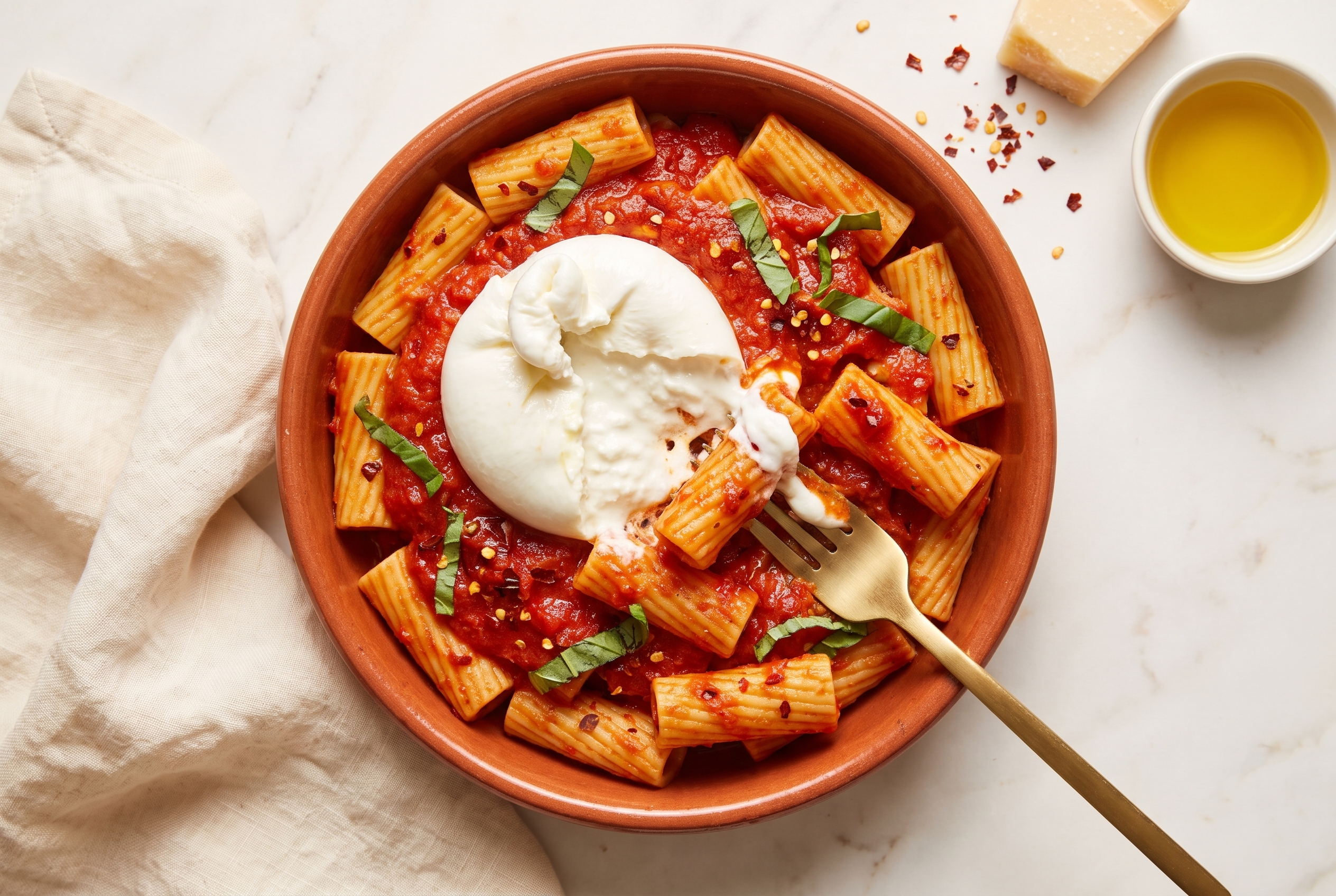
If you have ever had the good luck to eat burrata in Italy — which is to say, burrata within hours of being made, pulled from the cream it was wrapped in that morning — you already know that it is one of the most quietly miraculous things in the cheese world. It looks like fresh mozzarella from the outside, but the moment you cut into it, the thin shell gives way to a soft, almost liquid centre of stracciatella cream that spills out across whatever is underneath it. It is the most luxurious five-second trick in the kitchen. Pair it with good summer tomatoes, a few basil leaves, and a generous glug of your best olive oil, and you have the kind of dish that makes everyone at the table go quiet for a moment.
This burrata salad is my version of the plate I order every summer at the little Italian place around the corner from my house. It is barely a recipe — a few marinated tomatoes, a ball of room-temperature burrata, some toasted bread on the side, and a finishing drizzle of the very best olive oil you have. It takes fifteen minutes if you skip the marinating, an hour if you do it properly, and almost no cooking at all. It is the kind of dish that looks like you tried much harder than you actually did, and it disappears in about seven minutes flat at any table you set it on.
The key is to start with the best ingredients you can find. Burrata should be bought from a cheese shop or a real Italian deli if you have one nearby — the pre-packaged grocery store kind is fine in a pinch, but the fresh one tastes like a completely different cheese. Tomatoes should smell like tomatoes. Olive oil should be the good stuff, the kind you would want to eat on its own with a piece of bread. These are not small things, and they make all the difference.
What Makes This So Effortlessly Elegant
The genius of this salad is that the marinated tomatoes do almost all the work for you. While they sit in the fridge absorbing the oil, vinegar, garlic, herbs, and a little bit of onion, they transform from ordinary raw tomatoes into something deeply flavourful and just-pickled-enough to cut through the richness of the burrata. By the time you are ready to plate, the tomatoes are essentially a side dish on their own, and the burrata is just the most beautiful cheese course you have ever thrown together at home.
The other secret is the toasted bread. Burrata without bread is a missed opportunity — the cream needs something to land on, and a piece of warm, oil-brushed, garlic-rubbed toast is the most perfect landing pad in the world. Tear a piece off, drag it through the cream, drop a tomato on top, and you have the most perfect bite of summer you can put in your mouth.
What You’ll Need
Five ingredients, most of which are in your kitchen right now. The one thing you may need to pick up is the burrata — look for it in the specialty cheese section of a well-stocked grocery store, or at a real cheese shop or Italian deli if you have one nearby. The 8- to 10-ounce ball serves 4 generously as a starter or 2 as a main course.

- 1/2 lb (250 g) baby plum or cherry tomatoes, halved (mix of red and yellow if possible)
- 3 tbsp good extra virgin olive oil, divided, plus more for finishing
- 1 tbsp red wine vinegar
- 2 tbsp very finely diced red onion (about 1/2 small onion)
- 2 tsp very finely chopped fresh basil, plus a few small leaves to serve
- 2 tsp very finely chopped fresh parsley
- 1/2 tsp kosher salt, plus more to taste
- 1/4 tsp freshly ground black pepper, plus more to taste
- 1 (8 oz / 225 g) ball of fresh burrata cheese, at room temperature
- 1 small baguette, sliced 1/2 inch thick
- 1 clove garlic, peeled and halved (optional)
- Flaky sea salt, for finishing
From Counter to Plate in Twenty Minutes
Take the burrata out of the fridge at least 30 minutes before serving. It needs to come to room temperature to be at its best — cold burrata is a sad, dense thing, while room-temp burrata is the soft, almost-liquid centre-of-the-cheese-world experience it was meant to be. Leave it in its tub with the cream.
Step 1 — Marinate the tomatoes. In a wide shallow dish (a pie plate works beautifully), whisk together 2 tablespoons of the olive oil, the red wine vinegar, the finely diced red onion, the chopped basil and parsley, the kosher salt, and the black pepper. Add the halved tomatoes and toss gently to coat every piece in the marinade. Cover and refrigerate for at least 30 minutes, ideally 1 to 2 hours, or even overnight. The longer they sit, the more flavour they absorb.
Step 2 — Toast the bread. Heat your oven to 400°F (200°C) or turn on the broiler. Arrange the baguette slices on a baking sheet in a single layer, brush both sides generously with olive oil, and toast for 4 to 5 minutes, flipping once, until deeply golden and crisp. If you are using the broiler, watch them like a hawk — they go from golden to charred in about 30 seconds. Once they come out of the oven, rub one side of each slice with the cut side of the garlic clove. This is the secret that takes the toast from “nice” to “I cannot stop eating these.”
Step 3 — Plate. Arrange the garlic toasts in a single layer on a large serving plate (or 4 individual plates). Use a slotted spoon to mound the marinated tomatoes on top of and around the toasts, leaving some of the bread peeking out. Drizzle any remaining marinade over the tomatoes. Carefully drain the burrata and place the whole ball in the centre of the plate (or one ball per plate).
Step 4 — Finish and serve. Use a sharp knife to carefully cut open the burrata at the table so the cream spills out across the tomatoes and toast. Drizzle the remaining 1 tablespoon of good olive oil over everything, scatter the small basil leaves on top, and finish with a generous pinch of flaky sea salt and another grind of black pepper. Serve immediately, with extra bread on the side for mopping up the cream and tomato juices.
A Few Tips From My Kitchen
- Always bring the burrata to room temperature. This is the single most important rule. Cold burrata is dense and rubbery; room-temp burrata is soft, almost liquid, and full of the creamy stracciatella that makes it magical. Take it out of the fridge at least 30 minutes before you want to serve it.
- Marinate the tomatoes overnight if you can. Even 30 minutes is good, an hour is better, and overnight is best. The tomatoes soften slightly, release some of their juices into the marinade, and become little flavour bombs that absolutely make the salad.
- Use the very best olive oil you have. This is not the place for your everyday cooking oil. Burrata is mild, tomatoes are mild, the dressing is simple — the olive oil needs to be loud and grassy and peppery. Save the good stuff for this.
- Cut the burrata at the table. The drama of the cream spilling out is half the fun. Let your guests see it happen.
- Don’t skip the bread. Burrata without bread is a missed opportunity. The bread catches the cream and the tomato juices and turns every bite into a complete little meal.

How To Serve It
This salad is at its best served as a starter, a light lunch, or part of an antipasto spread. It pairs beautifully with a simple green salad, some grilled bread, and a glass of cold white wine. For a more substantial meal, add a slice of prosciutto, a few slices of salami, some marinated olives, and a bowl of good pasta. It is the perfect dish for a long summer lunch on the patio with people you love, served in the late afternoon when the light is golden and nobody is in any hurry to do anything at all.
Storing & Reheating
This salad does not store well once assembled — the burrata is best within 30 minutes of being cut, and the toasts go soggy fast. However, the marinated tomatoes will keep in the fridge for up to 3 days, and the garlic toasts can be made a few hours ahead and stored at room temperature. When you are ready to serve, just bring the burrata to room temperature, plate everything, and cut the cheese at the table.
Easy Twists To Try
- Add stone fruit. Sliced ripe peaches or nectarines are spectacular with burrata. The sweetness of the fruit against the cream is the kind of combination you will dream about for the rest of the summer.
- Drizzle with pesto. A spoonful of good basil pesto (homemade or store-bought) spooned over the top adds a beautiful punch of flavour and a gorgeous green colour.
- Use heirloom tomatoes. If you can find them, big colourful heirloom tomatoes sliced thick are stunning here. Salt them lightly and let them sit for 10 minutes to release some juice before plating.
- Add some crunch. Toasted pine nuts, slivered almonds, or even a few crushed pistachios scattered over the top add a beautiful textural contrast to the cream and the soft tomatoes.
- Try a different vinegar. Aged balsamic, white balsamic, or even a good sherry vinegar all work beautifully in place of the red wine vinegar. Each one brings a slightly different character to the dish.
Common Mistakes & Easy Fixes
- The burrata is dense and rubbery. It is too cold. Take it out of the fridge 30 to 60 minutes before serving. Room temperature is the magic here.
- The salad is bland. Almost always a salt issue. Salt draws out the tomato juices and seasons the cream. Taste and adjust right before plating — you will almost certainly want more salt than you think.
- The bread is soggy by the time you serve it. Toast it just before plating, not earlier. If you have to make it ahead, do not put the tomatoes on top until the very last minute.
- The burrata broke open and the cream leaked out before you got it to the table. Carry it on a separate plate and cut it at the table. This is the move every restaurant uses for exactly this reason.
A Few Questions You Might Have
What is burrata, exactly? Burrata is a fresh Italian cheese made from mozzarella and cream. The outside is a thin shell of mozzarella, and the inside is a soft, almost liquid centre of stracciatella (shredded mozzarella soaked in cream). When you cut into it, the cream spills out — that is the magic moment.
Can I substitute fresh mozzarella? You can, but the dish will be different. Fresh mozzarella is firm and milky; burrata is soft and creamy. If you can only find fresh mozzarella, slice it thick and let it come to room temperature, then proceed. It will not be the same dish, but it will still be lovely.
How far ahead can I make the marinated tomatoes? Up to 24 hours. They actually taste better the longer they sit, so make them the day before if you can.
What if I cannot find baby plum tomatoes? Any ripe tomato will work. Cherry tomatoes, grape tomatoes, or even diced larger tomatoes (scoop out the seedy pulp first) are all fine. The key is using the best tomatoes you can find — they should smell like tomatoes and feel heavy for their size.
Can I skip the bread? You can, but I would not recommend it. The bread is what turns this from a beautiful side dish into a complete, satisfying bite. If you are gluten-free, a sturdy gluten-free baguette or some gluten-free crackers will do the same job.
A Few Last Thoughts
This is the salad that taught me that the best summer cooking is barely cooking at all. It is the dish I make when I have bought a particularly beautiful ball of burrata and I want to let it be the star. It is the recipe I give to friends who think they cannot cook, because it is essentially impossible to mess up. And it is the plate I put down in the middle of the table when I want everyone to stop talking and just eat for a minute — which, in the middle of a long summer afternoon, is exactly the right thing to do.
If you make it, I’d love to hear how it turned out. Leave a note below, or come and find me over on the Savory Discovery blog — I read every single comment. And if you discover a new twist, please tell me about it; I am always looking for the next reason to justify buying extra burrata.
—Elowen Thorn