By Elowen Thorn · Fall Baking · 12 keeper desserts
Pumpkin desserts fail for one reason far more often than any other: water. Everything else — the spice, the sugar, the oven temperature — is easy to fix, but a wet puree will sink a custard, flatten a cookie and leave a loaf gummy in the middle no matter how carefully you follow the recipe. This guide sorts the whole season into three families, then shows you the ratios, temperatures and timings that decide whether each one works.
Every autumn the same twelve or so pumpkin desserts circulate, and every autumn half of them disappoint. A pumpkin pie weeps. A pumpkin cookie spreads into a flat sheet. A loaf looks perfect and then turns gummy two slices in. None of that is bad luck and none of it is a bad recipe. It is one ingredient behaving exactly as it should.
Pumpkin puree is roughly ninety percent water. That single fact runs through the whole season. In a custard it is the liquid you are setting, so you need to know how much you are setting. In a cookie dough it is an intruder, because cookie dough has no structure to absorb it. In a quick bread it is a gift, up to a point, and then it is the reason the centre never sets.
So this is not a list of twelve recipes to scroll past. It is the season organised into three families — custards that set, batters that rise, and doughs that hold — with the ratios, temperatures and doneness cues for each. Once you can place a dessert in a family you already know most of what it needs. If you want the single most useful bake to master first, it is a quick pumpkin bread, because it teaches you what a well-balanced pumpkin batter looks and smells like before it goes in the oven.
The one rule that matters more than the rest. Before you bake anything, blot two tablespoons of your puree on a paper towel. If a wet ring creeps out past the puree within a minute, your puree is carrying too much water and every recipe below will need it drained first. Canned is usually fine. Home-roasted almost never is.
The Three Families of Pumpkin Dessert
Almost every pumpkin dessert you will bake this autumn belongs to one of three families, and the family determines what you are actually managing. Custards are set by heat and time. Batters are set by chemical lift and gluten. Doughs and no-bake fillings are set by chilling and fat. Confusing the three is where most disappointing results come from.
The three families, and what each one asks of you
Family
What sets it
Best examples
What usually goes wrong
Custard
Egg proteins, gently, in a water bath or a slow oven
Classic pie, cheesecake, cream pie, bread pudding
Overbaked: cracks, weeps, or turns rubbery at the edge
Batter
Baking soda and powder, plus gluten structure
Loaves, muffins, sheet cake, bundt, cookies
Too much liquid or too much mixing: sunken centre, tough crumb
Chilled or no-bake
Fat and starch setting cold, with no oven at all
Mousse, icebox bars, no-bake cheesecake, trifle
Under-whipped cream or too little chill: it will not slice
How to choose which one to bake
Match the family to the occasion rather than to the photo. If it has to travel, choose a batter dessert; loaves and bars hold their shape in a car and do not need refrigeration. If it has to be made a day ahead and look impressive on a table, choose a custard; a cheesecake is better on day two and slices cleanly when cold. If you have an hour and no oven space because the turkey is in there, choose no-bake. The seasonal pressure is real, and the family you pick decides whether that pressure helps or hurts.
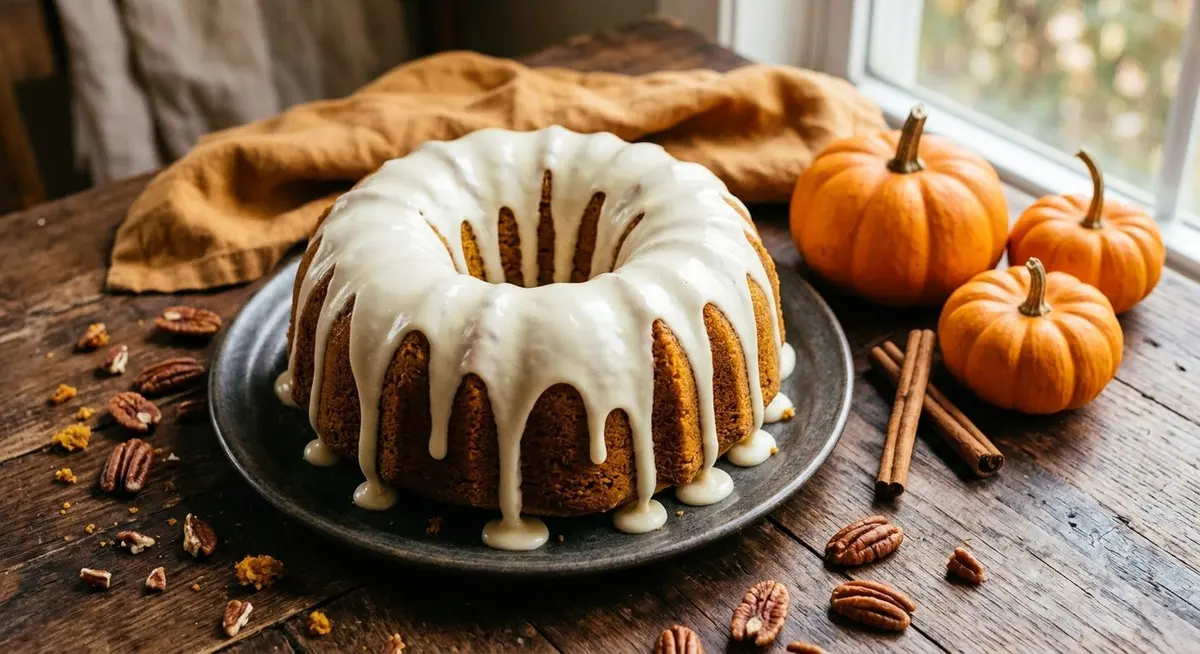
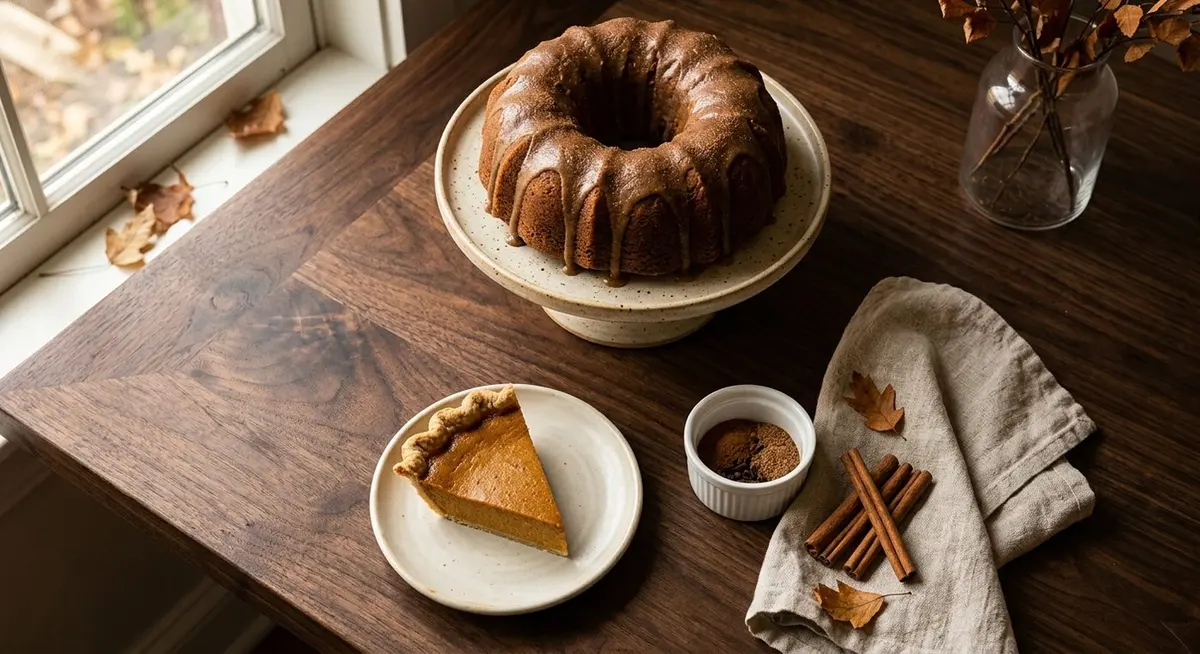
A bundt is the most forgiving batter dessert in the season: the fluted pan conducts heat evenly, so the centre sets before the crust over-bakes.
Pick by the pan you own, not the pan in the picture. A recipe written for a 9 x 5 inch loaf will bake unevenly in an 8 x 4 and will over-bake in a 9 x 13. The bake-times table below covers every common tin, because switching pans is the most common reason a pumpkin bake comes out dry on the outside and raw in the middle.
Start With the Right Pumpkin
There is no other ingredient in autumn baking that varies this much. Two cups of puree can differ by a quarter cup of liquid depending on whether it came from a can, a sugar pumpkin, a butternut squash or a kabocha — and that quarter cup is the difference between a custard that sets and one that slumps.
Which pumpkin, and how wet it is
Form
Water content
Best used for
What to watch
Canned puree
About 90 percent, consistent
Everything, and the safest default
Scrape the can out properly; the last two tablespoons matter
Canned pie filling
Set with starch, already sweet and spiced
Nothing in this guide
It is not a substitute. It is a finished product
Home-roasted sugar pumpkin
Variable, usually higher than canned
Loaves, muffins, cakes
Drain 30 minutes in a sieve or the centre will sink
Home-roasted butternut
Lower than pumpkin, sweeter
Pies, custards, cheesecake
Reduce added sugar by about two tablespoons
Home-roasted kabocha
Low, dense, very sweet
Cheesecake, mousse, no-bake fillings
Cut the sugar by a quarter or it turns cloying
If you are roasting your own, halve a small sugar pumpkin or a butternut, scoop the seeds, and roast cut side down at 400°F until a knife slides through without resistance, about forty minutes. Cool it, scoop the flesh, blend it smooth, then drain it. That last step is the one people skip, and it is the one that matters. Line a sieve with a coffee filter or a clean cloth and let the puree sit for half an hour.
Sugar pumpkin, butternut and kabocha are the three worth roasting. All are sweet and low in water.
Skip the big carving pumpkins. They are bred for size and hollow structure, and the flesh is stringy and bland.
Two pounds of squash yields roughly two cups of drained puree, which is one standard batch of almost everything here.
Freeze the surplus in two-cup portions pressed flat. Thawed overnight, it makes any of these a February bake as easily as an October one.
Buying note. Read the label every time. Cans sit side by side on the same shelf and the words puree and pie filling are the only difference between an ingredient and a finished dessert. Many of the disappointing pumpkin pies people describe are simply pies made with pie filling on top of a recipe that already added sugar and spice.
The Spice Blend That Carries Everything
Pumpkin spice is not a product, it is a ratio, and once you know it you will never buy a jar again. Measured per cup of puree, it scales cleanly from a single mug cake up to a triple batch of cheesecake, which means one formula covers the entire season.
The blend, per cup of puree and as a jar to keep
Spice
Per cup of puree
Jar mix (6 batches)
Ground cinnamon
1 tsp
2 tbsp
Ground ginger
1/2 tsp
1 tbsp
Ground nutmeg
1/4 tsp
1 1/2 tsp
Ground allspice
1/8 tsp
3/4 tsp
Ground cloves
1 pinch, about 1/16 tsp
3/8 tsp
Ground cardamom, optional
1/8 tsp
3/4 tsp
How to tune it to your taste
More warmth: add another quarter teaspoon of ginger. Ginger is the note that makes a dessert taste like a cold morning rather than like cake.
More aroma: grate nutmeg fresh instead of using it ground. The difference is not subtle and it is the cheapest upgrade in this guide.
Less aggressive: halve the cloves or leave them out. Cloves divide people more than anything else in the jar.
Chai direction: add the cardamom and a pinch of black pepper, then taste the batter before you commit to it.
Deeper colour: a teaspoon of espresso powder does not read as coffee, it just makes the orange look richer and the spice taste rounder.
Bloom it, do not just stir it in. Warm your fat — butter, oil, brown butter — and stir the spice into it for thirty seconds off the heat before it meets the rest of the batter. Fat carries the aromatics that water cannot, and the finished dessert tastes noticeably more spiced for no extra spice. This is the single technique difference between a good pumpkin dessert and one that tastes like the jar.
Custard Desserts: Pies, Cheesecakes and Cream Pies
Custards are the family that rewards patience and punishes impatience more than any other. You are setting egg proteins with gentle heat, and egg proteins go from silky to rubbery over a surprisingly narrow band of temperature. The good news is that the whole family responds to the same handful of numbers.
The custard pie method, in order
Blind-bake the shell until it is properly golden, not pale — a pumpkin custard is wet and will soften the base as it bakes. Warm your puree and your milk together before they meet the eggs, because cold liquid into warm eggs is how you end up with curdled streaks. Whisk the eggs and sugar only until smooth, never until frothy; foam on the surface bakes into a mottled top. Then strain the custard through a fine sieve into the shell. That thirty seconds removes the chalazae and any stray cooked egg, and it is the reason a bakery pie has that glass-smooth surface. Bake at 425°F for fifteen minutes to set the edge, then drop to 350°F for the rest of the bake. This high-then-low approach is exactly how you get a classic pumpkin pie with a firm rim and a centre that still trembles.
Cheesecakes and cream pies
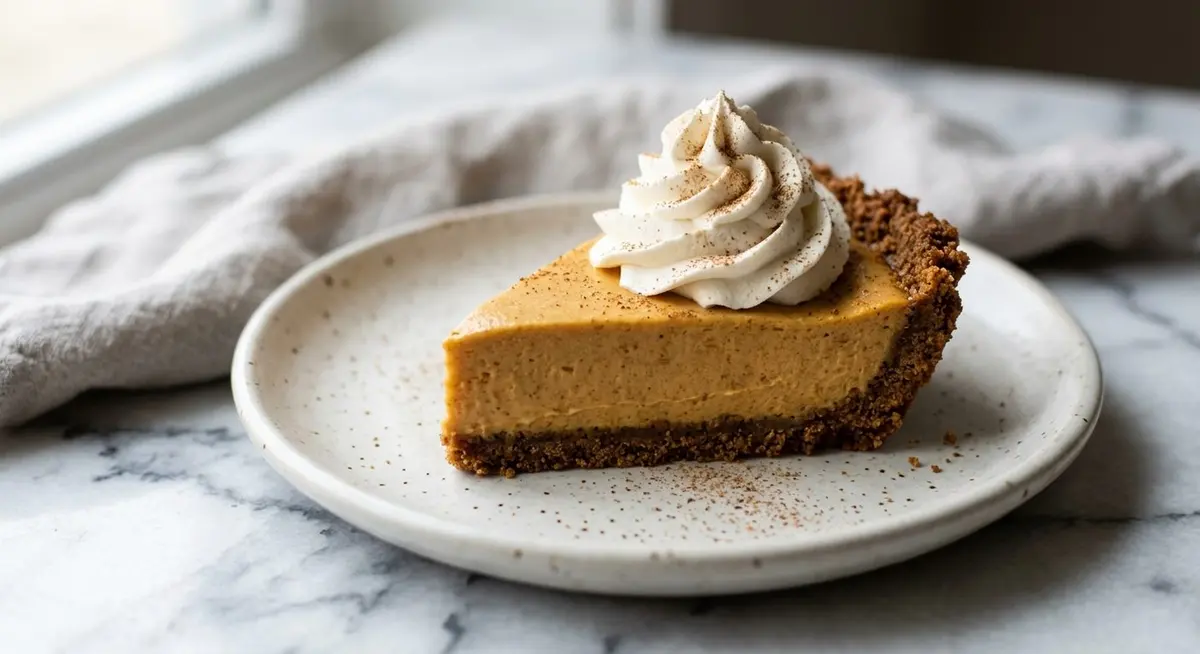
A pumpkin cheesecake is a custard with cream cheese added for richness, and it behaves the same way. Bake it in a water bath at 325°F, pull it when the centre still wobbles across a two-inch circle, then leave it in the switched-off oven with the door ajar for an hour. That slow cool is what prevents the crack. A pumpkin cream pie takes the other route entirely: you cook a pumpkin custard base on the hob until it thickens, cool it fully, then fold in whipped cream and set it cold, with no oven involved. It is faster, it cannot crack, and it needs four hours of chilling before it will hold a slice. If you want the middle ground between the two, our pumpkin cheesecake bars set in a 9 x 13 pan with the same custard logic and no water bath at all.
A cream pie is the custard family with the oven removed: cooked on the hob, folded with cream and set cold, so it can never crack.
The doneness test that actually works. For a custard pie, the centre should read about 175°F and still look loose, like a soft-set jelly, when you slide the rack out. It will look underdone. That is correct — carryover heat finishes it as it cools. For a cheesecake, pull it at about 150°F with a two-inch wobble. Both are better after a night in the fridge, which makes them the ideal make-ahead dessert for a holiday table.
Cakes, Loaves and Quick Breads
This is the family that made pumpkin famous, and it is also the one where technique matters most. A quick bread is a muffin batter in a bigger pan: it relies on baking soda and powder for lift and on gluten for structure, which means the two ways to ruin it are to add too much liquid and to stir it too long. Stop mixing the moment the last streak of flour disappears and you have already solved most of it.
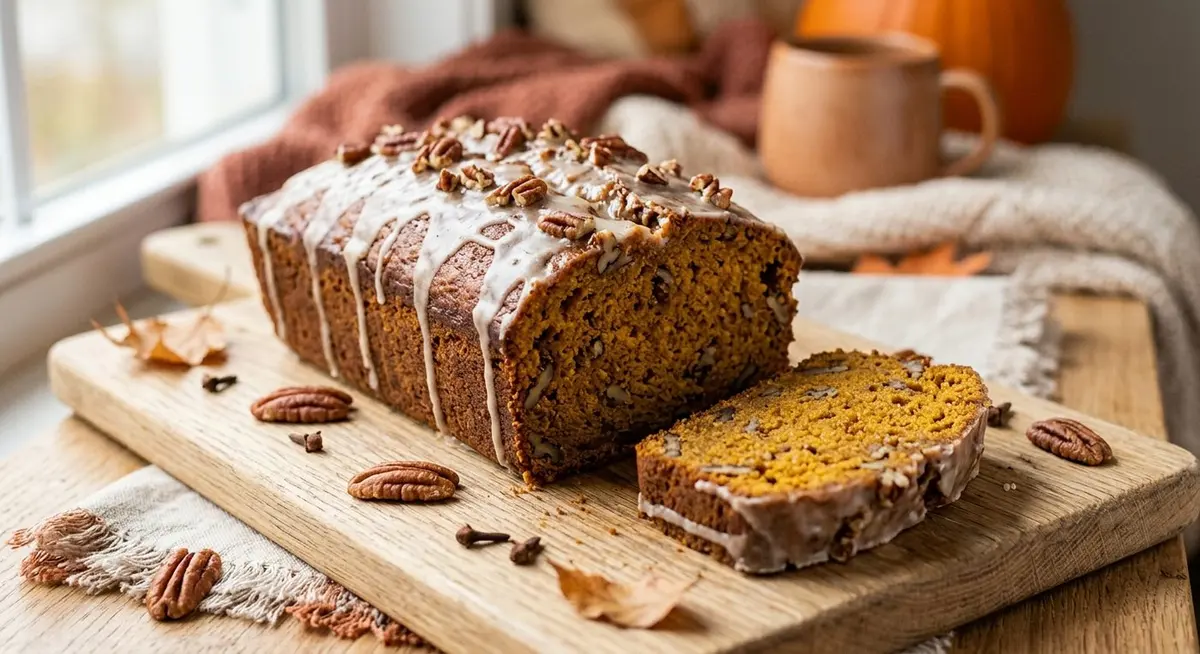
Oil beats butter in this family, and it is not a shortcut. Butter is solid at room temperature, so a butter loaf firms up in the fridge and tastes stale the next day. Oil stays liquid, which is what keeps the crumb soft for four days. If you want butter flavour, melt some and brush it on the finished loaf while it is warm instead of swapping the fat in the batter. Our one-bowl pumpkin loaf is built entirely around this principle.
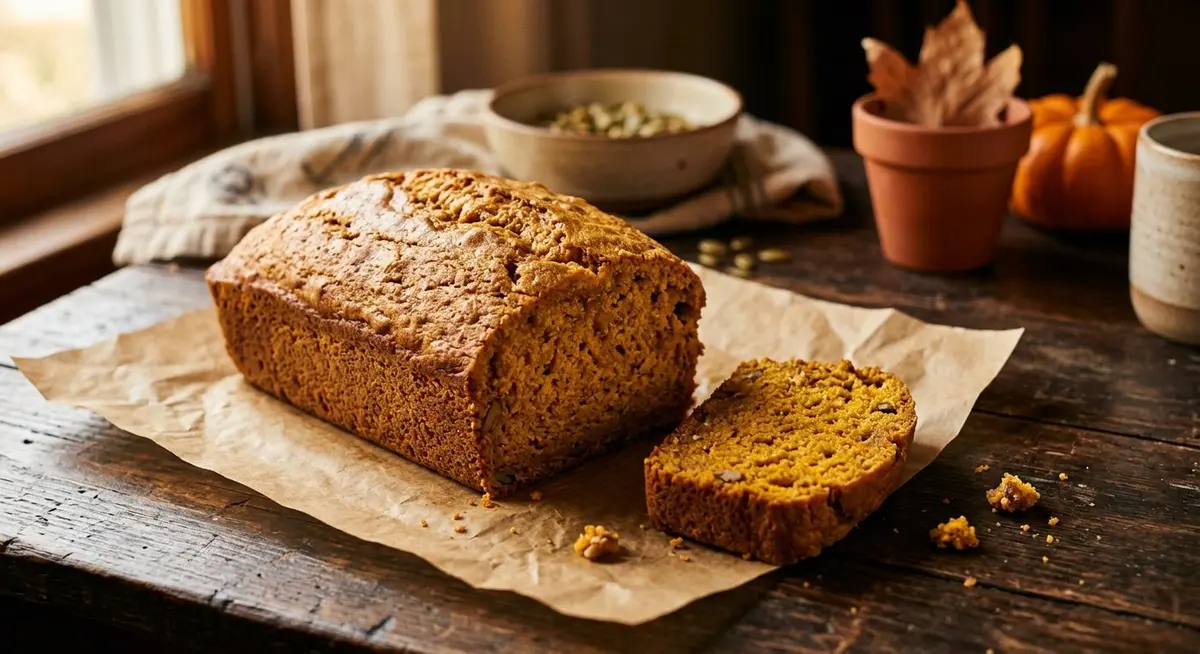
A crack down the domed top is not a flaw. It is what a properly raised quick bread does as it cools and the crumb contracts.
One batter, any pan: bake times
Pan
Oven
Time
Done when
9 x 5 inch loaf
350 F
60 – 70 min
Skewer has a few moist crumbs
8 x 4 inch loaf, on a tray
325 F
75 – 85 min
Springs back at centre
Three mini loaf pans, 5 x 3
350 F
35 – 45 min
Clean skewer, edges release
12-cup muffin tin
375 F
20 – 24 min
Domed and barely springy
8 x 8 inch square pan
350 F
35 – 40 min
Springs back at centre
9 x 13 inch sheet cake
350 F
28 – 34 min
Edges pull from the wall
10-cup bundt
325 F
50 – 60 min
Pulls from the wall cleanly
If your pans are not the ones in the recipe
Dark metal and glass conduct heat harder than light aluminium, so both will over-brown a crust before the centre sets. Drop the oven temperature by 25 degrees and start checking five minutes early. Whatever the pan, trust the skewer and a thermometer over the clock; every oven runs hot or cold by enough to matter across a sixty-minute bake. Mini loaves are worth knowing as a gift strategy rather than a compromise: three pans, thirty-five minutes, and they cool in half the time. The same batter makes excellent pumpkin muffins if you want breakfast out of the same bowl.
Cookies and Bars
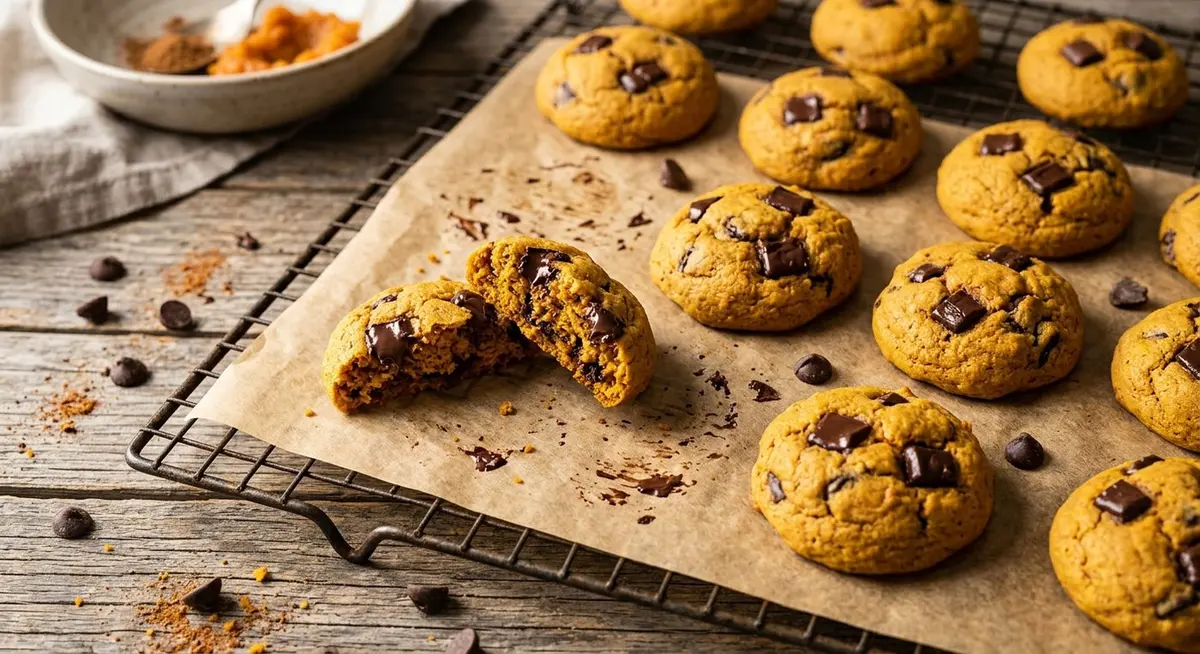
Pumpkin cookies are the hardest thing in this guide to get right, because cookie dough has almost no structure to absorb water and pumpkin brings a great deal of it. The result, when it goes wrong, is a tray of flat discs that taste fine and look like pancakes. There are four fixes and they all work together.
The four fixes for pumpkin cookies
Blot the puree. Spread it on a double layer of paper towel and press another layer on top. You are removing water that the dough has no room for.
Chill the dough at least an hour. Cold fat holds its shape in the first minutes of baking, which is exactly when a warm dough spreads.
Reduce the egg slightly. Many pumpkin cookie recipes carry an egg too many. One whole egg plus one yolk gives structure without extra liquid.
Scoop, do not drop. A level scoop of chilled dough holds a taller shape than a spoonful dropped from a height, and taller dough bakes into a taller cookie.
Pull them when the edges are set and the centres still look underdone. A pumpkin cookie that looks finished in the oven is dry by the time it cools.
Bars, and why they are the easier route
Bars sidestep the whole problem. In a 9 x 13 pan the batter has walls to hold it, so the same water content that ruins a cookie is harmless. Press the crumb base firmly with the flat of a measuring cup so it does not crumble when you slice it, cool the pan completely, then refrigerate for an hour before cutting and wipe the knife between cuts. Chocolate and pumpkin are the pairing most people land on, and our pumpkin cookies and brown butter chocolate chip cookies show the two ends of that spectrum.
Two small things that lift the whole batch. Toast your nuts before they go anywhere near the batter, because raw nuts go soft inside a wet crumb and toasted ones stay crisp. And toss the chocolate chips in a spoonful of flour before folding them in, so they stay suspended through the bake instead of sinking to the base.
No-Bake and Chilled Desserts
The no-bake family exists for the days when the oven is full, and it is the most useful family in November. Nothing here is set by heat, so everything is set by cold and by fat, which means the only real skill is patience and whip discipline. Under-whipped cream is the number one reason a no-bake dessert will not slice.
No-bake desserts: what sets them and how long they need
Dessert
What sets it
Minimum chill
Slice it when
Pumpkin mousse
Whipped cream folded into a cooled base
2 hours to set, 4 to firm
It holds a spoon mark without sagging
No-bake cheesecake
Whipped cream plus set cream cheese
6 hours, overnight ideal
The edge releases with a thin knife
Icebox bars
Chilling a starch-thickened filling
4 hours, overnight for clean cuts
The filling resists a fingertip
Pumpkin trifle
Layered cream and cake, cold
4 hours
A spoon cuts a clean wall
Pumpkin parfait
Chilled cream in glasses
2 hours
Serve with a spoon, never turned out
Whip to soft peaks, then stop. Cream taken to stiff peaks is over-whipped and will look grainy and separate when it is folded into a pumpkin base. Whip to soft peaks, then finish it by hand with a whisk for the last few strokes. If you are working in a warm kitchen, chill the bowl and the beaters first. And fold in three additions rather than one, because that is what keeps the air you just built in.
The Texture Rules That Decide Success
Desserts are judged by texture before they are judged by flavour, and pumpkin desserts have a narrow band to hit. Too dense and it reads as heavy; too light and the pumpkin disappears behind the sugar. These are the checks worth running every time, whichever family you are baking.
Blot the puree on paper towel before it goes into any batter or dough. A wet ring means draining first.
Bring eggs, butter and cream cheese to room temperature. Cold dairy seizes the fat and gives you a lumpy batter that bakes unevenly.
Spoon flour into the cup and level it with a knife. Scooping straight from the bag compacts it and can add a fifth more flour than the recipe wants.
Stop mixing the moment the flour disappears. Lumpy batter is fine; overmixed batter is tough.
Bloom the spice in warm fat for thirty seconds before it meets the batter.
Toast nuts before they go in, and add them last so they stay crisp.
Cool bakes completely before wrapping them, or trapped steam softens the crust and the crumb.
For custards, pull them while the centre still looks underdone and let carryover heat finish the job.
Reading a bake without opening the oven
Opening the oven is the most expensive habit in autumn baking, because a blast of cool air drops the temperature and a batter that was rising evenly can fall in the centre. Learn the smell instead. A pumpkin batter smells raw and faintly of flour for most of the bake, then shifts to toasted spice and caramel in the last five minutes. When the kitchen stops smelling like raw batter, it is time to start checking. On a custard, watch through the glass for the moment the centre stops looking wet and starts looking like set jelly. That is your window, and it is a much better guide than the timer.
What Actually Pairs With Pumpkin
Pumpkin is mild, earthy and faintly sweet, which makes it unusually easy to pair and unusually easy to drown. Strong liqueurs, heavy citrus and anything aggressively flavoured will wipe it out. The pairings that work are the ones that echo what pumpkin already has and then add one thing it does not.
Pairing by what pumpkin brings
Pumpkin brings
Reach for
Go easy on
Earthy sweetness
Brown butter, maple, dark brown sugar, molasses
White sugar alone, which reads thin and one-dimensional
A soft, dense crumb
Toasted pecans, walnuts, pepitas, a shard of caramel
Large wet fruit pieces, which sink and leave a soggy pocket
Faint acidity
Buttermilk, sour cream, cream cheese, yogurt
Extra lemon, which fights the spice instead of lifting it
Vanilla extract as the only note, which is not enough
Mild flavour
Bourbon, dark rum, brown butter, toasted sugar
Strong liqueurs such as amaretto, which swamp everything
Deep orange colour
Dried cranberries, white chocolate, pistachio
Green colouring, which turns muddy against the orange
The pairing that surprises people. A small amount of salt in a sweet pumpkin dessert is not about tasting salt, it is about making the spice legible. A quarter teaspoon in a batch of frosting, or a pinch on top of a cream pie, does more for the flavour than doubling the cinnamon would. Same logic as the espresso powder: both are there to make what is already in the bowl taste more like itself.
Serving, Storage and Gifting
Pumpkin desserts hold up better than most people expect, provided you wrap them properly and do not freeze anything glazed. Get these two things right and a bake from Sunday still tastes good on Thursday, and a batch made in October comes back to life in December.
How long each dessert keeps, and how to store it
Dessert
How to store it
Keeps
Loaf or quick bread
Parchment then foil, or an airtight tin, room temperature
4 days
Sliced loaf
Stand it cut side down so the exposed crumb is covered
3 days
Muffins
Airtight tin at room temperature
3 days
Cookies
Airtight tin with a slice of bread to keep them soft
1 week
Crumb-topped bars
Refrigerate loosely covered so the topping stays crisp
4 days
Custard pie
Refrigerate covered once fully cool
3 days
Cheesecake
Refrigerate under a dome, away from strong flavours
5 days
Cream pie
Refrigerate covered, no longer than this
2 days
Whole loaf, frozen
Foil, then a zip bag with the air pressed out
3 months
Slices, frozen
Interleaved with parchment so they do not fuse
3 months
Frozen puree
Two-cup portions pressed flat, labelled with the date
6 months
Freezing, and the glaze mistake
Never freeze a glazed or frosted dessert. The glaze weeps as it thaws and leaves a sticky, wet surface that no amount of re-whipping will fix. Freeze the bake plain, wrapped in foil and then bagged with the air pressed out, and finish it with glaze or frosting after it has come back to room temperature. For slices, freeze them individually on a tray for an hour first so they do not fuse into a single block. Custards and cheesecakes freeze poorly and should be eaten fresh rather than frozen.
Gifting a pumpkin bake
Mini loaves are the ideal gift: three to a batch, they cool in half the time, and they travel without a tin. Cool them completely, wrap each in parchment and tie with twine, and add a small jar of the spice blend from earlier and you have a present that costs very little and gets remembered. The same logic works all season, which is why a jar of slow-cooked apple butter or an apple cider cake sits naturally alongside a pumpkin loaf on the same autumn table.
Food safety, plainly. A baked pumpkin dessert left out at room temperature should not go beyond four days, and anything with a cream cheese frosting, a custard filling or whipped cream belongs in the fridge. If you see any fuzz, throw the whole thing away rather than cutting the visible part off, because the mould’s threads run deeper than the patch you can see.
Troubleshooting and Questions
These are the questions that come up most often, and nearly all of them trace back to one of three things: too much water, too much mixing, or an oven that runs hot. Find the one that matches your result and change that single thing next time.
My pumpkin bread sank in the middle. What happened?
A sunken centre almost always means the batter was overmixed or the oven was opened too early. Fold only until the flour disappears, then stop, because extra stirring builds gluten that rises fast and then collapses. Also stay out of the oven before the earliest time in the recipe, since a drop in temperature lets the centre fall while the outside has already set. A sunken loaf is still perfectly good eating: slice it, toast it, and treat it as a slightly denser bake.
Why are my pumpkin cookies flat?
Almost always water and warm dough. Pumpkin puree is about ninety percent water and cookie dough has no structure to absorb it, so blot the puree on paper towel before it goes in and chill the dough for at least an hour. Using a level scoop rather than a spoon dropped from a height, and cutting the egg back to one plus a yolk, will fix the rest.
How do I know when a pumpkin custard is done?
The centre should read about 175 F and still look loose, almost like a soft-set jelly, when you slide the rack out. It will look underdone and that is correct, because carryover heat finishes it as it cools. A cheesecake is done at about 150 F with a two-inch wobble. Both will set further overnight in the fridge.
Can I use canned pumpkin pie filling instead of puree?
No. Pie filling is already sweetened and spiced and often thickened with starch, so substituting it throws off the sugar, the spice and the set all at once. Check the label for the word puree and make sure nothing else is in the can.
My cheesecake cracked across the top. Can I prevent that?
Cracks come from fast cooling and from overbaking. Bake it in a water bath at 325 F, pull it while the centre still wobbles, then leave it in the switched-off oven with the door ajar for an hour so it cools slowly. The water bath moderates the temperature around the pan, which is what stops the top from setting before the middle.
Can I freeze pumpkin desserts?
Batters freeze beautifully and custards do not. Freeze loaves, muffins, cookies and unfrosted cakes, wrapped in foil and then bagged with the air pressed out, and freeze cookie dough as portioned balls. Never freeze a glazed or frosted dessert, because the glaze weeps as it thaws. Custards and cheesecakes should be eaten fresh.
Is it worth roasting my own pumpkin?
Yes, if you enjoy it and you are willing to drain the puree properly. Home-roasted squash tastes sweeter and more vegetal than canned, and varieties like kabocha are genuinely better than anything in a can. It is not, however, a shortcut. Homemade puree holds more water and will sink a custard unless you drain it for half an hour first.
Why does my pumpkin dessert taste flat?
Usually tired spice. Ground cinnamon, ginger and nutmeg lose most of their punch within about six months of opening, especially stored above a stove. Write the date on your jar, rebuild the blend each autumn, and bloom the spice in warm fat for thirty seconds before it goes into the batter. A pinch of salt helps more than most people expect.
Free Printable: The Fall Pumpkin Dessert Planner
A printable companion to this guide — the shopping list, the puree and spice cards, bake times for every pan, custard doneness temperatures, the flavour pairing chart, a make-ahead timeline, storage times and gift tags to cut out.
PDF · 6 pages · prints on letter or A4 · subscribe to unlock the download
Savory Discovery · By Elowen Thorn · Last updated September 2026. Temperatures are for a conventional oven; reduce by 25 degrees for a fan oven unless the recipe says otherwise.
Elowen Thorn I cook, photograph and re-test every recipe in an ordinary home kitchen before it goes up, so what you make matches what you see. Savory Discovery is where simple weeknight cooking, seasonal ideas and the odd bit of kitchen craft sit side by side — written plainly, and worth cooking twice.