Have you ever roasted a whole head of garlic just to see what would happen? The first time I did, my whole kitchen smelled like a French bakery. The cloves came out soft, golden, and almost sweet. I squeezed them onto a piece of crusty bread and ate them straight, no butter, no salt. I have been roasting garlic at home ever since.
This pasta is what happens when you take that same roasted garlic and put it into a cream sauce with a splash of dry white wine. The garlic gets honeyed. The wine adds brightness so the cream does not feel heavy. The Parmesan brings the salt and the umami. Together, they make a sauce that tastes like it took all afternoon, even though it takes ten minutes once the garlic is out of the oven. The linguine is the vehicle. The sauce is what will keep you coming back.
Creamy Roasted Garlic and White Wine Linguine
You might be tempted to skip the white wine. Do not skip the white wine. It cuts the richness of the cream, deepens the sweetness of the roasted garlic, and gives the sauce a brightness you cannot fake with lemon juice or broth. A dry, crisp white is all you need. Pinot Grigio, Sauvignon Blanc, an unoaked Chardonnay — any of those will do. If you would not drink it, do not cook with it.
Roasted garlic is a different ingredient from raw. It is sweeter, softer, almost spreadable, and once you blend it with cream, it melts into the sauce like a dream. The long, slow heat — 35 to 40 minutes at 400°F — gives the natural sugars time to caramelize. If you have been on the fence about roasting garlic, this is the recipe to push you over.
From Pot to Plate
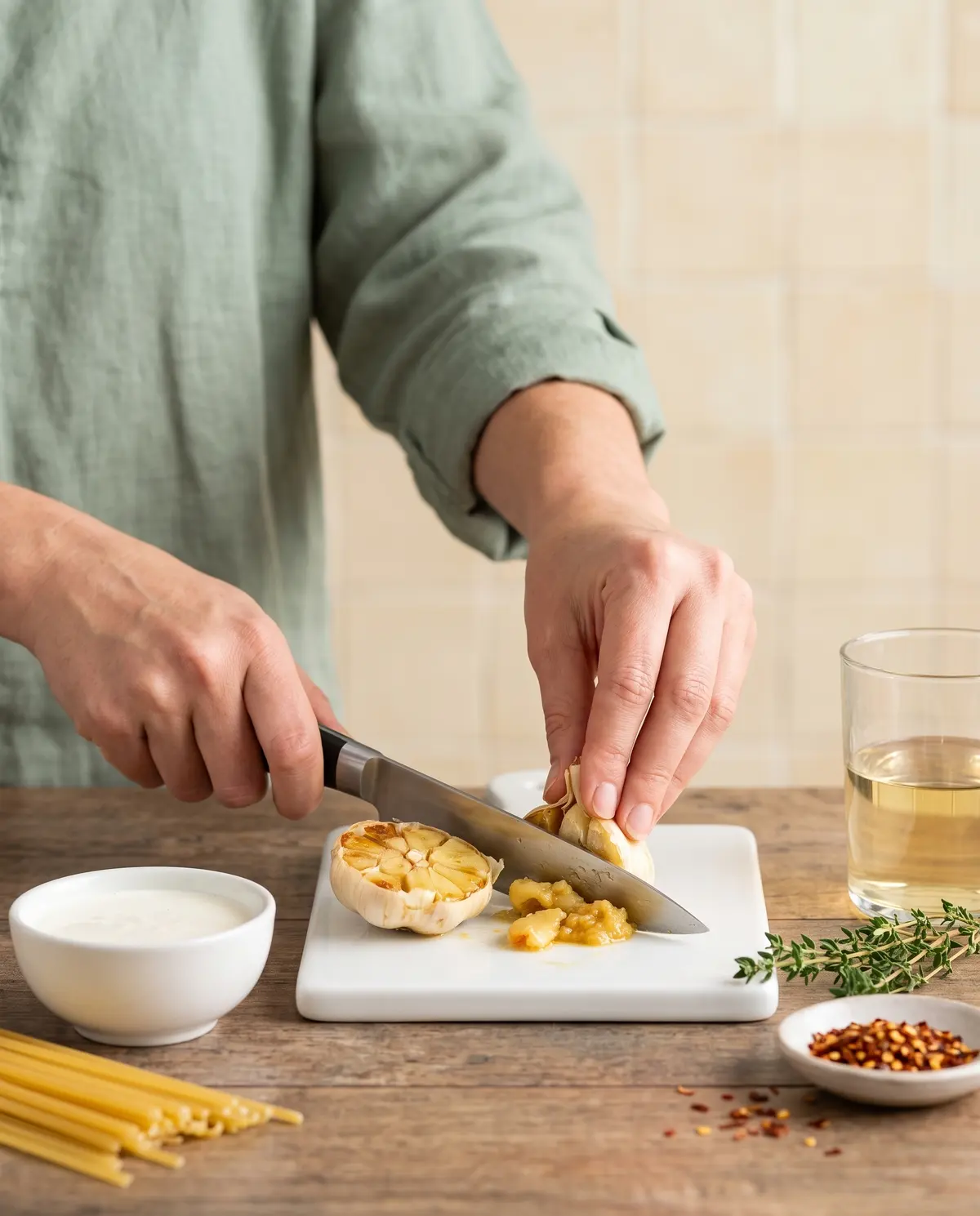
Step 1: Roast the garlic. Heat the oven to 400°F. Slice the tops off the garlic heads so the cloves are exposed. Drizzle each with olive oil, sprinkle with salt, wrap tightly in foil, and place on a small baking sheet. Roast for 35 to 40 minutes, until the cloves are completely soft and a light golden brown. Cool just enough to handle, then squeeze the cloves out of their skins.
Step 2: Blend the garlic cream. Drop the roasted garlic into a small blender. Add 1/3 cup heavy cream and 1/2 cup of the reserved pasta water. Blend on high until completely smooth and silky. This step is the secret to a glossy sauce.
Step 3: Boil the pasta. Bring a big pot of well-salted water to a boil. Cook the linguine one minute shy of al dente. Reserve 1/2 cup pasta water, then drain.
Step 4: Build the sauce. Return the same pot to medium-low heat. Add the garlic cream and red pepper flakes. Warm for 30 seconds, stirring. Add the white wine and simmer 1 to 2 minutes until reduced by half. Stir in the remaining 1/3 cup cream and a few grinds of pepper.
Step 5: Toss with pasta and cheese. Add the drained linguine and the Parmesan. Toss vigorously with tongs until coated. The sauce will look loose at first — that is correct. If it gets too thick, splash in more pasta water a tablespoon at a time.
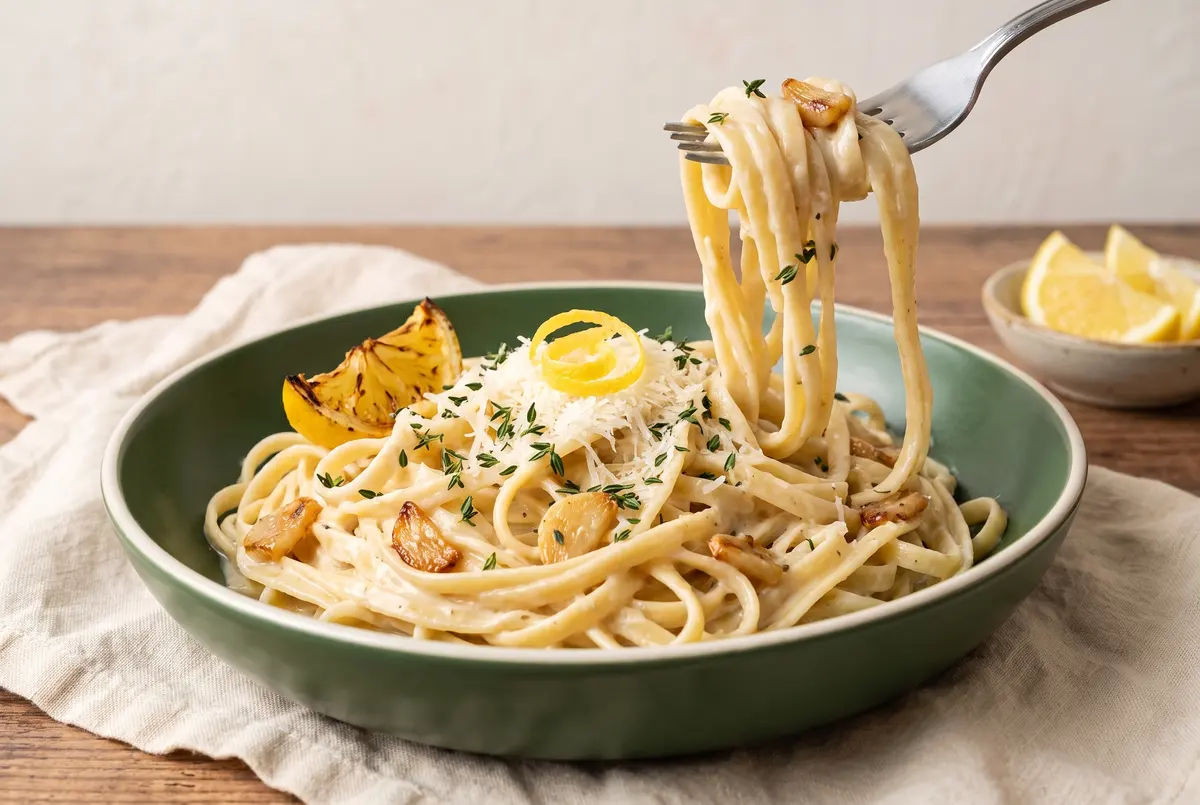
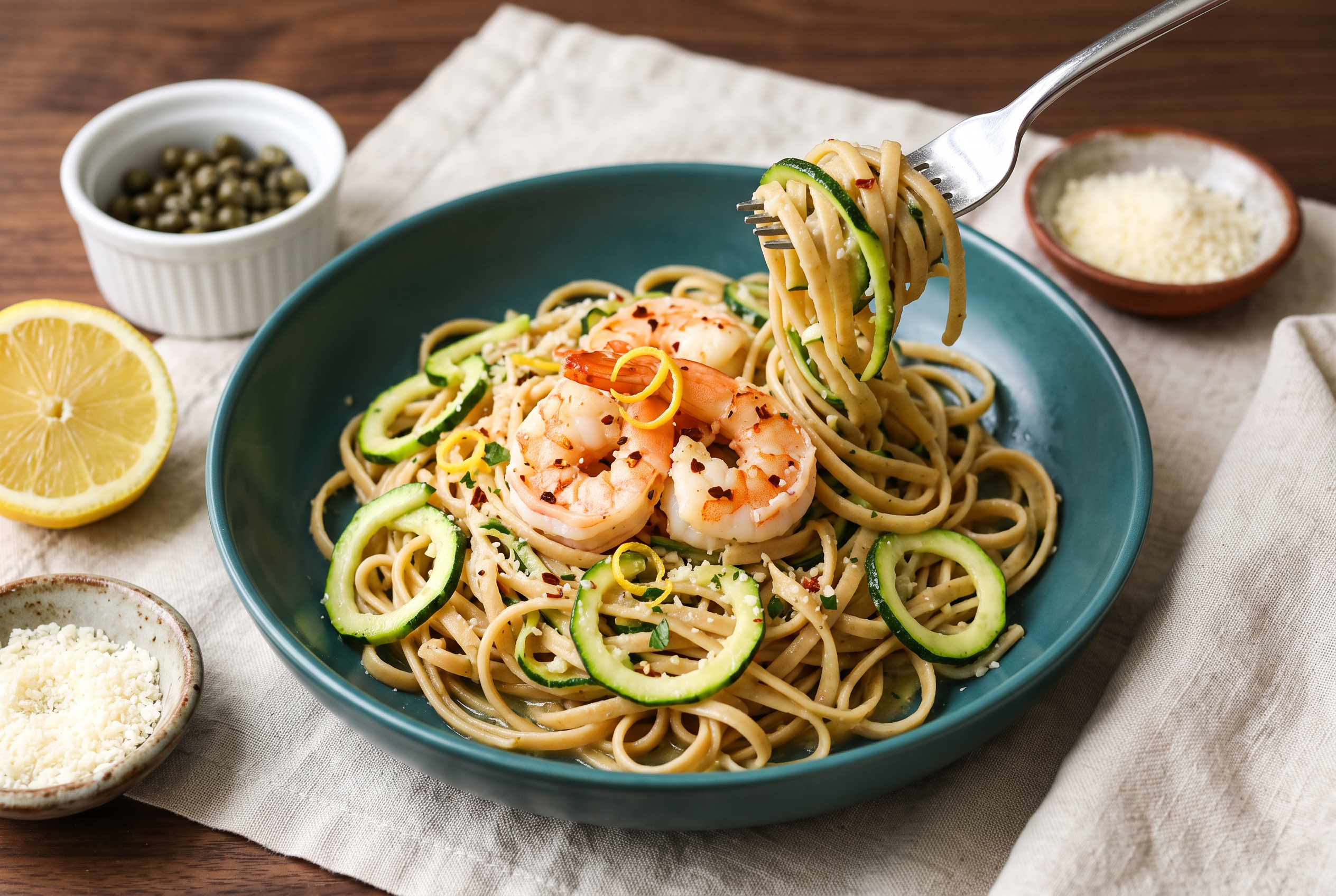
Step 6: Finish and serve. Taste. Parmesan is salty, so you may not need extra salt. Plate the pasta, scatter fresh thyme leaves over the top, add a curl of lemon zest, and finish with more Parmesan. A charred lemon wedge on the side is a nice touch, especially for company.
Easy Twists to Try
Brown the butter first. Melt 2 tablespoons of butter and let it cook until the milk solids turn golden and it smells nutty. This adds a deeper, caramelized layer.
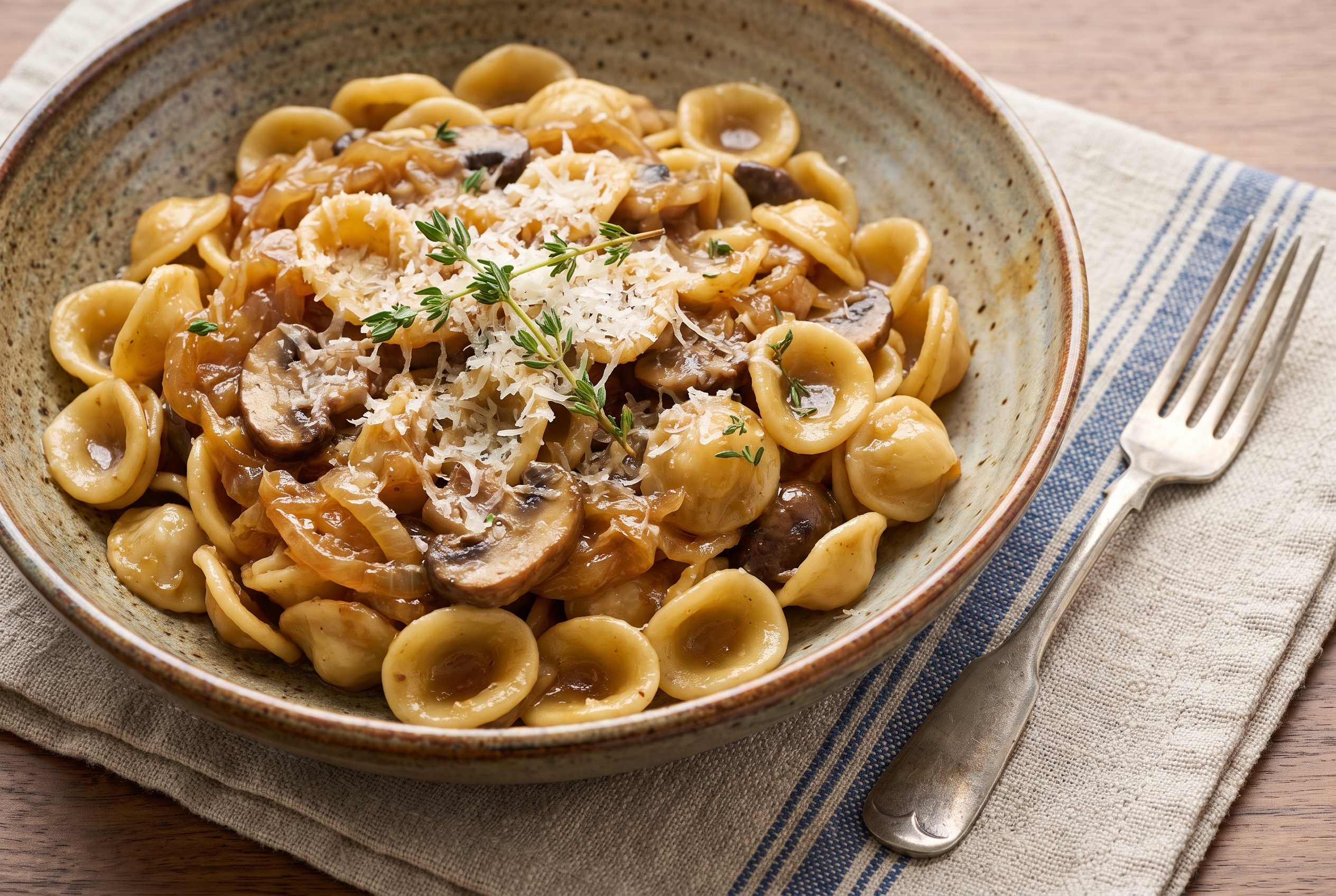
Add mushrooms. Sauté sliced cremini until deeply browned and stir them in at the end. The earthiness is wonderful with the sweet garlic.
Use half-and-half. For a lighter version, swap the cream for half-and-half. The sauce will be thinner but still silky.
Lemon zest at the end. A teaspoon of fresh lemon zest stirred in at the very end cuts through the richness beautifully.
Make it vegan. Use full-fat coconut cream instead of dairy cream, skip the Parmesan, and add a tablespoon of nutritional yeast at the end.
How to Serve It
What do you drink with this? The same white wine you cooked with — a crisp Pinot Grigio or Sauvignon Blanc. A light Pinot Noir also works. For non-alcoholic, sparkling lemon water or iced tea with lemon is lovely.
On the side, something green and bright: an arugula salad with lemon and shaved Parmesan, roasted broccolini, blistered cherry tomatoes. Crusty bread for mopping is never wrong. I love serving this in shallow bowls with a charred lemon wedge on the rim and a small bowl of extra Parmesan on the table.
Why I Love This Recipe
It looks and tastes like restaurant pasta. The cream, the wine, and the roasted garlic come together in a way that feels a little fancy, even though it is one of the easier pastas I make. It is the recipe I reach for when friends come over for an impromptu dinner — I get the garlic in the oven before they arrive, and the rest comes together in the time it takes to pour a glass of wine.
It is also endlessly forgiving. A little more wine, a little less cream, a handful of spinach — it all works. The slow-roasted garlic does most of the heavy lifting, so the rest of the ingredient list can flex to what you have on hand. Easy, elegant, and ready in 45 minutes.
Storage and Make-Ahead
Leftovers keep in a sealed container in the fridge for up to three days. The sauce will thicken as it sits, which is normal. Reheat gently in a small pan over low heat with a splash of milk or pasta water. Do not microwave — the cream can break. A slow stovetop reheat keeps everything silky.
You can roast the garlic up to three days ahead. Store the squeezed cloves in a small jar in the fridge, covered with a thin layer of olive oil. The full sauce can also be made a day ahead and reheated with a splash of cream before tossing with the pasta.
Easy Fixes for Common Issues
The sauce is too thin. Let it simmer a minute longer, or add a little more Parmesan. Cheese is a thickener, so go in small amounts and taste as you go.
The sauce is too thick or gluey. Splash in more pasta water, a tablespoon at a time, and toss vigorously until it loosens back up.
The garlic tastes harsh. It probably did not roast long enough. Blend in a small spoon of honey and let it cook a few minutes longer — the sauce will mellow out.
The wine flavor is too strong. Simmer a minute or two longer. Most of the alcohol cooks off in two minutes.
Your Quick Questions, Answered
Can I use pre-minced jarred garlic? In a pinch, yes, but the flavor will not be the same. Use about 2 tablespoons and skip the roasting.
What kind of white wine? Anything dry and crisp — Pinot Grigio, Sauvignon Blanc, unoaked Chardonnay, even dry vermouth. Avoid sweet wines.
Can I use a different pasta shape? Yes. Spaghetti, fettuccine, bucatini, or even rigatoni all work.
Can I make this gluten-free? Yes. Use your favorite gluten-free linguine — the sauce is naturally gluten-free.
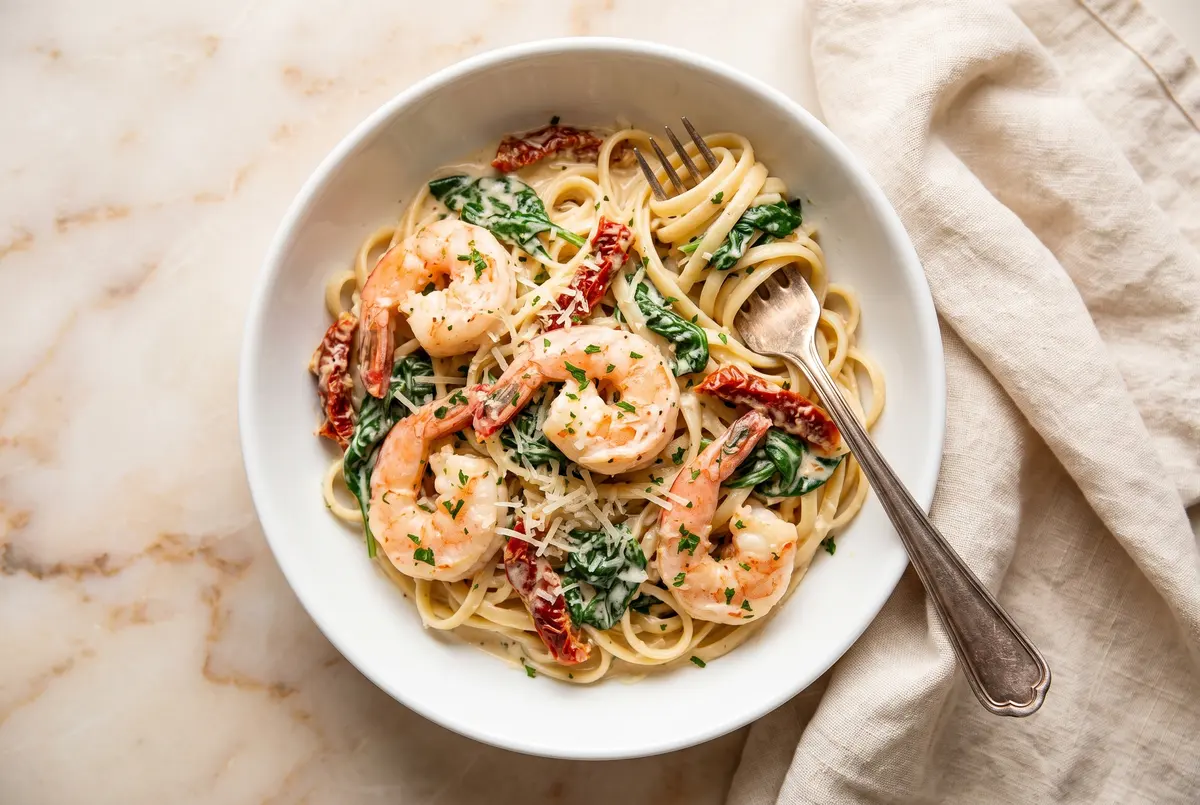
Can I add protein? Absolutely. Sautéed shrimp, sliced grilled chicken, crispy pancetta, or a soft-boiled egg on top. A handful of baby spinach stirred in at the end is also lovely.
What can I do with leftover roasted garlic? Smear it on toast, stir it into mashed potatoes, blend it into hummus, or whisk it into vinaigrette. It keeps a week in the fridge under a thin layer of olive oil.
A Few Last Thoughts
If you have been scared of cream sauces, this is the one to start with. The roasted garlic does most of the flavor work, so you do not have to fuss with anything fancy. The wine brightens everything. The Parmesan brings the salt. The whole thing comes together in a single pot in the time it takes to cook the pasta.
Make it once, and I promise you will find reasons to make it again. Date night dinner. Sick friend drop-off. Sunday night after a long week. A bowl of pasta that tastes like you put in more effort than you did. If you make this, leave me a comment. For more easy pasta like this, take a look at the [pasta section of the site](https://savorydiscovery.com/category/pasta/). Until next time — always roast more garlic than you think you need.
Sweet slow-roasted garlic, a splash of dry white wine, and a silky cream sauce. This linguine tastes like restaurant pasta but comes together in one pot.
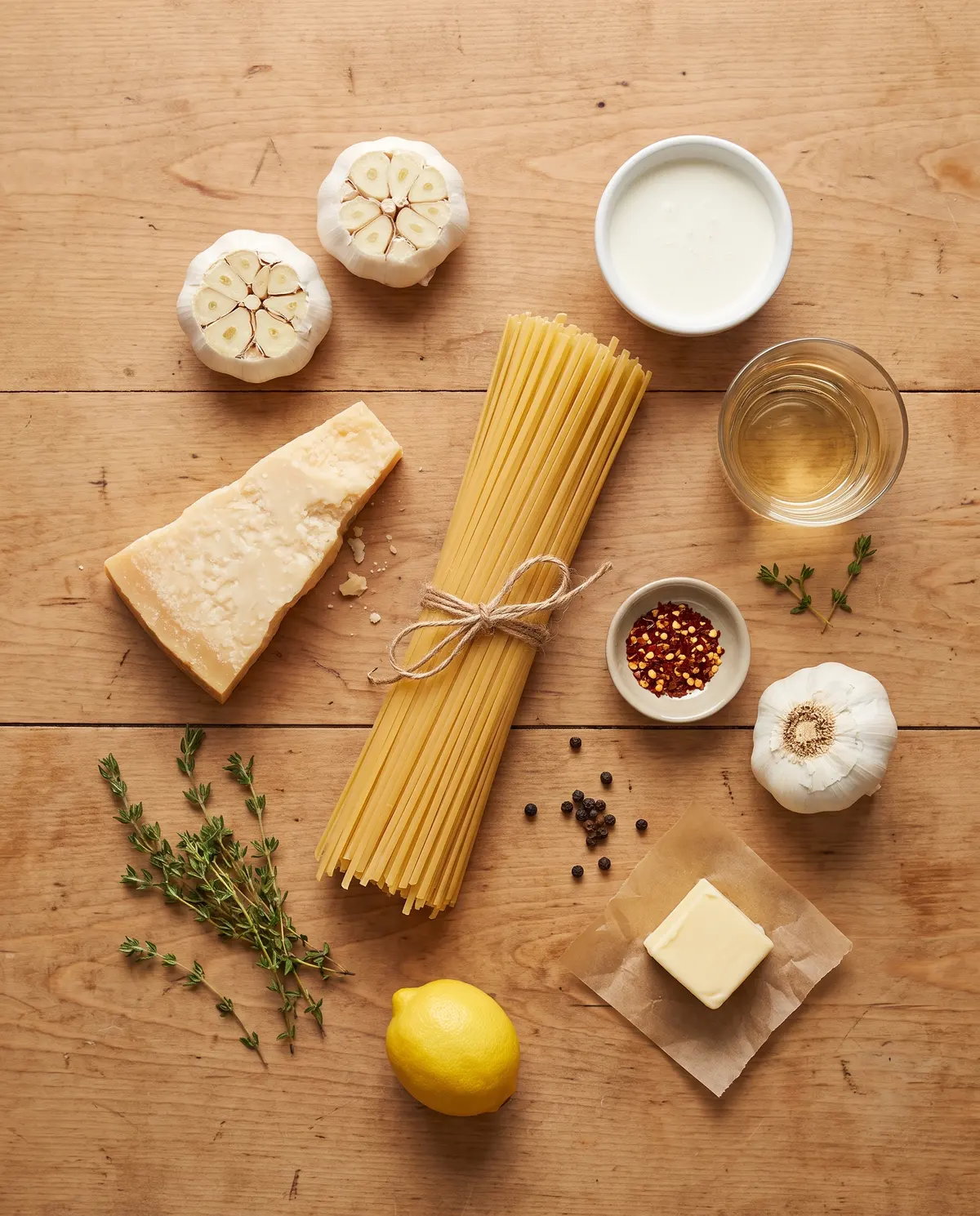
Ingredients
Instructions
Preheat the oven to 400°F. Slice the tops off the garlic heads so the tops of the cloves are exposed. Drizzle with olive oil, sprinkle with salt, wrap tightly in foil, and roast for 35 to 40 minutes until the cloves are completely soft and golden.
Squeeze the roasted garlic cloves into a small blender or food processor. Add 1/3 cup of the heavy cream and the reserved pasta water. Blend on high until completely smooth and silky.
Bring a large pot of well-salted water to a boil. Cook the linguine for 1 minute less than the package directions for al dente. Reserve 1/2 cup of the pasta water, then drain.
Return the same pot to medium-low heat. Add the garlic cream mixture and the red pepper flakes. Warm for 30 seconds, stirring. Pour in the white wine and simmer for 1 to 2 minutes until slightly reduced.
Stir in the remaining 1/3 cup of cream and a few grinds of black pepper. Add the drained linguine and the grated Parmesan. Toss vigorously with tongs until every strand is coated. If the sauce is too thick, add more pasta water 1 tablespoon at a time.
Taste and adjust salt. Serve immediately, topped with fresh thyme leaves, lemon zest, more Parmesan, and a charred lemon wedge on the side if using.
Notes
Use a dry white wine you would happily drink — Pinot Grigio, Sauvignon Blanc, or unoaked Chardonnay all work. The roasted garlic can be made up to 3 days ahead and stored in the fridge covered with a thin layer of olive oil.
Keywords:roasted garlic pasta, creamy linguine, white wine pasta, weeknight pasta
Elowen Thorn I cook, photograph and re-test every recipe in an ordinary home kitchen before it goes up, so what you make matches what you see. Savory Discovery is where simple weeknight cooking, seasonal ideas and the odd bit of kitchen craft sit side by side — written plainly, and worth cooking twice.