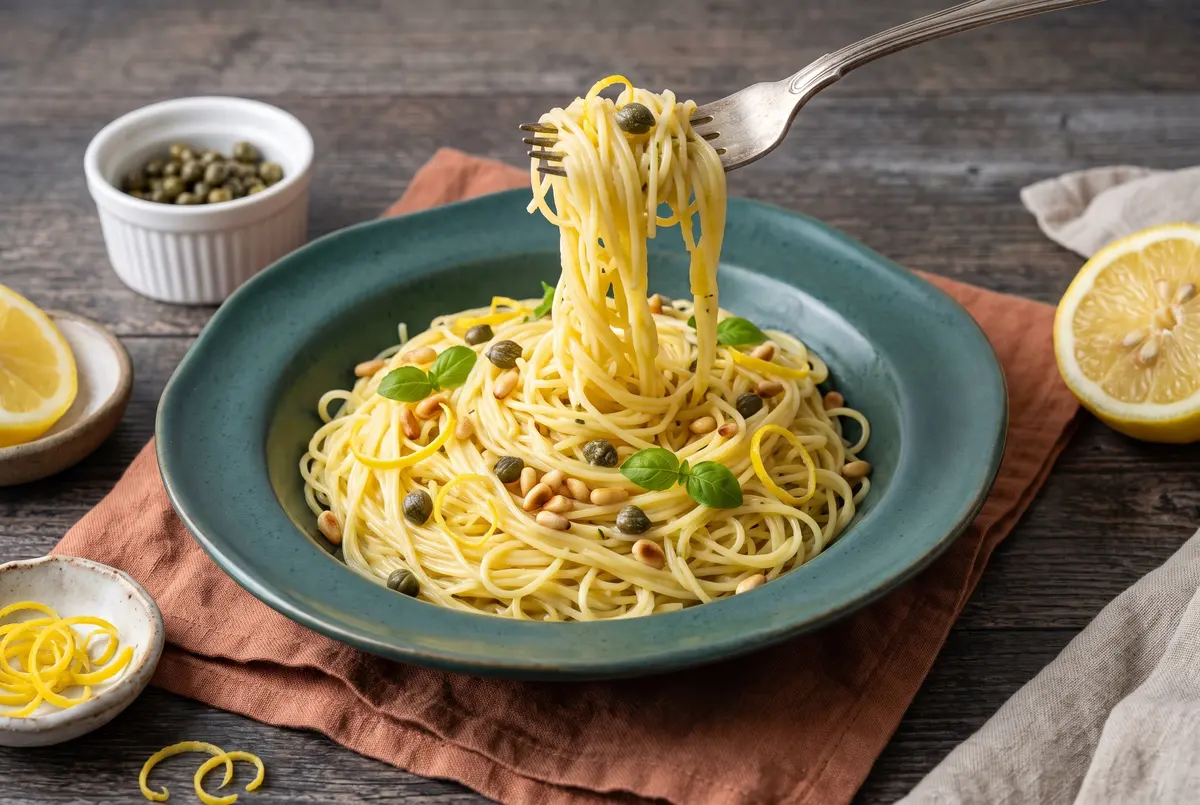
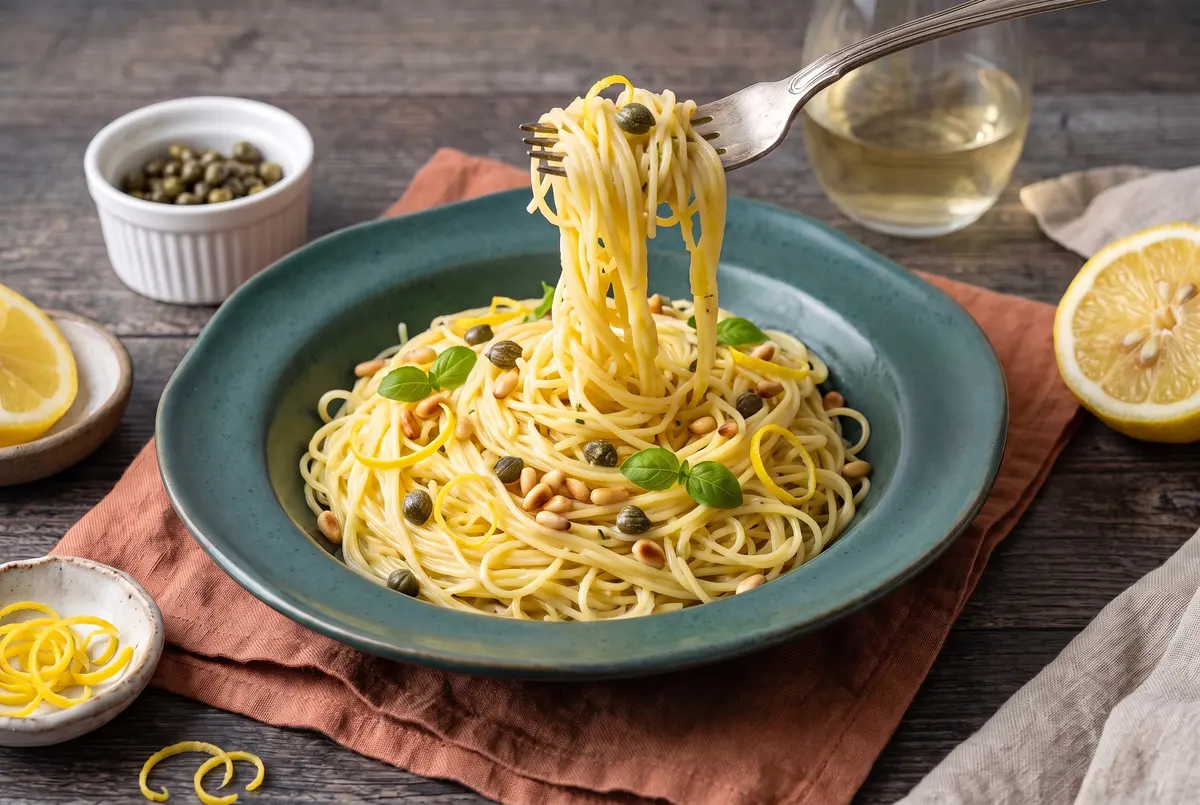
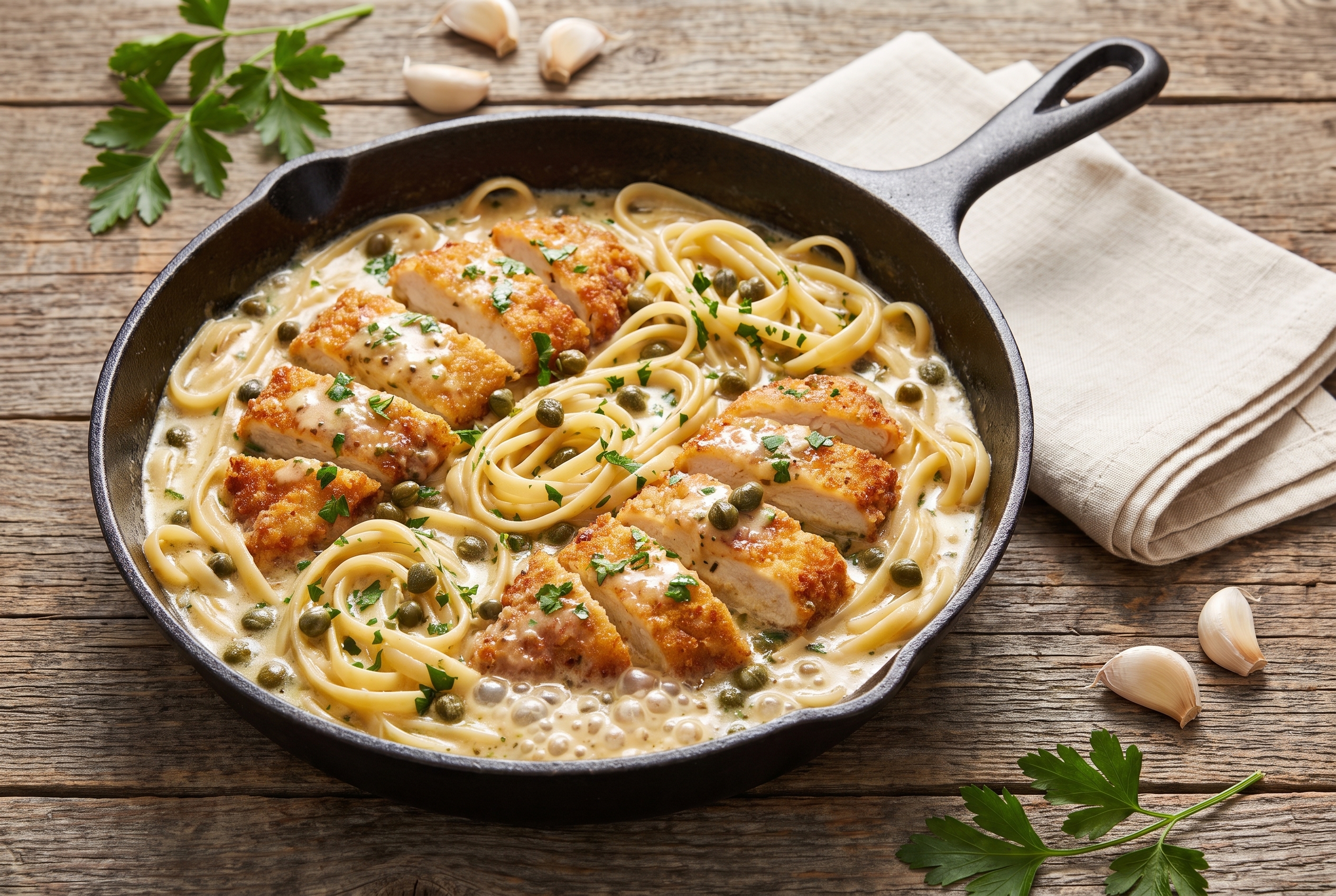
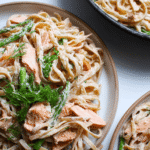
Some nights, dinner needs to taste like sunshine. That’s exactly what this lemon caper angel hair pasta delivers — a tangle of tender noodles glistening with buttery lemon sauce, the tiny briny pop of capers in every forkful, and just enough garlic to make your kitchen smell like you’ve been cooking for hours. It comes together in the time it takes to boil the water and drain the noodles, which is part of why I keep coming back to it on those busy evenings when takeout is whispering my name. Have you ever had one of those days where you just want something light and bright on the plate? This is that dinner, and I think you’re going to love it.
The first time I made anything like this was at my grandmother’s summer table. She’d keep a little jar of capers on the back of the stove and a bag of lemons on the counter, and when the garden was overflowing she’d send me out to pick parsley. Dinner would happen in fifteen minutes flat, and somehow it tasted like she’d been planning it all day. The secret, I think, was the restraint. No cream. No cheese piled on top. Just good butter, good garlic, a generous squeeze of lemon, and those salty little capers doing their thing. The pasta is the star; the sauce is just there to make it shine. Let me show you how I do it now.
Why This Recipe Works
Angel hair pasta — also called capellini — is the thinnest, most delicate long pasta you can buy. It cooks in about three minutes and has this beautiful way of soaking up sauce without ever getting heavy. That makes it perfect for a light, bright butter-and-lemon situation where you want every strand glossy and flavorful, not weighed down. The lemon zest and juice bring acidity and fragrance; the butter brings richness and that silky, clingy quality; the capers bring a salty, briny punch that keeps the whole thing from feeling flat. Together they hit every taste bud in your mouth at once — sweet, salty, sour, rich — and somehow it all balances out in this elegant, simple bowl of pasta.
The other reason this works is the pasta water. I know everyone says it, but the starchy, salty water your noodles cook in is basically liquid gold for making sauce. A splash of it tossed with the butter, lemon, and capers emulsifies into this glossy, clingy coating that clings to every strand. Don’t drain your pasta and rinse it — you want all that surface starch to do its job. Have you ever made a sauce that looked greasy and separated? A few tablespoons of pasta water, tossed vigorously, will bring it right back together. It’s the kind of trick that makes you feel like a real cook.
Putting It All Together: My Method
Step 1: Boil well-salted water. Fill a large pot with water, salt it generously (it should taste like the sea), and bring it to a rolling boil. While it’s heating, get everything else ready — once angel hair hits the water, the whole dish comes together in about ten minutes, so you want to be set up.
Step 2: Start the sauce. While the water heats, melt the butter in a large skillet over medium heat. Add the minced garlic and cook just until fragrant, about 30 to 60 seconds — don’t let it brown or it’ll turn bitter. Pour in the white wine (or chicken broth, if you’d rather cook without alcohol) and let it simmer for 2 to 3 minutes to reduce slightly.
Step 3: Add the lemon and capers. Stir in the lemon zest, the lemon juice, and the drained capers. Let this simmer gently for another minute or two so the flavors can get to know each other. Taste the sauce at this point — it should be bright, buttery, and a little salty from the capers. If it tastes flat, add a tiny pinch of salt. If it’s too sharp, a small extra pat of butter will round it out.
Step 4: Cook the pasta. Drop the angel hair into the boiling water and cook for about 2 to 3 minutes, until al dente — tender but still with a little bite. Before draining, scoop out about a cup of the starchy pasta water and set it aside. Then drain the pasta (don’t rinse it).
Step 5: Toss everything together. Add the drained pasta directly to the skillet with the sauce. Add a few tablespoons of the reserved pasta water and toss everything together vigorously for about 30 seconds, until the sauce clings to every strand and looks glossy. If it looks dry, add another splash of pasta water. Stir in the chopped parsley and red pepper flakes if you’re using them, and taste once more for seasoning.
Step 6: Serve immediately. Angel hair waits for no one — it goes from perfect to overcooked in about 60 seconds. Plate it up right away, finish with a little more grated parmesan if you like, and dig in while it’s hot and glossy.
Creative Twists to Try
Add protein: A handful of cooked, peeled shrimp tossed in at the end turns this into a full meal. Crispy prosciutto, broken into pieces, is another lovely option.
Make it creamy: Stir in a few tablespoons of heavy cream along with the butter for a richer, slightly more decadent version that’s still bright from the lemon.
Go green: Add a few handfuls of baby spinach or arugula to the skillet at the end and let it wilt gently into the sauce. The peppery greens play beautifully with the lemon.
Toasted breadcrumbs: Sprinkle garlicky toasted breadcrumbs over each bowl for a little crunch that contrasts nicely with the silky pasta.
Switch the pasta: While angel hair is classic here, this sauce is wonderful with linguine, spaghetti, or even a short pasta like fusilli or campanelle.
Serving & Pairing Ideas
What do you serve with this? Honestly, this pasta is the kind of dish that wants a really simple side. A big green salad with a sharp lemon vinaigrette is my go-to — it echoes the citrus in the pasta and adds crunch. A basket of warm, crusty bread for swiping up any leftover sauce is, in my opinion, non-negotiable. For protein, grilled shrimp, seared scallops, or a piece of simple roasted chicken all play nicely. For wine, you’ll want something bright and crisp: a Sauvignon Blanc, a Pinot Grigio, or a dry sparkling wine are all wonderful. Have you ever tried this with a glass of chilled rosé? Highly recommend. Would you go with a salad or a vegetable side? Either works, but if you’re serving this to guests, the salad feels a little more elegant.
Why I Love This Recipe
What I love most about this recipe is how it makes elegance feel effortless. There’s no fancy technique, no hard-to-find ingredients, no hours in the kitchen — just good butter, good lemon, a handful of briny capers, and a pot of well-cooked noodles. It tastes like something you’d order at a tiny trattoria on a backstreet in Rome, but it comes together faster than the delivery app on your phone. I make this at least once a week in the summer, when the garden parsley is going wild and lemons feel like the only flavor I want. It’s the kind of recipe that reminds you simple is often best, and a few good ingredients treated kindly can become something really memorable.
Storage and Make-Ahead
Angel hair pasta is best the moment it’s made, and it doesn’t reheat as gracefully as thicker pastas. If you have leftovers, store them in an airtight container in the fridge for up to 2 days. To reheat, add a splash of water or broth to a skillet over low heat and toss gently until just warmed through — avoid the microwave, which tends to make angel hair rubbery. I don’t recommend freezing this one; the delicate noodles don’t hold up well to thawing.
That said, the sauce itself can absolutely be made ahead. Make the butter-lemon-caper sauce up to 2 days in advance and store it in the fridge. When you’re ready to eat, reheat the sauce gently in a skillet, cook the angel hair fresh, and toss everything together with a splash of pasta water at the end. This is my favorite way to entertain with this recipe — the sauce is done ahead, the noodles cook while guests are pouring wine, and dinner is on the table in under ten minutes. For more make-ahead weeknight inspiration, browse my pasta recipes.
Troubleshooting
If your sauce looks greasy and separated, the butter got too hot or the pasta water wasn’t starchy enough. A few tablespoons of warm pasta water tossed in vigorously with a pair of tongs will usually bring it right back together. If your pasta is gummy, it was probably overcooked or you rinsed it — angel hair only needs 2 to 3 minutes, and rinsing removes the surface starch that helps the sauce cling. If the sauce is too sharp, a small extra pat of butter or a tiny pinch of sugar will round it out. And if you find your pasta water is too salty, you’re salting the cooking water correctly — pasta water should genuinely taste like the sea. Would you like more weeknight-pasta rescue tips? Let me know in the comments.
Your Quick Questions, Answered
Can I use lemon juice from a bottle? Fresh is really best here — the flavor is brighter and more nuanced. But in a pinch, a good-quality bottled juice will work. Just use a little less, since bottled juice can sometimes taste a bit flat or sharp.
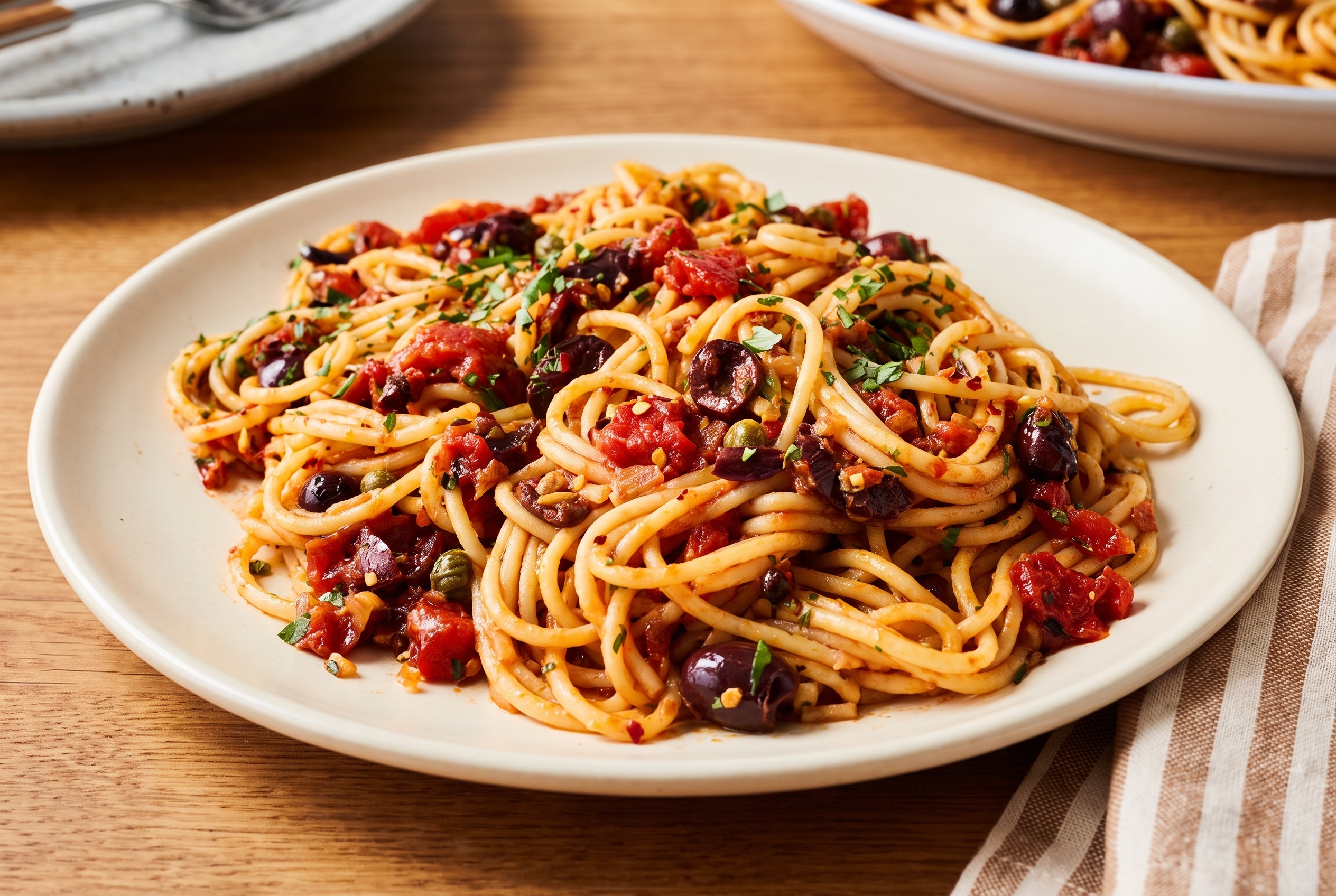
Are capers necessary? They’re really the soul of this dish. Without them, the sauce tastes like buttered noodles with lemon, which is fine but not the same. If you genuinely can’t eat capers, try chopped green olives instead — they bring a similar briny punch.
Can I use a different pasta? Yes, absolutely. Linguine and spaghetti are both lovely here. Just remember the cook time will be longer, and reserve your pasta water the same way.
What can I substitute for the wine? An equal amount of chicken or vegetable broth, with a tiny splash of white wine vinegar or extra lemon juice to mimic the acidity, works very well.
Is this dish good for company? It’s perfect for company. The whole thing comes together in 15 minutes, which means you can actually be present with your guests instead of stuck at the stove. Scale the recipe up and you can feed a crowd without breaking a sweat.
Can I add cheese? A small amount of grated parmesan stirred in at the end is lovely, though it’s not traditional in a classic lemon-caper pasta. Don’t overdo it — a heavy cheese layer can mute the brightness you’re going for.
A Few Last Thoughts
This is the kind of recipe I wish someone had handed me when I was first learning to cook for myself. It looks impressive, it tastes like something from a restaurant, and it takes about as much effort as scrambling eggs. There’s real magic in that combination. Whether you’re cooking for one on a quiet Wednesday, hosting friends on the patio, or just trying to use up a jar of capers before they go bad, this pasta is the answer. I hope it becomes one of those recipes you keep in your back pocket, the way my grandmother kept capers on the back of her stove all those years. Let me know how it turns out, and if you find a fun variation, I’d love to hear about it.
Happy cooking, friends. I’ll see you in the next one.
A bright, buttery lemon caper sauce tossed with delicate angel hair pasta — ready in 15 minutes, elegant enough for company.
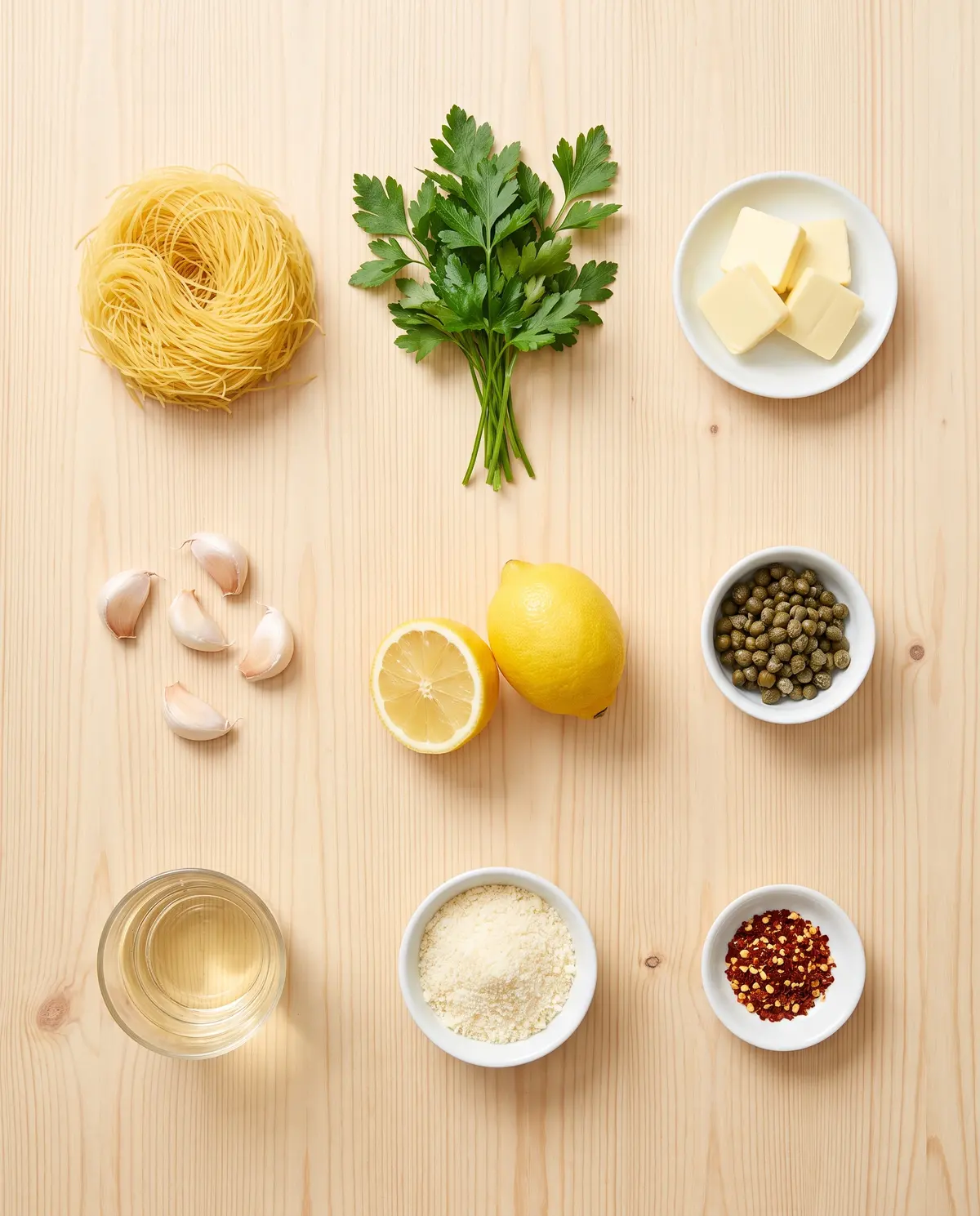
Ingredients
Instructions
Bring a large pot of generously salted water to a rolling boil.
While the water heats, melt the butter in a large skillet over medium heat. Add the garlic and cook until fragrant, 30 to 60 seconds. Pour in the white wine and simmer for 2 to 3 minutes to reduce slightly.
Stir in the lemon zest, lemon juice, and capers. Simmer gently for another 1 to 2 minutes. Taste and adjust seasoning — capers are salty, so you may not need much added salt.
Cook the angel hair in the boiling water for 2 to 3 minutes until al dente. Reserve about 1 cup of the starchy pasta water before draining. Do not rinse the pasta.
Add the drained pasta to the skillet with the sauce. Pour in 1/4 cup of the reserved pasta water and toss vigorously for 30 seconds, until the sauce is glossy and clings to every strand. Add more pasta water a tablespoon at a time if needed.
Stir in the chopped parsley and red pepper flakes if using. Taste once more for seasoning, then serve immediately with a little grated parmesan if you like.
Notes
Angel hair cooks very fast — don’t walk away from the pot. For a more substantial meal, add a handful of cooked shrimp or crispy prosciutto. The sauce can be made up to 2 days ahead and reheated gently; just cook the pasta fresh.
Keywords:lemon caper pasta, angel hair, capellini, weeknight pasta, Italian dinner
Elowen Thorn I cook, photograph and re-test every recipe in an ordinary home kitchen before it goes up, so what you make matches what you see. Savory Discovery is where simple weeknight cooking, seasonal ideas and the odd bit of kitchen craft sit side by side — written plainly, and worth cooking twice.