The Bowl of Pasta That Made Me Believe in Cheese Again
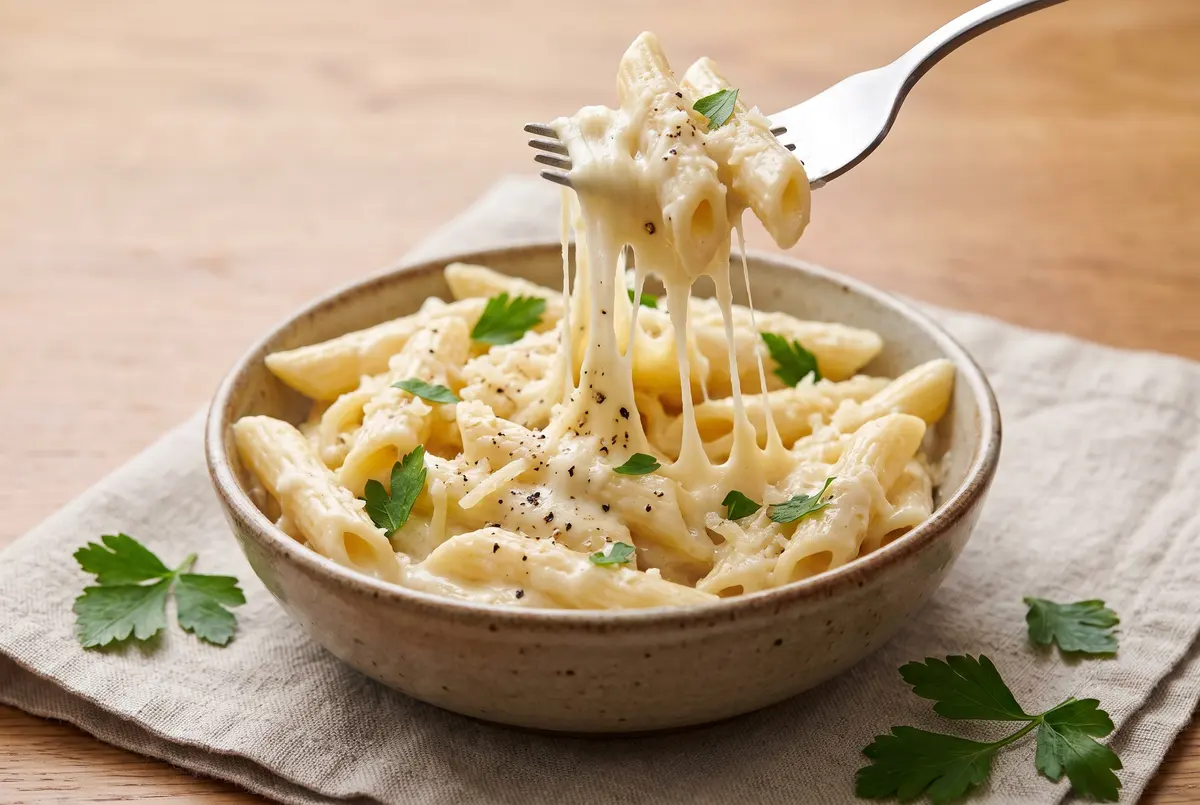
Have you ever eaten something so quietly perfect that you just sat there for a moment, fork paused, trying to figure out what made it so good? That is what happened the first time I made this creamy four-cheese pasta. It was a cold Tuesday, I had a wedge of Taleggio I had been ignoring, a sad little nub of Gorgonzola, and a piece of Gruyère from a cheese board I had hosted over the weekend. I threw them all into a saucepan with milk and hoped for the best. What came out of that pot changed how I think about weeknight pasta forever.
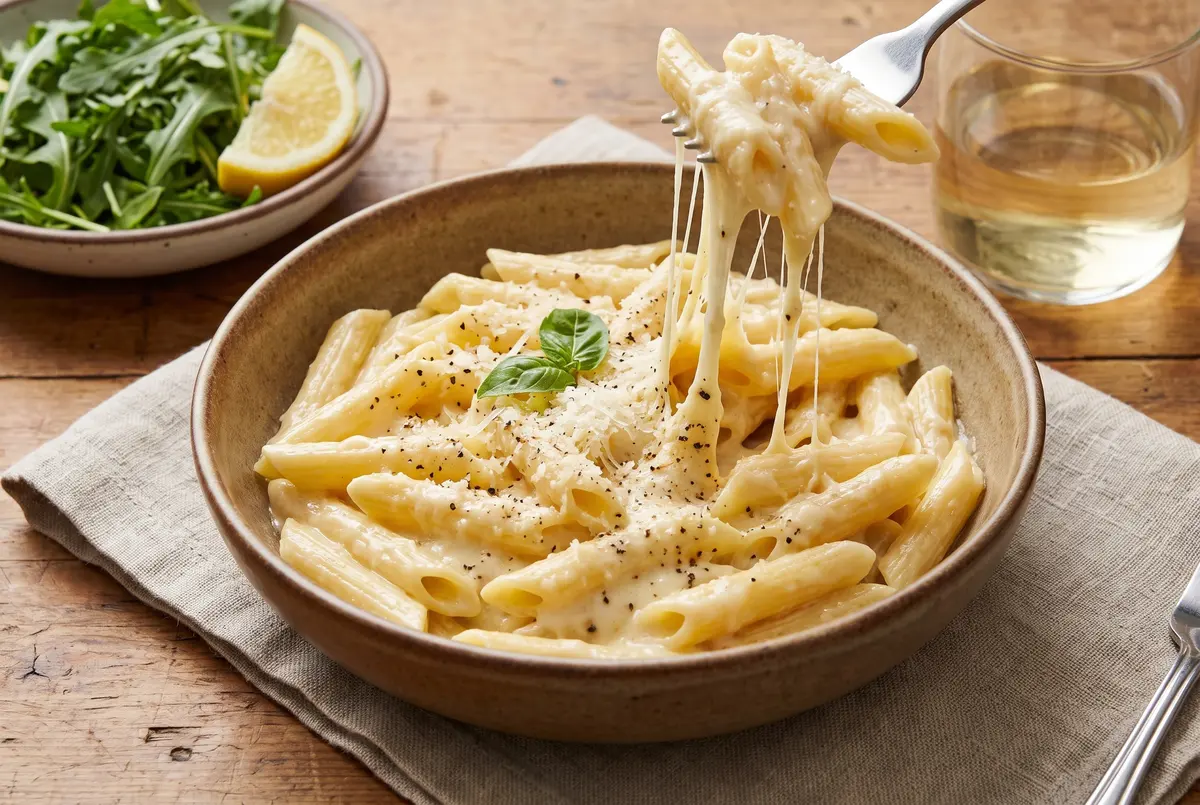
Italian nonnas have known this trick for centuries — a quartet of cheeses melted slowly into warm milk creates a sauce so silky and so deeply flavored that it tastes like it took all day, even when it took less than twenty minutes. The Gorgonzola brings a quiet tang. The Taleggio brings that earthy, mushroom-y depth. The Gruyère melts into the sauce like it was always meant to be there. And the Parmigiano — well, the Parmigiano is the quiet hero that pulls everything together with a salty, nutty finish that you cannot quite name but absolutely cannot do without.
My grandmother called this dish pasta ai quattro formaggi and she made it on nights when the fridge looked thin. “Cheese is a meal,” she would say, stirring a knob of butter into the sauce with the back of a wooden spoon. She was right, of course. Cheese, milk, and good pasta are all you really need for a perfect dinner. Which cheese would you add to your version?
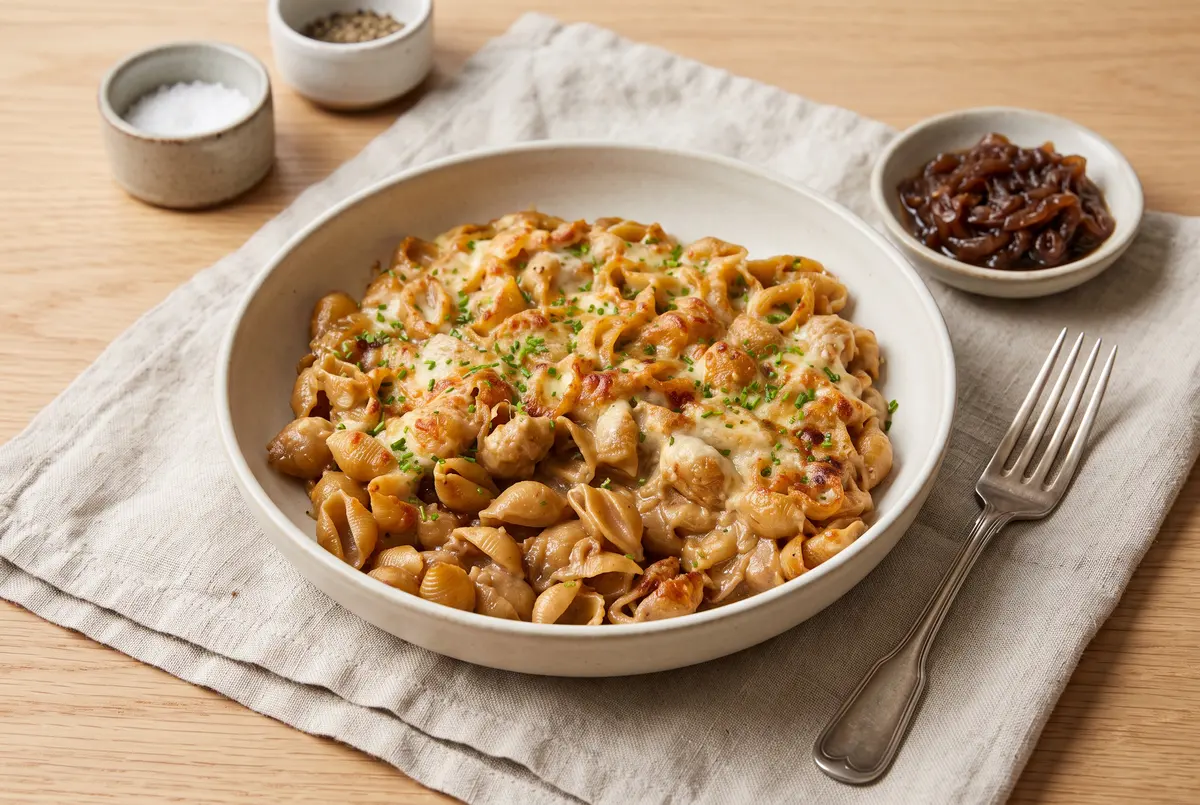
Creamy Baked Four Cheese Pasta
This is the easiest cozy dinner in my rotation, and the one I lean on when I want something that tastes impressive but does not ask me to leave the kitchen for any ingredients I cannot pronounce. You need about ten minutes of prep, fifteen minutes of cook time, and a willingness to stir gently and not rush the sauce. The result is a glossy, silky, four-cheese pasta that is rich without being heavy, and that tastes even better reheated for lunch the next day. If you have been searching for a baked pasta that is more about the cheese than the tomatoes, this is the one.
From Pot to Plate
Step 1: Salt the water and start the pasta. Bring a large pot of generously salted water to a rolling boil. Plunge in the pennette rigate (or any small pasta shape — penne, shells, or fusilli all work) and cook until just shy of al dente. You will finish cooking the pasta in the cheese sauce, so a minute under is exactly where you want to be.
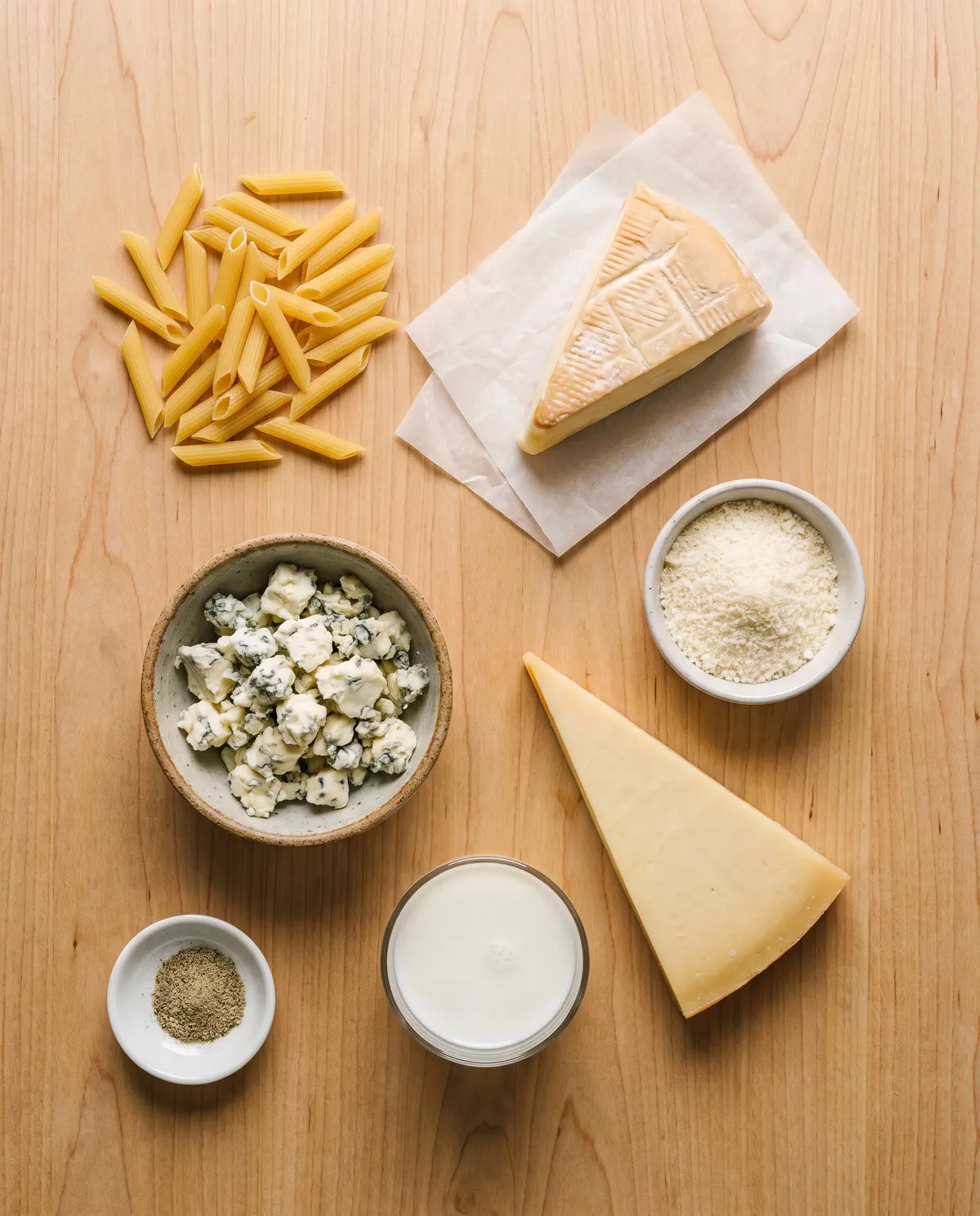
Step 2: Prep your cheeses. While the pasta cooks, grate the Gruyère using the coarse side of a box grater. Cut the Taleggio into small cubes, rind removed. Cut the rind off the Gorgonzola and crumble it into pieces. Grate the Parmigiano Reggiano finely. Lining them up in little piles on a plate makes the next step feel almost ceremonial.
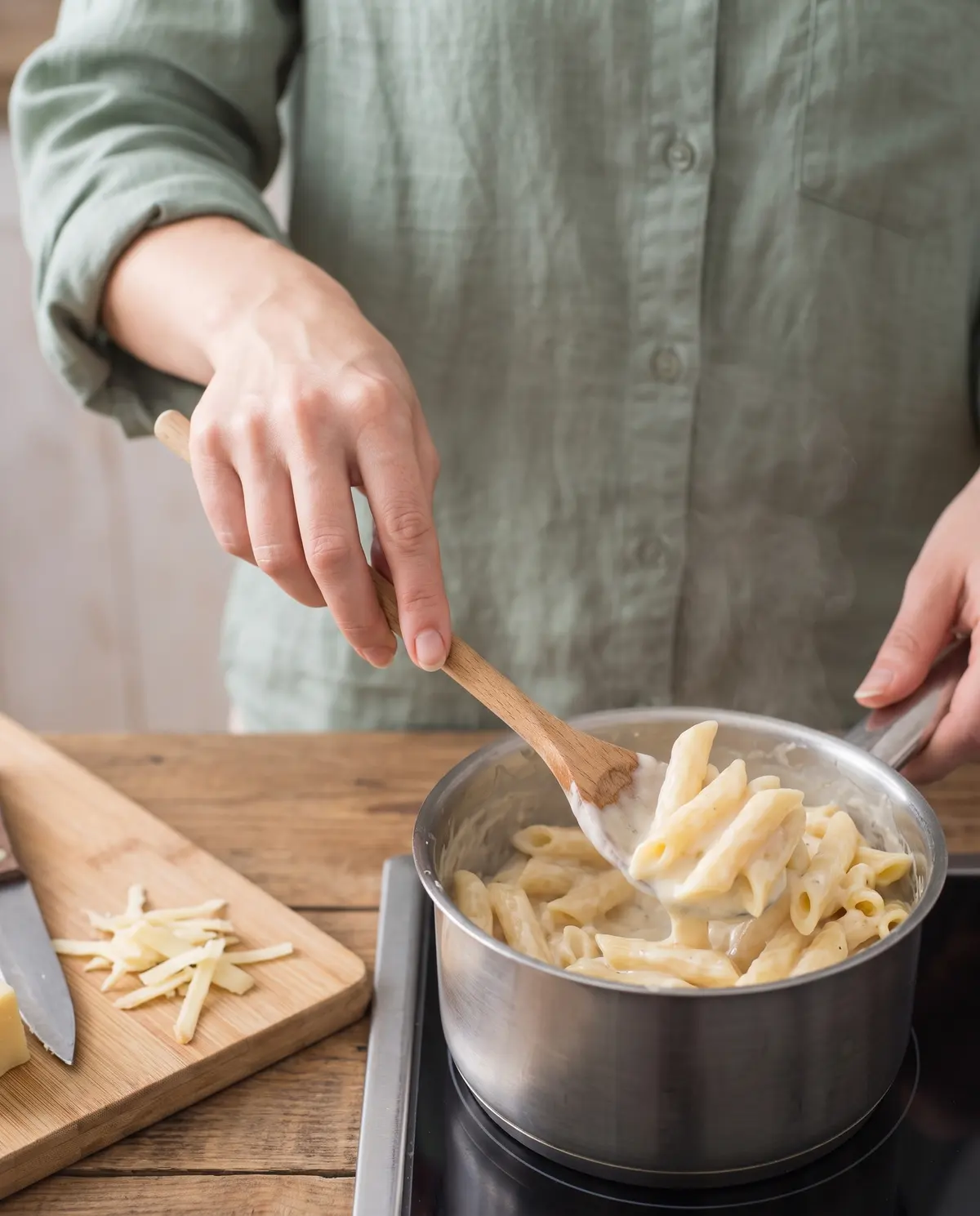
Step 3: Build the cheese sauce. Pour the whole milk into a wide saucepan and warm it over low heat until it is just about to simmer — tiny bubbles at the edges are your cue. Add the Gorgonzola first and stir gently until it begins to melt. Then add the Taleggio cubes and keep stirring — do not walk away, the sauce can scorch if the heat climbs too high. Finally, add the Gruyère and let everything melt together into a thick, glossy sauce. This is the moment the kitchen starts to smell like a dream.
Step 4: Finish the sauce off the heat. Turn off the heat and add the grated Parmigiano Reggiano, plus a pinch of white pepper. Stir until completely smooth. The sauce should coat the back of a spoon and look like liquid velvet. If it is too thick, splash in a tablespoon of the starchy pasta water. If it is too thin, give it another minute on the lowest possible heat.
Step 5: Bring it all together. When the pasta has about one minute left, use a slotted spoon to transfer it directly from the pot into the cheese sauce. The starchy water clinging to the pasta is your secret weapon — it helps the sauce cling to every curve of the noodles. Stir gently over very low heat for about thirty seconds until everything is glossy and coated.
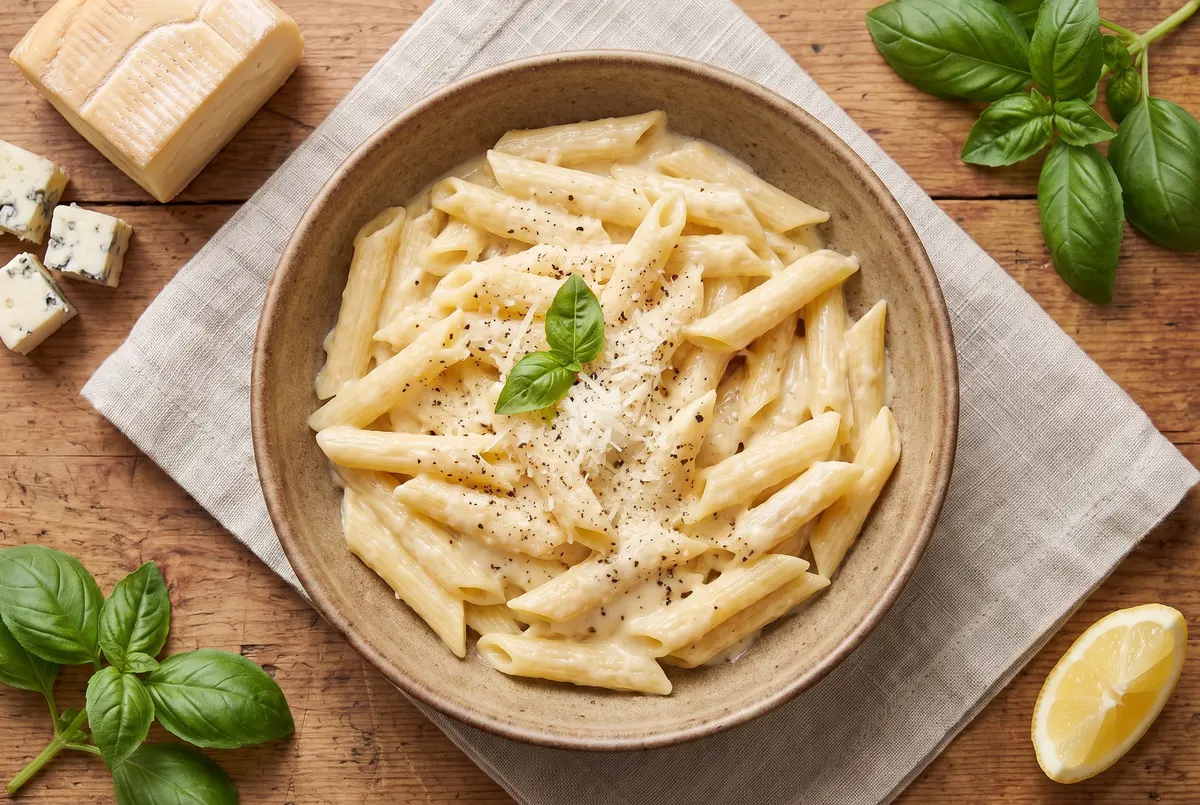
Step 6: Finish and serve. Add a final crack of black pepper, taste for salt (cheese is salty, so you may not need any), and serve immediately in warm bowls. A few torn basil leaves on top are lovely, though not essential. That first bite is going to be a quiet revelation — that is the kind of pasta this is.
Creative Twists Worth Trying
Once you have the base down, this pasta becomes a wonderful canvas for what is in your fridge. A few favorites:
Add a little heat. Stir in a pinch of crushed red pepper flakes or a few cracks of fresh black pepper at the end. The warmth balances the richness of the cheese beautifully.
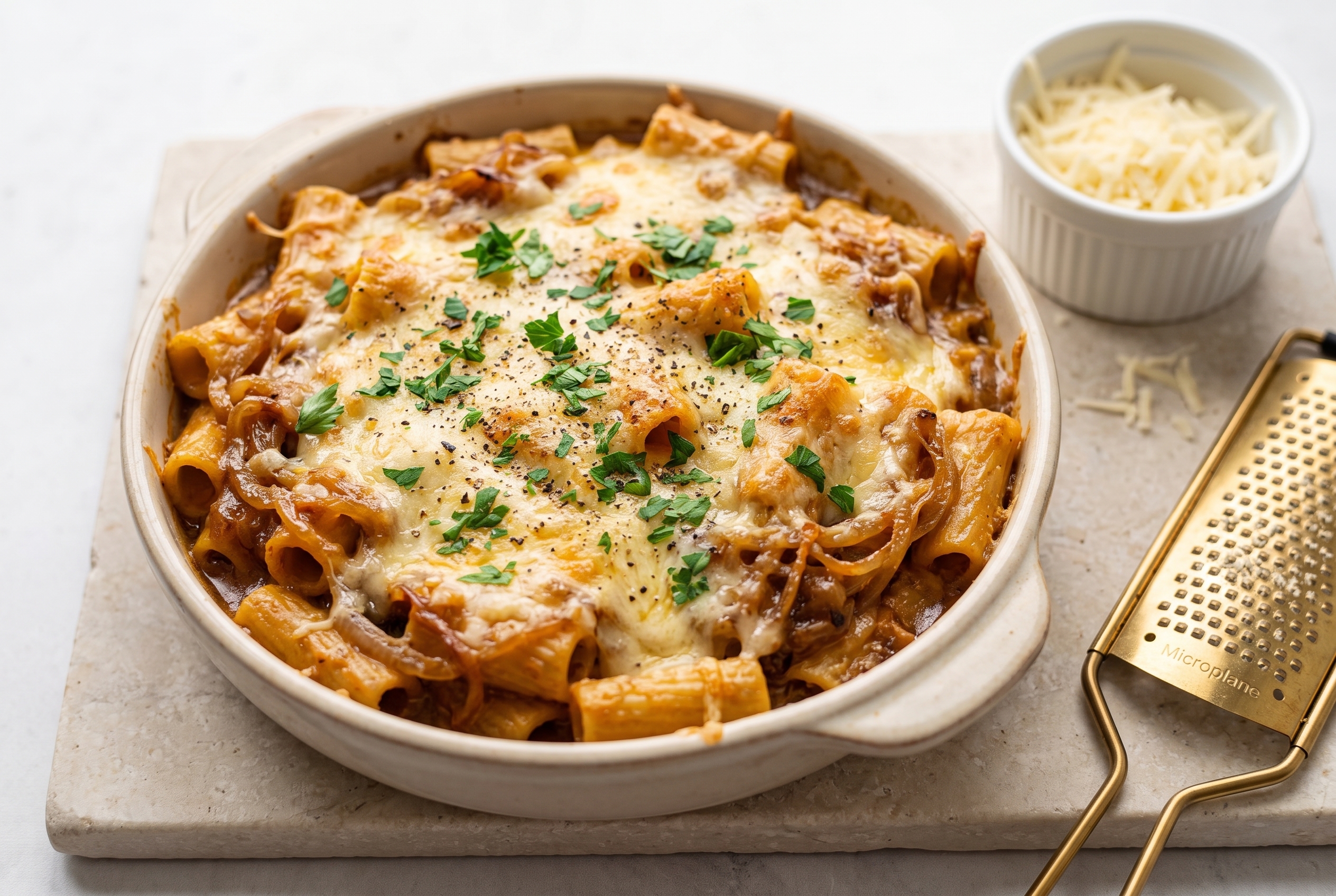
Brown the top. Transfer the finished pasta to a baking dish, sprinkle with a little extra Parmigiano, and broil for 3 to 5 minutes until the top is golden and bubbling. It turns this from a stovetop pasta into something that feels like a baked pasta.
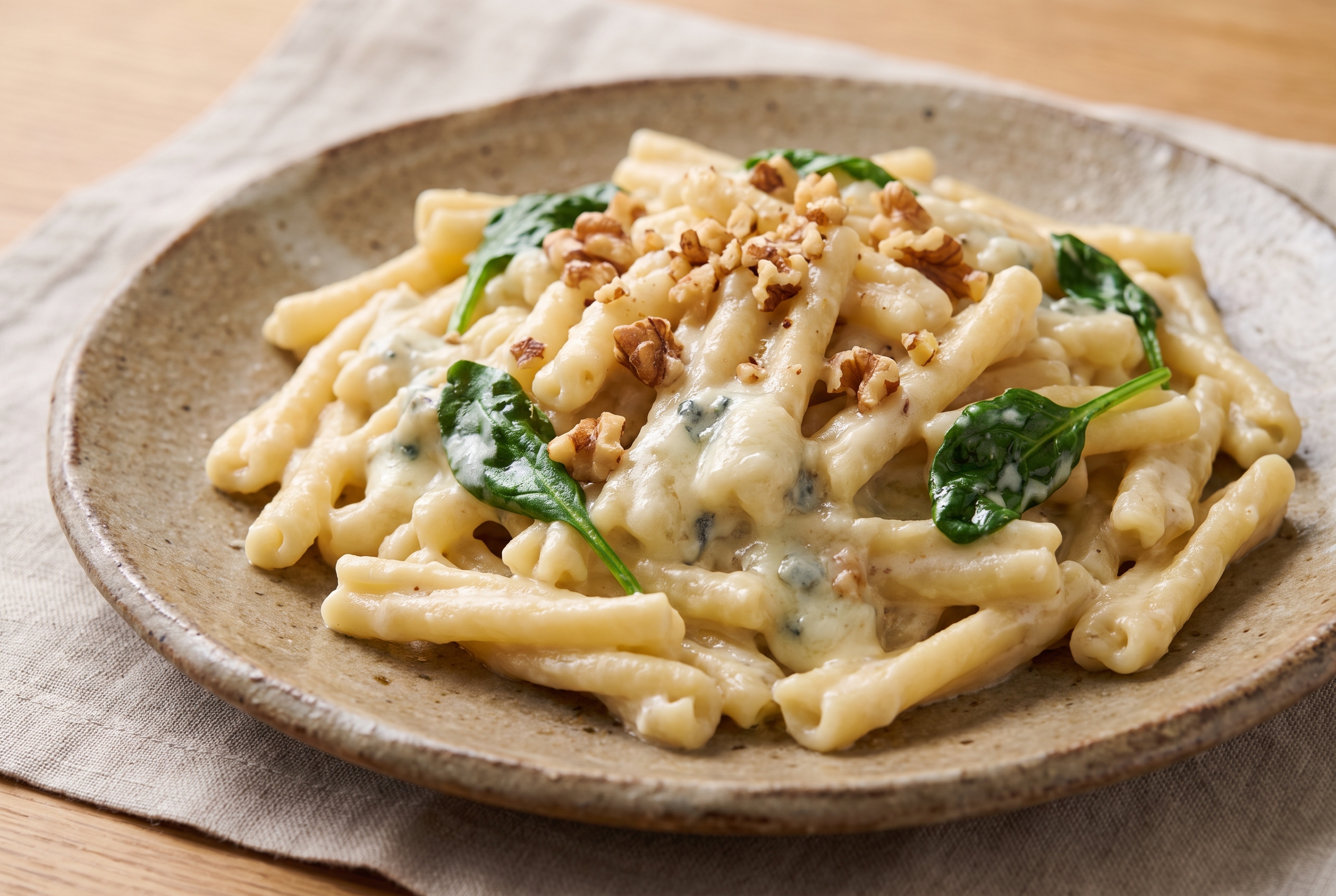
Stir in some greens. Wilt a few handfuls of baby spinach into the sauce just before adding the pasta. The color is gorgeous and the nutritional boost does not hurt.
Use what you have. Swap Taleggio for brie, Gruyère for fontina, Gorgonzola for any blue cheese. The principle — four cheeses, milk, low heat — stays the same.
Make it a baked pasta. Transfer to a baking dish, top with a mixture of panko, grated Parmigiano, and a drizzle of olive oil, and bake at 425°F for 15 minutes until golden and crisp on top. Pure comfort.
Serving & Pairing Ideas
What do you serve with a four-cheese pasta? Honestly, the pasta is the show. But a few simple sides make it feel like a complete meal. A peppery arugula salad with lemon juice, olive oil, and shaved Parmigiano cuts through the richness without competing with it. Warm, crusty bread is a must for mopping up the sauce — do not skip it. A glass of crisp white wine like a Pinot Grigio or a Verdicchio is beautiful alongside. For the kids, or for a non-alcoholic option, a sparkling lemon water keeps the meal feeling bright.
Why I Love This Recipe
There is a particular kind of comfort in a pasta that asks almost nothing of you and gives back a great deal. This creamy four-cheese pasta is exactly that. It uses one pot for the pasta, one saucepan for the sauce, and ingredients you can find at any grocery store. It comes together in less than thirty minutes, and it tastes like something that should take twice as long. The sauce is rich without being heavy, deeply cheesy without being one-note, and the slow, gentle melt of the four cheeses creates a flavor that is layered in a way that single-cheese sauces rarely achieve.
It is also the dish I make when I want to use up the end-of-the-week cheese drawer without committing to a specific plan. Half a wedge of Taleggio, a small piece of Gruyère, a nub of blue — they all find a home in this sauce. It is forgiving, generous, and it always disappears faster than I expect. That, to me, is the sign of a really good recipe.
Storage and Batch Cooking
Leftovers keep in the fridge for up to three days in a covered container. To reheat, add a small splash of milk (about a tablespoon per serving) and warm gently over low heat on the stove, stirring constantly. The milk brings the sauce back to its silky, glossy texture. The microwave works in a pinch, but the stovetop gives a much better result. If you have a baking dish, you can also reheat under the broiler for a few minutes until the top is just golden.
For make-ahead, this is best assembled right before serving. The sauce does not love to sit for long — the cheeses tighten as they cool and the texture can become gummy. If you must make it ahead, undercook the pasta by a minute more, store the sauce and the pasta separately in the fridge, and combine them with a splash of milk when you are ready to serve. It will only take a minute or two to bring everything back together.
Troubleshooting Your Sauce
Why is my cheese sauce grainy? Almost always because the heat was too high. Cheese is a delicate emulsion of fat and protein, and high heat causes the proteins to seize up and separate. Keep your heat on low, add the cheeses gradually, and stir gently. If it has already broken, a quick fix is to remove the pan from the heat entirely and whisk in a tablespoon of cold milk — sometimes that brings it back together.
Why is the sauce too thick? Either the cheese-to-milk ratio is off, or the pasta was drained too dry. Splash in a little more warm milk, or a few tablespoons of the starchy pasta water, and stir until it loosens up. The sauce should coat the back of a spoon but still drip slowly off a fork.
Why does it taste flat? Cheese is salty, but it is not always salty enough. Taste the sauce before serving and add a pinch of fine salt if it needs it. A final grind of black pepper also wakes the flavor up — do not skip it.
Why did the cheese clump instead of melting? The milk was probably not warm enough when you added the cheese. Make sure the milk is at a low simmer with tiny bubbles at the edges before you start adding the cheese, and add it gradually so each addition has a chance to melt before the next goes in.
Your Quick Questions, Answered
Can I use a different pasta shape? Absolutely. Penne, shells, fusilli, or even rigatoni all work beautifully. Short shapes with ridges or curves are best because they catch the sauce in all the right places. Just cook them a minute under al dente so they finish in the sauce.
Can I make this without Gorgonzola? Yes. Use any blue cheese you like — Stilton, Roquefort, or even a mild domestic blue. If you do not like blue cheese at all, swap it for an extra handful of grated Gruyère or a soft cheese like brie.
Is there a substitute for Taleggio? Brie or camembert (rind removed) work as direct substitutes. They have a similar creamy, slightly earthy character that melts into the sauce in the same way.
Can I use pre-shredded cheese? You can, but the sauce will not be quite as silky. Pre-shredded cheese has anti-caking agents that keep it from melting smoothly. If you can, grate your own — it only takes a couple of minutes and the difference is noticeable.
Can I use half-and-half instead of whole milk? Yes, but the sauce will be a bit richer. If you want a lighter result, stick with whole milk — it has enough fat to keep the sauce silky without overwhelming the cheese.
Can I make this ahead of time for a dinner party? It is best served fresh, but you can prep the cheeses in advance and have everything measured and ready. The actual cooking takes about 20 minutes, so you can do it last-minute without stress. If you must make it ahead, store the sauce and pasta separately and combine just before serving with a splash of warm milk.
A Few Last Thoughts
If you have been searching for a pasta that feels a little bit indulgent but does not ask you to spend the whole evening in the kitchen, this creamy four-cheese pasta is the one. It is the recipe I send friends who say they do not know how to cook. It is the recipe I make for myself on a quiet night when the house feels too still. It is the recipe that reminds me, every time, that simple food made with care is almost always the most nourishing food of all.
So grab your favorite cheese (or four), bring a pot of water to a boil, and let the gentle melt of milk and cheese do the rest. And if you make it, I would love to hear what combination you used — did you go classic with the four Italian cheeses, or did you riff with what you had on hand? Drop me a note in the comments and tell me all about it. Until next time, keep a wedge of Taleggio in your fridge and a pot of salted water on the stove. You never know when a Tuesday might call for it.
A silky Italian four-cheese pasta (pasta ai quattro formaggi) made with Taleggio, Parmigiano, Gorgonzola, and Gruyere melted into warm milk. Rich without being heavy, ready in 25 minutes.
Ingredients
Instructions
Bring a large pot of generously salted water to a rolling boil. Plunge in the pennette rigate and cook until just shy of al dente (about 1 minute under the package time). The pasta will finish in the sauce.
While the pasta cooks, grate the Gruyere on the coarse side of a box grater. Cut the Taleggio into small cubes, rind removed. Cut the rind off the Gorgonzola and crumble it into pieces. Finely grate the Parmigiano Reggiano. Arrange in small piles on a plate.
Pour the whole milk into a wide saucepan and warm over low heat until just about to simmer, with tiny bubbles at the edges. Add the Gorgonzola and stir gently until it begins to melt. Add the Taleggio and stir until mostly melted. Add the Gruyere and stir until the sauce is thick and glossy.
Turn off the heat. Add the grated Parmigiano Reggiano and a pinch of white pepper. Stir until completely smooth. If the sauce is too thick, splash in a tablespoon of the starchy pasta water. It should coat the back of a spoon like liquid velvet.
When the pasta has about 1 minute left to cook, use a slotted spoon to transfer it directly into the cheese sauce, carrying over a little starchy water. Stir gently over very low heat for about 30 seconds until everything is glossy and coated.
Add a final crack of black pepper, taste for salt (cheese is salty so you may not need any), and serve immediately in warm bowls. A few torn basil leaves on top are a lovely finishing touch.
Notes
Best served fresh. Leftovers keep covered in the fridge for up to 3 days — reheat gently with a splash of milk to bring the sauce back to its silky texture. To make it a baked pasta, transfer the finished pasta to a baking dish, top with panko mixed with grated Parmigiano and a drizzle of olive oil, and bake at 425F for 15 minutes until golden.
Keywords:four cheese pasta, quattro formaggi, creamy pasta, taleggio, gorgonzola, italian pasta, weeknight dinner
Elowen Thorn I cook, photograph and re-test every recipe in an ordinary home kitchen before it goes up, so what you make matches what you see. Savory Discovery is where simple weeknight cooking, seasonal ideas and the odd bit of kitchen craft sit side by side — written plainly, and worth cooking twice.