By Elowen Thorn · Autumn · 30 activities · 12 you will actually do
Every autumn I make the same mistake: I write a list of thirty wonderful things and then do four of them. The season is short, the weekends fill up, and by the time the leaves are down the list is still on the fridge. So this year the list is built differently — thirty ideas, but organised so that twelve of them are genuinely finishable, and the rest are there for the years you have more time. Here is the whole thing, plus the planning that makes it work.
A bucket list is not a to-do list, and treating it like one is why most of them fail. Thirty items with no structure is a menu of guilt: you look at it in November, count what you missed, and feel worse than if you had never written it. The fix is not a shorter list. It is a list with a shape — grouped by the kind of energy each activity needs, so you can pick the right one for the afternoon you actually have.
So the thirty ideas below are sorted into six groups: outdoor and nature, pumpkin patch and orchard, festivals and games, cozy nights in, crafts, and giving back. If you have very small children, the same thinking is behind our autumn activities for toddlers and the preschool version, which narrow the list to what a two- or four-year-old can genuinely do. Each group has a different cost in time, money and clean-up. A rainy Tuesday needs something from the cozy group. A free Saturday with good weather needs something from the outdoor group — and if you want the short version for a specific age, our simple fall activities for toddlers covers the twenty-minute end of the scale. When you can see the groups, choosing stops being a negotiation.
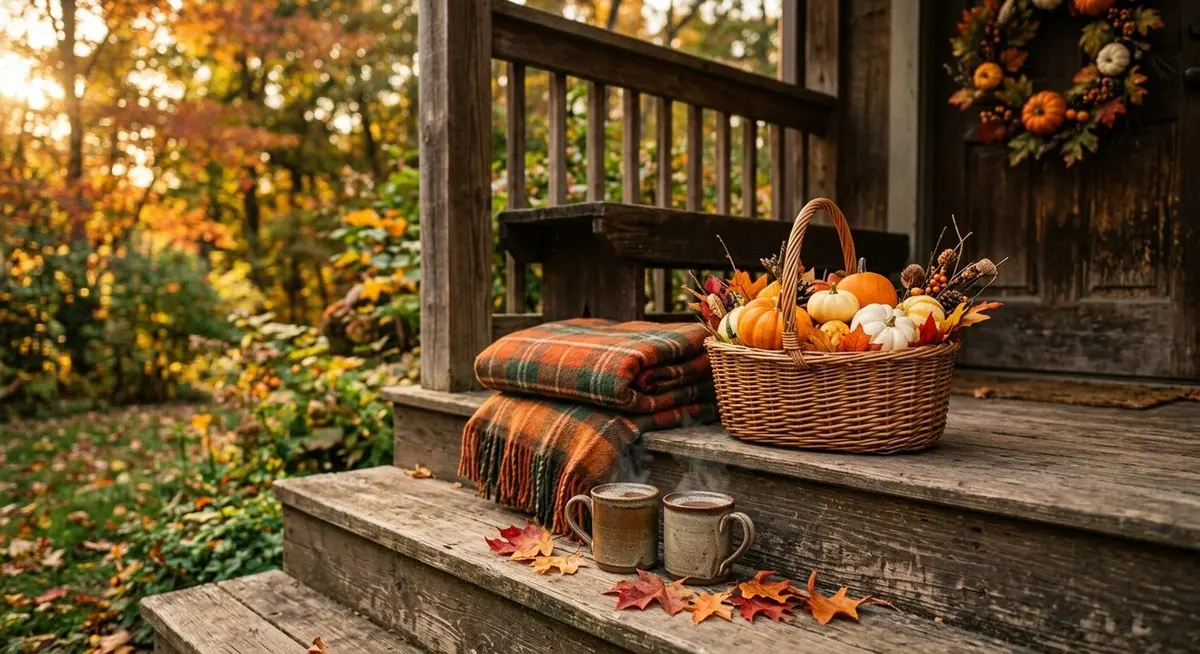
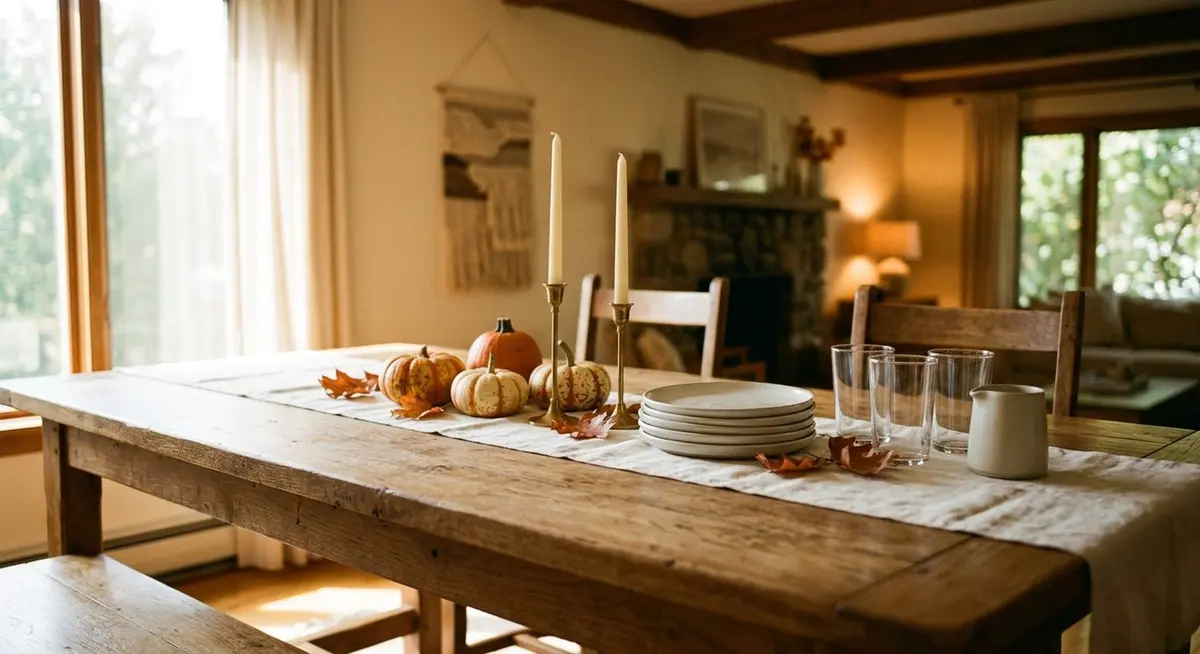
The whole season in one image: a basket of pumpkins, a blanket, and two mugs of cider that nobody has to drive anywhere to enjoy.
The one rule that matters most: pick twelve, not thirty. Twelve is roughly three activities a month, which is what a normal family with jobs, school and laundry can actually finish. Finishing is what makes the list feel good. A list you complete at 40 percent is worth more than one you complete at 13 percent.
How to Use It: The Twelve Rule
Read the whole list once, out loud, with everyone in the room. Then each person names their top three. Whatever overlaps goes on the shortlist first — those are the ones nobody will resist. Fill the remaining slots with a mix: at least four free activities, at least two you can do on a weeknight without leaving the house, and at least one that is a proper outing worth putting on the calendar.
Then write the twelve down somewhere visible and stop adding to it. The other eighteen are not failures; they are next year’s list, and having them written down means you never start from a blank page again.
How to balance your twelve
Slot
How many
Why it matters
Free activities
at least 4
Removes the money excuse on a tight week
Weeknight-friendly
at least 2
The weekend is not the only time you have
One real outing
at least 1
Something to look forward to and photograph
Everyone’s top pick
all of them
If one person’s favourite is missing, the list stalls
Weather-proof
at least 3
Autumn rain cancels plans; backups keep momentum
Repeatable
at least 2
Bonfires and movie nights are better the second time
Put the twelve on the calendar, not just on the fridge. An activity with no date is a wish. Even a vague date — “second Saturday” — is enough to stop the season from sliding past. The planner that comes with this guide has a four-weekend grid for exactly this.
Outdoor and Nature Activities
This is the group to reach for when the weather is good and everyone has been inside too long. None of it needs a ticket, and most of it needs nothing but shoes. The trick is to give the walk a job — a colour to find, a sound to count, a bag to fill — because “let’s go for a walk” is the fastest way to hear a complaint.
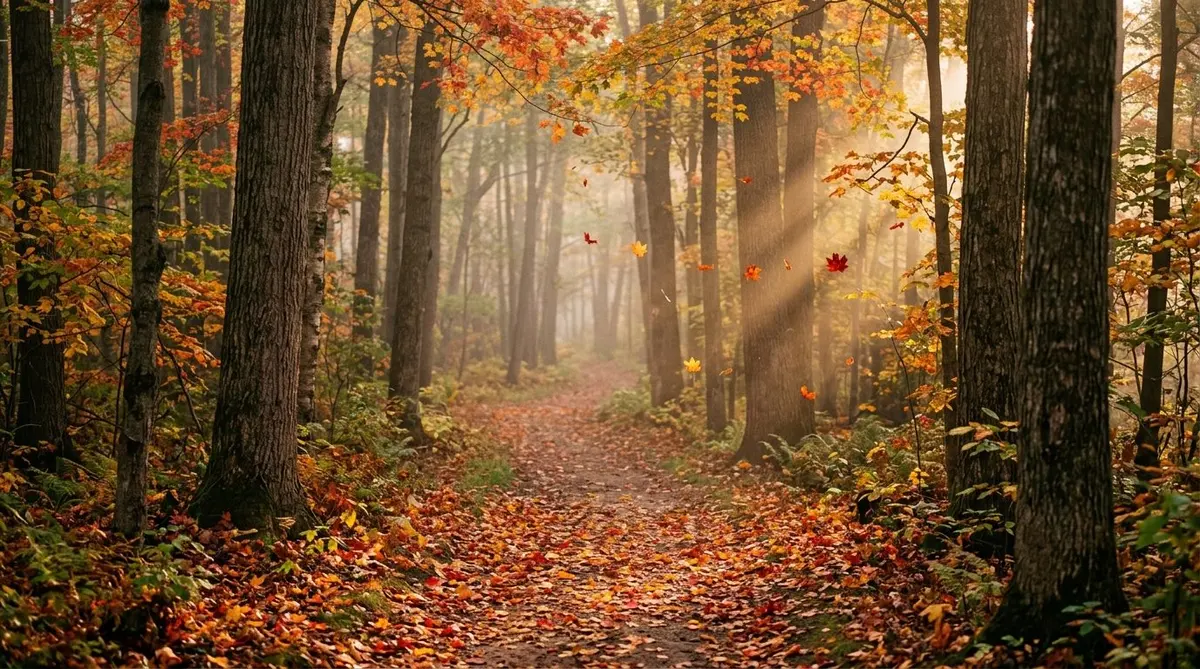
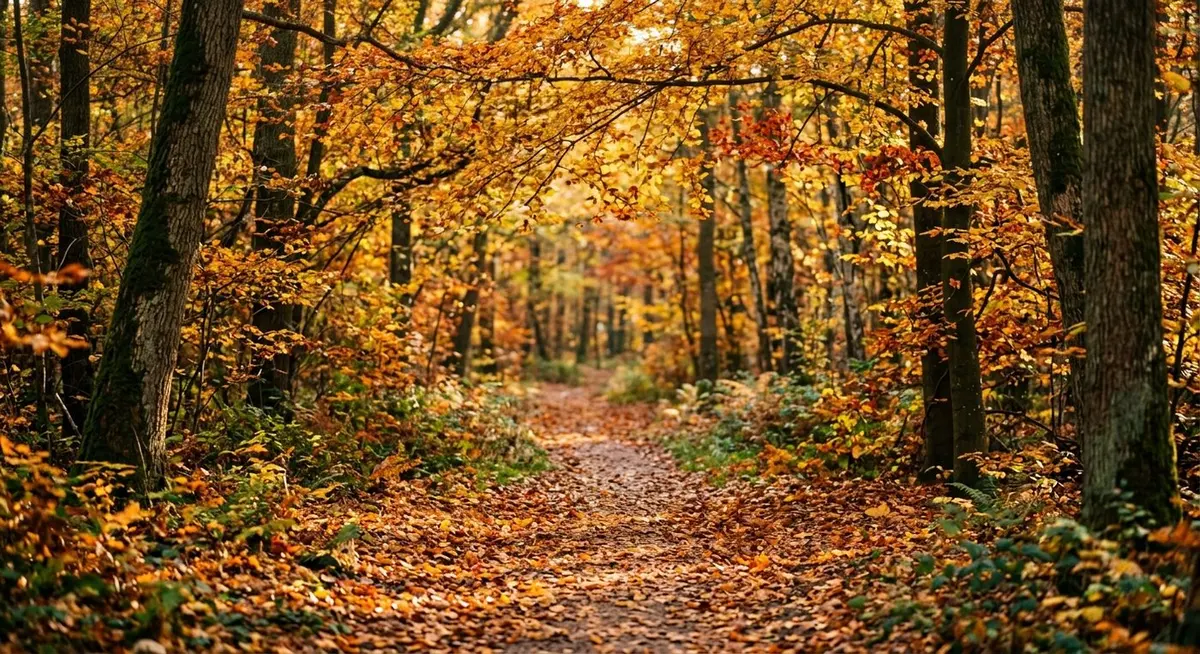
A path like this does the entertaining for you. Give each child one colour to hunt and the walk runs itself.
Take a phone-free colour walk. Everyone leaves their phone in a pocket, face down. Play eye-spy with colours instead of objects, and let the slowest walker set the pace. Forty minutes is plenty.
Take a scenic drive. Pick a loop you have never driven and prepare three conversation starters for the car. The drive is the activity; the destination is optional.
Take a family bike ride. Choose a flat, paved route and turn back at the halfway point of everyone’s energy, not the halfway point of the map.
Have a backyard bonfire with s’mores. Invite the neighbours, keep a bucket of water within arm’s reach, and let the fire burn down to coals before the marshmallows come out.
Go on a leaf hunt. Print a card with six colour swatches and send everyone off to match them. It doubles as yard clean-up, which is the best kind of double duty.
Rake a pile and jump in it. The oldest activity on the list and still the one that gets the biggest reaction. Rake it twice; the second pile is always better.
Dress one layer warmer than you think. Autumn afternoons drop ten degrees between three and five o’clock, and the fastest way to end a good outdoor afternoon is a cold, underdressed child. Hats and a spare pair of socks in the car solve most of it.
Pumpkin Patch and Orchard Outings
These are the classic autumn outings, and they are worth doing properly rather than squeezing in. The single biggest improvement you can make is to go early — not just for the crowds, but because the light is better, the fields are drier, and small children are at their best before lunch.
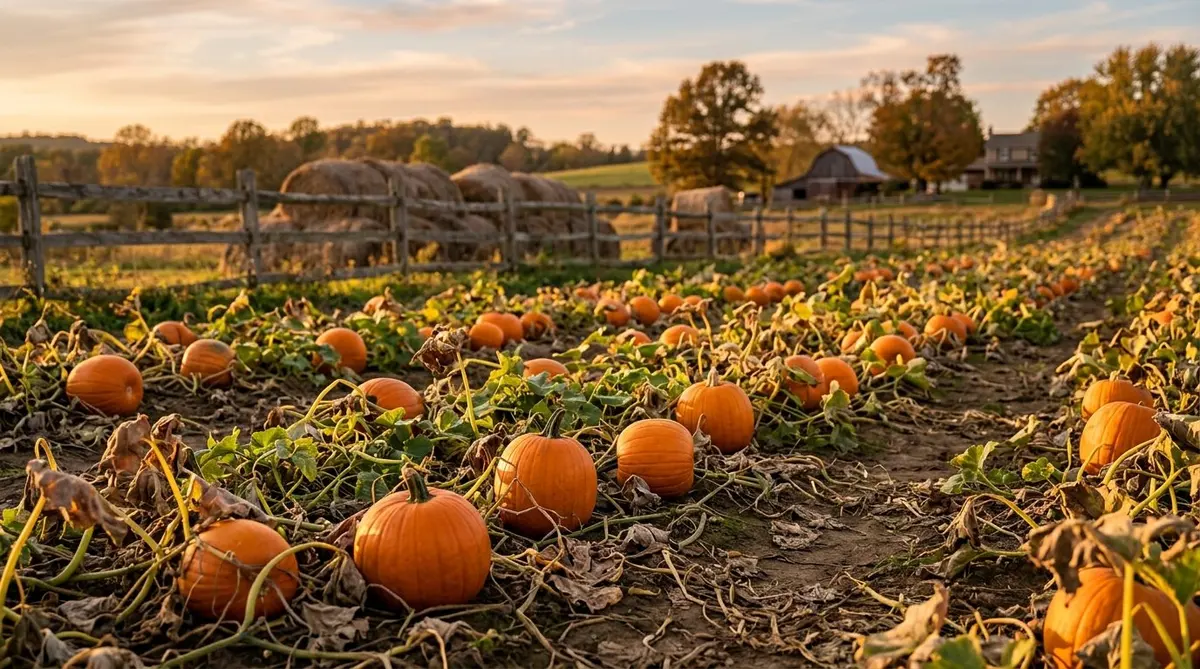
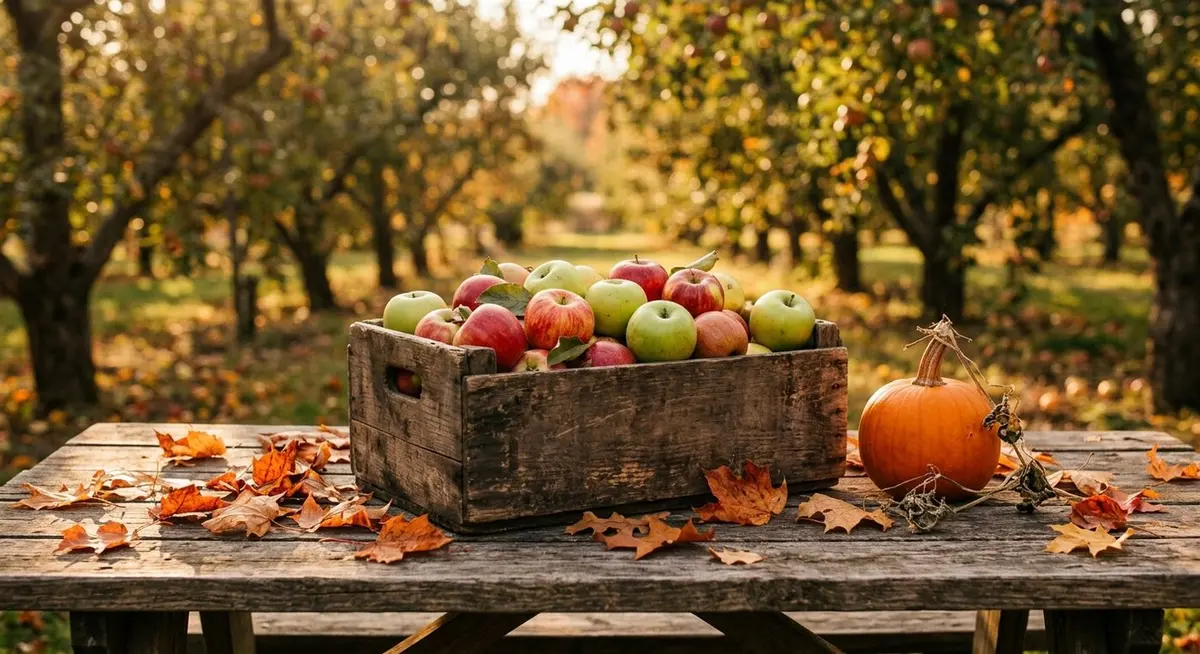
Go early in the day. The fields are drier, the light is softer, and the pumpkin you want has not been picked over.
The classic outings, and how to get them right
Activity
Best time
Watch out for
Pumpkin patch
First two weekends of October
Mud after rain — bring boots and a change of shoes
Hay ride
Mid-afternoon
Long queues; buy or book ahead where you can
Apple picking
Late September to mid-October
Bruised fruit — pick into a basket, not a bag
Corn maze
Before 2pm
Getting genuinely lost with tired children; note the exit
No-carve pumpkin decorating
Any evening
Paint that does not wash out — use washable and cover the table
Let each child choose their own pumpkin. It will be the wrong one — lopsided, too small, oddly shaped — and that is the point. A pumpkin they chose is a pumpkin they will carry, decorate and remember. The perfect one is yours to buy separately.
Festivals, Games and Spooky Fun
This group is about the communal side of autumn — the part that happens with other people. It is also the group where age matters most, so read the age table further down before committing to a haunted house with a seven-year-old.
Go to a football game. It does not have to be professional. A high school game under lights costs almost nothing and has more atmosphere than most stadiums.
Visit a haunted house or haunted hay ride. Check the scare level before you buy. Many venues run a gentler early-evening session for younger children — ask, because they rarely advertise it.
Shop a farmer’s market together. Give each child a small budget and one job: choose the vegetable for dinner. They will eat it, because they chose it.
Plan a weekend getaway. It does not need to be far. One night in a town ninety minutes away feels like a holiday and costs a fraction of one.
Attend a fall festival. Go early, before the crowds thicken and the queues for the good stalls get long. Leave while everyone is still enjoying it.
The early-exit rule. The best way to make an outing memorable is to leave while it is still fun. Ten minutes past the point of tiredness turns a good afternoon into a meltdown in the car park, and that is the version everyone remembers.
Cozy Nights In
This is the group that saves the season when the weather turns, and it is the one most people under-use. A cozy night in costs nothing, needs no planning, and works on a Tuesday. Treat it as a real activity rather than a fallback and it stops feeling like a consolation prize.
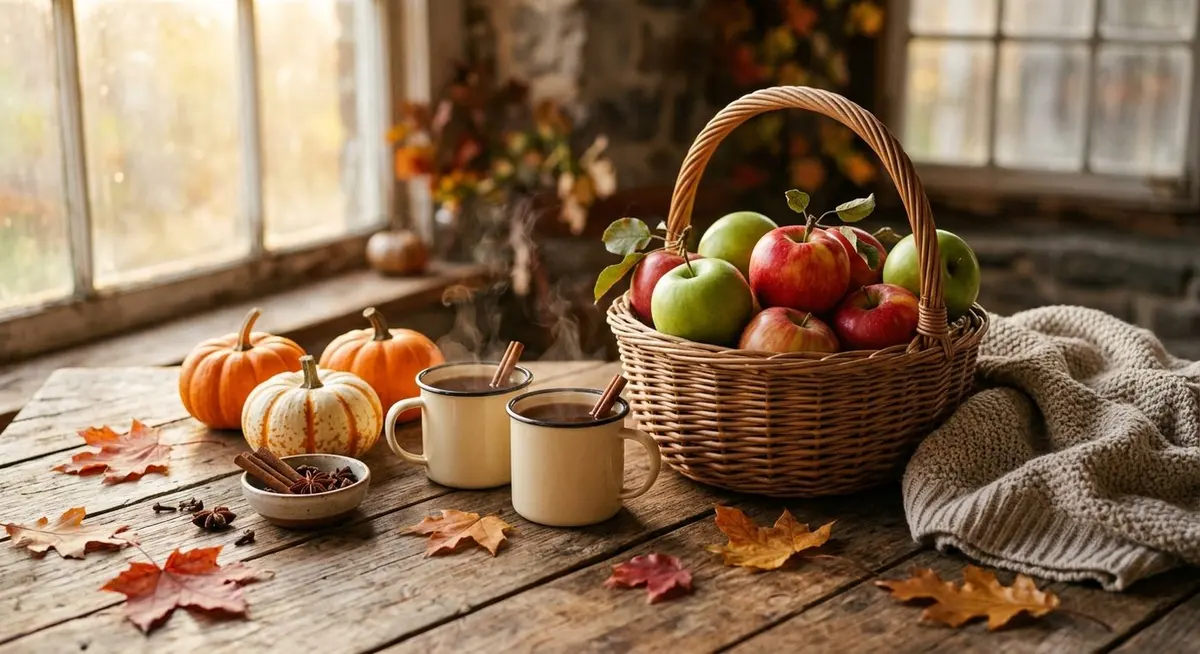
A rainy evening is not a cancelled plan. It is the cozy group’s best night.
Start a family book club. One book, one chapter a night, and a proper discussion when it is finished. Picture books count for younger children; the ritual matters more than the reading level.
Build a slow-cooker recipe list. Collect five recipes you want to try this autumn and work through them one a week. The leftovers are the real prize. If you want a starting point, our four-week meal plan is built for exactly this kind of batch cooking.
Cook something new with pumpkin. Go past bread and pie. Pumpkin works in soup, curry, pasta sauce and even macaroni cheese, and it is genuinely good for you. A simple pumpkin soup is the easiest place to start, and a loaf of pumpkin bread is the one children will help with.
Make a special seasonal grocery run. Go as a family, give everyone one thing to find, and cook something with the haul that evening. Apples are the best value of the season — a batch of slow-cooked apple butter or a tray of caramel apples turns a bag of them into an afternoon.
Sip cider and watch a fall movie. Blankets, lights low, phones in another room. The phones are the whole point of the exercise.
Make the cozy night a fixture, not a rescue. Put one evening a week aside for it — say Friday — and it becomes something everyone expects rather than something you fall back on. Predictable rituals are what children actually remember, which is the same principle behind our night routine cards for kids.
Crafts and Creative Projects
Autumn is the best craft season because the materials are free and lying on the ground. Leaves, acorns, pinecones and gourds are all sitting outside waiting to be collected, which means the craft starts with a walk rather than a shopping trip.
Deck out the front door and porch. A wreath of collected leaves, a few pumpkins on the step, and one thing that lights up. That is a whole porch, and it takes an afternoon.
Do a seasonal closet clean-out. Swap summer for sweaters, and put the outgrown coats and shoes in a bag for donation while you are at it. Two jobs, one afternoon.
Hold a fall craft-a-thon. Cover the table, set out everything at once, and give no instructions. Leaf rubbings, painted pinecones, acorn creatures — the mess is the activity.
Decorate for the whole season. Not just one night. A pumpkin that lasts from early October to the end of November earns its place far better than one carved and binned in a week. If you want the kitchen to smell like the season while you work, a batch of apple cider donuts or a classic apple crisp does more for the atmosphere than any ornament.
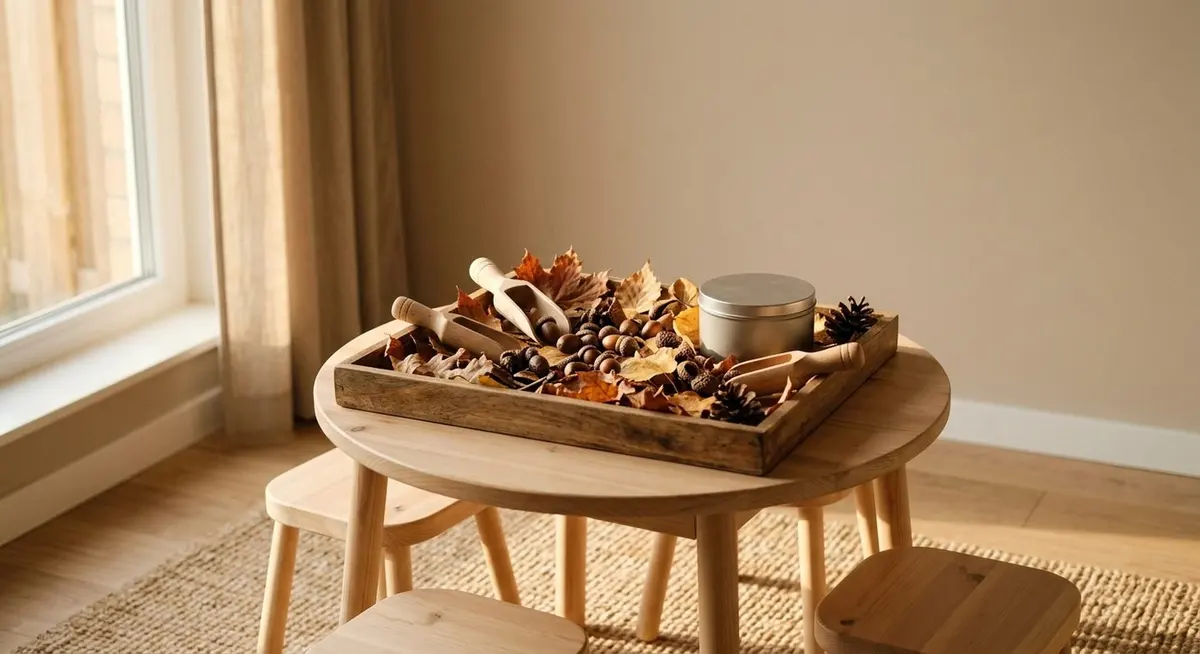
Collect first, craft later. Go out with a bag and gather more than you need. Having a bowl of leaves and acorns on the table means a rainy afternoon can turn into a craft session with no planning at all.
Gratitude and Giving Back
The last group is the one that turns a season of consumption into something with a bit more weight. It is also, reliably, the group children respond to most warmly — given the chance to give something away, most of them take it.
Start a gratitude jar. Everyone writes three things on slips of paper each week and drops them in. Read the previous month’s slips out loud before adding the new ones.
Donate coats, books and food. Let the children choose what goes in the bag. A coat they picked out themselves means more than one you quietly removed from the wardrobe.
Write thank-you notes. One each, to someone who helped this year — a teacher, a neighbour, a grandparent. Handwritten, posted, and it will be kept.
Do the giving-back activity early in the season. It sets the tone for everything that follows, and it is the one group that gets harder to fit in once the holiday calendar takes over in November.
The Six That Cost Nothing
Six of the thirty activities cost nothing at all beyond what you already own. If money is tight this autumn, these are not the consolation prizes — they are the ones children ask to repeat.
Free activities, and what they actually need
Activity
What you need
Time
Colour walk
Shoes
40 minutes
Leaf hunt
A printed colour card
30 minutes
Backyard bonfire
Wood, marshmallows, water bucket
2 hours
Craft-a-thon
Collected leaves, paper, glue
1 hour
Movie night
A film, blankets, cider
2 hours
Gratitude jar
A jar and paper
15 minutes a week
Free does not mean lesser. Ask any adult which autumn memories stuck and they will describe a bonfire, a leaf pile or a film on the sofa — almost never the thing that cost the most money. The free six are the ones that get repeated.
What Works at What Age
The single most common reason an activity falls flat is a mismatch between the activity and the child’s age. A corn maze is wonderful at nine and miserable at three. Use this as a rough guide and trust your own child over the table.
Matching the activity to the child
Age
Best bets
Skip for now
Under 2
Leaf hunt, pumpkin patch, cozy nights, sensory play
Corn maze, haunted house, long drives
2 to 4
Pumpkin patch, hay ride, leaf hunt, craft-a-thon, bonfire
Haunted house, long bike rides
5 to 7
Corn maze, apple picking, festivals, bike ride, book club
Intense haunted houses
8 to 11
Corn maze, haunted house, football game, weekend getaway
Nothing much — this is the sweet spot
12+
Haunted house, football game, festival with friends, giving back
Anything that feels like a family obligation
Mixed ages need a split. With a wide age gap, plan the outing around the youngest and give the oldest a job — navigator, photographer, snack carrier. A role is what keeps an older child engaged when the activity is aimed at a younger sibling.
The Four-Weekend Rhythm
Autumn gives you roughly eight usable weekends between the first cool morning and the first hard frost. That is more than enough for twelve activities if you stop trying to fit them all into October. Spread them out, and leave one weekend a month deliberately empty as a weather buffer.
Weekend one: one outdoor activity and one cozy night. Low effort, gets the season started.
Weekend two: the big outing — pumpkin patch, orchard or festival. Book or go early.
Weekend three: a craft or a giving-back activity. These are the ones that get squeezed out, so give them a slot.
Weekend four: leave it empty. This is your buffer for the rained-off outing, and you will need it.
Two activities a weekend is the ceiling. Three sounds ambitious in September and feels like a job by October. One good activity done properly beats three rushed ones, every single time.
Rainy-Day Backups
Autumn rain will cancel at least one plan. The families who enjoy the season are not the ones with better weather — they are the ones with a backup already decided, so nobody has to negotiate in a wet car park.
Indoor leaf hunt. Hide twenty paper leaves around one room and give each child a colour to find. Ten minutes of setup, forty minutes of quiet.
Blanket fort and book club. Build the fort first, then read a chapter inside it. The fort is the reward for sitting still.
Kitchen session. Bake one thing together and let them do every pour and stir. Choose a recipe with five ingredients or fewer.
Craft-a-thon from the collection bowl. This is why you gathered extra leaves and acorns in the first place.
Movie matinee. Cider, blankets, lights off, phones away. The simplest backup and the one they will ask for again. A bowl of halloween trail mix takes five minutes and makes it feel like an occasion.
Decide the backup before you need it. Write two rainy-day options on the back of the list. Choosing in advance takes the disappointment out of a cancelled plan, because the alternative is already agreed.
Keeping the Season Affordable
Autumn outings add up quietly. A pumpkin patch, a hay ride, a festival and a haunted house can easily run past a hundred pounds or dollars without anyone noticing, and the cost is rarely the thing anyone remembers. Here is how to keep the season generous without it being expensive.
Count the free six as real activities. They are not filler. Four of your twelve should come from that group.
Go early in the season. Pumpkin patches and orchards are cheaper and quieter in the first two weeks of October than the last.
Pack the food. The single biggest hidden cost of a family outing is buying lunch on site. A flask and sandwiches save more than the ticket.
Pick one paid outing and do it properly. One memorable trip beats four rushed ones, and it is easier to budget for.
Use what you already own. Boots, coats, blankets and a thermos cover almost every activity on this list.
Write the estimate down before you go. The planner that comes with this guide has a budget tracker with an estimate and an actual column. Filling it in for one season tells you exactly which outings are worth repeating — and which ones you were paying for out of habit.
Questions and Troubleshooting
These are the questions that come up most often when families try to plan a season like this. Almost every problem traces back to one of three things: too many activities, no dates on the calendar, or an activity that does not match the child’s age.
How many activities should we actually plan?
Twelve. That is roughly three a month, which is what a family with work, school and ordinary life can finish. Thirty is a menu to choose from, not a target. If you finish twelve and want more, the other eighteen are still there — and if you do not, you have still had a full season.
What if we miss a week?
Nothing. The list is not a streak and there is no penalty. Move the missed activity to the buffer weekend at the end of the month, or let it go and pick a different one. The only real failure is abandoning the list entirely because you fell behind on it.
What is the best activity for a rainy day?
A movie matinee or a blanket-fort book club. Both need no planning, no money and no leaving the house, and both are reliably popular. Decide which one is your default before the rain arrives, so nobody has to negotiate about it in a wet car park.
How do we handle a big age gap between children?
Plan the outing around the youngest child and give the oldest a job — navigator, photographer, snack carrier. A role keeps an older child engaged when the activity itself is aimed at a younger sibling. For the craft and cozy groups, the gap matters far less.
Is a haunted house suitable for young children?
Generally not under about eight, and it depends entirely on the child. Many venues run a gentler early-evening session for younger visitors, so ask before you buy — it is rarely advertised. If in doubt, choose a haunted hay ride over a walk-through house; it is easier to leave halfway.
What if we cannot afford the paid outings this year?
Do the free six and repeat them. A colour walk, a leaf hunt, a bonfire, a craft-a-thon, a movie night and a gratitude jar will fill a whole autumn, and they are the activities children ask to do again. Free is not the lesser version of this list.
When should we start?
The first cool morning, not the first of October. Starting early means the season has room to breathe and you are not cramming everything into the last two weekends before Halloween. If you are reading this mid-season, start with the cozy group — it needs no weather and no planning.
Do we need to do all thirty eventually?
No. The list exists to make choosing easier, not to create an obligation. Most families will do twelve to fifteen in a good year and be perfectly happy. Treat the rest as ideas for next autumn, and you will never start from a blank page again.
Free Printable: The Fall Family Bucket List Planner
A printable companion to this guide — the full thirty-activity checklist, a pick-your-twelve worksheet, a four-weekend timeline, rainy-day backup cards to cut out, a budget tracker and a memory log.
PDF · 6 pages · prints on letter or A4 · subscribe to unlock the download
Savory Discovery · By Elowen Thorn · Last updated September 2026. Activity suggestions are general guidance; check venue age policies and supervise children around fire, water and tools.
Elowen Thorn I cook, photograph and re-test every recipe in an ordinary home kitchen before it goes up, so what you make matches what you see. Savory Discovery is where simple weeknight cooking, seasonal ideas and the odd bit of kitchen craft sit side by side — written plainly, and worth cooking twice.