By Elowen Thorn · Fall Salads · Serves 4 to 6 as a side
This is the salad I make from the first week the apples turn crisp until well past the last of the Thanksgiving plates are cleared. It takes about fifteen minutes, it uses six ingredients you probably already have, and the dressing is a sixty-second job in a jar. What makes it worth writing down is not that it is clever — it is that the balance never fails.
Most salads collapse under their own ambition. People add eleven things, dress them badly, and end up with a bowl that tastes like nothing in particular. This one does the opposite. It has five components, and each one is there for a single, specific job: something crisp, something sweet, something tart, something crunchy, something creamy.
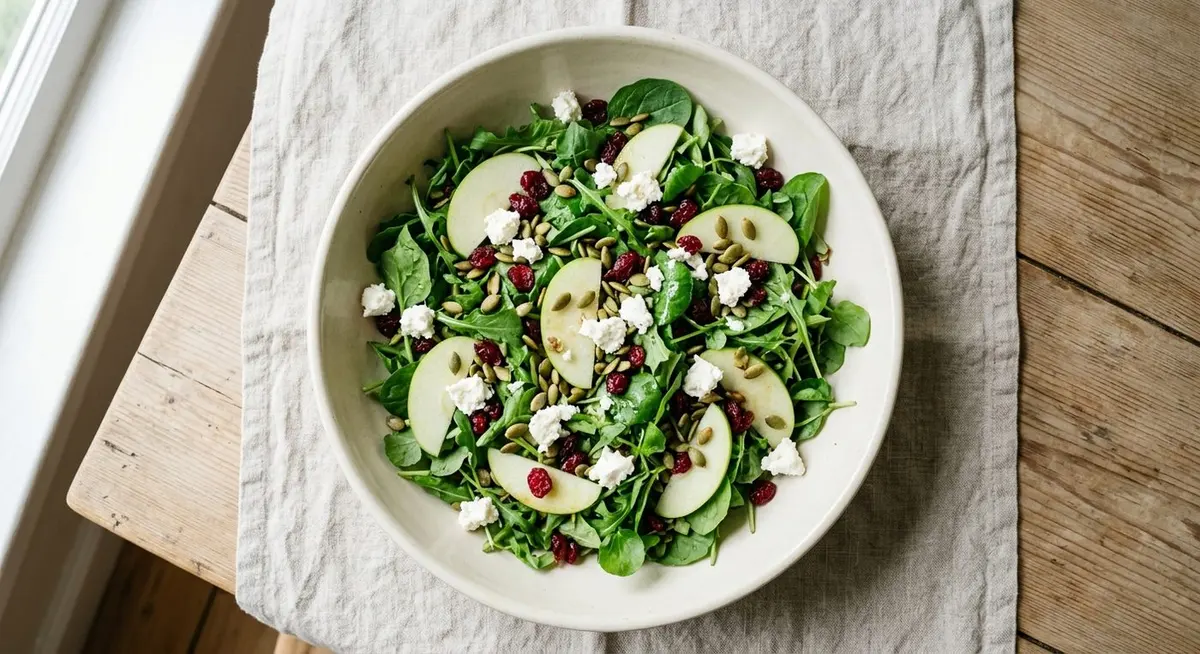
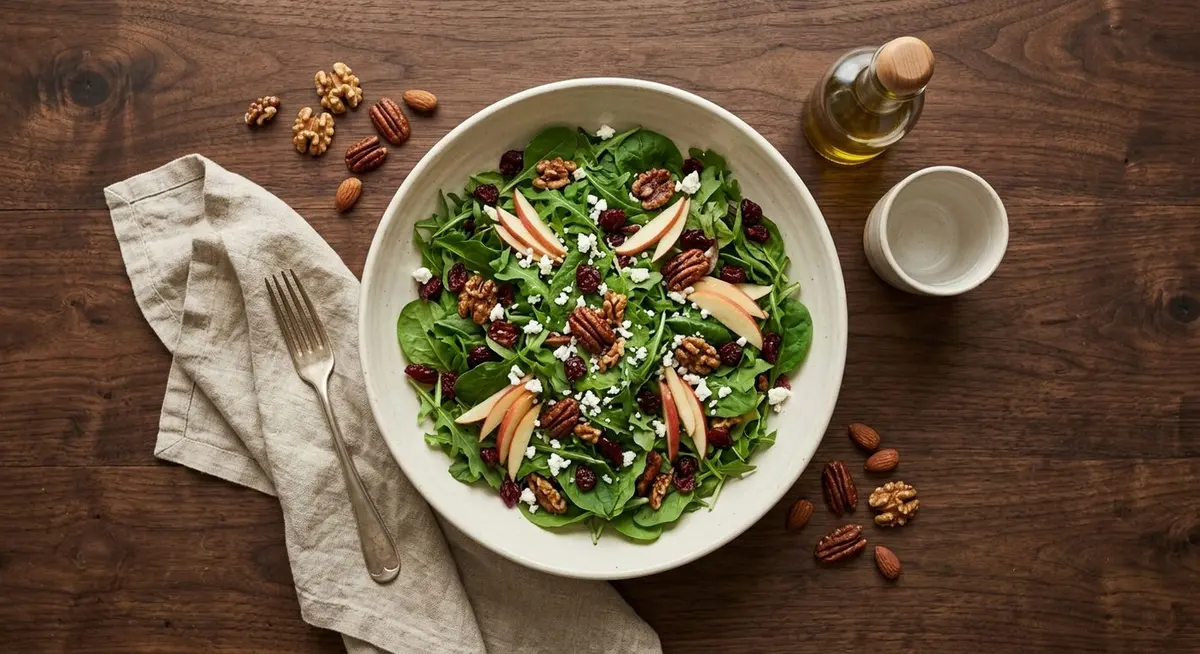
That is the whole architecture. Crisp greens give it structure. Sweet-tart apple gives it the cool, juicy bite that makes a heavy meal feel lighter. Dried cranberries bring concentrated fruit sugar that keeps every forkful interesting. Toasted pepitas add the crackle and the savoury, almost-green note. Crumbled goat cheese gives it creaminess and a little tang, so the vinaigrette has something to push against.
Then the dressing ties it together with three things in tension: a good olive oil, apple cider vinegar for sharpness, and just enough honey to round off the edge without tipping the salad into dessert. Everything is in balance before you have even tasted it.
Five components, one bowl, fifteen minutes. This is the salad that gets requested at every autumn gathering I cook for.
Start here if you are in a hurry. Greens in the bowl, apple sliced at the last second, cranberries and toasted seeds scattered over the top, cheese crumbled, dressing drizzled and tossed. If you read nothing else on this page, that sequence will still give you a very good salad.
What Goes In
Quantities below make four generous side salads or about six smaller ones alongside a big holiday spread. If you are feeding a crowd, double everything except the dressing and make the dressing in a second jar — a double batch is easier to balance in two small jars than in one large one.
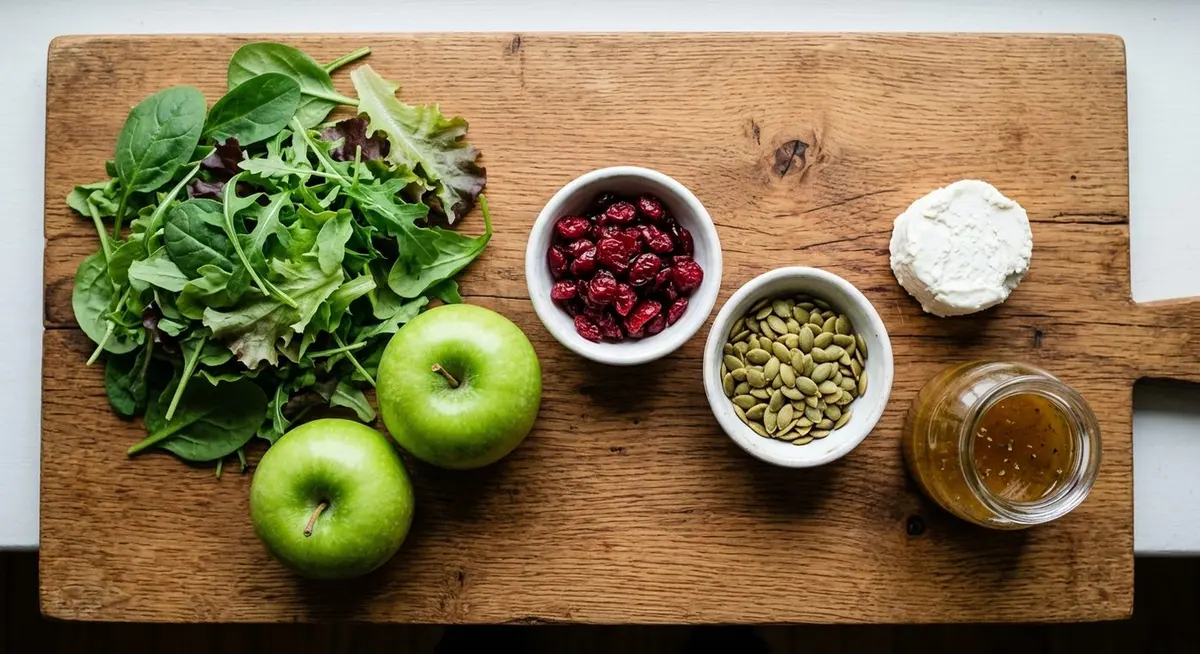
Ingredients and what each one is doing
Ingredient
Amount
The job it does
Spring greens or baby salad leaves
5 oz (about 5 packed cups)
Structure and freshness — the base everything else sits on
Crisp green apple
1 large or 2 small
Cool, juicy sweet-tart bite; the reason the salad feels light
Dried cranberries
1/3 cup
Concentrated fruit sweetness and a ruby-red colour pop
Pepitas (green pumpkin seeds)
1/4 cup
Crunch and a savoury, faintly grassy note
Chilled goat cheese
2 oz, crumbled
Creaminess and tang, so the vinegar has something to work against
Extra-virgin olive oil
1/4 cup
Carries the flavour of everything else
Apple cider vinegar
1 1/2 tbsp
The acid that wakes the whole bowl up
Honey
1 1/2 tsp
Rounds the vinegar without sweetening the salad
Dijon mustard
1 tsp
Emulsifier — it holds the dressing together so it clings
Fine salt
1/4 tsp
Without it, everything above tastes flat
Black pepper
to taste
A little heat against the sweetness
One shopping note that changes the result more than any technique: buy whole pepitas, not the salted roasted snack kind. Salted snack seeds are already seasoned and often oily, and they will fight the dressing. Raw green pumpkin seeds from the baking aisle are what this recipe wants.
The Five Components, and How to Swap Them
Once you see the salad as a formula rather than a list, you can make it from whatever is in the fridge without losing the balance. Keep one item in each column and it will work.
The formula
Role
In this recipe
Good substitutes
Crisp base
Spring greens or baby leaves
Chopped romaine hearts, butter lettuce, baby spinach, or massaged kale
Sweet-tart fruit
Green apple
Pear, Honeycrisp, or a handful of halved grapes
Dried sweetness
Dried cranberries
Dried cherries, golden raisins, or chopped dried apricots
Crunch and savoury
Toasted pepitas
Toasted pecans, walnuts, sunflower seeds, or sliced almonds
Creamy and tangy
Chilled goat cheese
Feta, shaved Parmesan, torn burrata, or a spoon of ricotta salata
Two rules keep swaps from going wrong. First, keep the crunch dry-toasted — a raw nut is a soft nut, and soft is the one thing this salad cannot absorb. Second, keep the creamy element sharp. Brie or cream cheese will make the bowl feel heavy; feta, goat cheese and Parmesan all bring the acidity the vinaigrette is expecting.
Choosing the Greens
The greens decide how long your salad lives. Tender baby leaves are at their best in the first twenty minutes and begin to wilt the moment dressing touches them. Kale and sturdy cabbages do the opposite — they improve as they sit, which is exactly what you want if the salad has to wait on a buffet table.
For a salad you are serving immediately
Use a spring mix, a baby spinach blend, or butter lettuce. Wash it properly and then dry it properly — this is the step people skip and it is the one that matters most. Dressing slides off wet leaves and pools at the bottom of the bowl, so you end up pouring on far more than you need and still getting a dry-tasting salad. A salad spinner, or leaves rolled in a clean tea towel, will fix this in a minute.
For a salad that has to wait
Swap in a bunch of curly or lacinato kale with the thick ribs stripped out, or a bag of shredded slaw mix. Both will happily sit dressed for hours and get silkier rather than sadder. Kale needs one extra step: massage it with a pinch of salt and a teaspoon of oil for thirty seconds, until the leaves darken and soften. If you are building a table for a crowd and want the whole meal to run on rails, the same advance-prep logic is what makes a monthly meal plan worth sitting down to write.
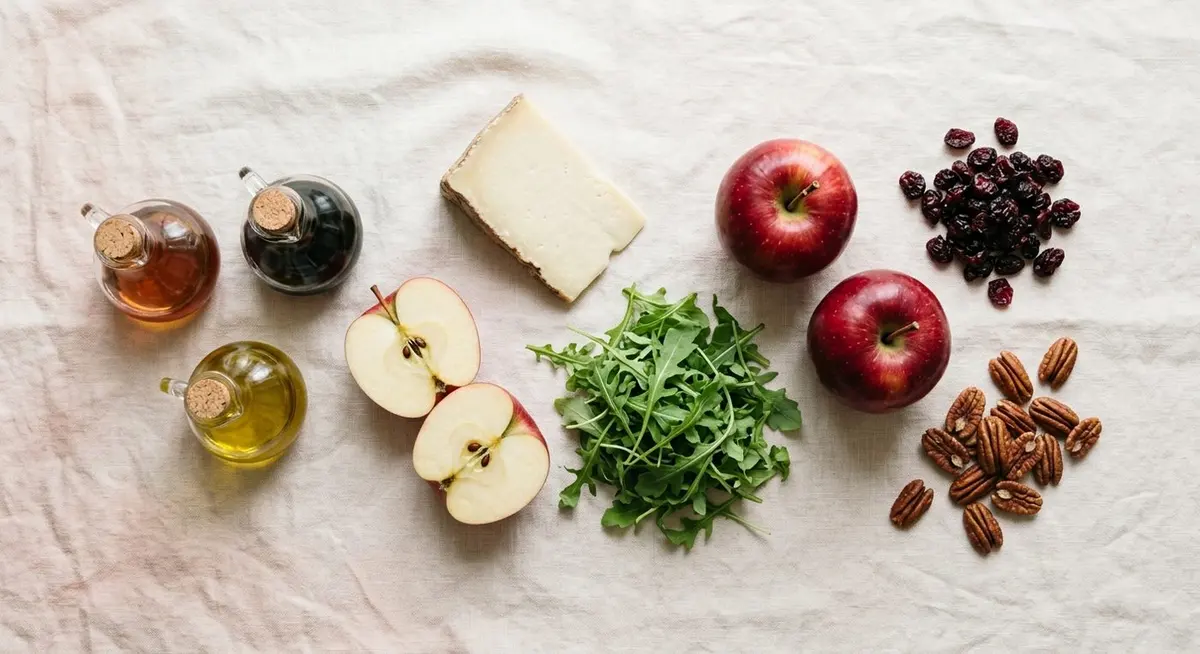
Everything laid out before you start. The whole salad takes four minutes to assemble once it is all in front of you.
The Apple Question
Apple choice matters more here than in most recipes, because you are eating it raw. A soft, floral apple will taste pleasant on its own and disappear completely in the bowl. You want something with acid and a loud crunch.
Apple varieties, ranked for this salad
Apple
Acidity
Texture
Verdict
Granny Smith
High
Very crisp
The classic choice — sharp enough to cut the cheese and the honey
Honeycrisp
Medium
Explosively crisp
The crowd-pleaser; sweeter, so use a little less honey
Braeburn
Medium-high
Crisp
Excellent balance of snap and sweetness
Pink Lady
High
Firm
Good tartness; holds its colour well once cut
Fuji
Low
Crisp but sweet
Works, though the salad leans sweeter overall
Red Delicious
Low
Mealy
Skip it here — it brings nothing to a raw salad
Cutting it so it stays crisp
Cut the apple immediately before you dress the salad, and cut it thin — about an eighth of an inch. Quarters, core out, then slice across into half-moons. Thick wedges feel like eating a separate piece of fruit; thin slices distribute through the leaves so that nearly every forkful gets one.
Stopping the slices from browning
Cut apples oxidise and go brown within about half an hour, which matters if the salad is going to sit. The usual advice is a squeeze of lemon, and it does work — but it also makes the fruit taste sour, which fights the sweet-tart balance you are trying to build. A very light brine works better: drop the slices into cold water with a quarter teaspoon of salt for three minutes, drain, and pat dry. The salt is invisible in the finished salad and the apple stays pale for well over an hour.
The vinegar does some of this work for you. If you are serving a kale-based version, toss the apple slices with the salad and the dressing straight away. The acid in the vinaigrette slows the browning on its own, so you can dress the bowl earlier and still get pale apple at the table.
Toasting the Pepitas
This is a two-minute step and it is the difference between a good salad and a memorable one. Raw pumpkin seeds taste flat and a little woody. Toasted, they turn nutty, deep green and audibly crisp.
Put a dry skillet over medium heat and let it come up properly — about two minutes. No oil. Oil in the pan makes the seeds greasy and they will not toast evenly.
Add the pepitas in a single layer and shake the pan to spread them out. Turn the heat down to medium-low; pumpkin seeds scorch quickly because they are small.
Stir or toss every twenty seconds or so. After about three minutes they will start to smell nutty and you will hear the first faint popping.
Pull them off the heat the instant the edges go golden and a few seeds have puffed and split. They keep cooking in the hot pan, so take them out slightly early rather than slightly late.
Tip them into a small bowl to cool. A hot pan will keep browning them into bitterness.
If they burn, start again. Burnt seeds are bitter and there is no rescuing them — a burnt pepita spreads its bitterness through the whole bowl. Two minutes of work is cheaper than a spoiled salad. If you are toasting nuts for several autumn dishes at once, a tray in a 350°F oven for eight to ten minutes is more forgiving, but you will need to shake the tray once.
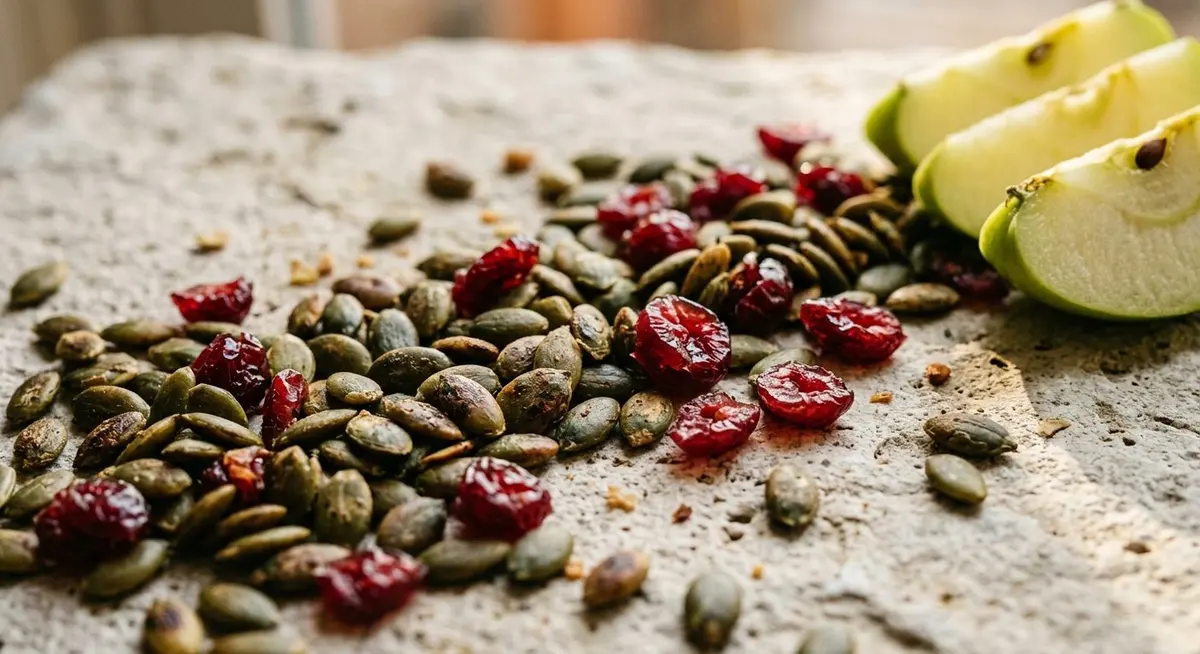
Toasted pepitas, dried cranberries and thin apple slices — the three things that make this salad taste like autumn rather than like a side dish.
The Apple Cider Vinaigrette
The dressing is a ratio, and once you have made it twice you will never measure it again. Three parts oil to one part vinegar, plus a small spoon of something sweet and a small spoon of something mustardy. Here it is written out, because the first time you make it you will want numbers.
Apple cider vinaigrette
Ingredient
Amount
Note
Extra-virgin olive oil
1/4 cup
A smooth, peppery oil — not a bitter finishing oil
Apple cider vinegar
1 1/2 tbsp
Shake the bottle first; the good stuff settles
Honey
1 1/2 tsp
Maple syrup works and makes the whole thing vegan
Dijon mustard
1 tsp
The emulsifier — do not skip it
Fine salt
1/4 tsp
Add it before you shake, not after
Freshly ground black pepper
to taste
Eight to ten turns of the mill
How to make it in one jar
Put everything in a small jar with a tight lid, screw it shut, and shake hard for twenty seconds. That is genuinely it. The mustard is what does the work: it acts as an emulsifier, holding the oil and vinegar in suspension so the dressing coats the leaves instead of separating into a puddle. Whisking in a bowl works too, but a jar means you can make it ahead, keep it in the fridge, and shake it again whenever you need it.
Tuning the balance
Too sharp? Another half teaspoon of honey and shake again. Do not add more oil — oil mutes the vinegar but also flattens the dressing.
Too sweet? A teaspoon more vinegar. The salad needs a firm edge.
Too thick after chilling? Olive oil sets solid in the fridge. Leave the jar on the counter for ten minutes, or run it under warm water for thirty seconds, then shake.
Want more depth? A teaspoon of whole-grain mustard in place of the Dijon adds texture and a little pop of seed.
How much to actually use. This makes about a third of a cup, which is more than five ounces of greens need. Add two tablespoons, toss, and taste before you add more. You want the leaves lightly coated and glossy — not wet, and never sitting in a pool. Overdressed salad is the single most common way to ruin an otherwise perfect bowl.
Assembling and Tossing
Order matters more than people expect. Put anything heavy or wet in too early and it drags the leaves down; dress too early and you are serving soup.
Get your greens properly dry and put them in a wide, shallow bowl. Wide matters — a deep narrow bowl makes you crush the leaves to reach the bottom, and keeps the salad from looking generous.
Shake the dressing and drizzle about two tablespoons over the leaves. Toss gently with your hands or two forks until every leaf has a faint shine.
Scatter the dried cranberries and the cooled toasted pepitas over the top.
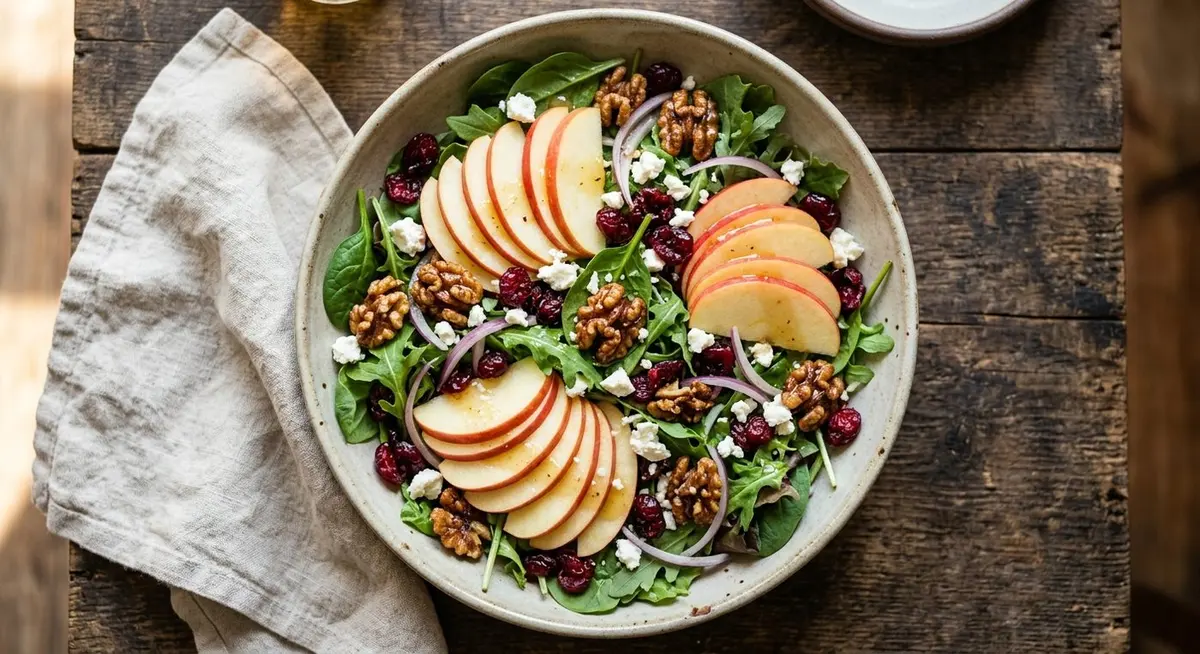
Cut the apple and lay the slices over the salad. Fan them in a loose spiral if you want it to look deliberate, which takes four extra seconds and always looks like more effort than it was.
Crumble the goat cheese over the top with a fork. Cold cheese crumbles cleanly; room-temperature cheese smears.
Give the whole thing one or two gentle folds — just enough to bring the toppings through the leaves — and serve.
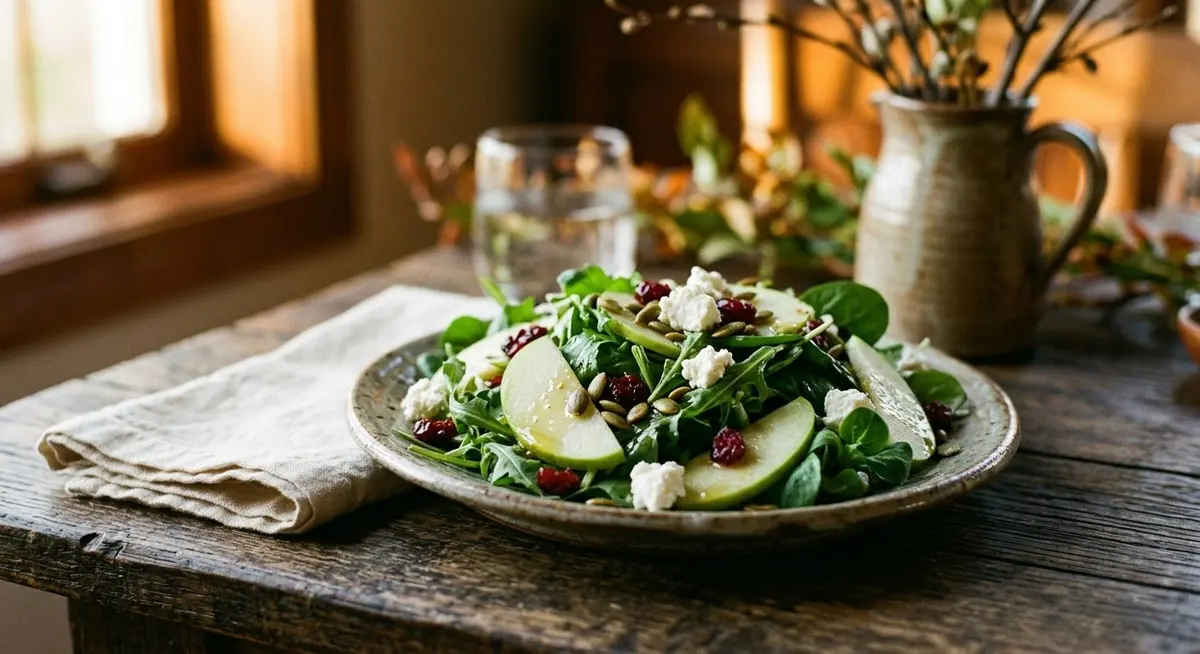
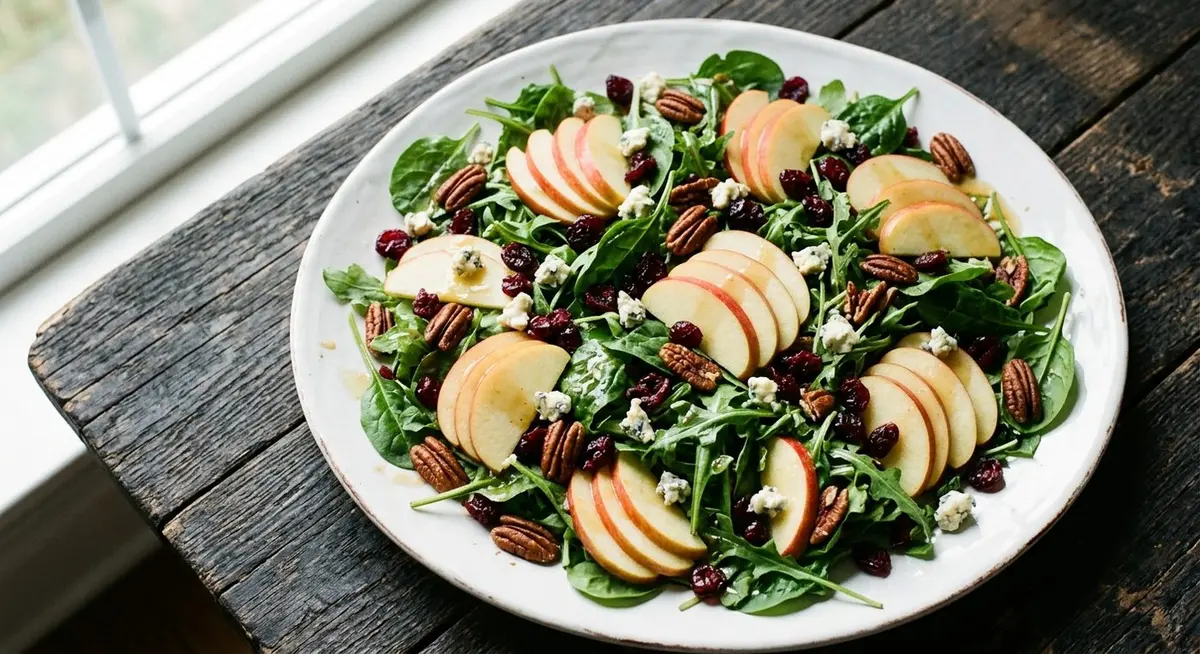
Serve it on a plate rather than in a bowl and the toppings stay on top of the leaves, where they belong.
The cheese trick. Crumble the goat cheese while it is straight out of the fridge, and do it over the bowl so the small pieces land evenly instead of in one heavy clump in the middle. If your cheese is a soft log, use a fork and press it through the tines rather than cutting it.
Make-Ahead and Travelling
This salad is a very good choice for a holiday table precisely because almost all of it can be done in advance. Only two things have to happen at the last minute, and neither is difficult.
What to do when
When
Do this
Up to a week ahead
Toast the pepitas and store them airtight at room temperature. Make the dressing and refrigerate it.
Up to two days ahead
Wash and thoroughly dry the greens; store them in a bag with a paper towel.
One hour ahead
Chill the goat cheese. Bring the dressing out of the fridge so it can loosen.
Ten minutes ahead
Assemble everything except the apple and the dressing.
Last minute
Slice the apple, add it, dress and toss, then serve.
Taking it to someone else’s table
Transport it in two containers: the dressed or undressed greens in one, and the cranberries, pepitas and cheese in another. Apples go in a zip bag with the brine drained off. At the other end it takes ninety seconds to build. If you know the salad will be sitting out for a while once it arrives, use kale instead of tender leaves — it will hold up for a couple of hours without turning limp.
The herbs that are worth adding
A small handful of soft herbs lifts this salad without changing its character. Flat-leaf parsley is the safest and works with everything. Mint is excellent with the apple and the cranberries, but use half as much as you think you need. Chives are the quiet option and disappear into the dressing rather than announcing themselves. Chop them fine and fold them through the leaves after dressing, so they stay green.
What to Serve With It
This is a side salad built for rich food. Something with fat and salt across the table makes its crispness and acidity feel almost like a palate cleanser.
With soups
Soup and salad is the obvious weeknight pairing, and this one holds its own against a thick, sweet soup. A pumpkin curry soup is the most autumnal choice, and the curry heat against the crisp apple is a genuinely good combination. A silky butternut squash soup works the same way and is a little more restrained. If you want something with more of a kick, a chicken tortilla soup turns the pair into a full dinner.
With heavy mains
Alongside roast chicken, a holiday ham, a lasagna or a pot roast, serve this instead of anything creamy. It cuts the richness rather than adding to it. For a burger night, a smash burger with this salad on the side is a much better plate than burger and fries, and air fryer smashed potatoes give you the crispness of fries without two fried things competing. A stuffed squash, like stuffed acorn squash, is the best vegetarian route to the same balance.
Swap the honey for maple syrup and leave the cheese out, or replace it with a spoon of toasted, salted seeds for the same salty-creamy role. The dressing is otherwise already vegan, so that is the whole change.
Make it a main course
Add two cups of shredded roast chicken, a can of drained chickpeas, or a cup of cooked farro or wild rice. All three turn this into a lunch that holds. If you add a grain, dress it while it is still slightly warm so it absorbs the vinaigrette rather than sitting in it.
Change the season
In summer, the same formula works with peaches in place of the apple and a watermelon feta salad approach in place of the goat cheese; a corn salad is the other obvious warm-weather cousin. In deep winter, when apples are tired and greens are expensive, shredded cabbage and dried cherries hold the same job at half the cost.
Small changes that make a real difference
Walnut oil in place of a quarter of the olive oil adds an earthy note that suits the cranberries.
A pinch of cinnamon in the dressing — a genuinely tiny one — reads as autumn without tasting like pie.
Blue cheese instead of goat makes the salad much more assertive. Halve the amount, because it is far saltier.
Fresh pomegranate instead of half the cranberries adds juiciness and looks spectacular on a holiday table.
Chilling the bowls. If it is a hot day or you are serving this somewhere warm, put the serving bowls in the fridge for ten minutes before you build the salad. It sounds fussy and it keeps the leaves crisp noticeably longer.
Storage, Leftovers and Food Safety
Dressed salad does not keep. That is not a food-safety issue, it is a texture one — the leaves go limp and the crunchy elements soften, and no amount of refrigeration brings them back. The fix is to think ahead about how much you are actually going to eat.
What keeps and for how long
Item
How to store
Keeps
Undressed greens
Airtight bag or box with a paper towel to absorb moisture
3 to 4 days
Dressing
Lidded jar in the fridge; bring to room temperature and shake before use
1 week
Toasted pepitas
Airtight jar at room temperature, away from heat
2 weeks
Dried cranberries
Resealable bag in the pantry
Several months
Sliced apple
Brine-drained, in a zip bag in the fridge
1 day
Dressed salad
Not worth keeping — eat it fresh
—
If you do have leftovers
Pick out the apple slices and the cheese, and refrigerate the dressed leaves in a sealed container overnight. The next day the greens will be soft, which makes them unsuitable for eating raw but perfectly good for a warm dish: fold them into a pan with a little olive oil and garlic for thirty seconds, or stir them into a soup at the end of cooking. Soft dressed greens are an ingredient, not a mistake.
Food safety note. Anything containing cheese should not sit at room temperature for more than two hours — one hour if the room is warm or it is sitting in the sun. If you are putting this salad out for a long party, set out only as much as you expect to be eaten and refill from a bowl kept cold inside. Do not add fresh salad to a bowl that has been standing out.
Questions and Troubleshooting
These are the things that come up most often. Almost every problem with this salad traces back to wet leaves, too much dressing, or soft nuts.
Can I make this salad ahead of time?
Yes, with one caveat: keep the dressing off the greens. Wash and dry the leaves, toast the pepitas, make the dressing, and store everything separately. Assemble ten minutes before serving, and slice the apple at the very last second. If the salad will sit out for a while, use kale instead of tender leaves — kale actually improves as it marinates.
How do I stop the apple from turning brown?
A three-minute soak in cold water with a quarter teaspoon of salt, drained and patted dry, keeps the slices pale for well over an hour without making them taste sour. Lemon juice also works but leaves the fruit tasting sharp, which fights the balance of the salad. Tossing the apple into the dressed salad straight away helps too, because the vinegar slows the browning.
My salad is soggy. What went wrong?
The leaves were still wet when you dressed them, or you used too much dressing. Dressing slides off wet leaves so you keep adding more without anything getting coated. Dry them properly in a spinner or a tea towel, then add two tablespoons of dressing, toss, and taste before adding any more.
Can I use pecans or walnuts instead of pepitas?
Absolutely. Warm them in a dry pan just until they smell fragrant — pecans and walnuts burn faster than pumpkin seeds because of their higher oil content. Toasted sunflower seeds and sliced almonds both work as well. The only real rule is that they must be toasted, because raw nuts go soft against the dressing.
What can I use instead of goat cheese?
Feta is the closest match and slightly saltier, so use a little less. Shaved Parmesan gives a firmer, more savoury result. Torn burrata makes the salad much richer, which is excellent on a holiday table but heavy for a weeknight. To make it dairy-free, leave the cheese out entirely and add an extra spoon of toasted salted seeds for the same contrast.
Is this salad vegan?
As written, no — honey and goat cheese are both animal products. Swap the honey for maple syrup and omit the cheese, and it is fully vegan. Nothing else needs changing; the olive oil, vinegar, mustard and seeds are all plant-based.
How much dressing should I actually use?
Two tablespoons for five ounces of greens, then taste. The leaves should look glossy and lightly coated, not wet. This recipe makes about a third of a cup, which is deliberately more than you need, because how much a given bag of greens absorbs varies a lot. Keep the leftover dressing in the jar in the fridge for up to a week.
Can I use bottled dressing instead?
You can, and a good quality vinaigrette will work. Look for one where oil is the first ingredient and the vinegar is a real vinegar rather than a flavoured spirit. Avoid anything creamy or sweet — a ranch or a honey-mustard dressing will bury the apple and the cranberries completely.
Free Printable: The Fall Green Salad Planner
A printable companion to this salad — the shopping list, the dressing ratio card, an apple variety card, the pepita toasting steps, a make-ahead timeline, an assembly checklist, and tables for scaling to 30 guests and storing every component.
Elowen Thorn I cook, photograph and re-test every recipe in an ordinary home kitchen before it goes up, so what you make matches what you see. Savory Discovery is where simple weeknight cooking, seasonal ideas and the odd bit of kitchen craft sit side by side — written plainly, and worth cooking twice.